Category: disability
Sometimes? There’s Not a Great Solution…

Sometimes? There is not a great solution available for positive advocacy.
This past Friday, my 21-year-old daughter asked me to go shopping with her. I’m always thrilled when she CHOOSES to spend time with me, so I agreed so long as it was the morning so that we could “beat the heat”. She agreed. She wanted to shop for new “under things” and I knew JCPenny was having a sale on these items. Kyersten, Chloe and I headed for Annapolis Mall to shop.
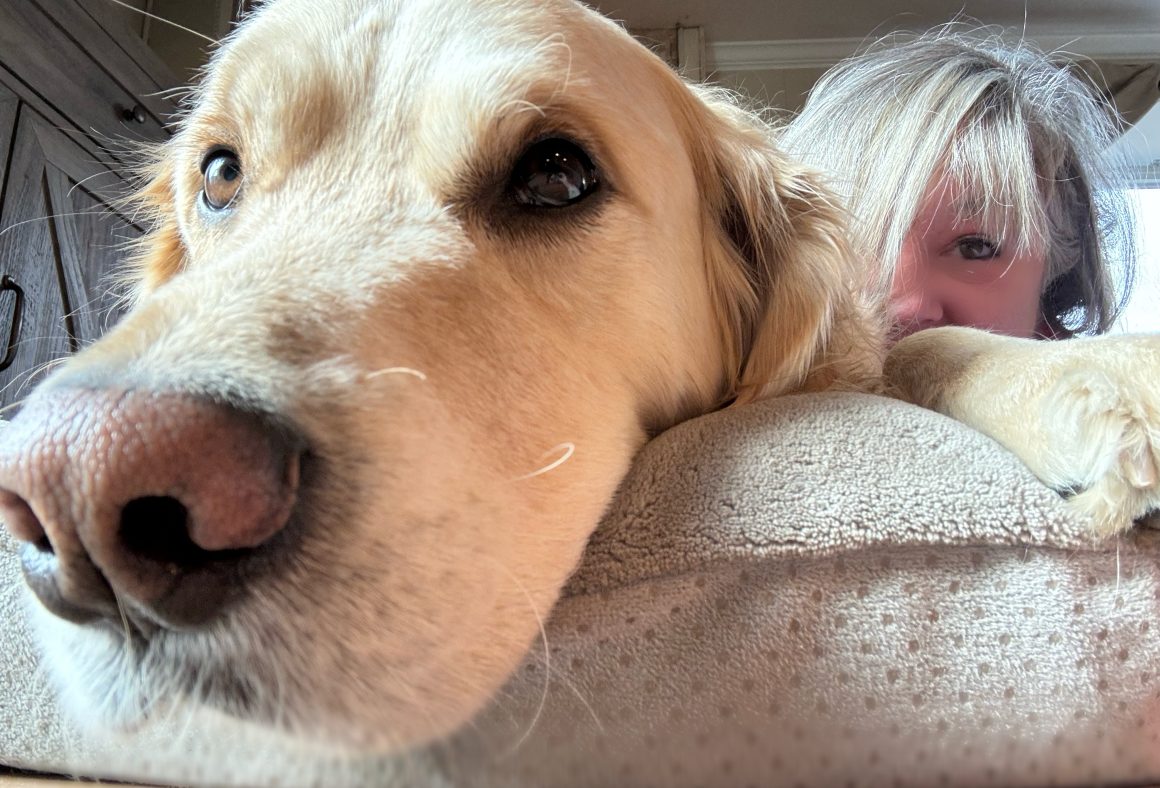
The bad thing about shopping in the “intimates” department is that there is not much room to maneuver. I was having some difficulty with my balance as well so I was just being extra careful about how much moving I had to do. Chloe does great even in confined spaces with the exception of that tail. I talk to her a great deal while we are out because it helps to keep her attention on me. Kyersten was busy looking at different styles available. My main job was to offer the occasional opinion and situate Chloe so that her tail didn’t knock things off with her loving “wag”. Chloe may not understand all that I say to her, but she does know her name and will wag as if she is paying attention to everything else I’m saying. Because my attention was on HER, and as we were in “tight quarters”, I was taken by surprise by two little girls who ran up and threw their arms around Chloe’s neck.
One little girl was about 4-years-old, and the other (obviously big sister) was probably 9 or 10-years-old. I stuttered out, “Oh! I’m sorry. She’s a working dog and cannot be petted right now”. The girls continued to squeeze and talk excitedly.
I tried to tune in a bit better and realized they were talking in Spanish. With my heart plummeting to my stomach, I held up my hand and shook my head NO saying, “Please don’t pet her. She is a working dog”.
The older girl stopped and tried to talk to me in English, and I understood “She’s a pretty dog”. At this point Chloe broke her sit/stay in order to break the choke hold. I was unprepared and went to my knees and caught myself on a rack.
With bras, panties, and tiny hangers attached to various body parts, I again held up my hand, shook my head no and said, “No please!” in a very firm voice. As I was still wobbling, I sat on my caboose to get my bearings.
The older girl said, “Oh … sorry” with some other words that I could not make out because of the accent. I did understand that she understood that Chloe was NOT to be petted. In Spanish she (I think) explained to her younger sister about Chloe. I think she realized something was amiss because I was now sitting on the floor with lingerie scattered around me. She left quickly with her little sister in tow.
I had Chloe brace so that I could get up, and asked my daughter to pick up some scattered articles. (Chloe could have, but I didn’t figure anyone else would want dog saliva on merchandise). Right as I was on one knee about to stand, the youngest came zooming around the corner with a squeal to squeeze Chloe again (who was now in a stand/stay and “brace”). I held up my hand and intercepted the young lady and my hand blocked her at the chest. Although I did not PUSH, it did stop her in her tracks. I said firmly with a head shake, “NO!” She turned and ran away.
I did NOT want to place my hands on someone else – let alone a child. I didn’t injure her, but I really felt out of options. I was “rattled” the remainder of the day. I was very upset with MYSELF that the resolution to this problem ended up playing out like it did.
When All Else Fails… Be Firm
I did look around for the youngster and never did see her or her older sister during the remainder of our shopping trip. When something doesn’t go according to plan I tend to beat myself up about it I’m afraid! I kept thinking about other options I may have had, and tried to think of what I might do should this happen again. (I’m open to suggestions – grin).
Sometimes we can try to advocate in a positive way – and the situation may just fall apart. Sometimes? You just have to be firm and resolute. We should always try to be positive and upbeat at the beginning…
“It would assist me in staff meetings if everyone would just pop a hand up before speaking so I can locate who is talking”.
“I can easily do my share of answering the phone if I had access to a captioned telephone that would provide understanding for when I don’t hear everything”.
“She’s not a pet. She’s a service dog and she can come into the store with me”.
Yet there are times we may have exhausted other options and have to stand firm.
“I need everyone to simply pop your hand up with a small wave before you speak. Thanks in advance”.
“I will require a captioned telephone so that I can do my job and share the task of answering the phone”.
“Here is a flier about what the ADA says about my rights. I’ll be over there shopping should you have any additional questions”.
I don’t think ANY of us welcome having to be firm and insistent, but there is a time and place for being firm. I try to always remember that there will be others who come after me that may also have accessibility issues. How I handle a situation may condition someone with normal hearing to respond to the next person they interact with who has a disability. There are times, however, when all pleasant and positive avenues have been closed to you. Even in your firmness… keep your cool. Keep it short and stick to the facts. My husband grins and tells me, “Denise! TMI. Keep it short! They don’t care about your background or care to hear your story”!
Accents, Foreign Languages, and Hearing Loss
The great thing about our country is the diversity. Because of where I live there are a large number of minority populations who speak English as their SECOND language. I do not speak an oral foreign language so I’m a little jealous of those who can! My mother taught high school Spanish for over twenty years, but her children never learned (much to her dismay). I have a lot of respect for people who speak English as their 2nd language. It is difficult, however, to understand language when an accent distorts the way a cochlear implant and/or hearing aid pick up the words. I have trouble understanding people with thick accents that may speak PERFECT English. I even have problems with American accents such as folks from Boston, Texas, etc. (I understand “Southern” as I lived there for so long!)
However, the fact that I have difficulty with accents, is MY problem. People with hearing loss should have patience with those who speak other languages as their primary language. I have heard late-deafened folks demean and criticize those who speak other languages. I always think to myself, “Really?” It is far more productive to explain that you have a hearing loss and have trouble understanding when an accent is present. Let them know that you are aware it is your problem, and pleasantly ask if they can perhaps speak slower and face you when they speak. I’ve overheard HoHearies blast people with heavy accents – as if it is THEIR fault! Always – ALWAYS – remember you are an advocate for others with hearing loss whether you signed up for it or not! If you are negative, critical and defensive, you are having a negative influence on how the rest of us are treated in the future. Yes, it can be frustrating and even embarrassing to have to ask someone with a heavy accent to repeat themselves again and again. But “own” the problem as yours – it isn’t their problem. It’s a big thing to be fluent in more than one language, so treat them with the respect they deserve.
Denise Portis
© 2011 Personal Hearing Loss Journal
Timeless Reminders

In 483 B.C., Medo-Persian King Xerxes (also known as Ahasuerus) threw a huge, 7 day party. What was strange about this party is that it FOLLOWED a 180 day, kingdom-wide celebration. I mean… who has THAT kind of money? I guess Xerxes did – and he had no qualms about spending it. At some point in the party, Xerxes makes a mistake. He assumes his queen, the beautiful Vashti, will want to come to the men’s party and parade around for everyone. She set him straight pretty quickly… all through the channels of the first private messaging system… eunuchs. After consulting the fellas in his “boys club”, Xerxes boots Vashti to the curb… or actually to a part of the harem where he’ll never see her again. ‘Cept… now he’s lonely. This lonliness sets in play a kingdom-wide search for all the beautiful single women in the kingdom. That’s right… there’s a job opening in the palace.
Hadassah was a young Jewess being raised in Susa by her cousin Mordecai. Was it because she was near the palace at Susa that she was picked up so quickly? We don’t know, but we do know she was a “hottie”. Beautiful in form and face. Her name was changed to Esther and she began the year-long process of getting her chance with Xerxes to see if he liked her well enough to become his new queen. History tells us that in 478 B.C., Esther becomes queen. Guess she made an impact…

Xerxes was a “strange ‘un”. He paid attention to seemingly unimportant things and completely overlooked really important details… like signing a law from a “Jew hater” named Haman to wipe out and annhilate all the Jews on a specific day. Haman is conniving and manipulative and leaves out the little detail about exactly WHO the race was to be destroyed. Xerxes didn’t have a problem with the Jews – one saved his life even (wouldn’t you know it was Esther’s cousin Mordecai?) – but Haman certainly did. If you are familiar with the story, you know that Queen Esther is given the opportunity to save her people from this vengeance edict that was drawn-up and pushed through into law by Haman. During a pep talk from her cousin Mordecai via that early private messaging system… he tells Esther something that has reverberated down through the years to words we all know. “FOR SUCH A TIME AS THIS”. Those six words are profound, aren’t they? Unfortunately, Esther 4:14, has an even greater timeless reminder that is often overlooked. Mordecai actually says, “And who knows whether you have not attained royalty for such a time as this”. Yup. Esther saves her people by exposing Haman and suggesting to Xerxes to write a counter-law that will allow the Jews to fight for their very lives instead of rolling over and giving up. It seems no one wants to face a Jew with a sword. They are saved.
I think we miss an important reminder when we take only those six words out of context. All the pieces were in play at the right time, right place… all for a very important reason. I’ve often thought about my own life and tried to look at opportunities available to me that I have as a result of – all the pieces being in play at the right time and right place. Who knows whether or not I became deaf for such a time as this?
You Have a Disability. Now what?
I’m reasonably certain that if I asked for a show of hands for anyone who signed up for developing a disability or acquiring an invisible illness, I’d see a “room” full of people sitting on their hands. To be painfully honest with you, there are days that I really hate being deaf and only being able to hear if I wear bionics. I can get extremely depressed after experiencing a day where I had to navigate my space hanging on to walls or using a cane. I didn’t ask to become deaf, nor aspire to being a person with Meniere’s disease. Yet I firmly believe that everything has a purpose. So I’m deaf and hear again with a CI. What can I do with that?
Do you know that you have access to people that may be unique to YOU? The Internet may bring like-minded people together for discussion and support, but many of these people you may never meet face-to-face. Yet in YOUR life, there are real people that you have contact with that I do not. You don’t know the sad-eyed waitress at my favorite locally-owned restaurant. You don’t buy stamps from the grumpy postal worker I see once a month. You don’t stop and wait your turn at the crosswalk where a harried, sweaty, “I can’t take much more of this”, crossing guard faithfully sees school children across the busy street each weekday. These folks are unique to me, just as specific individuals you know at work, school, church, and PTA are unique to YOU.
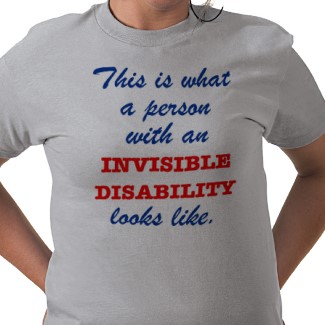
Do you literally navigate life by using a power-scooter or walker? Then you are mobile in a manner I do not understand. Do you have fibromyalgia? I don’t understand that kind of pain – symptomatic of an invisible illness often misunderstood. Even those I know who have hearing loss and Meniere’s disease face different problems, frustrations, and symptoms than I experience. Hearing loss is often as unique as the individual. Yet all that is YOU, puts you in a unique position to make a difference where you are. I cannot influence the people that are unique to you.
You know something? It helps me to remember this timeless reminder when I am feeling particular frustrated about my life. I’m in a specific time and place with specific gifts, skills, and personality to influence those around me in a positive way. What is frightening is remembering that I can also influence others in a negative way. Going back to Mordecai’s pep talk to Queen Esther, he also reminds her that if she keeps her mouth shut and doesn’t ask Xerxes for the life of her people, then deliverance will come from another place.
Esther 4:14, “For if you remain silent at this time, relief and deliverance will arise for the Jews from another place and you and your father’s house will perish. And who knows whether you have not attained royalty for such a time as this?”
I don’t know about YOU, but I want to seize my opportunities. Sure… some may seem like small opportunities for impacting the life of another, but who is to say that opportunity is without worth? If I don’t live my life actively looking for opportunities to make a difference, then someone else will be in a position to do it instead. Especially if it is an opportunity to be a blessing and to make a positive difference in another. You are unique. The opportunities available to YOU are unique.
President Harry Truman said, “A pessimist is one who makes difficulties of his opportunities and an optimist is one who makes opportunities of his difficulties”. Yup. I realize there is some therapeutic value in the occasional pity party. However, don’t stay as a permanent guest. You are missing opportunities if you keep your eyes on SELF. I believe living a life looking for opportunities makes life worth living. I try to re-evaluate where I am in finding and seizing opportunities every Monday. Mondays are dreaded by most; however, I’ve come to look forward to them as I’ve discovered self-evaluation can be invigorating – or at least a KICK IN THE PANTS.
Denise Portis
© 2011 Personal Hearing Loss Journal
Get Their Attention
I recently attended the annual national convention of the Hearing Loss Association of America because it was actually held in my area this year. At one point, I was in the crowded convention hall perusing the numerous hearing loss vendors and booths. At a distance, I saw an old acquaintance scoot by in their scooter. I tried to wave them down but I was not in their peripheral so they did not see me. After they quickly rolled out of my sight, it hit me! I could have raised my voice and said, “Hey Bob!” This friend did not have a hearing loss, but attended these conventions alongside of his wife who WAS deaf and hearing again with two cochlear implants. I had to smile at my mistake, because I forget that people with normal hearing do not have to have a visual cue in order to get their attention. (Thankfully we ran into each other later…)
I see this all the time in my kids. Kyersten and Chris (now 21 and 20-years-old) attend college but live at home. They really have no memories of my not having a hearing loss. Even though I had a progressive loss, it took twelve years before my hearing was completely gone. They have both told me that they don’t remember my ever hearing well. They are so accustomed to speaking with someone who has a hearing loss, they automatically do things that are more difficult for someone who isn’t in constant contact with someone who is deaf. They always come into the same room that I am in, and rarely try to have a conversation from another room with ANY family member… even those with normal hearing. Recently my son came all the way into the family room to ask my husband a question. It was a simple question that could have easily been asked from the kitchen. The television wasn’t on, and the area was fairly quiet. However, he is so accustomed to facing the person he is talking to, it is difficult to remember that he can do some communicating from another room when it comes to his dad. My daughter is often told that even as shy as she is, she has “uncanny eye contact” when communicating with someone.
Teaching Them Early
When my kids were about 2-3 years old, they were already “old hats” at communicating with a person who had hearing loss. They cannot remember watching television without captions. Even “Barney, the Dinosaur” had captions, as did “Sesame Street” and “Thomas the Tank Engine”. I believe it helped them learn to read as early as they did!
If I needed to tell my kids something, I would walk over to them and get down on their level. I would put my hands on each side of their face and say, “I’ve got my GUESS WHAT FACE ON!” I’d then (almost nose to nose) tell them what I wanted to tell them, or simply say “I love you”.
If they came to talk to me, I could hear that they were talking, but not understand what they were saying. So I’d lean down and put my palms on each side of their face and ask, “Wow! Do you have your GUESS WHAT FACE ON?” It didn’t take long for them to begin putting their own palms on the sides of my face when talking to me. As they grew older, we dropped putting our hands on the face of the other, but they would come and tell me with direct eye contact… “Mom, I’ve got my GUESS WHAT FACE ON…” and then tell me what they were going to say.
By the time my kids were 5 and 6-years-old, it had become habit. I was eventually able to afford a refurbished hearing aid that gave me some help in hearing for several years. I recall my daughter (from the next room) telling my son, “Wait a minute. Let me put my GUESS WHAT FACE ON and ask Mom!” As they continued to age and mature, what “stuck” was direct eye contact and face-to-face conversations. It was actually a wonderful gift to help nurture in them, for all of us do very well to give the other person the attention they need and deserve when communicating. No competing with electronic games, closed captioning on television, or computers when we talk. We put everything down and LOOK at the other person.
How to Get a Deaf Person’s Attention
Here are some great tips in how to get the attention of a person with hearing loss.
1. Wave your hand in their line of sight.
2. Touch their shoulder or hand before speaking.
3. Move into their line of sight with your body to gain their attention.
4. Turn the lights off and on (this is especially helpful in a room that may have more than one person with hearing loss and you need EVERY person’s attention).
5. If sitting at a table with the person, gently knock on the top to get their attention through vibrations.
Can you think of any others? I welcome your input!
How Service Dogs Get Attention
Hearing assistance dogs are taught to get their partner’s attention by gently bumping them with their nose or touching them with a paw. As I have a balance disorder, Chloe tries to garner my attention by standing and staring and WAGGING LIKE MAD. She only places a paw on me or bumps me with her nose if her 1st efforts have failed. Smaller assistance dogs, may get their partner’s attention by actually jumping up on them.
Even though hearing assistance dogs are trained how to get the attention of their partner to alert them to sounds, the human partner has to be responsible as well. Shortly after being matched with Chloe my trainer, Pat, took me to many different types of public places to train ME. Chloe was already trained. She drilled into me, two important things:
1. WATCH YOUR DOG
2. TRUST YOUR DOG
I quickly learned to pay attention to what has Chloe’s attention. Her hearing is not only much keener than my own, it is more sensitive than people with normal hearing. I can now even recognize when she hears something if she is standing in front of me (with my only seeing the back of her head). Chloe has a modified “heel”. “Heel” position is when the dog’s shoulders are parallel to their partner’s left leg. However, I do not have peripheral vision on my lower left. So we taught Chloe a modified “heel” that is slightly forward of a true “heel”. I had to learn how to observe the BACK of her head. Thankfully she has these wonderful hound ears that perk up and she “points with her nose” in the direction from which a sound is coming. She will even cock her head to the side to really tune in.



If the sound is something she thinks I should hear, she’ll come and get me – phone ringing, door bell, someone calling my name, kitchen timer, etc. These are all trained alerts. However, I have been in situations where I could tell a sound had completely distracted her yet I could not hear or place what it was. When this happens, I ask “Chloe… what is it? Show me!”
Chloe will start to wag and TAKE me to what is making the sound. I have to be careful about this. I don’t want her to take me to every single sound she hears. She may hear the kid’s arguing and cock her head as she listens. I do NOT want her to take me to where they are arguing because they are old enough to work out their own problems! She seems to understand when it is a sound that I need to pay attention to – such as a cat locked in the laundry room, the low-battery sound on the phone in the bottom of my purse, or “Daddy” hollering from the bathroom because there isn’t any toilet paper!
A Word of Caution
I believe that individual’s with hearing loss should get the attention of every person they wish to speak to – even if that person has normal hearing. Do you know how many conversations I have interrupted because I walked up to someone and started talking without hearing that they were talking to someone else? I try to make it a habit (and still sometimes fail) to make sure I have the attention of someone before I begin speaking. This eliminates the likelihood of my talking over someone already talking.
I suspect all of us can improve our communication skills. If you have someone in your life who has a hearing loss, I encourage you to sit them down and ask them in what ways you may better communicate with them. If you have a hearing loss (whether a veteran of deafness or a “rookie” – new to coping with hearing loss), try to sit folks down and have a “heart to heart” about ways they might better communicate with you. This may include family members, co-workers, or even supervisors. Don’t think, however, that once you share with them how to better communicate with you that they will always do “right” from that point forward. I have learned that the people in my life need occasional (positive) reminders.
“Could you put your hand down please? You are covering your mouth”.
“Do you mind looking my direction when you speak?”
“Could you get my attention before you begin speaking? I’m afraid I missed all that you said prior to my looking up and seeing you standing there!”
Stay positive. Few people will put any genuine effort into communicating with you if you belly-ache and whine about it. If you get angry, it may cause resentment and defensiveness. Keep your cool! Smile… be positive! In the end, you are actually helping them better communicate with ALL!
Denise Portis
© 2011 Personal Hearing Loss Journal
“Tag” You’re IT

Chloe and I were recently in a Wal-mart shopping. In the household cleaning section, one doesn’t expect to run into a child. Among the 4 or 5 other shoppers and carts stood a 5 or 6-year-old little girl. I don’t know how she ditched mom, but she was obviously unsupervised. She was about 20 feet away when she first caught sight of us and slowly made her way down the isle towards us. Inwardly I cringed… for I didn’t really feel like asking her not to pet Chloe. Instead she got close enough and looked at Chloe’s vest (although I’m not sure she could even read), and then at the side of my head where my cochlear implant and BLING sparkle for all the world to see!
She smiled at me and said, “This is a WORKING DOG”.
I replied (with some surprise), “You are EXACTLY right! Chloe is a working dog”.
Unsure of what communication might follow that exchange, she smiled impishly up at me… reached over with her index finger an POKED me while exclaiming, “TAG! You’re IT”. With a squeal she was gone and around the corner with pony-tails flying behind her.
Service Dogs and Play
Chloe’s tail started wagging and she looked up at me with an expectant, “Yeah! Let’s go!”
I just grinned at her and caught sight of a lady about 3 yards from us just grinning from ear-to-ear, having seen the whole thing. I smiled back, calmly walked by her and just as I was passing her – reached out and poked her while saying, “Now YOU’RE it…” She burst out laughing and we went on our way.
I am asked occasionally if Chloe is ever allowed to play. Most recently this came up at a DEMO we did for the Department of Disabilities for the state of Maryland. I think people love the idea of working dogs, but often wonder if the dog is ever allowed to be “just a dog”. We always assure people that our dogs have plenty of opportunities to rest, play, and just be a dog. They are frequently rewarded throughout the day with treats, praise, and physical touch. Walmart is not the BEST place to induce Chloe to play, so I opted out of the game of “tag”… but I can assure you that Chloe is allowed to play with our family dog, and with family members very often.
All Work and No Play
Just like people, dogs need down time. Especially working dogs IMHO. But we could learn a few things from our furry partners. Chloe often naps when waiting in line at a busy cash register, or if we are traveling by Metro, airplane, or even the family car. She knows when to rest and get some shut eye. She also knows when to play and enjoy a major tail-wagging romp! I try to remember to take “5” and rest when I can. I try to get 8 solid hours of sleep each night because I actually hear better, and walk more steady if I make sure a good night’s rest is priority.
Perhaps we should all play tag from time to time. Hey! It is good exercise, and I’ve not met anyone yet who didn’t smile after being tagged!
Denise Portis
© 2011 Personal Hearing Loss Journal

