One of the hardest things for me, mentally and emotionally, is accepting help with tasks I use to do independently and without thought. “Muscle memory” at 60 usually includes all household chores, health and hygiene habits AM/PM, paying for items at a grocery store, even driving home after having worked at the same job for 13 years.
At first, I couldn’t figure out why that didn’t help me after my mobility and vision challenges became an issue. Part of it, I discovered, was that I live with someone who would move items around in the house. Another issue became random toys and bones that would “pop up” in a path I normally take with my rollator or wheelchair. Having 3 dogs and 2 cats will do that for ya!
About once a month my son, Chris, takes me to Costco. He has had to learn to tell me if aisles have changes due to holiday items, or if aisles are blocked due to large stacks of items to be shelved. I can’t find the tiny little slit in the debit card machine to pay for my items, so he has to help me do it. These things were frustrating at first, but he really doesn’t mind and in fact, is very glad he can help me.
I’m learning to ask for help. No small task, believe me, when YOU were the one going out of your way once before to assist students, colleagues, members of my church, and neighbors. Now I have to ask for help sometimes. For all those out there with disabilities and progressive illnesses, finding it hard to ask for help, remember that just as you found joy and satisfaction in being able to help before, others now feel the same about helping you.
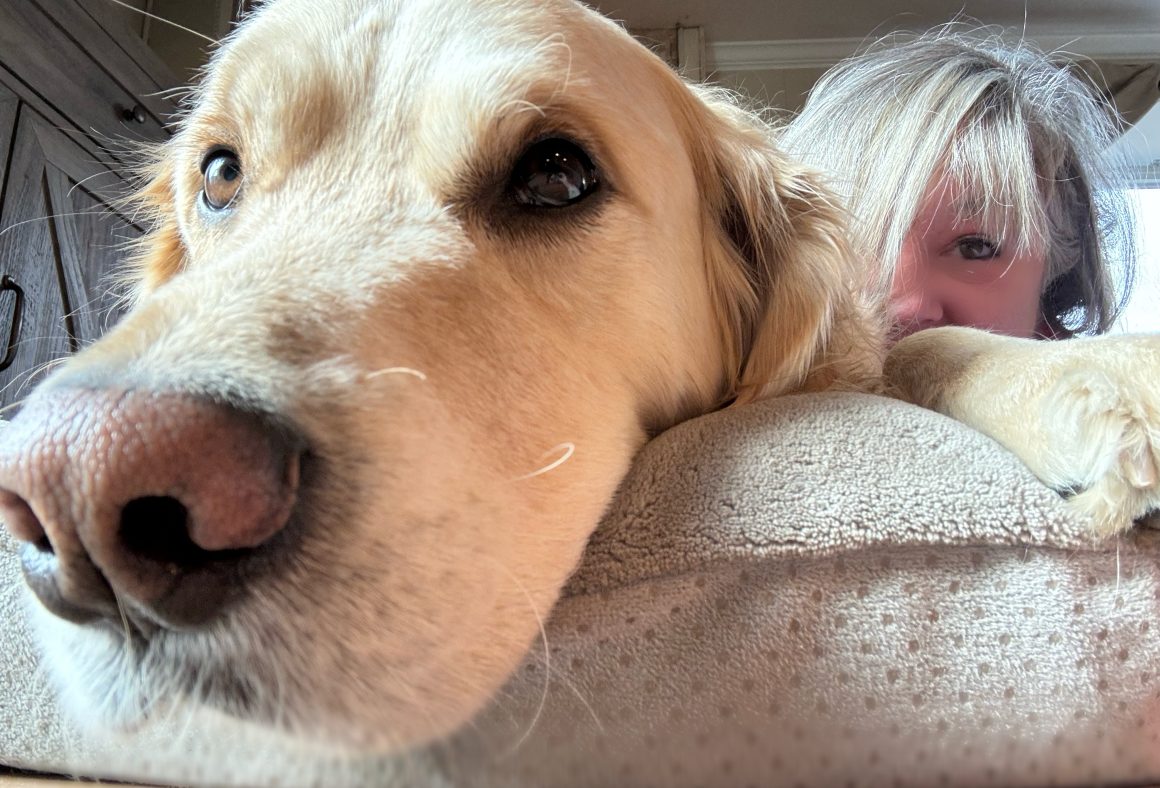
So I ask my neighbor’s teen son to take my trash cans to and from the curb for trash pick-up. I ask my son help with “doggie doody pick-up” chores. I ask for help with captioned phone calls on the days my husband is working from home. I ask grocery delivery drivers to place my bags right near the door so I can locate them. Of course, I continue to ask Finn (my 3rd service dog-Golden Retriever) to continue to help retrieve clothes out of the dryer to fold, open and close the dishwasher, retrieve dropped items, etc.
Finn has had to adjust to my new challenges as well. In the past I would point to an item and give the fetch command (Tavi – his commands are all in Hebrew), and he’d cheerfully retrieve whatever I needed. Now when I drop something I am not certain as to the location of the dropped item so Finn has had to learn to look around for something on the floor that doesn’t belong. Occasionally, I get a drool-covered dog toy instead of a dropped shoe, for example, but he’s getting better at it. I’ve discovered he does recognize NAMES of items, and he will put a retrieved item in my hand or bump my hand to give it to me. Service dogs are so smart!
I have panic attacks 3-4 times a week. Something that helps it to be short-lived is if I can get to the freezer and get a neck ice rollator device out to “shock” my system into not going through all the panic attack symptoms.
Finn has learned if he sees me put my head between my knees or if I gasp really loud and hold my head, to run to the freezer and “paw” it. (I usually sit on the floor next to the freezer when in the midst of an attack). I’m trying to figure out how to teach him to OPEN the freezer, retrieve the device, and bring it to me. Because the freezer has a strong seal, I’ve not had success with a “tug” device for Finn. Any hints or advice from trainers is appreciated.
As I become more and more comfortable with my new challenges, I’m learning to ask for help more openly. Something I’m working up to is asking someone to pick me up and take me to a store or something since I only go to doctor appointments right now. I’m still working up the nerve, LOL. It’s asking a lot. There is me, my wheelchair, and helping me to some degree to be my “eyes” when in a store.
When Terry and Chris have their surgery in the next few months, I will need to ask for rides to and from the hospital. When I can’t get a ride, I will be “Ubering” for the first time. For some reason I have no problem asking a total stranger for help (like with un/loading my wheelchair and pointing me to the curb cut and door), but it is harder to ask someone I know. It shouldn’t be this way, but I’m still working on it.
Recently, a friend reminded me that even for “abled” folks, it can be hard to ask for help when needed. She told me that especially if you are perfectly able to do what you are asking for help with, but another set of hands makes the work go quicker, is very hard. Or, maybe you are asking for help with something that requires a talent/skill you don’t have. It helped me to remember that at times, we ALL need help. Learning to accept that help with grace and poise is hard. I’m getting there though!
What things have you had to ask for help with that was a difficult “ask”?
L. Denise Portis, Ph.D.
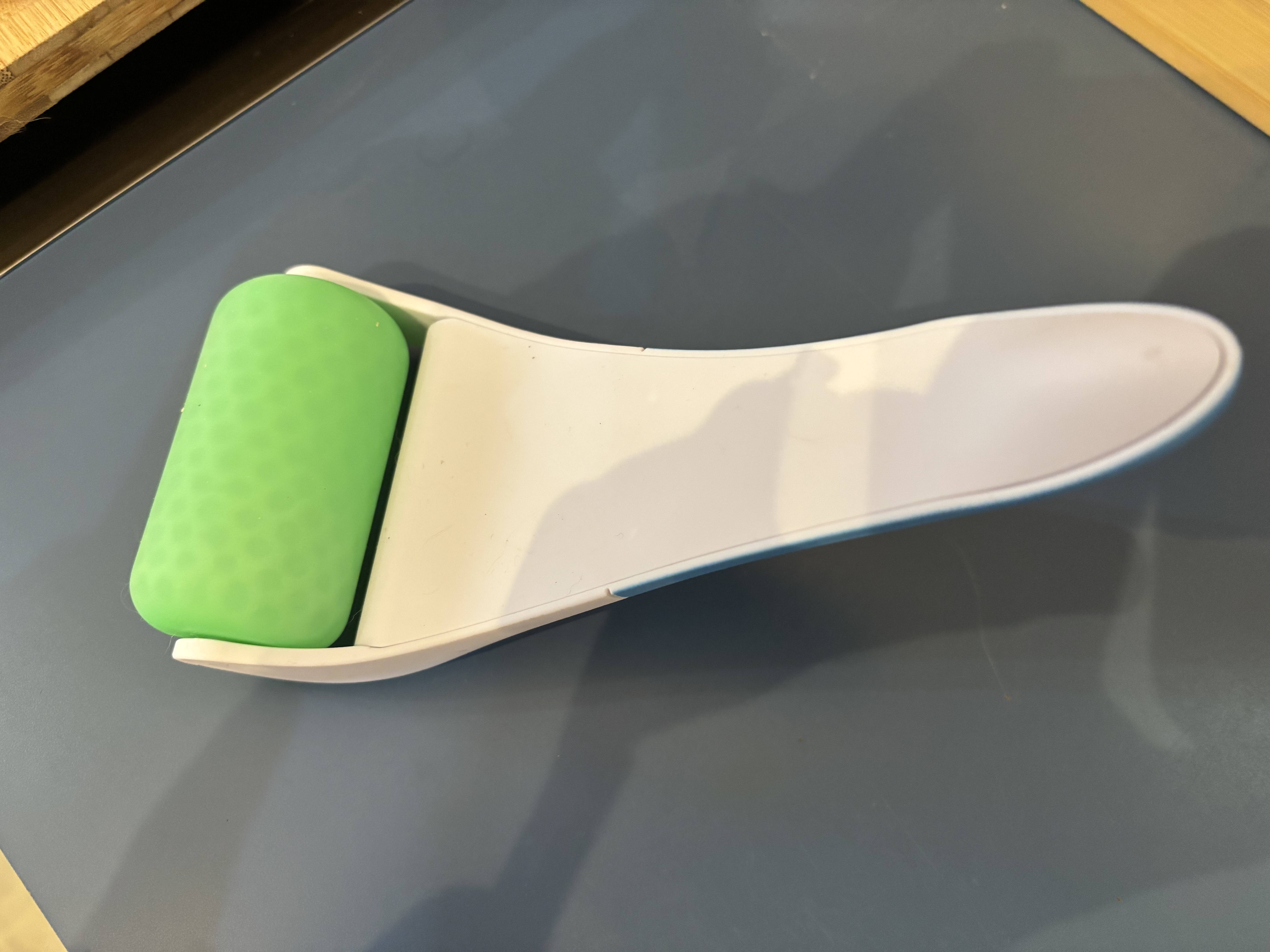
The ice roller I use to interrupt the onset of a panic attack.

