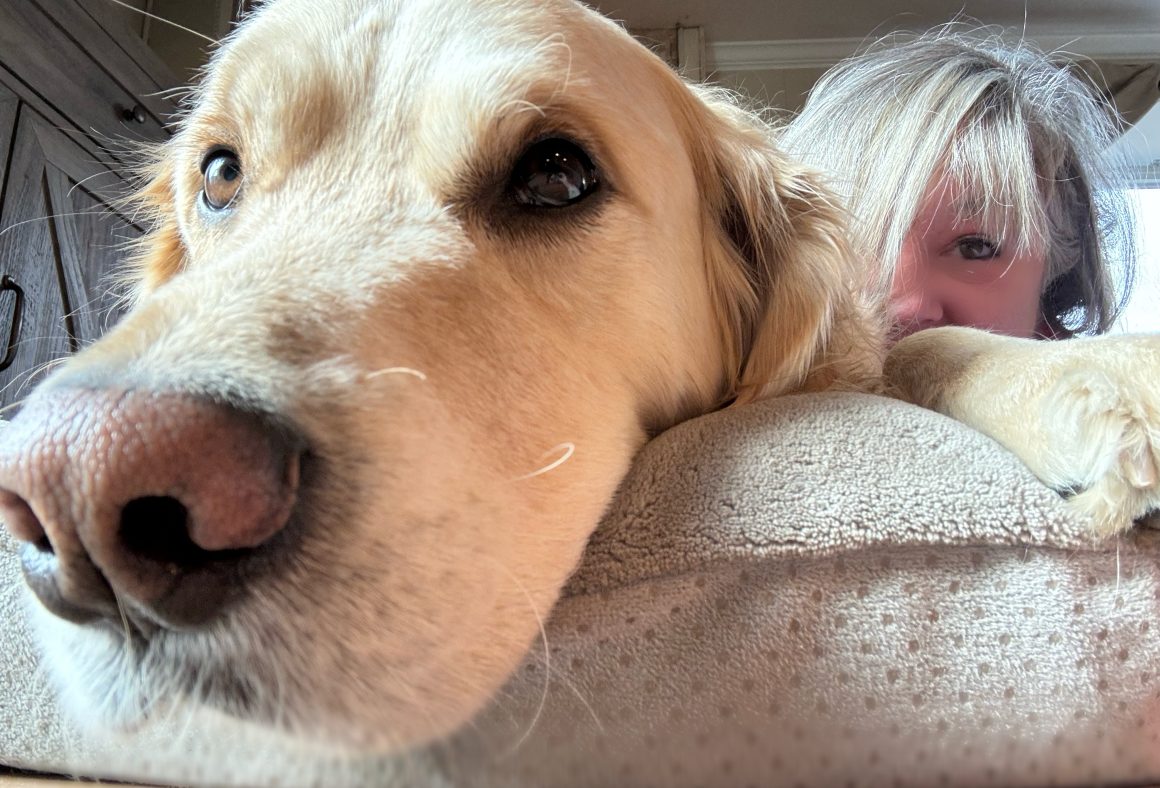
Accepting Help

November 12, 2026

One of the hardest things for me, mentally and emotionally, is accepting help with tasks I use to do independently and without thought. “Muscle memory” at 60 usually includes all household chores, health and hygiene habits AM/PM, paying for items at a grocery store, even driving home after having worked at the same job for 13 years.

At first, I couldn’t figure out why that didn’t help me after my mobility and vision challenges became an issue. Part of it, I discovered, was that I live with someone who would move items around in the house. Another issue became random toys and bones that would “pop up” in a path I normally take with my rollator or wheelchair. Having 3 dogs and 2 cats will do that for ya!

About once a month my son, Chris, takes me to Costco. He has had to learn to tell me if aisles have changes due to holiday items, or if aisles are blocked due to large stacks of items to be shelved. I can’t find the tiny little slit in the debit card machine to pay for my items, so he has to help me do it. These things were frustrating at first, but he really doesn’t mind and in fact, is very glad he can help me.

I’m learning to ask for help. No small task, believe me, when YOU were the one going out of your way once before to assist students, colleagues, members of my church, and neighbors. Now I have to ask for help sometimes. For all those out there with disabilities and progressive illnesses, finding it hard to ask for help, remember that just as you found joy and satisfaction in being able to help before, others now feel the same about helping you.

So I ask my neighbor’s teen son to take my trash cans to and from the curb for trash pick-up. I ask my son help with “doggie doody pick-up” chores. I ask for help with captioned phone calls on the days my husband is working from home. I ask grocery delivery drivers to place my bags right near the door so I can locate them. Of course, I continue to ask Finn (my 3rd service dog-Golden Retriever) to continue to help retrieve clothes out of the dryer to fold, open and close the dishwasher, retrieve dropped items, etc.

Finn has had to adjust to my new challenges as well. In the past I would point to an item and give the fetch command (Tavi – his commands are all in Hebrew), and he’d cheerfully retrieve whatever I needed. Now when I drop something I am not certain as to the location of the dropped item so Finn has had to learn to look around for something on the floor that doesn’t belong. Occasionally, I get a drool-covered dog toy instead of a dropped shoe, for example, but he’s getting better at it. I’ve discovered he does recognize NAMES of items, and he will put a retrieved item in my hand or bump my hand to give it to me. Service dogs are so smart!

I have panic attacks 3-4 times a week. Something that helps it to be short-lived is if I can get to the freezer and get a neck ice rollator device out to “shock” my system into not going through all the panic attack symptoms.

Finn has learned if he sees me put my head between my knees or if I gasp really loud and hold my head, to run to the freezer and “paw” it. (I usually sit on the floor next to the freezer when in the midst of an attack). I’m trying to figure out how to teach him to OPEN the freezer, retrieve the device, and bring it to me. Because the freezer has a strong seal, I’ve not had success with a “tug” device for Finn. Any hints or advice from trainers is appreciated.

As I become more and more comfortable with my new challenges, I’m learning to ask for help more openly. Something I’m working up to is asking someone to pick me up and take me to a store or something since I only go to doctor appointments right now. I’m still working up the nerve, LOL. It’s asking a lot. There is me, my wheelchair, and helping me to some degree to be my “eyes” when in a store.

When Terry and Chris have their surgery in the next few months, I will need to ask for rides to and from the hospital. When I can’t get a ride, I will be “Ubering” for the first time. For some reason I have no problem asking a total stranger for help (like with un/loading my wheelchair and pointing me to the curb cut and door), but it is harder to ask someone I know. It shouldn’t be this way, but I’m still working on it.

Recently, a friend reminded me that even for “abled” folks, it can be hard to ask for help when needed. She told me that especially if you are perfectly able to do what you are asking for help with, but another set of hands makes the work go quicker, is very hard. Or, maybe you are asking for help with something that requires a talent/skill you don’t have. It helped me to remember that at times, we ALL need help. Learning to accept that help with grace and poise is hard. I’m getting there though!

What things have you had to ask for help with that was a difficult “ask”?

L. Denise Portis, Ph.D.
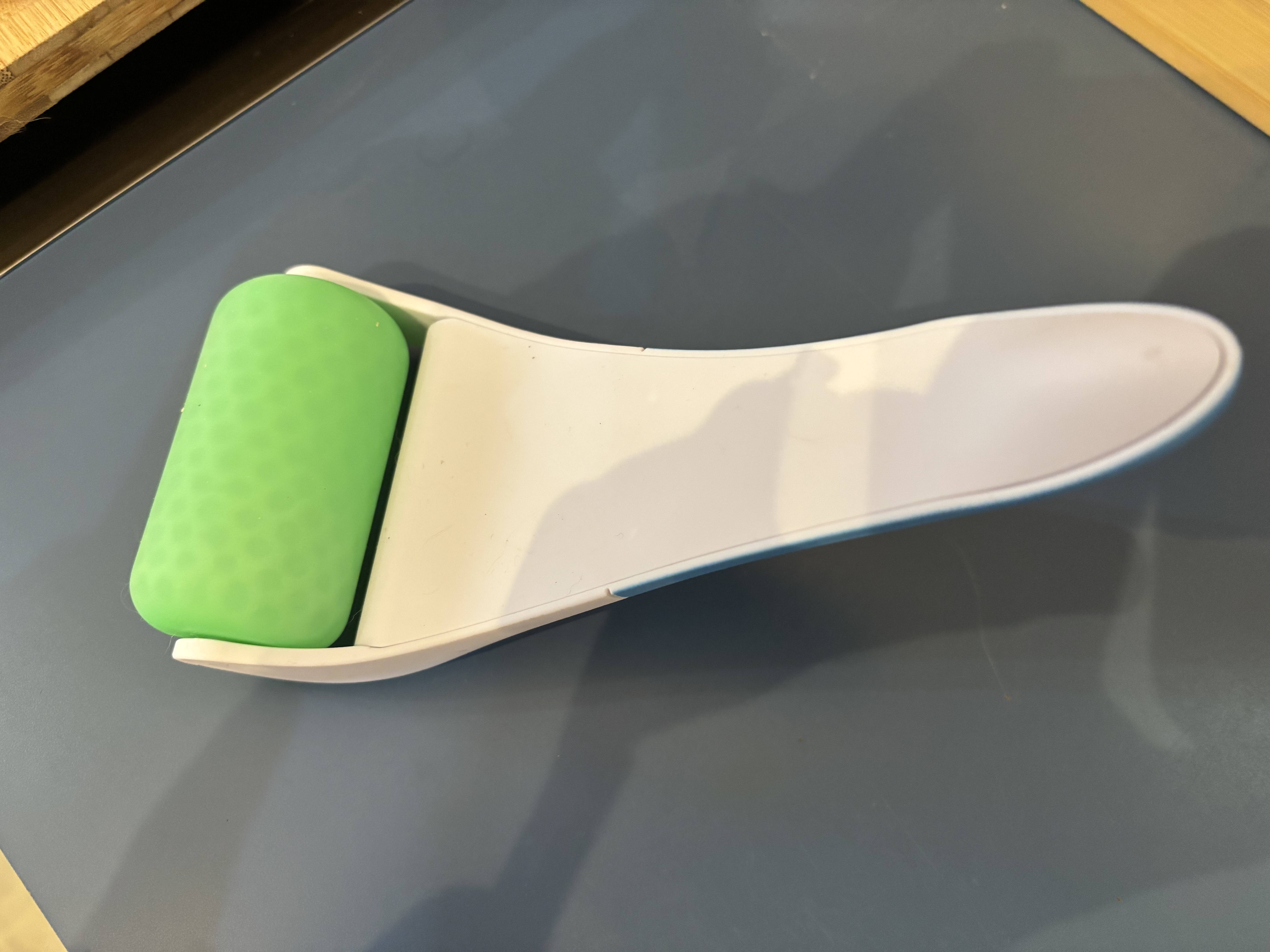
The ice roller I use to interrupt the onset of a panic attack.

Support Refers to Far More than Underwire Bras

More than ever before, I find myself really seeking and using the support of people. It was a hard change for this fiercely independent woman, let me tell you! After a lot of internal battles, I finally decided that support doesn’t cancel independence. Instead, it can actually enhance living with some measure of independence.

I experience something called “foot drop” on my right foot. I reached out to a MS support group and had dozens of suggestions within minutes. I love my new brace as it is easy to put on and lightweight. I wish I had reached out sooner because I recently, had to throw a number of shoes away as a result of wear and tear from the drag of my foot. This past Monday I suffered yet another concussion. I don’t wear my brace at night and I got up to go to the bathroom. Returning to bed, my dragging foot caught on the edge of the walk-in shower. I fell, hitting my heaon the closed door. I’m not sure how long I was unconscious, but Finn was curled up next to me panting and whuffing in concern. My first conscious thought was, I need to go back and ask the group what they do at night for that foot drag…

I followed up with my primary care on Friday after the fall, and she insisted I begin thinking about transitioning to a wheelchair. Ugh. so now I began the process of seeing what my insurance will pay for and what other people use in older homes with narrow hallways and doorways. One of the reasons that keeps me from being in complete despair about this change is that I know I have people I can count on in my support groups for advice. One aggravation I have already encountered is that my insurance does pay for electric wheelchairs, but they are the big ones that I would never be able to use in my home. SHM

Our support need not only come from people facing the same challenges as we do. I have a wonderful abled community of people who care. I am very thankful for all of my family members who pitch in to help without judgment nor frustration. My husband, Terry, helps all the time when he is home and my son Chris comes over to help with grooming the cats and helping with yard work. Kyersten just mentioned the other day coordinating a schedule for when Terry gets his kidney transplant since he and Chris, the donor, will both be out of commission. She lives an hour away so I know it’s a sacrifice to be away from home for several days to help, yet she insisted it was something she wanted to do because she cares.

Support is sometimes simply encouragement at a time when you really need it. Yesterday I received a DM from Mike who had a story to share about a family member transitioning to a wheelchair and how positive the experience was. I receive cards from women like Jean and Sandy at my church periodically that always seem to come at the perfect time. A friend named Sherri texts me all the time to remind me that she’s praying for me. As she deals with her own serious chronic illness it always means a lot to hear that. Texts and DM’s from friends both old and new, are always welcome when invisible illness, and disability isolate you from the rest of the world. Don’t ever hesitate to reach out to someone to just check in and say “hi” if you know they’re dealing with challenges. Even if your challenges are far different than a person you touch base with, doing so can mean the world to them.

Focusing on your physical health and mental health is another way to being supportive of yourself. I have recently started to try some strength training, which I have found is limited in that I have to stay seated. Like I have found that I am prompt to do however, I am finding numerous YouTube videos of people who provide examples and strength training programs for people who must remain seated. I even found some for people with balance disorders! I am trying to eat right and avoid processed foods and sugary sweets. I have made sleep hygiene a primary focus as I have discovered if I don’t get enough sleep then my fall risk increases and my energy levels are low.


When I need to I try to touch base with my counselor whom I can contact online and have virtual appointments. This is a have to for me since I can’t drive. I periodically purchase books that help promote mental health, well-being and positive thinking. I pray. A lot! When you can’t hear well, it is really nice to talk to “the SomeOne” Who hears what you even can’t seem to be able to articulate. (ROM. 8:26).

I’m sure you will probably roll your eyes at this, but I also believe fur family members can be a source of support. We have four dogs. One is Finn, my retired service dog; a Golden. We have another Golden named Maylee and a giant, mixed-breed named Mishka. We also adopted my grand-dog who is a dachshund, named Sherlock. We have two Maine coon kittens and a Quaker parrot who is very talkative. I can hear my mother‘s voice in my head, asking me why I make so much work for myself. However, because I am retired. I have all day to do pet chores and take care of my fur family members. They provide so much unconditional love and loyalty and tend to crack me up and bring a smile to my face. They are someone to talk to and provide much needed company.

No matter what form of support you investigate and pursue, do it. I have found that by seeking support in a number of different ways, it encourages me to be the best me I can be!

L. Denise Portis, Ph.D.

Stonington and a Sense of Direction

Stonington Community Center

I was raised in a small farming community in Colorado. One would think that because it was Colorado I would have a wonderful view of the Rocky Mountains at all times. Instead, the area where I grew up was more like the TV series, “Little House on the Prairie”. My nearest neighbors were my grandparents one and a half miles west of my house, and one of my aunts and uncles (with six cousins) two miles northwest.

I knew the exact direction because when you live on the vast and wide open prairie, you learn at a young age which direction is north, south, east, and west. Landmarks that you could see from a great distance, were taught to young children like myself, in order to orient a person to where they are in the middle of nowhere. I used to often think I lived in the middle of nowhere! Instead, it was an important and specific “someplace”, that taught me far more than a sense of direction.

I learned distance because I was taught to count REA poles. Once I learned to drive, I used both of these tools in order to locate new locations. Honestly? I was never any place in the whole county where I didn’t know where I was! LOL. I always knew where I was going because I knew nearly everyone who lived there. I was actually related to most of them!

Stonington was slightly northeast of my home and too far to walk. I could ride my bike or the four wheeler, however. It was one of my daily errands to go to the post office to pick up my family’s mail. The United States post office was a small building with rickety stairs at the entrance. My great aunt Armilda, was the post mistress. I really enjoyed my visits with her and she was very funny. I swear she must’ve lived outside during daytime hours because she would see me coming and often have my mail in her hand as I pulled up. Armilda was very short and at 12 years old, I towered over her! One thing I remembered about Armilda was her keen sense of direction. I could ask about a certain family and she would update me and tell me which field they were working in that day and would use north, south, east, etc. just by being completely oriented as to her own location.

After I went to college, got married, and moved to both North Carolina, and then Maryland, I lost my sense of distance and direction. The world was so much different away from my hometown. Thankfully, I learned to rely on MapQuest, Google maps, and eventually GPS. I have to admit I was a little embarrassed that I had to rely on these tools to know where I was.


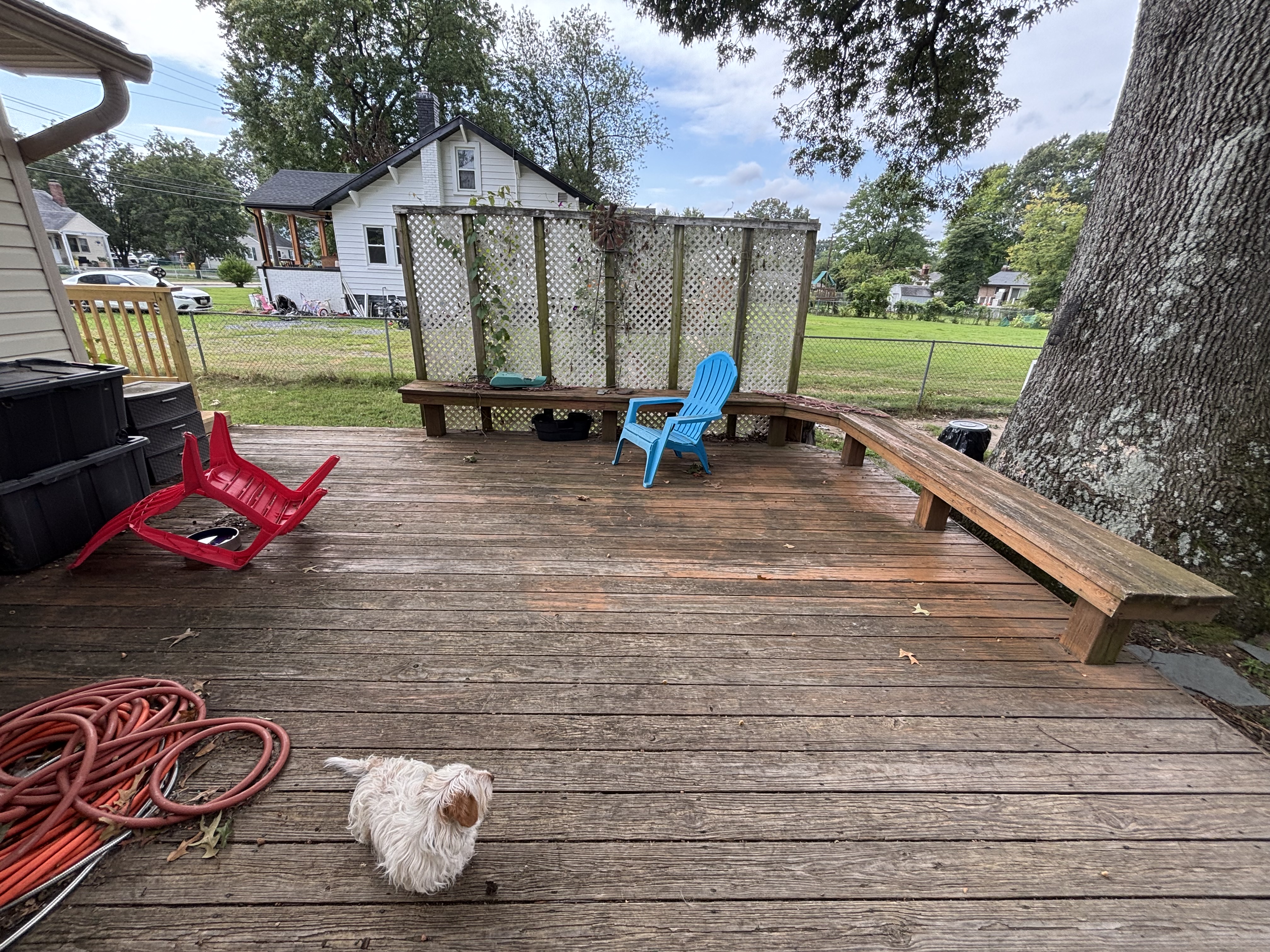
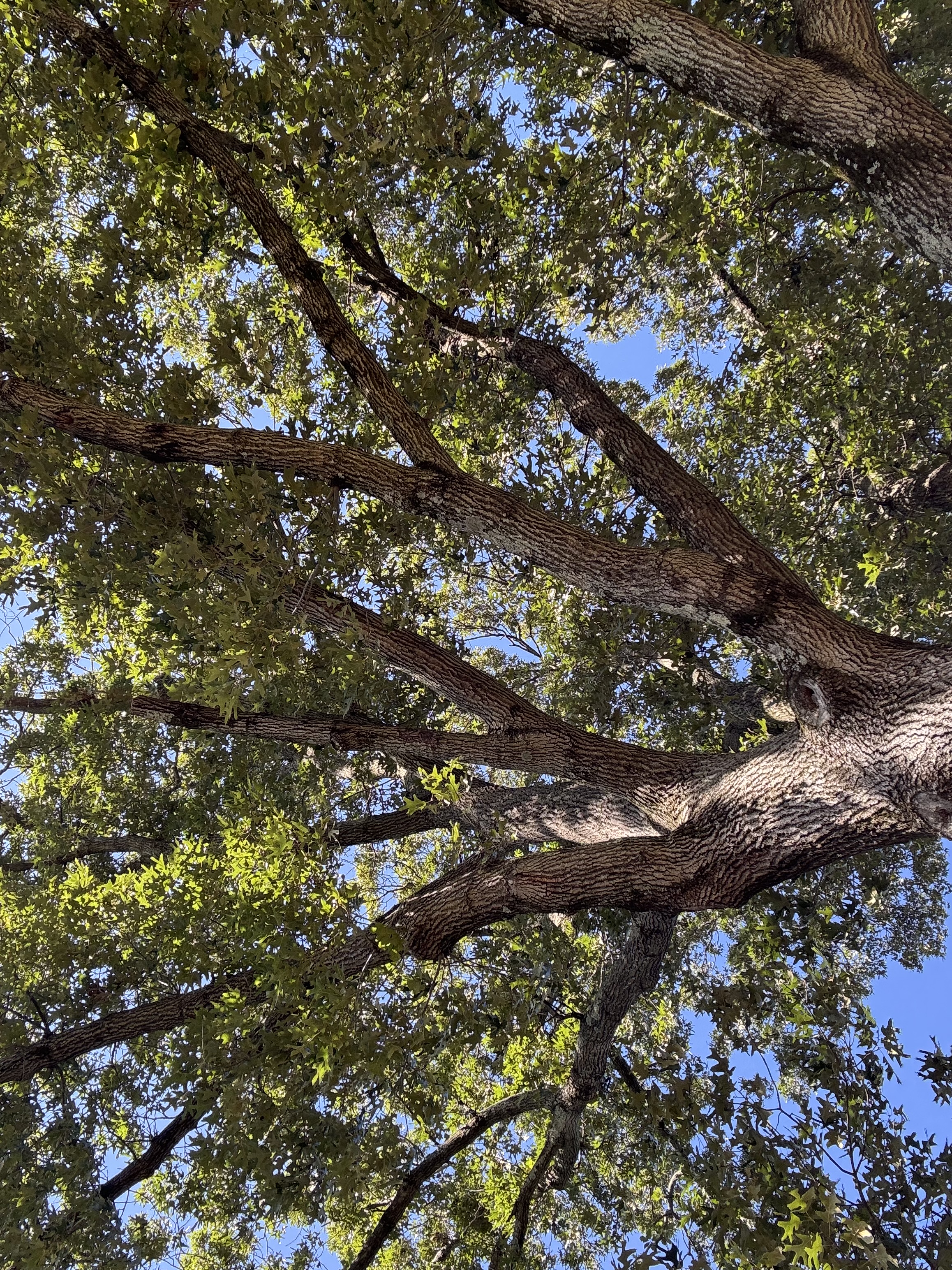
Now that I have low-vision and am unable to drive, I have revisited “Stonington-learned” directionality. I know the front of my house faces east and the bay window in my living room is to the west. When I step out my slider door to the porch, I am moving south. If I don’t have my Rollator to place in front of me, I know I take one step down and 10 paces forward to reach the lattice and seat. I placed things on my porch in a certain space so that I can make my way to those things safely. This includes the water hose, the water dish for wildlife, my big oak tree, and the squirrel feeder… all are in specific places.

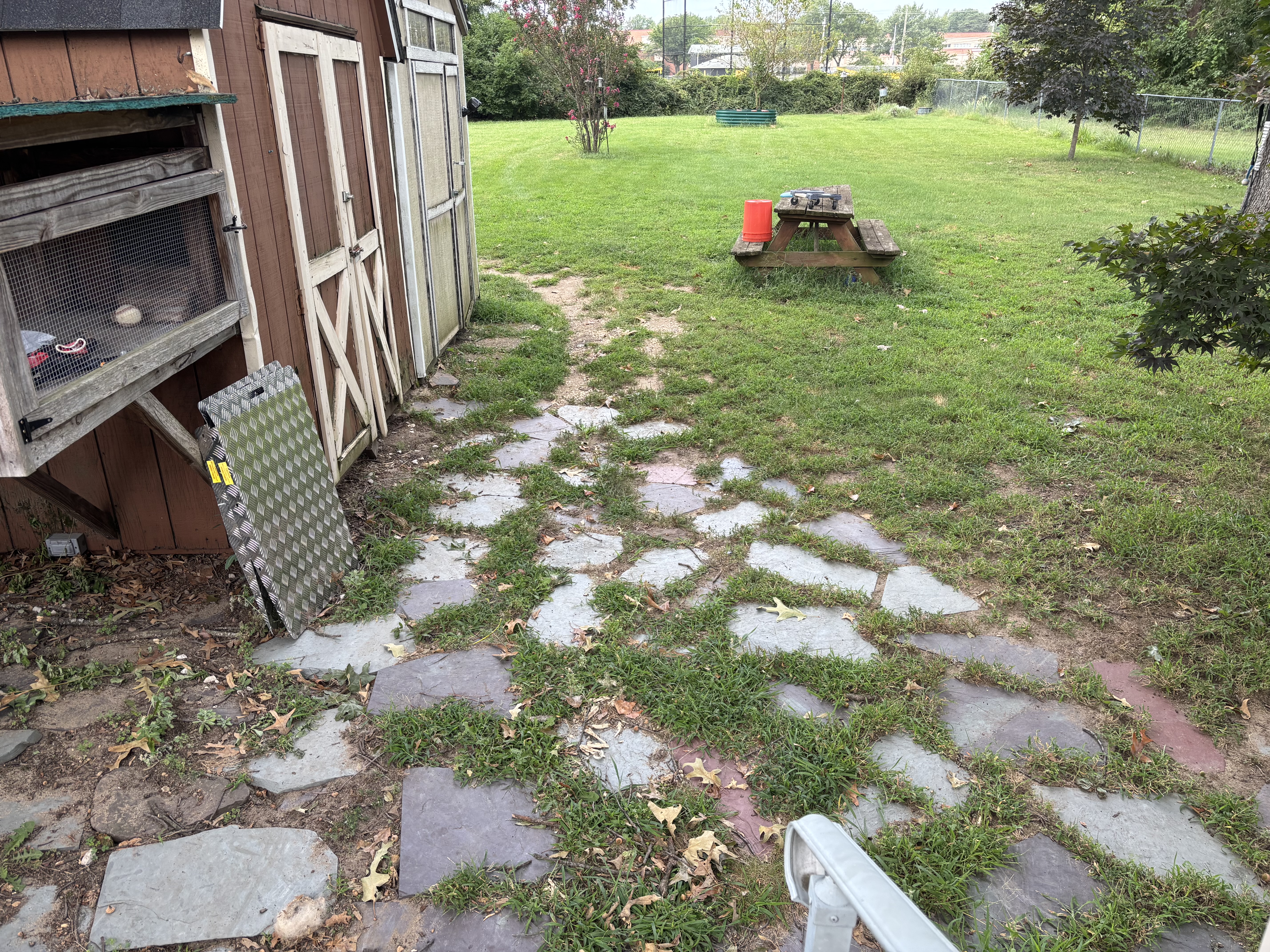
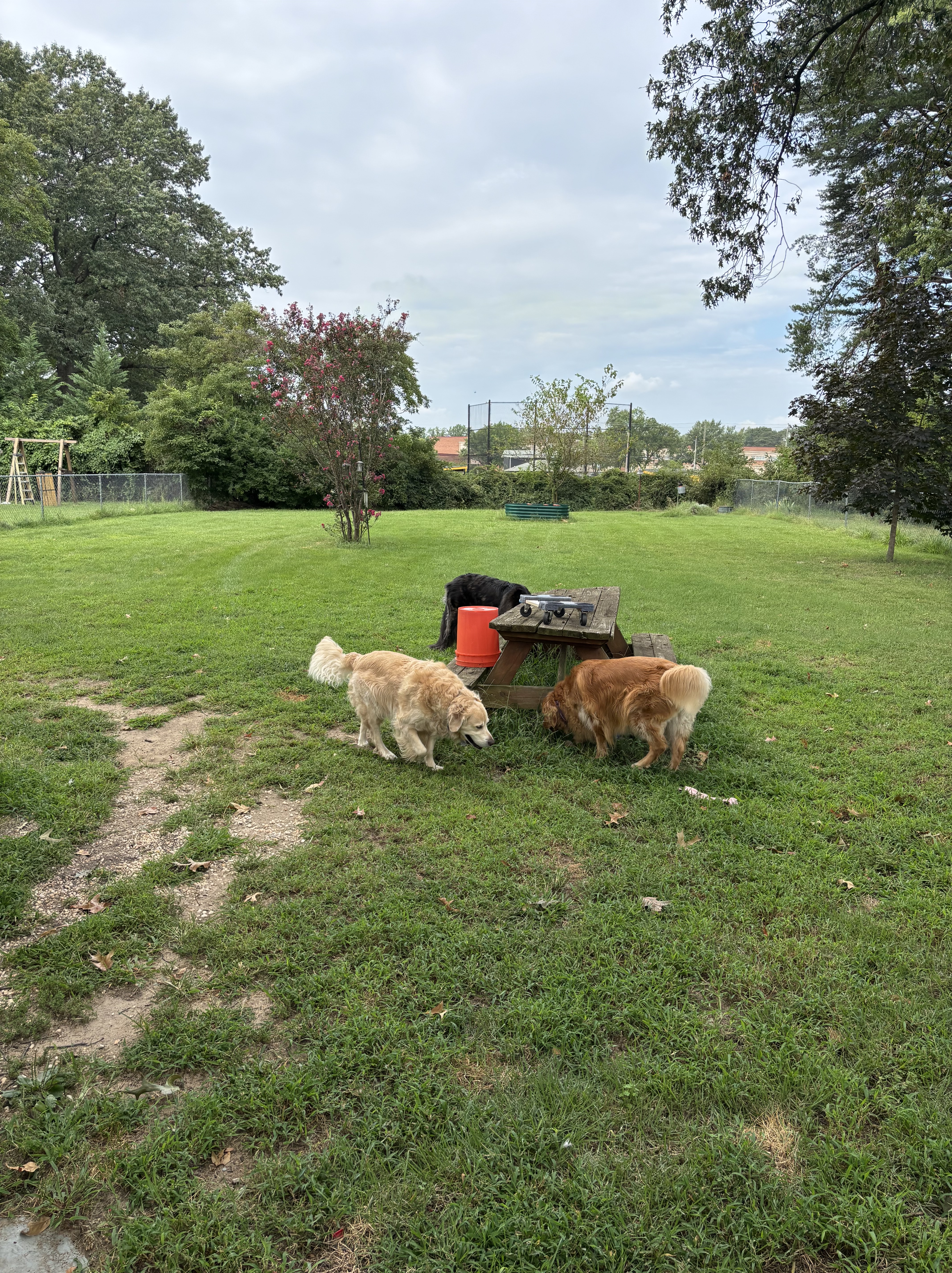
If I follow the edge of the house and go down three steps, I can take 22 steps to the picnic table.

I tried, rather unsuccessfully, to locate my squirrel feeders and bird feeders. I can see the bright blooms on the tree this time of year, but I don’t always locate it. Even with my Rollator, it is just a lucky guess ha ha! A couple of weeks ago I went outside and prepared to walk to the bench to sit outside for a while. Unfortunately, Mishka, our giant Great Bernard/Caucasian Shepherd mix, had drug a big tree branch onto the porch that was the same color as the worn out wood on the deck. A BRANCH, y’all! I learned a new direction:

UP !!!!! 🤣

Having a Service dog helps as well. Finn was trained to be a mobility dog. Yet during his life with me, he learned to alert to low blood sugar while we were living with my mom, and now seems to understand I don’t see well and will come and plaster himself to “heal”position to help me go INSIDE. (Chasing a rabbit here, but I used to call my first Service dog, Chloe, my “MapQuest dog”. I always had MapQuest directions printed out in the front seat next to me in our Town & Country van. She had a place in the back, but for obvious reasons preferred sitting in the front next to me. She would pick up the MapQuest directions, climb up in the seat, calmly turn and sit facing the road with the directions in her mouth, as if that is what she was supposed to do! Even when we were going to training at Fidos For Freedom where we were both trained, she’d have directions in her mouth as we exited the vehicle. I always wondered what my trainer, Pat, must have thought!)

As I lay on the deck that day facing UP, I remembered a commercial I had been hearing and seeing a lot on TV for Nature Made vitamins. In the commercial, a mother talking to her daughter, was commiserating about feeling nervous and anxious about school starting. She put her hands on her hips and said, “I choose joy today!” The little girl did the same and evidently they both had a fantastic day lol. With a sore hip and scraped palms, I lay on the deck laughing and shouted, “I CHOOSE JOY TODAY!”

No matter what direction you are going in your “ differently-abled or chronic-illness world today, you can learn tools and accessibility habits to create a safe space in your own world. Some of the tools you use may be things you had in your childhood. Some may be a brand new “means to an end” in a world that places technology front and center. I learned long ago and continue to rely on advice and accessibility tools recommended by people just like myself. Having MS, low vision and hearing loss, is really no big deal when you habitually seek the right direction.