Support Refers to Far More than Underwire Bras

More than ever before, I find myself really seeking and using the support of people. It was a hard change for this fiercely independent woman, let me tell you! After a lot of internal battles, I finally decided that support doesn’t cancel independence. Instead, it can actually enhance living with some measure of independence.

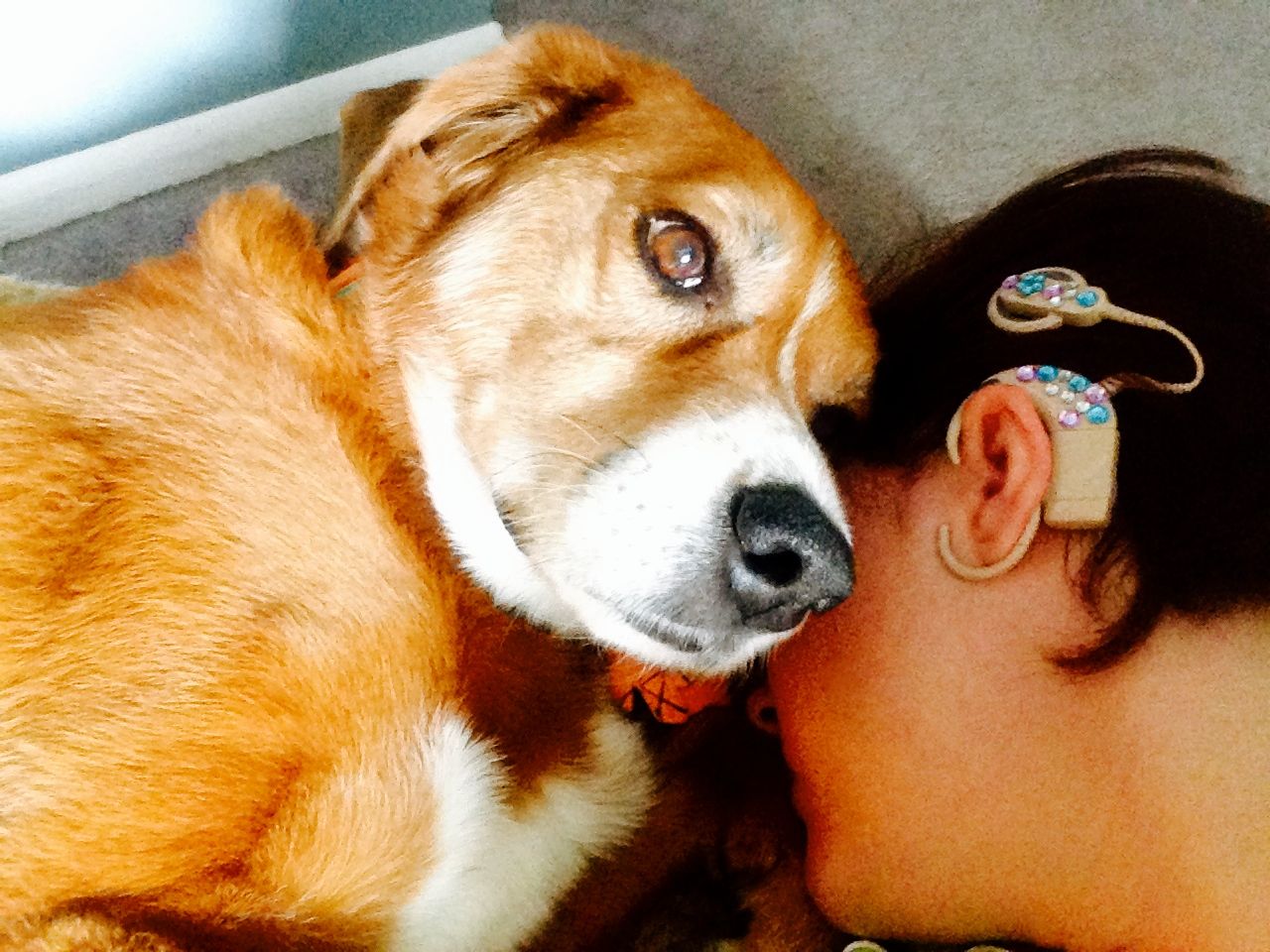
I experience something called “foot drop” on my right foot. I reached out to a MS support group and had dozens of suggestions within minutes. I love my new brace as it is easy to put on and lightweight. I wish I had reached out sooner because I recently, had to throw a number of shoes away as a result of wear and tear from the drag of my foot. This past Monday I suffered yet another concussion. I don’t wear my brace at night and I got up to go to the bathroom. Returning to bed, my dragging foot caught on the edge of the walk-in shower. I fell, hitting my heaon the closed door. I’m not sure how long I was unconscious, but Finn was curled up next to me panting and whuffing in concern. My first conscious thought was, I need to go back and ask the group what they do at night for that foot drag…

I followed up with my primary care on Friday after the fall, and she insisted I begin thinking about transitioning to a wheelchair. Ugh. so now I began the process of seeing what my insurance will pay for and what other people use in older homes with narrow hallways and doorways. One of the reasons that keeps me from being in complete despair about this change is that I know I have people I can count on in my support groups for advice. One aggravation I have already encountered is that my insurance does pay for electric wheelchairs, but they are the big ones that I would never be able to use in my home. SHM

Our support need not only come from people facing the same challenges as we do. I have a wonderful abled community of people who care. I am very thankful for all of my family members who pitch in to help without judgment nor frustration. My husband, Terry, helps all the time when he is home and my son Chris comes over to help with grooming the cats and helping with yard work. Kyersten just mentioned the other day coordinating a schedule for when Terry gets his kidney transplant since he and Chris, the donor, will both be out of commission. She lives an hour away so I know it’s a sacrifice to be away from home for several days to help, yet she insisted it was something she wanted to do because she cares.

Support is sometimes simply encouragement at a time when you really need it. Yesterday I received a DM from Mike who had a story to share about a family member transitioning to a wheelchair and how positive the experience was. I receive cards from women like Jean and Sandy at my church periodically that always seem to come at the perfect time. A friend named Sherri texts me all the time to remind me that she’s praying for me. As she deals with her own serious chronic illness it always means a lot to hear that. Texts and DM’s from friends both old and new, are always welcome when invisible illness, and disability isolate you from the rest of the world. Don’t ever hesitate to reach out to someone to just check in and say “hi” if you know they’re dealing with challenges. Even if your challenges are far different than a person you touch base with, doing so can mean the world to them.

Focusing on your physical health and mental health is another way to being supportive of yourself. I have recently started to try some strength training, which I have found is limited in that I have to stay seated. Like I have found that I am prompt to do however, I am finding numerous YouTube videos of people who provide examples and strength training programs for people who must remain seated. I even found some for people with balance disorders! I am trying to eat right and avoid processed foods and sugary sweets. I have made sleep hygiene a primary focus as I have discovered if I don’t get enough sleep then my fall risk increases and my energy levels are low.


When I need to I try to touch base with my counselor whom I can contact online and have virtual appointments. This is a have to for me since I can’t drive. I periodically purchase books that help promote mental health, well-being and positive thinking. I pray. A lot! When you can’t hear well, it is really nice to talk to “the SomeOne” Who hears what you even can’t seem to be able to articulate. (ROM. 8:26).

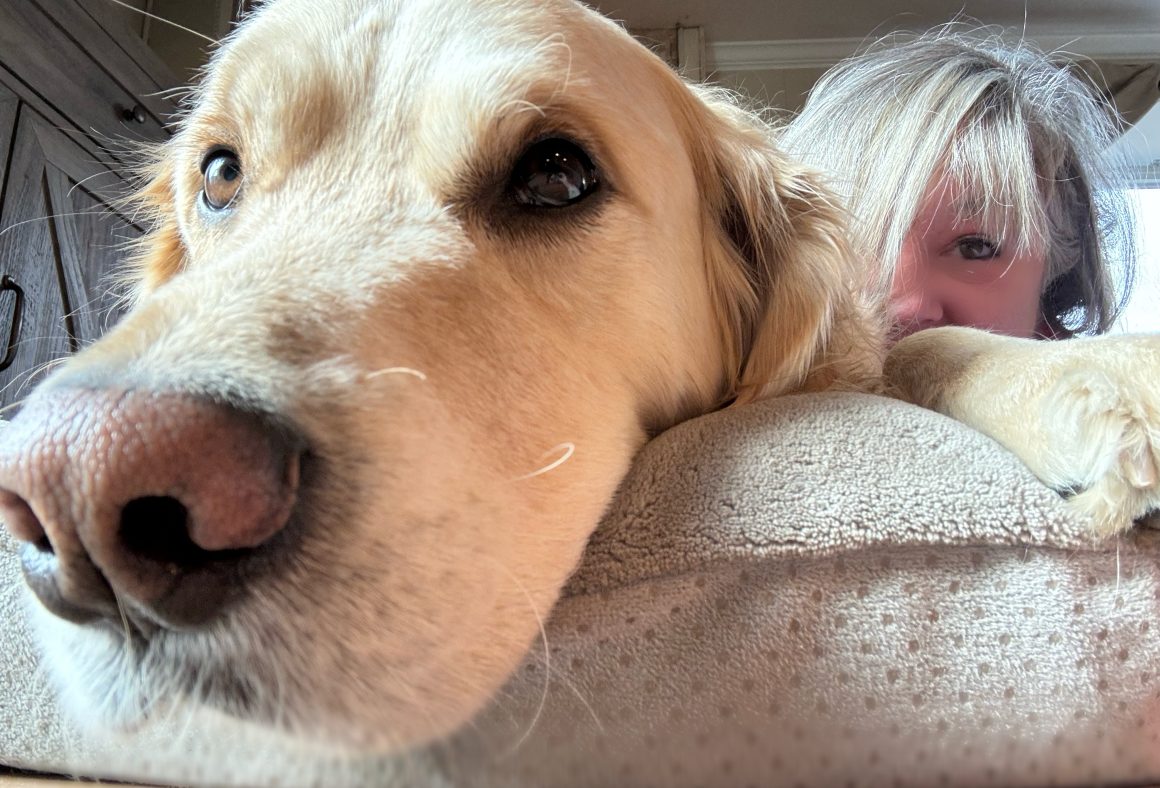
I’m sure you will probably roll your eyes at this, but I also believe fur family members can be a source of support. We have four dogs. One is Finn, my retired service dog; a Golden. We have another Golden named Maylee and a giant, mixed-breed named Mishka. We also adopted my grand-dog who is a dachshund, named Sherlock. We have two Maine coon kittens and a Quaker parrot who is very talkative. I can hear my mother‘s voice in my head, asking me why I make so much work for myself. However, because I am retired. I have all day to do pet chores and take care of my fur family members. They provide so much unconditional love and loyalty and tend to crack me up and bring a smile to my face. They are someone to talk to and provide much needed company.

No matter what form of support you investigate and pursue, do it. I have found that by seeking support in a number of different ways, it encourages me to be the best me I can be!

L. Denise Portis, Ph.D.

Happy Trails to You

Dale Evans and Roy Rogers

After someone you love dies, you may discover some things about the person that you didn’t know. My Mom loved to sing. Because her generation (the “Silent Generation” 1928-1945) was different than mine (“Generation X” 1965-1980), the songs she would sing at breakfast (a normal occurrence) and in the evening were oldies. Breakfast was usually “Mockingbird Hill” (When the sun in the morning, peeks over the hill…).

When Mom was diagnosed in July of 2021, my siblings and I began to hear from her former students on FaceBook. As the ALS progressed and began to take away basic functions, we would read to her what her former students were saying. It was all good and brought many smiles and happy tears. While she could still talk, she would relay some story about the student that posted and it was as if she took us by the hand and walked us back to her teaching days. Mom was defined by what she did, a teacher. It was her real joy and privilege to teach for over thirty years.

One recurring theme from former students was that she would sing the first few stanzas of “Happy Trails” as they left class at the bell. Though knowing this song was a favored one, we were still shocked to learn she sang in public too!

I have been teaching now for 28 years. I have taught middle school, high school, and college-aged students. Having heard from so many of Mom’s former students since her diagnosis and subsequent death, it got me to ponderin’ — “what would my students have to say about me?” “Would they even remember me?” (Mom had been retired for 16 years at her passing).

Yesterday was the first in-person convocation we have had at Anne Arundel Community College since 2019. A recurring theme of the various administrators was to remember that the smallest things could make a difference. Even a taped message from the incoming SGA (Student Government Association) president reminded us that the “small things matter”.

I am a big believer in the difference “small things” make. For you see? It has been small things each and every day that have encouraged me to continue hiking that trail. My trail is not always happy, but it is a scenic and worthwhile hike.

People with disAbilities often express their concern that they do not matter anymore. Or perhaps they feel that with their disability, they can no longer make a difference. Many of you already know these things about me, but let me summarize some of my own challenges:

  1. Late-deafened (25 years on)
  2. Post Concussive syndrome (TBI as a kiddo and 11 concussions since)
  3. Meniere’s disease
  4. Vestibular disorder
  5. Mental health diagnoses (Panic Disorder and PDD)
  6. 65% blind in my right eye (concussions)

If I had a dollar for every time I considered giving up, I could retire now! I’m no super hero. I’m not anything special. What I am is persistent and determined. Stubbornly resolved to connect at least one time each day with someone who needs encouraged, loved, high-5’d, heard, or acknowledged. Notice that none of these things require being an abled person! I know that many of my readers are people with disability or chronic illness. MANY have expressed to me the dismay they feel in being disabled, by NOT being able to make a difference. Their physical or mental health diagnoses have meant they have learned coping skills or learned a new way to do things. However, many still FEEL disabled because they feel as if these diagnoses take away opportunities for them to MATTER.

My friends? Please do not ever discount the difference it makes for you to be kind to the cashier at the grocery store. Smiling and saying a kind thing or two to the delivery person may completely turn their day around. Being kind and friendly to that young wait staff person can make a day that is crushing them seem not so burdensome. Send an encouraging email or message to someone you know is struggling. It can be life-changing for them. Make a phone call to someone you know who feels isolated. Take advantage of the way social media platforms “level the playing field” for those with disabilities through CONNECTING them with others. One small comment can make a difference.

I know this for a fact! I know because the

Deborah’s, Wendy’s, Kellie’s, Lisa’s, Candice’s, Sara’s, Stephanie’s, Kyersten’s, Felicia’s, Kimberly’s, and SO MANY more have taken 15 seconds to type me a message that encouraged me and rekindled my desire to keep on keepin’ on. I’m not saying it is EASY. For some, it may mean real “spoons” are used up (The Spoon Theory).

ALS is a horrible, terminal disease. My Mom suffered and died a terrible death. I’m still dealing with the fall out and likely will for the remainder of my own life. But do you know at the end, Mom could only roll her eyes, grin, and wink, but she did that as her hovering children did their best to love and care for her? She could speak some, but it was a real chore to understand, even with picture, word, and alphabet cards to assist while she could still point. Yes. There were days with tears and “why God?” conversations. Yet while DYING she continued to make a difference. These past 12 months cemented an already steadfast “heart beat” for me. NO MATTER WHAT, I can make a difference to someone. In my work as a suicide prevention and awareness advocate, one of my favorite sayings is “Your voice is your power”. Use it.

Choose to sing “Happy Trails” to someone upon departure. Choose to smile and say, “I truly hope you have a great day!” Sign to someone “happiness is a choice”. Send that email to a struggling soul, “I’m thinking of you today”. You have a purpose. It doesn’t matter how many disabilities or challenges you have. You still have the power to make a difference. This is your super power. Use it. It matters. Happy trails to you…

L. Denise Portis, Ph.D.
  1. Deb Marcus Tilevitz's avatar
  2. hearingelmo's avatar
  3. Janet McGettrick's avatar

    I love this article. You mentioned that you’re a former teacher. Have you retired?

  4. hearingelmo's avatar
  5. Laurie's avatar

    Did you know that the word ASSUME means an “ASS out of U (you) and ME? I really appreciate this…

L. Denise Portis, Ph.D.
2

Try To See Each Other Out There

A new school year is right around the corner. I love teaching psychology courses. I love teaching. I love students. I love Anne Arundel Community College. I have a great number of “loves”, am I right?

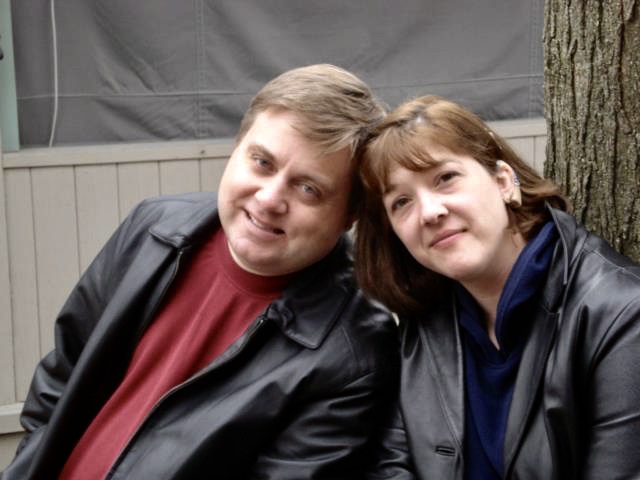
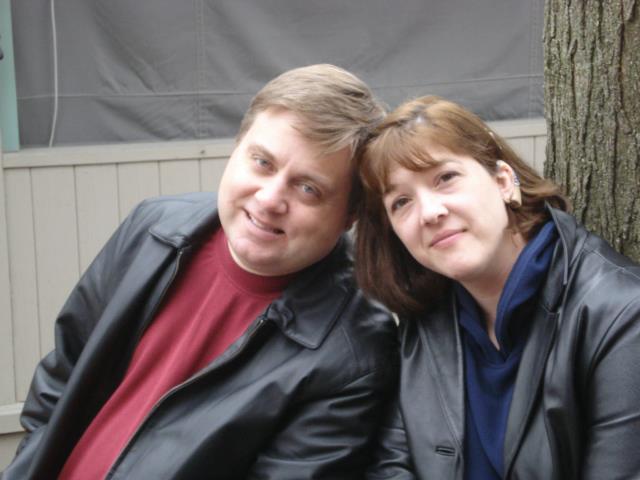
The biggest “love” (other than the guy in the picture with me – married 32 years now) is that I am in a place where numerous opportunities await. An over all “motto” on my campus is “Engagement Matters“. I know this sounds like I’m tooting my own horn, but I was doing “engagement matters” before “Engagement Matters”. This isn’t some special talent, skill, nor ego booster. I try to see… really SEE the students in my classes. Why?

I have been invisible in my pain and loneliness before.

Having just one person notice and tell me they cared made all the difference.

It is relatively easy to see people who are versions of “self”. I want to tell you a story that for me, was the catalyst for changing how I see my students. Many of our faculty offices at Anne Arundel Community College are shared. Several years ago, I was in the adjunct faculty office sitting in one of 5 desks. I usually get to know the other Psychology faculty, but this specific office is shared by other departments. To this day, I have no idea who this teacher was. I only know she taught history. A student was meeting with her. The student was sitting in an easily recognizable “defensive” position, just oozing aloofness and apathy about what she was hearing. It seemed she had done poorly on an exam and had met with this professor to see what kinds of extra credit were available. Unfortunately, this teacher was not really seeing her. Perhaps the student felt backed into a corner? Maybe an earlier excuse she had provided (that I had not heard) was shot down. All I know for sure was that she had given up trying to get the professor to cut her a break and instead protected herself with a belligerent, bored, and apathetic attitude. My class start time was approaching so I packed up my stuff and headed outside with Milo (my service dog) to give him one more potty break before class.

When I returned to the building, this student was sitting in an alcove crying her eyes out. I “saw” her, as did Milo-bear. He led me over to where she was sitting and I sat down next to her. Milo put his head on her knees. She looked up in surprise and then continued to “release heart pressure” as she gently stroked Milo’s head. I didn’t say a word. She had seen me in the faculty office. (It’s hard to miss a professor with a service dog). She didn’t say a word.

erm… Milo didn’t say a word (but was “speaking” volumes).

About 15 minutes later, she quietly said “thank you” and gathered her things and left. I grabbed my stuff and headed to the elevator, now fairly late to class.

“Sorry, sorry, SORRY” I chanted as I rushed into class out of breath. “Sorry, I’m late!”

My students looked up and smiled, putting their phones up that they had been using to take advantage of my tardiness. “Drew” (name changed) piped up and said, “Bob Burg, right?“. Another student explained, “Yup. We saw you with that student having a meltdown!”

I stood there a little bewildered trying to catch up with what they were saying. Another student (able to decipher the confused look on my face), added, “Yeah! Remember the meme you shared in class last time?”

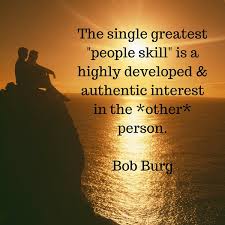
In my Psych of Relationships class we had just covered communication and learning to take an interest in others – even total strangers, and WHY we should do so. I had just shared in the last class, a slide with this photo/meme:

I had steered our discussion towards seeing beyond the words. Seeing someone who is hurting can quite literally mean the difference between life and death. We discussed different opportunities we have had. Opportunities to take a few minutes to make a difference and to CARE. Sometimes a topic just “takes off” in class and numerous students shared how it felt for someone to take an authentic interest in them and to really SEE them.  Through a “Poll Everywhere” activity, we took a quick class vote of who was currently going through something difficult and felt invisible and alone in their pain. Nearly 87% of the class signed in to say “this is me“.

The class looked around in astonishment. One student said, “Everyone in here looks happy!”

BINGO

We have to look beyond a quick glance. Really SEE the whole person.

This time of year reminds me to make it my heart’s prayer and my default response to be the kind of person who really SEES other people. It only takes a few minutes to show someone you see them. By…

… giving a gentle hug

… asking if they are OK

… just being with them for a few moments

… simply saying, “I care”.

Try to see each other out there.

L. Denise Portis, Ph.D.
©2018 Personal Hearing Loss Journal

I’m fine. Really.

Im_Fine_Really-300x213

“Never underestimate the lingering effects of a dash of spontaneous comfort.” (Greenlee, 2008)

Ugh! I hate it when I see unfinished posts and reminders to post to my blog. Writing always helps me. ALWAYS. Yet, sometimes I let “stuff” get in the way of coming here to write, sharing my heart and mind with any who will “listen”.

I’m weary. I’m so weary, in fact, I’ve forgotten to turn my filter to the “ON” position and when answering that habitual greeting, “How are you, Denise?” I’m blurting out… “Awful. Crappy. FINISHED!”

Honest? Maybe. Correct? Well… not according to our society. When someone asks how are you, the age-old response is “Fine! Great! How are you?”

Is it lying when you are responding with a customary and expected, “pre-recorded” and chirpy reply? I don’t know that I would call it LYING, but it is certainly

… the expected

… customary

… response.

There isn’t anything going on that is the CAUSE of my bleh. Perhaps I’m not getting enough rest. That seems to always have an impact on my bleh-meter.

Surprisingly, a major source of bleh-busters have been quick, yet heartfelt comments by someone I know.

“I care about you!”

“You made my day!”

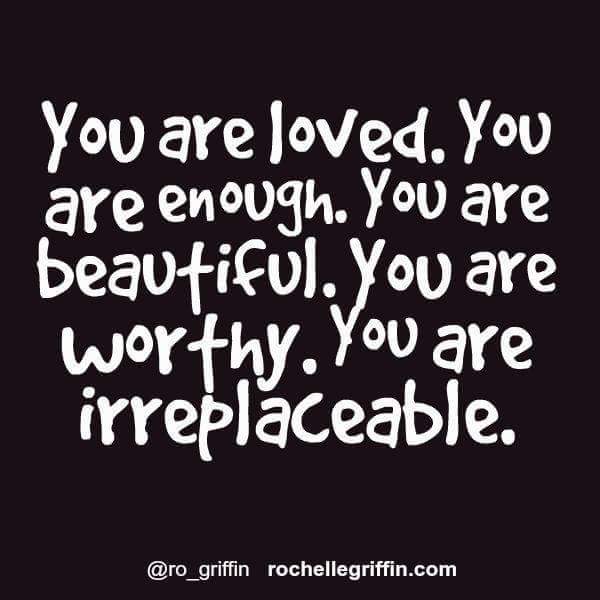
… and a friend who posted on FaceBook this morning on behalf of EVERYONE reading that I laid claim to since I was one of those readers:

you are loved

Isn’t it amazing how a spontaneous, genuine word of encouragement can make a dreary day, brighter? These verbal “high fives” are sometimes quick phrases of encouragement. Sometimes someone simply checks in to see how I’m doing. These things matter. They matter enough that I know I want to do a better job of being more likely to share the same with others.

“Never underestimate the lingering effects of a dash of spontaneous comfort.” (Greenlee, 2008)

Denise Portis

© 2015 Personal Hearing Loss Journal

Greenlee, G. (2008). Postcards & pearls: Life lessons from solo moments on the road. San Diego, CA: Aventine Press


Pressure Cookers and “The BIG REVEAL”

pressure cooker

I can hear my grandmother’s voice saying, “Turn up the heat and see what boils out!” None of us like pressure.

None of us enjoy being stressed.

None of us “sign up for” difficult times.

Yet life is full of difficult times. It’s just the way it is. I use to get so aggravated at my mother for responding to my self-pitying tears and hiccup-sobbing announcement that “It’s not FAIR” with, “Denise… life is NOT fair“.

Life isn’t. Bad things happen to good people. Wonderful people suffer. Terrific human beings have their hearts broken.

Sucks, don’t it?

How a Pressure Cooker Works

I don’t know of very many people who own a pressure cooker. I don’t use one. I had a grandmother who used one fairly frequently, however. Why use a pressure cooker?

Pressure cookers essentially do two things.

  1. Raises the boiling point from about 212° to 250°.
  2. Raises the pressure inside the pot and forces moisture into the food.

Using the pressure cooker as a great analogy for LIFE, it helps us deal with higher temperatures, and keeps us from DRYING OUT. That’s right. When you are forced to deal with stress and pressures, you actually work out your “dealing with it” muscles and make it easier to handle the next burden. This is especially true if you are dealing with it often enough that you’ve developed good habits. New good habits include:

  1. Taking it to God and recognizing that “He’s got this”.
  2. Learning to ask for help from trusted friends.
  3. Learning to pace yourself; taking the time to rest when needed.
  4. Looking for the GOOD in a very BAD DAY.
  5. Burning your “Blame Game” after recognizing it is no one’s FAULT.
  6. Showing off your “BIG REVEAL”

That’s right. After the burner is turned down and the pressure is OFF, we lift the lid and  take our bows. The big reveal.

My former pastor from North Carolina reminded me however, that the “reveal” is often long before we lift that lid.

“The true test of character is not just seen in your actions but your reactions. We often like to excuse our inappropriate behavior by saying, “I’m sorry I was just under a lot of pressure.” But it’s the pressure that often reveals what’s on the inside and what we’re really like!” (Pastor Jake Thornhill)

While we are blowing off steam, we are also revealing to all who watch, who we really are. I have a dear friend who recently lost her young adult daughter in a car accident. As a person of faith, she knows she will see her daughter again one day. Yet, she has been very “real” in blowing off some steam. She is hurting. She misses her daughter. Her faith is strong. She’s dealing with it. However, I repeat: She is hurting. She misses her daughter. It is a poignant reminder to me that the very best people need our love, support, and prayers. Bad things DO happen to good people.

People who live with chronic illness, invisible conditions, or disabilities have good days and bad days. There will be days that you handle “your normal” in a positive, healthy way. There will also be days that you need to go back to bed and zip your lips because everything spewing out is pretty ugly. Not everyone is going to understand that. (Even some folks close to you won’t understand). Want to know some “ol’ sayings” that get on my very last nerve?

“What doesn’t kill you will make you stronger”

“Shine – don’t whine!”

“Be better, not bitter”

“When life hands you lemons, make lemonade!”

If we take these oft-used encouragements too far in our attitude towards OTHERS who are going through tough times, we miss out on one of life’s biggest blessings. One of the quickest ways to alleviate someone else’s stress and pressures are simply to let them know you are there for them. Pray for them. Hug them. Tell them, “I care about you“. If you deliberately look away when life increases the temperature under someone’s pot and assume “this is good for them”, you miss the opportunity to be used in a special way.  Throwing a chirpy little positivism at them will not help them. BEING there for them is what matters.

Love someone with significant challenges? You will learn what to SAY, and what NOT to say, to support your loved one best. Please allow me to mangle one more colloquial expression?

“A watched pot never boils”. Oh yes it does. You can stand there and watch the pressure gauge go up and Up and UP on a friend or loved one’s pressure cooker, and it’s going to boil. There is no escaping the heat. I don’t know about you, but I want to be the kind of friend who is there through the cooking process and present for the big “reveal”, for when the pressure is gone and the lid is lifted. That’s what friends do. That’s what support is.

Denise Portis

©2015 Personal hearing Loss Journal


Self-Talk

positivethinkingimage11

Self-talk. Chances are you have been using self-talk since you were a child. As a matter of fact, developmental psychologists tells us that self-talk begins in middle childhood, ages 6 to 11-years-old (Arnett, 2013). Perhaps that is why many folks think that simply “talking to yourself” out loud is the same thing as self-talk. Children often “play out loud”, adding sound effects, conversations, and even lengthy monologue within imaginary play. This is not self-talk. Self-talk is really just your inner voice. It often reflects your conscious and unconscious thoughts, beliefs, and assumptions (Psych Central, 2015).

Self-talk CAN be out loud… don’t get me wrong. One of my favorite things to practically shout when I use self-talk, is “Girl? I REJECT THAT!” This is said out loud, with southern accent, hand on hip, and oozing with attitude.  (Are you picturing it? If you know me, you likely have even heard me say it).

Self-talk is also studied in Sport Psychology. As a matter of fact, if you do some searching online, many athletes have often used quotes that incorporate the use of self-talk. We ALL use self-talk, however. Whitbourne (2013), explained “Psychologists have identified one important type of these inner monologues as “self-talk,” in which you provide opinions and evaluations on what you’re doing as you’re doing it. You can think of self-talk as the inner voice equivalent of sports announcers commenting on a player’s successes or failures on the playing field” (para. 1).

This is why sometimes internally and oft-times out loud, we say, “Well. That was stupid”. As a matter of fact, much of our self-talk as adults is negative. Some of us may be parroting things we actually hear others say. However, most of the negative self-talk comes from the heart of pessimism and self-deprecation. Why? Why are we so hard on ourselves?

People who live with chronic illness, or invisible (or visible) disabilities often have negative self-talk. Statistics tell us we don’t really engage in negative self-talk more than adults who do not struggle with these issues, but perhaps the source is different. Frustration tends to be a significant source of negative self-talk for the differently-abled.

self-talk-2

Perhaps you are trying to discover how to do something independently. Maybe your are coming to terms with having to do something differently. Here are some things I have found helpful when I find frustration is spawning negative self-talk:

1. Identify it. Perhaps this is why the first phrase out of mouth is often “Girl? I REJECT THAT”. I identify that I am engaging in negative self-talk. See it (or hear it). Call it what it is. Now that you recognize it:

2. Change your spin on it. See if you can’t put a positive spin on it. Perhaps your self-talk has recognized something that you need to pay attention to but you need to say it like you are talking to your best friend. Be your own best friend. We wouldn’t say, “Geesh, that was dumb”. Try re-phrasing it. “Well I’m smarter than this. How can I make sure this doesn’t happen again?”

A great example of this happened to me just last week. I took a really hard fall between my front door and the grass to “potty the dogs”. It was late, and pretty dark outside. I was in a hurry. My pillow was calling out to me and I wanted to reply face-to-face. I left the house without my cane. I was only walking 10 yards. What could happen?

I have 6 bruises and a small cut on my arm to show how wonderfully intelligent that choice was. So laying there in the grass with “mother earth” in my mouth, ear, and eyes, my first thought was:

“Dang. You are so graceful”.

Yeah. I speak fluent sarcasm.

My second thought was, “Geesh, that was stupid”. I’m a bit of a motor-mouth so I’m pretty sure the conversation went on a little longer, discussing how many brain cells I have, could I be any lazier for not taking 10 seconds to grab the cane?, and competing very hard to convince all living things listening that I deserve my title of Accident Prone Queen.

Because I’ve had so much practice at this, I immediately identified what was happening. Putting a new spin on it meant I could say, “Well this is why you should take 10 seconds to grab the cane!” Folks, I was WRONG to leave the house without my cane. But finding a middle-ground and re-phrasing the self-talk helped me be just a little more kind to myself. We need to take the time to be kind to ourselves.

3. Flexible expectations. No one knows you like YOU know you. If you have lived with invisible illness or disability for any length of time at all, you know what your own limitations are.

Unlike some of my cochlear implant friends, I still do not hear music very well, nor enjoy what I hear. My iTunes account could be deactivated. Does this mean music isn’t a part of my life? Absolutely not. I sing 80’s tunes at the top of my lungs when home alone.

Because of positional vertigo, I cannot use exercise equipment like the cross trainer (my husband’s favorite), stair-climber, or anything that moves my position vertically. Does this mean I cannot exercise? No. I can use a treadmill and I can walk. The latter I do twice a day.

The doctoral program I am in is designed to push you through in two years. I will be done in 3.5 years. And you know what? That is OK. This is the pace I can do successfully and complete my schooling. I can be flexible in my expectations!

a622e70b25c04c3989562d851625641a

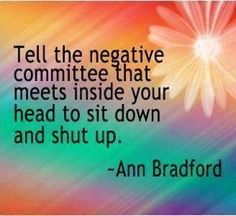
When all else fails, tell yourself to shut up. You may not say, “Girl? I REJECT THAT!”, but don’t be afraid to tell yourself to zip it. It may even be helpful to say it out loud. It works for me! In the end, you can actually work self-talk to your advantage. Learn to cheerlead yourself. Most of us look great with poms-poms.

Arnett, J. (2013). Developmental Psychology: A cultural approach (1st ed.). Upper Saddle River, NJ: Pearson Education, Inc.

Psych Central (2015). Challenging negative self-talk. Retrieved June 15, 2015, from http://psychcentral.com/lib/challenging-negative-self-talk/

Whitbourne, S. K. (2013). Make your self-talk work for you. Psychology Today. Retrieved June 15, 2015, from https://www.psychologytoday.com/blog/fulfillment-any-age/201309/make-your-self-talk-work-you

Denise Portis

© 2015 Personal Hearing Loss Journal

“I’m Fine” = Code for …

Sometimes you just need to lay down, close your eyes, and hug your dog.

“Hey Denise! How are you today?” 

“I’m fine! How about yourself?” I cheerfully chirped in reply.

Exchanged in 15 seconds as we crossed paths and headed in opposite directions…

It is considered common courtesy to exchange greetings or acknowledge another – even in passing. What has become habitual to say really isn’t very good English if you think about it. It isn’t very specific, is it? Not, “How are you feeling today?“, “How has your DAY been so far?“, “How many people have you slugged today?” Instead, “How are you?” What does that actually MEAN?

Don’t get me wrong. I think we should be courteous to one another. In my opinion, it is a way to show respect and regard for other human beings. Before you feel defensive, please know that I do this too! It is a habit and habits can be hard to break. I will tell you, however, that I AM trying to change this “good habit”. I want to ask “How are you today?” only if I have the time to stop and HEAR how you really are doing today. The expected response is almost rhetorical. “I’m fine.” I was involved in a small group discussion this week about this topic. One friend said that “… people don’t even stop to really hear your response. I don’t get from them that they CARE“.

The fact of the matter is, “I’m fine” could be code for a number of things. Worse, it may just be an out-and-out lie. Oh sure, folks aren’t TRYING to be deceptive. The response rolls off our tongues automatically. “I’m fine” might be code for:

“I’m terrific! I feel great, look great, and believe that – heck… I’M GREAT!”

“I’m just so-so. Thanks for making me think about it and respond though.”

“I’m broken.”

“HELP ME”.

My Mouth Says “Fine”, My Expression Says HELP

This weekend I was on Howard Community College’s campus for the MDCAP (Maryland Consortium for Adjunct Faculty Professional Development) conference. During one of our breaks, I took Chloe outside to “do her business” and to sit in the sun for a few minutes. The “quad” at HCC sits in the center of a number of buildings, with a beautiful brick walking path that breaks up the area with various green spaces throughout. I found an unoccupied bench and sat for a few minutes just enjoying the sunshine and autumn breeze. Across the quad, a young woman sat with a stroller and a kiddo. An open book was on her lap and she did her best to keep an eye on the toddler while obviously trying to read or study at the same time. On a bench about 20 feet away sat another young woman. She hunched over her phone and the tension just seemed to roll off of her.

The child looked to be about 3-years-old. The kiddo skipped over towards the young woman and watched silently for a minute. The little one said, “Hi! How are you?“. The young woman looked up briefly and said, “Hi! I’m fine“. She went back to texting furiously.

The little girl continued to stand there and stare and broke the silence by finally saying, “You don’t look fine. You want my rocks? They are really pretty!” She dug in her pocket and pulled out what I guessed to be rocks (I’m brilliant that way). She sat them down on the bench and stepped back as if to let the young woman know they were all hers now. And weren’t they the prettiest thing?

The young woman got a little choked up and said, “Thank you! I’ll keep them forever and ever!” The little girl shyly scuffed her shoes on the sidewalk and then very “spur of the moment” reached over and hugged the young woman. The mother called the child back over – for she’d finally noticed her little one was hugging total strangers. I watched as the young woman took a photo of the rocks with her phone and then carefully put them in her backpack.

You see? This little girl looked pass the words. She KNEW this young woman was not FINE. She stuck around long enough to care. She intervened. She shared. She hugged.

A Challenge

It’s great to be polite and it is expected of intelligent, caring people who understand proper niceties and etiquette. I’d like to ask you to change one thing, however. Let’s stop asking “How are you?” Instead, make a comment about the day if you only have time to greet and walk on. Something like “Hello! Pretty day, isn’t it?” Better? “Good morning!” “Hello! Nice to see you today!“.

On my lunch hour today I received a text from a good friend. “How are you doing? Really.”

I knew I could take the time to really say how I was doing – and that she cared. Take the time to do more than greet when you can. Look for the code words. Share your rocks. Hug someone.

In the end you “broke the code” and unlocked the “secret”. Compassion.

Denise Portis

© 2014 Personal Hearing Loss Journal

I Was Given Just 15 Months to Live…

Heather Von St. James

Hearing Elmo welcomes guest writers are I am thrilled to introduce you to Heather Von St. James. Invisible illness and disability are not aided in remaining invisible. One of the things that helps to raise awareness is for advocates to write about their experiences, and educate others about “little known” diagnosis. Heather shares in an interview, her passion for mesothelioma research and awareness because it is HER story. You can learn more about her personal experience at: http://www.mesothelioma.com/heather/#.U2PU0ihNuSo

If you would like to contact Heather, please see her contact info at her website.

Heather, many people may not even know what mesothelioma is. Can you explain what it is in layman’s terms for us?

Mesothelioma is cancer of the lining of the organs primarily caused by asbestos exposure. There are three main types, Pleural, which is the lining of the lung, peritoneal, which is the lining of the stomach area and pericardial, which is the lining of the heart.

How common is this type of cancer?

It is quite rare… only about 300 people a year in the US get diagnosed with it every year.

What can you share about those early days immediately after diagnosis? What were you thinking and feeling, and what advice can you give those newly diagnosed with this?

The first few weeks were a total blur. I was going from one doctor appointment to another, then from one scan to another, making travel arrangements to get us to Boston to see the specialist, as well as trying to tell everyone in our lives what was going on was almost more than I could deal with. On top of that, I was caring for a newborn. My daughter was just 3 1/2 months old upon diagnosis.

I remember thinking that I just need a plan to beat it. If I could get a plan in place, then it would be ok. The feelings were all over the place; fear, determination, anger, relief that I finally knew what was wrong with me… then finally a state of peace, because I knew that no matter what, this was happening for a reason, and I would do whatever it took to beat it. My advice would be to find a medical team you are comfortable with, and a specialist. Get a page on Caring Bridge to keep friends and loved ones up to date on things going on, so you don’t have to make 1000 phone calls. Surround yourself with your support system. The more people to help you out in your time of need, the better… and let them help you. That is the hardest thing sometimes, is to open up enough to let others help us.

Heather Von St. James and family

What advice can you give friends and family members? What are “good things” to say and do, and what were some of the “not so good things” you heard that were not beneficial to you?

OH boy… there is not enough space to talk about this! The main thing to remember… cancer isn’t contagious. You can’t catch it from the person who is ill.. Your loved one who is sick has not changed, they just have this going on in their life. Don’t desert them… be honest with them, that yes, it scares you, and you are scared for them, but this is about them not YOU. Good things to say are to tell the person you love them. Be mindful of the person who is ill, and be honest with them. Don’t be a Debbie Downer, and be depressed around them, that does no good for anyone. Just be who you always have been. Trust me, they will appreciate that.

HOPE and staying positive are a central theme of your message. Can you explain why this attitude is so important when a diagnosis you may have seems extremely dire and frightening?

Negativity and despair will do nothing for you in your battle. You have to have a victorious mind set, not victim mentality. It’s been clinically proven that a positive attitude does more than just medicine alone. I let myself have down days. It is impossible not to, but just visit that place, don’t live there… when you are done wallowing in self-pity, get up, dust yourself off (figuratively speaking) and move on. No good comes of negativity. It is not always easy, but fighting something so scary is a lot easier to do when you have hope.

Heather Von St. James and daughter

You have a beautiful daughter who was only a newborn when you were diagnosed. How have you discussed your illness with her and what advice can you give someone if they are a parent?

We have never hidden anything from her. It has always just been a part of our life. She knows I have limitations because of my one lung and for the most part is pretty cool about it. I’m very involved with her life at school and take her places to show her that I’m not a victim, and that I try my hardest, even with certain limitations. Handling a situation like this is different for every family, depending on the child, and what they are capable of. I guess you need to do what is right for you and your individual family. What works for us, doesn’t work for everyone. Some people are very private, and the thought of sharing their life with the world is mortifying, while others don’t mind and put it all out there. It is whatever is right for you.

How can we help YOU raise awareness?

Share my story, my blog, my video… tell people asbestos is not banned. Tell them to call their elected officials and ask for money to be appropriated for meso research and to say NO to the FACT Act. Those are just a few… Thank you so very much for helping, it means the world to me.
– Heather Von St. James


Counseling. Only for the Weak and Needy?

terry and denise

I’m married to a psychologist. I’m 37 hours + dissertation away from my own Ph.D. in Psychology (I know, I know it is still a lot! But to count it down helps! 2016 seems like such a long ways away!). My daughter is getting her Master’s in Psychology. My son is working on his Bachelor’s in Cyber-criminology. Needless to say our family meals – the few we have since our kids are adults now – are very weird. Weird, as in we talk about strange things. “Psycho-babble”. We are psychology geeks. Or is that freaks?

For me, to seek counseling has zero stigma attached. But… some folks do think that seeing a counselor is something to be ashamed of and try to hide the fact they may be getting professional help.

Don’t misunderstand. I don’t think you should tell your life story to every single stranger you encounter who asks, “How are you, today?” But when is it OK to seek professional help and talk to someone about all the things you DO have trouble expressing to anyone else?

I Feel Like I’m not as Independent…

A friend of mine found out I was seeing a counselor. She knows me well enough that she can ask me nosy questions and I don’t even feel as if she is being – well, NOSY. With her permission, I’m copying the gist of the conversation here:

Her: “You are one of the most independent people I know! Why are you so open about seeing a counselor? Aren’t you afraid people will think you aren’t as strong as you let on? I think if I went to see one I wouldn’t be able to let anyone know!”

Me: “Well it doesn’t work that way. I need someone to listen and who will give me objective advice. If they were my bestie like you, they wouldn’t give it to me straight!”

Her: “Hey. I tell you like it is all the time!”

Me: “Giving me a ‘dose of reality’ is different than being objective from a trained, counselor’s point of view. How can something make me less strong when I walk out of there feeling ‘stronger’?”

Her: “I dunno. I thought you were ‘Ms. Independence’. It seems strange to hear YOU are going to see a licensed counselor!”

Me: “You are missing the point. I’m seeing a counselor so that I can continue to be independent about the right things, but am also learning to be dependent in a healthy way. Geesh this life is hard enough without trying to ‘go it alone’. We all need help from time to time!”

She remains unconvinced, but hey! I think she’s coming around.

So Should you see a Counselor?

So how DO you know if you should see a counselor?

Psychology Today has a great little “self test” that helps you determine if you should seek therapy. You can find it here: CLICK HERE

Another great little quiz to help you make this determination can be found here at Psych Central’s website: CLICK HERE

The Huffington Post put out a great article in February, “8 Signs You Should See a Therapist”. You can find that article here: CLICK HERE

Those 8 “signs” include:

1. Everything you feel is intense

2. You’ve suffered a trauma and you can’t seem to quit thinking about it

3. You have unexplained and recurrent headaches, stomach-aches or a rundown immune system

4. You’re using a substance to cope

5. You’re getting bad feedback at work

6. You feel disconnected from previously beloved activities

7. Your relationships are strained

8. Your friends have told you they’re concerned

People with disability or living with invisible, chronic illness can benefit from counseling. Whether you are struggling to cope, grieving “something lost”, feeling angry or depressed, or just feeling overwhelmed, seeking help can prove very beneficial. It doesn’t make you weak. If anything, it shows how proactive you are about your own mental and emotional health. Recognizing that “all parts” of who we are need to be strong is a sign you are being pretty darn good to yourself!

How do I find Help?

Where do I find help? My favorite “how to” article is several years old, but I still think it’s the best advice I’ve seen. You can check out the article by Dr. Aletta here: CLICK HERE

For me, I had to find someone that was “in network”. I can’t afford to pay for counseling other than a co-pay. Sometimes practices will have pro-rated charges based on your income. For most of us though, we have to go see who our insurance will pay for to help alleviate costs. Depending on your insurance, you can probably find a list of “in network” counselors, therapists, and psychologists. For me, finding someone who had similar faith practices was important. Doctrine wasn’t as important as finding someone who believes there is a God. So you may have to go to the web and search too, matching practices up with who your insurance says is “in network”. If you don’t have insurance, or insurance won’t cover counseling, there are still options. (The article I gave you *points up* gives some great tips).

Feel free to comment here or privately email me. I’m pretty open about my own “journey to a healthy mental/emotional, Denise”. If you live in an area where counselors are “few”, you may find assistance at area worship centers. If confidentiality is a MUST (meaning you don’t even want to be seen coming and going), a new trend includes cyber-counseling. A licensed and trained counselor sees you at a designated time through a web-cam, so it is still face-to-face (important for those of us that need to see a face to communicate well).

Denise Portis

© 2014 Personal Hearing Loss Journal


A Stolen Life

stolen life

It’s that time of year again. The end of a semester. The beginning of “panic week” for students in colleges all across the country. For my own classes, this means that students are rushing to get it the extra credit because their grade isn’t going to be  what they’d hoped. I offer a fairly easy, yet time-consuming extra credit incentive.

– Read “A Stolen Life” by Jaycee Dugard

– Take a quiz on it (and pass)

– Turn in a 3-5 paragraph essay of your own reflections on the book

I’m always tickled at reading the student’s responses to this book. It’s an “easy read”, but difficult material. Jaycee Dugard writes about her long-term confinement after being kidnapped. Students normally respond with one of three attitudes.

1. They are ticked off. The theme of their essay is how unfair and unjust this case was. They are upset at all the many “players” along the way that should have seen, should have intervened. They yearn (and demand) justice.

2. They are shocked. Many are fully aware these horrible crimes occur, but to read a first-person account of someone who SURVIVED really leaves them wondering how the world can be so evil.

3. They are grieved. Some feel very down – even depressed – after reading the book. Many actually try to contact Jaycee through forums or email to let her know they look up to her and wish her the best. Some may have experienced some form of abuse themselves so they feel empathy as well. They admire Jaycee’s courage and resilience.

How Do We Respond?

While reading essays this weekend and assigning extra credit points to hyperventilating students, it struck me how similarly we tend to react to life’s problems and challenges.

I know plenty of folks who have responded to invisible illness or disability by being ticked off. They feel it is unfair they have to shoulder this burden. They may enter “offensive mode”. They make sure everyone around them are aware of the unfairness of it all, and to make sure everyone treats them with continued respect – disregarding the changes in their lives. After all, they didn’t ask for them.

Some people are shocked. The rug has been jerked out from under them and they are still sitting on their fannies watching the room spin. How did this happen? Why did this happen? I’m all ALONE! Someone HELP ME! They are often at risk to isolate themselves or become depressed.

Many people feel grief, actually going through the stages of grief as they learn to cope with their “new normal”. They may reach out to others – their peers who face the same struggles that they face each and every day. They eventually find – and become – heroes.

Do you feel that your invisible illness or disability has essentially “stolen” your own life? Do you feel out of control and unable to cope? Have you responded with anger, shock, or grief?

The Internet is a wonderful thing. I truly believe that people with invisible illness or disability are at an advantage compared to the lives of those who experienced the same before the Internet. It is a simple thing to go to your browser to search, discover, and benefit from online forums, support groups, and advocacy communities. You are not alone.

Do you feel as if your life was stolen? Jaycee eventually confided in someone, was rescued and reunited. Need a listening ear? I may be deaf but I listen very well. Or, there are many other avenues that you may find peers to help you through this time. Take part in your own rescue by reaching out. Reunion and a victorious, purposeful life may be just around the corner.

Denise Portis

© 2012 Personal Hearing Loss Journal