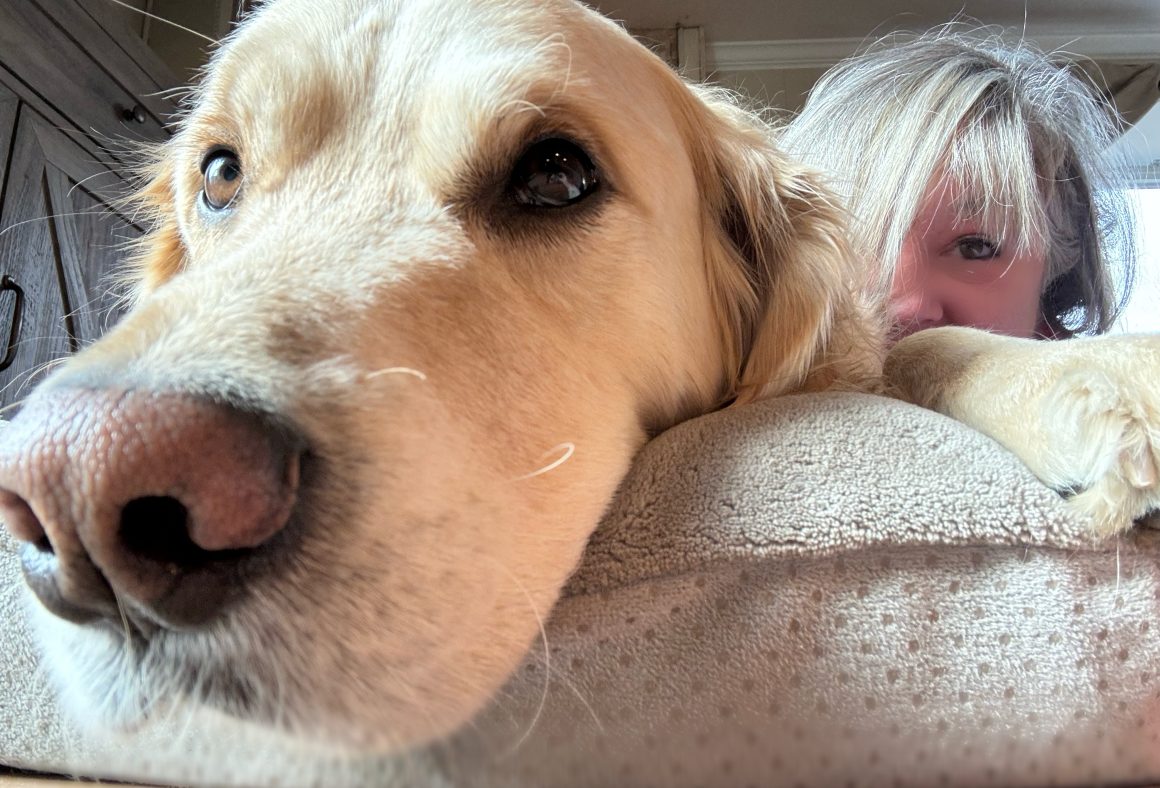
Accepting Help

November 12, 2026

One of the hardest things for me, mentally and emotionally, is accepting help with tasks I use to do independently and without thought. “Muscle memory” at 60 usually includes all household chores, health and hygiene habits AM/PM, paying for items at a grocery store, even driving home after having worked at the same job for 13 years.

At first, I couldn’t figure out why that didn’t help me after my mobility and vision challenges became an issue. Part of it, I discovered, was that I live with someone who would move items around in the house. Another issue became random toys and bones that would “pop up” in a path I normally take with my rollator or wheelchair. Having 3 dogs and 2 cats will do that for ya!

About once a month my son, Chris, takes me to Costco. He has had to learn to tell me if aisles have changes due to holiday items, or if aisles are blocked due to large stacks of items to be shelved. I can’t find the tiny little slit in the debit card machine to pay for my items, so he has to help me do it. These things were frustrating at first, but he really doesn’t mind and in fact, is very glad he can help me.

I’m learning to ask for help. No small task, believe me, when YOU were the one going out of your way once before to assist students, colleagues, members of my church, and neighbors. Now I have to ask for help sometimes. For all those out there with disabilities and progressive illnesses, finding it hard to ask for help, remember that just as you found joy and satisfaction in being able to help before, others now feel the same about helping you.

So I ask my neighbor’s teen son to take my trash cans to and from the curb for trash pick-up. I ask my son help with “doggie doody pick-up” chores. I ask for help with captioned phone calls on the days my husband is working from home. I ask grocery delivery drivers to place my bags right near the door so I can locate them. Of course, I continue to ask Finn (my 3rd service dog-Golden Retriever) to continue to help retrieve clothes out of the dryer to fold, open and close the dishwasher, retrieve dropped items, etc.

Finn has had to adjust to my new challenges as well. In the past I would point to an item and give the fetch command (Tavi – his commands are all in Hebrew), and he’d cheerfully retrieve whatever I needed. Now when I drop something I am not certain as to the location of the dropped item so Finn has had to learn to look around for something on the floor that doesn’t belong. Occasionally, I get a drool-covered dog toy instead of a dropped shoe, for example, but he’s getting better at it. I’ve discovered he does recognize NAMES of items, and he will put a retrieved item in my hand or bump my hand to give it to me. Service dogs are so smart!

I have panic attacks 3-4 times a week. Something that helps it to be short-lived is if I can get to the freezer and get a neck ice rollator device out to “shock” my system into not going through all the panic attack symptoms.

Finn has learned if he sees me put my head between my knees or if I gasp really loud and hold my head, to run to the freezer and “paw” it. (I usually sit on the floor next to the freezer when in the midst of an attack). I’m trying to figure out how to teach him to OPEN the freezer, retrieve the device, and bring it to me. Because the freezer has a strong seal, I’ve not had success with a “tug” device for Finn. Any hints or advice from trainers is appreciated.

As I become more and more comfortable with my new challenges, I’m learning to ask for help more openly. Something I’m working up to is asking someone to pick me up and take me to a store or something since I only go to doctor appointments right now. I’m still working up the nerve, LOL. It’s asking a lot. There is me, my wheelchair, and helping me to some degree to be my “eyes” when in a store.

When Terry and Chris have their surgery in the next few months, I will need to ask for rides to and from the hospital. When I can’t get a ride, I will be “Ubering” for the first time. For some reason I have no problem asking a total stranger for help (like with un/loading my wheelchair and pointing me to the curb cut and door), but it is harder to ask someone I know. It shouldn’t be this way, but I’m still working on it.

Recently, a friend reminded me that even for “abled” folks, it can be hard to ask for help when needed. She told me that especially if you are perfectly able to do what you are asking for help with, but another set of hands makes the work go quicker, is very hard. Or, maybe you are asking for help with something that requires a talent/skill you don’t have. It helped me to remember that at times, we ALL need help. Learning to accept that help with grace and poise is hard. I’m getting there though!

What things have you had to ask for help with that was a difficult “ask”?

L. Denise Portis, Ph.D.
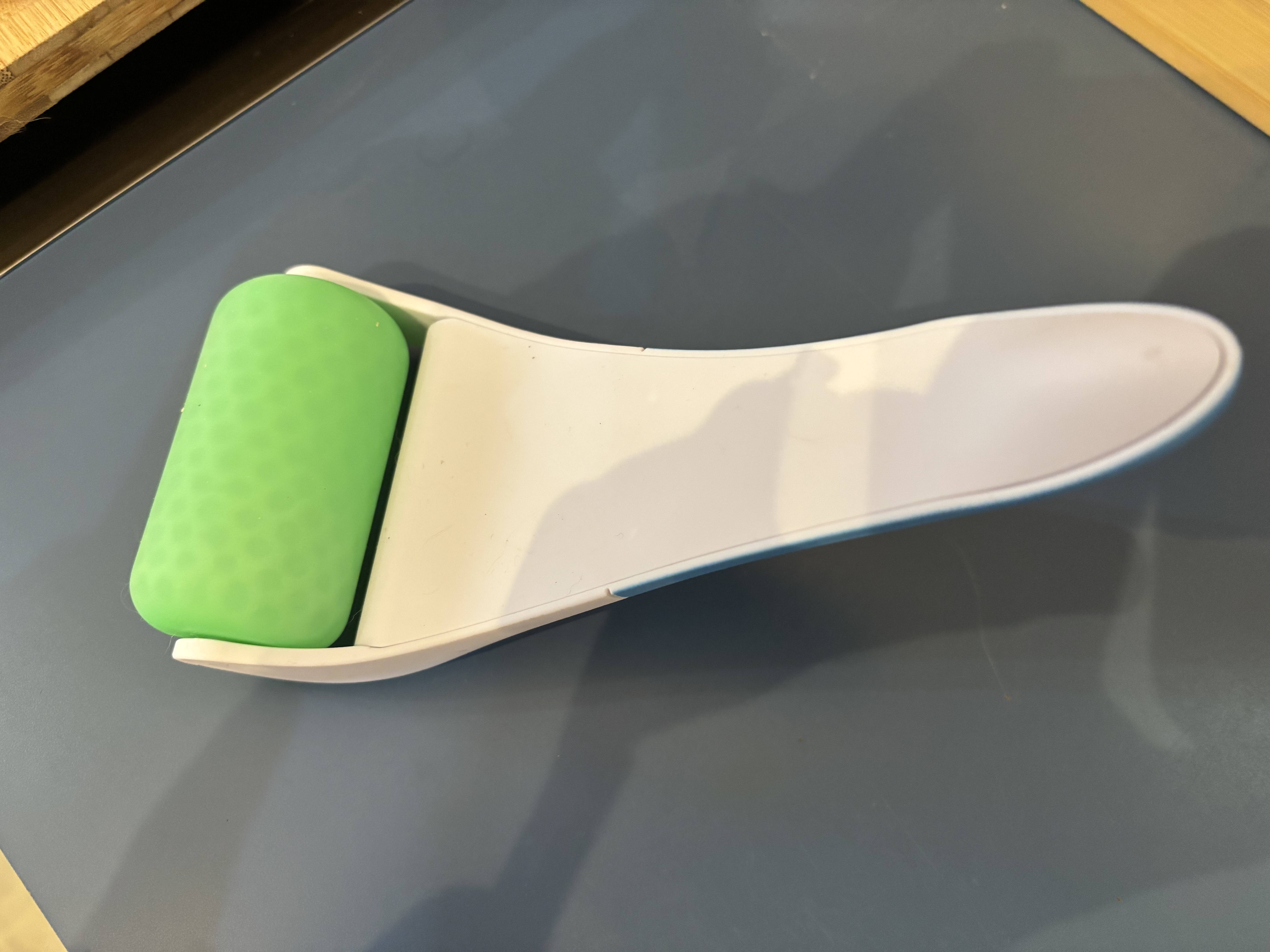
The ice roller I use to interrupt the onset of a panic attack.
Support Refers to Far More than Underwire Bras

More than ever before, I find myself really seeking and using the support of people. It was a hard change for this fiercely independent woman, let me tell you! After a lot of internal battles, I finally decided that support doesn’t cancel independence. Instead, it can actually enhance living with some measure of independence.

I experience something called “foot drop” on my right foot. I reached out to a MS support group and had dozens of suggestions within minutes. I love my new brace as it is easy to put on and lightweight. I wish I had reached out sooner because I recently, had to throw a number of shoes away as a result of wear and tear from the drag of my foot. This past Monday I suffered yet another concussion. I don’t wear my brace at night and I got up to go to the bathroom. Returning to bed, my dragging foot caught on the edge of the walk-in shower. I fell, hitting my heaon the closed door. I’m not sure how long I was unconscious, but Finn was curled up next to me panting and whuffing in concern. My first conscious thought was, I need to go back and ask the group what they do at night for that foot drag…

I followed up with my primary care on Friday after the fall, and she insisted I begin thinking about transitioning to a wheelchair. Ugh. so now I began the process of seeing what my insurance will pay for and what other people use in older homes with narrow hallways and doorways. One of the reasons that keeps me from being in complete despair about this change is that I know I have people I can count on in my support groups for advice. One aggravation I have already encountered is that my insurance does pay for electric wheelchairs, but they are the big ones that I would never be able to use in my home. SHM

Our support need not only come from people facing the same challenges as we do. I have a wonderful abled community of people who care. I am very thankful for all of my family members who pitch in to help without judgment nor frustration. My husband, Terry, helps all the time when he is home and my son Chris comes over to help with grooming the cats and helping with yard work. Kyersten just mentioned the other day coordinating a schedule for when Terry gets his kidney transplant since he and Chris, the donor, will both be out of commission. She lives an hour away so I know it’s a sacrifice to be away from home for several days to help, yet she insisted it was something she wanted to do because she cares.

Support is sometimes simply encouragement at a time when you really need it. Yesterday I received a DM from Mike who had a story to share about a family member transitioning to a wheelchair and how positive the experience was. I receive cards from women like Jean and Sandy at my church periodically that always seem to come at the perfect time. A friend named Sherri texts me all the time to remind me that she’s praying for me. As she deals with her own serious chronic illness it always means a lot to hear that. Texts and DM’s from friends both old and new, are always welcome when invisible illness, and disability isolate you from the rest of the world. Don’t ever hesitate to reach out to someone to just check in and say “hi” if you know they’re dealing with challenges. Even if your challenges are far different than a person you touch base with, doing so can mean the world to them.

Focusing on your physical health and mental health is another way to being supportive of yourself. I have recently started to try some strength training, which I have found is limited in that I have to stay seated. Like I have found that I am prompt to do however, I am finding numerous YouTube videos of people who provide examples and strength training programs for people who must remain seated. I even found some for people with balance disorders! I am trying to eat right and avoid processed foods and sugary sweets. I have made sleep hygiene a primary focus as I have discovered if I don’t get enough sleep then my fall risk increases and my energy levels are low.


When I need to I try to touch base with my counselor whom I can contact online and have virtual appointments. This is a have to for me since I can’t drive. I periodically purchase books that help promote mental health, well-being and positive thinking. I pray. A lot! When you can’t hear well, it is really nice to talk to “the SomeOne” Who hears what you even can’t seem to be able to articulate. (ROM. 8:26).

I’m sure you will probably roll your eyes at this, but I also believe fur family members can be a source of support. We have four dogs. One is Finn, my retired service dog; a Golden. We have another Golden named Maylee and a giant, mixed-breed named Mishka. We also adopted my grand-dog who is a dachshund, named Sherlock. We have two Maine coon kittens and a Quaker parrot who is very talkative. I can hear my mother‘s voice in my head, asking me why I make so much work for myself. However, because I am retired. I have all day to do pet chores and take care of my fur family members. They provide so much unconditional love and loyalty and tend to crack me up and bring a smile to my face. They are someone to talk to and provide much needed company.

No matter what form of support you investigate and pursue, do it. I have found that by seeking support in a number of different ways, it encourages me to be the best me I can be!

L. Denise Portis, Ph.D.

DisAbility Etiquette (part ONE)

DisAbility Etiquette (Part ONE)

You cannot know how long I struggled with what to TITLE this piece! Having recently left a nearly 3-decades-long career in teaching (Psychology and ASL), I know how preoccupied folks are with being “inclusive” and equitable. Some even fully embrace being <GASP> WOKE. Folks who do not identify with any marginalized person group have shared with me (at least in the field of education and higher learning) that workshops, required certifications, and mandatory inclusive components more and more feel like “hoops to jump through”. 

I can tell you that as a person with disabilities, the last thing I want abled people to feel about inclusive practices is relief at having a checkmark on their HR records. I love the way Emily Ladau (2021) simplifies best practices with an easy to incorporate “rule” in interacting with those who are differently-abled. “The Golden Rule” is simple and easy to live out with true authenticity. Treat others in the same way you would want to be treated. “You don’t need to start overthinking everything you say or do. That just makes things weird. Disability etiquette isn’t about tiptoeing around us and treating us like strange, delicate flowers (in fact, that’s pretty ableist in and of itself.) It’s about treating us like full and equal human beings” (Ladau, 2021, p. 89). 

I truly believe (most) people mean well. Sometimes well-meaning intentions go awry, however. Yesterday, my husband and I went out to eat at a restaurant. My husband knows not to linger and hover over me as my service dog, Finn, gets me from “point A” to “point B” safely. Besides, he needed to make a “pit stop” so I walked out alone. As I navigated the last section near the door, I passed a booth with a family who had young children in it. Having lived the majority of my life with profound hearing loss, I do speech read fairly well. I saw one of the dads say to those at the table, “there’s a dog coming with a disabled person… don’t look, don’t stare, DON’T STARE”. Two of the three children (with age-appropriate ability to fully comply), dived under the table with one screeching, “I’m not looking at the dog! I’m not looking at the woman!” 

I tell you what, I was so cracked up I had to stop and lean against my cane for a second before giggling my way to the door. As I passed the booth one dad was doing a classic “face palm” while the other mouthed, “SORRY” as I hobbled by. When I got outside, I had to do a “cane lean” again as I seriously nearly fell over laughing. Those dads didn’t need to warn the kids about my coming by. Finn is gorgeous, smart, and talented. I don’t mind the “look at the dog!” comments. I know the dad’s comments were meant in respect, but please… just treat me like a normal person. I have bling on my cane, cochlear implant, and hearing aid. My dog is an 85-pound, solid Golden Retriever. I’m not invisible nor do I care to be. If someone says, “What a pretty dog” as I walk by, I simply smile and say, “Thank you! He’s amazing”. I don’t consider noticing something that is VERY noticeable as being rude.

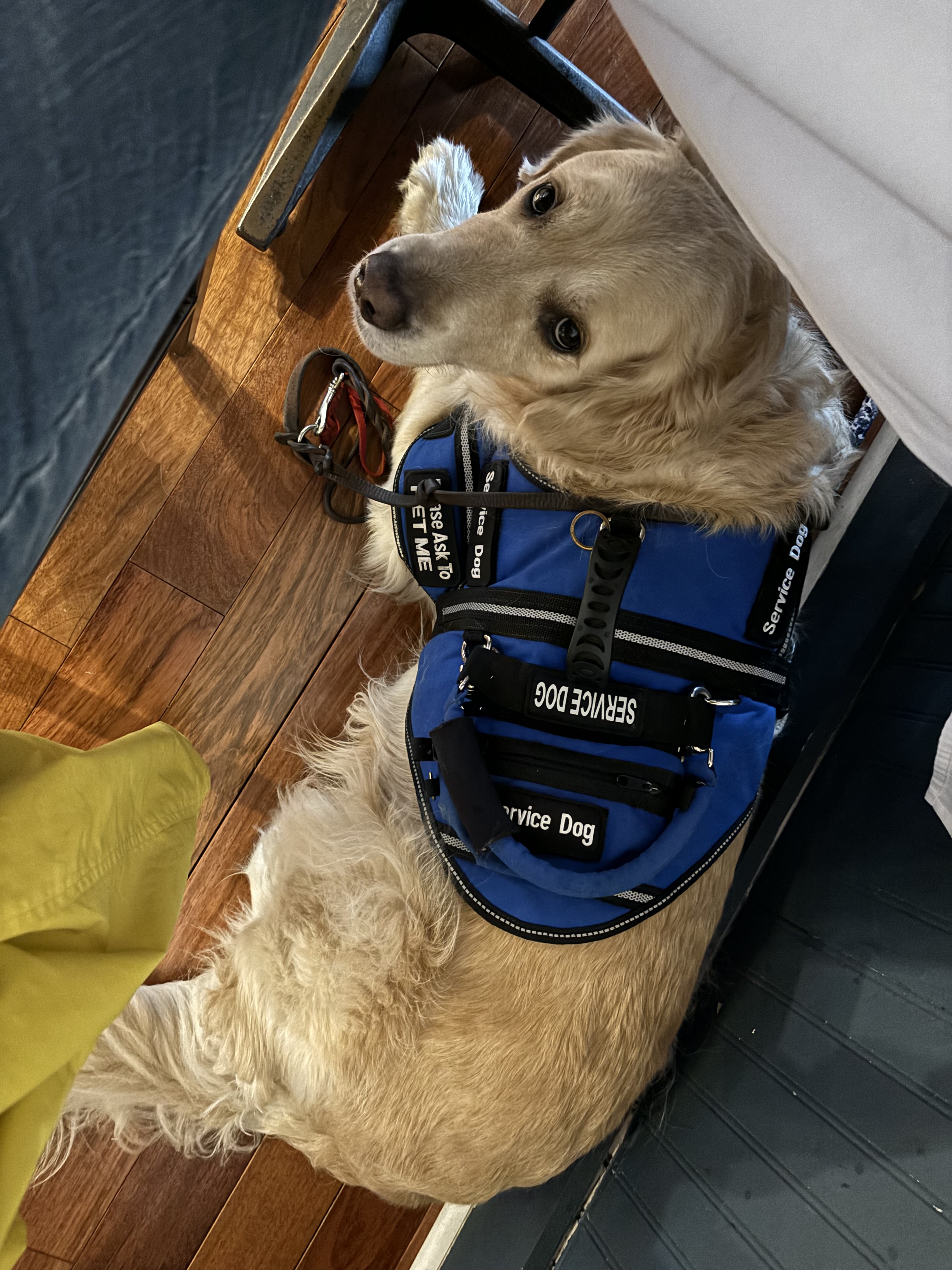
Photo description: Large Golden Retriever with royal blue service dog vest under a table at a restaurant. 

To close out this two-part series on “DisAbility Etiquette”, I wanted to share some do’s and don’ts of two disabilities I have. [CHALLENGE: If you have other disabilities and would like to write for “Hearing Elmo” and share your own “do’s and don’ts” please contact me at denise.portis@gmail.com. I love having guest writers!]

In part two, I want to discuss some do’s and don’ts for people who use canes and service dogs for mobility challenges. In part one, I’d like to share some tips for interacting with people who have hearing loss. NOTE: I do “hear again” with a cochlear implant but these tips work for anyone with any degree of hearing loss, even those who are culturally Deaf.

DO:

  1. The Golden Rule (I won’t reiterate it again – smile)
  2. If you know someone has a hearing loss and you are hosting a workshop, meeting, or get-together, send an email or text to the person and ask what you could do to make the venue more accessible.
  3. Follow-up (especially work-related) meetings with an email to ask if they have any questions or missed any topics. (Careful with this one… don’t be condescending).
  4. If possible, secure captioning (transcription) for the meeting. Transcripts can be emailed to EVERYONE which only helps all present.
  5. Avoid small group activities where everyone is talking in small groups at the same time.
  6. If a person uses ASL, please provide an interpreter.
  7. Flicker the lights to bring the meeting to order. Yelling or wildly gesturing is rude.
  8. If there is a microphone present, USE IT. Don’t say, “my voice carries” or “I think everyone can hear me”. 
  9. Insist others use a microphone from the audience, or repeat any questions asked. 
  10. Write out on a white board or include a slide in a presentation if you are going to do any type of ice-breaker question, detailing what is being asked of participants. 

DON’T

  1. Announce or otherwise bring attention to any one individual who may have trouble hearing.
  2. Raise your voice to a near shout. 
  3. Turn your back to the audience to point to or gesture towards a screen or whiteboard.
  4. Talk to the interpreter of a culturally Deaf person, instead of talking to the person themselves. 
  5. Play music or “theme songs” in between speakers.
  6. Use videos without captioning turned on
  7. Talk at the same time someone else is.
  8. Over enunciate speech
  9. Chew gum or have other items in your mouth when speaking.
  10. Hesitate to ask the person with disabilities if you are not sure how to proceed.

Ladau, E. (2021). Demystifying disability: What to know, what to say, and how to be an ally. New York: Ten Speed Press

L. Denise Portis, Ph.D.

© 2023 Personal Hearing Loss Journal

Kindness Can Be Complicated

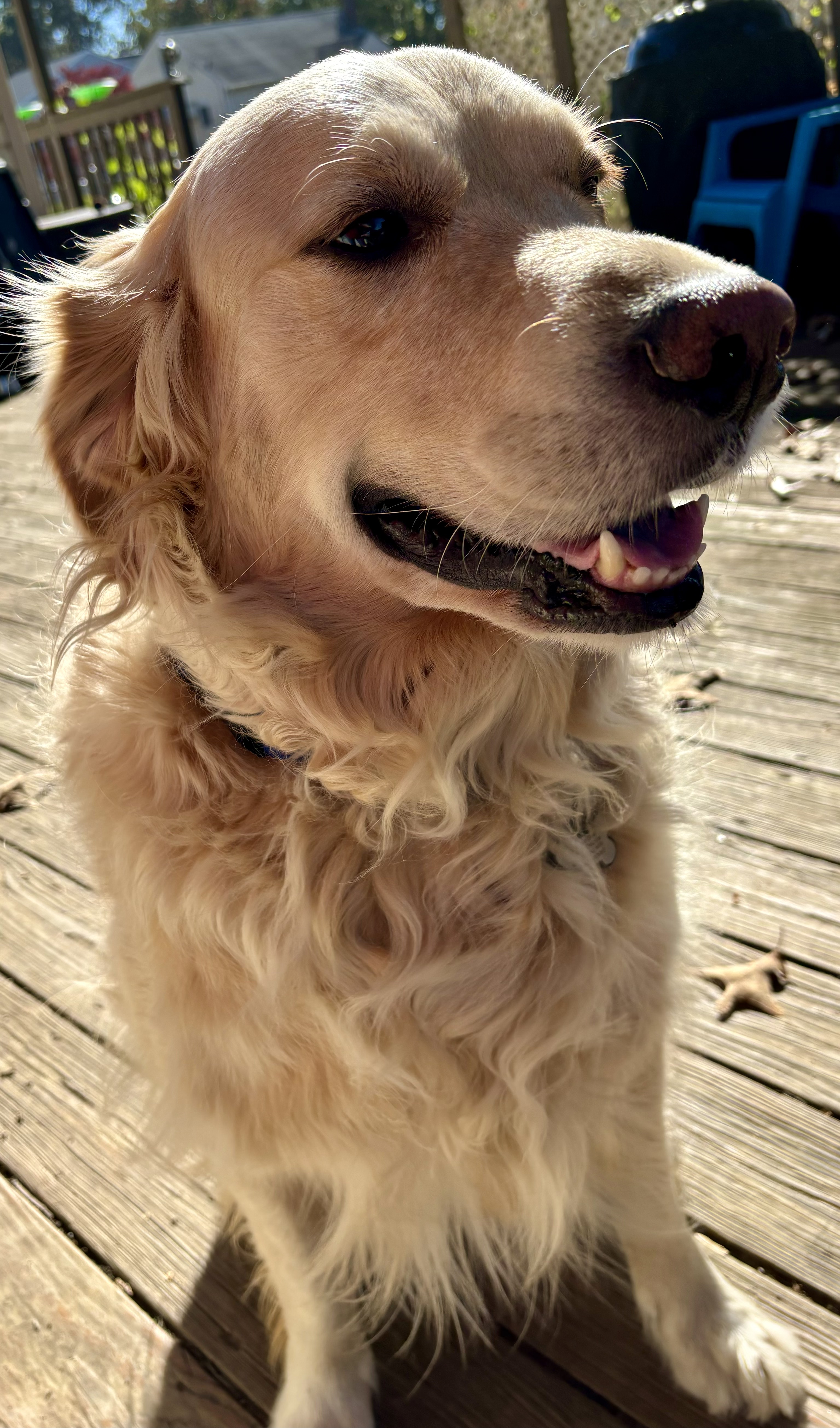
Photo description: Finn, Golden Retriever, 5-yrs-old, off duty and relaxing on a wood porch.

YAWN. 

I get it, Finn. I’m nervous too. Stay calm. (I fidget with my cane)

Finn YAWNS again and sidles closer. 

I know! Should I be rude and curt? Condescending in hopes of shaming? Teacher/educator mode? I just want to shop without notice like every other person in this store!

Finn YAWNS and does a slight eye roll. With him as my shopping buddy I can’t very well go unnoticed.

Finn is my 3rd service dog. Like anything I take on, when I chose to be partnered with a service dog to help mitigate my disabilities, I learned all I could about dog behavior, training, and service-dog work. A dog yawning is a very specific kind of “dog language”. Turid Rugaas (2013) explains that when a dog yawns, the dog is signaling that it is nervous, anxious, or excited. Finn and I were silently communicating unease at having been stopped and engaged even though all of MY body language said, “stay clear, I’m doing fine on my own”. 

“Dogs yawn when they are slightly stressed by something in the environment. It can be something very simple, such as a dog or person passing by a little too closely. Dogs often yawn when they are feeling like they have to “perform” in some way. Dogs yawn often when they feel confused or frustrated by the current situation” (Aloff, 2007, p. 90). Finn was not comfortable because I wasn’t comfortable. Being my partner for five years, he knew that I was not happy this person had stopped me in Costco to talk about my disabilities and service dog. With only one hand on the cart (the other holding Finn’s leash), I automatically wobble more than I would if both hands were on the cart. Because of my wobbles, my cane, hooked for easy access on the cart handle, is banging against the side of the cart. I’m sure my voice is tense. I’m unhappy. Finn YAWNS.

I’m unhappy because someone is trying to be nice. 

You read that right.

Out of the kindness of their own heart, a total stranger asked if they could help me in the store. My cart has 7 or 8 items in it already. It’s obvious I didn’t need their help to shop thus far. I assure them I am fine and “thank them for asking”. They ask about Finn, who is now on his 5th YAWN. His vest says, “Please ask to pet me” on the side. 

This very KIND person asks, “May I pet him? What’s his name?” I reply (with kindness) my rehearsed response:

“I don’t mind if people pet him if I’m seated. Since I am not, it would be better for you just to ignore him.”

The kind person looked around and even stepped to the side to look down a long aisle with cooking utensils. “I don’t see any chairs”.

Oh because everything about me tells you I want to sit so you can pet my service dog and take even more of my time?

Instead I say, “Well I am shopping right now and we need to keep going. I tend to run out of energy fairly quickly so we need to finish up”. 

The kind person looks slightly affronted and says, “OK. I was only trying to help!” 

AND… There lies the conundrum.

Kindness is complicated. I truly believe people mean well. Perhaps if I were not differently-abled, I would make the same mistakes. Good hearted people want to help someone, especially if it looks like they are struggling. (By the way, I was doing great before being stopped and actually struggled more after having to engage – hence Finn’s YAWN.) 

As a former teacher, I’m all about advocating through education and information. However, there is a time and place for everything. Like most people with disabilities, if I need help I will ask for it. This is something you learn to do if you’ve lived with disabilities for some time. My service dog, cochlear implant, and cane can help me do most things independently. There are times, however, where I need some assistance. I will ask for it. I’ve never been turned down and I’m 57 y’all! That’s a lot of years of having to occasionally ask for assistance! Sometimes automatic doors will not work. Sometimes a dropped item is too big or too heavy for Finn to pick up. I will ask for help. I appreciate all the kind people but enough already. Rebekah Taussig (2020) said it best:

I am a magnet for kindness. Like the center of a black hole, my body attracts every good deed from across the expanse of the universe to the foot of my wheelchair. I move through parking lots and malls, farmers’ markets and airports, bookstores and buffets, and people scramble to my aid. They open doors and reach out their arms to help, they offer prayers, grab my handlebars for a push, watch over me, and hold out wads of cash (p. 167).

People trying to be kind can be authentic. They noticed me and really do want to help. It can also be someone who is curious and wants to learn more. Maybe they know someone with a mobility challenge and want to learn how they can best help? As Rebekah states, folk’s attempts at being kind can “be anything from healing to humiliating, helpful to traumatic. It’s complicated” (Taussig (2020, p. 169).

I’ve come home from Costco trips determined to be an online shopper. I’ve also come home and thought about what a positive shopping trip that was after asking a stranger for help when Finn’s leash snagged on a pallet at a Target we were at and I could not yank it free. I tried to free it myself for a few minutes and then caught the eye of someone nearby and said, “Would you mind freeing Finn’s leash for me?” A dozen or so people bumped heads trying to be first in line to free that leash! (Yeah, that was a slight exaggeration). After freeing us up, I went on about my business as did the kind “helper”. 

Kindness is complicated. Please don’t misunderstand. Kindness is wonderful. We NEED MORE KIND PEOPLE. The world NEEDS MORE KIND PEOPLE. Just use “intelligent kindness”. Does the person you want to help look as if they need it, as if they want it?

If you are person with a disability? Don’t struggle with something you cannot do on your own and then beret everyone around for not helping. If you need help, ASK.

L. Denise Portis, Ph.D.

© 2023 Personal Hearing Loss Journal

Aloff, B. (2007). Canine body language: A photographic guide. Interpreting the native language of the domestic dog. Dogwise Publishing. 

Rugaas, T. (2013). Calming signals—The art of survival. Turid Rugaas—International Dog Trainer: International Dog Trainer Education. Retrieved October 26, 2023 from http://en.turid-rugaas.no/calming-signals—the-art-of-survival.html

Taussig, R. (2020). Sitting pretty: The view from my ordinary resilient disabled body. Harper Collins Publisher.

Is it WORRY or ANXIETY?

As a disAbility advocate, I have blogged about the challenges of invisible conditions or diagnosis as well as those that may be very apparent (to even a total stranger). One that I don’t often write about is mental health diagnoses, surprising since I am a psychologist. 

Life is hard. It doesn’t matter who you are, we all have a tough time at some point in our lives. All of us, to a person, also worry about things. These can be big things or small things. These can be small things you’ve made into BIG things. My Mom used to tell me, “Denise, you can make a mountain out of a mole hill!” When I was very young (8-10 years old) I thought it was a complement about achieving MUCH. It wasn’t until I was a teenager, seriously struggling with “worry over little things” that I understood the true meaning. 

Worry is a normal part of life. We worry because we care. We can also have short periods of time where we experience true anxiety and that too, is normal. As a psychologist, I adhere to many APA (American Psychological Association) definitions and will provide that here for you. However, even these “textbook” definitions seem to lack something and want some fine tuning. I asked for definitions of WORRY and ANXIETY from one of my social media sites and found the “fine tuning” of these words very interesting. Let me provide those here (with permission):

“I feel as though worry can be a protective reaction meant to protect and caution beings. Whereas anxiety is an all-consuming concern that renders you unable to make rational determinations and hinders the decision making process”.

“To me worry has a specific target and is low intensity. I’m worried about my family driving in bad weather when they leave my house tonight. It’s a passing thought. I ask them to check in when they get home. 

Anxiety doesn’t start with a target it’s an intense physical feeling of dread and fear that I will then attach to everything. Everything becomes the target. Disaster planning starts for every possible thing that could happen and what resources I have to overcome those disasters.”

“Worry feels thought driven. Though anxiety can be, for me it tends to sort of happen. Like I feel a coursing of chemicals in my body rush through and a step behind that, I think and process.

“I think anxiety occurs naturally for everyone and can be addressed more readily. Whereas I think worry is more deliberate – choosing to ruminate.”

“For me, worry is usually specific to something, and anxiety is free-floating and more irrational. Anxiety is usually more long-lasting, and I feel more out of control; worry can sometimes be alleviated by coming up with a plan B or something similar to that.”

“Worry to me is over thinking negative outcomes which may or may not be real. anxiety to me is a negative emotional response to a known or unknown stimulus that’s results in body changes such as elevated blood pressure, significant increases in heart rate and breathing, nausea, trembling, inability to rationalize reality, etc.”

“Worry to me is specific and directed toward one specific task or interpersonal relationship. Anxiety is a general feeling of apprehension, fear, or regret about multiple life events.”

“For me also, worry is specific and anxiety is a pervasive feeling of dread. It’s a fight or flight response chemically but there’s no immediate threat I need to escape from or fight off. One time I had a severe anxiety reaction while sitting at my desk, and there was nothing happening of concern. I will say that when there are a lot of different things that I’m worried about, It can bring on a more pervasive anxious state.”

“Worry are the waves and anxiety is the current. Those are the things I see and unseen issues sometimes randomly driving and daunting my soul.”

I was very impressed with the numerous responses. 

The APA (APA, 2023) defines both as the following:

Worry: A temporary chain of thought that is a negative form of thinking and promotes distress.

Anxiety: n. an emotion characterized by apprehension and somatic symptoms of tension in which an individual anticipates impending danger, catastrophe, or misfortune. The body often mobilizes itself to meet the perceived threat: Muscles become tense, breathing is faster, and the heart beats more rapidly. Anxiety may be distinguished from fear both conceptually and physiologically, although the two terms are often used interchangeably. Anxiety is considered a future-oriented, long-acting response broadly focused on a diffuse threat, whereas fear is an appropriate, present-oriented, and short-lived response to a clearly identifiable and specific threat. —anxious adj.

At this point you may be asking, “Why are you detailing the difference between WORRY and ANXIETY”? Anxiety that continues and impairs your ability to live your “best life” is a mental health disorder and often needs help to improve. This help can come in the form of:

  • Self-help books or support groups
  • Licensed therapy/counseling
  • Anti-anxiety medications
  • “Natural” or “herbal” plant-based remedies

Again, short-term anxiety and worry is normal. It can even improve outcomes and produce positive change. For example, maybe you are worried about an exam so you study more thereby receiving a better grade. You temporarily feel anxious about a birthday party you are planning for your sister. Until the party is over, you may be anxious about everything going well because you care about her and want it to be a “hit”.

When anxiety begins to impair your ability to function normally (what is “normal” for YOU), you may need to seek the help of a counselor, therapist, or psychiatrist.

Living with disabilities, visible/invisible conditions, or chronic challenges are hard enough without trying to do so when you are also anxious. The National Alliance on Mental Illness (NAMI, 2023) states that anxiety disorders are the MOST COMMON HEALTH CONCERN in the United States. Note that they do not designate the diagnosis as a mental health diagnosis. This is because anxiety disorders impact us physically, emotionally, and spiritually. There is likely no other disorder with the power to do more harm—should we allow it to continue without seeking help. 

I know that as a person living with numerous disabilities, I often focus on managing and treating my physical symptoms. However, I have learned that failure to manage/treat my mental health ultimately means that my overall health worsens. This is part of the reason I advocate so strongly for people to take their mental health seriously. If I were not managing/treating my anxiety and depression, ALL other symptoms and conditions would worsen. 

Mental health disorders carry a lot of stigma and negative stereotypes. Let’s do our part by talking about and treating “mental health” as an important part of our overall health. This is the only way we can normalize mental health issues and promote taking care of ALL of who we are. 

L. Denise Portis, Ph.D.

© 2023 Personal Hearing Loss Journal

Anxiety (2023). American Psychological Association. Retrieved October 2023 from https://dictionary.apa.org/anxiety?_ga=2.200114798.1388236549.1668603216-581175404.1667400704

Anxiety Disorders (2023). National Alliance on Mental Illness. Retrieved October 2023 from https://www.nami.org/About-Mental-Illness/Mental-Health-Conditions/Anxiety-Disorders#:~:text=Anxiety%20disorders%20are%20the%20most,develop%20symptoms%20before%20age%2021.

“What About Me? Effect”

Social media and access to information at large is a “game changer” for people with disabilities and/or chronic illness. Here are just a few reasons why I believe this is true:

  1. Connects you to information and resources about “what ails ya”. This yields truth to the “knowledge is power” phrase.
  2. Provides the means to share and connect with others struggling with similar issues.
  3. Provides a platform for advocacy and change.
  4. Alleviates feelings of isolation and loneliness.
  5. Enables individuals to stay connected to local, national, and world news, often with unmatched accessibility to this information.
  6. Allows differently-abled people to shop, pay bills, etc., in an accessible, safe space (home).
  7. Allows everyone access to education and learning knew skills – some of it free!

I also know that social media provides an outlet for connection, fun and entertainment, and can fill some hours when sleep seems unavailable to me. Like anything, however, social media platforms can be negative and challenging as well. “TikTok creator Sarah Lockwood (@sarahthebookfiary) refers to the tendency to make everything we see online about ourselves as the “What About Me Effect” (Borresen, 2023). Sarah posted a video about this “effect” in September and it really struck a cord in me. She states, “when someone sees something that doesn’t really pertain to them, or they can’t fully relate to, and they find a way to make it about them — or try to seek out certain accommodations for their very nuanced, personalized situation, instead of recognizing that maybe they’re just not the target audience for that thing” (Lockwood, 2023).

Like any population, even individuals living with disability or chronic conditions can get caught in a self-centered web of “what about me?” I’ve seen it happen in forums where someone posted information about a means to make a certain household chore or errand more accessible when living with a disability like their own. Instead of celebrating the ingenuity, a person with similar disability might not be able to accomplish the same because of demographics, or other subtle difference in diagnosis or condition.

Please do not misunderstand my point here. Equity and inclusion are important, however “what about me?” comments interferes with free speech; for a person in a marginalized population from freely voicing their truth. It is a very simple thing to chime in with perhaps another idea that would bring valuable discussion for accessibility options for someone with a slightly different disability. As a disability blogger and advocate, I recognize that I am an individual first. My experiences are just that–MY experiences. My experience as a balance-challenged woman may mean that I have some things in common with some, but am likely more different than similar to others with balance disorders.

Let’s be supportive of each other’s stories and life truths. We can learn something even if someone’s experience is different than our own. Even within disability related platforms, not every piece of content is geared towards every single person. We are unique and our challenges and gifts often are as well.

L. Denise Portis, Ph.D.

© 2023 Personal Hearing Loss Journal

Borresen, K. (Oct. 12, 2023). The What About Me Effect is rampant on social media. Are you Guilty of it?. HuffPost Life section. Retrieved October 16, 2023 from https://www.huffpost.com/entry/what-about-me-effect-tik-tok-bean-soup_l_6525a8d9e4b0102e6963c51

Lockwood, S. (Sept. 14, 2023). Sarahthebookfiary [Video]. https://www.tiktok.com/@sarahthebookfairy/video/7278702404315680046

Microaggressions

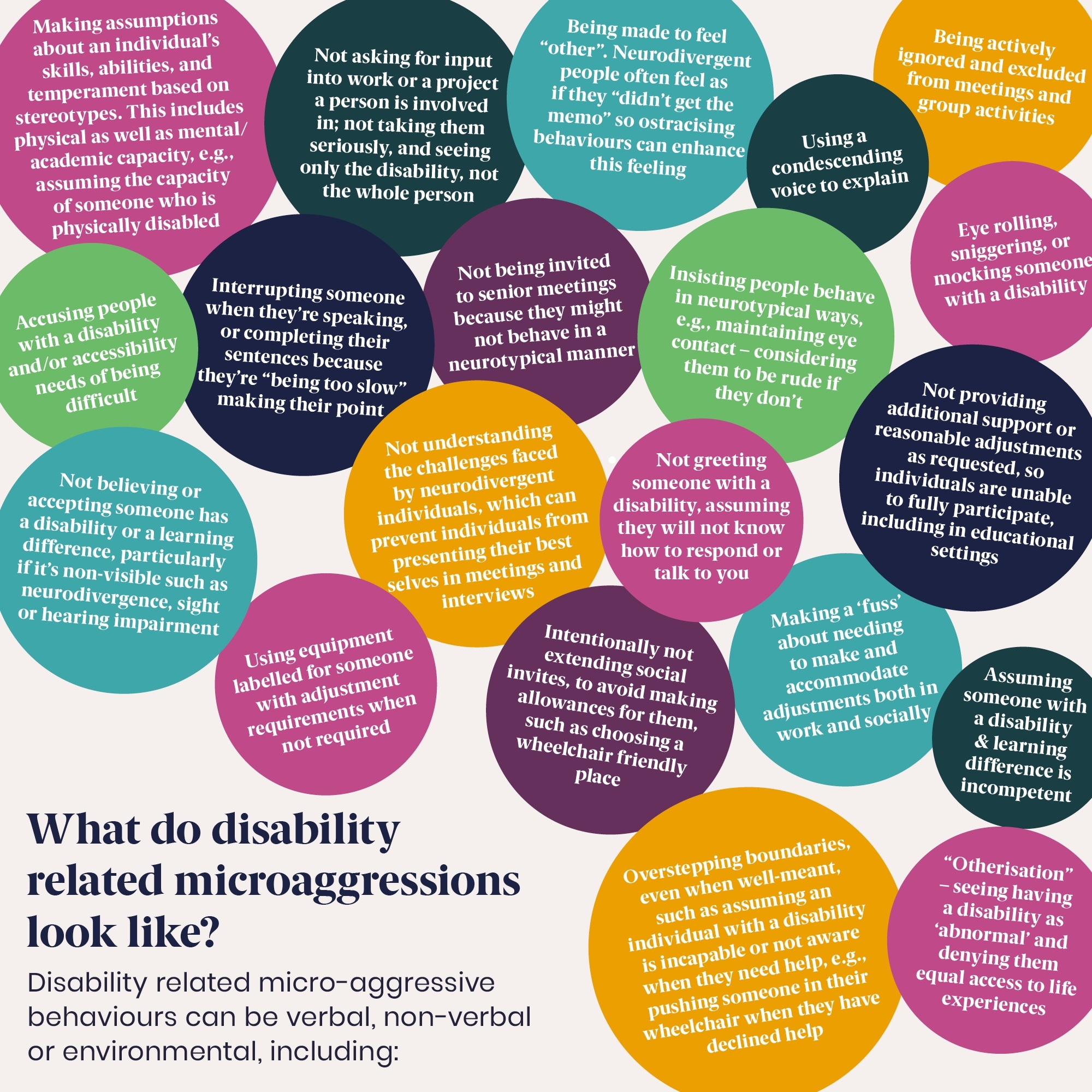
Image from https://www.rpharms.com/recognition/inclusion-diversity/microaggressions/disability

Microaggressions. What are they and how do they apply to people with disAbility and chronic conditions?

Meriam-Webster defines microaggression as “: a comment or action that subtly and often unconsciously or unintentionally expresses a prejudiced attitude toward a member of a marginalized group”.

Copied from the image above, I am re-listing some microaggressions here for those who may use screen readers.

  1. Overstepping boundaries, even when well-meant, such as assuming an individual with a disability is incapable or not aware when they need help. E.g. pushing someone in their wheelchair when they have declined help.
  2. “Otherisation” — seeing having a disability as ‘abnormal’ and denying them equal access to life experiences.
  3. Assuming someone with a disability & learning difference is incompetent.
  4. Making a “fuss” about needing to make and accommodate adjustments both in work and social.
  5. Intentionally not extending social invites to avoid making allowances for them, such as choosing a wheelchair friendly place.
  6. Using equipment labeled for someone with adjustment requirements when not required (accessible bathroom stalls, standing in the way of handrails, etc.)
  7. Not believing or accepting someone has a disability or learning difference, particularly if it is non-visible such as neurodivergence, sight or hearing impairment.
  8. Accusing people with a disability and/or accessibility needs of being difficult.
  9. Making assumptions about a person’s skills, abilities, and temperament based on stereotypes. This includes physical as well as mental /academic capacity. E.g. assuming the capacity of someone who is physically disabled.
  10. Not asking input into work or a project a person is involved in; not taking them seriously; and seeing only the disability, not the whole person.
  11. Being made to feel “other”. Neurodivergent people often feel as if they “didn’t get the memo” so ostracizing behaviors can enhance this feeling.
  12. Using a condescending voice to explain.
  13. Being actively ignored and excluded from meetings and group activities.
  14. Eye rolling, sniggering, or mocking someone with a disability.
  15. Not providing additional supports or reasonable adjustments as requested , so individuals are unable to fully participate, including in educational settings.
  16. Insisting people behave in neurotypical ways, e.g. such as maintaining eye contact–considering them to be rude if they don’t.
  17. Not being invited to senior meetings because they might not behave in a neurotypical manner.
  18. Interrupting someone when they are speaking completing their sentences because they’re “being to slow” making their point.
  19. Not understanding the challenges faced by neurodivergent individuals, which can prevent individuals from their best selves in meetings and interviews.
  20. Not greeting someone with a disability, assuming they will not know how to respond or talk to you.

A few of my own that I have experienced: (Add your own in the comments!)

21. Not facing someone who may have hearing loss so that they can read your facial expression, body language, and speech read better.

22. Assuming a person with disability can and should not be promoted because it will be “too much” for them.

23. Openly or secretly criticizing someone with disability when they are very disability focused and disability-minded.

24. Not providing impartial and equitable investigations into discrimination claims.

25. Assuming that providing things like captions, means that the person with communication challenges is now on equal footing with those who hear normally.

26. Not promoting a person with disability because they interview poorly as a result of disability (hearing loss, vision loss, cognitive issues, etc), in spite of a track record of excellence that warrants promotion.

There are other marginalized groups and diversity populations that experience microaggressions as well. I know that even I have at times said or did something that seems prejudicial. We are human and make mistakes. However, especially if a microaggression is identified by the marginalized person, we should take every means necessary to make changes and go forward with “less” prejudice.

One of the more disheartening truths about disability microaggressions, is that often the result of experiencing such can and will cause the individual additional harm. Stress alone can greatly exacerbate symptoms and conditions. I believe this is why so many “give up” following through with pursuing legal investigations. At least, it was true in my own case of disability discrimination.

So what can we do?

Keep doing all you can. After all, that’s all any of us can do.

L. Denise Portis, Ph.D.

© 2023 Personal Hearing Loss Journal

What if… ?

My husband teases me because my favorite movie genre is apocalyptic themes. My favorite book as a kid was “The Long Winter” in the Little House series because the circumstance and outlook was so dire! I’m a pessimist and very, VERY hard on myself. Even though I’m 57 and had decades of practice of “doom, despair, and agony on me” (let’s see if any of you catch that reference jingle), I have learned to change my “what if…” inner dialogue to promote happiness and health.

Persons with disability often worry, fret and are anxious about many “what if” scenarios. Things like:

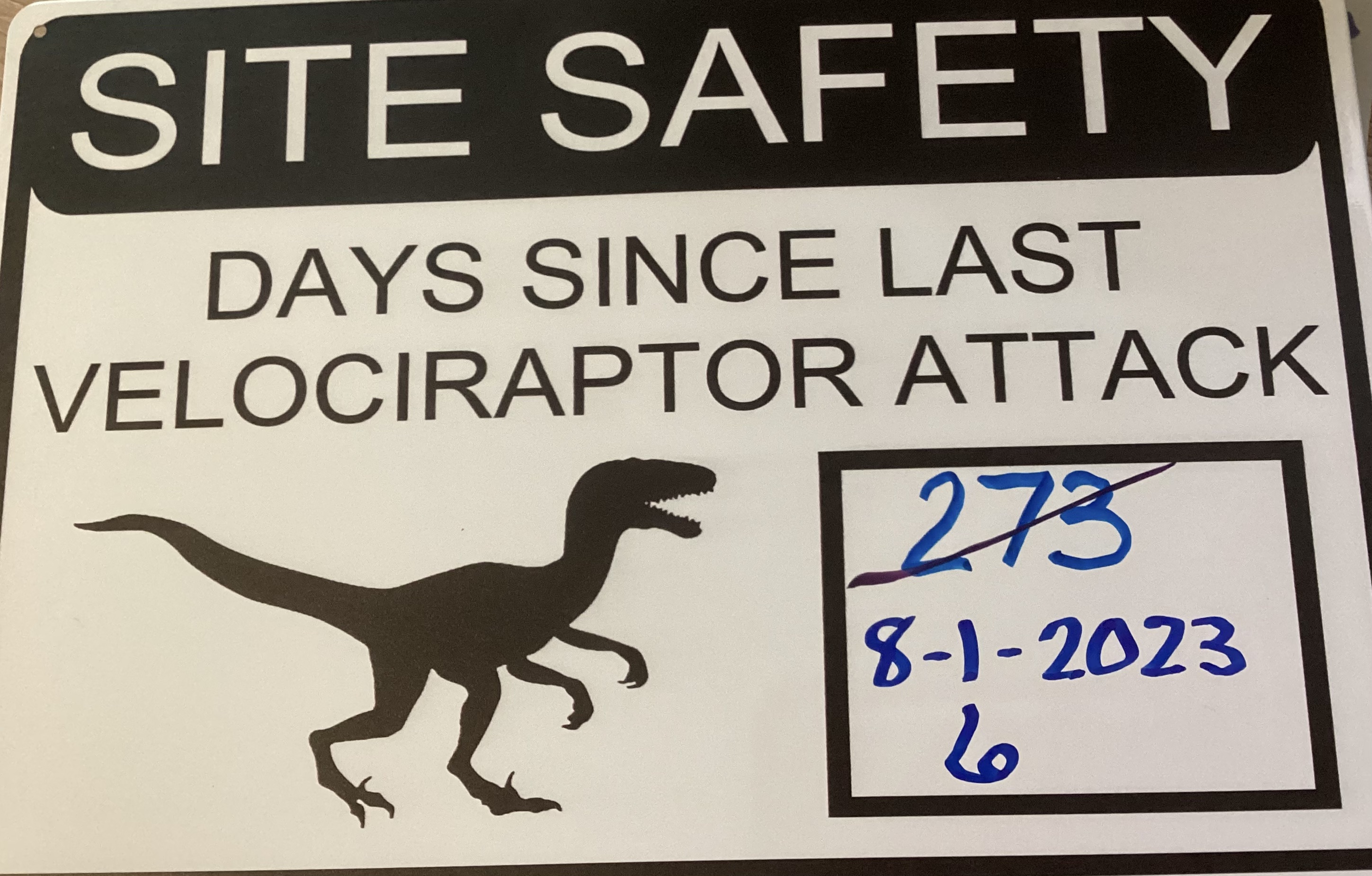
What if I suffer another concussion? (I was so aggravated at myself to have to update my sign a week ago):

What if I become legally blind?

What if I have to have my cochlear implant removed to get an MRI and accurate MS diagnosis?

What if I get ALS like my Mother?

What if… ?

I mean seriously it could go on and on! I’m grateful my interests and subsequent training and education meant I pursued psychology. Yes, yes, occasionally I grieve being rejected by Hogwarts, but psychology likely saved me! Seriously! I use snippets of cognitive behavioral therapy (CBT) every SINGLE DAY! I know that I’m prone to cathastrophizing my life. I know this bad habit is detrimental to my emotion self and mental health. It also takes a toll on my physical health.

When I find myself perseverating on negative “what if’s…?” I have to deliberately pause and choose to say the opposite.

What if I go another year without any new concussions? I’m taking great pains to walk safely, work around the house safely, etc. That last concussion may have been my last!

What if the meds I am taking save my eyesight?

What if the MRI (after surgical removal of my CI magnet) shows a definitive MS diagnosis? Then I can find proper treatment!

What if I live as long as my Mom did (78) and die from “old age” and not ALS?

In CBT, you have to start with your thinker. If you can change your thinker, it will aid in changing your feeler (heart) and in turn change your behavior (anxious thoughts, depression, self-harm, etc.) Change your THINKER to change your FEELER to change your BEHAVIOR.

So there isn’t anything wrong with “what if…?” thinking. Just make sure most of your “what if’s…?” are positive thoughts and affirmations. It’s hard enough being a person with disabilities and invisible or chronic illness. Don’t become your own worse enemy. Cue the music and summon your Mission: Impossible chi and see if this CBT tool can at the very least improve your mental health and personal regard.

L. Denise Portis, Ph.D.

© 2023 Personal Hearing Loss Journal

Brain Injury Awareness – A Survivor’s story 50 Years Later

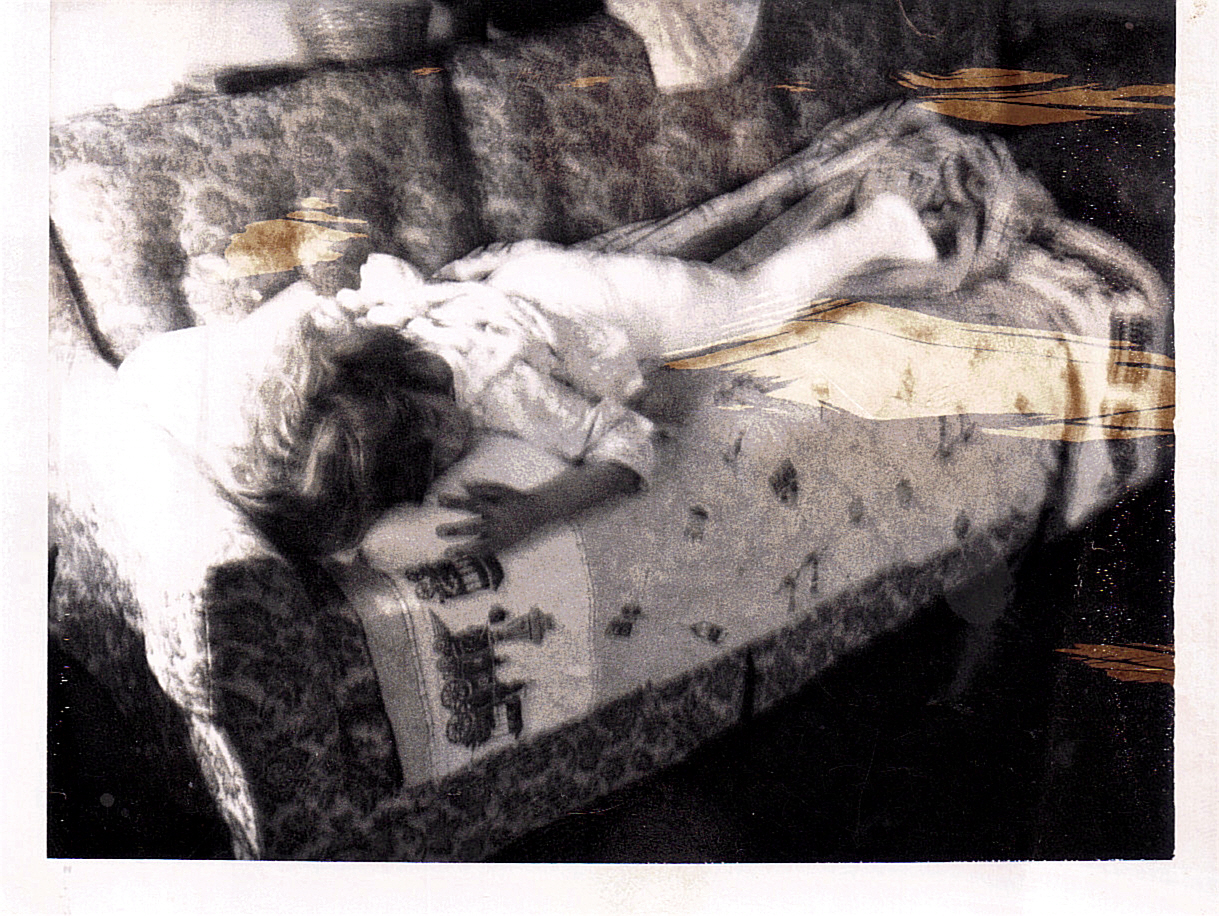
Wow! This photo is from 1972. I was in a body cast from the chest down and had to sleep a lot. Prior to the TBI, I slept on the top bunk in a room I shared with a sibling. There was no lifting me that high so I spent much of my recovery on the couch. Mom slept in a nearby recliner. Traumatic Brain Injury as a child meant that my saying “I don’t remember my early childhood” wasn’t at all unusual to declare. Even abled folks in their 50s say, “I can’t remember back that far”. My parents worked hard in my rehab and by third grade I was back in school. I would eventually become deaf and acquire a vestibular disorder, but I had a terrific childhood living on a farm in rural Colorado.

Fast forward 50 years. TBI, like many traumatic injuries, is “the gift that keeps on giving”. I don’t even mean that in a particularly snarky way, as my disabilities have opened up so many opportunities for me during me life. The downside, however, is that when the brain is injured in a significant way a survivor will always have repercussions. For me, it meant 11 concussions, broken fingers, hands, toes and numerous hospital visits. It has meant learning disabilities and cognitive challenges. It meant that it took me 16 years to finish all my degrees. It has meant a very real struggle to stay on top of serious depression and anxiety.

Having fought, struggled, and persevered, having cried, grieved, and given up SO MANY TIMES, on this side of having survived 50 years, I can say “My Life Matters“. For over 3 decades, I have used something “bad” for something very, very GOOD. I am an advocate, a teacher, a passionate voice for those who often have no voice. My TBI gifted me with my “calling”, and became the impetus to fight the fight for those with disabilities.

I am one of the lucky ones, however. Are you a parent? Research and gear up with all the knowledge that you can about how to keep your child’s head safe in play, team sports, and recreational activities. Treat concussions seriously, even mild ones. Don’t hesitate to enjoy life, but enjoy it safely. Enjoy it while protecting that wonderful brain of yours. You cannot put a cast on a brain and hope it heals straight. Preventative measures are all we can do.

Happy Brain Injury Awareness Month!

L. Denise Portis, Ph.D.

You can do ANYTHING!  Well… MOST THINGS!

I anticipate that what I write this week will upset some folks who live with disABILITY or chronic conditions. If you would, “hear me out” until the end of the post. If you still disagree, I can easily “agree to disagree” and even concede that the power of optimism is often the key to overcoming real obstacles.

My main point? Do not tell a person with disABILITY that: YOU CAN DO ANYTHING!

This standard platform statement is normally accompanied by volume and higher pitch, with a pom-pom smacked to the face of anyone not paying attention. Educators like myself sometimes misuse this encouraging statement. Administrators may assume the statement is standard for any mandatory attendance meeting, certain to help liberate the doubtful and unify the group, lighting them on fire with enthusiasm. 

Last semester I sat and cried with a student having to drop my class. Like me, she is a TBI survivor. Her dream job was to work in a big hospital and oversee support groups for individuals and families who are experiencing life with traumatic brain injury. She wants the “shingle”, the Ph.D., the training to really make a difference. I believe she will reach her goal. She will reach her goal after a longer road than most. There will be setbacks. There will be obstacles. I shared with her that it took me 16 years and a lot of outright stubbornness to finish school. Accommodations made the attempt more equitable but honestly, I shared, “it took not giving up and recognizing my pathway to goal was a longer one”. 

I have had short-term mentors tell me YOU CAN DO ANYTHING! (My long-term mentors had a more realistic approach). However, pom-poms, enthusiasm, and genuine hopefulness will never:

… allow me to hear normally.

… walk without a limp.

… have vertigo-free days.

… help me be as sharp at the end of the day as I am at the first.

… keep me from needing more sleep than others.

… prevent me from ever falling again.

… alleviate my communication challenges.

… prevent me from feeling isolated and left out occasionally.

… stop the loss of vision in my right eye brought about by 11 concussions.

… interrupt every single panic attack.

… defeat persistent depressive disorder.

… keep me from missing my Mom, the primary REALIST in my life.

Frankly, there are some things I CANNOT do. Any successes or “wins” are the result of stubborn persistence. Any recognitions or awards are from finding a different way to accomplish the same tasks. Many “end results” were not something originally targeted. There are things I CANNOT do and tasks I will NEVER be able to do. Instead, I have learned to set my sights on something obtainable. I have learned to align my goals with things that are possible. I have even learned to dream and “pin my hopes on” goals that are doable for even one such as I. In the end, most of us aspire to make a difference. If you find yourself looking around at the place your training, hard work, and experience have landed you thinking, “Well gee. This was a major detour but gosh darn it! I’m happy and I’m making a difference!” 

Perhaps the big DIFFERENCE we make was something outside our imagination originally. Reality redirected our purpose with an unexpected detour. Yet here you are, thriving…influencing… and KILLIN’ IT! Having a sense of real purpose looks good on EVERYONE. 

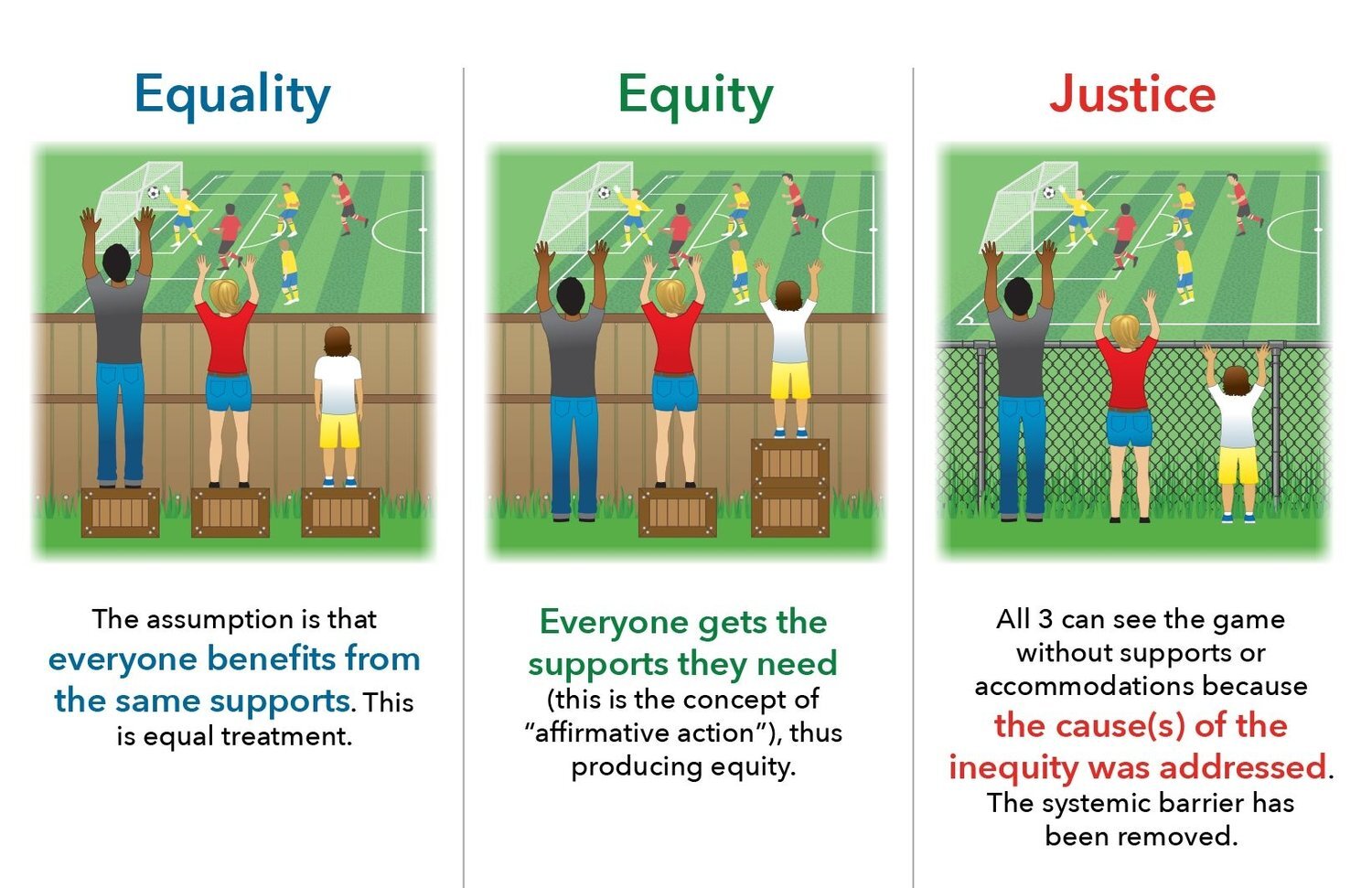
I have talked with students and colleagues hesitant to ask for some extra time or an equitable accommodation because they fear being judged that their performance is only possible through props others do not need. Y’all? There is a heck of a lot of difference between equitable accommodations and “hand holding”. This photo says it all:

I received an email from a follower of Hearing Elmo around Christmas. They are on disability, with limited transportation and even more limited opportunities. They shared that at times they are discouraged because they feel limited in what they can do. But folks? The opportunities this reader has are golden, the lives they touch are valuable. They consider their purpose and mission to advocate, educate, and touch just one life at a time. They support and encourage LGBTQ+ young adults with disability and act as a sounding board, a shoulder to cry on, and are a stout champion to a truly marginalized group. 

Are you an abled administrator, director, co-worker, or friend? I encourage you to use realistic encouragement and language as you lovingly support the folks in your life who have special challenges to overcome. Having YOU helps them overcome. Be careful not to balk at a seemingly unrealistic goal. If people with disability are anything y’all, they are realists! If you are blessed with an invitation to chart a path alongside someone who is determined, then LISTEN, research, encourage, and advocate on their behalf. 

A well-meaning friend and I had our behinds parked on a bench on campus catching up with each other. Some geese flew overhead, flying in a perfect “V” and heading South for the winter. My friend said, “Wow, what a racket!”

I grinned at her and said, “Well I don’t hear anything!”

Abashed, she said, “Well at least you can see them, right?”

I said, “Sure! And I do LISTEN with my EYES sometimes!”

However, unless a big ol’ goose comes waddling up to my side and honks right in the direction of my cochlear implant, I’m not gonna hear it’s unique sound y’all. This doesn’t mean that I do not have a purpose since I cannot hear a goose honk from high above while flying in formation. My disAbilities make me uniquely qualified and effective to make a difference in the lives of those in Denise Portis’ sphere of influence. Y’all have a sphere too. Manage it. Own it. Thrive. Because all of us are pretty…

FABULOUS.

L. Denise Portis, Ph.D.

2023 Hearing Loss Journal