
Walking in the Autumn

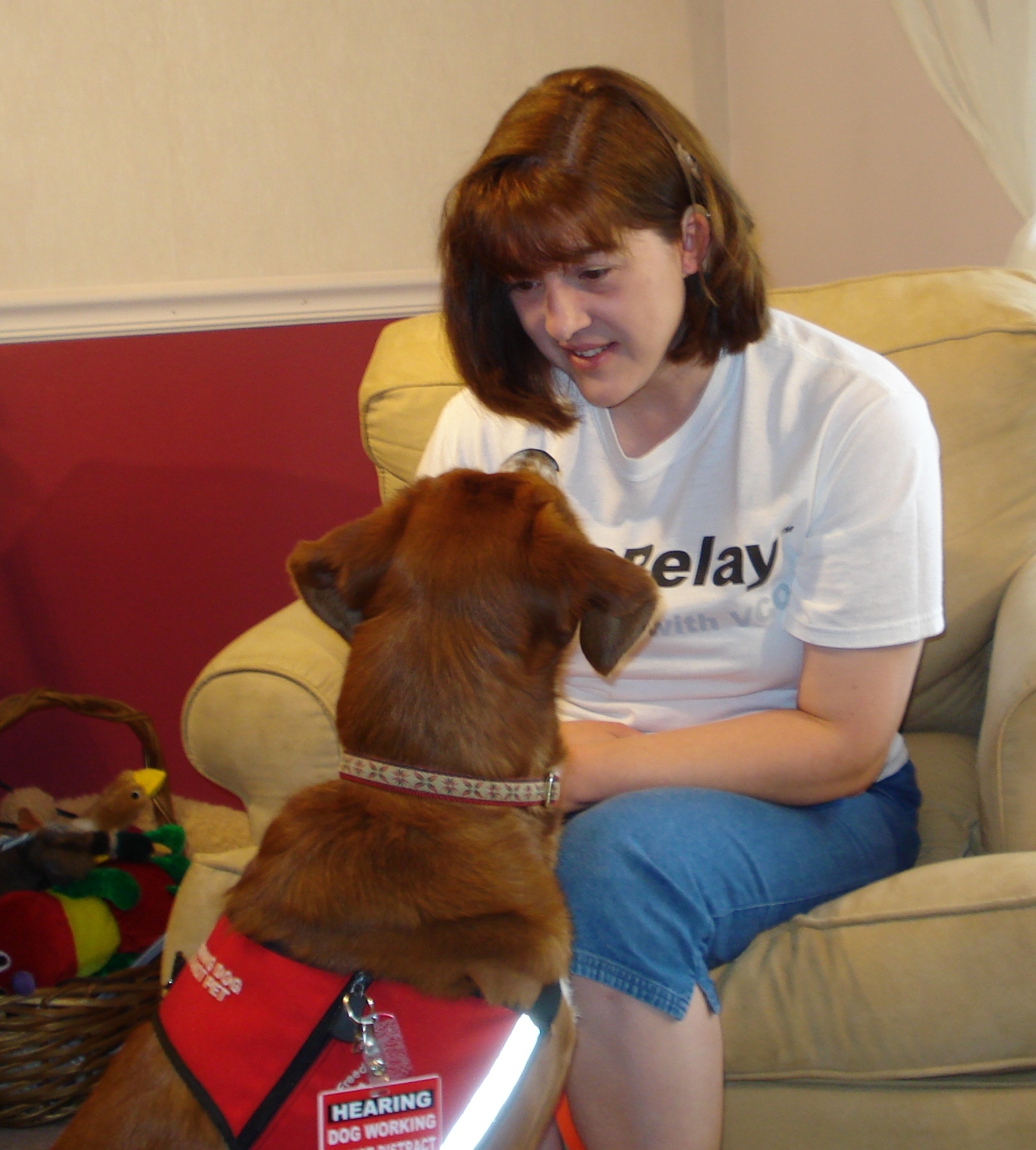
One thing I love about cooler temperatures, is that when “Chloe takes me for a walk” I can do so – HEARING. I’ll probably get “wrung out to dry” for this, but I do not usually exercise with my CI processor on my head. It’s not that I CANNOT, but more about a choice I made. I know people who run races with their cochlear implant! When I use to go to the gym, I would lift weights with my CI and my hearing “intact”. I don’t have a gym membership anymore, so my primary means of exercise is walking.

This summer I made the choice to walk in the cool of the evening without my cochlear implant. It is “wicked hot” here in Maryland on summer evenings, and I tend to perspire a lot. Oh gee… that’s stretching it a bit, because I honestly? I sweat! I walk “very fast”, much to the delight of my beloved assistance hound. It’s just short of a “jog” and because I move at a pretty good clip, I tend to perspire a great deal. I got tired of having to stick my CI in the “Dry ‘n Store” when I got home. After all, when I arrive back home I’m walking into a house full of people I care about. I want to hear them and interact with them. That doesn’t really happen if I have to go “deaf” upon my return from a walk!

However, it looks like cooler temperatures are here to stay for the season. (Hope I don’t jinx that!). One thing I love about the fall, winter, and early spring is being able to walk with my CI on and “working” since I do not perspire as much. It’s especially fun when walking for the first time in a long time WITH SOUND. I had forgotten that Chloe’s feet can actually be heard on the sidewalk. The sound of the breeze in the branches above the sidewalk sounds like music to these ears! Squirrels scamper about and “fuss at me” from lower branches of the trees as I pass. Those dogs we always see in fenced yards that either greet with a friendly bark and wag, or snarl/bark with a territorial warning, each have a unique sound, tone and “voice”!

I can hear the leaves skitter on the sidewalk in front of me as the breeze picks a few up and scatters them ahead. I can hear the distant traffic, occasional siren, or overhead jet… these peripheral sounds that make up the noisy world in which we live. Some of the “pressure is off” in walking with sound. I don’t have to concentrate so intently on the direction of Chloe’s attention, or worry about unheard traffic as I cross streets.

I think Chloe enjoys our walks more because I actually talk to her more. Isn’t that strange? I wonder why my voice tends to go SILENT when I cannot hear? I’m much more “chatty” as we walk along when I can hear the world around us. I realized I must talk infrequently when I took note that Chloe would turn her head to look at me. I realized she was startled to hear me talk! (I’ll have to make a better effort next summer of talking even when ‘deaf’)

In anticipation of winter, I look forward to hearing my boots on icy sidewalks and the sound of skeletal branches click-clacking in the cold wind!

Seasons of Life

Re-adjusting to hearing while walking at night brought a reminder of a parallel I’m currently experiencing. I’m at a “new place” in my life. At the age of 44, I have a child living on a college campus away from home. The “baby’ of our family is almost twenty and as a young man has really begun asserting some independence. (This is a good thing… though hard to adjust to not being needed like I was!) I’m in my last semester of school and feel the pressure of finding more part-time work come January!

It’s funny how different seasons in life we may “hear” differently. Specifically in hearing God, this often changes depending on the season of life one finds themselves living. At times, hearing Him is by choice… after all, He’s never the One who “leaves” or temporarily disconnects with us. Much like the choice to deliberately not wear my CI, I can choose to disconnect with God. It has happened in times of anger, depression, and even when everything was going “swell”.

It’s not that I’m coming back to the place of a LOUDER relationship with God. However, this season of my life I have found that I am having to lean more heavily on Him and on the power of our relationship. I guess you could say that right now, I really need God in my life… in an ever-present, constant sort of “coil connected to my head” kind of way! I have numerous little “worries” and concerns that seem to weigh heavily on my heart and mind. It’s just a season I’m going through. I’m thankful I’ve deliberately and consciously chosen to listen more carefully to God during this time.

Denise Portis

© 2010 Personal Hearing Loss Journal

Markers

Sunday I had the rare treat of hearing my husband, Terry speak. In the past I was able to attend and listen to numerous speaking opportunities that he had, but our lives do not “intersect” outside of HOME as often as they once did. So the opportunity to hear him speak on Sunday when our pastor invited him to “fill the pulpit” while he was gone was pretty special. Our church is beginning a study on the book of Ezekiel.

We don’t have a “deaf ministry” in our church. We also do not have a loop system. Our church family is a pretty small group – but we love it! There are two of us with cochlear implants. Myself and a young teenage boy are the “hearing again” crowd in our church family. When you hear with a CI, there is a teeny, tiny delay in processing what you hear until you understand what it is you hear. Most of the time I do not notice the delay at all. However, in large cavernous place like the auditorium in which we meet, plus the fact I have all this noise around me which includes children, rustling of papers, sneezes, adjusting body weight in chairs, etc., I’m a little more distracted by what I’m hearing! It’s also strange to focus your attention on a speaker, but the sound of their voice is coming from another place. I suppose since I was without sound completely for almost two years, I still habitually speech read. Looking at Terry, I “understand” much of what is enunciated on his lips. However, Terry’s voice was coming from the two large speakers from the side. Since we aren’t “looped” for hearing assistive technology, what I heard was what everyone else heard… coming from the speakers. (BIG GRIN). It’s hard to explain… but trust me when I say it can be difficult when you hear with a CI!

Anyway, Terry began by talking about his past work with BIANC (Brain Injury Association of North Carolina). He brought up examples of people talking about markers in their life. As I’m playing a constant game of “catch up” throughout the study… when he said this the first thing that came to mind was Crayola Markers. After I understood what he meant, I was pretty cracked up. Some examples he gave:

“Well before my brain injury, I ….”

“After I lost my hearing, I…”

“Before I got married, I…”

“After we had kids…”

We all have these markers in our life. At some point – LIFE HAPPENS. And when it does, you are left with a permanent “marker” in your life. Things at THAT POINT changed and your life would forever be different. These markers are not always a BAD thing… they can be a good thing too! These markers in our life indicate a point in time where our focus changed. They indicate where we ‘chose a new road’, or embraced a new calling or mission. The markers can also indicate a point in time where the “bottom dropped out” of the world as we knew it. Tragedy, loss, and heartache have a way of searing a painful scar on our hearts and minds, leaving a point in time where we recognize our lives changed.

Terry had some main points from Ezekiel chapters 1-4. Ezekiel’s marker was an encounter with God. Before this “marker” in Ezekiel’s life:

BEFORE

He was entering a new season of life.

He was with people who were dealing with problems.

He was looking for opportunities from God.

Then during the “great moment in time” that would forever change Ezekiel’s life:

DURING

It was impossible to ignore.

Impossible to explain

and Impossible to get over.

After the encounter, Ezekiel found that:

AFTER

What defined him would be different.

What discouraged him would be different.

What satisfied him would be different.

I think all of us can say that these points hold true to any “marker” we have in our own lives. Invisible disabilities may define individuals in different ways but there is one thing we have in common. Our lives will never be the same. That isn’t always a bad thing… for even in “losing something” we often gain so much. It may be hard to recognize at first, but the ‘gain’ is there if you really look for it. I think of my own life and the marker of “After I lost my hearing…” What now defines me and discourages me is different than before the marker. What SATISFIES me is different. My goals, desires, and passions are much different than they were. I have a friend who deals with numerous invisible disabilities. I love her. She has ministered to me in ways she does not understand. She once wrote about her new satisfaction about what a friend was. Allow me to share…

“Several years ago I fell ill, unable to continue a life that was full of people. They were genial folks, kindhearted and interesting. As they faded away when I was no longer able to do things with them and for them, I discovered the difference between a friend and a friendly acquaintance… A good friend changed from something I was owed to a breathtakingly beautiful gift. The sorrow and grief made that change possible, leaving behind it a bit of wisdom. There have been many an acquaintance made after I lost my pre-illness social circle, but now they are held rather lightly. I enjoy them, but resist having expectations of them. Often I will find myself sensing when a relationship feels more like a requirement, or when I seem to be taking more than I give back. Not in IOU or UOME terms, but in an awareness of balance.”

She goes on to explain that really the only ONE who can meet our needs is God.

I am reminded of an Ebenezer. To some of my readers, you may recognize that word from a VERY old hymn, rarely sung in churches today. “Come Thou Fount of Every Blessing” is not widely known in today’s churches. I had a grandmother who was not only fond of old hymns, but also of explaining what words meant. Ebenezer comes from two Hebrew words Even and Haazer. It looks like this:

It means “stone of help” and represents a memorial stone set up specifically to TESTIFY and REMEMBER.

These markers in our life are indelible, permanent fixtures on our own hearts and minds. For some things, however, I like to have a literal Ebenezer. Something tangible, something I can hold, and something that forces me to remember.

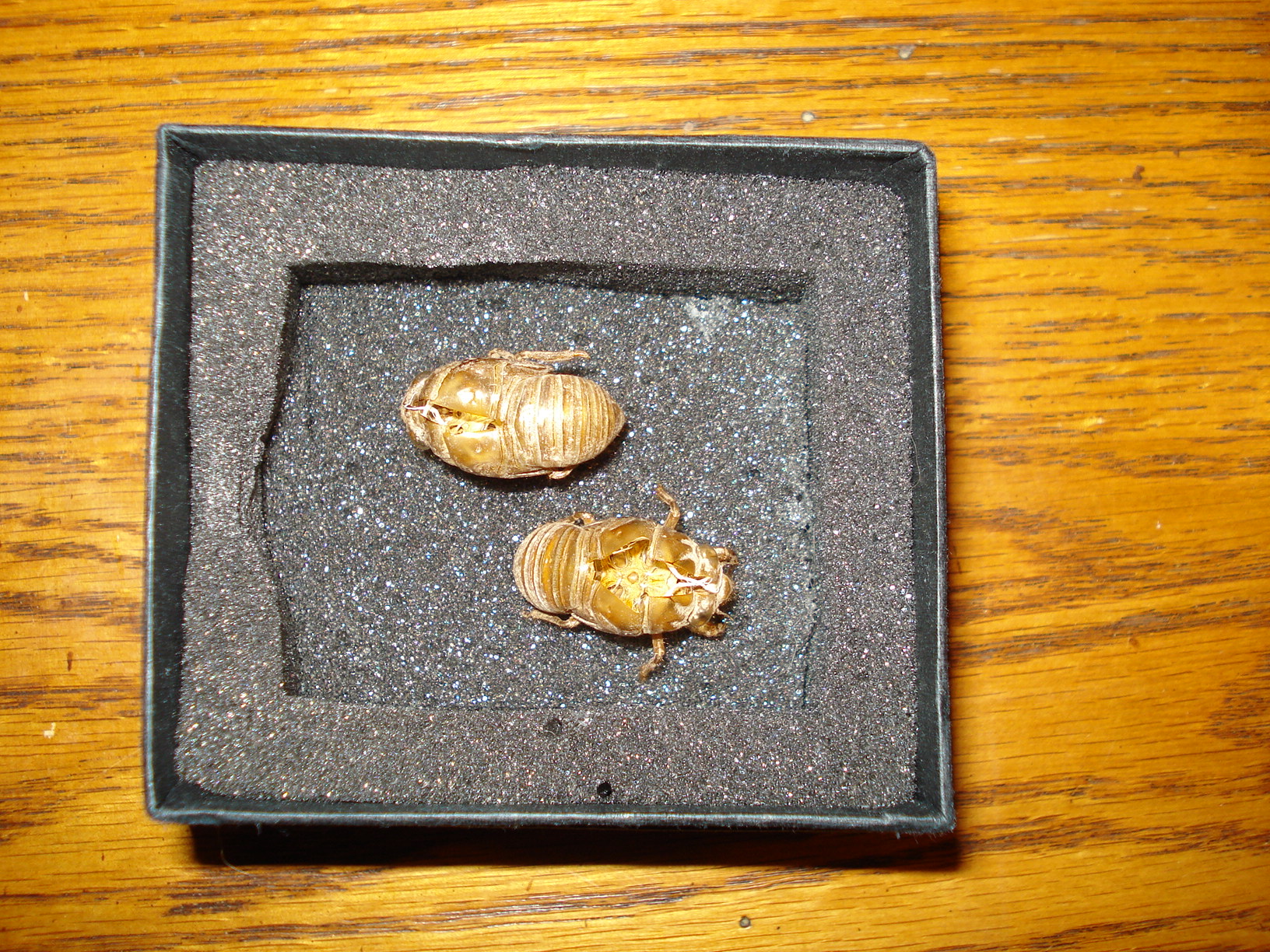
You are going to think I’m crazy… but check out this Ebenezer:

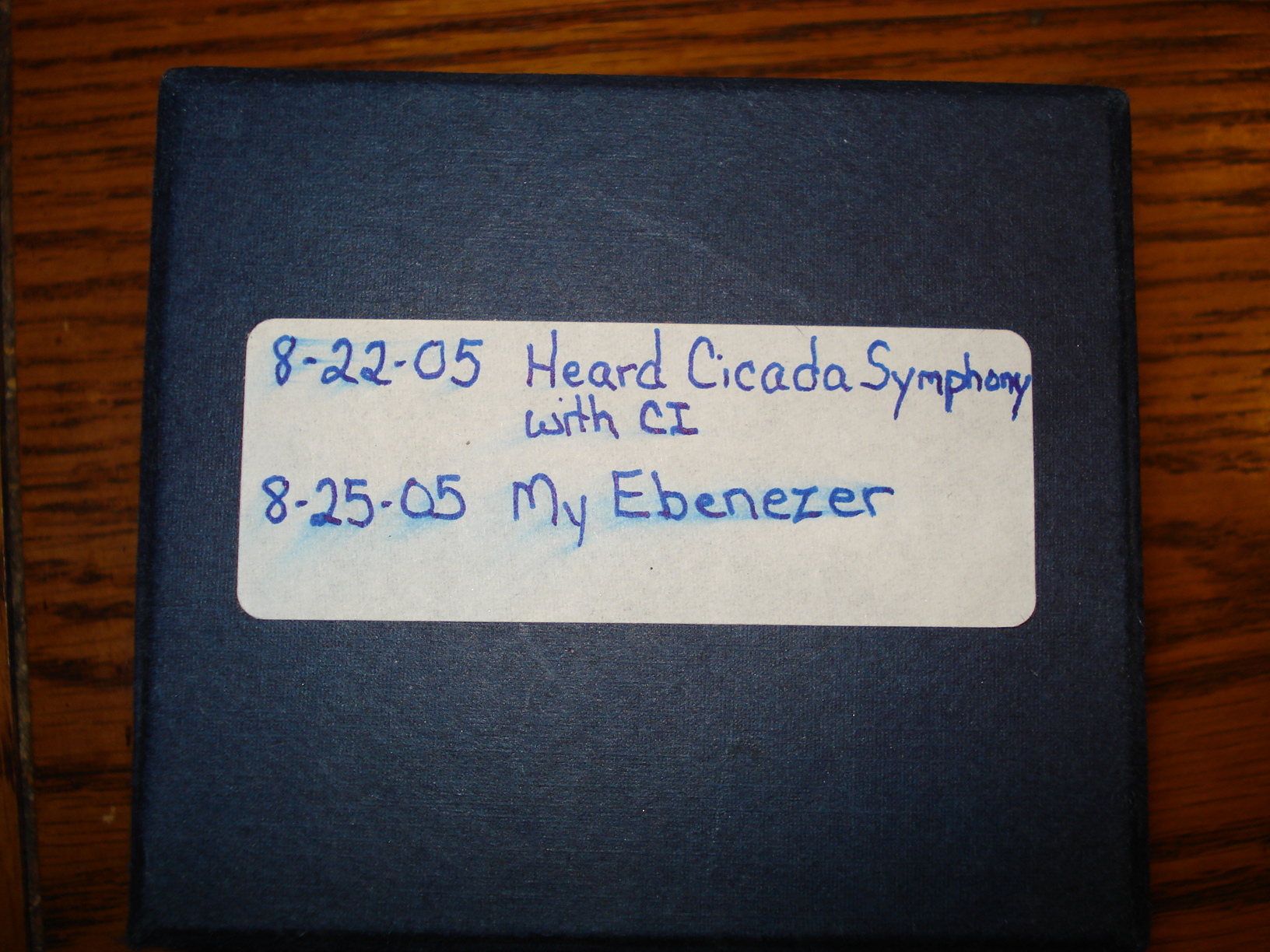
Nope! Your eyes do not deceive you. These are two shed cicada skins. Before you think I’ve lost it and am “gruesome beyond belief”, read the LID of the box:

Unless you’ve lost your hearing… only to regain it through a cochlear implant, you cannot understand what it means to hear and recognize a sound from your past.

You cannot understand what it means to bend and pick up something unless you live with arthritis.

You cannot understand what it means to see again unless you’ve lived with cataracts and then had them removed.

You cannot understand what it means to stretch for a glass from your cubboard and realize you feel no pain today, unless you live with fibromyalgia.

You cannot understand what it means to have independence because of an assistance dog, unless you live with mobility issues and difficulties.

You cannot understand what it means to look forward to “today”, unless you live with mental illness.

Life challenges bring a new appreciation… a new satisfaction for what once were mundane tasks. If you haven’t yet identified markers in your life, well my friend? It’s one of two things… you either aren’t living life, or you haven’t lived enough of it YET.

One of the hardest things about being a parent is seeing my young adult children identify and experience things that etch permanent markers in their own lives. Perhaps you aren’t a parent, but you know someone who is experiencing a first “marker”. Do your best to encourage them. Be a living testimony of someone whose own life markers made them “better”. Make a difference…

Denise Portis

© 2010 Personal Hearing Loss Journal

Not Taken For Granted

October 2000 - September 20, 2010

It’s the little things that make a difference when you are “hearing again”.

This morning we had to put my daughter’s cat, Mandie to sleep. Kyersten is a junior at Liberty University in Lynchburg, VA. She doesn’t have a car and yet through friends was able to get home. (We currently only have one car and couldn’t do it).

It was a series of phone calls – some in a panic, to get all the plans just right so that she could get home in time. The cat could not wait. I’m just amazed at what a difference being able to hear on the phone means even in the midst of a small family crisis.

Not only could I hear to communicate plans, etc., but when we went to the vet I could hear whispered voices as the technicians tried to remain sensitive to the reason we were there. WHISPERED VOICES.

I am so thankful for cochlear implant technology and for being able to “hear again”. I’m certain that if I had not been able to have CI surgery, we would have still found a way through family crisis without my hearing. However… it just makes the biggest difference. You just really can’t imagine what it means unless you’ve lost your hearing and regained it through cochlear implants.

I do not take it for granted.

Denise Portis

© 2010 Personal Hearing Loss Journal
Who Is That Person?

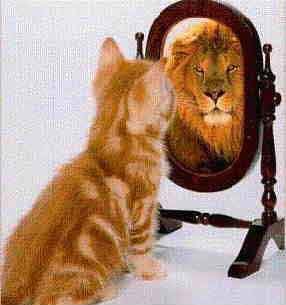
The bathroom downstairs is decorated with cats. Lots of them. (Yes I know… decorating a bathroom with “cat stuff” is unusual, but it is what my cat-loving children picked out!). The above picture hangs in the bathroom near the sink. As a result, I’ve given a lot of thought to this painting!

Who IS that?

This morning I was getting ready and caught sight of myself in the mirror. I had already fixed my hair, put on my make-up and “made pretty”. Yet, I was taken by surprise at what I saw in my reflection.

It’s raining today. We really need it too. Yet… I really dread rainy days. I usually know it’s raining even before I roll out of bed in the morning. I get this “sense” that all is not right. Weather systems do a number on my balance and I walk like a drunken sailor if bad weather prevails for more than a day or two. Looking at my reflection I could see IT on my face. Fatigue, dread, worry, and acceptance of the unavoidable. There it was in the reflection in the mirror. You would have to really know me to notice. Something in the eyes… tension in the facial muscles. Since I know myself pretty well (grin)… I could spot it right away.

Am I Defined or REFINED by Acquired Disability

The people I find most difficult to be around are those who “knew me when”. Folks who grew up with me – my parents, siblings, and family members – have a hard time being around me I think. I’m not who I was. My family are spread out all over the United States. We are currently in four different states, and unfortunately this necessitates rather infrequent visits. (Thank goodness for Facebook, email and SKYPE so that we can at least touch base virtually). My immediate family (husband and children) transitioned along with me as my life gradually changed from “what was” to “what is”. It seemed less like CHANGE to them, for life changes gradually grew who they were as well. However, when you haven’t seen someone in a very long time and then have the opportunity to be with them, changes are not only obvious they can be surprising!

I’ll never forget shortly after receiving my bionics and cochlear implant, I was visiting my sister while I was in Texas on business. I reached up to remove my CI to hand it to her so she could look at it because she seemed a trifle intimidated by it. She screeched, and said, “No, NO! Don’t take it off!” I got the impression she thought I was going to remove it from my brain or something! As if removing it meant you could peer down into the cavity of my skull! Her grimace and horror at what I was trying to do really threw me off! At first I was REALLY hurt (I’ll just be honest here). I couldn’t believe that in something so life changing for ME, that someone this close to me had done so little investigation themselves about what my having a cochlear implant would mean. But honestly? Researching and finding out more information about the CI that would change MY life is not HER job. I should continue to be the best DENISE I can be, using whatever means necessary to “do a good job” at that. It isn’t her job to completely understand what that transition will look like nor to completely understand the technologies I use to cope and HOPE.

Adaptation is “A change by which an organism or species becomes better suited to its environment” . My family and I have made adaptations. I don’t believe my disability DEFINES me, but it’s ridiculous to pretend it isn’t part of who I am now. I do believe it REFINES me. This isn’t a NEGATIVE thing. I’m still me… but a BETTER me because of the things I’ve adapted to as the result of having an acquired disability.

But sometimes… like this morning… I do a double-take when I see IT in the reflection of the mirror. I suppose it’s because there are days – thankfully few and far between – where my hearing loss and Meniere’s disease get the best of me. It would be so easy to just turn around and crawl back into bed. Heck! Honestly? There are days that would be the WISEST thing to do! I think of the people I know who are living with Lyme disease, Chronic Fatigue Syndrome, Fibromyalgia, MS, HIV, or cancer. Invisible disabilities and chronic illness that, unless you knew the background and testimony of the person standing in front of you, one would never know the courage it takes to live life each and every day with some semblance of normalcy.

Standing and looking in the mirror – you may notice a little bit of IT peeking out at you from time to time. I walked away from the mirror this morning totally OK with the fact that the stress of my life was showing a bit in my reflection. I don’t have to let how I FEEL influence the way I BEHAVE. Frankly? I think every person has days they have to try a little harder to PUT ON A HAPPY FACE. They don’t have to be people who live with invisible disabilities. It’s normal to have bad days. And normal? Well… that’s just exactly how I want to be.

I’ll leave you with a super song that I discovered long ago when that animated movie “Mulan” first came out in 1998. It wasn’t until I saw the lyrics for the first time that it was really driven home – the truths of reflection for every woman, every person, every individual living with invisible disabilities or chronic disease. When will my reflection show, who I am inside?

Truthfully it shows every single day. You just have to look harder on some days than on others. I don’t ever stop being ME though. I usually walk away from the mirror pretty satisfied with the evidence of things not seen on the surface. May we all be great reflections of who we are INSIDE…

Denise Portis

© 2010 Personal Hearing Loss Journal
“People are like stained-glass windows. They sparkle and shine when the sun is out, but when the darkness sets in, their true beauty is revealed only if there is a light from within.”(Elisabeth Kubler-Ross)

Prepared For It?

We simply do not take ANY chances

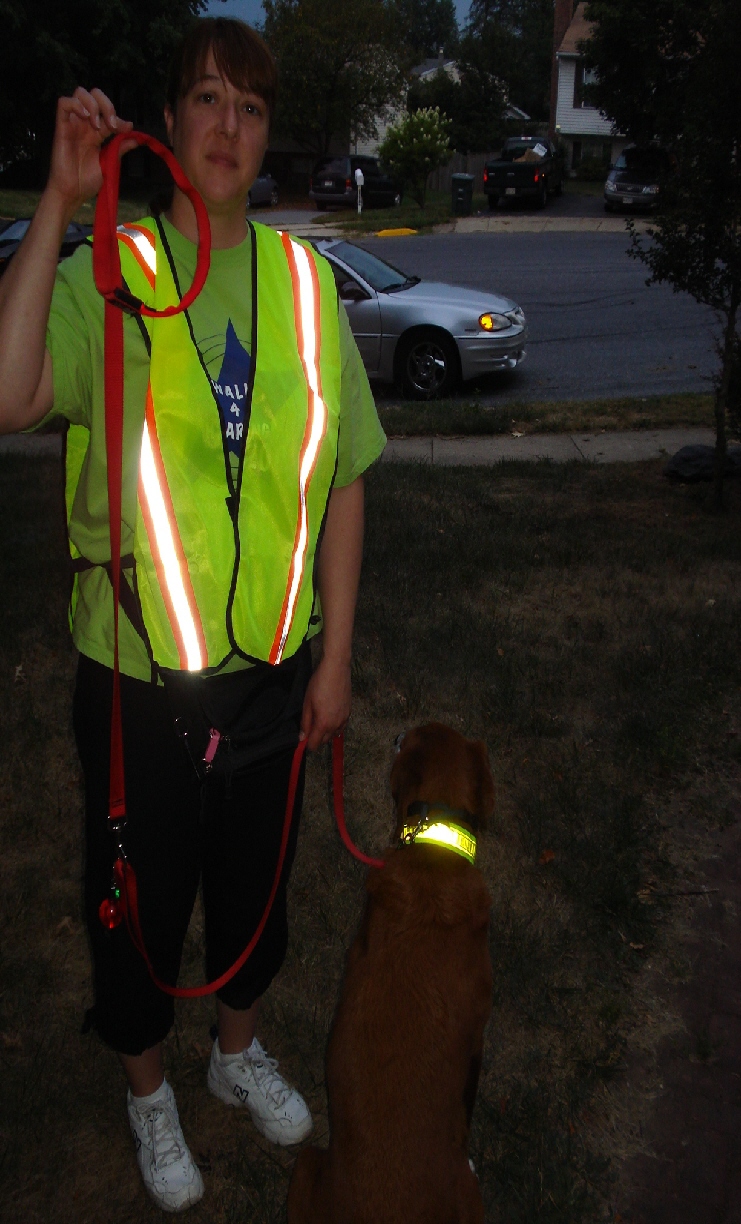
“The dog days of summer”… whew! Has it ever been hot here in my home state! I could take a repeat of last winter’s snows, believe me! I’ve always preferred 3 feet of snow to 3 weeks of 95 + temperatures! Because of the heat, Chloe and I have been forced to walk pretty late at night. At “twilight” it is dark enough that it isn’t safe to be walking. At least not in my neighborhood where people go 40 mph in a 15 mph zone.

To placate my husband, I make sure Chloe and I are decked out in a number of things that are reflective. I wear a reflective vest, and Chloe a reflective collar. The leash I carry actually lights up near the handle end, and it also sports “lighted bling” of various kinds. I’m sure from a distance we must look like Santa and his team of reindeer! Small price to pay … this GLOW IN THE DARK preparation — for a safe walk! I didn’t anticipate having to walk so late at night, yet preparation has made all the difference.

I’m safe.

It is cooler.

We walk faster.

No… really! Not sure why that is, but the big “loop” we walk is usually 7-8 minutes faster than if we walk when there is more light. Perhaps because we aren’t having to stop to get Chloe re-collected after startling a bunny? Either the bunnies have an early bedtime, or they simply are not seen as easily.

Just Because it Wasn’t Planned, Doesn’t Mean You Don’t PREPARE

I know of very few people who planned to acquire a disability or to be diagnosed with chronic illness. I have become acquainted with people who have progressive hearing loss or are deaf, people who have lost their eyesight due to Usher’s Syndrome, people with MS, Parkinson’s, Meniere’s disease, and Chronic Fatigue Syndrome, people with fibromyalgia and many others who find that they are living a life they didn’t exactly “sign up for”.

So what do you do?

Give up? Try to get a refund? Sue?

Well… most of the people I know “deal with it”. They do so in their own way, and for some it may mean working through it. Working through it for some people may mean that they have a pretty long period of time either denying the problem or grieving the problem. Each of us do this, but some spend more time on these steps than others. That’s OK. I get really aggravated when I hear someone tell a person learning to live with changes that affect their life that they need to “get over it” and “get on with life”. I guess I’m aggravated because the person saying that usually does not have the same diagnosis as the person they are preaching at! However, I do sometimes see someone who DOES share the diagnosis “preach” the same. Just because YOU did not grieve your hearing loss — or whatever it may be that you are dealing with — doesn’t mean that other people deal with the loss the same way.

Once you do work through that process, however, you can start to prepare. Preparation is key. For me preparation looks like this:

1. I always have #13 hearing aid/cochlear implant batteries. I carry some in Chloe’s vest, the car, my pocket book, and Chloe’s treat bag. I have them in my bedroom and my office.

2. My cane is right by the front door. If it is rainy or if there has been a pressure system come into the area, having my cane “handy” insures I actually take it with me out the door. No one “messes” with where I put my cane. If you move it, you risk life and limb (grin).

3. I leave early to arrive early. Let’s face it. It takes me longer to get to where I’m going. For one thing I travel with an assistance dog, and I have to spend a couple of minutes allowing her to “do her thing” before going into a public place. I have to load her up safely in the car. I have poor peripheral vision on one side so I drive the speed limit in a world where no one else does. I allow extra time to get to places ON TIME. Sure! I’m early sometimes, but I am rarely late.

4. I never walk out the door without my cell phone… and I am ZEALOUS about making sure my phone has a full charge. As a matter of fact… I have my cell phone on my person almost every waking moment. (Perhaps something to do with having a kid in college in another state now?)

5. I make it a PRIORITY to get eight hours of sleep. This is so important, I schedule myself to get at least eight hours. Heck! I’ll be honest… I actually do better with nine, so if I can schedule that I do! Having a cochlear implant is terrific! I love being able to communicate without having to actually be in the same room with someone. I’m fairly certain it’s not AGE… it simply takes a LOT of brain power to communicate now! Who’d have “thunk” that communicating with a hearing loss could be so exhausting. It doesn’t seem fair that no calories are burned! It is mentally (and sometimes emotionally) exhausting to communicate with hearing loss. If I get less than eight hours of sleep, it is very noticeable that I do not communicate as well. Fatigue will do that.

6. I make sure I travel with information about service/assistance dogs. You never know when you may have access issues. As a matter of act this has been a pretty prevalent part of our lives lately. (See the links here (with a video too!), here and here).

7. I avoid sodium, limit caffeine (something I find nearly impossible), and take Manganese! These three things I have found to be very helpful in limiting the effect Meniere’s disease has on my own life. Manganese is hard to find too! (Magnesium is plentiful… Manganese not so much). Remembering to make these “BIG 3” a priority, really makes a big difference in how severe my symptoms may be when an episode hits.

8. I memorize and use lines that best describe my communication issues and how I can solicit positive responses. These include:

A. You speak wonderful English! However, I have a hearing loss so I have trouble with accents. Could you repeat that a little slower please?

B. I have trouble understanding in background noise. If you would face me when you talk, I should be able to speech read and hear with my CI (point to it) and hear you much better!

C. I missed what you said. What I heard was (and I repeat the parts I heard). Could you repeat what I missed? (This way folks aren’t having to repeat EVERYTHING).

D. It’s so noisy in here that I am having trouble pulling your voice from “all this chaos”. Can we step over there (points) to a quieter spot? I really want to hear what you are saying.

E. Do you mind if we sit down? My balance is “off” today and if we sit it will give me one less thing I have to deal with!

F. Let’s step over here to talk so that I can put Chloe in a “safe place” so she won’t get stepped on.

There are many more… but it pays to rehearse and have specific examples to communicate to others your attempt at being proactive to help yourself. I have never… not even one time… had someone respond to these types of explanations in a negative way. Preparing explanations like this keep me from slipping and offending someone by spouting off:

A. Geesh, your accent is killing me! I can’t hardly understand what you are saying!

B. Would you quit mumbling and speak slower please? Gee whilackers!

C. HUH?

D. WHAT DID YOU SAY? (In a super loud voice trying to drown out all the noise. Now ever eye is on you and the person who was trying to talk to you).

E. (Denise is bumped and falls to the floor in a tangle of arms and legs… including doggie legs).

F. STOP STEPPING ON MY DOG!

Preparation = Ownership

In preparing and planning, a person with an acquired disability or chronic illness in essence choose to take ownership of their own life. It isn’t another person’s responsibility. It is ours. What ways do you prepare and “own” your life to better live with a disability or chronic illness?

Denise Portis

© 2010 Personal Hearing Loss Journal


Making the World Accessible… One Voice at a Time

I love it when I have guest writers come forward to write for Hearing Elmo. There are so many different types of disabilities, chronic illnesses, and debilitating health issues. Reading different perspectives and other individual’s stories is important. This week Hearing Elmo welcomes guest writer Kacey A., who lives in South Carolina with her husband.

Because I am such a fun and loving wife my husband recently invited to join him as he completed an assignment for his Master’s program. Secretly, I think his intent was to get me to the department store so he could beg me to buy him something!  His assignment was to visit a local establishment and evaluate it for handicap accessibility.  He probably wishes he would’ve left me at home.  Not only because I didn’t buy him a thing, but because he forgot how much of an “out of the box” thinker I am.   I had him taking more notes than he takes IN his Master’s class!

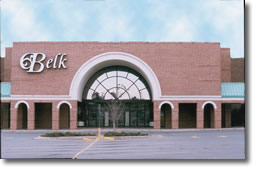
The establishment we chose was the local Belk department store. It is the only department store we have here in town, so it keeps a steady stream of business.  According to some statistics I found, a staggering 24.5% of our county is listed as having a disability.  So, I think it is pretty important for our businesses to be accessible to all of those who have disabilities.

But what does accessible mean?  When people think of “handicap accessibility“, they usually think of people in a wheelchair.  But what about those people who have a disability but don’t need a wheelchair?  Some disabilities require a cane, a walker, an assistance dog, or a simple chair/bench to sit down and rest for a bit.

The first thing I noticed during this visit WAS wheelchair related.  There were quite a few handicapped parking spots up close to the door, which was good.  BUT…because I’ve had some experience with loading and unloading wheelchairs, I also noticed that the parking spaces were the normal size with no little yellow striped zone to allow extra space to unload a wheelchair.  So, if you parked with a side-loading van lift, you’d either dump the wheelchair into the row of bushes or into a car.  Hmm, not very practical.

The next thing we noticed was the little sidewalk entry for wheelchairs/walkers/strollers/carts. It was made of bricks that looked like Legos, with all those little bumps on top!  It’s not easy to push a loaded wheelchair, stroller or a cart, let alone push it up an incline made of bumpy bricks.   I imagine it would be the same story for someone using a cane or walker.  Those bumps would just get in the way and may cause more injury. I’m not sure what these people were thinking when they put in bumpy bricks but I was feeling a little pessimistic already.

But then things started getting better.  The entry way was a double automatic door, which got a “double” a thumbs up because it actually gives a person some space to get in and out!  In between the two entrance doors, we spotted a courtesy wheelchair, which was another thumbs up for me.  There are people I know who don’t need wheelchairs on an everyday basis, so they don’t own one, but when they get out and about, they find they need one.  So a courtesy wheelchair is always a great thing to have available.

Feeling adventurous, we grabbed the wheelchair and my husband (who is also a  football coach) pushed me through the aisles as if I was the football he was rushing into the end zone before someone could tackle him.  I held my breath, shut my eyes and prayed quietly to keep from screaming, but when we stopped and I opened them, I realized that we made it clear across the store!  To my surprise, the wheelchair actually fit down just about every aisle. There was one aisle that had a ladder in it, but it was easy to maneuver around to the other side of the ladder.  Once I caught my breath, I started feeling a little more optimistic. We returned the wheelchair and headed towards the bathrooms….. where things got rough again.

Bathrooms are always difficult to “pass with flying colors” in my book.  For starters, the signs usually only have braille on them about half of the time.  I guess those with sight impairments don’t have to use the bathroom. Of course, I can see rather well and sometimes I have trouble figuring out if I should go in the door labeled “Blokes” or the door labeled “Sheila” at Outback. Sigh.

Anyway, moving on.  Then the door itself is usually an issue too.  Very rarely do you see a bathroom door that has a automatic “door open” button.  I grumbled to my husband about how this should be mandatory at all facilities in order to be accessible for those with walkers, strollers and wheelchairs. He looked confused.  So I had to demonstrate with my “air walker” what I really meant.  It is NOT easy to push a (sometimes heavy) door, maneuver a device AND keep your balance without bumping into someone who is coming out the door.   My heart is happy when I see facilities that just eliminate the door all together and have a small “maze of walls” that leads to the restrooms.

So let’s say you manage to get in the door, or get lucky to find a place that doesn’t have a door.  Well, you are usually “home free” then because most places have the handicap accessible bathroom stall.  However, most people never even notice that most places are missing a lowered sink.  This isn’t just an issue for those in wheelchairs.  Some of those sinks are REALLY high for children to get to to wash their hands too.  Then you have the mom who stands and lifts each of her seven kids up to the sink to wash their hands.  Or she just breaks out the hand sanitizer on the way out the door.

Sigh.  Speaking of mom’s.  You know how most restrooms have a baby changing area?  Yeah, those are great, except for this one.  It was RIGHT in the way of the door.  So when it was down, no one could go through or come out.  Not very convenient.  But my other issue with these is that they have a weight limit.  What happens when you have a large child, or even an adult who needs to be changed?  I have seen ONE place that had a “Changing Counter” to allow for that.

Okay, I think you get the picture of why bathrooms never really get a thumbs up from me!  We finished up and my husband was getting anxious to leave, but I wasn’t done.

As we walked through the store, I noticed that besides the shoe department, there wasn’t a single place to sit down for those who may just need to rest.   Not even at the fitting rooms!  Chairs are such an easy and relatively cheap fix.  Considering the number of  people these days with fibromyalgia or arthritis that  need that short break so they can continue to enjoy their day without regretting it later, you’d think that even a small department store in a small  town would have some chairs!

And finally, what may be the most important aspect of being “accessible” — the employees.  Some facilities may not have everything someone needs, but friendly and helpful employees go a long way.  They may be able to find a chair for someone to sit down in.  Or they simply smile and repeat themselves to those who are hard of hearing.  They can move things around for those in a wheelchair or a walker.  They can lend a hand in opening that heavy bathroom door.  They smile as a person and their assistance dog walks by rather than scoffing and yelling about a dog being in the store. Friendly employees really go a long way.

People who don’t have disabilities don’t think of accessibility issues until the issue is staring them in the face.  How do we train employees to be understanding in a world that wants to criticize and condemn? How do we educate people in a world that would rather be ignorant because it is “easier”?

A disabled person’s limitations and accessibility issues usually go unnoticed because the person in the situation doesn’t have the energy or the confidence to ask (or demand) that organizations do something to help them have easier access.    How many people do you know who would rather just stay home than worry about making a scene somewhere?  I know far too many.  How do we build confidence in those around us who have disabilities to fight for their rights?

More importantly, how do we get businesses to think about these things before the “fight”? Organizations usually do only what the ADA requires and don’t think anything else of it.  While I think the  establishment we visited did well compared to some other establishments in town, there is still room for improvement EVERYWHERE.  But how do we push for that improvement in a day when so many organizations are looking for ways to cut costs instead of increase them?

The only answer I can come up with is this —  Stand up for yourself and those around you who are disabled. If you are blessed to be without a physical impairment, start thinking about those who you know who do have impairments while you are out and about.  Would they be welcomed into the store with their assistance dog?  Would they be able to easily maneuver around the facility?  Would they be greeted by friendly employees and treated with respect?  If the answer is no, then speak up.  Let someone know.  There is no need to make a scene, but simply let our voice be heard…. one voice at a time.

By the way, my husband got a 100% on his paper that week.  So maybe he didn’t regret taking me after all!

Kacey A.

A Common Dust Speck

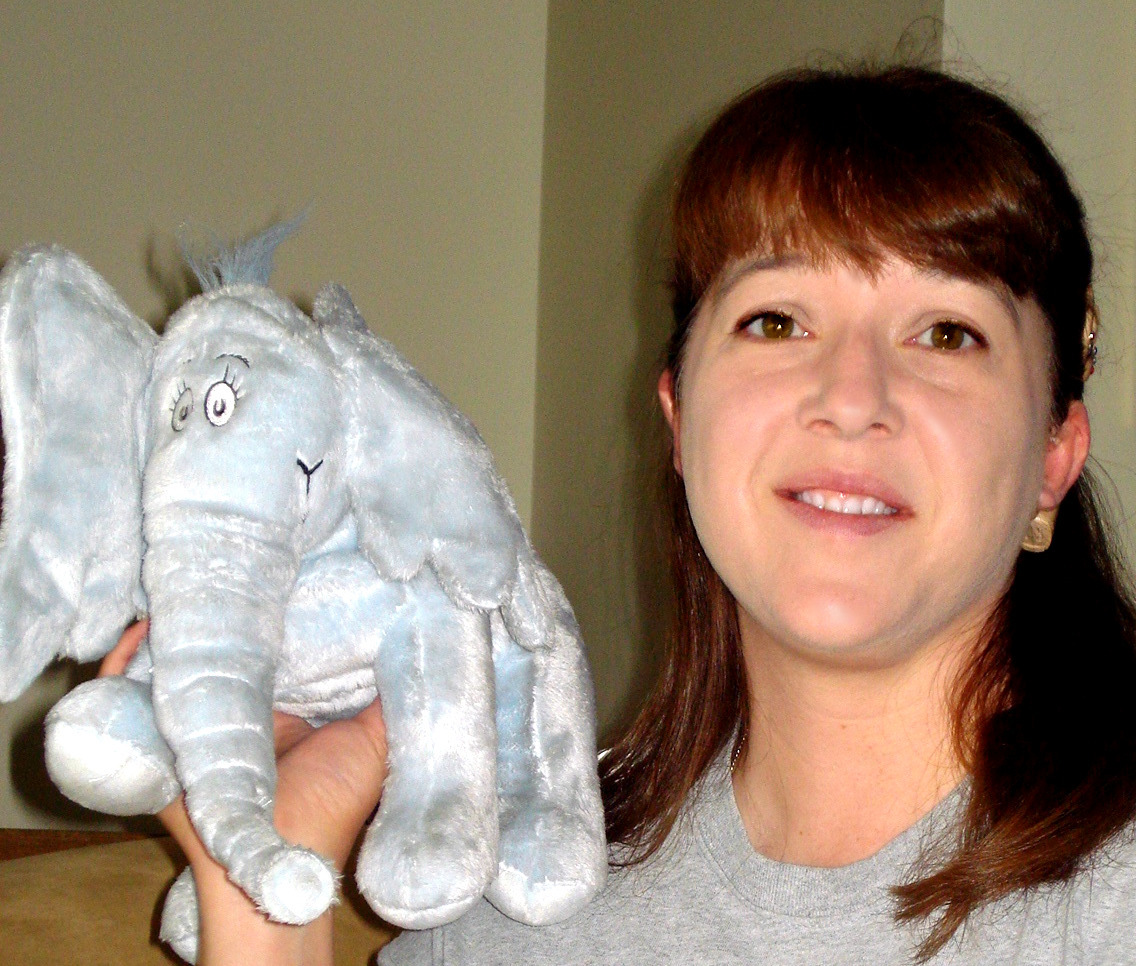
To others it was just a common dust speck. To Horton, it housed an entire world in need of assistance, with hundreds of lives at stake on the brink of being (gulp) boiled. “Common” is subjective, for what is commonplace and boring to one individual may be exactly opposite to another.

Losing to Learn to Appreciate

Having an acquired disability like hearing loss and a balance disorder often teaches me to be appreciative of things I once took for granted. Activated merely eight days before, what blended into the background as a normal, ordinary, and mediocre sound to my husband, was the astonishing, spine-tingling gurgle of sound to me! It took me 15 minutes to finally pinpoint the sound of the electric coffee-maker in his office.

“How could you not hear THAT! What a wonderful sound! It is so distracting! It fills the entire room!” I exclaimed.

“Honey, it is such a commonplace sound it doesn’t even register for me!” he replied.

I was stumped! This gurgle-burp, sigh of steam… commonplace? Doesn’t register? No way!

Subtle cues

If you’ve never had any experience with a hearing assistance/balance assist dog, there are cues that are subtle… even invisible to someone other than their partner. My husband is constantly amazed that I am able to scoot the cart out of the way of a “mother of two in a hurry” at a store when I only have one cochlear implant. Finding the direction of sound is quite a challenge. However, Terry isn’t watching what I’m paying attention to while we shop. If Chloe turns her head and pricks her ears up, I automatically look in the direction her nose is pointing. To me this subtle cue shouts, “Well! Would you look at THAT, Denise!”

When air pressure and bad weather create a vestibular nightmare for me, it is the subtle cues that Chloe and I communicate most effectively. On a “normal day”, I’ll drop something and can slowly bend to retrieve the object. However, on a “bad day”, I only need to look at the object I dropped and intercept Chloe’s gaze… for she has most certainly already noticed the dropped item too. Sometimes I only smile and she cheerfully retrieves the object! Other times I may point and ask her to specifically fetch something. (You don’t ALWAYS want your dog to retrieve dropped items. For example, my husband Terry dropped a large candle from the top of the closet this weekend. I did not want Chloe to retrieve any of the glass scattered over the carpet and had to “shoo” her away!)

Chloe may go through a day and only alert me to the kitchen timer a couple of times, my cell phone, and retrieve my garden gloves from the yard. Those tasks may seem very ordinary and commonplace. Yet without those alerts, my tea kettle would have boiled empty and the chicken defrosting in the microwave may have sat in there all day! I would have missed the call from my husband reminding me that he was working late. I would have had to retrieve those garden gloves myself in the middle of a yard with nothing nearby with which to pull myself back up! So common and subtle cues are subjective. They may be very important alerts that enable me to live more independently.

Just Help

I know people who do things to help others who are never noticed. They don’t want the attention. It can be something as simple as paying a military person’s meal for them when you see them in a restaurant.

Perhaps you help a mother get her stroller up on the curb, or take a shopping cart to the “cart corral” for a customer in a hurry.

Don’t ever underestimate any help you are prompted to give. We are called to serve… to make a difference. Even people with disabilities can help others. I know someone who is blind and deaf who emails “10 Blessings” a day to various people. As I’m the occasional recipient, I can tell you those blessings come on days I need them most.

You don’t have to have money to help. Most acts of service are free.

You don’t have to have a lot of time to help. Most opportunities take seconds.

Don’t ever look at a day as a “common” one. If you really set out to do so, you can make a difference in someone’s life.

If you listen really carefully, you may even hear…

“We are here, we are Here, we are HERE”

Denise Portis

© 2010 Personal Hearing Loss Journal


Follow-up to “Community”

It’s so nice to have guest writers from time to time if not for any other reason, than to give you a break from me! Today I am posting a well-written and thought-provoking comment from Dr. M.E. Osborne, whom I share a “community” with at the Cochlear Community. Feel free to leave your comments (as always), and if you like I can forward personal messages to her via email.

Dr. M. E. Osborne

Denise : We are all thankful you are a member of the Cochlear Community. You bring us different, clear viewpoints and concepts to think about.

Your description of the grocery store incident put me there as if I had been a butterfly on the top shelf. Some thoughts flew instantly to mind, and others developed as I thought about the incident throughout the day.

FIRST: How sorry I am for the little boy; he is being taught prejudices. If a parent actively, consciously imparts a narrow connotation of “normal” – for 7 years – you know there are other interrelationship terms that are also skewed.

SECOND: I take it she also was hearing impaired and was referring to “normal” in the “deaf community” through her experiences and the results of the choices she made. By 7 years of age a child’s basic personality and framework of values are 80% set. But the input of details that determine our ability to make our own choices is only about 30% set [Kaugher, 2004] That little boy is on the cusp of making important choices for himself.

His language development is still open. Unless his parents permit his examination, it will be another 11 or 14 years [depending on “legal age for self-care” in the state where he is then living]. Those of us in the Cochlear Community each know at least three people who had no hearing until Cochlear Implant[s] happened. That might be case for that little boy. He would be eligible for speech/ auditory/ aural/ oral services. He might come to speak as clearly as a couple of Cochlear Volunteers. IF THE MOTHER’S ATTITUDE PREVAILS, HE WILL NOT HAVE THAT CHANCE EARLY IN HIS LIFE. HOW TRAGIC.

THIRD: You were SO much more polite than I would have been. I would have flown after her to “ask” her, HOW DARE SHE MAKE THAT IMPORTANT CHOICE FOR HIM!  No matter how I had to communicate – sign with the ASL I remember, spell words one letter at a time, or write it. She would understand my intense furor with her making life choices for another person.

She is exactly the type of parent who drives people in my chosen area of expertise out of our minds. She is afraid of technology and teaching that prejudice to a child, not describing options.

[For those of my Cochlear Cousins who do not know, one of my doctoral concentration areas is Special Education Administration. The program I completed was heavy in being an advocate for the client – especially for youngsters.]

Then I would have emphatically flown off into “WHAT IS ‘NORMAL’ IS SITUATIONAL.” The two of them “out in the usual world in a grocery store, using ASL to communicate,” was not normal right then – unless everyone in the store at the same time was using ASL

“Normal” implies behaviors, clothing, manners, foods, rules, customs etc. that are highly predominant among a group of people.

THERE IS NO ONE NORMAL FOR EVERYWHERE, ANYTIME.  I have lived both as a citizen and as a military member, literally around the world; traveled extensively on four continents, and have been privileged to be part of many social communities. Communities may be defined internally – people who have chosen to be self-segregated from interaction/ participation with those outside. Communities may be people forced to separate, by customs, laws, etc. Communities may be segregated from each other on some binding reason the members consider enough – an example is the “upstate homies” and the “downstate homies” in a juvenile prison.

While teaching in a southern city, I was accepted by the Deaf Community as one of them because I tutored/ taught the children. The same reason was in force in a northern city as I taught three young people for 6 years. Their three “accompanying interpreters” in public school, agreed to provide a concentrated ASL class for the 24 teachers involved.

What are perceived as communities, sometimes must merge, not just function, but each individual interact successfully. Consider the situation: Nancie was one of the school interpreters; Black; attending an active Catholic church with an almost total Black congregation, and the congregation kept many traditions of Black, southern churches – the Mother of the Church and the Sodality Members wore white, all other members wore navy blue, to any church service. Nancie’s mother passed away. The three students, the two other interpreters,  all 24 teachers, students close to the signing student’s, & the students’ families, piled into a school bus at the school located on the fringes of the city, to ride deep into the city,  down to the river. In the melee of people were Black, European, Hispanic, Jews, Catholics, Baptists, Methodists, hearing, partial hearing, and totally deaf. We were greeted and welcomed by the Priest and the Mother of the Church. You bet we had it together … because it meant something to Nancie, and us. We sat behind the Deaf Community – one of the two interpreters signed in the front – the other about in the middle, both up high enough to be seen. All teachers, families, etc were in navy blue dresses or suits. The Catholics spread out through the group to help the others get through a completely sung, old fashioned, high Mass. [For those of you who wonder, the cemetery was a short drive to the north. Yes, our bright yellow school bus was in it.]

Imagine the chaos, the pathos, the inflicted insults and injury had every individual clung only to what made them comfortable.

Currently I am in the USA, living in a SC rural area near an average small city, 50K people.  Permit me to list some things that might not be the norm, the usual, in public situations:

  • ASL, or for that matter, any language other than English;
  • an assistance dog, lemur, ferret, or tree monkey;
  • a lady who covers the left side of her head, but puts a finger in her right ear when eight F-16s go fly low, landing/ taking off.    [Guess who with a BAHA]
  • people using heavy, metal, leather braces and cup crutches;
  • families of 21 children;
  • people wearing clothing that openly indicates their choice of religion/ religious practices – Hutterite plain clothes, burqa, nuns in habits, yarmulke/ Kippah;
  • people with little screens on their head attached to a weird looking hearing thingy – you can see one on Rush Limbaugh.

Some things that here are the norm:

  • No matter the time of day, lots and lots of men and women in military uniforms for the Air Force or Army  [NOT Navy or Marines] Shaw AFBase is in Sumter, Ft. Jackson Training facility is in Columbia, and the 3rd Army is coming to Sumter piece by piece
  • Many large, off road capable, pick-ups with a full gun rack inside the back window of the cab. Often there is not a need to lock the truck, there are a couple sets of large barking teeth on guard
  • After people have been home from medical, banking, other “white-collar” jobs, welding shops, construction, several groups of motorcycle riders gather – Legion Riders, Sons of God, Hyundai Hots – each in a different huge, parking lot
  • Men and women who proudly have Concealed Weapons Permits, carry their handgun, and love to take them out [unload all] and compare. [Me too]

NONE OF THE LAST FOUR ITEMS WOULD BE “NORMAL” IN DOWNTOWN CHICAGO AND ZIP CODE 60625.

Thank Our Lord for people in the Cochlear Community who

  • chose to create and maintain an open, welcoming community
  • accept input from professionals, family, and friends in making decisions; and also welcome the prayers of us who offer them
  • respect and embrace the decisions community members make
  • have the personal courage – sometimes at the cost of pride – to ask for support from others who also live with Cochlear technology
  • encourage us who are slugging our way through our CI/Baha  journey by sharing in both disappointments and joys
  • are ready to show their own personal hearing technology to people – recently I listened to a campaign manager explain that a car magnet was worth 300 votes for a political candidate – so I was thinking,  can we assume every CI magnet explained will bring 300 more people to hearing ?  Maybe the person spoken to, maybe someone they talk to ?
  • belong to SEVERAL social communities and move comfortably from one to another – even if we make a mistake now and then – such as when I heard my name called in exasperation in Eastern Star meeting, and snapped to my feet, smartly made a Navy military about face, to attention, and said sharply, “Ma’am”. Wrong community. The response should have been to stand graciously, make a small bow, and say respectfully, “Worthy Matron.”
  • are not afraid to risk making new friendships, that begin in the ether of the Internet, and because of geography, might never move to in-person friendships.

Dr. M.E. Osborne

Community

I don't exactly blend into the background...

Recently Chloe and I were at our neighborhood grocery store. I rounded a corner and came face-to-face with a young boy approximately 6-years-old. His eyes grew wide as saucers and his mouth dropped open. Curious, I looked around quickly to make sure his astonishment was at my own appearance and not on someone in my vicinity. Since it was just Chloe and I… I surmised he was surprised at ME. He looked at Chloe carefully and read her vest. I could see his little mouth sounding out the words on her vest. I could “see the light bulb go on” for him about what Chloe does as her job. He took a step to the side and leaned so as to better see the side of my head. My smile let him know I was OK with that – I even turned my head so he could better see the cochlear implant. His answering smile seemed thrilled to understand as the result of his attentive perusal. I wasn’t prepared for what happened next. So unprepared was I, my own mouth dropped open in surprise!

A lady who looked like she’d lost a 7-year-old boy came around the corner in a near trot. She stopped dead in her tracks and looked with relief on the boy and waved at him to “get over here“. He shook his head “no” and signed, “Look (towards me)! Cochlear Implant receive me, able dog own can/able? yes?” His mother practically interrupted his sign and shook her head NO.

She signed back, “Dog want – cochlear implant want not. Appear normal important!” She took him by the hand and drug him away to the cereal isle. I stood there for a few minutes digesting what I had over – erm – HEARD. Obviously, she didn’t realize I am fluent in ASL. I stood there … in all my NOT NORMAL glory… not fitting in… while Chloe sat and stared at a box of Uncle Ben’s rice that happened to be nose-level.

I was speechless! For those of you who know me – well that is a RARE THING – THAT! I finished my shopping in a near-daze.

Not Normal

I wear “bling” on my cochlear implant and have a bright, red ear mold on the hearing aid in the opposite ear. I have an assistance dog who alerts me to direction, sounds I miss, and helps me with balance related tasks. You can look at me and guess pretty quickly there isn’t a lot NORMAL about me. But that isn’t because I have a hearing loss and balance problems. Plenty of people wear cochlear implants or hearing aids. Plenty of people have balance problems. I believe my not being “normal looking” lies in the fact that I make sure my invisible disabilities – AREN’T. There are numerous reasons for that… likely best left for another post. It is in my best interest to be visible. It keeps me from getting injured – although it doesn’t guarantee that.

Not everyone with hearing loss chooses to be as visible with bionics or assistive listening devices and technology. Not everyone with Meniere’s disease is partnered with an assistance dog. Yet this works FOR ME. I’m happy, confident and independent. Isn’t that what every adult wants, after all? Sure – like everyone I have things I am dependent upon. My faith – the love of my family – connections with others. However, what I choose to use in order to live my life independent of the help of others is my desire. I’ve taken steps that I felt were necessary to ensure that independence.

A “Brag” on the Hearing Loss Crowd

Can I just brag for a minute? Do you know that I believe people with hearing loss tend to be more accepting and understanding about differences than any other group? I am MOST at home in a crowd of people who all have hearing loss yet are extremely different.

Some have assistance dogs

some “sport” various CI’s represented by all three manufacturers of cochlear implants

some have vision loss as well

some have hearing aids

some wear neck loops and are using assistive devices

some use sign language

some carry notebooks and READ and WRITE messages…

Yet I am at home among this group. I was reminded of how at home I feel after enjoying the numerous pictures taken by friends who were able to attend the recent Hearing Loss Association of America convention in Milwaukee. Everyone “fits in” at these conventions. It’s much like a family reunion. I don’t agree with everything HLAA does, nor do I believe they always seek to fulfill their original mission. But one thing HLAA does very well is – COMMUNITY. Through forums, live chats, national conventions, state conferences, local support groups, and the Walk4Hearing, HLAA provides community to an every-growing population of people living with hearing loss. Being a part of this community encourages people to do more than live with hearing loss. This community encourages LIVING WELL with hearing loss. I think we all want an abundant life!

William Mather Lewis: The abundant life does not come to those who have had a lot of obstacles removed from their path by others. It develops from within and is rooted in strong mental and moral fiber.

Socrates: Living well and beautifully and justly are all one thing.

Latin proverb: While life lasts let us enjoy it.

Denise Portis

© 2010 Personal Hearing Loss Journal


For Our Own Good

A dog with a cone that is not FREAKING OUT

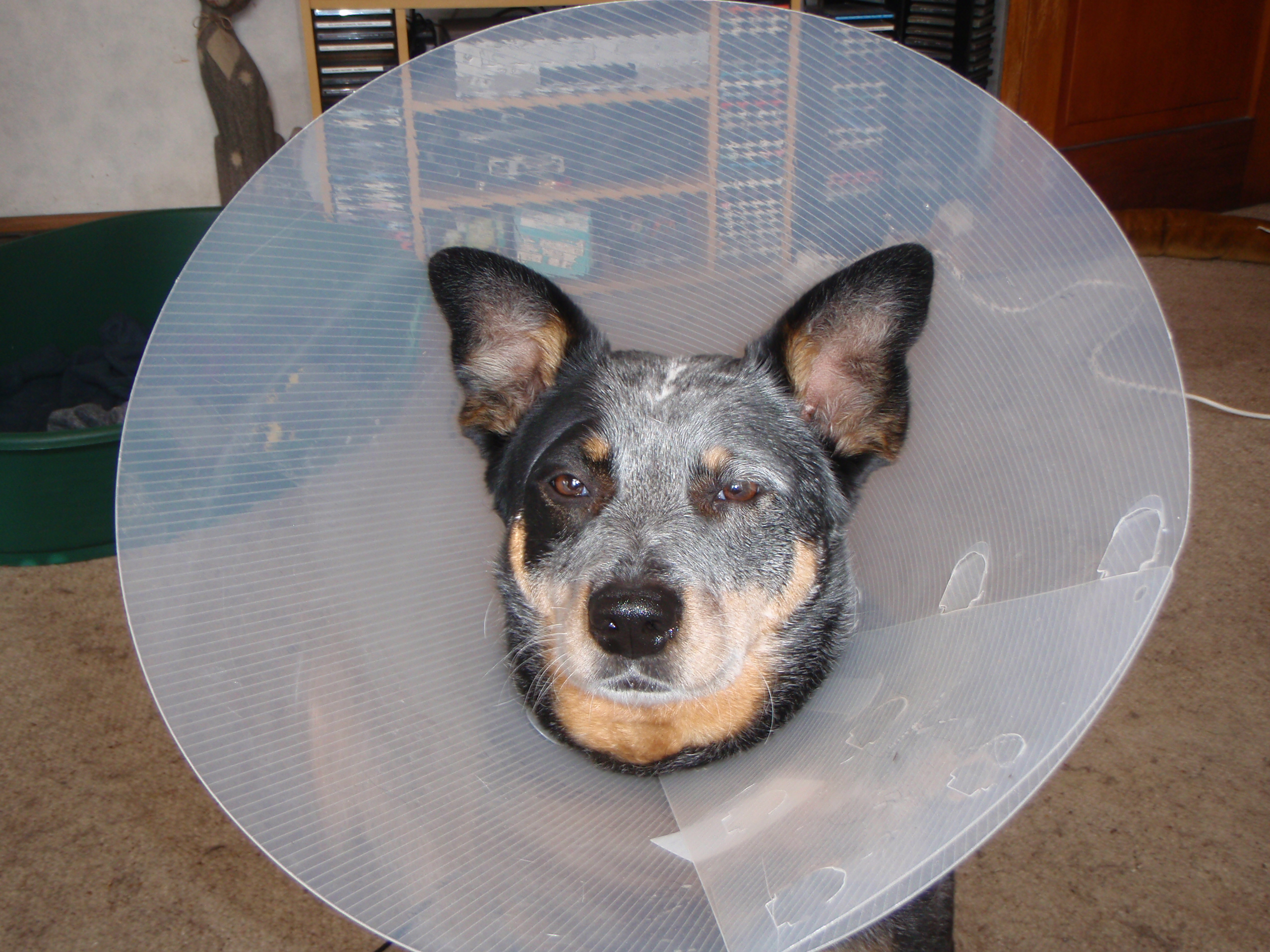
Chloe was injured on May 9th and it has been a LONG road to recovery. She had surgery following the accident to save a toe, lost 4 toenails… and it has been “3 steps forward and 2 steps back” ever since! Our biggest problem was getting her to leave the surgical site alone. Chloe is very smart. Chloe has been trained by the best. Chloe attends Fidos For Freedom for follow-up training and polishing. But Chloe? Well… she’s still a DOG. We were given a very nice cone similar to the one in the picture above. The only problem was that Chloe would go BERSERK when I put it on her. During the day, I could simply keep an eye on her while I was working at my desk. However, at night I needed a little assistance. The CONE was suppose to be my assistance. Every time we put the “cone of shame” (a line from the animated movie UP!), she went crazy… running into walls, dashing her head around, and inevitably breaking open the cauterizations and stitches on her foot. We ended up having to use “Bitter Apple” instead.

This saved my life actually! I wasn’t getting a “wink” of sleep and was seriously near a nervous breakdown from fatigue. One of my daughter’s friends at work recommended “Bitter Apple”, and it only took a few sprays for Chloe to LEAVE her FOOT ALONE! All night! (Thank you GOD… quite literally!).

I think part of the cone’s drawback was that it wasn’t transparent. Chloe couldn’t see to the right or left… all she could see was what was directly in front of her. It made her panic – the NOT knowing what was around and about. She could hear our voices, but her world had suddenly become very small. It was only as big as what she could see out the end of the cone.

You can’t very well explain to a DOG why they need a cone on their head. If you could explain that… well GEE! You could probably reason with them about why they should leave a surgical site alone! We could not explain to Chloe that the cone was for her own good.

For OUR Own Good

Isn’t that just like us? How often do we fight against what is only there to protect us? Some things that come to mind:

1. The speed limit. It’s not there to challenge you to see if you’ll get caught speeding. It’s there to protect you and others.

2. Exercise and eating right. How many thousands of Americans re-commit each January to make this change? It’s not because getting sweaty, pumping “iron” and eating fruits and vegetables are a lot of FUN. But we’ll live longer… and probably feel better too.

3. The 10 Commandments. Yeah, I know… it’s OLD TESTAMENT. But aren’t these things we should all continue to strive for even as “New Testament” believers? If you are a person of faith it normally means there is something different about you. If you covet, steal, murder, and hate, it is YOU who is scarred and broken in the end. Those “commandments” are for your good.

4. Taking medicine. Blech. But if you are sick, do you not take medicine when it may be what stands between you and good health… or life?

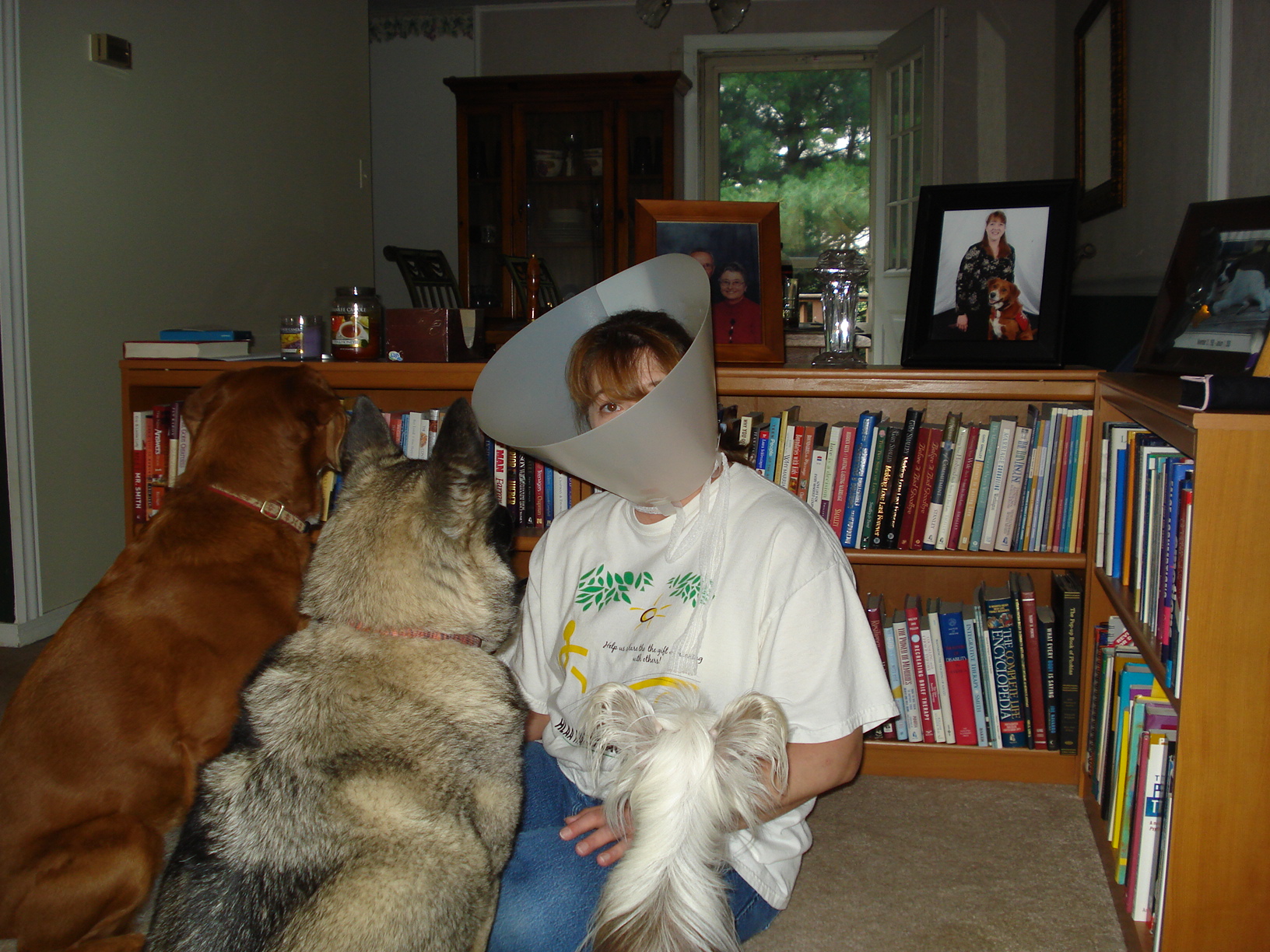
All 3 dogs were very concerned about my donning the "Cone of Shame"

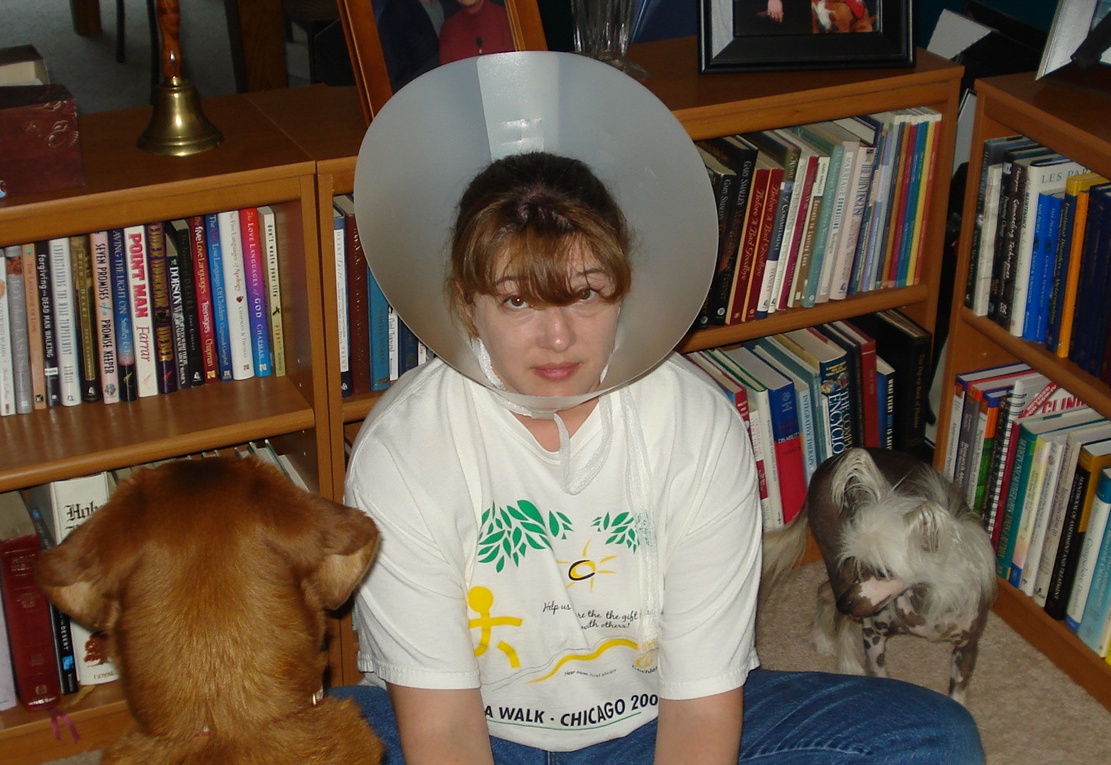
I tried on the “Cone of Shame”. (Does that make me “game” or nutty?) The dogs were very concerned as you can see. All 3 sat in front of me and Chloe whined and breathed hard in my face every time I turned her way. It was very disconcerting to not be able to see around.

I believe that a “cone” is a good representation of how difficult it is to put your faith and trust in something or Someone that you can’t see. I have never seen God, yet He’s as real to me as anything I have ever experienced. I see Him in His creation. I see Him in the service and love of others. I see Him in answered prayer… even when He says “no”. Yet, I’ll admit to a major frustration in my faith walk. It is really hard not knowing what tomorrow may bring.

It can be very disconcerting to have a disability that may be progressive. It can be frightening to have an invisible disease like fibromyalgia, Meniere’s disease, or hearing loss. Have you ever been told “you’ll only get worse”? That knowledge can make it really difficult to have dreams and hope to see beyond “today”. We have to trust that what we have access too is enough for now. We should reach out to others and form strong relationships. We should research, prepare and educate ourselves. We don’t have to run around in a panic with this “cone” we didn’t ask for! Can you calmly and in faith, believe the “cone” is for your own good?

I have a “short-term” goal and a “long-term goal”. I strive hard to make every minute in pursuing both worthwhile. I know God has a plan for me that is not fulfilled as of yet. I know this because I am still here. It can be very frustrating sitting around with a “cone on my head and heart” — not able to see the big picture that God has access to  — since He PAINTED IT. I know keeping my eye on the short-term goals are important. It’s good for me. It keeps me focused, on track, and “real”. Yet I really want to be able to see 360°. I realize GOD can see the big picture… that’s what “omniscient” means… all knowing. I have to have FAITH that what I’m allowed to see and make sense of RIGHT NOW is enough. Having that “cone” on is for my own good.

It may not be very comfortable, but we have to believe that God has our best in mind.

Proverbs 3:5-6

Trust in the Lord with all your heart,
and do not lean on your own understanding.
In all your ways acknowledge him,
and he will make straight your paths.

At some point… I’m going to see beyond the cone.

Denise Portis

© 2010 Personal Hearing Loss Journal