Embracing It!

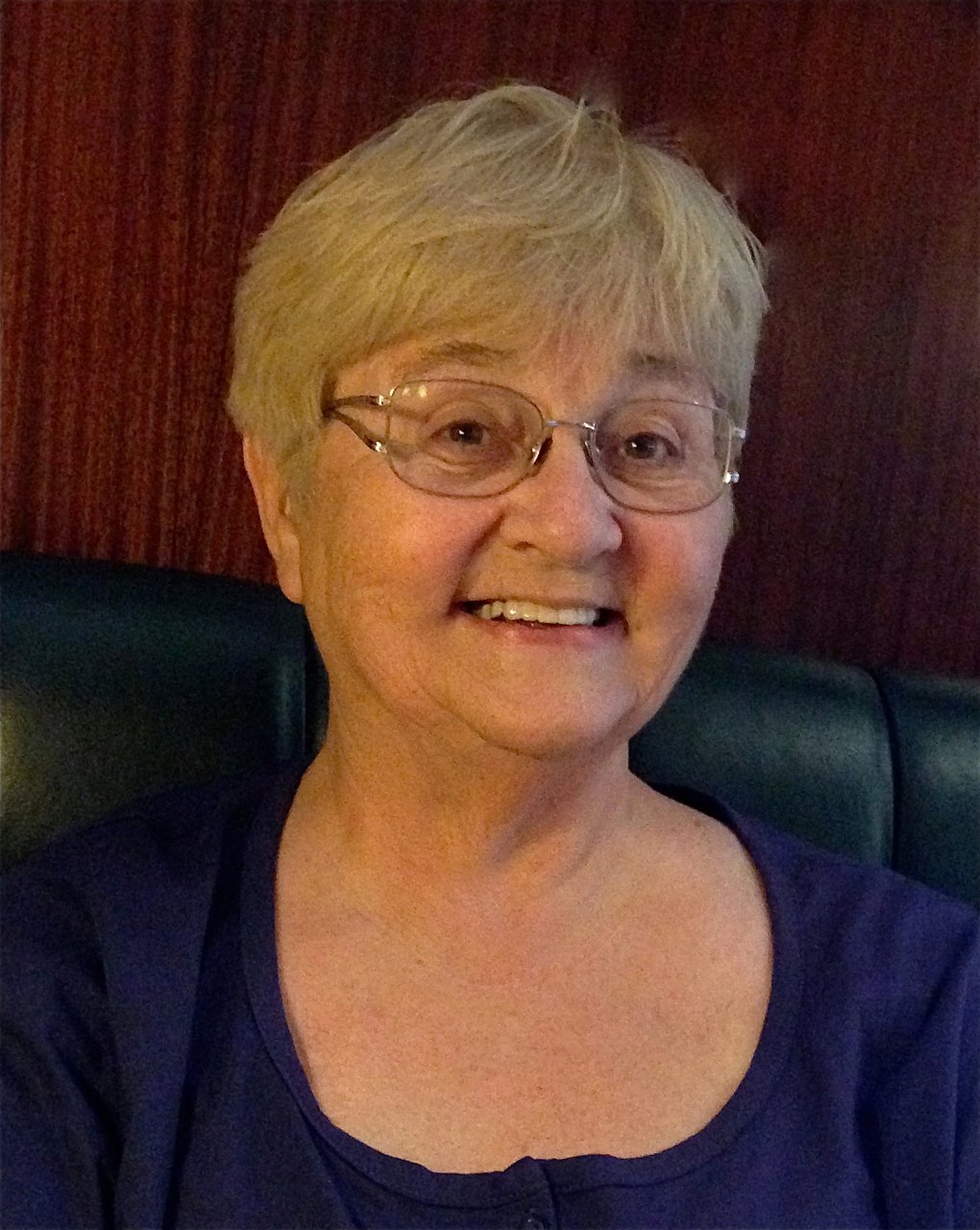
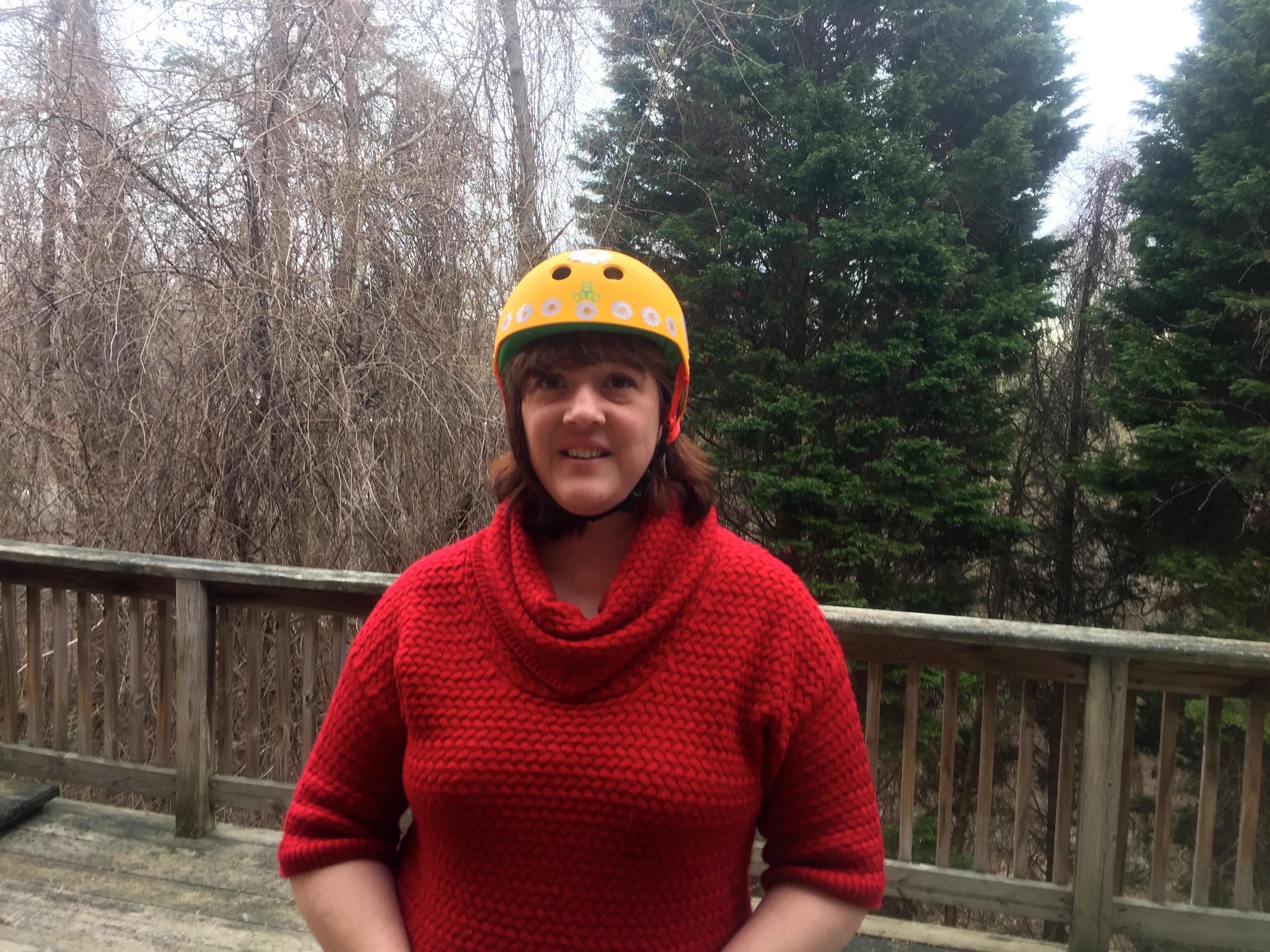
"So... tell me the truth. How does this look?" (Terry) "Baby? You are rockin' that helmet!"
“So… tell me the truth. How does this look?” (Terry) “Baby? You are rockin’ that helmet!”

I believe that there are very legitimate reasons for people who choose to keep invisible disabilities invisible. I respect their choice and their reasons for doing so. In many circumstances, it makes “good sense” and isn’t at all about vanity or shame.

I am “all out there” for lack of a better way to put it. In my profession, in my life, in the community service arenas I’m involved in, and for personal safety reasons, making my invisible disabilities – visible is the right thing to do.

I wear bling on my implant. I think it is fun. It puts a smile on my face. I’m so SO thrilled to be hearing again. The progression of my hearing loss took 12 painful years. I was completely deaf for almost two, silently researching and investigating cochlear implants. I’m so proud to be hearing again. Some say I’m flaunting it. Ummm…

YEAH.

If you do not want to bring attention to disabilities, do not ever choose to be partnered with a service dog. Even though our dogs are taught to be nearly invisible (and don’t you know folks are always startled when I get up to leave restaurants because they had no clue my dog was there?), when you walk through a store or into a doctor’s office, your service dog will bring attention to the fact that “something is different about you”. It has been a very long time since working dogs were only trained to be guide dogs. There are diabetic alert dogs, seizure alert dogs, autism dogs, PTSD service dogs, mobility assist dogs, balance assist dogs, alzheimer assist dogs, hearing assistance dogs, and the list goes on! My service dog makes me more independent. I don’t have to ask for help nearly as often. I don’t miss things (sounds my CI won’t pick up), and I’m confident and more safe. But choosing to have a service dog will bring attention to you.

When my Meniere’s disease worsened, I finally realized that 3-5 falls a week were too many. When I have my cane, I stumble maybe 3-4 times a week, but rarely go all the way down. I average only 2-3 falls a month now. I have three canes. They are bright, bold, and beautiful. I don’t try to hide that I carry a cane with me.

I love to be outside. Perhaps it’s the “farm girl” in me, but I love to be outside and love to walk. Just because I have a balance disorder does not mean that I am going to stop walking. Yet… I seemed to have trouble doing it safely. Even with cane and service dog, I was still taking tumbles when the roads or sidewalks were bad. Winter is my favorite season. I love snow, love ice, love “visible breath” in the air… but I have had some bad winters, 3 years in a row. As a matter of fact, when perusing my medical records with my neurologist, I was averaging 2 concussions each year, usually in Winter months. My last mild concussion was March 8th. I have a follow up with my neuro the first week of May. At the last appointment, he said, “You know. You need a helmet for when you walk!”

I laughed and said, “all my friends tell me I need to be wrapped in bubble wrap or need to wear a helmet.”

He looked at me eye-ball to eye-ball and said, “You don’t understand. I’m being serious. You CANNOT continue having concussions”.

Oh.

OH.

NO FREAKING WAY!

I sat there a little stunned for a minute but then began to consider the possibilities. I’m not afraid of what people think. I don’t care about what is fashionable – heck I consider myself a “disability-advocate fashion expert”. But could I embrace a helmet for walking when road and sidewalk conditions were bad?

I decided that yes… Yes, I could!

So I started researching, (cuz, yeah, that’s what I do) and found the helmet I wanted. I was crazy ecstatic that it is called a … “Brainsaver“! Ain’t it great? *BEAMS*
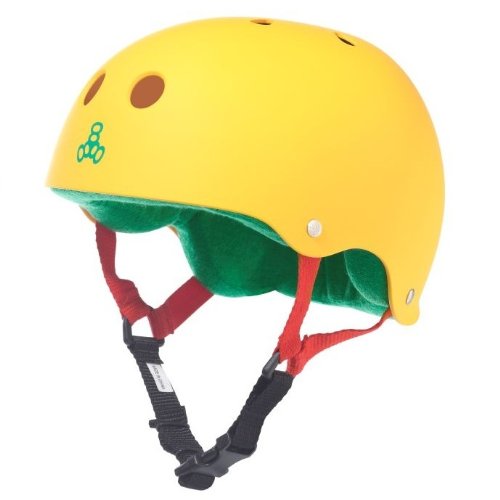
Triple 8 Brainsaver Rubber helmet with Liner in Rasta Yellow

I blinged up the helmet with some of my favorite stickers, (I’m a nut for daisies), and now I’m all set for walking. I even fixed the liner where my cochlear implant magnet had a little place to “rest” inside so it would not get pushed off.

I realize my approach to MY LIFE may not work for you. However, I love embracing who I am and holding my head high. I want to be an example to others, but I certainly know and understand that it is “different strokes for different folks”.

I hope I can report this time next year that I haven’t sustained any new concussions. Yay for me, and yay for neurologists who push to get their patients to take their brains seriously.

Denise Portis

© 2015 Personal Hearing Loss Journal
Change and Control

change for the better

I’m not a big fan of change. So when faced with a year that is sure to be chock-full of change, I can feel a little overwhelmed. Ok. That’s actually not true.

I can feel freaking terrified, sick to my stomach, near panic attack, bite my nails to the quick, SOMEONE LET ME OFF THIS MERRY-GO-ROUND called life screaming, “abandon ship! abandon ship!”

I’m not even a spontaneous person. My family knows not to ever throw me a “surprise” party. To me ordinary is extraordinary. I just hate change. For me, it’s all about control. That’s right. I’m a bit of a control freak. There is an upside to being a control freak. I am very organized. I’m punctual and responsible. There are, however, all kinds of negative things that come from being a control freak and refusing to accept change too.

I had fairly significant OCD tendencies throughout my childhood and into my early 20’s. As a teen, I developed bulimia nervosa after facing my first big change moving away from home to go to college. Emotionally, I drove some people bananas with my need to control and drove some people AWAY as a young adult.

If you believe everything happens for a REASON and that there is a life lesson to be learned in everything that occurs, one could hypothesize that my developing acquired disabilities was the best (worst) thing to ever happen to me! My hearing loss began at the age of 25 and was a progressive loss. I wasn’t completely deaf until the age of 32 so I had a long time to adjust and cope. Meniere’s disease was diagnosed at the age of 35, though I suspect I had it from my early 20’s. It, too, became progressively worse over time; in part, because of multiple mild concussions. My health issues forced me to change. To remain independent (something I discovered was extremely important to me), I found that I had to work hard at adapting. I had to embrace change instead of shy away from it or pretend it wasn’t happening.

Living with acquired disabilities means something CHANGED. You have to adjust. You have to make choices about how you will cope and how you will treat the diagnosis or disorder. You have to determine how you enlist others to assist – if at all. What adaptive equipment or technologies are available to mitigate the disability? How are you going to mentally and emotionally adjust? (For acquired disability or illness never occurs without having an impact in other areas of WHO you are…)

At the age of 48, I have lived more of my life adjusting to my new limitations than I did to living in a relatively “worry free” life. Here are some things about change that I have learned.

1. Take notice of changes.

This means you have to really get to know yourself. Habitually take your own “pulse” and see how you are doing. Make note of the readings on your “tension thermometer”. How are you sleeping? How are your relationships?

You don’t want change to take you by surprise. One must deliberately brace and expect changes. Be on the look out. Identify health (or mental health) changes.

2. Accept change with a positive attitude.

You cannot stop change, nor control it, but you can change how you react to change. We’ve all see the serenity prayer before. For those of us with acquired disability or illness, however, following these words of wisdom can be very freeing.

God … grant me the serenity
to accept the things I cannot change,
courage to change the things I can,
and wisdom to know the difference.

3. Learn to relax. 

Even up-tight control freaks can learn to relax. One of the most important things I learned in vestibular rehab was how to relax when falling. We naturally stiffen up and become tense when we are “on our way down”. I learned to relax my leg muscles so that I immediately dropped to my caboose instead of falling like a tree cut off at the base.

I have also learned to take “me time” every single day and refuse to feel guilty for taking the time to do so. It may be something as simple as looking through a friend’s collection of photographs. It may mean some personal journal time. I might choose to read a good book – that has nothing to do with psychology or my dissertation. I may burn my favorite candle while cuddling with my assistance dog on the floor in the dark.

4. Ask for help.

It took me so long to learn that it didn’t make me weak to ask for help. I chose to be partnered with an assistance dog so that I didn’t have to ask for as MUCH help from other people. In spite of this life-changing decision, I still occasionally have to ask for help. When I do, I don’t apologize first.

“I’m sorry to have to ask you this, but could you help me? I’m so sorry. I hate asking for help, but do need your assistance. I’m sorry I’m bothering you!”

Please don’t ask for help like this. It’s rather pathetic, isn’t it? Yet, we tend to react to even THINKING about help as if asking is something to apologize for when doing the asking. Honestly, most people are glad to help.

If you really have problems asking for assistance, at least learn to ask others “how can I do this task independently?” Brain storm with OTHERS what you can do to remain independent. I have run completely out of ideas about how to do something safely, only to discover through someone ELSE a “brilliant” work-around.

5. You are changing, but you are still You.

Frankly, all of us change as we grow older. The changes may occur physically, emotionally, or mentally. Yes, change may seem more difficult when it occurs as the result of acquired disability or chronic illness, but ya know something? You are actually stronger for it. You had to adjust and perhaps been forced to make changes. The core of who you are does not change. We tend to fear that being “disabled” becomes our new identity. No one signs up for that, and it is never chosen. So when it happens… know that who you are hasn’t changed. If anything you become a better version of you.

One of my favorite quotes about change was written by John Eliot. “As soon as anyone starts telling you to be “realistic,” cross that person off your invitation list.” We can’t avoid negative people. They will cross our path. They will see our being differently-abled as license to give-up and quit. They’ll tell us to be realistic and stop aspiring for “more”. You may not be able to avoid these morons people, but you don’t have to hang out with them on purpose.

So I gear up for a big year of changes for me. I’ll be finishing up my coursework in school, retiring my assistance dog, and face some possible surgery. Those all seem so darn negative, but there’s always two sides to every “coin”. My dissertation awaits – and geesh, but do I love to write or don’t I? I’m retiring Chloe, but I have my close-knit Fidos For Freedom family and friends supporting me with a successor dog eventually entering my life. I hate surgery, but really look forward to getting to the bottom of some of the neurological issues I’ve been having. I can identify and sense these impending changes with a weird sort of relief. I have discovered that change can be good. Relinquishing control can be freeing.

Denise Portis

© 2015 Personal Hearing Loss Journal
As You Wish…

blog as you wish

I’m a HUGE “Princess Bride” fan. Perhaps I’m even classified as being an “annoying Princess Bride fan“. I know so many of the lines by heart and they tend to slip out in both opportune and inopportune moments. If you’ve never seen the movie – for shame. Seriously, it is one of those ridiculous movies that everyone needs to see at least once. You will be talking about it for the rest of your life. I promise.

One of the best known (and faithfully repeated) lines of the movie is that of our hero, Westley. He says, “As you wish…” to his beloved, Buttercup, (hey… I can’t make this up) to genteelly and sweetly acquiescence to her every request. Yup. This makes him a bit of a sap. But he does become the “Dread Pirate Roberts” later and reveals to Buttercup, that he is still her “Westley” in this dramatic (and hysterical scene):

In the end, we learn that “trewww lub” (true love) is worth fighting for and that we should be careful about agreeing for the sake of keeping the peace. Well… at least that is ONE “moral of the story” I got out of this favorite! 🙂

When People with Disabilities Keep the Peace

We’ve all heard how important it is to have the right attitude when you are advocating for your own rights or needs, or on behalf of another. “You can catch more flies with honey than vinegar“.

Trust me.

I know how hard this can be at times. Having had it drilled into my head, I am fully aware that how the public interacts with ME, may influence how they interact with another who has hearing loss, balance disorders, or a service dog in the future. That “burden” keeps my mouth shut when I strive to bite my tongue. But ya know something?

Sometimes when my attitude says, “As you wish…“, I’m really only hurting myself AND others.

About a month ago, I was walking with a colleague to a meeting in another building. We had to walk through the Student Union bldg., and then go to the second floor. We were talking as we walked. My colleague turned to go up a 20-step flight of stairs… still talking.

I hesitated and said, “the elevator is up the hallway…” and my friend interrupted and said, “Come on! We need the exercise!” She continued up the stairs and was still talking.

I put Chloe is a close heel, looped my cane over my wrist, grabbed the handrail and took one careful step at a time, all the while with a death grip on Chloe’s handle attached to her vest. By silently agreeing, I practically shouted, “As you wish…”

I can’t talk and climb stairs, so I quietly made my way up the stairs one careful step at a time. When I got to the top of the stairs, I exhaled heavily (for it seems I was holding my breath), and looked up with a triumphant grin. My smile immediately faded because my friend stood there with big tears in her eyes. My brain started processing sound again (for it had been wholly fixed on arriving ALIVE at the top of the stairs), and I belatedly picked up some of her words…

“For heaven’s sake, why didn’t you remind me you can’t do stairs? All you had to do was remind me!”

I was struck dumb (silent – not mentally – grin) for a second and said, “Well I was just keeping the peace!”

She said, “You keep the peace by reminding me what your needs are. That’s not keeping the peace, that’s being a martyr. Just tell me!”

I apologized (profusely).

We can remind people what we can, and cannot do safely without sounding as if we are complaining. We need to learn to be pro-active in a positive, upbeat way. Don’t apologize for who you are or for what your needs are. However, be careful not to agree to something foolhardy like climbing a set of stairs when there is an elevator right up the hallway. My attitude of “As you wish…” could have set the scene for a disaster that day. Thankfully, it did not.

“Shove it up your… “

There are times when people with disabilities need to actually be a little more firm when they are educating or advocating. I don’t always do this well. I try to even interrupt my rising temper by reminding myself that I represent “Fidos For Freedom, Inc.“, and “Anne Arundel County’s Commission on Disabilities“. I chant in my head, “Bite your tongue, bite your tongue”. It doesn’t always work. The phrase, “shove it up your… NOSE” (scared ya a minute, didn’t I – wink), reverberates in my head.

Monday, I stopped at the U.S. Post Office to purchase some stamps for Christmas cards. (Yes, I’m aware I’m late to this “party”). I saw a man leaning against the building, smoking. I sort of register this in order to use the door farthest from him because I cannot stand the smell of cigarette smoke. As I exited my car, I reached in and got my cane, closed the door… opened the back door to unload Chloe, adjusted her vest and leash, closed HER door and then turned to walk into the building.

It seems we had an audience.

The man leaning against the building said, “What a beautiful guide dog! My mother is almost blind now. Where did you get your dog?”

I was so startled I stutter-stepped and screeched to a stop. I know my mouth was hanging open. I looked over my shoulder at my car. I pointedly looked at the car keys in my hands. I looked at Chloe and her visible vest that said “Service Dog” with tags that said, “Hearing Dog. Do not Distract”.

Then I made a mistake. I blurted. Nothing ever goes well when I blurt.

“Is that nicotine or weed you are smoking?”

His eyes got big. He stomped out his cigarette and stomped into the building. Then this little convo/prayer went through my head:

“Ok God. I blew that. If I find that man in the building please give me the opportunity to apologize and make that right. But… please don’t let me find him because I swear he’s stupid and higher than a kite!”

Yeah. It seems I can’t pray with the right attitude right after a ridiculous encounter either.

But ya know something? There ARE times when it is ok to put someone in their place. Especially if someone repeatedly makes the same comment or observation about you or people with disabilities. You can be firm and be kind.

I didn’t tell the “smoker”, “As you wish…” with an attitude that what he said made perfect sense. However, I could have reminded him that a person with vision loss would not have just pulled into the parking lot and got out of the vehicle. I could have educated him quickly and politely that there are numerous types of service dogs and canes. Instead, I was a smart aleck. Justified? Perhaps. However, in the end, I didn’t promote any “cause” or advocate in a positive way.

So Where is the HAPPY MEDIUM?

If you have lived with invisible illness or disability long enough, you DO eventually learn how to balance all of this. You learn how to remind those who have known you long enough that they may have forgotten some of your limitations. You speak up for yourself. You also learn when to firmly, but kindly, put someone in their place. There is a time for that as well.

You are going to make mistakes. Your attitude will scream, “As you wish…” at times when you simply need to say, “I can’t and won’t attempt that“. You are also going to learn to not label someone a pothead, and instead take 60 seconds to educated them in a positive way. It’s a balance we all eventually learn.

If you haven’t seen, “Princess Bride” – you are missing a treat. 🙂 I hope all of us who are differently-abled, learn to balance how to advocate and educate others.

Denise Portis

© 2014 Personal Hearing Loss Journal
Everything you ever wanted your audiologist to know…

10359013_10204485423482111_8593672202503336088_o

Hearing Elmo always welcomes guest authors. Although this site is a place of information and support for all types of disabilities and invisible illnesses, once in awhile an author has a very specific “hearing” topic. I know few individuals with more consumer experience with hearing loss advocacy and support than Judy Martin. She is my friend as well and fellow “heartstring” (a long story). If you have a good working relationship with your audiologist, this is a great article to pass along! 

Everything you ever wanted your audiologist to know . . .

Late last year, the Florida Academy of Audiologists (FLAA) and the Hearing Loss Association of Florida (HLA-FL) formally agreed to a partnership to encourage a fuller understanding of each other. Articles are planned for each other’s newsletters; Noel Crosby, my counterpart in FLAA, suggested my topic describe what consumers would like their audiologists to know.

– Judy G. Martin, Immediate Past President)

As I stand in front of my imaginary class, I’m aware that all the people in attendance have some degree of hearing loss. Some use hearing aids, cochlear implants or assistive listening devices. Many proudly display their multi-colored devices while others are more discreet – each according to their needs, wishes, or personality. We are brought together by one commonality, though, the desire to hear better. For some, it is an old journey, and for others a newly-begun one.

This class may be the figment of my imagination, but it is filled with real people from around the country. Inspired by one person’s remark of what the perfect audiologist would be like (thank you, Paul), I ask “students” to discuss how their provider could be the most helpful as far as their hearing loss is concerned. (Of course, we would be willing to know how we can be the perfect consumer, a subject for another time.)

Paul, from Michigan, speaks up first and says his idea of perfection would be the audi who is knowledgeable about Hearing Assistance Technology (HAT); about the t-coil and the ways it can be used; and at least some familiarity with Bluetooth and FM; and where to find products to assist with telephone, cell phones, TV, meetings and communication. If a hearing loop is set up in the office, he would be able to hear the receptionist. If not a loop, then a willingness to let him make and confirm appointments via e-mail. This perfect person would be compassionate and willing to share information about the ADA, hearing loss groups, and hearing loss counselors. Many first-time hearing aid users are at the beginning of a scary learning curve and in a vulnerable position. And finally, he or she could be proactive in helping him to understand the fitting and adjustment process.

Jimm, who lives in New York, has a short and sweet idea: his audiologist would make the perfect earmold!

Having a receptionist who doesn’t whisper is the fond wish of Betty, from Delaware. Soft- spoken office workers, or those who don’t face the patient, strike terror in the hearts of those with hearing loss. Hearing loss-related news and magazines (especially, ahem, the HLAA Hearing Loss Magazine) would be quite beneficial when placed in the offices of audiologists and ENTs.

Sarah, Illinois, agrees that hearing loss information and magazines are so important in addition to helping find outside support groups. She also wishes that audiologists were affiliated with HLAA or a local chapter. Sarah suggests that attendance at an HLAA Convention would be beneficial as it is totally patient-oriented, in that everything is seen from the viewpoint of the consumer. She believes a little more explanation of what to expect when purchasing a hearing aid is something that would be helpful to her or knowing the importance of adjustments. (A journal kept by the consumer would be helpful here, making notes on what noises are bothersome, which need to have volume increased or decreased.)

Making sure that every hearing aid, unless it’s too small, leaves the audi’s office with a manual t-coil included. Since the t-coil can at least double the benefits of the aid, Germaine, a resident of Florida, says it’s important it have a volume control. Automatic volume control works well in many cases, but too often the experienced user wants and needs to override the control – a combination of both would be good. All that said, since t-coils are used with phones, both landline and cell, looping technology, FM, Bluetooth and other assistive listening technology, no self-respecting hearing aid should leave home without it. She hopes that the hearing instrument provider’s office will have copies of HLAA’s consumer checklist for purchasing hearing aids.

Laura, in New Jersey, agrees and also wishes that the importance of manual t-coils be uppermost in everyone’s mind.

Jennifer, from Pennsylvania, wishes the idea of hiding hearing aids was not promoted because it adds to the perceived stigma. Advertising which promises invisible hearing aids works at cross-purposes with HLAA’s mission to provide awareness of our invisible disability. She also thinks that more familiarity with the BAHA device for persons with single-sided deafness will guide those for whom the traditional aids won’t work.

Richard, who resides in Florida, believes a high number of hearing aid consumers are not conversant in discussing or understanding their own audiograms. Much of the relevant information available is written on a level beyond the comprehension of some consumers. Perhaps a brochure or flyer could be created to explain to all so they would understand their own degree of hearing loss and become audiogram literate!

From Montana, Tamie seconds the motion that professionals be educated about the importance of t-coils. She reached that conclusion when a new audi in town donated headphones for those with hearing loss to a local live theater. They were the kind which required the removal of one’s hearing aids.

Audiologists provide an invaluable service in the treatment of hearing loss, says Ed from Florida, but he wishes there was more proactivity in the education and advocacy process. It would be so helpful for the audiologist to initiate a discussion about hearing loops, captioning, cell phone usage or the Hearing Loss Association of America. Suggesting to new patients, who obviously need support, that they try a local HLAA chapter would help eliminate much bewilderment. It would be desirable for audiologists to take the lead on important advocacy missions such as being the first to install a loop in their offices. He goes on to say that since so much of his support comes from HLAA and other outside sources, he wishes treatment could be seen as a team sport because so much support is needed.

Also from Florida, Joan thinks audiologists could tell patients they need an aid large enough to accommodate t-coils even though the user may think differently. Spending time explaining why this tiny device is so important and how some of the applications of the t-coil will benefit the user is greatly needed. Hearing in noise and recruitment are two major problems professionals can explain in laymen’s terms even before the patient is troubled by them. If audis sell equipment such as FM and Bluetooth systems, it is imperative they be able to instruct patients in their effective use. Finally, Joan wishes that professionals would tell users about HLAA and the availability of a local chapter. She doesn’t believe that any audiologist today is unaware of the value of support groups for their patients.

Judy from Ohio said her ideal audiologist would keep current with the latest news and devices. She suggests joining a consumer online forum to learn what’s on the mind of people who have hearing loss. Judy sent her hubby (a newbie) off to have his hearing tested and when he inquired about t-coils at her behest, he was told that “they are not being used much any more because people are getting away from that.”

Cheryl, who lives in Florida, takes a different tack and says consumers should realize it takes patience and perseverance to use a hearing aid and a good result comes from numerous adjustments. Hearing aid users should not put their aids on the shelf or in a drawer as they need to be used daily. She also believes the consumer should know about the t-coil, how it works and where it works.

California resident, Cindy, hopes the high cost of her devices would include minor technical service, adjustments and guidance for a specific period of time. She would appreciate the audis being knowledgeable about the products they sell and being able offer instructions about warranties. She’d like it if the professional would listen to her, ask her questions and know that, in her eyes, they are as important in her life as her primary care physician or her eye doctor. After being successfully fitted, Cindy would like repairs to be made as quickly as possible even if returning them to the manufacturer is required.

Programming aids according to the user’s needs and real world feedback, not factory- recommended settings, is the wish of Tamara, who lives in Texas. She hopes they will take the time to share their knowledge about t-coils and the less expensive non-proprietary assistive listening technology. Further, she would like to be instructed about financial assistance, payment/ financing options and government assistance programs. To her, it would be extremely beneficial to offer listening therapy, living-with-hearing-loss classes, education for spouses and family members in addition to giving advice on support groups which would address the social and emotional factors.

My imaginary class ends on a high note with everyone agreeing that hearing loss professionals cannot be all things to all people. They believe that most audiologists are already well-rounded in their knowledge and possess a willingness to help. These suggestions are offered in hope that they might help fill in the gaps.

by: Judy Schefcick Martin


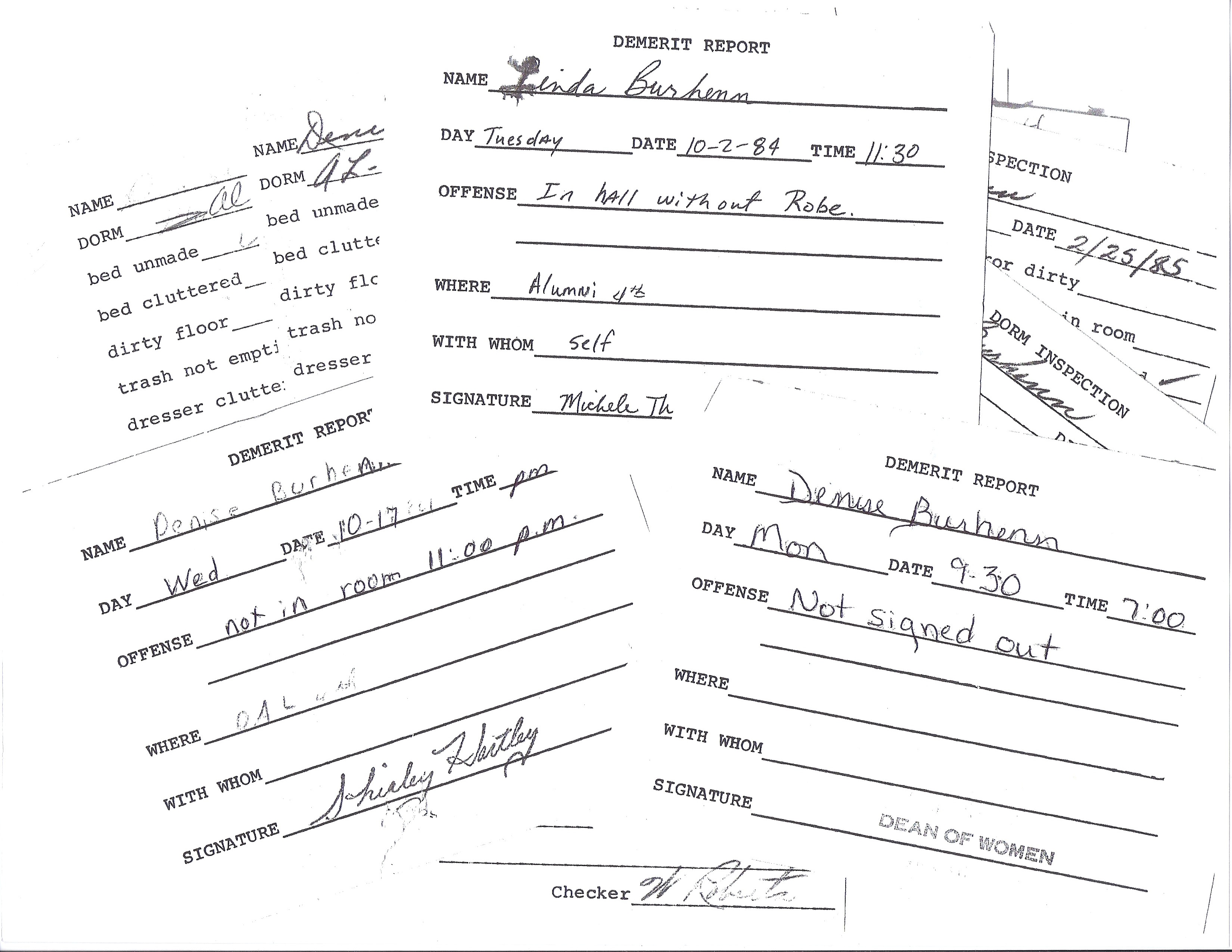
TONS of Demerits = Life Turning Point

demerit

I went to a Christian University right out of high school. I lived in a small rural farming community with no Christian colleges nearby so I thought that I may as well go to the one my parents attended … 5 states away. What I didn’t realize, is that little had changed in the 25 years since my parents went there. Rules, regulations, and unequal criteria for males/females were still early 1960’s. If I had it to do over again, I would have transferred out after I met my husband-to-be my Freshman year. He was smart and he did that. I’m stubborn though and wanted to finish where I started. I remember the first week when I received my first demerit. I still have every demerit I ever received. Back to that in a minute…

Some Background

You see? In high school I was “the weird one”. I had some close friends, which coupled with my dream of “leaving forever”, was part of the reason I survived high school. I grew up in a legalistic, religious background. It was a loving home… and most of what I experienced I wouldn’t change because I’m sure it is a part of who I am today (and I happen to like who I am today). However, in high school I was not allowed to do anything OUTSIDE OF SCHOOL. No “dragging main” on Friday and Saturday nights. I wasn’t allowed to date until I was 16 years old, and by the time I hit that milestone everyone thought I was “weird”. I didn’t get to go to movies or dances. I got really tired of people thinking I felt as if I was better than everyone else, when the boundaries put in place were not of my choosing. I was bullied. I’ve never really talked about it to many people. Classmates would probably be shocked if they knew some of the things that happened to me when I was caught in the gym alone, or in the hallway on the way to Study Hall. One of my bullies (a second cousin one year older) would actually follow me into the bathroom (he was male) and shove me around just for kicks. Another bully, also one year older, not only shoved me around and called me names, but he pinched private parts, threatened me with horrible death threats, and basically made my life hell. I would just see him coming and start to have a panic attack. I learned to duck into safe places like the office, or favorite teacher’s rooms “just to say hi” to escape an encounter with him. One of the things he constantly pounded (quite literally) into me was that I thought I was better than everyone else because I was so “holy”. This is the baggage I took into college with me <smile>!

Yay! A Demerit!

By the time I was 18 and started getting written up (for really ridiculous things), I began to really excel at breaking stupid rules. Sure, I got a LOT of demerits but I did plenty of things I never got caught for either. I don’t say that in a bragging way. My point is that I really was proud of having proof on paper what a “rebel” I was. I even sat through some “sermons” from hall monitors and dorm mothers because of what my last name was. My family name was known at this university and they couldn’t believe I wasn’t behaving “perfectly”. I got married young and tease my husband that it was “just to get out of the dorm”. I even received some demerits after I said “I do“… for sitting to close to my husband in chapel. *rolls eyes* But ya know something? I hung on to every single one of those demerits because they were important to me. They represented a turning point in my life. I finally realized as a young adult that I could make decisions about what I would – and wouldn’t do – by myself. I really filled my lungs deeply with the freedom of that feeling! Demerits were received for not meeting someone else’s expectations. Now I could determine what my own boundaries were, what my expectations were for my own life.

I’m a person of faith (and haven’t tried to hide that on here), but I like to think I really live my faith and am a REAL person. Life isn’t about rules and regulations. Nothing wrong with some of those as they keep us on track, help us reach goals, and provide security. However, these rules and boundaries are only good when they set us free, not when they cripple us. Trying to follow someone else’s rules will only get you a box full of demerits. You have to believe what you live and live what you believe.

Life Turning Point

My college experiences and changes set the stage for how I handle life today. It was a turning point for me. I stopped apologizing for who I was, and felt comfortable in my own skin because *I* had made decisions and set standards for myself that I approved of and felt comfortable with as well. If someone didn’t like what I did, I gently (OK, sometimes it wasn’t gentle) argued that I respected their choices, so they should respect mine. I learned to be responsible for ME. I wanted to live a transparent, REAL kind of life, and wanted to make a difference because of that “realness”.

I had single-sided deafness from a car accident at the age of 6-years-old. I had my last ear surgery at the age of 18. I STILL think it took us all by surprise when I developed rather rapid, bi-lateral,  progressive, sensorineural hearing loss after the birth of my kiddos. At the same time, I developed Meniere’s disease (although I didn’t know what it was at the time). I determined early on what kind of “person with disabilities” I wanted to be. I would be responsible for who I am and how I cope. My top TEN decisions that turned my life around:

1. It is OK to grieve. It is OK to scream.

I learned how important it is to give yourself permission to FEEL. Bottling up those feelings only leads to physical and emotional problems.

2. Discover your “safe people”.

I’ve blogged about this before. However, find who is “safe”; cherish and nurture these relationships. (Some of those posts are HERE, HERE, and HERE.)

3. I can “be deaf and have a balance disorder” however I want!

Disability and invisible illnesses are often unique and you may not share exactly the same symptoms as another. Own who you are. Do what makes you comfortable with your “new normal”. For me this means bling-bling on the cochlear implant, bright canes and assistance dog. I am far better served to make the invisible, visible.

4. When necessary, get professional help.

There is no shame in seeking help. Finding a trusted, objective professional can be very beneficial for a variety of reasons. If you aren’t happy with who you are seeing, find someone else.

5. When necessary, ASK for help from others.

There is no shame in asking for help when you need assistance. I have never had anyone turn me down if I ask for help getting to my car, or to help me identify what sound Chloe is zeroed in on. In spite of the negative headlines, most people are nice. Most are glad to help when asked and feel good about offering assistance. (There is a trick to this though – you DO have to ASK. If you are an independent peep like me, folks have learned to wait to see if I ask for help).

6. Believe you can make a difference.

I don’t care what your limitations are. I have never met ANYONE that didn’t have a way to make a difference – to be a catalyst for positive change. Our disabilities don’t limit us – WE limit ourselves.

7. Avoid negative people.

We all have these folks in our lives. But you can limit your interaction. Set boundaries. Protect yourself.

8. Dream big. Have goals.

Just because special challenges “rocked your world” doesn’t mean you can’t have short-term and long-term goals. Your attitude is the only barrier to achieving these.

9. Write. Share. Take photos. 

Thinking is great. I recommend THINKING. However, the single most powerful tool I have is my writing. I know others who draw, take pictures, or attend support groups and share. Make sure your “new normal” is something tangible, something you can look back on and identify and recognize change.

10. Don’t work at meeting someone else’s expectations.

If you haven’t learned this already, here’s a news flash. You can’t please everyone. It is healthy to have expectations for yourself, but those alone are all you should work towards.

Have you ever received “grief” for not following someone else’s directions about how to live your life? As a kid, this is OK because we need older (and sometimes wiser) folks to give us direction and instill good habits. But as an adult, you are responsible for you. Don’t apologize for choices you have made. If you deal with your challenges a certain way and it works for you, pat yourself on the back. Be careful though. Like ALL people, we can become focused on self. That isn’t what I’m trying to encourage here. We need other people. Don’t isolate yourself and say, “to heck with the rest of the world”.

Denise Portis

© 2014 Personal Hearing Loss Journal
 

Beaver – Destructive or Discerning?

swimming-beaver-344367-m

We have beaver. Actually, we’ve had beaver for about 16 months now, however this summer it is really evident WE HAVE BEAVER.

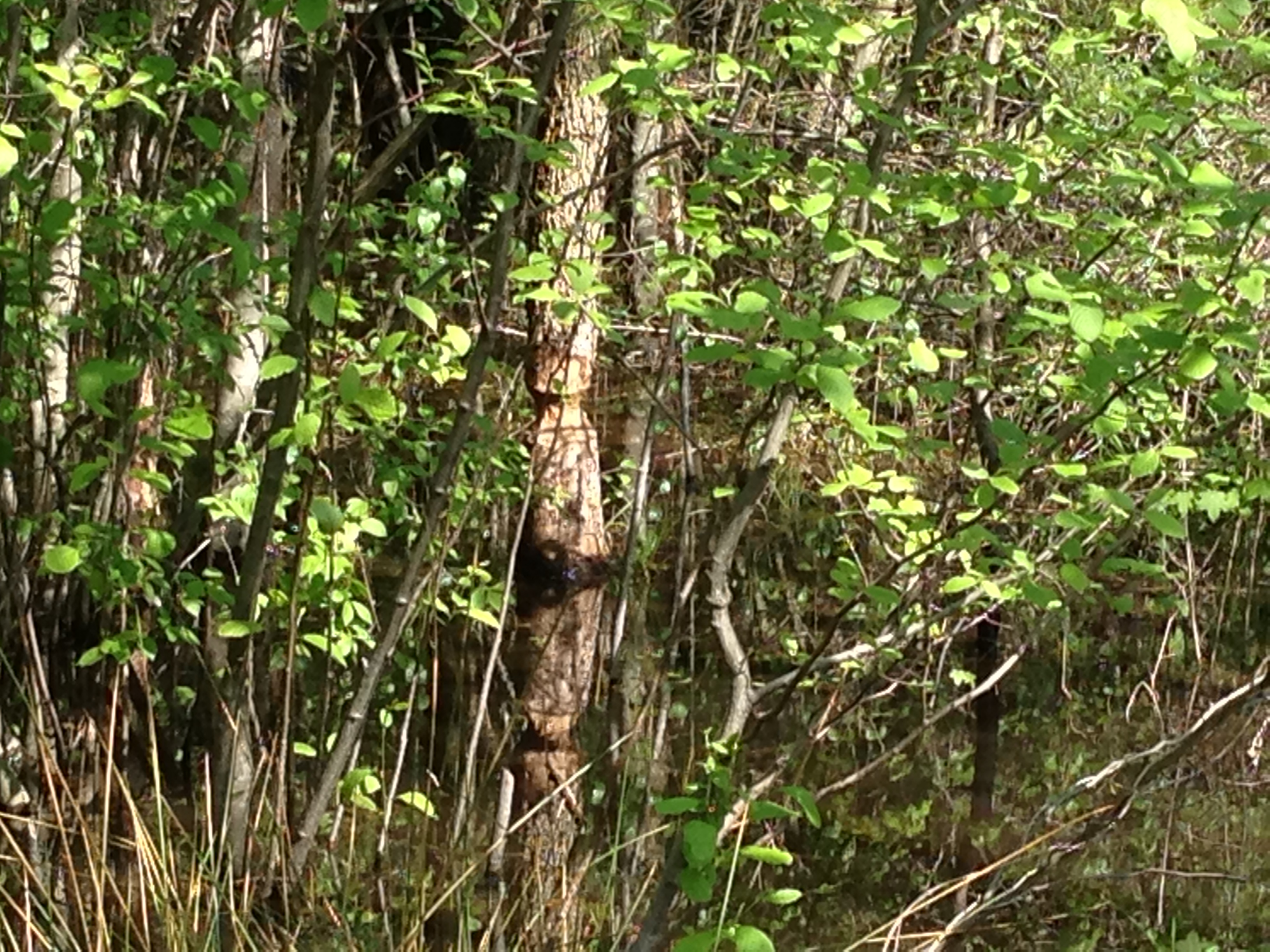
Our townhouse community sits up at the top of a hill. It is a closed cul-de-sac community, so it is great that “through traffic” is not an issue here. A brand-new walking path is now within footsteps of my front door. It will eventually connect to other walking paths, but for now it is about 1.5 miles round trip. At the bottom of our “hill” the path takes us by both a busy road, and what was once a small creek. In the Spring, I use to get a kick out of “hearing” the water sounds, especially after heavy rains. Last Spring those water sounds disappeared. However, I spotted this:

beaver10

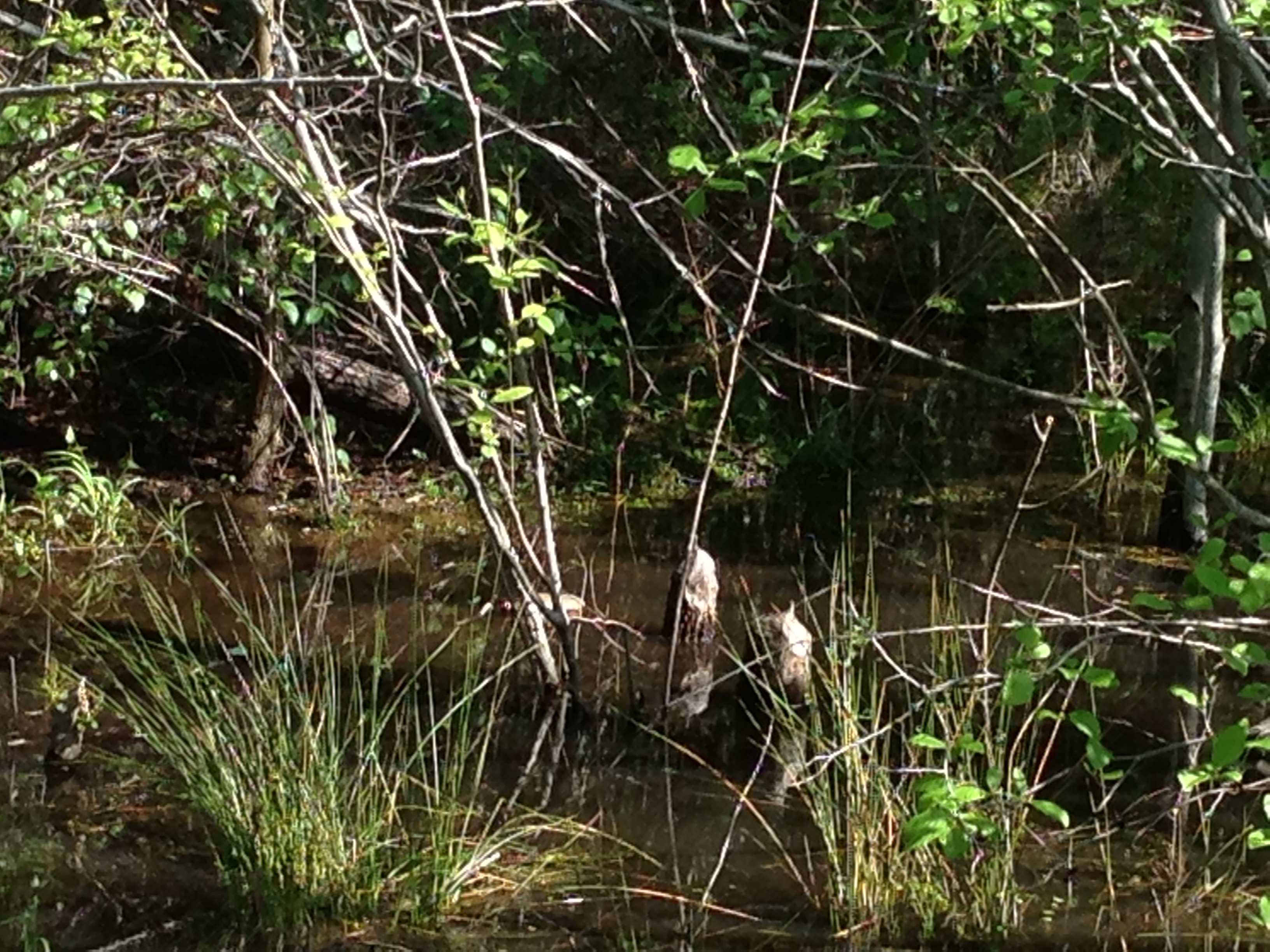
… and then this:

beaver11

The creek quickly turned into a pond. And this year? Well let’s just say there is a new ecosystem near my house.

I came across a huddled group of homeowners about 3 weeks ago, whispering and gesturing towards the pond with banks now within 60 feet of our back doors. I stopped to see what was going on, and because it was early enough in the morning with few traffic sounds, I could actually hear their whispers.

“Will the water level rise much more?”

“What do you think they are up to?”

“Do they bite?”

Now my first thought was, “FOLKS. Beaver do not understand human language and to my knowledge they don’t have bionic hearing like I do. Why the HECK are you whispering?”

I didn’t voice those thoughts. Instead I said, “Ummm” (I’m ever so eloquent…)

“Yeah, but have y’all been down to the pond area where the walking path is? Have y’all seen what has happened down there?”

Blank looks. I discovered they don’t comprehend SOUTHERN. I tried to speak a little more cultured…

“Yes, you should walk down there. There are 2 HUGE culverts about 8 feet in diameter. That water level will never get any higher unless those culverts become dammed up as well. If that happens, the city will just unplug them. After all, that road will flood before our homes will“.

Blank looks. See what a lack of exercise will do? Go walking folks, go walking. Check out what the beaver have done up close. Geesh. I think they were miffed I was talking in a normal tone of voice. After all… *sneaky whisper* … the beaver probably HEARD ME.

Beaver have made a comeback in Maryland. I pulled this from a neighboring county’s website:

“Beaver can be among the most beneficial of the county’s wildlife. They create favorable habitat for a variety of wildlife species including fish, birds, amphibians, reptiles, and mammals. This variety of wildlife is in turn valued for recreational, scientific, educational and aesthetic purposes. Beaver activity is also helpful in retaining storm water runoff and improves water quality by trapping sediment, nutrients, and pollutants. Beaver activity can also cause flooding of roads, trails, forest land. They also consume trees and shrubs. Their impacts often occur suddenly and dramatically.

These benefits and detriments often occur simultaneously at a single location. Because of the varying degrees of tolerance levels among people to beaver activity, there are bound to be disagreements on how best to “deal” with beaver conflicts.” (Howard County Parks and Recreation, 2014).

Living side-by-side with these amazing creatures is fairly simple. I’ve been thinking a lot about this family of beaver.

beaver3

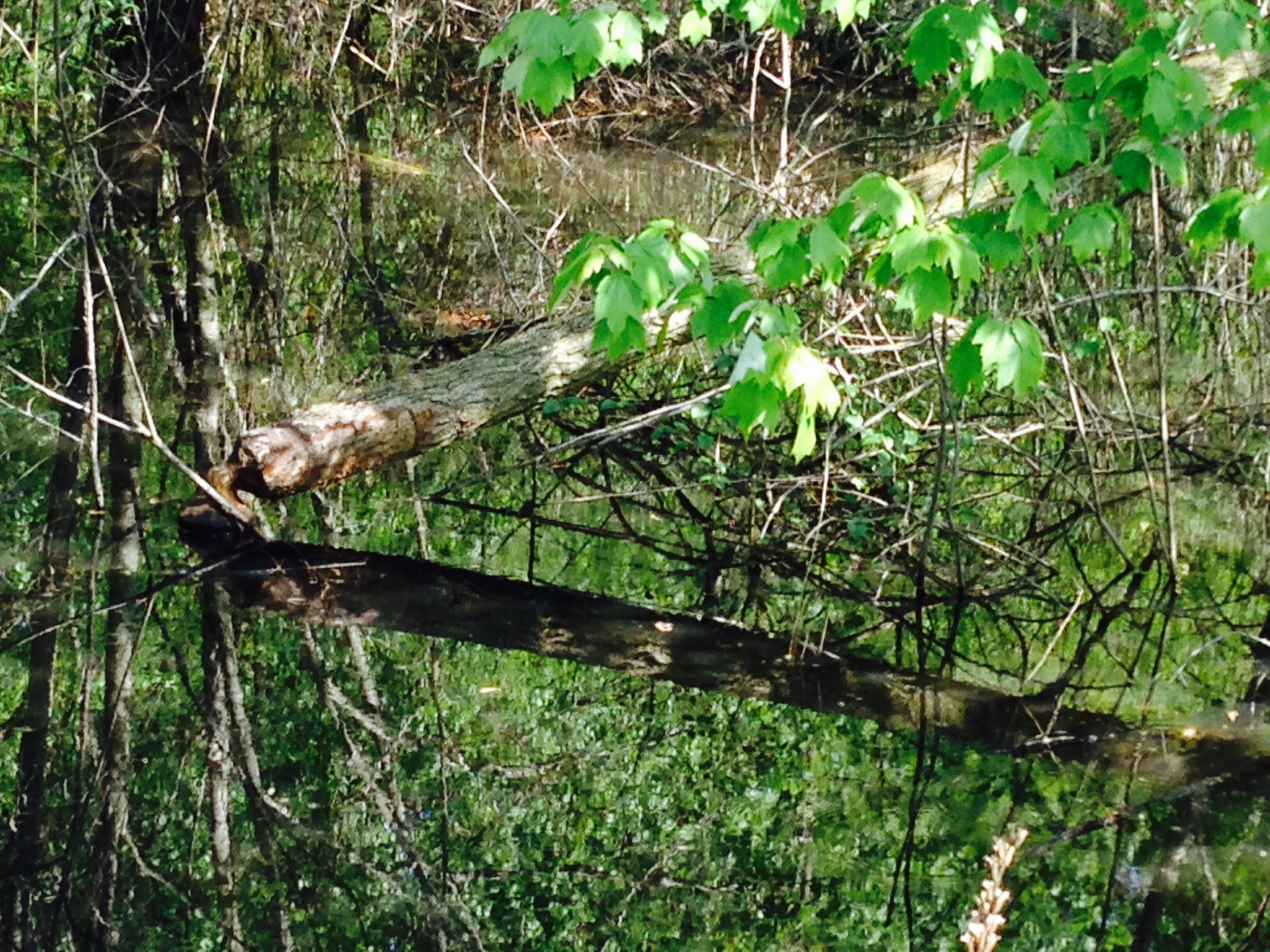
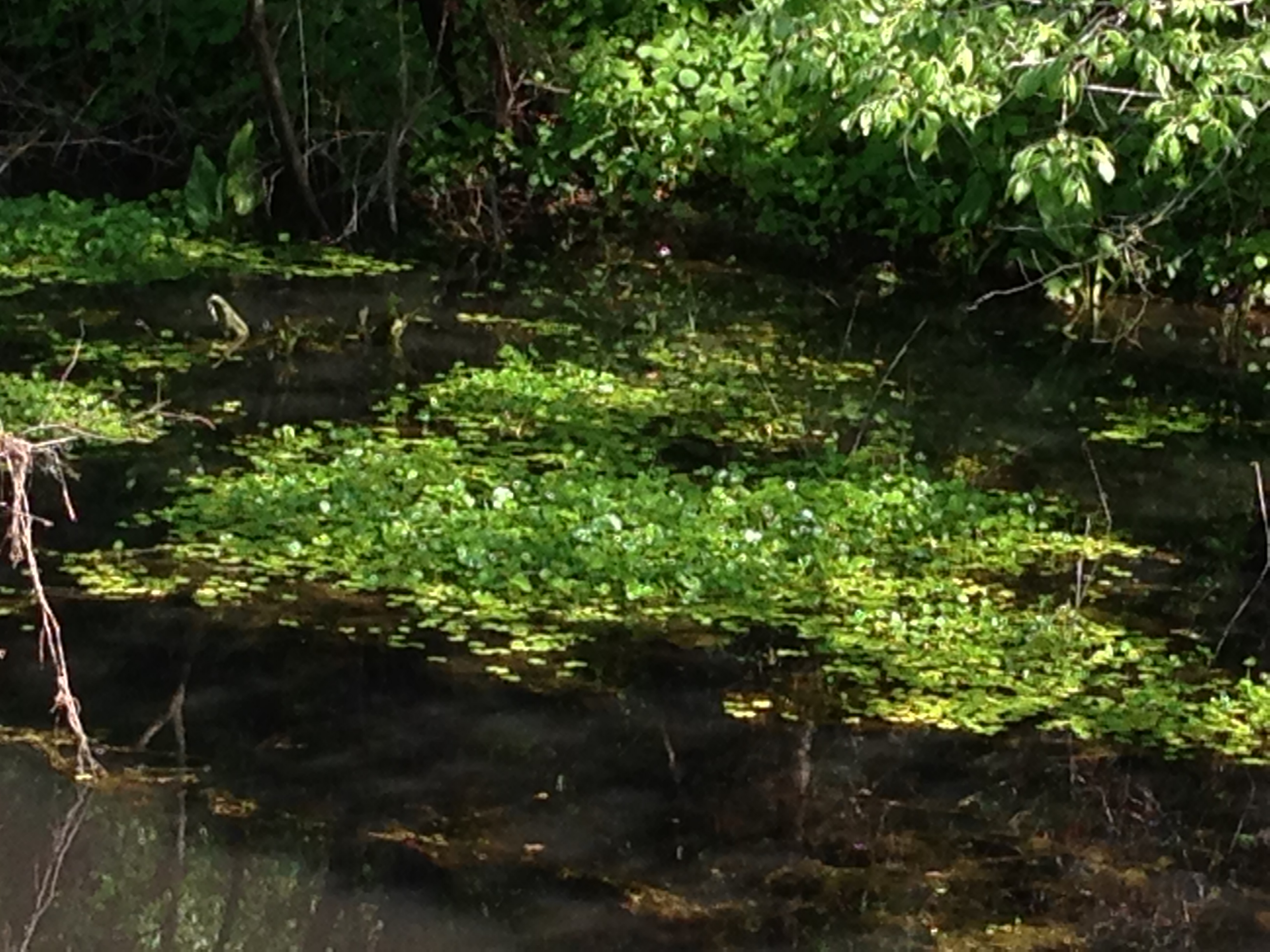
They migrated to this area near the bay bridge and did what came naturally to them. Not with destruction in mind… but cunning and incredibly discerning architects, this family of beaver have created a whole new ecosystem. We’ve always had tree frogs (although it took Chloe’s trainer to clue me in to what I was hearing each year). But now we have:

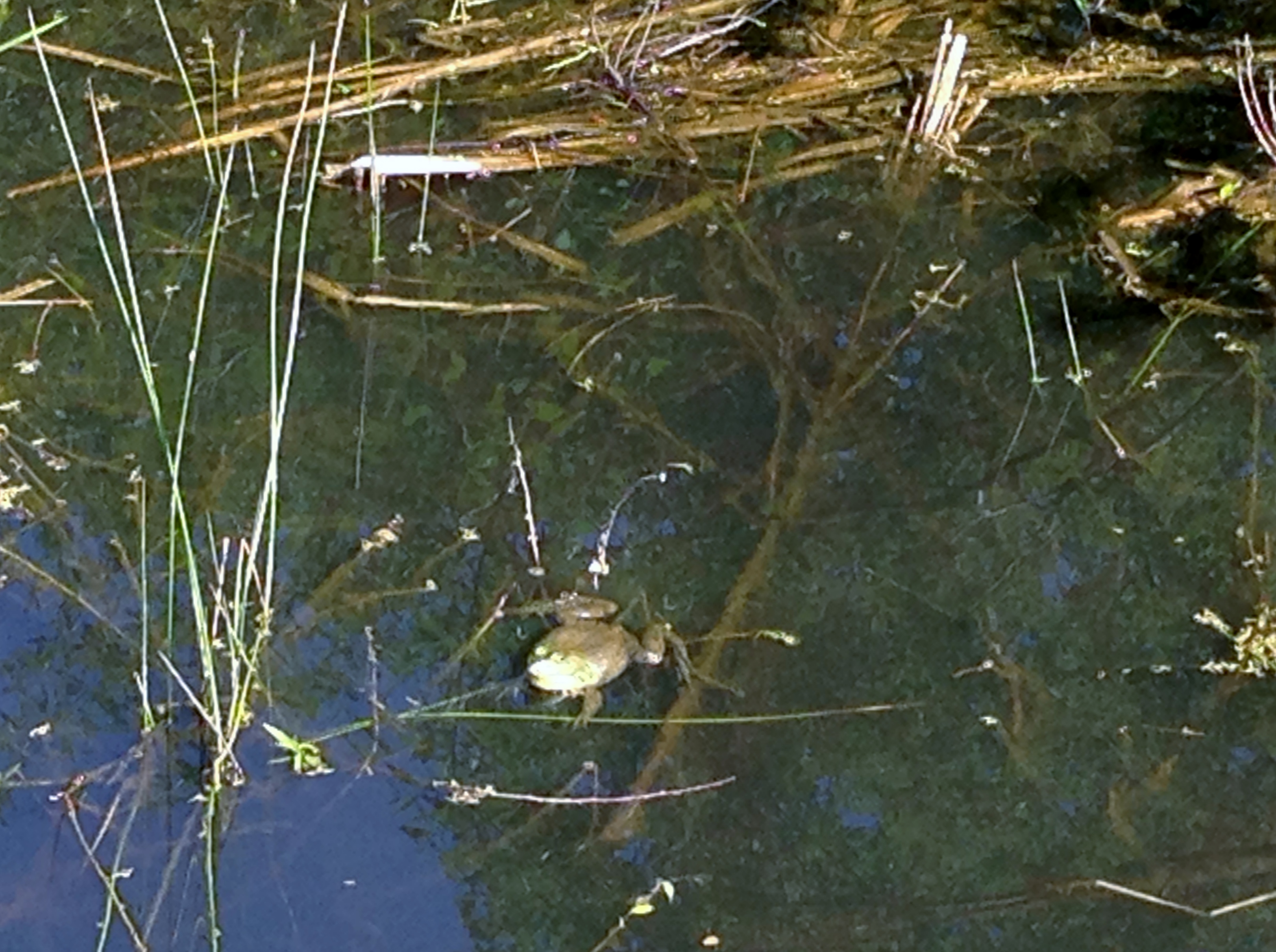
Beaver8

… bullfrogs. You should have seen Chloe’s head and ears the first time she heard THEM! These fellas stretch about two feet, nose to tip of hind legs. I know this, because I’m the crazy neighbor lady screeching to the neighborhood boys who have caught them and held them up to “Return them to the pond when you are done!”  There are also numerous plants I have never seen before in this area when all we once had was a creek…

Beaver7

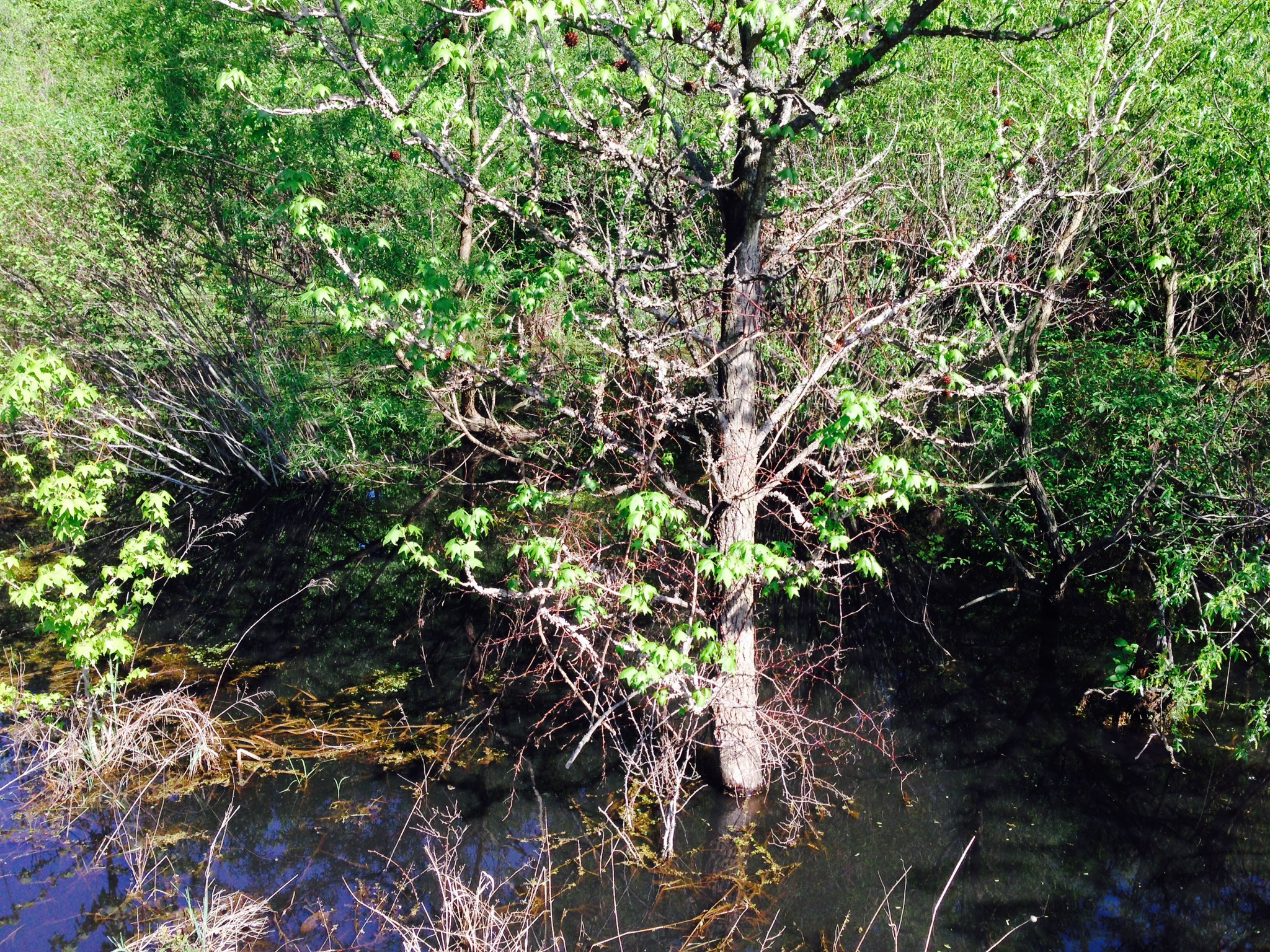
and the trees are flourishing…

beaver1

I counted 4 different families of mallard duck one evening, with little ones thriving in this secluded and protected environment. Turtles are sunbathing on any log or rock that breaches the surface of the water. The fox are back (having been gone for at least two summers). There are enough deer in our area now to make my poor hound dogs hoarse for all the barking alerts they insist on for me.

I cannot help but be amazed. The beaver strengthened and created a home just right for them, and in the process created a place to thrive for other species. Folks? I want to be a beaver.

I didn’t ask for disabilities. I never once thought, “When I grow up… I want to be DEAF and have a significant BALANCE DISORDER”. However, in my own process of adapting and making my environment safe and liveable for ME (cochlear implant surgery, service dog from Fidos For Freedom, be-dazzled canes, no-slip shoes, discovering where all the elevators are on campus, practicing all I learned in vestibular rehab.), I have created a new ecosystem.

I want MY WORLD to intersect with the REAL WORLD and help folks recognize the importance of inclusion. I work to make sure that my new life, teaches and advocates in accepting differences. I want others to recognize abilities rather than disabilities. I want my invisible disabilities to be visible and “pond-like“. I want my life to inspire others to choose to live equally purposeful lives. In my own small way I do this by working with my campus disability office. I openly talk about being “differently-abled” in class. I “plug” what I know whenever I can to whomever will listen… cochlear implants and service dogs, depression and coping skills. I have discovered my environment changing. People are coming out of the woodwork… or umm… newly created POND, and sharing with me that they have a mental illness, invisible challenge or diagnosis such as fibromyalgia, chronic fatigue syndrome, or Lyme’s disease.

Yes. Having an attitude of gratitude and focus on education and advocacy, has me walking by concerned citizens from time to time, whispering about a beaver conspiracy. But just as I’ve learned that being transparent is contagious, these folks will eventually HEAR and go walking to discover other new ecosystems. At least… I hope they will.

Do you live with disability? Are you struggling with an invisible illness? Do you have a chronic condition that folks do not seem to understand, nor comprehend how it affects you? Hearing Elmo is not just a place to “hear”. My desire is that numerous authors, both named and anonymous, begin to disseminate the kind of information that changes our environments. In the end, the beaver aren’t the sole beneficiaries. We all benefit. Would you like to write for Hearing Elmo? Contact me at denise.portis@gmail.com and type “Hearing Elmo” in the subject line. Building dams is pretty fun. It is unexpected. It is worthwhile. We can all make a difference!

Denise Portis

©2014 Personal Hearing Loss Journal
Howard County Parks and Recreation. (2014). Beavers. Retrieved May 16, 2014, from http://howardcountymd.us/DisplayPrimary.aspx?id=2396

Fundamental Attribution Error

hershey park

I drive my family crazy sometimes. I have psychology on “the brain”. Things I’m studying, things I’m teaching, things I’m thinking about (the dreaded dissertation looms after all), I tend to talk about. I mean a lot. Even when you don’t want me to.

Spring is a busy month for Hearing Elmo. For some reason, lots of folks tune in and contact me. I love to write (even email responses) so I don’t mind at all. To me? This is what Hearing Elmo is all about. I’m glad to be a small part in helping to raise awareness about invisible disAbilities and chronic illnesses. I learn SO MUCH from so many of you who write. So thanks! 🙂

Lately, I’ve had a lot of conversations both email and face-to-face with folks who are struggling with bad thoughts. Thoughts about strangling someone.

Even though it’s deserved.

People with disAbilities or chronic illness are often judged. Sometimes it’s a first impression. Sometimes it is by someone who knows better. I want to cover both today. In psychology we call this the “Fundamental Attribution Error”. Lilienfeld, Lynn, Namy, and Woolf (2013), explain that the fundamental attribution error “refers to the tendency to overestimate the impact of dispositional influences on other’s behavior. By dispositional influences, we mean enduring characteristics, such as personality traits, attitudes and intelligence. Because of the fundamental attribution error, we also tend to underestimate the impact of situational influences on other’s behavior” (p. 501). It’s that last part I want to talk about in this post.

People with Disability or Chronic Illness are Misunderstood

If you are reading this post you likely have some connection to invisible illness or disAbility. Perhaps your condition is not invisible at all. You may live with personal challenges.

easter 2014

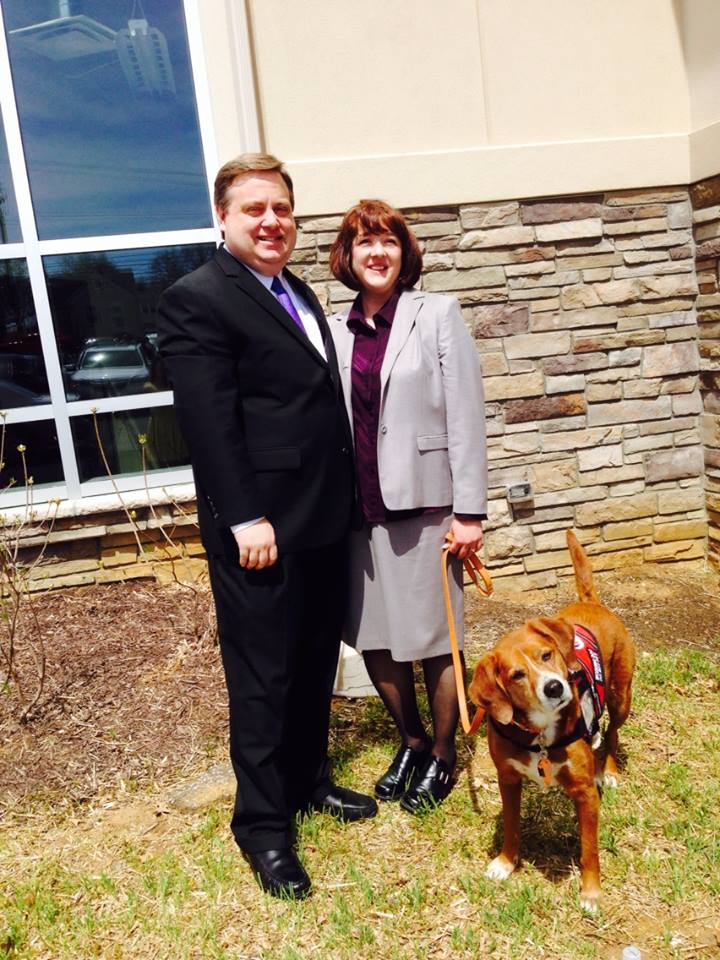
Easter Sunday I came home from church with husband and hound dog and went downstairs to work. After about 20 minutes I came to the realization many of you do each and every day. I was wiped out. I knew I would get far more work done if I went upstairs to take a nap. Some folks call these “power naps”. Me? I’m not going to sugarcoat it. I need naps sometimes because I have Meniere’s disease and hear with a cochlear implant. I’m 47-years-old. I get tired. I get tired a lot! So trudging upstairs I passed my husband in the family room and said, “I’m going upstairs to take a nap“. I stood there a second to see if that elicited any reaction.

Now Terry has been married to me long enough to know that if I actually say I need a nap, you better let me take a nap. No smart remarks. He only said, “Be sure to close the blinds or Chloe will bark at every little thing“. I’ve “trained him well“, yes?

But it isn’t easy being the significant other of someone who has a invisible illness or disAbility. When Terry first married me I was only unilaterally deaf and no balance disorder to speak of. Fast forward 28 years and I am now at a point where I can still do a lot. I have dreams, goals, work hard, am a wife, mother, mentor, teacher, student and writer… and I take naps.

I have been out and about before running errands or just shopping with my best friend – Terry Portis. I have out of the blue said, “Ok. You need to take me home.” The last time this happened we were going to a super Target. We had just parked in the parking garage and Terry started to get out. “Ok“, I said. “You need to take me home“.

He stopped and looked at me. After a long pause he asked incredulously, “You mean… now?”

I looked at him eyeball to eyeball (which can be uncomfortable with the risk of losing your contacts – but I needed him to know I meant business). “Now” I responded.

So we went home. Sometimes when I “run out of gas” I do so very suddenly. There can be little warning. You could make me push it and we’ll both risk the reality of a major nosedive in “Lawn and Garden” with mild concussion and concerned gathered crowd to show for it. (Clean-up on aisle twelve…)

None of us ask to develop acquired disAbilities. No one prays for a chronic illness. People we know and love may get peeved at us that we require more rest than we use to need. Part of it may be that they miss doing things with you that they use to be able to do. My husband loves Target. But sometimes? Well sometimes you need to take me home and do it NOW. That can be hard.

So those of us who have the chronic illness or disAbility need to be understanding too. But… don’t be afraid to talk about it. One of my favorite “opening statements” for a heart-to-heart conversation begins like this:

“When you say (or do) _________________ it makes me feel like _______________.”

It lets the people I care about know that it DOES bother me when they say or do something – not seeing the whole picture. They don’t understand the situation well enough to get why I behaved a certain way or responded a certain way. So I need to remind them. That’s OK.

If you are the “significant other” – try to put yourself in the other person’s shoes. You don’t want to really know what they are going through for that would mean you’d have to share the disAbility or diagnosis to really get it. What they are going through is really… REALLY…

HARD.

But you know what? They can get through it because you are there to help them, encourage them, and cheer them on! (So don’t forget how influential you can be, OK?)

For Those Who Don’t Know me

Several times a year someone who doesn’t even know me will say something that I almost come unglued about. I have one of those moments where I want to strangle someone. But in most states that is still against the law…

Costco, October 2013: I was in the meat section trying to decide how many crock-pot size meals I wanted to make in the next couple of weeks when I heard a woman about 3 feet away say, “Oh MY GOD!!!!!!!!!!! A dog, in the meat section. I’m going to complain to the manager“.

I turned around and saw this woman standing there with hands on hips and an embarrassed husband standing next to her. Well my friends? Sometimes good sense just rushes right out of my head. I pointed my finger in her face and said, “This is a service dog. I am late-deafened and have a balance disorder. This dog has picked up dozens of things for me since I’ve been in this store for the last 20 minutes. You shouldn’t judge what you don’t know. I’d rather have disAbilities than be stupid. You can’t fix stupid“. And I walked away.

Amidst applause. For it seems we had drawn a crowd.

Yet I will be honest with you. More times than not I do NOT get to say something pithy and intelligent. Sometimes my heart is broken. Sometimes I walk away crushed. Sometimes I strangle people. (Ok, maybe not but I may FEEL like it).

It can be really hard when people judge what they don’t know. After stumbling into an end cap at a store I had a person jest, “Little early to be drinking, isn’t it?” I could get mad and “let it rip”. Or strangle. Cuz yeah I’m a little sidetracked by how satisfying that would be right now. But folks don’t know me. They don’t know my reality, or my day-to-day situational influences that have me moving, responding, and requesting naps. Then I have to make a decision.

A) Strangle them

B) Scream at them

C) Walk away. It isn’t worth it.

“C” is the best response most of the time.

———

Do you get tired easily? Does fatigue trigger headaches, body aches, and brain fog? Do you sometimes just need a NAP? People may not understand that. They may think you are being lazy. They may think you should try harder. They may need strangled…

… with the truth. So tell them!

Denise Portis

© 2014 Personal Hearing Loss Journal
Lilienfeld, S. O., Lynn, S. J., Namy, L. L., Woolf, N. J. (2013). Psychology: From inquiry to understanding (3rd ed.). Boston: Pearson Publishing.


Make a Difference

make a difference

My paternal grandmother passed away unexpectedly on March 28th. She was instrumental in my becoming, well – ME. I told her the FIRST time how important she was to me at Silver State Youth Camp in the Rocky Mountains when I was 13-years-old. I made it a point to tell her at least once a year, and to my knowledge never missed a year of telling her how important she was to me.

We have people we care about, and then there are usually a smaller group of people who influenced who you are. I’m convinced we do not have a whole lot of opportunities in life to invest ourselves THAT WAY in the life of another.

Searching for Significance

One of my favorite books is by Robert McGee. Searching for Significance is something all of us long for I believe. Something it took me years to learn, however, is that “significant” is what you deem important. What I think is significant and life-changing, may not mean a hill of beans to you. And that’s OK. We can’t find significance by asking others how they measure that. Significant things are as unique as people are. This is why so many of us are invested in causes, hobbies, and community service. For US, these things add significance to our lives. We want to make a difference by being involved.

One of my favorite quotes is by Joseph Campbell. “Life has no meaning. Each of us has meaning and we bring it to life. It is a waste to be asking the question when you are the answer.”  I find this rather profound. WE bring meaning TO life.

Life is hard. Living with disabilities is hard. Living with adult children at home is hard (not really but I had to throw that in there). If I expect my life – with all it’s trials and successes, joys and sorrows, to provide meaning, I’ve missed the whole point of living.

Some folks think they are not in a position to make a difference. You don’t have to have money or advanced degrees to make a difference. Everyone has some kind of talent. I have friends whose disabilities are severe enough they are really home-bound. Yet they have made such a difference in my life through the short emails or messages they send me – right when I need encouragement the most. I have had people I don’t even know make a difference.

I will never forget the homeless man I met at the inner harbor in Baltimore. My “quick diagnosis” was schizophrenia. He was a beggar, entertainer, and to many a nuisance. He stopped me to ask about my service dog. He asked if he could have her and promised to take good care of her. When I explained what she does for me I actually got choked up. He listened attentively and then squatted down and held her head for a moment. He muttered something to her and I couldn’t make it out. (It hadn’t registered with him that I said I was late-deafened). He looked up and said a little louder, “I was jus’ tellin’ her to be the best dog for you she could be because life is short. She makes a difference so she has to count now, not tomorrow”. I was like, “Woah.” That has stuck to me like super glue for 6 years now. It has inspired me to make a difference TODAY. We aren’t promised tomorrow to make a difference. Count now.

Just Remember to TELL THEM

If someone else does something that makes a difference to you, won’t you tell them so? It doesn’t have to be a huge announcement. It doesn’t have to be a flamboyant gesture. No need for helium balloons and streamers. Just tell them, “You made a difference”.

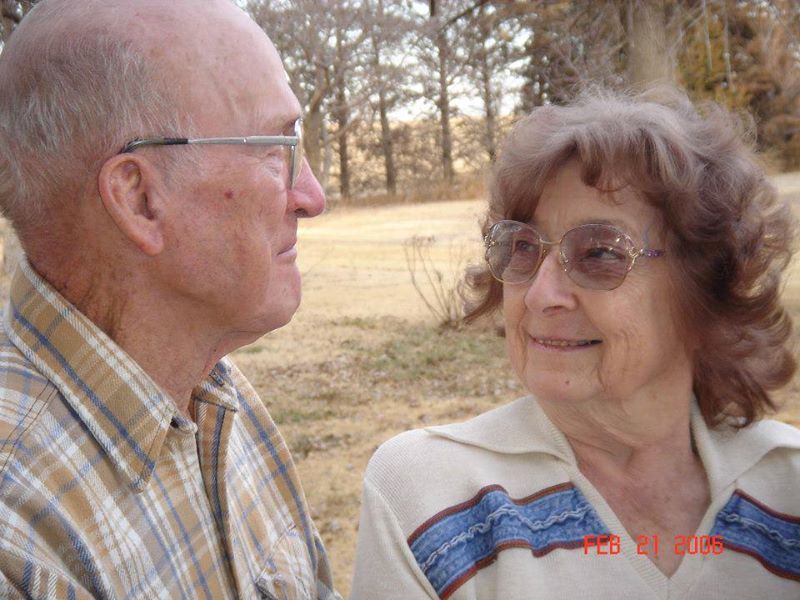
My grandparents... together again.
My grandparents… together again.

We need to let others know when they influence us or inspire us. Who am I because of my grandmother? Those who knew us both tell me I get my stubbornness from her. They also tell me my love of dogs, singing voice, hair color, and ability to confront people with courage all come from her. The reality is that even when my life began to change as the result of Meniere’s disease and deafness, her letters made a difference. She is a writer, and encourager, a cheerleader, an advocate, a teacher, and a legacy-builder. When she wrote, a common theme included near constant reminders that *I* could still make a difference. She encouraged me to be an advocate.

I am.

She encouraged me to write.

I do.

She told me I should not be afraid to speak and present to others.

I’m not and I do.

Her legacy of “making a difference” spans generations.

Very likely I do not know you personally. However, I do know that you *POINTS THROUGH YOUR COMPUTER SCREEN* can make a difference. It doesn’t have to be big. Betcha it is big to someone else though! That is what making a difference is all about.

Denise Portis

© 2014 Personal Hearing Loss Journal
Hearing Loops Come to Oshkosh

Juliette Sterkens
Juliette Sterkens

Hearing Elmo welcomes guest author, Juliette Sterkens. Juliette Sterkens, AuD is a Wisconsin audiologist with 30+ years of experience in the field of audiology and hearing instrument fittings.  Dr. Sterkens is currently on a sabbatical from her audiology practice to speak around the country to consumers and hearing care professionals on the use of hearing loops in behalf of the Hearing Loss Association of America.  Her efforts have leveraged nearly 300 hearing loop installations in the Fox Valley and Wisconsin and many more beyond. She is the creator of the www.loopwisconsin.com website and her blog at http://loopwisconsin.wordpress.com .  She has received the Wisconsin Audiologist of the Year, the American Academy of Audiology Presidential Award and the Humanitarian of the Year Award from Arizona School of Health Sciences for her work on a local, state and national level.

Chris Prust of Oshkosh is one of 36 million Americans with a significant hearing loss.  Although she wears a hearing aid and a cochlear implant, it is still difficult for her to clearly hear and understand amplified speech in churches, auditoriums, or meeting rooms.  As a member of the Algoma Boulevard United Methodist Church in Oshkosh, she was delighted at the results the first Sunday the church turned on its new hearing loop system.  “I’m home now and can’t stop smiling.  The system went way beyond meeting my expectations.   I was in awe.  I thought I would never again be able to experience a church service where I could hear every world and be able to follow along with the music knowing I was singing the correct and note and verse,” Chris said.

A hearing loop takes a signal from a sound source — a television or a public-address system, for example — and transmits it through an amplifier to a wire that surrounds (“loops”) the audience. That wire sends a magnetic signal to a person’s hearing aid, which has a telecoil, a type of sensor. The hearing aid wearer then gets a direct, clear signal, one without interference from reverberation and crowd noise.

Hearing loops are most commonly found in auditoriums, concert halls, places of worship and lecture halls but  new applications make it useful for ticket booths, taxis, tour buses, service desks and airport gates. While public installations require a trained installer, a TV or computer can be self-installed by a handy individual. Hearing loops have been in widespread use in public venues in England and the Scandinavian countries for some time, and are now starting to catch on in the United States. (See www.hearingloop.org)

Jim and Vicki Denzin, parents of three daughters, two of whom use hearing aids, are grateful that St Raphael Catholic Church in Oshkosh has installed a hearing loop. “Our girls are now able to understand Fr. Doug so much better” they commented. So pleased were they with the hearing loop technology they also installed a system in their Neenah home. Jim commented installation only took an hour and was not hard to do. Vicki reports her girls love using the loop in the TV room but is also quick to point out that it makes it easier for the girls to ignore their mother when they are watching TV. The loop has one other downside Vicki laughs, “The loop broadcasts to other areas of the house including the upstairs which meant we quickly learned to turn the loop amplifier off when it is bedtime, otherwise they pick up the TV’s audio while in their bedrooms!”

Hearing loops make public facilities accessible for people with hearing loss and brings them in compliance with the Americans with Disabilities Act. In the Fox Valley many libraries, nearly a hundred large churches, the Fox Cities Performing Arts Center, the Oshkosh Convention Center, funeral homes, the Grand Opera House and several retirement communities and senior centers all have taken the initiative to install hearing loops to better serve people with hearing loss.  A list of loops of loops around the country  can be found at www.aldlocator.com

“It is not because the sound is not loud enough, that people who have hearing loss complain that they can’t hear” said audiologist Dr. Juliette Sterkens, an Oshkosh audiologist at Fox Valley Hearing Center, who is on a sabbatical from her practice to
serve as the Hearing Loss Association of America’s hearing loop advocate, “it is because the reverberation and background noise in large rooms and churches make understanding very difficult for persons who use hearing aids. A hearing loop helps to overcome this problem”

Sterkens started a Hearing Loop Initiative in early 2009, similar to an initiative in Michigan (see www.loopwisconsin.info) and today nearly 300 hearing loops can be found around the state.  Sterkens continued “Hearing loops can profoundly affect people who use hearing aids.  When Chris Prust told me that the day the hearing loop was turned on at her church, was one of the most memorable moments in her life because it made her feel “normal’, we both cried a few tears.”

– Juliette Sterkens, AuD

———


When Lightening Strikes TWICE

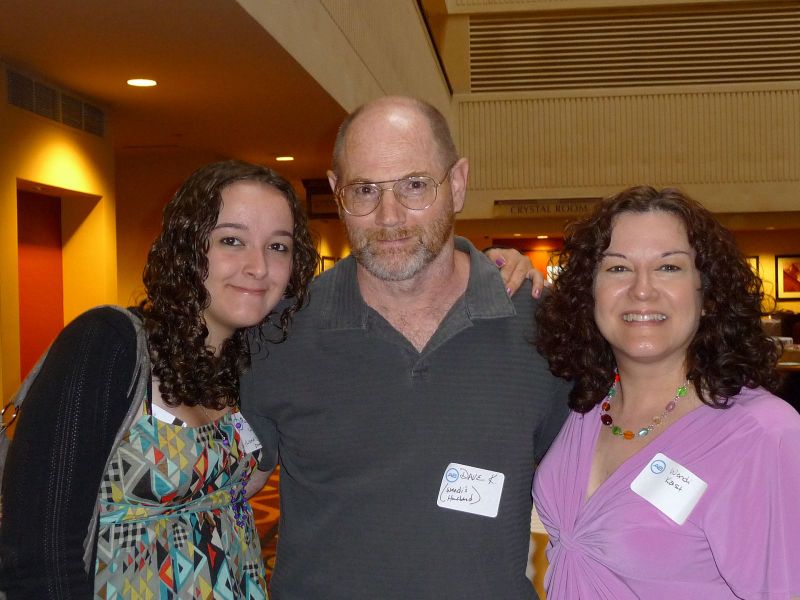
Wendi, husband Dave, and daughter Paige at a Hearing Loss Association Convention

Hearing Elmo welcomes, Wendi Tirabassi Kast, fellow blogger and cochlear implant buddy. Wendi writes at “Sudden Silence” (http://suddensilence.wordpress.com/). I have been a big fan of Wendi for years now. She writes about LIFE – life with hearing loss and cochlear implants. Life with other kinds of struggles – but her posts remind me that this is LIFE. Her positive attitude and quirky sense of humor connects with me – and I think will with you! You should check out her blog – she frequently updates and every read is worth the time to check in!

In 1993, when I was 28 years old, I lost all of the hearing in my right ear.

 I grew up with a hearing loss that was discovered when I was four years old.  I never expected to lose more hearing; nobody knew why I lost some of my hearing to begin with, but a high fever from roseola was what we suspected.  (Knowing what I know now, I would also suspect the antibiotics used to treat it back in the mid-1960s.)  I always thought my hearing would stay the same; in fact, I never really gave my hearing (or lack thereof) much thought at all.  I treated my hearing aid like I did my glasses … just an aid to help me with one of my senses.  I certainly never thought I might lose all of my sight some day, so why would I think I might lose all of my hearing?

 Finding out that all of my hearing had vanished virtually overnight, for no known reason, rocked me to my core.  I was absolutely devastated and terrified.  Suddenly a whole host of worries was presented to me, including the possibility of going completely deaf someday.  I woke up terrified every morning, wondering if I would lose the rest of my hearing that day.  I lived in the hearing world, not the Deaf world.  I didn’t know sign language; none of my family or friends knew it.

I spent two weeks without my hearing aid, because I wore the aid in my right ear and it was suddenly unaidable.  They made an ear mold for my left ear and ordered analog bi-CROS hearing aids for me.  While I waited the two weeks for my left ear mold to be completed, I had to navigate my hearing world using nothing but the hearing that remained in my left ear.  I did word processing for an industrial parts supply company; I could still type and do my job, but communicating with my coworkers was very, very difficult.

When my new ear mold and hearing aids were fitted, I was weak with relief.  Things sounded normal again.  The bi-CROS aids picked up sounds from my now-deaf right side and transmitted them to the left.  My hearing remained stable; I slowly began to stop worrying and started taking my new level of hearing for granted again.  I mean, this couldn’t happen to the same person twice, right?

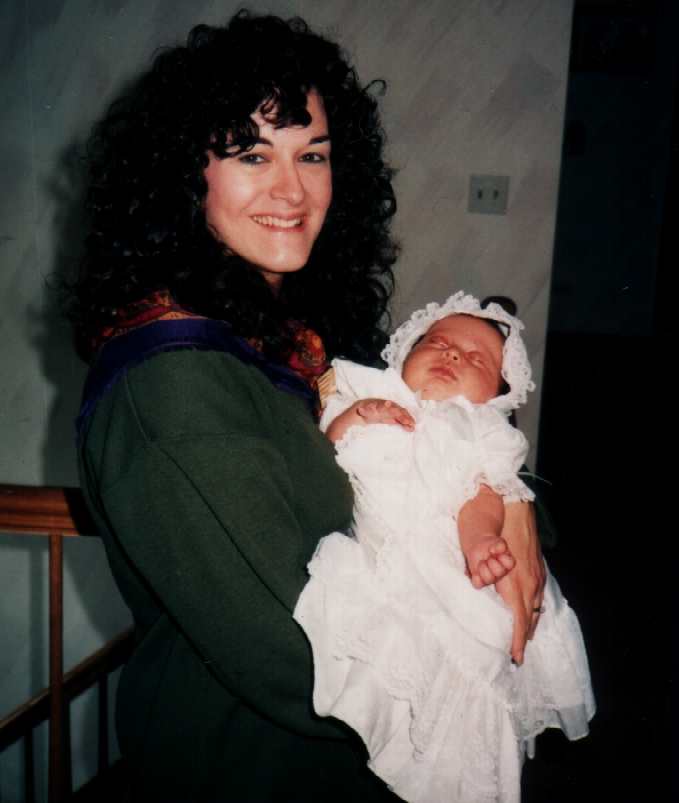
Wendi with daughter Paige at her baptism in 1994 after she lost her hearing.

When I realized the hearing in my left ear was getting a little strange, in early April 2008, I chalked it up to an illness.  It was that same kind of faint ‘hearing things from the bottom of a tunnel’ type of hearing that I get when I’m fighting a fever or virus of some kind.  I wasn’t sick but still assumed I was on the verge of something.  Well, I was … but I was on the verge of total, profound deafness, not a virus.

My husband scheduled an appointment with my otolaryngologist.  The day before my appointment, I woke up and realized I was completely deaf.  I could not hear anything.  My teenage children were leaving for school and I tried to keep it together until they left, but I was so scared.  I burst into tears in front of them, wailing to my husband, “I don’t want to be deaf!  I can’t believe I’ll never hear you guys talking to me again!”  I was completely hysterical.

Well, I gave in and let myself grieve.  It was only a few days before I realized I could only do so much crying and feeling sorry for myself.  I was still sad and scared, and I used my blog to express my feelings during this time.  But I also decided I had to move on and decide how I was going to live my life as a deaf woman.

My first concern was communicating with my family.  I had remarried in 2002 and my husband knew some sign language, so he began teaching signs to me and the kids.  We rented DVDs, bought books, and learned to fingerspell the alphabet.  We never did learn ASL but we learned enough signs to communicate and get the message across.  My speech reading skills kicked into high gear, and these really saved me.  My family was very, very patient – they made sure to face me, to speak at a rate that was easy for me to lip read, and would repeat words or fingerspell until I got it all.  They never said, “Oh never mind” or “It’s not important.”  They knew I wanted to be part of the conversation, important or not.

After a few big scares, my husband put up mirrors around my desk so I could see if someone was approaching from behind.  (It’s pretty terrifying to suddenly feel a hand on your shoulder when you aren’t expecting it!)  We ordered a free TTY from the state and got a flashing light for the phone.  I used online relay for phone calls as well.  I already had a bed shaker alarm clock and, of course, we were already using captions on the TV.  (My husband has a hearing loss as well so we both use these accommodations.)

I found out that I qualified for cochlear implants, and began the process of testing and insurance approval.  My hearing tests were easy; I sat in the soundproof booth, listening to nothing, until they opened the doors and said I was done.  I asked if I could get a cochlear implant in each ear at the same surgery.  Although it wasn’t done very often, they said it was no problem as long as my insurance approved it … which they did.  The whole process was quick:  I had my testing in May, my insurance approval in early June, and my simultaneous bilateral surgery was on July 22, 2008.

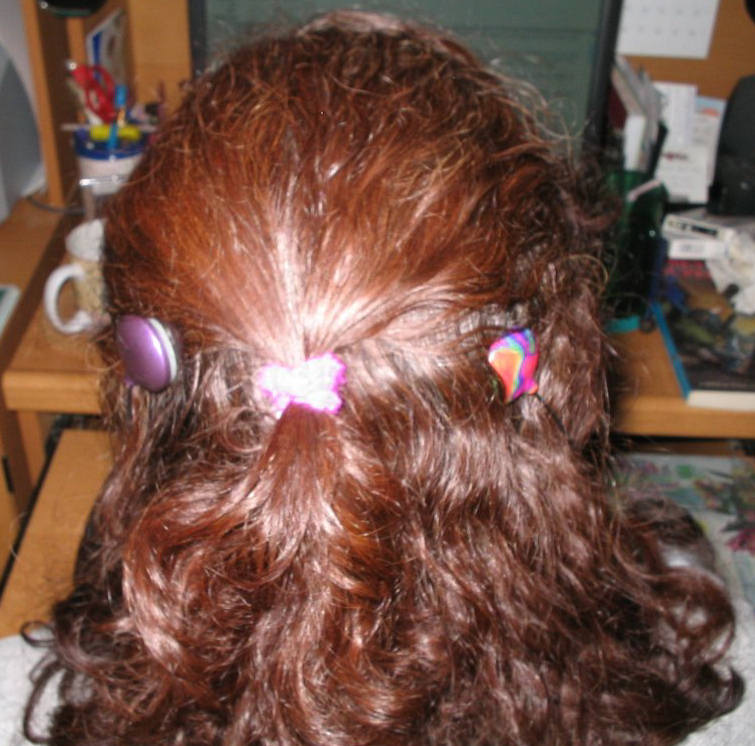
Wendi's cochlear implants from the back
Wendi’s cochlear implants from the back

On August 20, 2008, the hearing world came back to me.  The sounds that came into my brain that day were nothing like anything I’d ever heard before … but it was sound and I was speechless with delight.  If someone had told me back in 1993 that someday I would have little computers in my head, and I would hear sound again in an ear that hadn’t worked since before 1968, I would’ve just laughed.

As my brain learned how to hear with my new cochlear implants, my tinnitus faded away to nothing.  Every day, I asked my family to help me identify what I was hearing until finally I could identify sounds on my own.  With each mapping, things sounded more and more the way I remembered them.  I heard the voices of my husband and children, music, my cats meowing and my dog barking.  One day, as I was leaving the audiologist’s office, somebody asked me for directions.  They were behind me, and I heard them clearly without lip reading!

It’s been over five years now and I never, ever take what I hear for granted.  It’s been gratifying to know that I can deal with my deafness even if something happens to my CIs someday.  But every day that I wake up, put on my processors and hear the rush of sounds once again, I am thankful, amazed and humbled.