Why I Love Winter – Restoration


Part Three of Four…

February starts this week. This winter has been a mild one in my neck of the woods. Very little snow and mild temperatures make many folks exclaiming “What a terrific winter we’re having!” I don’t begrudge the milder winters to those that enjoy them. I do love my snow though! When we have more than our share of winter weather, I’m happily out in it directly after a snowfall, shoveling and scraping and tossing the “white stuff” around!

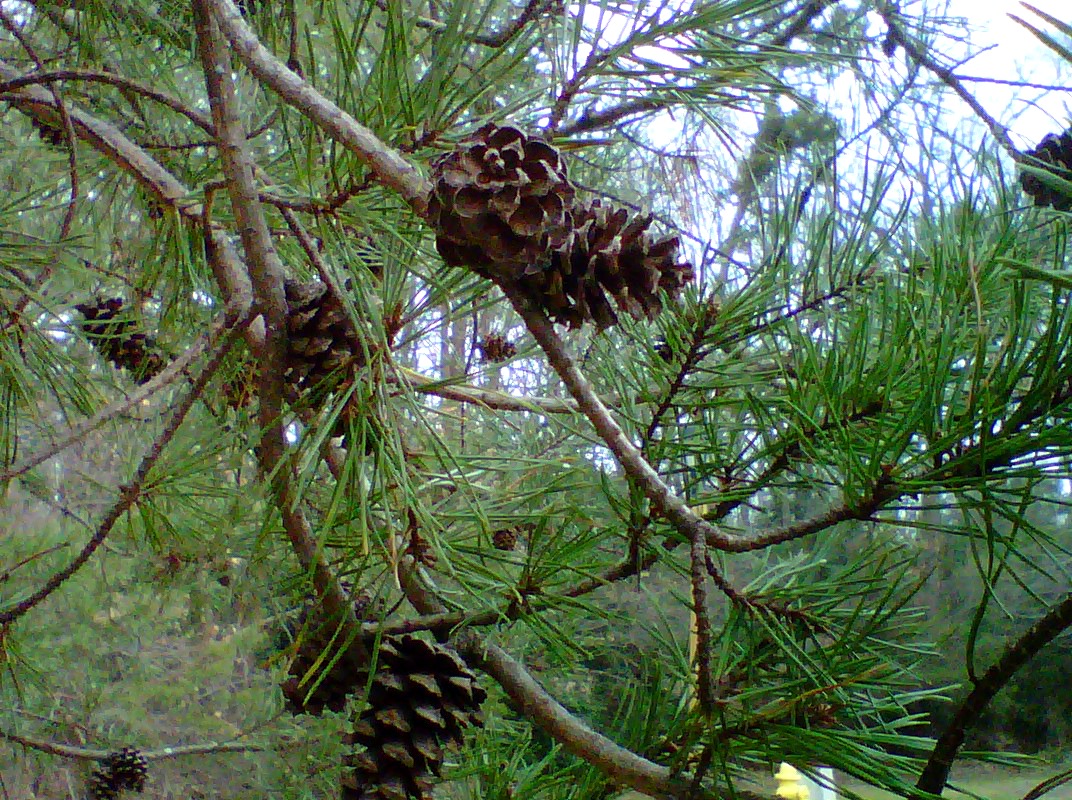
Some of nature goes “dormant” during the winter while other types of plant life may just conduct photosynthesis at a reduced rate. Animals may hibernate, or only move about sparingly to limit calorie burning. Our winter has been so mild the squirrels have been scampering about much like they do in the autumn. I know for a fact the raccoons are out and about for we finally had to break down and purchase “raccoon proof” trashcans. I’ve seen deer near the creek below our home. So have the dogs:

Foxes stare at us from the bushes and shrubs at night when we take the dogs out for the last time. Animals are busy, busy. The trees and perennials are just – C o N f U s E d.

When I think of winter, however, I think about all the restoration that is taking place. Nature may not LOOK alive, but it is. Many types of life are resting, preparing to get very busy producing new growth or replenishing body fat. Growth spurts cannot happen without winter and the dormant phases many types of life experience. This period of restoration actually prepares and allows this growth.

An old, but favored song about the seasons says it much better than I am able to describe:

Every Season

Every evening sky, an invitation
To trace the patterned stars
And early in July, a celebration
For freedom that is ours
And I notice You
In children’s games
In those who watch them from the shade
Every drop of sun is full of fun and wonder
You are summer

And even when the trees have just surrendered
To the harvest time
Forfeiting their leaves in late September
And sending us inside
Still I notice You when change begins
And I am braced for colder winds
I will offer thanks for what has been and was to come
You are autumn

And everything in time and under heaven
Finally falls asleep
Wrapped in blankets white, all creation
Shivers underneath
And still I notice you
When branches crack
And in my breath on frosted glass
Even now in death, You open doors for life to enter
You are winter

And everything that’s new has bravely surfaced
Teaching us to breathe
What was frozen through is newly purposed
Turning all things green
So it is with You
And how You make me new
With every season’s change
And so it will be
As You are re-creating me
Summer, autumn, winter, spring!

Life Restored

In my own life I have periods of “winter”. Frankly and honestly? I have been more dead than alive during specific life seasons. I don’t know if I could even call it “dormant”, but I do know life continued for spring eventually DID come.

Experiencing deafness as an adult and acquiring a balance disorder is never a welcome addition to life. One doesn’t ASK for disability, chronic illness or invisible difficulties. Yet, some of us are asked to walk this road. I wish I could say that I have always accepted what has come with grace, humility, and courage. I cannot.

Depression is an ugly thing. It comes in many forms. Depression also spawns a number of different symptoms and feelings in individuals. For me, it meant I almost lost my life. There were some close calls. Even when I was able to get past the despair, there were days I simply felt numb – going through the motions of being a mother of preteens, working, and barely surviving. It wasn’t until the crisis had passed that I was even able to share with those closest to me what I had gone through and how close I really came to the “end”. Maybe that is why this blog is so important to me and why I open it up to authors of all kinds to tell their story. In 2002, I was reading a lot of things on the Internet. Some of it saved my life.

As I began to learn to cope with everything that was happening and learned to adjust to my worsening hearing and balance, I got a lot of rest. Not even necessarily the poor type of rest that comes with depression. I did begin to slowly heal from the inside out. No (grin). My ears didn’t heal. But I did gain momentum in learning more about HOW to cope with hearing loss and balance issues. I learned to ask questions. I learned what worked for me and what did not. I surrounded myself with people who were ahead of me in the process and along side of me in the journey. Eventually I discovered I could also reach out to those who were still coming to terms themselves with hearing loss. I felt restored.

I want to close this post out with the video (captioned in both English AND Spanish) of “Every Season”. I hope you find as much wisdom in the simple song as I have. If you are experiencing winter as the result of chronic or invisible disability and illness, please write me. I handle all correspondence through this blog confidentially unless you specifically ask me to post your response for some reason. (Please email me at denise.portis@gmail.com    instead of leaving a comment as these DO become public). Despite my hearing loss I am a good listener. (SMILE) I do not claim to have all the answers, but I have a story, too, and we may share many experiences, frustrations, and successes. I hope (and even pray) that your winter is a time of restoration.

Denise Portis

© 2012 Personal Hearing Loss Journal

Why I Love Winter

The woods near our home without their usual foliage…

(PART ONE OF FOUR)

Chloe and I took a walk after lunch today. I had to smile as I saw the snowflakes falling softly around us even though it wasn’t cold enough to “stick”. I just love winter. I love actually getting out IN the cold weather as well. I love bundling up and walking briskly – something I can do even with Meniere’s as my symptoms are usually much more mild in the winter. I love being able to see my breath in the air and being able to smell various fireplaces in use in homes as I pass. However, one of the biggest reasons I love winter might surprise you. As a person with hearing loss, one doesn’t expect to enjoy QUIET.

Winter Can Be So Quiet

When walking, many people are inside where it is warm. So in the wintertime, my walks are often much more quiet than when I go during other seasons. I love the quiet. Don’t get me wrong! I love being able to hear, but I hear best when it is quiet. Am I contradicting myself? (BIG GRIN). Eh… maybe.

Hearing with a cochlear implant is a mind-boggling thing. I hadn’t expected to hear this well again this side of Heaven. When my husband and I realized that my progressive hearing loss would ultimately mean I would not hear at all, we were concerned. Thankfully, through the support and relationships of the Hearing Loss Association of America, we learned that being late-deafened does not necessarily mean the end to hearing. We learned about cochlear implants and I took almost three years researching and “talking the much needed ears off” numerous cochlear implant recipients. As thankful as I am for my cochlear implant, it does not mean that I now hear perfectly. As a matter of fact, I become a little aggravated when people act as if my cochlear implant “fixed” my hearing. Yes, I can hear. But it’s a different kind of hearing, and one made more difficult when trying to understand speech in the midst of noise.

So I love the quiet. I hear better. When walking, as the world around me is more quiet compared to other times of the year, sounds that are present are crisp and clear. If it is quiet on our walks, I can actually hear much of what Chloe is hearing.

Chloe can HEAR the squirrels even though she hasn’t yet spotted them…

I love listening to nature. I pick up many more sounds in the winter because of the quiet. The lack of foliage also assists in allowing sound to carry. In some spots of our neighborhood I can even enjoy an “echo-like” effect in the world around me.

We Need the Quiet

I have had numerous late-deafened folks tell me that they too, go “deaf” on purpose. For those of us who are thrifty, it saves on battery life. However, for many it is simply a matter of being mentally fatigued. It takes a lot of effort to understand and communicate using technology and speech reading. People with hearing loss must employ a number of senses to communicate. Those with normal hearing are not required to use much more than their sense of hearing to communicate. I believe this is part of the reason I need 8-10 hours of sleep a night. (Yes… you read that right!) I am mentally exhausted at the end of every day just because I’m communicating with family, friends, and co-workers. It takes work to hear! Listening requires active participation for those of us with hearing loss.

The forest is sleeping during the winter…

When there is a great deal of background noise, I don’t hear well. As a matter of fact? There are times I don’t even try. Case in point… my church:


Want to know the noisiest part of every church service? I think it is before and immediately after the actual service. Or, how about when the pastor or minister of worship says, “Everyone take a few minutes to meet and greet those around you!” ? AAAARGH! I try to make myself invisible if you must know. I am petrified someone will come and talk to me because I know I won’t hear them. I’m getting better though when someone approaches with their hand out and a big smile. I’m taking a risk but “betting on” that they are saying, “Hello, how are you today?” I have learned to smile, shake their hand and say a simple “Hello!” My preference in communicating is definitely one-on-one.  I do really well – IF – it is in a quiet atmosphere.

But you know something? My exposure to multiple disabilities at Fidos For Freedom has taught me one very important lesson. We could ALL do with more “quiet” in our lives. Quiet can foster introspection – and friends? I’m big on reflection, meditation, and soul-searching! For many of us, we face many physical battles on a daily basis. We really NEED quiet time. Contemplation may provide us with resolve, a new “plan of attack”, time to absorb new information about our disease/disability, and the ability to recuperate emotionally and mentally. As a person of faith, it is my quiet moments that I can humbly ask for guidance or assistance… or scream for help!

It is often when we are quiet that we can plan and “gear up” for the journey ahead. Victor Hugo said, “One is not idle because one is absorbed. There is both visible and invisible labor. To contemplate is to toil, to think is to do. The crossed arms work, the clasped hands act. The eyes upturned to Heaven are an act of creation.” For some of you, life’s journey requires a little planning. I have a friend who cannot do anything spontaneously. Errands are planned, cleaning specific rooms of the house are planned a whole day in advance. Errands rely on the goodwill of family and friends who are willing to cart her “here and there” as her eyesight has deteriorated. Cleaning is done when the body isn’t on “strike”. Lyme’s and Chronic Fatigue insist that she double-up on recipes when she has enough energy to cook. That way she can freeze things so that she doesn’t go hungry on days she cannot cook meals. She requires a lot of quiet time. For her… it’s not a communication issue. She needs time to plan and to take strategic steps in organizing as best she can her journey. She even needs quiet time to COPE with her disease.

Winter allows me more quiet time. Outside – fewer people are out and about. Inside – family members at home tend to curl up and do quiet things on their computers or may catch up on reading. Like hibernating bears they tend to sleep more. Co-workers are quieter during the winter. Hubby says it is because of S.A.D. Who knows? I do think winter generates a feeling of “quiet” in many people.

I encourage you to find more quiet time. Winter, spring, summer, or fall – the season isn’t important. Finding time to be QUIET and use the time wisely is important to all. Even if you use the time for a power nap…

Denise Portis

©2012 Personal Hearing Loss Journal

My Goals? Stop Apologizing…

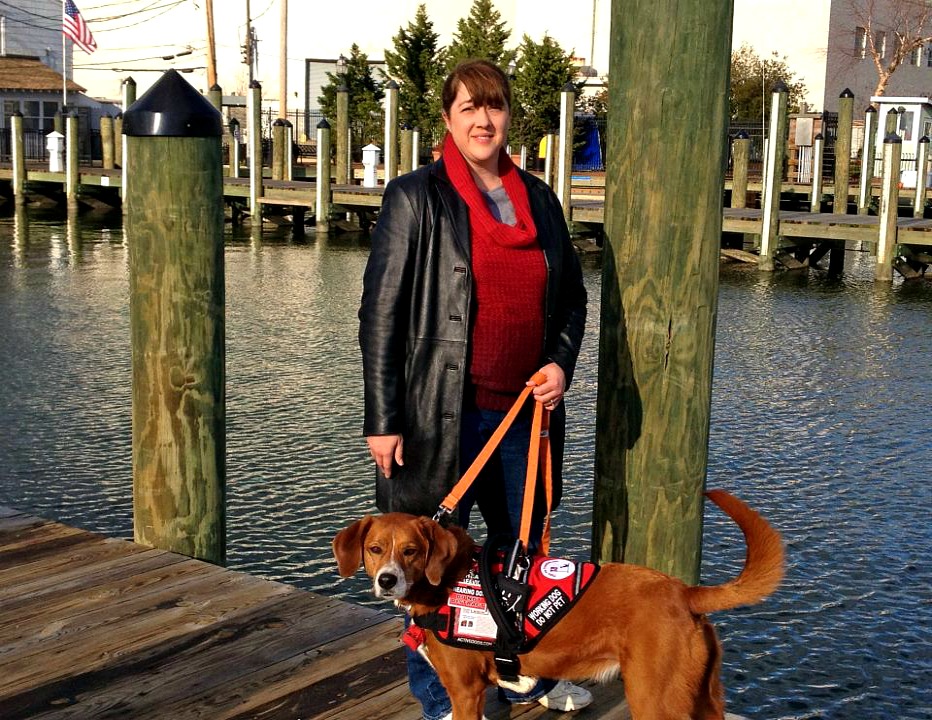
At City Dock in downtown Annapolis near the U.S. Naval Academy

I find it a little hard to believe it is 2012. Normally, the New Year doesn’t sneak up on me. However, this year it certainly did just that. In the past, I’m almost obsessive-compulsive about planning and organizing my resolutions for the New Year. I suppose that I haven’t allowed myself to obsess about it this year, points to the fact that I continue to change and evolve as I age. I think change is important and hope that I will always grow, mature, and change from one year to the next.

Sometimes though? Sometimes I see things in myself that I need to change because they are negative. In my reflection of 2011, I discovered a real negative that I really want to work on in 2012. Introspection did not really help me discover WHY I have developed this bad habit, but I can make some educated guesses.

I apologize. I apologize a great deal. I apologize for things that are not my fault. Some reasons I may do this?

1. I feel as if it will keep others from feeling the blame or reacting in a defensive way.

2. I default to shouldering the blame for most things.

3. I hope to diffuse any uncomfortable thoughts or reactions by others.

4. I hope to garner apologies and acceptance of responsibility by others by my own example.

5. HABIT

Please don’t misunderstand me. I believe that people should accept responsibility and offer apologies when they are warranted. However, I have developed a habit of apologizing for things that are not my responsibility. Sometimes when I say “I’m sorry”, it is simply a matter of miscommunication. I need to say something… but do so in a way it more accurately communicates my real meaning.

An example: “I’m sorry you misunderstood me”.

A better response would be, “I believe I have been misunderstood. May I clarify my meaning and intent?”

As a person with hearing loss I even respond with a “sorry” when I missed something. Example: “I’m sorry. I didn’t catch that”. It may very well be that it is no one’s FAULT that I missed it. After all… I am a late-deafened adult. Yes, sometimes folks may cover their mouth with their hand, or mumble. When that happens it is better to say, “I didn’t catch that. Could you repeat it please?” – or – “You were covering your mouth and I didn’t catch that. Will you repeat it please?” I’m going to try to stop myself before I respond with a habitual “I’m sorry. I didn’t catch that”.

It’s My Choice to Mitigate My Disabilities with a Service Dog

Recently, I “replied all” to an email in which a group of employees were nailing down details about when to meet for a book group. We are reading “Storm” by George R. Stewart. I actually typed out, “I apologize in advance that I will have my service dog with me as she is with me 24/7”. I sat and looked at that sentence for a minute and thought to myself, “WHAT IN THE WORLD?”

I deleted that sentence and re-typed, “Just a heads up so that no one is startled, I will have my service dog with me as she is with me 24/7”. I re-read and re-thought that sentence for several minutes. I like to give people I’ve never met before heads-up about Chloe, but it isn’t required. However, some people ARE afraid of dogs or have allergies. I like to let people know in advance when I can.

When I interviewed at the local community college, before hanging up the phone I let the person know that I would have my service dog with me at the interview. When I arrived to meet with the panel of people interviewing that day, the director let me know that he was glad I told him about Chloe. He normally has his dog with him at work during the summer, and he didn’t want his dog to interfere with my working dog.

Sometimes it cannot be helped. I arrive and people are surprised (or dismayed) that I have a service dog with me. In the past, I have intercepted looks and stepped forward to apologize that I have Chloe with me. I’m not sure why I felt compelled to do this. I’m NOT sorry I have Chloe. She has given me the independence and confidence I needed to follow my dreams! Yet, I often felt as if I needed to apologize for her presence.

When someone asks if they can pet Chloe, I would automatically say, “I’m sorry. She’s a working dog and cannot be pet while she is in vest”. A better response that I’m trying to remember to say is, “She’s a working dog and cannot be distracted right now. Thank you for asking permission though!”

I realize that many people use the “I’m sorry” phrase without thinking about the ramifications of the meaning. To many it is simply a way to break the ice, or begin communicating a difficult idea. For me, I believe that the overuse of the phrase has only served to weaken my own self-esteem and even development as a confident adult with a disability. Please understand that I am talking about ME – and how being overly zealous with apologizing has inadvertently affected ME in a negative way. You will never hear me correct YOU if you choose to use this phrase.

I believe in giving heartfelt apologies when they are needed. In the right circumstances, it conveys the desire to make right a wrong and to restore a good relationship with another person. One of my favorite books is “The Five Languages of Apology” by Chapman and Thomas. I believe in caring about our fellow man and to learn to apologize in such a way it restores good communication and healthy relationships.

It’s no one’s fault I do not hear well. There is no one to blame that I stumble around on rainy days nor am able to retrieve things from the floor. You may be surprised to learn that I wouldn’t change anything about me. Sure… it’s taken a long time for me to accept who I am and to “like me” just the way I am! I do want to correctly communicate my heart, mind, and intent to others. I believe I apologize in far too many circumstances. I want to accurately relay information without demeaning or demoralizing myself.

You may be thinking “poTAtoes” – “po-TAH-toes”. What is the difference? For me… this is something I choose to work on this year. I want to better communicate with others without taking the blame for things that cannot be helped.

In October I was at a training class at Fidos For Freedom in Laurel, Maryland. One of my least favorite exercises is the “Meet and Greet”. I hate it, yet know it is one of those necessary (evil) tasks that I must learn to accomplish with an assistance dog along side of me. Reality check? I will have to communicate with others in a group when there is background noise. It is very difficult for those of us with hearing loss to do this exercise. I have to remember to turn my t-coil off on both cochlear implant and hearing aid. Thankfully, our training room is looped and I hear the trainer very well when commands are given. However, I have to turn these OFF in order to hear a group of people in the “Meet and Greet”. We introduce ourselves and give a little information about our dogs to new people. To folks we know well we simply “catch up”. Our dogs are suppose to remain in a safe place (sit or stay) and we learn to communicate while also keeping an eye on our partners. When you also speech read, it can be very difficult to watch faces while also keeping an eye on your dog. At this particular training, Chloe was in a down/stay for the inevitable “Meet and Greet”. Some of these dogs Chloe has known for a long time. Some of them are newer puppies recently introduced to the training floor to eventually be matched with a client. I spotted Chloe stretching in her down/stay with tail all a-wag and kisses galore for another dog in a down/stay. I corrected her and then realized I missed what the fellow client said.

“I’m sorry. I missed that”, I said with exasperation.

The other client didn’t hesitate and said, “Don’t be sorry. I don’t apologize for weaving around with both a cane and a dog!”

It hit me that I was implying my inability to hear well in this environment could be changed. It is what it is. I do NOT hear well in “Meet and Greets”. It is not anyone’s fault that I do not. No apologies are necessary. I’m learning to ask for repeats without apologizing.

I wish you success in planning your own New Year’s resolutions and goals. I’m keeping it simple this year. Happy New Year and welcome 2012!

Denise Portis

© 2012 Personal Hearing Loss Journal
 

Alone “On Purpose”

I recently “re-read” a terrific article by Arlene Romoff, fellow blogger and Hearing Loss Association of America member/leader. She detailed how to navigate the holidays with a hearing loss. (Her article can be viewed here).

I was reminded that these tips work well for most holiday situations, but not ALL. Are you ever invited to holiday gatherings that are not “family” or close friend centered activities? It can be quite difficult to navigate holiday gatherings that you are not in control of – or – that are attended by folks you may not know so well. My husband and I have been attending a terrific church for the past two months and are involved in a small group with similar aged people. A holiday gathering was discussed and planned. Sign-up for the activity began a couple of weeks ago. And you know? For the first time in my life with hearing loss, I explained when asked if I was coming that I’m would not be. I did not feel crushed by the guilt of being so anti-social afterwards!

Perhaps it is because I have learned in recent years that it is OK to be alone “on purpose” on occasion. Now don’t get me wrong! I’m all for relationships, communication, and forging/cementing friendships! I believe in “play time” and in working hard to participate in family and friend activities during the holiday so as to celebrate the season in all its glitter, glory, and historical significance.

I knew from paying attention in this small group at church that “sign up” would begin soon. So I embraced an opportune moment at home with my best friend and husband, Terry, to discuss the issue. I explained that I fully supported his going to “represent us” and that I know from understanding the dynamics and participators in this group… that not all attend with spouse or “significant other” for various reasons. I explained to him that I have chosen to not put myself in extremely unsettling and difficult situations. Sure… sometimes I have no choice. But in this? I did. I explained that the effort was almost debilitating and between fears of being jostled and trying to navigate and hear in an unfamiliar place – in a PARTY no less – well… I was just choosing literally NOT “to go there”. I could see him thinking about my comments and as he is very expressive, I could tell he was thinking back to various activities I had attempted in the past. He was very understanding. He agreed that should things like this come up and he desired to go, he would do so even without me. He knew I’d hound him for details later and appreciate participating vicariously.

It has been a couple of weeks now since that sign-up sheet went around in class. I still don’t feel guilty, but must be so use to that feeling I keep waiting for it to hit me! (GRIN) As it is, I simply think am finally OK with being alone “on purpose”.

Solitary Activities

I love to walk and hike. Thankfully my assistance dog, Chloe, never argues about being a walking buddy so I can depend on her ears and alerts to stay safe while doing something I enjoy. My preference is to walk alone… but I never say “no” to walking with my young adult daughter, Kyersten. However, when walking alone I actually hear better. No one to talk to you see, unless you count a very attentive hound dog. Because of this “lack of people” noise, I’m able to tune into what sounds are going on around me. I’m constantly amazed at what my cochlear implant will pick up – when no one is talking. The sound of crunching leaves, fussing squirrels, the wind blowing the now skeletal branches of the trees around me… autumn is noisy! I can hear traffic sounds both near and far, children on the playground, dogs barking at doors as we traverse the neighborhood, and cats glaring from windows in homes. OK, yeah… that last one was a bit over the top, but I certainly have “holes drilled into my back” by the glares of imperial felines who watch us pass their kingdom’s boundaries!

I love when my house empties out with various family members going to activities, movies, or different shifts at work. I work better in a quiet house. No one interrupts me and I get a lot of work done! When I don’t have work to do, I have learned to not only embrace solitary “down time”, I look forward to it! A hot cup of tea and a good book + turning off my ears “on purpose” = a type of sweet surrender to all that is good in being alone.

I participate in holiday activities and feel close to family and friends. Thanksgiving was at my house (but of course!) and we had company as well… but on my terms. No holiday music, activities were quieter ones, and I heard very well. The experience was not at all stressful. I’m learning, you see…

I DO get to know new people – but usually one-on-one. In large or even small group settings, my focus and concentration are on staying at a place I’m not “lost” in the conversation. That makes it pretty difficult to get to know others! But one-on-one meetings, lunches, or walks allow me to really discover new people. I’m quick to invite and accept the invitations for such outings!

Thankful for… the Internet

Perhaps a bit “off topic”, but as Thanksgiving was this past week, I don’t feel as if I can close this post without mentioning how thankful I am for the Internet. I know people think that you cannot have “real” friends through the Internet. However hearing loss can at times be almost isolating… and not by choice. I have discovered a network of very special friends – all who have hearing loss. I have peeled back layers of “them” to see reveal people who I am proud to call FRIEND. I have met them face-to-face in various locales… usually hearing loss related activities. I never hesitate to participate in groups – even large ones – with my peers. There is no frustration in asking for repeats at these conferences, conventions, and gatherings. I don’t mind folks invading my personal space, for it is always good EAR first. In super noisy environments, paper is always handy and darn if we don’t abbreviate and jot quick notes as good as the younger texting generation! If your batteries go dead, one need simply to remove their implant… scowl at it, and several people nearby will hand you batteries. It isn’t strange to ask hostess or waiters to turn the background music “off”, because no one in the group wants it on anyway. We finish each others sentences and clarify for each other when one voice, timbre, or pitch may not be heard as easily as another. We are comfortable with each other because we live the same kind of life. The Internet allows us to stay in touch “in between times”. For that I am grateful and mindful to acknowledge the power of connecting through this tool – the Internet.

If you are a person with hearing loss and have not yet learned it is fine to be alone “on purpose”, perhaps it is because you have not yet discovered solitary activities that you enjoy. I hope that you will learn to embrace these times. Take up a new activity that is done well as the result of your being alone. I know dynamite photographers, writers, and artists whose skills improved when they learned to embrace their own alone time. What hidden talents and skills have you not yet honed but could do so should you choose to be alone “on purpose”?

Denise Portis

© 2011 Personal Hearing Loss Journal

 

Untreated Hearing Loss

An initiative by Phonak – http://www.hear-the-world.com/

I just loved the movie UP! Not just because it had main characters that were dogs – and ones that could talk at that! Carl, a 70’s something animated actor sported hearing aids and spunk. Mostly the latter…

I recently ran into a 70’s something gentleman at the gas pump. I was leaning against the car waiting for my tank to fill, trying desperately to avoid looking at the high numbers scrolling across the screen as my 12 gallon tank drained my bank account. It was a pretty fall day, so I had the car windows down and was talking to Chloe. She could really care less about the price of unleaded, but she does like to flirt with other people nearby. I caught sight of a low tire, and changed positions so as to look at it better. This gentleman caught my eye and said, “I noticed that too… you need air in that tire”.

With some apprehension I looked around the station and could not see an air pump. I responded, “Oh dear, I don’t see an air pump!”

The gentleman cupped his ear and said, “teardrops and dare what?”

I think my eyes popped wide. Another person with hearing loss! I just beamed at him and turned to face him while repeating, “I don’t see an air pump, do you?”

He dropped his cupped hand and turned in a circle looking around the islands of pumps at the station. “Nope! I don’t see one either. You may have to go to another station and get some air in that tire!”

I pointed to my head and said, “I have a hearing loss too…”

He looked at me quizzically and moved to see the side of my head. “Oh! I thought that was one of those new-fangled gadgets people use to talk into. Is that a hearing aid?”

I beamed again, always excited to share and said, “No. It’s a cochlear implant.” I pointed to my other ear,… “but I have a hearing aid in this ear even though it doesn’t do me much good”.

He shook his head sadly and said, “Yes, I tried them for awhile but all I got was squeals and whistles. I never could hear better.”

Pointing to my CI again I said, “You should go to your audiologist and get evaluated for a cochlear implant. I hear much better than I ever did with just a hearing aid.”

He moved closer to me, still occasionally cupping his ear. I couldn’t tell if he was understanding all I was saying, so I really concentrated on speaking at a moderate pace and clearly. At least as clear as a pronounced southern accent would let me.

He stood within a yard from me and looked longingly at my CI. “If I were young again, I’d get that surgery!”

I put my hand on his arm and said, “Oh! You shouldn’t let age stand in your way. I know plenty of folks who are older who get the CI. They do very well!”

“No… no. I’m too old. It’s too late for me”, he said sadly. His eyes glistened and his chin dropped. It was all I could do not to throw my arms around him and hug him tight. Demonstrations of physical affection and empathetic squeezes were not likely to be accepted by a total stranger. So I restrained my impulses and instead said clearly, “You should think about that some more. It’s the quality of life that matters.”

My tank was full, as was his and cars were in line. I gave him my card and told him to email me. I hope he does.

Untreated Hearing Loss

Untreated hearing loss may result in depression, anxiety, little to no social activity, and insecurity (cited by Zounds). Helen Keller, who was both blind and deaf, said that deafness cuts one off from people, whereas blindness cuts one off from things. Even those who have received treatment for hearing loss may experience some of these same results, but in different degrees.

I recently went to a small group Bible study and had trouble hearing when I first came in since everyone was talking at the same time. Someone addressed me and I didn’t hear them. They ended up reacting negatively to that and I sat in shock at having been misunderstood and unfairly judged – and “I’m a veteran!” I thought to myself. But I think as a result of taking concrete steps towards hearing better, those of us who have made an effort to communicate with assistive listening devices and technology have also developed coping skills towards dealing with bouts of depression, anxiety, and insecurities. We have very likely also made great strides in being more socially active. In my case, having a negative experience at least meant I could email my peers and belly-ache about it and get some great advice!

But what if your hearing loss is untreated? If your hearing loss began as an adult, do you remember those early days of not hearing well? I sure do. I can tell you they aren’t GOOD memories either. Slowly, but surely I dropped out of nearly everything. When Terry and I first got married we vowed to continue to date. So even after the kids were born, we’d swap baby-sitting favors and go out on dates. After I began losing my hearing (when our 2nd child was born), those dates dwindled away and eventually stopped. I’d have hubby “order in” so that I could eat something I didn’t have to fix but would not have to face the noise of a restaurant. Now that I have a CI, I’m enjoying dining out again.

If you are still a working adult when hearing loss occurs, it can greatly impact your ability to do your job. You can only “fake it” so long. Hearing loss can be treated discreetly and privately. I have met some people at work, church, or in public who I didn’t realize had a hearing loss until they noticed my own “bling” (or hearing assistance dog) and mentioned it to me. For many, disclosing hearing loss is a choice you can make, whether you are at work or another place you often hang out (ballgames, church, community events, etc).

If you know of someone who may have a hearing loss, you may discover they can be stubborn about agreeing to go get evaluated by an audiologist. Encourage them to do so! Many times audiologists will do a hearing test for free. Even if you do not yet need a hearing aid or other technology in order to maximize hearing, it is good to get a baseline audiogram to chart where your hearing is “going”. Not all types of hearing loss are progressive – but then again there are many that ARE. Having a real way to chart what is happening to your hearing is important.

We use to get our hearing checked regularly in school. Because of budget cuts few schools do hearing tests anymore. Parents should be diligent about periodic hearing tests for their children. Especially those who had tubes put in when young, or suffered from numerous ear infections. If hearing loss runs in the family, it is even more important to religiously set up audiograms for members of the family.

Don’t Chalk it Up to “Age”

I have heard many say that they expected some hearing loss when they reached their late 60’s or 70’s. Age-related hearing loss is not uncommon. However, many choose not to do anything about it. Hearing aids have “come a long way baby”. They come in all sizes, shapes, and COLORS. (Yeah, of course I would mention THAT!) They can be worn discreetly or worn all “be-dazzled”. You may find that you hear fine in “most” situations, but perhaps you have trouble understanding and hearing in noisy places. Hearing aids are also able to isolate voices close and zero in on direction of the listener. You’ll never know what is available until you go see an audiologist and talk to them about your options!

If you tried hearing aids and hated them, but know your hearing loss has worsened – please don’t discount cochlear implants without sitting down and talking to recipients. All three cochlear implant manufacturers have message boards and forums in which you can ask questions and discover answers from actual cochlear implant recipients. Age doesn’t matter either – the oldest person I personally knew who was implanted was 87-years-old. I have read stories of others who are even older. A person does need to be healthy enough to undergo outpatient surgery and anesthesia, but age doesn’t disqualify anyone!

The American Academy of Audiology reported the findings of a study done by the National Council on the Aging. Over 2,300 individuals participated in the study, and 2,090 hearing family members were also surveyed. The results of the study can be viewed here. The study noted that, “Hearing loss is one of the most prevalent chronic conditions in the United States, affecting more than nine million Americans over the age of 65 and 10 million Americans age 45 to 64. But about three out of five older Americans with hearing loss and six out of seven middle-aged Americans with hearing loss do not use hearing aids”.

If you or someone you know has a hearing loss, go get an audiogram and information about your hearing loss. What have you got to lose?

Denise Portis

© 2011 Personal Hearing Loss Journal
Reflections on National Invisible Illness Awareness Week

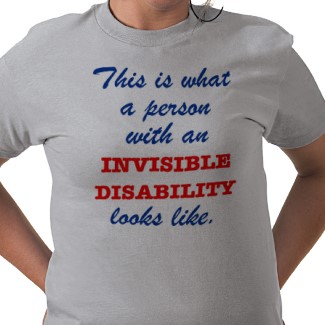
According to the Invisible Illness Awareness website, the following statistics are true:

  • Over 100 million people in the U.S. have a chronic illness;
  • 20.6 percent of the population, about 54 million people, have some level of disability;
  • 9.9 percent or 26 million people had a severe disability
  • 1.8 million used a wheelchair
  • 5.2 million used a cane, crutches, or a walker
  • So that is less than 6% who have a visible illness.
  • There are many illnesses that start out being invisible and as the disease progresses it becomes more visible.

Also note that:

  • 26 million persons were considered to have a severe disability;
  • yet, only 7 million persons used a visible device for mobility.
  • Thus, 19 million of the people who were defined as severely disabled, did not use a wheelchair, cane, crutches or walkers.
  • In other words, 73% of Americans with severe disabilities do not use such devices.
  • Therefore, a disability cannot be determined solely on whether or not a person uses visible assistive equipment.

U.S. Department of Commerce (1994). Bureau of the Census, Statistical Brief: Americans With Disabilities. (Publication SB/94-1).U.S. Department of Commerce (1997). Bureau of the Census, Census Brief: Disabilities Affect One-Fifth of All Americans. (Publication CENBR/97-5).

Why Do I “Plug” Invisible Illness Awareness Week?

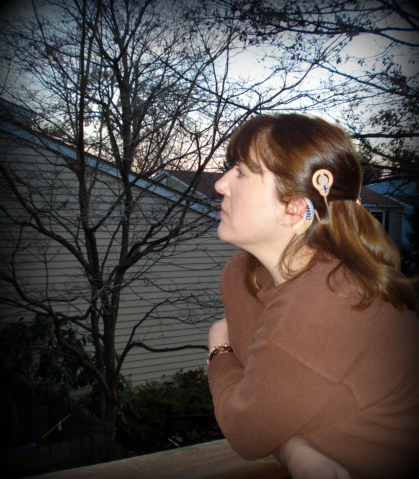
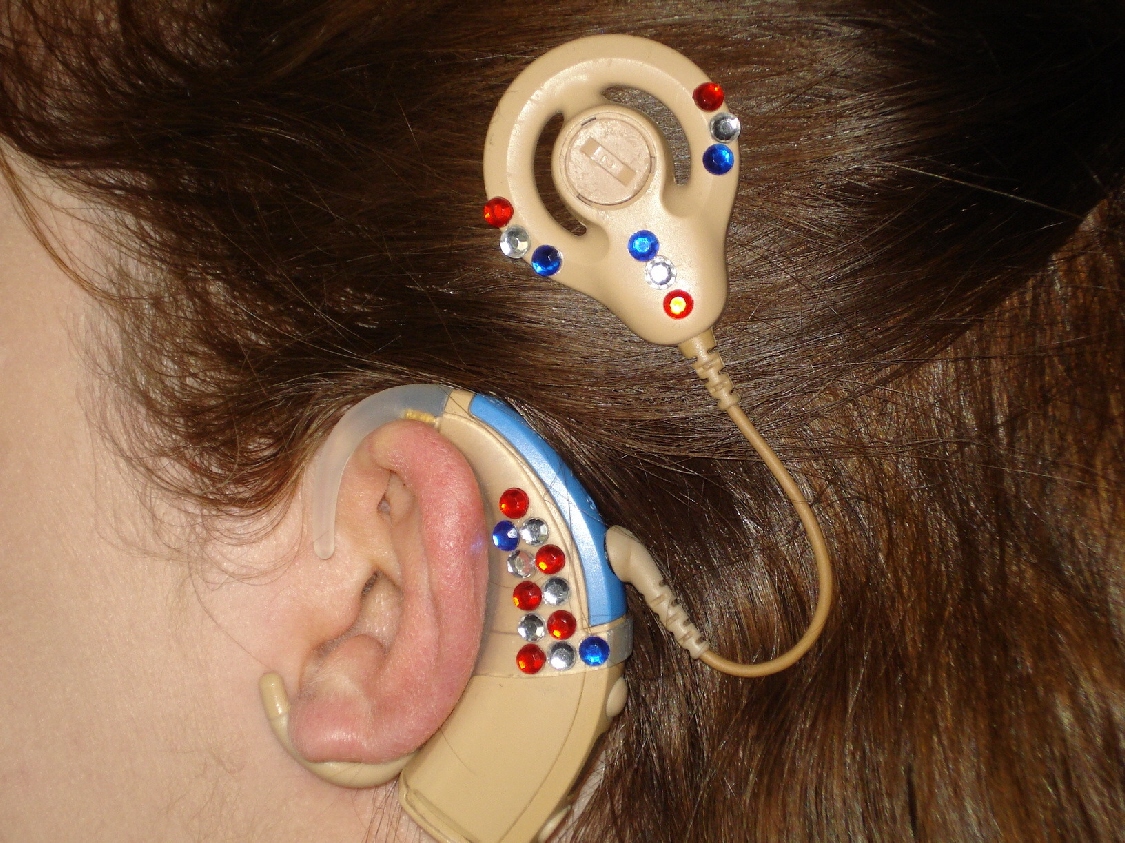
I have been trying to raise awareness about this week for three years now. This year, a friend noticed my “don’t miss” posting on Facebook and couldn’t resist teasing me about it. After all, I don’t exactly allow my challenges to be INVISIBLE. I wear a bright red ear mold on the hearing aid in my “deaf” ear. I wear sparkly “bling” on the cochlear implant on my “hearing again” ear. I go about my life accompanied by a hearing assistance/balance assist dog 24/7. I learned long ago that it was in my best interests to make an invisible disability – VISIBLE. It kept me from being knocked out of the way, and helped people realize that something about me is different. I can still work, shop, go to movies, hike, and dance… yeah. OK, maybe not that last part…

I just don’t hear well… especially in big, cavernous places, or busy, buzzing atmospheres. Once you get my attention and I know you are talking to me, I can actually hear you great! I may have to ask for a very occasional repeat, but for the most part I do really well. I’m proud of how far I’ve come in my hearing. Despite all my visible reminders and “kissing sidekick”, Chloe, people who know me well (friends, co-workers, and family members) will forget that I may have trouble if you don’t get my attention first and that I can’t move FAST – ever. Heck… sometimes even *I* forget that I cannot move fast. Nothing reminds me quicker than when I

fall

down

and

go

BOOM!

Through the years I’ve been able to meet some wonderful people. Some examples include:

1) Folks through the training center at Fidos For Freedom.

2) People at Hearing Loss Association of America conventions or conferences

3) “Hearing Again” recipients at Cochlear America conferences

4) Individuals in support groups for tinnitus, Meniere’s disease, hearing loss, and assistance dogs users (both face-to-face and in virtual environments online).

Not every disability can be made visible. Not every person chooses to even try and make something invisible – visible. They have their reasons and it is an individual’s choice how they want to disclose or keep hidden any disabilities they may have. It could influence their work environment, relationships, and even self-esteem. I choose to support ALL individuals who live with chronic illness, invisible illness, or disability. Recognizing these illnesses once a year in a push for national awareness, I hope will eventually dispel erroneous ideas and information about these very populations. This is one of the reasons I “blog”, and invite guest authors to write for “Hearing Elmo” as well. Raising awareness makes a difference… one person at a time.

I read some incredible stories of courage, faith, and perseverance this week at the national website for invisible illnesses. You can check out some of them here. I’m proud to be a part of a community of people who choose to live a victorious life  – “in spite of”.

Take some time this week if you can to recognize the courageous people that you know who live with invisible illness and the choices they have made in order to live life to its fullest!

Denise Portis

© Personal Hearing Loss Journal
10 Year Anniversary of 9-11

Patriotic Cochlear Implant "Bling"

It is hard to believe we’ve seen the 10 Year Anniversary of “9-11” come and go already. It really put it into perspective for me when my 21-year-old daughter relayed an amusing anecdote to me. She had gone to Union Station to pick up “the boyfriend“. They walked around a bit before getting on the METRO and she spied a police car outside with “9-1-1” on the side. Because of the anniversary of 9-11, and a result of what I think those numbers MEAN to someone of her generation, she pointed at the car and said, “Oh look! I guess that is on there to commemorate the 10 year anniversary!”  I think “the boyfriend” was hard pressed not to laugh.

Hers is a generation that grew up without William Shatner and his “Rescue: 9-1-1” television show. Although 9-1-1 was covered in school, for her it left a permanent link to a different meaning other than how to call in the event of an emergency. For her, those 3 numbers meant something far different. She was old enough to understand that the world had changed for those here in the U.S.A., but young enough to experience different kinds of fear, anxiety, and apprehension experienced by parents and their peers.

On 9-11 I was “only” hard-of-hearing at the time. The progressive loss and downward spiral of my own hearing had not left its life-changing mark as yet. However, even with my first hearing aid, I still relied on closed captioning. I think if I had to put my finger on ONE memory of 9-11, it would be being afraid and confused about what was happening because those professionals who did closed captioning were FREAKING OUT. At times, the closed captioning was just gibberish, and there was a great deal more of instantaneous corrections being made for “Live” television. When the first tower came down I remember sitting – quickly – STUNNED.

Ten years later I am a different person. Hopefully, all of us can say we are “different” after a decade of life. Our goal should be to mature, learn, and even blossom. I am completely deaf now, but “hear again” through cochlear implant technology. Who I count as friends are peers who also live with hearing loss, live with invisible disability/illness, or work with those populations. Sometimes we live victoriously and sometimes there are setbacks. I have found a “community”, however, and they have become family and friends to me. I watched a number of specials about 9-11 and still used closed captioning. However, it was with some confidence that I also HEARD the commentary and watched the speeches at various memorials. I am grateful for my cochlear implant and for the privilege of living in America.

We will never forget…

Denise Portis

© 2011 Personal Hearing Loss Journal
Timeless Reminders

In 483 B.C., Medo-Persian King Xerxes (also known as Ahasuerus) threw a huge, 7 day party. What was strange about this party is that it FOLLOWED a 180 day, kingdom-wide celebration. I mean… who has THAT kind of money? I guess Xerxes did – and he had no qualms about spending it. At some point in the party, Xerxes makes a mistake. He assumes his queen, the beautiful Vashti, will want to come to the men’s party and parade around for everyone. She set him straight pretty quickly… all through the channels of the first private messaging system… eunuchs. After consulting the fellas in his “boys club”, Xerxes boots Vashti to the curb… or actually to a part of the harem where he’ll never see her again. ‘Cept… now he’s lonely. This lonliness sets in play a kingdom-wide search for all the beautiful single women in the kingdom. That’s right… there’s a job opening in the palace.

Hadassah was a young Jewess being raised in Susa by her cousin Mordecai. Was it because she was near the palace at Susa that she was picked up so quickly? We don’t know, but we do know she was a “hottie”. Beautiful in form and face. Her name was changed to Esther and she began the year-long process of getting her chance with Xerxes to see if he liked her well enough to become his new queen. History tells us that in 478 B.C., Esther becomes queen. Guess she made an impact…

Xerxes was a “strange ‘un”. He paid attention to seemingly unimportant things and completely overlooked really important details… like signing a law from a “Jew hater” named Haman to wipe out and annhilate all the Jews on a specific day. Haman is conniving and manipulative and leaves out the little detail about exactly WHO the race was to be destroyed. Xerxes didn’t have a problem with the Jews – one saved his life even (wouldn’t you know it was Esther’s cousin Mordecai?) – but Haman certainly did. If you are familiar with the story, you know that Queen Esther is given the opportunity to save her people from this vengeance edict that was drawn-up and pushed through into law by Haman. During a pep talk from her cousin Mordecai via that early private messaging system… he tells Esther something that has reverberated down through the years to words we all know. “FOR SUCH A TIME AS THIS”. Those six words are profound, aren’t they? Unfortunately, Esther 4:14, has an even greater timeless reminder that is often overlooked. Mordecai actually says, “And who knows whether you have not attained royalty for such a time as this”. Yup. Esther saves her people by exposing Haman and suggesting to Xerxes to write a counter-law that will allow the Jews to fight for their very lives instead of rolling over and giving up. It seems no one wants to face a Jew with a sword. They are saved.

I think we miss an important reminder when we take only those six words out of context. All the pieces were in play at the right time, right place… all for a very important reason. I’ve often thought about my own life and tried to look at opportunities available to me that I have as a result of – all the pieces being in play at the right time and right place. Who knows whether or not I became deaf for such a time as this?

You Have a Disability. Now what?

I’m reasonably certain that if I asked for a show of hands for anyone who signed up for developing a disability or acquiring an invisible illness, I’d see a “room” full of people sitting on their hands. To be painfully honest with you, there are days that I really hate being deaf and only being able to hear if I wear bionics. I can get extremely depressed after experiencing a day where I had to navigate my space hanging on to walls or using a cane. I didn’t ask to become deaf, nor aspire to being a person with Meniere’s disease. Yet I firmly believe that everything has a purpose. So I’m deaf and hear again with a CI. What can I do with that?

Do you know that you have access to people that may be unique to YOU? The Internet may bring like-minded people together for discussion and support, but many of these people you may never meet face-to-face. Yet in YOUR life, there are real people that you have contact with that I do not. You don’t know the sad-eyed waitress at my favorite locally-owned restaurant. You don’t buy stamps from the grumpy postal worker I see once a month. You don’t stop and wait your turn at the crosswalk where a harried, sweaty, “I can’t take much more of this”, crossing guard faithfully sees school children across the busy street each weekday. These folks are unique to me, just as specific individuals you know at work, school, church, and PTA are unique to YOU.

Do you literally navigate life by using a power-scooter or walker? Then you are mobile in a manner I do not understand. Do you have fibromyalgia? I don’t understand that kind of pain – symptomatic of an invisible illness often misunderstood. Even those I know who have hearing loss and Meniere’s disease face different problems, frustrations, and symptoms than I experience. Hearing loss is often as unique as the individual. Yet all that is YOU, puts you in a unique position to make a difference where you are. I cannot influence the people that are unique to you.

You know something? It helps me to remember this timeless reminder when I am feeling particular frustrated about my life. I’m in a specific time and place with specific gifts, skills, and personality to influence those around me in a positive way. What is frightening is remembering that I can also influence others in a negative way. Going back to Mordecai’s pep talk to Queen Esther, he also reminds her that if she keeps her mouth shut and doesn’t ask Xerxes for the life of her people, then deliverance will come from another place.

Esther 4:14, “For if you remain silent at this time, relief and deliverance will arise for the Jews from another place and you and your father’s house will perish. And who knows whether you have not attained royalty for such a time as this?”

I don’t know about YOU, but I want to seize my opportunities. Sure… some may seem like small opportunities for impacting the life of another, but who is to say that opportunity is without worth? If I don’t live my life actively looking for opportunities to make a difference, then someone else will be in a position to do it instead. Especially if it is an opportunity to be a blessing and to make a positive difference in another. You are unique. The opportunities available to YOU are unique.

President Harry Truman said, “A pessimist is one who makes difficulties of his opportunities and an optimist is one who makes opportunities of his difficulties”. Yup. I realize there is some therapeutic value in the occasional pity party. However, don’t stay as a permanent guest. You are missing opportunities if you keep your eyes on SELF. I believe living a life looking for opportunities makes life worth living. I try to re-evaluate where I am in finding and seizing opportunities every Monday. Mondays are dreaded by most; however, I’ve come to look forward to them as I’ve discovered self-evaluation can be invigorating – or at least a KICK IN THE PANTS.

Denise Portis

© 2011 Personal Hearing Loss Journal

 

Get Their Attention

I recently attended the annual national convention of the Hearing Loss Association of America because it was actually held in my area this year. At one point, I was in the crowded convention hall perusing the numerous hearing loss vendors and booths. At a distance, I saw an old acquaintance scoot by in their scooter. I tried to wave them down but I was not in their peripheral so they did not see me. After they quickly rolled out of my sight, it hit me! I could have raised my voice and said, “Hey Bob!” This friend did not have a hearing loss, but attended these conventions alongside of his wife who WAS deaf and hearing again with two cochlear implants. I had to smile at my mistake, because I forget that people with normal hearing do not have to have a visual cue in order to get their attention. (Thankfully we ran into each other later…)

I see this all the time in my kids. Kyersten and Chris (now 21 and 20-years-old) attend college but live at home. They really have no memories of my not having a hearing loss. Even though I had a progressive loss, it took twelve years before my hearing was completely gone. They have both told me that they don’t remember my ever hearing well. They are so accustomed to speaking with someone who has a hearing loss, they automatically do things that are more difficult for someone who isn’t in constant contact with someone who is deaf. They always come into the same room that I am in, and rarely try to have a conversation from another room with ANY family member… even those with normal hearing. Recently my son came all the way into the family room to ask my husband a question. It was a simple question that could have easily been asked from the kitchen. The television wasn’t on, and the area was fairly quiet. However, he is so accustomed to facing the person he is talking to, it is difficult to remember that he can do some communicating from another room when it comes to his dad. My daughter is often told that even as shy as she is, she has “uncanny eye contact” when communicating with someone.

Teaching Them Early

When my kids were about 2-3 years old, they were already “old hats” at communicating with a person who had hearing loss. They cannot remember watching television without captions. Even “Barney, the Dinosaur” had captions, as did “Sesame Street” and “Thomas the Tank Engine”. I believe it helped them learn to read as early as they did!

If I needed to tell my kids something, I would walk over to them and get down on their level. I would put my hands on each side of their face and say, “I’ve got my GUESS WHAT FACE ON!” I’d then (almost nose to nose) tell them what I wanted to tell them, or simply say “I love you”.

If they came to talk to me, I could hear that they were talking, but not understand what they were saying. So I’d lean down and put my palms on each side of their face and ask, “Wow! Do you have your GUESS WHAT FACE ON?” It didn’t take long for them to begin putting their own palms on the sides of my face when talking to me.  As they grew older, we dropped putting our hands on the face of the other, but they would come and tell me with direct eye contact…  “Mom, I’ve got my GUESS WHAT FACE ON…” and then tell me what they were going to say.

By the time my kids were 5 and 6-years-old, it had become habit. I was eventually able to afford a refurbished hearing aid that gave me some help in hearing for several years. I recall my daughter (from the next room) telling my son, “Wait a minute. Let me put my GUESS WHAT FACE ON and ask Mom!” As they continued to age and mature, what “stuck” was direct eye contact and face-to-face conversations. It was actually a wonderful gift to help nurture in them, for all of us do very well to give the other person the attention they need and deserve when communicating. No competing with electronic games, closed captioning on television, or computers when we talk. We put everything down and LOOK at the other person.

How to Get a Deaf Person’s Attention

Here are some great tips in how to get the attention of a person with hearing loss.

1. Wave your hand in their line of sight.

2. Touch their shoulder or hand before speaking.

3. Move into their line of sight with your body to gain their attention.

4. Turn the lights off and on (this is especially helpful in a room that may have more than one person with hearing loss and you need EVERY person’s attention).

5. If sitting at a table with the person, gently knock on the top to get their attention through vibrations.

Can you think of any others? I welcome your input!

How Service Dogs Get Attention

Hearing assistance dogs are taught to get their partner’s attention by gently bumping them with their nose or touching them with a paw. As I have a balance disorder, Chloe tries to garner my attention by standing and staring and WAGGING LIKE MAD. She only places a paw on me or bumps me with her nose if her 1st efforts have failed. Smaller assistance dogs, may get their partner’s attention by actually jumping up on them.

Even though hearing assistance dogs are trained how to get the attention of their partner to alert them to sounds, the human partner has to be responsible as well. Shortly after being matched with Chloe my trainer, Pat, took me to many different types of public places to train ME. Chloe was already trained. She drilled into me, two important things:

1. WATCH YOUR DOG

2. TRUST YOUR DOG

I quickly learned to pay attention to what has Chloe’s attention. Her hearing is not only much keener than my own, it is more sensitive than people with normal hearing. I can now even recognize when she hears something if she is standing in front of me (with my only seeing the back of her head). Chloe has a modified “heel”. “Heel” position is when the dog’s shoulders are parallel to their partner’s left leg. However, I do not have peripheral vision on my lower left. So we taught Chloe a modified “heel” that is slightly forward of a true “heel”. I had to learn how to observe the BACK of her head. Thankfully she has these wonderful hound ears that perk up and she “points with her nose” in the direction from which a sound is coming. She will even cock her head to the side to really tune in.

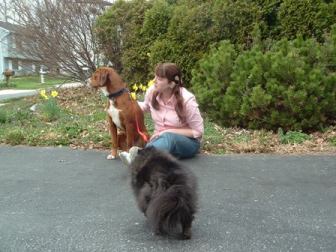
Look the neighbor came out...
Look at that family over there...
something is in the bushes...

If the sound is something she thinks I should hear, she’ll come and get me – phone ringing, door bell, someone calling my name, kitchen timer, etc. These are all trained alerts. However, I have been in situations where I could tell a sound had completely distracted her yet I could not hear or place what it was. When this happens, I ask “Chloe… what is it? Show me!”

Chloe will start to wag and TAKE me to what is making the sound. I have to be careful about this. I don’t want her to take me to every single sound she hears. She may hear the kid’s arguing and cock her head as she listens. I do NOT want her to take me to where they are arguing because they are old enough to work out their own problems! She seems to understand when it is a sound that I need to pay attention to – such as a cat locked in the laundry room, the low-battery sound on the phone in the bottom of my purse, or “Daddy” hollering from the bathroom because there isn’t any toilet paper!

A Word of Caution

I believe that individual’s with hearing loss should get the attention of every person they wish to speak to – even if that person has normal hearing. Do you know how many conversations I have interrupted because I walked up to someone and started talking without hearing that they were talking to someone else? I try to make it a habit (and still sometimes fail) to make sure I have the attention of someone before I begin speaking. This eliminates the likelihood of my talking over someone already talking.

I suspect all of us can improve our communication skills. If you have someone in your life who has a hearing loss, I encourage you to sit them down and ask them in what ways you may better communicate with them. If you have a hearing loss (whether a veteran of deafness or a “rookie” – new to coping with hearing loss), try to sit folks down and have a “heart to heart” about ways they might better communicate with you. This may include family members, co-workers, or even supervisors. Don’t think, however, that once you share with them how to better communicate with you that they will always do “right” from that point forward. I have learned that the people in my life need occasional (positive) reminders.

“Could you put your hand down please? You are covering your mouth”.

“Do you mind looking my direction when you speak?”

“Could you get my attention before you begin speaking? I’m afraid I missed all that you said prior to my looking up and seeing you standing there!”

Stay positive. Few people will put any genuine effort into communicating with you if you belly-ache and whine about it. If you get angry, it may cause resentment and defensiveness. Keep your cool! Smile… be positive! In the end, you are actually helping them better communicate with ALL!

Denise Portis

© 2011 Personal Hearing Loss Journal

A Very Windy Birthday

We celebrated my birthday early this year since no one was going to be home EXCEPT me. The timing worked out well because my college-aged daughter was home for the weekend too.

I expected my birthday to come and go without incident. I spent the day at home preparing for classes – alone, save our furry family members. However, the evening ended up being an exciting adventure in spite of the lack of presents, cake and family. April 27, 2011, was a very windy day here in Maryland. As a matter of fact it was windy and stormy across much of the eastern seaboard. In Maryland we had four tornadoes touch down according to local news and radar.

It’s nice to be living in a day of technology. All evening I received tornado warnings via text on my Blackberry, and the television had constant program interruptions with late-breaking news on area damage and warnings. I spent a great deal of time looking out my front glass door. The trees were bending and swaying. The noise was really something! I guess wind by itself doesn’t make a noise. It isn’t until it comes into contact with other things that sound is created.

I stood, at times, open-mouthed at the major wind storm in our area. I was very vigilant about checking the alerts and listening as closely as I could. On a whim, I removed the coil of my cochlear implant to get an impression of the storm WITHOUT SOUND. It is very different to rely on visual stimuli to notice important things like possible tornadoes. As I stood there “deaf” for a moment or two, I noticed something right away. My hound dog was at the BACK door while I stood at the front. Since she is hardly ever more than a room away from me… I walked to the back door where she stood trembling. I was astonished to see a fallen tree behind our home! When did that come down? I stuck my coil back on my head in order to pick up more cues about what was going on. How did I miss the sound of that tree coming down? Thankfully, it missed the townhouse. I enlisted the “muscle” of my 20-year-old son to get the tree down the hill and into the ravine the next day.

I suppose it was because my focus was on what was going on out front that I missed what was going on out BACK.  Although I hear very well with my cochlear implant now, I still rely on other cues to get the “whole picture”. Because I was using my eyes and ears together, the sounds I heard were focused on what was happening out front. The sound that accompanied the toppled tree in the back had to be very loud. The trembling hound dog was evidence enough of that! Yet, I didn’t hear it.

Emergencies and Hearing Loss

I believe the key to coping with and surviving any emergency is preparedness. Below is a number of wonderful resources for people with hearing loss in the event of an emergency. These resources are terrific – but having a PLAN is still a necessary component of being prepared when emergencies occur.

1. The Michigan Deaf and Hard of Hearing People have put together a wonderful resource of how to prepare and special links. You can check it out here.

2. Jenilee Perlas put together a terrific PDF file that covers hearing loss in an emergency. Check it out here.

3. One of my favorite online resources for “anything hearing loss” with an excellent series of articles that are updated frequently (the latest being April of 2011), is Hearing Loss Web. You can access it here.

4. A great list of tips from the American Red Cross for people with hearing loss in preparing for emergencies may be accessed here.

5. A great resource from the U.S. Fire Association that provides tips in how people with hearing loss can be safe before, during and after a fire may be downloaded here.

6. A fact sheet in surviving an earthquake from the Independent Resource Center of San Francisco may be viewed here.

7. Finally, NOAA has a wonderful resource in how to access weather-related emergency information through a weather radio. You can access this information here.

Whether you live alone or with others, it is important to be prepared in the event of an emergency. Preparedness should include the chance that you will be alone even if you live with others. I experienced a very windy birthday without the company of the people I normally live with on any other given day! Do you have any other tips or resources you’d like to share? Feel free to leave them in the comment section. Information and shared resources can only help all of us as the likelihood is not IF we experience an emergency – rather WHEN.

Denise Portis

© 2011 Personal Hearing Loss Journal