“You are Getting Sleepier…”

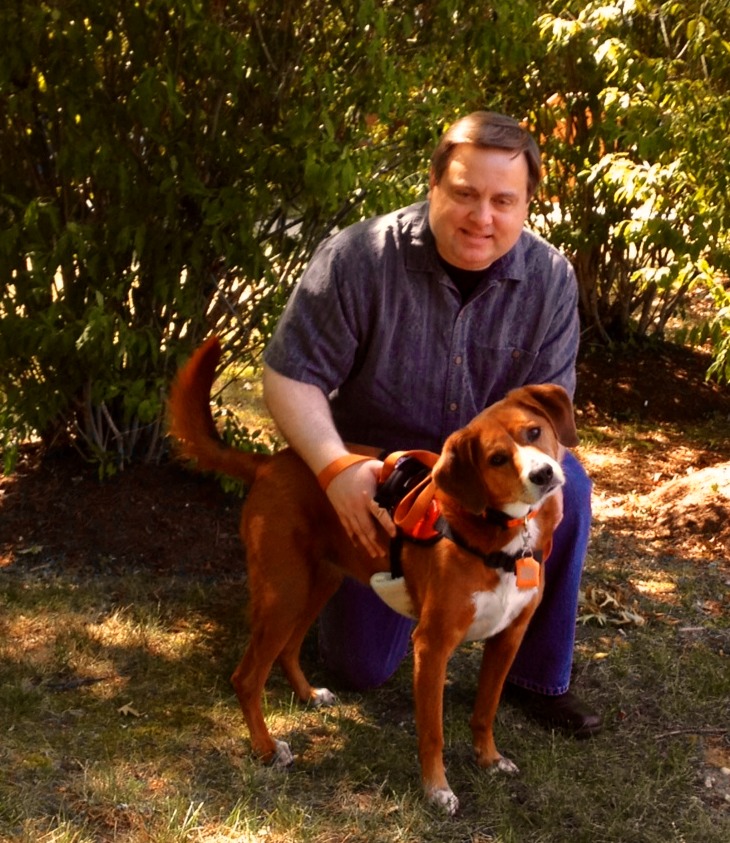
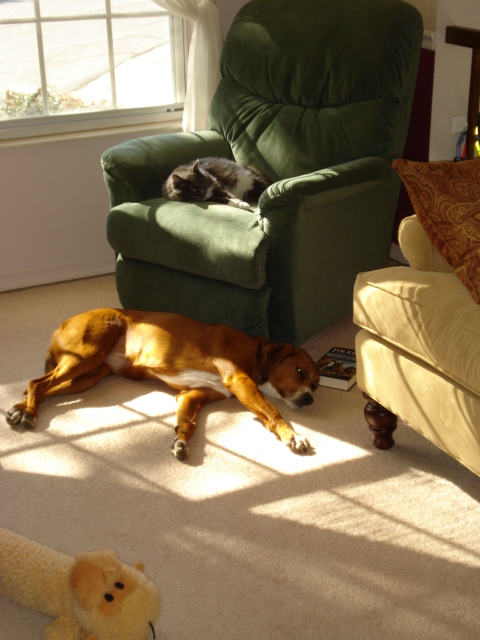
— Oh for a patch of sunshine and an afternoon nap…

“You are getting sleepier…”

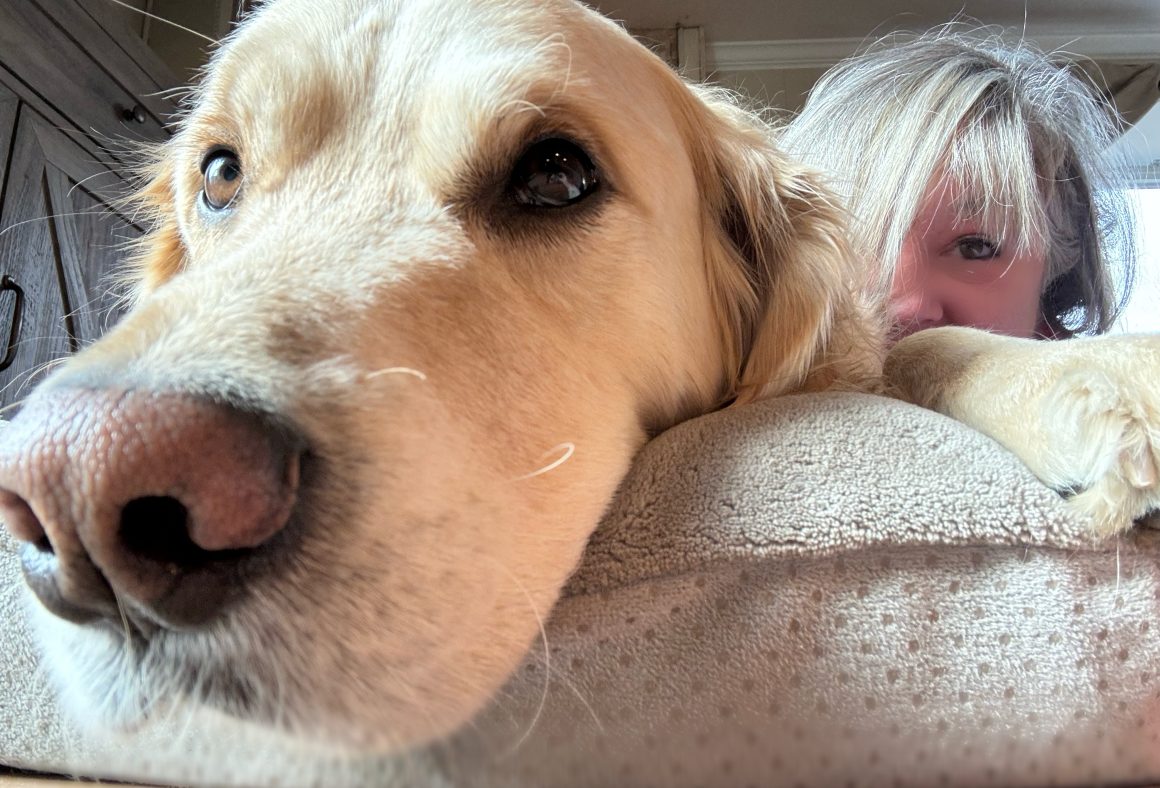
I could have handled a little hypnotic suggestion this past Friday. Thursday morning before going to work, my hearing assistance dog did just what she was suppose to do – sort of. I had just placed my breakfast of bacon and eggs on the table when Chloe alerted me to the front door. I went to see who was there to find the UPS man and a delivery for my husband. I should have been suspicious. Chloe normally wags and flirts with whomever is at the door, but she disappeared while I made small talk with the UPS guy.

Meandering back into the kitchen I noticed all three dogs sitting in a row, Chloe closest to the table of course. My plate was empty. As a matter of fact, it had been licked so clean it appeared to have come straight from the dishwasher. I fussed, even though I knew it was my own fault. Well-trained assistance dog – yes. Still a dog? YES.

I could have predicted the outcome, but was sort of hoping if I kept my hypothesis to myself it may not prove to be true. But my sensitive-tummy service dog was sick as a – ERM – DOG, by Thursday evening. As a matter of fact she was sick all night long. I was up every 90 minutes to 2 hours with her – for up to 30 minutes at a time. At 3:30 in the morning, I sent out an email to all my students cancelling classes. I was so tired I was hallucinating. Seriously. After taking Chloe out around 3:00 AM I was freaked out by the hundreds of mice running all over the yard – or so I thought since I was seeing things that weren’t there.

Being a person with disability, I require more sleep than an average adult anyway. It wasn’t until hound dog was feeling better Friday night that I finally got a solid nine hours of much needed sleep.

How Much Sleep Do You Need?

According to the National Sleep Foundation, average, healthy adults need 7-9 hours of sleep every night (National Sleep Foundation, 2011). While most of us very likely receive far less than that, the experts agree that this is the amount we should strive for every night. However, people who live with disability or invisible illness may actually require more. At the very least, these folks should make the 7-9 suggested hours a priority.

People with arthritis may need more sleep (Eustice, 2012), as do people with epilepsy (NYU Langone Medical Center, 2012). What can be frustrating, however, that for many living with invisible illness or disability, sleep disorders are often a co-morbid diagnosis. I know people with fibromyalgia, Lymes disease, and other chronic pain conditions that explain sleep is difficult to obtain. Your body may need extra sleep; however, because of the illness itself the person may have difficulty falling asleep or staying asleep.

Training along side of fellow clients at Fidos For Freedom, Inc., I have a new “family” of folks who have various disabilities and illnesses. Some have chronic pain conditions, some have MS, mobility issues, Parkinson’s, and hearing loss. Since getting to know them over the years, I have heard ALL of them explain they simply do not get enough sleep, or have trouble getting a full sleep cycle in each night. As a result, each have stories to tell of “things getting worse” and symptoms causing near accidents or actual falls, bumps, bruises, etc. I recall overhearing a conversation of one of the trainers talking to a newly matched client. They were falling more and having trouble with even cognitive functioning. The (wise) trainer asked them, “How much sleep are you getting?” The client explained that they were so excited about this new chapter in their life that they had trouble sleeping – night after night. They quickly surmised this may be increasing the severity of some of their disease’s symptoms. Sleep matters!

People with hearing loss may actually require more than the average 7-9 hours necessary for most adults. According to Healthy Hearing (2008), because our brain is actually more involved than our ears in communication, a tired brain can impair how well we hear. Even if we are “hearing again” with cochlear implant, BAHA, or hearing aids, sleep deprivation may impair our ability to communicate well and to maximize what we are able to hear.

People with hearing loss often forget how much harder they have to work to communicate effectively. As a result we actually tire out much faster than our normal hearing peers. If you must pay attention and concentrate wholly on a conversation to adequately understand and respond, your brain actually TIRES.

I also have Meniere’s disease, a vestibular and balance disorder. Because I have to pay attention to stepping up, stepping down, avoiding visual vertigo triggers such as ceiling fans, paying attention to my surroundings to avoid snags in carpet, etc., I actually “think my way safely” throughout each and every day. It can take a lot out of me to constantly remain on “high alert” to possible problems to avoid falls.

So Exactly How Do I get More Sleep?

There are NUMEROUS places online from which you can find information about how to get a better night’s rest. Some of these “tips” include:

1. Avoid caffeine 5-6 hours prior to when you plan to go to sleep.

2. Avoid complex carbohydrates such as breads, pasta, and sweets several hours before bed. Some experts suggest avoiding eating ANY large quantity of food before bed.

3. Avoid exercising within several hours of when you plan to go to bed.

4. Limit “light” – especially those created by many types of technology and electronics. Computers, iPads, televisions, etc., all may stimulate your brain activity and make it more difficult for you to sleep.

5. Worried? It can keep you awake. Try writing down things you need to get done the next day so you do not lay in bed worrying about remembering to do them. If you are worried about things you cannot control, try talking to someone. It doesn’t have to be a counselor – even a close friend or family member may work.

6. Try going to bed at the same time every night. Many stay up later on Friday or Saturday nights. This can actually disrupt our sleep schedule. Our bodies like routine – especially when it comes to sleep. Or, you may love sleeping in on Saturday morning. This too, can disrupt our sleep schedule. Try waking up and going to bed at the same time – no matter what day it is.

7. Many people sleep better in a dark, cool room. Do you need to purchase room darkening blinds? Maybe purchase a fan for just the bedroom?

8. Depending on who you read, opinions vary about whether or not taking an over the counter sleep aid like Tylenol PM or even Benedryl can be helpful. There are also medications specifically FOR sleep, though most warn they are not to be taken long-term. There is a new drug to hit the “over the counter” scene called “ZzzzQuil” believe it or not – made by NyQuil. It has been getting fairly positive reviews. Some may find they need a prescription sleep medication. Discuss with your doctors any risks associated with the prescription.

Do you think you are “getting by” on what sleep you are able to get? There are too many articles (written by medical experts) that show links to very serious, even life-threatening health problems for those who are chronically sleep deprived. Check out this great article by Dr. Stephanie Schupska at WebMD: Click here. “Not Enough Sleep: 7 Serious Health Risks”

Please feel free to comment and share how sleep deprivation has posed problems for you; or, ideas about how to get a better night’s rest!

Denise Portis

©2012 Personal Hearing Loss Journal

About.com Arthritis and Joint Conditions (2012). Arthritis patients need more Zzzzzz’s. Retrieved October 22, 2012 from http://arthritis.about.com/cs/betterliving/a/needmorezzzzzs.htm

Healthy Hearing (2008). Sleep your way to better hearing. Retrieved October 22, 2012 from http://www.healthyhearing.com/content/articles/Hearing-loss/Treatments/24201-Sleep-your-way-to

National Sleep Foundation. (2011). How much sleep do we really need? Retrieved October 22, 2012 from http://www.sleepfoundation.org/article/how-sleep-works/how-much-sleep-do-we-really-need

NYU Langone Medical Center. (2012). Sleep and Epilepsy. Retrieved October 22, 2012 from http://epilepsy.med.nyu.edu/living-with-epilepsy/epilepsy-and-lifestyle/sleep-and-epilepsy
What I SHOULD Have Said

I’m not really a history buff like some of my siblings, but I do like to watch the occasional autobiographical movie or read books on real people. I have, however, always been an Abraham Lincoln fan. I’m so excited about the new movie coming out and hope it does not disappoint. (Lincoln – the trailer). Needless to say, I’m also a big fan of President Lincoln’s quotations. Many of them I have memorized from my childhood and throughout my life.

In preparing for this post, a quote of President Lincoln’s came to mind: “I will prepare and some day my chance will come.”

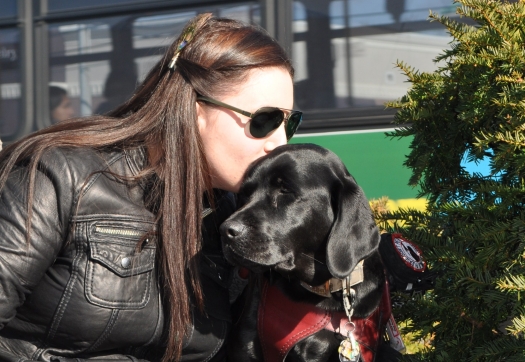
I’m a big fan of using hindsight to our advantage. One of my favorite training exercises at Fidos For Freedom, Inc., is role playing… actually putting ourselves in scenarios where we face incredulous, doubtful strangers, belligerent business owners, or even just curious but nosy bystanders. These exercises have allowed me to practice what I need to say – not IF – but WHEN I need to have the words to explain my need for Chloe. I know I may need to defend my right to mitigate my disability with an assistance dog.

Experience Can Be a Harsh Teacher

Did you ever have something happen that was totally unfair? Feelings of righteous indignation and self-preservation well up and literally choke the words right out of you? I’m one of those poor folks who rarely says what I should have said  at exactly the right moment. Instead, my feelings are hurt; or, I’m madder than a wet hen. Not… that I’ve ever seen a wet hen despite my childhood experiences of owning and caring for chickens, but I digress..

Ever replay a hurtful or confrontational conversation over and Over and OVER again in your head… thinking about what you SHOULD have said? Well I take Abraham Lincoln’s advice to heart. “I will prepare and some day my chance will come.” Now I’m the first to admit that one can perseverate on a past hurt and be much worse off than if you just let it go. I’m a planner though (at times to a fault).

If my feelings are just hurt and it is someone I don’t know well, I just let it go (though I may replay the entire horrible episode to my patient husband). If it is someone I have a relationship with, I may decide to let them know that I didn’t like how the conversation went and came away hurt and would like to discuss it some more. However, most of the things that hurt my feelings or ruffle my – erm – feathers, are comments from total strangers or mere acquaintances.

How many of you have heard these comments? :

But you don’t LOOK sick.

You were just fine yesterday. What’s wrong today?

You are feeling poorly AGAIN?

Are you ever well?

You seemed to hear me fine the other day on the phone.

Don’t you get tired of being so lethargic?

I think you are just low-energy.

You are such a drama queen!

Are you sure it isn’t all in your head?

I love my dog too, but I don’t self-diagnose a disability just so I can be with them all day.

Maybe you should see a counselor…

I knew you the first 20 years of your life. There was nothing wrong with you then!

Is this all for attention?

Don’t you worry how your family will feel having to pick up the slack?

People with invisible disabilities, illness or chronic conditions often LOOK just fine. Being late-deafened, I speak with little or any “deaf accent” or enunciation issues. With a cochlear implant and hearing aid (a bi-modal, hearing again peep with BLING), I often hear voices well unless there is a lot of background noise. If it is a sunny day, I not only may have very little “wobble” in my step, I may actually be able to move fast. So to look at me – well, I look fine! But on rainy days or in environments with tons of LOUD surround sound, vertigo can hit me like a freight train and cause me to walk as if I’m intoxicated. I usually clam up because if I speak I may vomit. (I’m serious…)

I have friends here in Maryland, and cyber friends I have come to know across the nation – many of whom are fellow bloggers. They have fibromyalgia and/or chronic fatigue syndrome. Some have assistance dogs, some do not. Some have been diagnosed with Lymes disease. Have you ever thought about how difficult it must be to have a chronic pain condition? And oh my goodness… talk about your invisible conditions! If you don’t know the person well enough to see the pain-filled eyes or pinched expression, you would never know that every step is excruciating – that even their clothing rubbing against their skin actually hurts.

Prepare – it Empowers

Those of you who live a life described above or know someone who does, my advice is to prepare. Use hindsight to your advantage. Think about an encounter that really hurt you – or made you squawk. Chances are, you will hear it again. (I know – GROAN – right?) Plan and prepare, even practice what you will say in the future should that same thing happen again. This can actually empower you to face that “next time” with a little more certainty and courage.

But Be Careful…

I do have some warnings, however. Even good things can become bad things.

1. Don’t be consumed by the preparation.

If all you think about is being prepared for a calm but meaningful/careful reprimand, you may unleash it with venom or saccharin sweetness. Your intent becomes a premeditated choice to wound. You end up saying the wrong thing or say it unkindly and in an offensive, war-like manner.

It could also become a set-up or scenario of revenge. Trust me. You do NOT want to live that way. (Tried it – not a winner any way you look at it).

Use your time wisely in reflection and preparation, but then let it go. If you are thinking about it constantly it should “wave the red flags” for you that it has become an obsession instead of a tool to develop positive responses.

2. Don’t look for what is not there.

After wobbling into the edge of the stove and spilling my coffee, I heard my husband sigh beside me. I turned (aimed) and yelled, “What? You think I like spilling everything I carry? You think I enjoy getting burned? Do you think I…”

He cut me off with a gentle squeeze of my arm. “Denise. I sighed because someone ate all my Lucky Charms.”

OH.

If you are reading this and KNOW someone who has an invisible condition, may I give you some advice? I know it must be frustrating to not ever really understand HOW to help or WHEN to help. But the best thing you can do? Listen and believe.

Denise Portis

© 2012 Personal Hearing Loss Journal


The Road to Rescue

Hunter with service dog, Raven.

A young woman I have come to admire, Hunter Lia Zager, received her service dog from Fidos For Freedom, Inc. where I train with Chloe. Hunter has a rare and unusual disease that even leaves her doctors stumped at times. She desperately needs the funds to get her vehicle modified for accessibility. The state is helping with a big chunk, but she still needs to raise over $12,000 herself. Hunter is only 25 years old and currently relies on (often unreliable) public transportation to go to work, doctor appointments, and much more. Imagine being limited to your home many times, simply because you lack a vehicle that can carry wheelchair, service dog, etc. Minimum donations are only $1.00 and you can donate using PayPal, or debit or credit card. If you would do two things?
1) Share this need with others on your own BLOGS.
2) Consider donating – even SMALL amounts add up.

I know times are hard for many people. However, I want to help this courageous, wonderful young woman reach her goal so that she can have reliable, accessible transportation. Please help. Please share! Thank you!

TO DONATE

Hunter’s story:

My name is Hunter Lia and for the first time in never I’m asking for help. At 25 years old I am terminal, but I have never held my arms up and said I was willing to stop my fight. 5.5 years ago I became ill with a very rare neurological disease, Complex Regional Pain Syndrome (CRPS), the most excruciating disease known to modern medicine. The road has been hard, but I am so terribly blessed to have such wonderful people and a wonderful service dog in my life who have helped carry me through the toughest of times.

This disease has consumed my entire body and caused me to reach deep stage 4. CRPS didn’t stop there, it turned my body into melting pot of other diseases. It has paralyzed areas of my body such as my intestines, which are incapable of processing food (Gastroparesis), created a neuro-cardio disease, Postural Orthostatic Tachycardic Syndrome, a neuro-pulmonary disease, Respiratory Dystonia of the Chest Wall, Spinal Stenosis, and countless other conditions and diseases. It is also now believed that on top of all this, Multiple Sclerosis (MS) might be one of my latest additions. Having every aspect of your body fail you is a tremendous burden for one to carry, especially when you’re just 25. Most 25 year olds are able to go out at night, travel, make plans for the future…for me, just the thought of that takes up all my energy. I wear devices for low hearing and low vision, but outside of attempting to take my wheelchair and service dog everywhere, it’s difficult to make my life easier and manage with a disintegrating spine, excruciating pain, and countless other symptoms and challenges.

One reason I’ve struggled so much is that my vehicle is not accessible. I traded in a SUV for a minivan in the hopes I could outfit it to all my body’s needs. I never realized the costs would be over $45,000 to adapt the vehicle. I am getting state assistance, but the last 25% is my responsibility. With all the other medical expenses I’ve had to incur, I don’t have even a fraction of the money to pay the company responsible for outfitting the car. I need your help. I am trying to raise over $12,000 to make my vehicle accessible. If I could do this, I would no longer have to worry I wouldn’t be able to keep my job and health insurance due to transportation challenges, worry about not having a vehicle in an emergency, reach doctors and specialists, and really just live life to the fullest. I know this economy is difficult, but every penny will help me reach my goal. And if that’s too difficult, passing this on would mean the world to me. Thank you for taking a moment to ready my story.

TO DONATE

Unexpected Perk, or Bother?

Several of the emails I receive through Hearing Elmo each week are questions about assistance dogs. This week is actually “Assistance Dog Awareness Week“, so I wanted to take a few minutes to talk about life with an Assistance Dog.

The first thing I always tell people who have questions is that if you are not prepared for the fact that an assistance dog will draw attention to you, then PREPARE YOURSELF. More importantly? If you are not comfortable with the attention, then an assistance dog is not for you.

Because I have a hearing loss and because I don’t hear well in stores or crowded places, I am oblivious to all the comments my family members DO hear. “Look at the dog!” “Oh look, a working dog!” “Why is that dog in here?” “Mom, why does that lady have a dog in here and why is it wearing a saddle?”

Assistance dogs lend independence to those who chose to mitigate their disability or illness with these special canines. I never worry about missing a phone call. I can do laundry without assistance from a human family member. I no longer burn supper. I always know when someone is at the door. I can shop and go out in public and never worry about not being able to bend and pick something up – important as I constantly drop things.

Some things you may not know that are actually perks of having an assistance dog?

1. Pre-Chloe, a routine doctor’s visit would result in the 3rd degree about why I always have so many bruises. It can be tiresome to field questions about whether or not I’m in an abusive relationship, when I simply fall or run into things a great deal because of Meniere’s disease. Now, Chloe lends legitimacy to those bruises. She reminds doctors why I have bruises because folks don’t go to the doctor with a dog partner if they didn’t need the assistance.

2. I’m rarely bumped into or shoved out of the way now in public. When you don’t hear well in these venues, impatient shoppers who don’t give a “fig” about why you are standing looking at dancing electronic flowers in the garden department, assume I’m being stubborn about moving to let them by. Now they see Chloe and if she doesn’t notice them and cue me, they carefully maneuver around me.

3. I never receive comments like “It’s a little early to be drinking isn’t it?” or “You should be ashamed of yourself” when I’m seen weaving a bit on rainy weather days (comments that have really been made). In the past, if I slammed into an end cap in a store, those around me assumed I was high or drunk. Now people see Chloe and think OR SAY, “Gee, it’s great she has that dog to help her”.

4. I’ve grabbed onto a fellow client’s scooter before (sorry, John) when I almost fell down. He understood. However, when what you grab is a nearby shopping cart, others aren’t as understanding. I once had a grandmotherly person stick her finger in my face and sternly say, “Let… GO”. I mumbled an apology and went my way. Now that I have Chloe, the most anyone will say in a “near swoon” moment is “Are you OK?”

Assistance dogs help people with hearing loss, mobility issues, seizure alert, PTSD, diabetes/blood sugar alerts, vision loss, balance problems, fine motor skill difficulties, and much more. I hope the next time you see someone with an assistance dog in public that you maybe take a minute and tell them that you think their independence with their canine is a great testament to courageous people. Don’t pet the dog or distract it though (grin).

Denise Portis

© 2012 Personal Hearing Loss Journal

Round and Round She Goes, Where She Stops…

… is USUALLY on her nose.

If you live with invisible disabilities or chronic illness, have you ever stopped and tried to make sense of it all? More often should I choose to do this, I find it simply doesn’t make sense. What can be more difficult, however, is trying to help someone ELSE understand what it is like to be a little “different”.

The words disability is a like a nasty tasting curse word to many. Personally? I’m not afraid of the word because it does currently define my rights under the ADA – something I wish wasn’t necessary but is in order to make sure that those who navigate life differently have the same access and rights as everyone else. I’m not here to today to discuss the WORD, however. I am here to bellyache.

A friend of mine posted a link to a terrific article currently taking up space at Invisible Illness Awareness Week. It detailed why it is important to just LISTEN sometimes. You can access the article HERE.

I belong to a number of online support groups for people with Meniere’s disease. I’ve never met anyone with symptoms exactly like mine. As a matter of fact, Meniere’s disease often frustrates perplexed physicians who are trying to help treat the disease. However, because there is no cure, one can only learn to manage and treat the symptoms. What may help one person, does not help another at all.

My assistance dog, Chloe, from Fidos For Freedom Inc., is a big blessing. Originally trained to be a hearing dog, she still performs all her hearing alerts with finesse and enthusiasm. As a matter of fact, 7 AM came WAY to early yesterday morning when my alarm went off. I tried to tell her to go back to bed and stop kissing my hand, elbow, and right ear. My husband rolled over and said, “Hello? Your alarm is going off!” Oh.

But Chloe actually helps me with far more balance related tasks each day than she does hearing alerts. I tried to “track it” one day and she performed 17 hearing alerts (alarm, kitchen timer, automatic retrieve of items I’d dropped and hadn’t heard, door knock, and cell phone ringing) and over 40 “other” tasks. (I quit counting after 40). These usually consist of directed retrieves. I drop things. I drop things a lot. Picking them up myself takes time as a bend all the way to the floor often precedes a fall. To avoid that, I simply let her get them for me. She also acts as a steady brace when I stand, sit, or go up/down stairs. She also acts as a brace if I begin to weave in a large cavernous place. The picture I chose for this post reminds me how bad my visual field was on Saturday. I ran into the mall with my husband to pick up something at a favorite store. When sound echoes, I tilt. (Picture Denise, aka Leaning Tower of Portis). Chloe has a large handle on the top of her vest that works perfectly. On my lower left is a solid helper that keeps my world from being quite so off center. I’ve been in JCPenney before and let go of her handle to look at some clothing on a sales rack. I immediately felt “swishy” because of the tall ceilings and lights. I grabbed out to keep from falling and clutched the breast of a nearby mannequin. I don’t make these things up. Thank goodness she/it wasn’t real, right?

Yet there are things Chloe cannot help me with, too. Here are some things about Meniere’s disease that surprise some folks:

1. Scrolling words or moving backgrounds on PowerPoints make me sick.

Our church places the words to songs and notes for the message on the walls in the sanctuary. This is very helpful for anyone with hearing problems… or ADHD (smile). However, sometimes there are moving points of light or star bursts that move behind the words or notes. I’m fine as long as I’M SITTING.

2. I have to sit to brush my teeth.

Yeah. I know, I know! Strange! But there is something about moving a toothbrush around in my mouth while in a standing position. I have to sit, and there are days I actually have to close my eyes on top of that!

3. Stepping down can be problematic.

This one really bugs me. On sunny days (weather is a trigger for me), I love to hike and climb around. I love rocks. Big rocks. I love heights (believe it or not). However, stepping down more than 6 inches is enough change in my altitude that I black out. It may only be for a few seconds, but if both feet are not on the ground, I’ll be picking blades of grass out of my nose hair. Chloe has learned that a “Whoa!” from me means

Move.

NOW.

4. Must… AVOID… looking… at ROTATING things (gasp)

Ceiling fans are not my friend. Neither are signs hung from ceilings when the air conditioner vents blow on them to make them twirl. For me this means heave, deep breath, heave again. I’m serious. 🙂

5. I shower while looking at my feet.

I didn’t realize how difficult it can be to get clean when you can’t look up at the shower head. Raise your eyes to reach up for shampoo or your razor? Honey? Do you want to get up close and personal to the DRAIN? Heaven help the family member who moves my shampoo or washrag from their designated place. I count on where they are so that I can shower safely… while looking at my chipped toenail polish.

6. Watching the effect of the wind can topple me too!

We’ve had some terrific storms lately. Since it has brought much needed rain, I’ve been loathe to complain. I love standing on the deck and watching the wind blowing the towering pines behind our home. Clarification: I like hanging on to the rail of our deck and watching the wind blow the towering pine trees behind our home.

7. Gingery’s Baby Pegasus can be mesmerizing to my detriment.

My daughter’s 12 pound hairless Chinese Crested likes to spin. For fun. Imagine that. It is quite captivating, but it only means CAPSIZING for me. “Look away, Denise, Look AWAY!”

8. I fuss at my son’s stomach.

My son… you know the one who was 7 weeks premature? He is 6 foot 3 inches tall. He’s a terrific kid. However, even at 21-years-old, he still needs the occasional “mama sermon”. I dare not look up, Up, UP into his eyes. One isn’t able to reiterate needed reminders when flat on the floor. Instead I point my finger and give his belly and chest “what for”. The kid laughs at me. LAUGHS. (sigh)

9. Glass elevators have speckled carpet.

I know this because I only see the carpet in glass elevators. Why not solids? Stripes? Only speckles. This confuses me.

10. I remind my doctor that I will NOT hold my breath while he’s listening to my ticker.

Because… well otherwise I’m waking up with nurses, hound dog, and doctor crowded around. (Why crowd someone who has swooned? Can I just ask that?)

Like many people who get up every morning and “manage” their symptoms, I hope perhaps I’ve helped you understand balance disorders a little better. Feel free to share your own “management techniques”.

Denise Portis

© 2012 Personal Hearing Loss Journal

Life With Someone Else’s Service Dog

Dr. Terry Portis is director of the Center on Aging at Anne Arundel Community College (AACC) and teaches in the psychology department. He supervises 205 faculty and staff who serve 4,100 students each year. Dr. Portis  has presented dozens of workshops and written numerous articles on marketing, program design, psychology of disability and health, personal development and technology. Prior to coming to AACC, Dr. Portis was executive director of the Hearing Loss Association of America.

Terry’s wife Denise has been a client at Fidos for Freedom since 2006.  Terry has served on the Board of Directors at Fidos For Freedom since 2011.

When a person is matched with a service dog they have to make adjustments in their life, and so do the people who are around them. This is especially true for the spouse or significant other who spends a lot of time with the person matched with the dog. You may think the service dog will only change the life of the person you love. However, there are changes you should try to anticipate as well.

Be prepared

There are a few negative issues that one has to deal with when a service dog enters your life. First, service dogs are very noticeable wherever you go. Most places we go I find people to be open and accepting. However, there are small, bitter people in the world who enjoy confrontation and have a “know it all” attitude. They may think they know the law because their third cousin has taken some classes in college. Having to occasionally deal with these unpleasant people in public can be very frustrating. It may also be difficult for you to let the person you love deal with these issues by themselves. Denise spent a lot of time in training and I suspect because of decades of advocacy work, it does not bother her to have to carefully explain the law to someone trying to deny access. At Fidos For Freedom, they spend a lot of time making sure the clients are prepared for these scenarios. Even though service dogs are not as unusual as they use to be, Denise will still occasionally enter an establishment that has never seen a service dog for hearing alerts and balance assist. Because I’m her husband, sometimes it is hard to stand by and let her stand up for herself. It certainly doesn’t hurt to make sure that family members are aware of the ADA allowances for people who mitigate their disability with a service dog. There have been times that Denise has been oblivious to someone trying to get her attention to ask her to leave the store with the dog. If I’m in the vicinity, I have spoken up and explained that Chloe is a service dog and can accompany Denise.

Another thing to be prepared for is the planning needed to make even small local trips. In the summer avoiding hot asphalt is always a consideration. Looking for parking spaces near grass is a challenge. We also think about which restaurants have the best seating for us. All of these things become second nature, and I find myself thinking about these things even when I am by myself.

Enjoy the experience

These few inconveniences though, are worth it for the value that a service dog brings into a person’s life. It is reassuring to have another set of eyes and ears to help protect and alert the person you love. Service dogs build confidence and help reduce feelings of isolation that people with disabilities often experience. If I know Denise is away from home teaching or running errands, I know I can call her phone and Chloe will let her know the phone is ringing. I know if she falls or drops things, Chloe is there to assist. I actually worry about Denise far less now that Chloe is a part of her life. According to Rintala, Matamoros, and Seitz (2008), service and hearing dog recipients reduced their dependence on other persons. As Denise became more independent, I worried less and also knew she was less dependent on me. As I knew how much she valued her independence, I fully supported her training and match with Chloe.

A service dog can be a very positive experience for everyone. You also have the opportunity to be an advocate, to tell people firsthand what you have experienced and learned. Dogs that have the intelligence and temperament to be service dogs are special, and the kind of dog most of us have never seen before.

Finally, a service dog becomes a part of the family. Chloe is like an extension of Denise, so she is around all the time. As a result, I’ve become her buddy as well. She is pretty excited about my coming home from work each night. It reminds me of when my children were little and were excited that “Daddy is home!” Having Chloe in our lives has been an easy adjustment for me. Chloe has fit seamlessly into our schedule and the peace of mind I have knowing how much she watches out for Denise is really worth the wet doggie kisses she gives when our alarms go off in the morning.

Rintala, D. H., Matamoros, R., & Seitz, L. L. (2008). Effects of assistance dogs on persons with mobility or hearing impairments: A pilot study. Journal Of Rehabilitation Research & Development, 45(4), 489-503.

Denise Portis

© 2012 Personal Hearing Loss Journal

Sometimes? You Are Going to Have a Bad Week

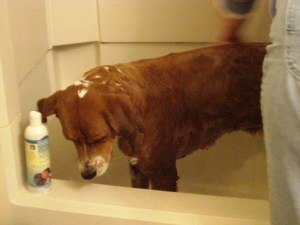
Chloe was having a pretty good week. At least she was until I told her to get in the bathtub. NOT her favorite thing. If “hound dog” could do forlorn, then honey? She’s gonna do FORLORN in the bathtub covered in suds.

While I scrubbed her and told her what an awesome dog she was, intervening during those “I’m gonna shake” moments, I thought about how quickly things can change.

Chloe was happy and excited to get home from class today. She was rough-housing with her buddy, Tyco, when she heard me call her upstairs. She came running with her tail all a-wag. I told her to get in the tub and proceeded to break her ever-lovin’ heart. She is drying and pouting over in the sun as we speak. If I’m lucky, she’ll have forgiven me by suppertime.

Spring has “sprung”, I’m getting a handle on my new schedule, Terry and I just took 2 days away to re-group ALONE (grin), I’m feeling very connected and supported at my primary “free time” activity (Fidos For Freedom Inc., in Laurel, MD), and then it happens. When you can see change coming you can run like mad… or at least brace for it. But sometimes? Well sometimes change smacks you up side the head like Gibbs smacks DiNozzo. It’s completely by surprise. You lay on the floor, dazed and confused, staring up at the ceiling fan thinking, “What just hit me?”

I’ve even let this unexpected negative “change” suck me into an old habit of depression. I could feel it creepin’ up on me. I’m blessed to have a live-in psychologist and I made sure I changed my “8 hours of sleep a night” to 10 hours immediately. That seemed to help. That in addition to some time since the SMACK DOWN, I’m feeling like I can do this thing called life again, despite the newest challenge. Change can be hard and can create a lot of stress. Heck. I was having such a meltdown (as were other members of the family), hubby announced “Let’s go out to eat for supper!” I begged and pleaded and implored him to allow me to fix supper (yeah, right!), but he insisted we go out to eat. We walked out the door discussing these serious issues that “done smacked me up ‘side the head” and half way to the car my husband stopped dead in his tracks and interrupted me saying, “Um Denise? Where’s Chloe?”

You know the service dog who is with me 24/7? The one on the other end of the leash every waking moment of my life? Poor forgotten Chloe stood inside the locked house door whining and whimpering. So yeah. I am THAT distracted by my smack.

There are various proverbs that remind us that life is not easy. Everything is not always going to go well. Sometimes bad things happen. It doesn’t matter if you have disabilities or not. Life can be very, very good. Yet any of us who have lived enough of it know that it can also be hard. I survive because of my 3 “F’s”: Faith, Family, and Friends who care. Surviving is sometimes one day at a time, one week at a time. This is why people with disabilities should take care not to isolate themselves. It’s so easy to do. Isolation is even easier than having to face interacting with others while learning to live successfully with a disability. But isolation is dangerous. We need others. Others help us do that “surviving” thing!

I for one and very glad to see Monday this week.

Chloe, on the other hand, is just glad her monthly bath can be chalked off.

Denise Portis

©2012 Personal Hearing Loss Journal

Kidney Disease and Hearing Loss

Recently, I read a blog that mentioned kidney disease and hearing loss. You can read the post HERE.

My husband, Terry, and I have been married almost 26 years. He was born with only one kidney, and the one he has doesn’t work ideally. Because he has always lived an “alcohol/drug” free life, he is in good health considering!

I have noticed, however, that he has started showing signs of hearing loss. It started with the television. We “TIVO” everything so that we can watch favorite shows when we have time to sit down and watch them together. In recent months, I have noticed that HE is asking me to turn the volume up. I’ll let that sink in for a minute (grin). I’m deaf. Sure I “hear again” with a cochlear implant, but HE is asking ME to turn up the television. He usually has the remote that fast-forwards through the commercials (as I seem incapable due to vertigo in watching the screen and trying to hit buttons). I have the remote that controls the volume.

He is also saying “huh” more. I’ve noticed it at the dinner table and also in restaurants. Granted, both places can be noisy environments, but it has been a bit of an eye-opener for me to be on the other side of that “huh?”

So as we’ve aged, my hearing has gotten better and his – not so much. I can’t say at this point he will need hearing aids, but I’m thinking the probability in the next 10 years is very high.

I want to be the kind of spouse he has been. Terry has been my biggest cheerleader, support, and source of encouragement. It can’t be easy to be married to someone who is late-deafened when you fell in love with someone who could hear. He has shown me that what happens after “I do” doesn’t impact love, commitment, or a shared life. He hasn’t let it phase him that I have a balance disorder. He picks me up if I fall, brushes me off and helps me see the “funny” in it (as long there isn’t any blood). He encouraged and supports my having a hearing assistance/balance assist dog from Fidos For Freedom. He now actually serves on their board.

So if my husband with kidney disease DOES lose his hearing? I’ll be there for him too. In the meantime, I am helping him navigate living with some adjustments regarding VOLUME.

Denise Portis

© 2012 Personal Hearing Loss Journal

Link to story in Wall Street Journal:  Click HERE.


Why I Love Winter

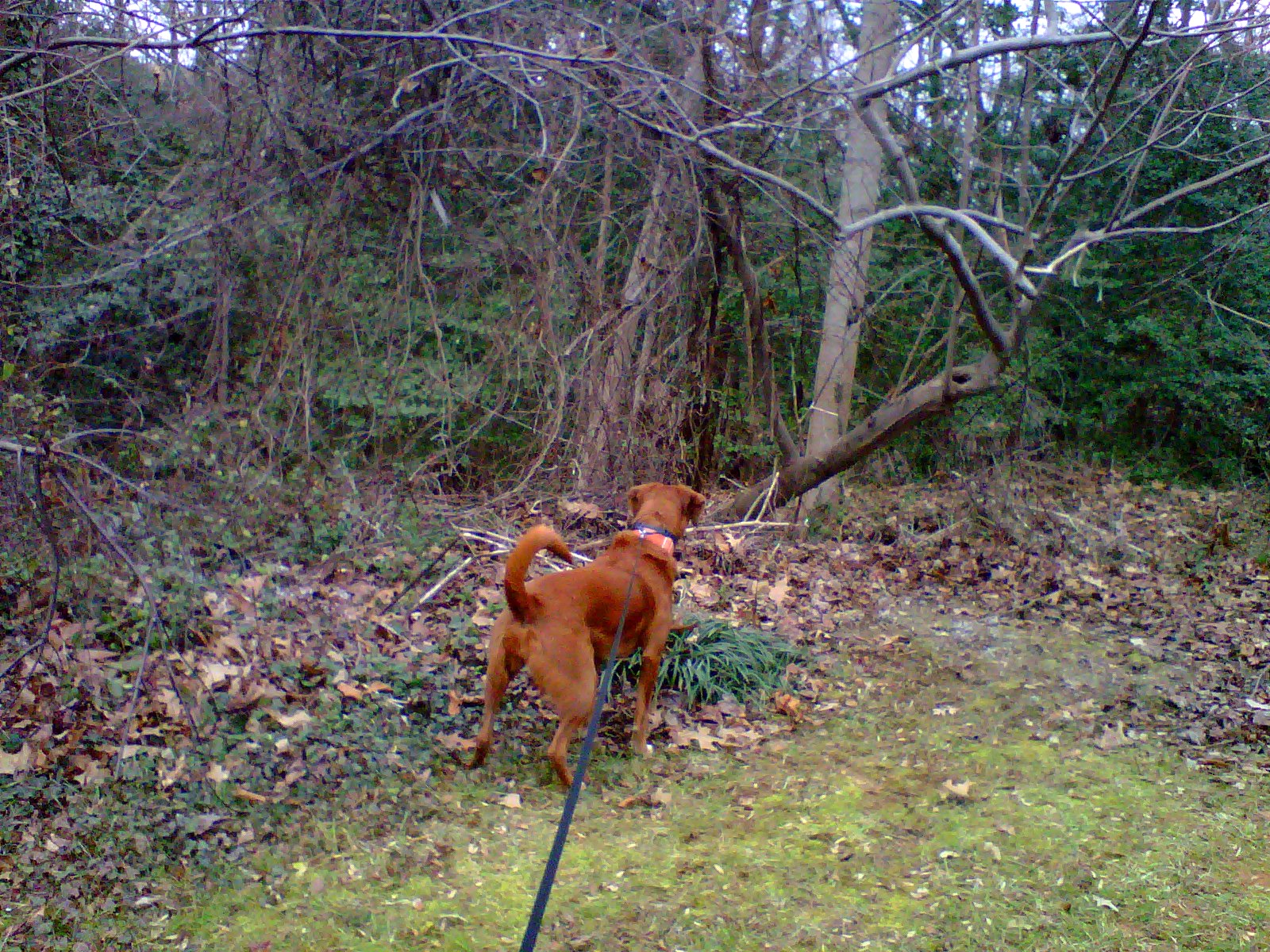
The woods near our home without their usual foliage…

(PART ONE OF FOUR)

Chloe and I took a walk after lunch today. I had to smile as I saw the snowflakes falling softly around us even though it wasn’t cold enough to “stick”. I just love winter. I love actually getting out IN the cold weather as well. I love bundling up and walking briskly – something I can do even with Meniere’s as my symptoms are usually much more mild in the winter. I love being able to see my breath in the air and being able to smell various fireplaces in use in homes as I pass. However, one of the biggest reasons I love winter might surprise you. As a person with hearing loss, one doesn’t expect to enjoy QUIET.

Winter Can Be So Quiet

When walking, many people are inside where it is warm. So in the wintertime, my walks are often much more quiet than when I go during other seasons. I love the quiet. Don’t get me wrong! I love being able to hear, but I hear best when it is quiet. Am I contradicting myself? (BIG GRIN). Eh… maybe.

Hearing with a cochlear implant is a mind-boggling thing. I hadn’t expected to hear this well again this side of Heaven. When my husband and I realized that my progressive hearing loss would ultimately mean I would not hear at all, we were concerned. Thankfully, through the support and relationships of the Hearing Loss Association of America, we learned that being late-deafened does not necessarily mean the end to hearing. We learned about cochlear implants and I took almost three years researching and “talking the much needed ears off” numerous cochlear implant recipients. As thankful as I am for my cochlear implant, it does not mean that I now hear perfectly. As a matter of fact, I become a little aggravated when people act as if my cochlear implant “fixed” my hearing. Yes, I can hear. But it’s a different kind of hearing, and one made more difficult when trying to understand speech in the midst of noise.

So I love the quiet. I hear better. When walking, as the world around me is more quiet compared to other times of the year, sounds that are present are crisp and clear. If it is quiet on our walks, I can actually hear much of what Chloe is hearing.

Chloe can HEAR the squirrels even though she hasn’t yet spotted them…

I love listening to nature. I pick up many more sounds in the winter because of the quiet. The lack of foliage also assists in allowing sound to carry. In some spots of our neighborhood I can even enjoy an “echo-like” effect in the world around me.

We Need the Quiet

I have had numerous late-deafened folks tell me that they too, go “deaf” on purpose. For those of us who are thrifty, it saves on battery life. However, for many it is simply a matter of being mentally fatigued. It takes a lot of effort to understand and communicate using technology and speech reading. People with hearing loss must employ a number of senses to communicate. Those with normal hearing are not required to use much more than their sense of hearing to communicate. I believe this is part of the reason I need 8-10 hours of sleep a night. (Yes… you read that right!) I am mentally exhausted at the end of every day just because I’m communicating with family, friends, and co-workers. It takes work to hear! Listening requires active participation for those of us with hearing loss.

The forest is sleeping during the winter…

When there is a great deal of background noise, I don’t hear well. As a matter of fact? There are times I don’t even try. Case in point… my church:


Want to know the noisiest part of every church service? I think it is before and immediately after the actual service. Or, how about when the pastor or minister of worship says, “Everyone take a few minutes to meet and greet those around you!” ? AAAARGH! I try to make myself invisible if you must know. I am petrified someone will come and talk to me because I know I won’t hear them. I’m getting better though when someone approaches with their hand out and a big smile. I’m taking a risk but “betting on” that they are saying, “Hello, how are you today?” I have learned to smile, shake their hand and say a simple “Hello!” My preference in communicating is definitely one-on-one.  I do really well – IF – it is in a quiet atmosphere.

But you know something? My exposure to multiple disabilities at Fidos For Freedom has taught me one very important lesson. We could ALL do with more “quiet” in our lives. Quiet can foster introspection – and friends? I’m big on reflection, meditation, and soul-searching! For many of us, we face many physical battles on a daily basis. We really NEED quiet time. Contemplation may provide us with resolve, a new “plan of attack”, time to absorb new information about our disease/disability, and the ability to recuperate emotionally and mentally. As a person of faith, it is my quiet moments that I can humbly ask for guidance or assistance… or scream for help!

It is often when we are quiet that we can plan and “gear up” for the journey ahead. Victor Hugo said, “One is not idle because one is absorbed. There is both visible and invisible labor. To contemplate is to toil, to think is to do. The crossed arms work, the clasped hands act. The eyes upturned to Heaven are an act of creation.” For some of you, life’s journey requires a little planning. I have a friend who cannot do anything spontaneously. Errands are planned, cleaning specific rooms of the house are planned a whole day in advance. Errands rely on the goodwill of family and friends who are willing to cart her “here and there” as her eyesight has deteriorated. Cleaning is done when the body isn’t on “strike”. Lyme’s and Chronic Fatigue insist that she double-up on recipes when she has enough energy to cook. That way she can freeze things so that she doesn’t go hungry on days she cannot cook meals. She requires a lot of quiet time. For her… it’s not a communication issue. She needs time to plan and to take strategic steps in organizing as best she can her journey. She even needs quiet time to COPE with her disease.

Winter allows me more quiet time. Outside – fewer people are out and about. Inside – family members at home tend to curl up and do quiet things on their computers or may catch up on reading. Like hibernating bears they tend to sleep more. Co-workers are quieter during the winter. Hubby says it is because of S.A.D. Who knows? I do think winter generates a feeling of “quiet” in many people.

I encourage you to find more quiet time. Winter, spring, summer, or fall – the season isn’t important. Finding time to be QUIET and use the time wisely is important to all. Even if you use the time for a power nap…

Denise Portis

©2012 Personal Hearing Loss Journal

My Goals? Stop Apologizing…

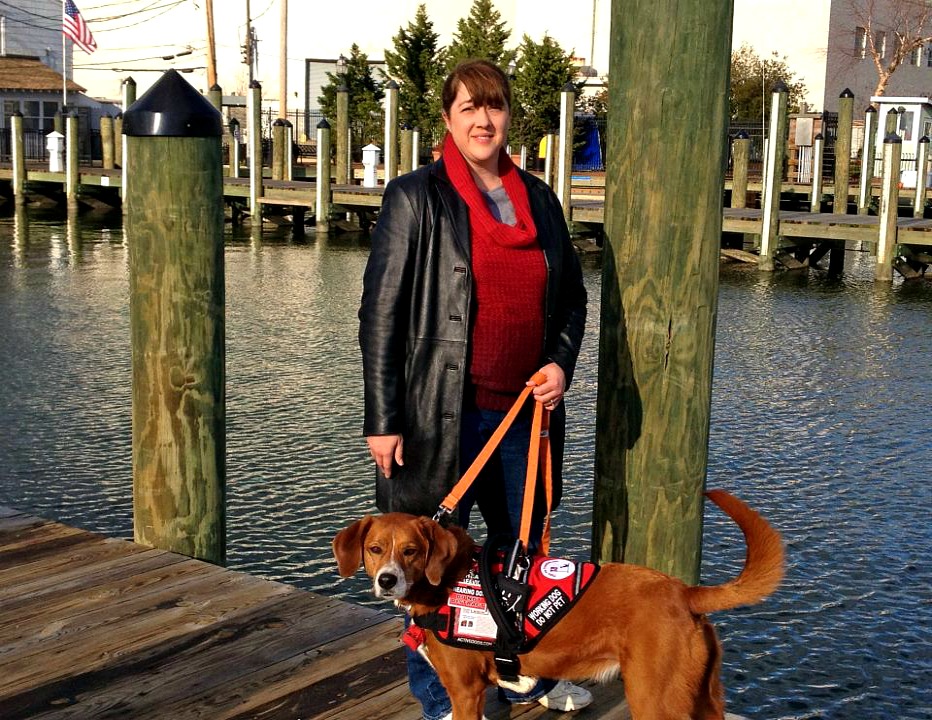
At City Dock in downtown Annapolis near the U.S. Naval Academy

I find it a little hard to believe it is 2012. Normally, the New Year doesn’t sneak up on me. However, this year it certainly did just that. In the past, I’m almost obsessive-compulsive about planning and organizing my resolutions for the New Year. I suppose that I haven’t allowed myself to obsess about it this year, points to the fact that I continue to change and evolve as I age. I think change is important and hope that I will always grow, mature, and change from one year to the next.

Sometimes though? Sometimes I see things in myself that I need to change because they are negative. In my reflection of 2011, I discovered a real negative that I really want to work on in 2012. Introspection did not really help me discover WHY I have developed this bad habit, but I can make some educated guesses.

I apologize. I apologize a great deal. I apologize for things that are not my fault. Some reasons I may do this?

1. I feel as if it will keep others from feeling the blame or reacting in a defensive way.

2. I default to shouldering the blame for most things.

3. I hope to diffuse any uncomfortable thoughts or reactions by others.

4. I hope to garner apologies and acceptance of responsibility by others by my own example.

5. HABIT

Please don’t misunderstand me. I believe that people should accept responsibility and offer apologies when they are warranted. However, I have developed a habit of apologizing for things that are not my responsibility. Sometimes when I say “I’m sorry”, it is simply a matter of miscommunication. I need to say something… but do so in a way it more accurately communicates my real meaning.

An example: “I’m sorry you misunderstood me”.

A better response would be, “I believe I have been misunderstood. May I clarify my meaning and intent?”

As a person with hearing loss I even respond with a “sorry” when I missed something. Example: “I’m sorry. I didn’t catch that”. It may very well be that it is no one’s FAULT that I missed it. After all… I am a late-deafened adult. Yes, sometimes folks may cover their mouth with their hand, or mumble. When that happens it is better to say, “I didn’t catch that. Could you repeat it please?” – or – “You were covering your mouth and I didn’t catch that. Will you repeat it please?” I’m going to try to stop myself before I respond with a habitual “I’m sorry. I didn’t catch that”.

It’s My Choice to Mitigate My Disabilities with a Service Dog

Recently, I “replied all” to an email in which a group of employees were nailing down details about when to meet for a book group. We are reading “Storm” by George R. Stewart. I actually typed out, “I apologize in advance that I will have my service dog with me as she is with me 24/7”. I sat and looked at that sentence for a minute and thought to myself, “WHAT IN THE WORLD?”

I deleted that sentence and re-typed, “Just a heads up so that no one is startled, I will have my service dog with me as she is with me 24/7”. I re-read and re-thought that sentence for several minutes. I like to give people I’ve never met before heads-up about Chloe, but it isn’t required. However, some people ARE afraid of dogs or have allergies. I like to let people know in advance when I can.

When I interviewed at the local community college, before hanging up the phone I let the person know that I would have my service dog with me at the interview. When I arrived to meet with the panel of people interviewing that day, the director let me know that he was glad I told him about Chloe. He normally has his dog with him at work during the summer, and he didn’t want his dog to interfere with my working dog.

Sometimes it cannot be helped. I arrive and people are surprised (or dismayed) that I have a service dog with me. In the past, I have intercepted looks and stepped forward to apologize that I have Chloe with me. I’m not sure why I felt compelled to do this. I’m NOT sorry I have Chloe. She has given me the independence and confidence I needed to follow my dreams! Yet, I often felt as if I needed to apologize for her presence.

When someone asks if they can pet Chloe, I would automatically say, “I’m sorry. She’s a working dog and cannot be pet while she is in vest”. A better response that I’m trying to remember to say is, “She’s a working dog and cannot be distracted right now. Thank you for asking permission though!”

I realize that many people use the “I’m sorry” phrase without thinking about the ramifications of the meaning. To many it is simply a way to break the ice, or begin communicating a difficult idea. For me, I believe that the overuse of the phrase has only served to weaken my own self-esteem and even development as a confident adult with a disability. Please understand that I am talking about ME – and how being overly zealous with apologizing has inadvertently affected ME in a negative way. You will never hear me correct YOU if you choose to use this phrase.

I believe in giving heartfelt apologies when they are needed. In the right circumstances, it conveys the desire to make right a wrong and to restore a good relationship with another person. One of my favorite books is “The Five Languages of Apology” by Chapman and Thomas. I believe in caring about our fellow man and to learn to apologize in such a way it restores good communication and healthy relationships.

It’s no one’s fault I do not hear well. There is no one to blame that I stumble around on rainy days nor am able to retrieve things from the floor. You may be surprised to learn that I wouldn’t change anything about me. Sure… it’s taken a long time for me to accept who I am and to “like me” just the way I am! I do want to correctly communicate my heart, mind, and intent to others. I believe I apologize in far too many circumstances. I want to accurately relay information without demeaning or demoralizing myself.

You may be thinking “poTAtoes” – “po-TAH-toes”. What is the difference? For me… this is something I choose to work on this year. I want to better communicate with others without taking the blame for things that cannot be helped.

In October I was at a training class at Fidos For Freedom in Laurel, Maryland. One of my least favorite exercises is the “Meet and Greet”. I hate it, yet know it is one of those necessary (evil) tasks that I must learn to accomplish with an assistance dog along side of me. Reality check? I will have to communicate with others in a group when there is background noise. It is very difficult for those of us with hearing loss to do this exercise. I have to remember to turn my t-coil off on both cochlear implant and hearing aid. Thankfully, our training room is looped and I hear the trainer very well when commands are given. However, I have to turn these OFF in order to hear a group of people in the “Meet and Greet”. We introduce ourselves and give a little information about our dogs to new people. To folks we know well we simply “catch up”. Our dogs are suppose to remain in a safe place (sit or stay) and we learn to communicate while also keeping an eye on our partners. When you also speech read, it can be very difficult to watch faces while also keeping an eye on your dog. At this particular training, Chloe was in a down/stay for the inevitable “Meet and Greet”. Some of these dogs Chloe has known for a long time. Some of them are newer puppies recently introduced to the training floor to eventually be matched with a client. I spotted Chloe stretching in her down/stay with tail all a-wag and kisses galore for another dog in a down/stay. I corrected her and then realized I missed what the fellow client said.

“I’m sorry. I missed that”, I said with exasperation.

The other client didn’t hesitate and said, “Don’t be sorry. I don’t apologize for weaving around with both a cane and a dog!”

It hit me that I was implying my inability to hear well in this environment could be changed. It is what it is. I do NOT hear well in “Meet and Greets”. It is not anyone’s fault that I do not. No apologies are necessary. I’m learning to ask for repeats without apologizing.

I wish you success in planning your own New Year’s resolutions and goals. I’m keeping it simple this year. Happy New Year and welcome 2012!

Denise Portis

© 2012 Personal Hearing Loss Journal