
30 Things

From Invisible Illness Week

30 Things About My Invisible Illness You May Not Know:

1. The illness I live with is:

Invisible if I want it to be, but I wear bling and use a service dog so that it is not.
2. I was diagnosed with it in the year:

1993
3. But I had symptoms since:
I was 6 years old after a car accident.

4. The biggest adjustment I’ve had to make is:
Learning to hear with a cochlear implant and learning how to adjust on days my Meniere’s disease symptoms have me wobbling around with poor balance.

5. Most people assume:
My cochlear implant has “fixed me”.

6. The hardest part about mornings are:
Not being able to hit “snooze” on my alarm clock since that happens to be my service dog, Chloe. When the alarm goes off, she kisses me awake and there is no going back to sleep. The dog is definitely a “morning dog”.

7. My favorite medical TV show is:
Not really a medical show but I do like Dr. Phil. He’s a “reality therapist” and I think everyone who has an invisible illness needs to have a healthy dose of reality!

8. A gadget I couldn’t live without is:
FM Clipboard for classes.

9. The hardest part about nights are:
Trying to ignore the tinnitus that comes roaring into play after removing my cochlear implant.

10. Each day I take __ pills & vitamins. (No comments, please)
1 prescription (blood pressure) and 9 different vitamins – one of which is Manganese. Studies have shown that people with Meniere’s disease may have a Manganese deficiency.

11. Regarding alternative treatments I:
Have tried numerous ones including acupuncture, chiropractor, and vitamins.

12. If I had to choose between an invisible illness or visible I would choose:
Visible – no question. This is why I try to make my invisible illness – VISIBLE.

13. Regarding working and career:
I am proud that I am able to work having made a number of adjustments and having chosen to be partnered with an assistance dog.

14. People would be surprised to know:
That I dread group activities because I don’t hear as well as they think I do.

15. The hardest thing to accept about my new reality has been:
That I must sometimes choose not to do things I once enjoyed because of my symptoms. For example: If there is a movie I wanted to see that is coming out, but the weather is bad and my Meniere’s disease has flared up, I cannot go and have to put it off.

16. Something I never thought I could do with my illness that I did was:
Go back to school and finish my MS.

17. The commercials about my illness:
There are none. I’ve never seen a late-deafened/cochlear implant commercial, nor a commercial about Meniere’s disease.

18. Something I really miss doing since I was diagnosed is:
Listening to music.

19. It was really hard to have to give up:
Friends who couldn’t cope with the new me accompanied by a service dog.

20. A new hobby I have taken up since my diagnosis is:
Blogging/writing

21. If I could have one day of feeling normal again I would:
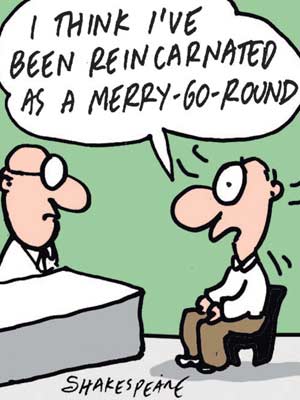
Go to an amusement park and ride every roller coaster there!

22. My illness has taught me:
That the disability community is live and well and fully utilize the Internet to connect, support, share information and to be proactive.

23. Want to know a secret? One thing people say that gets under my skin is:
“Nevermind”. If you aren’t willing to repeat it for someone who hears differently are you not behaving as if it doesn’t matter to THEM?

24. But I love it when people:
Include me.

25. My favorite motto, scripture, quote that gets me through tough times is:
Helen Keller:  “Blindness separates us from things but deafness separates us from people. “

26. When someone is diagnosed I’d like to tell them:
Email me. Ask questions. I want to help!

27. Something that has surprised me about living with an illness is:
How family members who once knew you “when” are not willing to learn about the new you.

28. The nicest thing someone did for me when I wasn’t feeling well was:
Email me and ask how I was doing.

29. I’m involved with Invisible Illness Week because:
Many illnesses and disabilities are invisible. I want to raise awareness.

30. The fact that you read this list makes me feel:

Appreciative that you care enough to learn more!

Denise Portis

© 2011 Personal Hearing Loss Journal
“It’s Just Lack of Sleep…”


When I was in college I adopted horrendous study habits that included “all nighters” and cramming. I also began to nap. I needed them. Between work study at the campus library and going to school full-time, naps were a coveted, hard-earned prize. I felt better after a nap. I could think better, got along better with my roommates, and could better survive the next long night of studying.

My children are 11 months a part. (No… it was not planned that way!) I did various “odd jobs” throughout their childhood so that I could stay home with them when they were babies, toddlers, and pre-schoolers. Thankfully, this meant I could nap at the same time they did. Let me tell you nap time may have been a thing of dread for a precocious three-year-old, but they were a luxury I enjoyed! I used a baby monitor even after my kids were not babies so that I could sleep with my good ear on it in order to make sure they stayed in their beds for their naps.

Darn it. My kids grew up and my part-time jobs began insuring I would no longer have a nap. I miss them still. I may not get a nap anymore, but I do make it a priority to get a good night’s rest. There is no magic number for hours of sleep necessary for an adult to function optimally. According to the National Sleep Foundation, sleep needs are individual; however, experts agree that healthy adults need 7 to 8 hours every night without risking accumulation of sleep debt (National Sleep Foundation, 2010). You may be slack-jawed having just read that. What adult consistently gets 7-8 hours of sleep every night? Few do.

According to the 2008 Morbidity and Mortality Report, 29% of all American adults report sleeping less than seven hours a night habitually. The report clearly stated that, “The importance of chronic sleep insufficiency is under-recognized as a public health problem, despite being associated with numerous physical and mental health problems, injury, loss of productivity, and mortality” (MMWR, 2008, p. 1175). So if we know we need more sleep, but don’t make it a priority… what is really at risk? Actually… a lot. Depression, heart disease, injury at work or when driving, and risk of DEATH may result from habitually losing sleep.

Factor in Invisible Illness or Disability

Let’s say you have an invisible illness or disability. You may argue (albeit weakly) that you get as much rest as other adults you know. I heard a mother with severe hearing loss complain of rarely getting a good night’s rest, “… in spite of being completely deaf at night without the hearing aids. It’s a matter of getting to bed and going to sleep. So much to do!” You may not realize that if you are operating with an invisible illness or disability you actually need more sleep. Don’t take my word for it. Lack of sleep may seriously impact the quality of life of a person with hearing loss (Preminger & Meeks, 2010). I have met people with Fibromyalgia, Chronic Fatigue Syndrome, MS, brain injury, PTSD, hearing loss, balance disorders, and paralysis who have all shared that they do not get as much sleep as they really need to live their best life.

For some, it may be that they are trying but chronic pain or discomfort may limit how much sleep they are able to get each night. For MANY, however, they simply do not take into account that they need more sleep than the average adult. Why do we make excuses for not making sleep a priority? If a doctor told you that you will feel better and perform better if you could make it a priority to get 2 to 3 more hours of sleep each night, would you do it? “Doctor’s orders”? If research and word-of-mouth testimonies give two thumbs up to getting more sleep, why do we ignore this?

I get 8 hours of sleep every single night – and sometimes I get nine! I’m no saint, but honey? Let me tell you I am ALL DEVIL if I do not get enough rest. It is beyond being grouchy too. I’m more insecure because I don’t hear as well. I fall more and sport pretty, but painful bruises. I don’t make time to exercise if I’m tired. My heart needs to exercise. I have a propensity towards depression when I don’t get regular aerobic exercise. My tinnitus is worse. I say “HUH?” more. (Honestly, I do!) Those who know me well… know how poorly I function when I do not get enough sleep. I lack the finesse of it being a cumulative effect too. Instead it shows up immediately. One of the most unselfish, “good for me” things that I do for myself is make 8 hours of sleep a night a priority. It’s a MUST in my daily schedule.

How about you? Do you get enough sleep? I have never met anyone that couldn’t re-arrange LIFE in order to prioritize sleep if they really chose to do so. It is a little embarassing the things we cut out of our life in order to make a good night’s rest a priority. You may cut out things like less time on FaceBook, or surfing the net, or channel surfing on television. If you live with an invisible illness or disability, how about trying a little test. For one month, really strive to get at least 8 hours of sleep each night. Journal about how you feel and about the steps you took in order to make sleep a priority. Ask others if they notice any changes in behavior, over all mood, and performance. You just may be surprised how important sleep is to even YOU.

Do you know you need more sleep but simply cannot find those hours? Talk to your doctor about whether or not you have a comorbid sleep disorder in conjunction with your illness/disability diagnosis. It is not uncommon to have difficulties going to sleep and STAYING asleep when you struggle with other issues.

I’m interested in your feedback! Have you found getting more (or less) sleep impacts your disability?

Denise Portis

© 2011 Personal Hearing Loss Journal
————–

Are sleepy workers a threat to safety, productivity?. (2009). Occupational Health Management, 19(2), 20-21. Retrieved from EBSCOhost.

National Sleep Foundation (2010). How much sleep do we really need? Retrieved August 22, 2011, from http://www.sleepfoundation.org/article/how-sleep-works/how-much-sleep-do-we-really-need

Perceived insufficient rest or sleep among adults — United States, 2008. (2009). MMWR: Morbidity & Mortality Weekly Report, 58(42), 1175-1179. Retrieved from EBSCOhost.

Preminger, J., & Meeks, S. (2010). The influence of mood on the perception of hearing-loss related quality of life in people with hearing loss and their significant others. International Journal of Audiology, 49(4), 263-271. doi:10.3109/14992020903311396

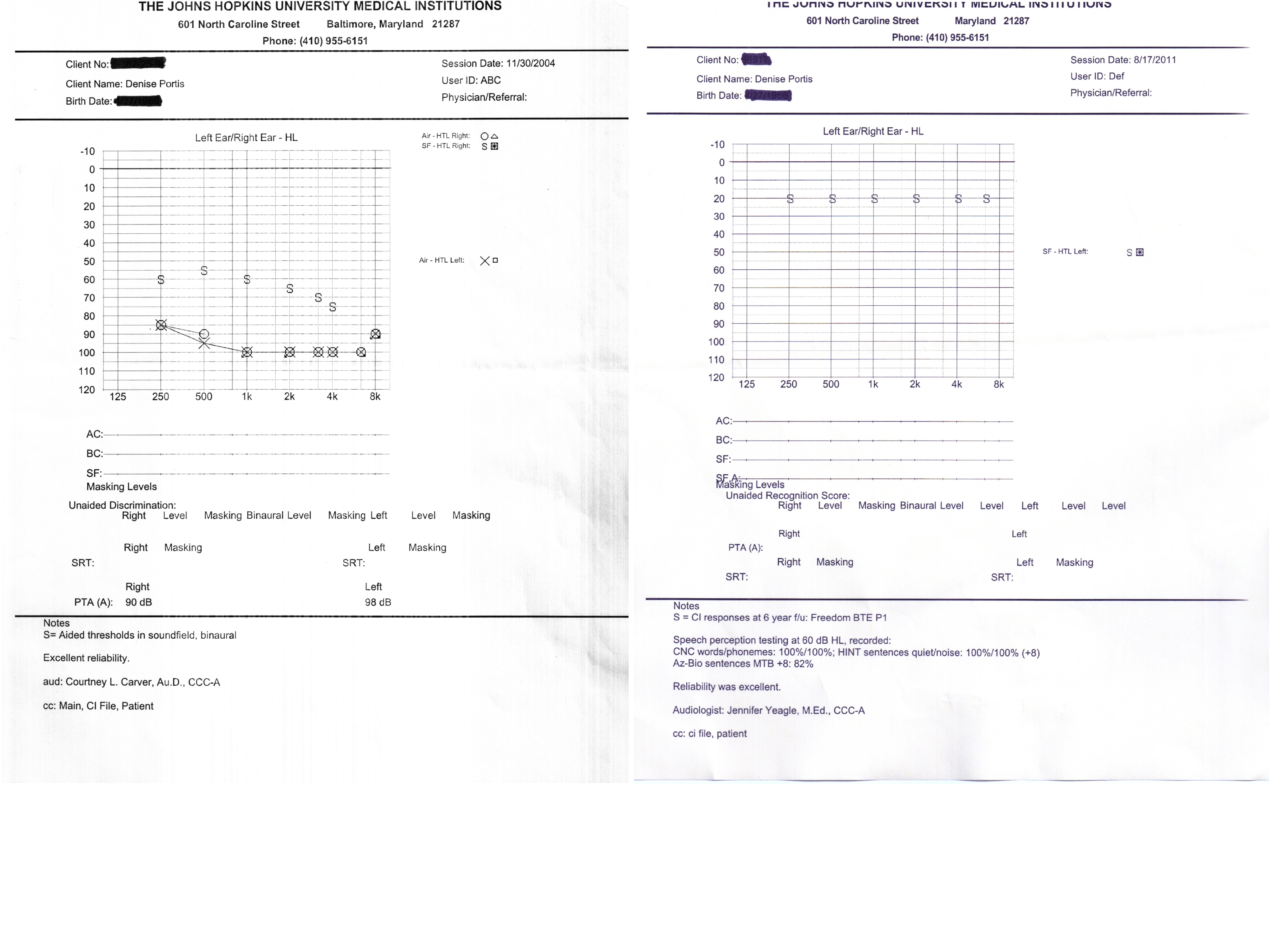
Six Year Post Activation Mapping at Johns Hopkins

(left) 2004 Pre-CI (right) August 17, 2011


(Click on photo above to enlarge)

Today I traveled to Johns Hopkins for my 6 year post-activation mapping of my cochlear implant. A number of things went through my head as I traveled a familiar road to my audiologist at the Listening Center. For one thing, I listened to the GPS give directions and didn’t glance at it once – for I was hearing it. I talked to my assistance dog, Chloe, in the back seat when I pointed out the stadium as we passed and heard her bark in response to let me know she was an Oriole fan.

As I entered the parking deck for Johns Hopkins Outpatient Center, I mashed the button to give me a ticket. I heard the instructions to pay before returning to my vehicle prior to leaving. Walking across the enormous lobby I could hear families chatting while they waiting to check in, and admissions counselors quietly talking to patients ON MY DEAF (implanted) SIDE. As I approached the elevators I heard a series of “dings” as different cars reached the lobby level waiting to take patients “up” or “down”. The elevator announced the floor level on each concourse and warnings to stand clear of the door echoed through the car.

All of these sounds were silent for me in 2005. Six years later I hear them all and do so with relative ease. When I was originally tested to see if I qualified for a CI, I entered the sound-proof booth with my husband. I waited to hear sounds in order to “mash the button” and turned to my husband to say, “Gee… when will it start do you think?” My voice drifted off when I saw the look on his face. SHOCK.

He gestured to the window and then the speakers and said, “Denise, the test has been going for 2 or 3 minutes already”. Neither one of us realized how poorly I was hearing since I relied on speech reading so much. Today I entered the booth with confidence and even took a test “brand new” for me. With crowd noise I had to repeat different voices (male and female) of a conversation. My audiologist was very impressed. She said she could see “the switch turn on” after a sentence or two when my CI picked out the important voices from among all the others.

I realize cochlear implants are not an option for everyone with hearing loss. I also know that some people get a cochlear implant and are not 100% happy with the outcome. For me… the Nucleus Freedom cochlear implant changed my life. I hear SO well, in fact, that I’ve chosen not to go bi-lateral like many in my peer group have done. On my “bad” balance days, I cannot risk having my balance worsen because of a 2nd implant at this time. I was diagnosed with Meniere’s disease PRIOR to my first CI, and my family and I cannot tell that it made my symptoms any worse. I have, however, found some research that may indicate a 2nd CI could worsen Meniere’s symptoms – so for now? I wait to see what the future may bring. My audiologist believes I hear as well with one as well or better than many do with two. I’m happy with how I am hearing!

Denise Portis

© 2011 Personal Hearing Loss Journal

 

Sometimes? There’s Not a Great Solution…

Chloe doesn't know Spanish...

Sometimes? There is not a great solution available for positive advocacy.

This past Friday, my 21-year-old daughter asked me to go shopping with her. I’m always thrilled when she CHOOSES to spend time with me, so I agreed so long as it was the morning so that we could “beat the heat”. She agreed. She wanted to shop for new “under things” and I knew JCPenny was having a sale on these items. Kyersten, Chloe and I headed for Annapolis Mall to shop.

The bad thing about shopping in the “intimates” department is that there is not much room to maneuver. I was having some difficulty with my balance as well so I was just being extra careful about how much moving I had to do. Chloe does great even in confined spaces with the exception of that tail. I talk to her a great deal while we are out because it helps to keep her attention on me. Kyersten was busy looking at different styles available.  My main job was to offer the occasional opinion and situate Chloe so that her tail didn’t knock things off with her loving “wag”. Chloe may not understand all that I say to her, but she does know her name and will wag as if she is paying attention to everything else I’m saying. Because my attention was on HER, and as we were in “tight quarters”, I was taken by surprise by two little girls who ran up and threw their arms around Chloe’s neck.

One little girl was about 4-years-old, and the other (obviously big sister) was probably 9 or 10-years-old. I stuttered out, “Oh! I’m sorry. She’s a working dog and cannot be petted right now”. The girls continued to squeeze and talk excitedly.

I tried to tune in a bit better and realized they were talking in Spanish. With my heart plummeting to my stomach, I held up my hand and shook my head NO saying, “Please don’t pet her. She is a working dog”.

The older girl stopped and tried to talk to me in English, and I understood “She’s a pretty dog”. At this point Chloe broke her sit/stay in order to break the choke hold. I was unprepared and went to my knees and caught myself on a rack.

With bras, panties, and tiny hangers attached to various body parts, I again held up my hand, shook my head no and said, “No please!” in a very firm voice. As I was still wobbling, I sat on my caboose to get my bearings.

The older girl said, “Oh … sorry” with some other words that I could not make out because of the accent. I did understand that she understood that Chloe was NOT to be petted. In Spanish she (I think) explained to her younger sister about Chloe. I think she realized something was amiss because I was now sitting on the floor with lingerie scattered around me. She left quickly with her little sister in tow.

I had Chloe brace so that I could get up, and asked my daughter to pick up some scattered articles. (Chloe could have, but I didn’t figure anyone else would want dog saliva on merchandise). Right as I was on one knee about to stand, the youngest came zooming around the corner with a squeal to squeeze Chloe again (who was now in a stand/stay and “brace”). I held up my hand and intercepted the young lady and my hand blocked her at the chest. Although I did not PUSH, it did stop her in her tracks. I said firmly with a head shake, “NO!” She turned and ran away.

I did NOT want to place my hands on someone else – let alone a child. I didn’t injure her, but I really felt out of options. I was “rattled” the remainder of the day. I was very upset with MYSELF that the resolution to this problem ended up playing out like it did.

When All Else Fails… Be Firm

I did look around for the youngster and never did see her or her older sister during the remainder of our shopping trip. When something doesn’t go according to plan I tend to beat myself up about it I’m afraid! I kept thinking about other options I may have had, and tried to think of what I might do should this happen again. (I’m open to suggestions – grin).

Sometimes we can try to advocate in a positive way – and the situation may just fall apart. Sometimes? You just have to be firm and resolute. We should always try to be positive and upbeat at the beginning…

“It would assist me in staff meetings if everyone would just pop a hand up before speaking so I can locate who is talking”.

“I can easily do my share of answering the phone if I had access to a captioned telephone that would provide understanding for when I don’t hear everything”.

“She’s not a pet. She’s a service dog and she can come into the store with me”.

Yet there are times we may have exhausted other options and have to stand firm.

“I need everyone to simply pop your hand up with a small wave before you speak. Thanks in advance”.

“I will require a captioned telephone so that I can do my job and share the task of answering the phone”.

“Here is a flier about what the ADA says about my rights. I’ll be over there shopping should you have any additional questions”.

I don’t think ANY of us welcome having to be firm and insistent, but there is a time and place for being firm. I try to always remember that there will be others who come after me that may also have accessibility issues. How I handle a situation may condition someone with normal hearing to respond to the next person they interact with who has a disability. There are times, however, when all pleasant and positive avenues have been closed to you. Even in your firmness… keep your cool. Keep it short and stick to the facts. My husband grins and tells me, “Denise! TMI. Keep it short! They don’t care about your background or care to hear your story”!

Accents, Foreign Languages, and Hearing Loss

The great thing about our country is the diversity. Because of where I live there are a large number of minority populations who speak English as their SECOND language. I do not speak an oral foreign language so I’m a little jealous of those who can! My mother taught high school Spanish for over twenty years, but her children never learned (much to her dismay). I have a lot of respect for people who speak English as their 2nd language. It is difficult, however, to understand language when an accent distorts the way a cochlear implant and/or hearing aid pick up the words. I have trouble understanding people with thick accents that may speak PERFECT English. I even have problems with American accents such as folks from Boston, Texas, etc. (I understand “Southern” as I lived there for so long!)

However, the fact that I have difficulty with accents, is MY problem. People with hearing loss should have patience with those who speak other languages as their primary language. I have heard late-deafened folks demean and criticize those who speak other languages. I always think to myself, “Really?” It is far more productive to explain that you have a hearing loss and have trouble understanding when an accent is present. Let them know that you are aware it is your problem, and pleasantly ask if they can perhaps speak slower and face you when they speak. I’ve overheard HoHearies blast people with heavy accents – as if it is THEIR fault! Always – ALWAYS – remember you are an advocate for others with hearing loss whether you signed up for it or not! If you are negative, critical and defensive, you are having a negative influence on how the rest of us are treated in the future. Yes, it can be frustrating and even embarrassing to have to ask someone with a heavy accent to repeat themselves again and again. But “own” the problem as yours – it isn’t their problem. It’s a big thing to be fluent in more than one language, so treat them with the respect they deserve.

Denise Portis

© 2011 Personal Hearing Loss Journal
Timeless Reminders

In 483 B.C., Medo-Persian King Xerxes (also known as Ahasuerus) threw a huge, 7 day party. What was strange about this party is that it FOLLOWED a 180 day, kingdom-wide celebration. I mean… who has THAT kind of money? I guess Xerxes did – and he had no qualms about spending it. At some point in the party, Xerxes makes a mistake. He assumes his queen, the beautiful Vashti, will want to come to the men’s party and parade around for everyone. She set him straight pretty quickly… all through the channels of the first private messaging system… eunuchs. After consulting the fellas in his “boys club”, Xerxes boots Vashti to the curb… or actually to a part of the harem where he’ll never see her again. ‘Cept… now he’s lonely. This lonliness sets in play a kingdom-wide search for all the beautiful single women in the kingdom. That’s right… there’s a job opening in the palace.

Hadassah was a young Jewess being raised in Susa by her cousin Mordecai. Was it because she was near the palace at Susa that she was picked up so quickly? We don’t know, but we do know she was a “hottie”. Beautiful in form and face. Her name was changed to Esther and she began the year-long process of getting her chance with Xerxes to see if he liked her well enough to become his new queen. History tells us that in 478 B.C., Esther becomes queen. Guess she made an impact…

Xerxes was a “strange ‘un”. He paid attention to seemingly unimportant things and completely overlooked really important details… like signing a law from a “Jew hater” named Haman to wipe out and annhilate all the Jews on a specific day. Haman is conniving and manipulative and leaves out the little detail about exactly WHO the race was to be destroyed. Xerxes didn’t have a problem with the Jews – one saved his life even (wouldn’t you know it was Esther’s cousin Mordecai?) – but Haman certainly did. If you are familiar with the story, you know that Queen Esther is given the opportunity to save her people from this vengeance edict that was drawn-up and pushed through into law by Haman. During a pep talk from her cousin Mordecai via that early private messaging system… he tells Esther something that has reverberated down through the years to words we all know. “FOR SUCH A TIME AS THIS”. Those six words are profound, aren’t they? Unfortunately, Esther 4:14, has an even greater timeless reminder that is often overlooked. Mordecai actually says, “And who knows whether you have not attained royalty for such a time as this”. Yup. Esther saves her people by exposing Haman and suggesting to Xerxes to write a counter-law that will allow the Jews to fight for their very lives instead of rolling over and giving up. It seems no one wants to face a Jew with a sword. They are saved.

I think we miss an important reminder when we take only those six words out of context. All the pieces were in play at the right time, right place… all for a very important reason. I’ve often thought about my own life and tried to look at opportunities available to me that I have as a result of – all the pieces being in play at the right time and right place. Who knows whether or not I became deaf for such a time as this?

You Have a Disability. Now what?

I’m reasonably certain that if I asked for a show of hands for anyone who signed up for developing a disability or acquiring an invisible illness, I’d see a “room” full of people sitting on their hands. To be painfully honest with you, there are days that I really hate being deaf and only being able to hear if I wear bionics. I can get extremely depressed after experiencing a day where I had to navigate my space hanging on to walls or using a cane. I didn’t ask to become deaf, nor aspire to being a person with Meniere’s disease. Yet I firmly believe that everything has a purpose. So I’m deaf and hear again with a CI. What can I do with that?

Do you know that you have access to people that may be unique to YOU? The Internet may bring like-minded people together for discussion and support, but many of these people you may never meet face-to-face. Yet in YOUR life, there are real people that you have contact with that I do not. You don’t know the sad-eyed waitress at my favorite locally-owned restaurant. You don’t buy stamps from the grumpy postal worker I see once a month. You don’t stop and wait your turn at the crosswalk where a harried, sweaty, “I can’t take much more of this”, crossing guard faithfully sees school children across the busy street each weekday. These folks are unique to me, just as specific individuals you know at work, school, church, and PTA are unique to YOU.

Do you literally navigate life by using a power-scooter or walker? Then you are mobile in a manner I do not understand. Do you have fibromyalgia? I don’t understand that kind of pain – symptomatic of an invisible illness often misunderstood. Even those I know who have hearing loss and Meniere’s disease face different problems, frustrations, and symptoms than I experience. Hearing loss is often as unique as the individual. Yet all that is YOU, puts you in a unique position to make a difference where you are. I cannot influence the people that are unique to you.

You know something? It helps me to remember this timeless reminder when I am feeling particular frustrated about my life. I’m in a specific time and place with specific gifts, skills, and personality to influence those around me in a positive way. What is frightening is remembering that I can also influence others in a negative way. Going back to Mordecai’s pep talk to Queen Esther, he also reminds her that if she keeps her mouth shut and doesn’t ask Xerxes for the life of her people, then deliverance will come from another place.

Esther 4:14, “For if you remain silent at this time, relief and deliverance will arise for the Jews from another place and you and your father’s house will perish. And who knows whether you have not attained royalty for such a time as this?”

I don’t know about YOU, but I want to seize my opportunities. Sure… some may seem like small opportunities for impacting the life of another, but who is to say that opportunity is without worth? If I don’t live my life actively looking for opportunities to make a difference, then someone else will be in a position to do it instead. Especially if it is an opportunity to be a blessing and to make a positive difference in another. You are unique. The opportunities available to YOU are unique.

President Harry Truman said, “A pessimist is one who makes difficulties of his opportunities and an optimist is one who makes opportunities of his difficulties”. Yup. I realize there is some therapeutic value in the occasional pity party. However, don’t stay as a permanent guest. You are missing opportunities if you keep your eyes on SELF. I believe living a life looking for opportunities makes life worth living. I try to re-evaluate where I am in finding and seizing opportunities every Monday. Mondays are dreaded by most; however, I’ve come to look forward to them as I’ve discovered self-evaluation can be invigorating – or at least a KICK IN THE PANTS.

Denise Portis

© 2011 Personal Hearing Loss Journal

 

On the Level

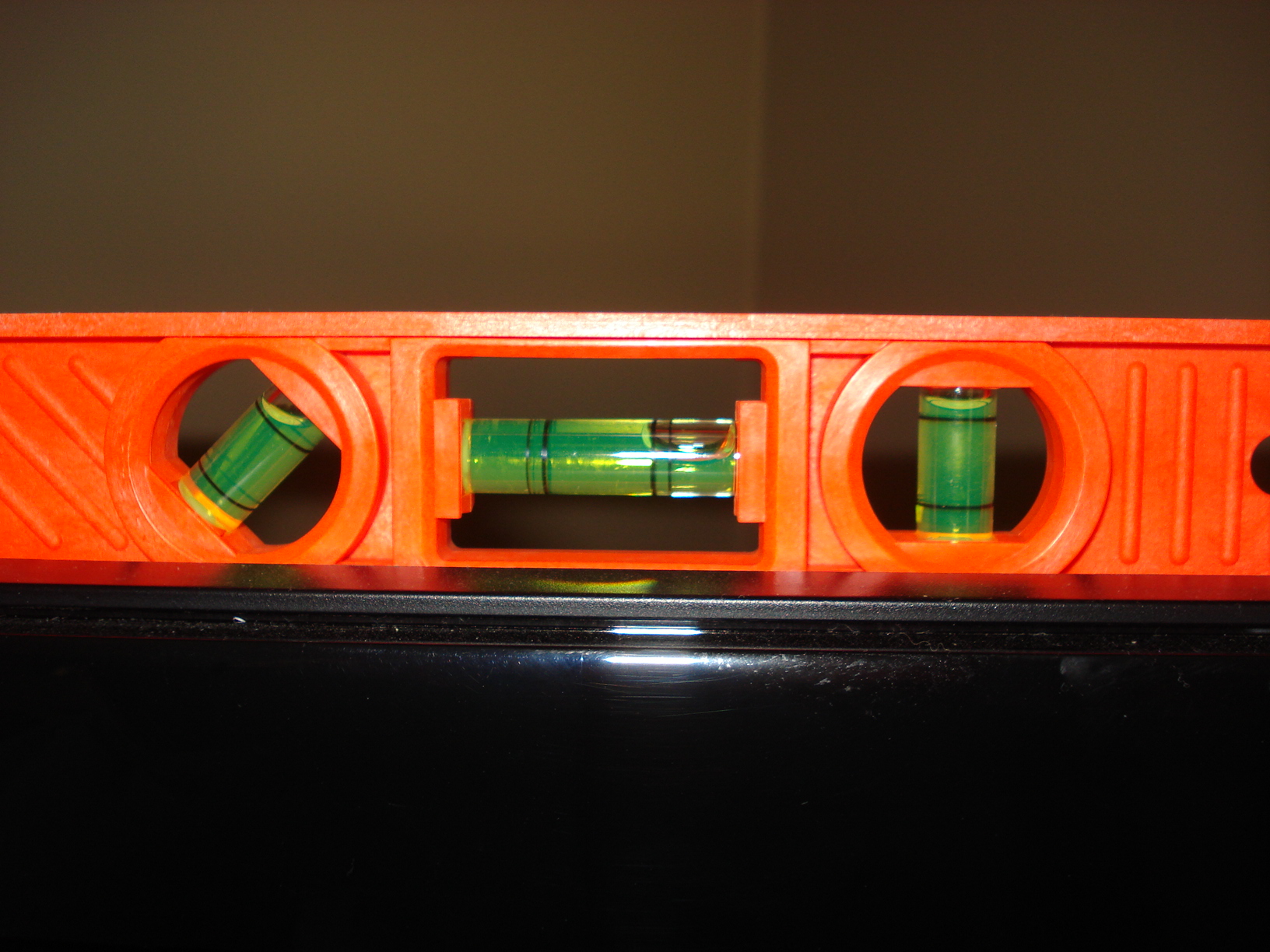
The “cheap” level I purchased this weekend.

We recently moved to reduce my husband’s daily commute from 3 hours to 10 minutes. In moving, things are often “lost”. A phrase often heard in our house lately has been “It’ll turn up!” Although cheerfully voiced and repeated with conviction, over the last 6 weeks there have been some items that have not turned up. One such item was the “level”. It was a really nice level too – approximately 18 inches long and very well made. I know that Home Depot advertises these digital gadgets that use an infra-red beam to determine – “level” – but I want something I can wrap my arms around and move around as if I need a hard hat and knowledge of construction! I have neither… but I like the illusion!

Anyway – I digress…

In the move, my husband and 20-year-old son put together a new T.V. stand for our 42-inch flat screen. The first time I sat down to watch a taped “favorite” I knew something was wrong.

“Umm… honey? The screen is crooked” I announced with confidence.

Terry did get up to stand in front of the T.V. with a critical eye, but explained with some assurance in tone and stance that, “It isn’t crooked. It’s fine!”

I gave him one of THOSE looks. You know the kind where you don’t actually SAY anything, but yet SAID a lot?

“Besides”, he teased, “how can YOU say whether or not anything is crooked or straight?”

“My world may revolve, but it isn’t skewed,” I retorted.

Over the next 3 weeks I continued to insist the screen was crooked. I watch very little television and what I watch is usually a taped show. When I sat to watch a taped cooking show or “Bones”, I didn’t want to have to turn my head to watch it “straight”. I was starting to let my frustration show that I seemed to be the only one who noticed the screen was crooked. Determined to prove my own “sense of level”, I went in search of our – erm – level.

It’s very frustrating to go through every nook and cranny of a new home looking for something you clearly remember packing and not finding the item! While picking up a few things at Wal-mart this weekend I got my husband’s attention as I headed for the hardware section. “I’m getting a cheap level,” I announced with NO ROOM for argument. He rolled his eyes but followed Chloe and I to the hardware department.

Ignorance is Bliss

When we got home, Terry and I unpacked the Wal-mart bags. I was busy in the kitchen when I caught sight of him in the family room standing in front of the T.V. He was putting the level on the television stand and then the T.V., all the while looking very thoughtful. I walked over to see if my sense of “level” could be trusted.

“It’s crooked,” he admitted with some surprise.

I tried very hard not to crow, for I’ve never done “chicken” very well. “Yes, honey. Do you think you can fix it? It is driving me bananas!”

“Oh sure I can fix it, but I’ll need Chris’s help. I’ll get it done this week,” he promised.

Do you know that over the last 2 days I have caught Terry standing in front of the T.V. numerous times with his head tilted? Ignorance is bliss. Now that he KNEW it was crooked, it seemed to exasperate him as well. The T.V. hasn’t MOVED or been ADJUSTED, yet now it seemed to really distract Terry too.

What “Bugs” Me, May Not “Bug” You

If you follow this blog because you have an invisible disability or service dog you will recognize a theme that often shows up here. No two disabilities are the same. Even folks with hearing loss have differences that make their hearing loss – or “hearing again” unique. I have become “pen pals” of a sort with numerous people who have Meniere’s disease. Yet I have never discovered any one individual who has exactly the same triggers as I. Through Fidos For Freedom, I have met a number of individuals with Multiple Sclerosis, mobility issues, deaf or hard-of-hearing, suffer from fibromyalgia, or other invisible “enemies”. I have learned that what may “bug” me may have no influence on someone else who may have a similar disability.We are as unique as our disability and abilities. I for one, like it that way. Something may look “crooked” to me and in need of straightening, but it may actually be fine to someone else.

I think we have to be very careful about assuming that every individual with a similar disability lives life the same way – experiencing the same frustrations and triumphs. The late-deafened crowd can be very bad about this as hearing loss is not “one size fits all”. Frequency, pitch, and decibel levels are all experienced differently by folks with hearing loss. Those of us who use cochlear implants and/or hearing aids may not experience the same benefit as another whose audiogram may look very similar. A listening environment may be very difficult for me because of the level of background noise, but you may be able to tune out things very easily with a specific “map” of your own CI.

Yesterday in church I experienced a painful reminder that what is “level” for one person may not be “level” at all for me. After church, the organist plays a piece of music as everyone leaves. People do a quick “catch up” with those around them or greet newcomers. Can I be honest a moment and say that it is all I can do not to wince when the organist begins to play? I try hard to control my expression, but I found myself gripping my hands together as I tried to make out the voices around me while my CI picked up the organ music loud and clear and deciphered the sound as best it could. I felt the hair on my neck stand up and …

I didn’t even know I had hair on my neck!

A plan of action is needed… I’m going to turn my CI off immediately after the service and just read lips.

If I tried to explain to someone else with hearing loss, they may not understand what the problem is and do just fine in that listening environment. As a matter of fact, I have noted a number of hearing aids in ears around me in the auditorium. They aren’t snatching the technology off from behind their ears and running from the auditorium screaming like a maniac. As I inwardly “shackled” my own maniac I couldn’t help but wonder how they did it. How can this surround-sound, swelling noise be ignored while they focused on actual voices around them?

Easy.

What was “crooked” to me was “on the level” for them. No adjustment necessary! We really have to remember that. I think it all boils down to:

1. Learn to communicate your needs clearly so others may adjust to best help.

2. Respect another individual’s choices and decisions made to find true accessibility.

Sometimes not much can be done to “straighten” what is crooked. Then our responsibility changes. I hope I can be gracious and accepting about things that cannot be “fixed” or “changed” to best meet my hearing and balance needs.

Denise Portis

© 2011 Personal Hearing Loss Journal
Frost Heave

picture from blog post at: Herding Grasshoppers

I recently read a post from one of my favorite bloggers. I love Herding Grasshoppers and NOT just because her son is hard-of-hearing. She is witty, adventurous and “real”. I rarely walk away form reading one of her posts without a smile on my face.

She recently posted about “Needle Ice” and frost heave. I was very intrigued. I’ve seen frost heave when walking trails before, but wasn’t really aware of what it was I was looking at. After reading her post I immediately went to look for more information about this phenomena. Frost heave occurs when moisture-retaining soils freeze in cold temperatures. As moisture sinks into the ground the freezing temperatures cause the water to freeze into ice. When water freezes… it expands and creates pressure. The soil presses up and may expose the roots of plants and has been also known to bring rocks and pebbles to the surface. Take a close look at the picture. The ice crystals have actually brought small rocks and pebbles to the surface. Once this thaws, the rocks and pebbles are left on top of the ground. One would almost think someone had “planted rocks” in an area that may have once been clear of them!

What “Heaves” out of you?

I have given a lot of thought recently about what kind of thoughts and actions are seen in my own life when the going gets “rough“? When my life becomes saturated with a seemingly endless bombardment of trials, problems, set-backs, health problems, and struggles, I am often left pleading with God “PLEASE! Not ONE more thing!” But ya know something? God must know my limits better than I do. Because there have been some difficult times that I have prayed and pleaded “not one more thing – thanks so much“, only to have a blast of cold air on top of my already “saturated life”. Exhaustion, pain, fear, depression and plain ol’ “bad attitudes” may have HEAVED to the surface of my life. These things are usually hidden. Some of the heaving exposes some thoughts and actions that just aren’t pretty. Some of it is just “junk” and “rocks”. The “heave” may expose “roots” as well and leave areas of my life vulnerable.

This past summer, I was having a pretty difficult time. I was doing my best to stave off depression as it is an unwelcome visitor that worms its way into my life at inopportune times. I was to the point of pleading, “Not ONE more thing God – please! Hello? Are you listening?” The next day Chloe was hurt in the park. For whatever reason (as we often will not understand this side of  Heaven), God allowed ONE MORE THING. Chloe’s foot took a really long time to heal and I even had fears she would ever be able to work again. Yes, she is special to me because she is my hound dog and  “doggie friend”, but she really enables me to be more independent too! What would I do if her foot would not heal? During the months (yes you read that right) that followed a lot of “stuff” heaved out of that pressure and into full view – especially to my family. It wasn’t all pretty. I was cantankerous (a nice way of saying PAIN IN THE BUTT) and aloof. I knuckled down and did the things I HAD to, but did not exert myself to do anything else. I had a major pity party several months long.

But not everything that HEAVES out of our saturation point is bad. Sometimes we discover that in spite of disability – we are very ABLE. You learn pretty early on what you CAN do, and end up doing it really, REALLY well. My saturation points have received an extra dose of FREEZE and heaved up compassion for others, patience, encouragement, and determination. I may stand and look around at the defrosted ground and spy a rock here and there. But sometimes? Sometimes I see beautiful geodes or prisms. I’ve not discovered a diamond yet – but heck. I’m only 44. I’m certain I’ve a great number of frost heaves in my future. Diamonds come with maturity. (If you ask my family – I’m not exactly THERE yet).

Have you experienced difficult times? Things that have happened in a life that already seemed completely saturated with problems and struggles? Don’t fear the weather forecast of overnight “freezing temperatures”. Meteorologists are RARELY accurate! If they happen to actually nail it one time? Welcome the heaving frost crystals to the surface and determine to unearth GOOD THINGS. Prepare your heart in advance to showcase determination, patience, long-suffering, gentleness, kindness, and love.

Experience enough frost heave and you’ll find that the soil of your heart and life is well aerated and primed for Spring.

Denise Portis

© 2011 Personal Hearing Loss Journal
Random Definitions – Consider the Source

Aren’t definitions funny critters? Oh sure… you can use “Dictionary.com” or Merriam-Websters Collegiate “big enough to cause a hernia” dictionary to look up words. But the funny thing about the English dictionary? Words can mean different things. The words can EVEN mean different things – to different people. Some random definitions I have encountered in the last week include:

Now: To the mother who demanded the trash be emptied, it means immediately. To the 20-year-old son who will get to it eventually, it means sometime today.

D-cup: “What does ‘D-cup’ mean to you?” Response: “Male or female?” Speechless thought: “Wha’…   ?”

McDonalds: To the over-extended, ‘I forgot to thaw out the chicken’ parent, it means SUPPER. To the health-conscious, it means ‘heart attack in a bag’.

Snap: Daughter: “Oh snap, I forgot my key!” Mother: snaps fingers and looks quizzically at daughter. Daughter: (raises eyebrows and shoots an exasperated DUH look at mother…)

Normal: To a teenager, it means someone who “fits in”. To a dog, it means it can be eaten. To a person who happens to have a disability, it means “treated like everyone else”.

Yup! You often have to consider the source to understand how people choose to define common words. The word “normal” has cropped up a couple of times in the past several weeks for me.

First occurrence:

Kyersten and I were at Costco looking around and purchasing some bulk items to take back to Virginia for college. A lady did a double-take, looked at Chloe (my assistance dog), looked at my head and kept walking a few steps. However, she immediately stopped and left her cart, pocketbook and items and trotted over to where Kyersten and I stood to say, “Excuse me! Is that a cochlear implant?”

“Yes,” I replied.

“Oh my husband has one of those. How long have you had yours?” she asked with curiosity.

I preceded to tell her a little bit about my own activation 5 years ago and hearing health history. I was trying to keep an eye on her cart (with pocketbook that screamed, “Steal me. Someone steal me” in it), so was a little startled when she interrupted my nervous glances toward her cart to say, “But your speech! It’s so normal!”

In talking with her, it seems her husband was deafened at a young age and was essentially without sound for 27 years before he received his own bilateral implants. He evidently has a noticeable speech impediment. But what is “normal”? I have met late-deafened and congenitally deaf people from all over the United States. “Normal speech”? Some would argue my southern accent is not “normal” for the DC-Metro area. How one person with hearing difficulties speaks, is much like an individual accent. There isn’t anything “abnormal” about it. My son has perfect (selective) hearing, and he has a speech impediment. It is “normal” for him though. How pronounced his own speech difficulties sound, depends on how hard he chooses to enunciate words and regulate his speed. Who determined what “normal speech” was and determined the “yard stick” by which to measure all speech?

At Pearle Vision Center:

A lady and her daughter stopped to admire Chloe who was in a down/stay. “Oh what a beautiful working dog! Are you training her?”

“Oh! No… Chloe graduated 3 years ago. She’s always training, but I’m not her original trainer” I replied.

“Oh! You mean she is YOUR partner?” the surprised woman asked.

“Yes. She’s a hearing/assist and balance assistance dog. I am late-deafened and have Meniere’s disease”, I cheerfully replied.

“Oh wow… you look so n-norm- normal” she stuttered out (since she realized how inappropriate that was as soon as she started saying it!)

I just smiled and she walked away embarrassed.

Normal?

Very likely, this world would be a better place if people didn’t go around labeling others as NORMAL or NOT.

To someone, somewhere… you aren’t “normal” if you choose to define the word as “not like you”!

Denise Portis

© 2011 Personal Hearing Loss Journal

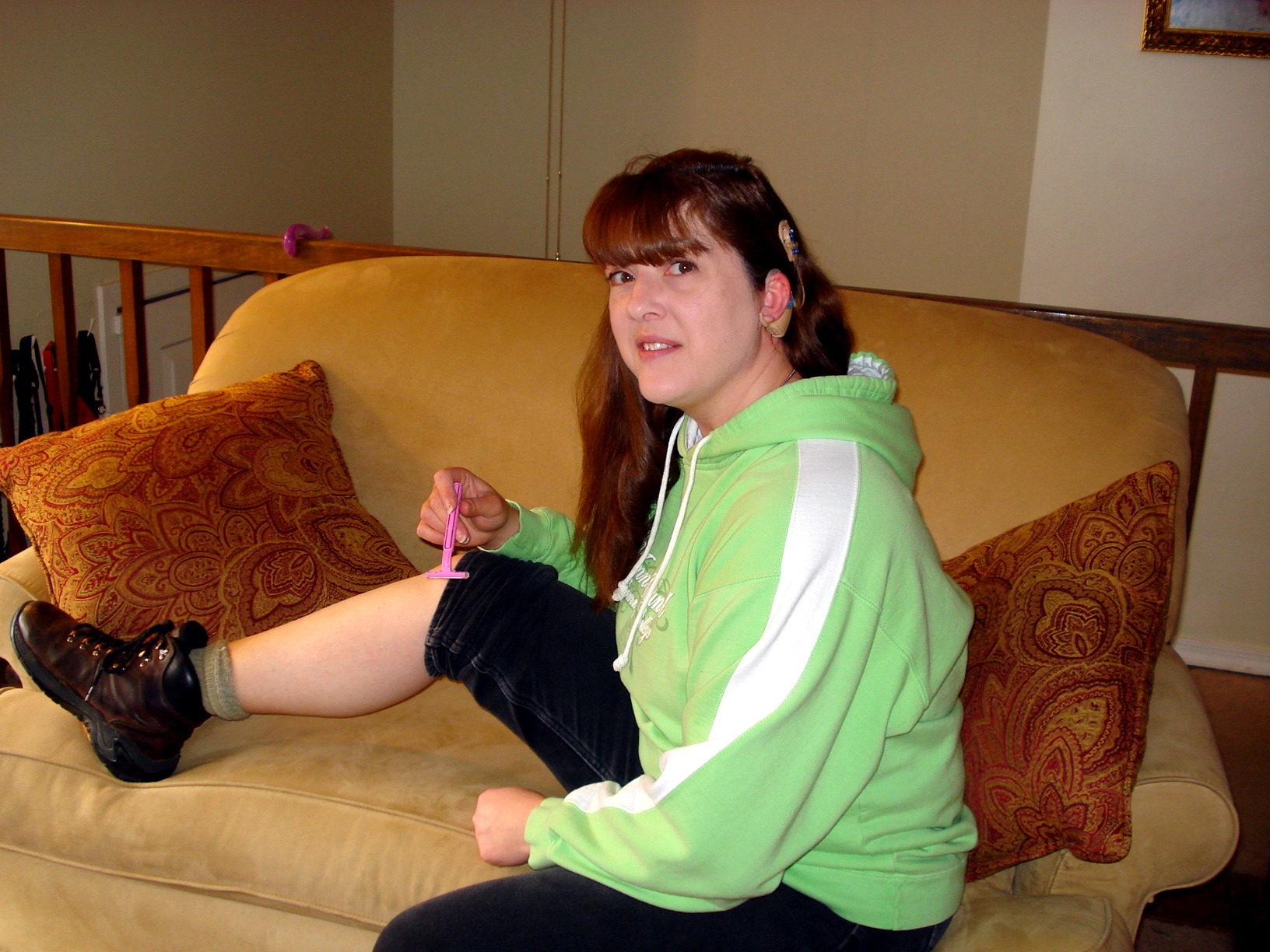
I’d Never Shave My Legs

You know? If I didn’t think what others thought of me was important… I’d never shave my legs.

I would throw my toothpaste away.

I would toss all of my bras.

After all, I do not do these things because smooth legs, peppermint breath and supported body parts do anything for ME.

I’ve heard folks say, “I don’t care what others think of me”. Oh really? If that were true, you wouldn’t have showered this morning and you’d be standing there in purple sweats;

and a red-checkered flannel shirt;

with one green flip-flop;

and one hiking boot!

Instead, your “outfit” (such as it may be) is color-coordinated to a degree. Your body odor reflects you care about hygiene.

OK. Maybe you are sitting there mentally clarifying that you may care what people SEE when they look at you, but – “I don’t care what people think of me personally”. Oh really? If that were true then when your spouse, teenager, co-worker, roommate, or walking buddy asked you this morning, “How are you?”, you would have responded with something much different than “I’m just great! How are you?”

Instead you would have thrown your hands up and said, “Well this is a POOPY day. My dog got in the trash this morning, my daughter forgot to run the dishwasher, I was running behind because I got up 20 minutes late, we were out of eggs so I had to eat CEREAL (face blanches), and I’m standing here with a wedgie if you MUST KNOW!”

But we don’t respond that way, do we? There are societal “niceties” that we adhere too. We know that, “Hi! How are you?” doesn’t mean that the other person really wants a play-by-play of how your day REALLY was. I don’t think that makes us liars. We are simply individuals that are part of a society that interacts somewhat superficially in our everyday greetings.

Yes – I know! There are some people we are just “straight” with and tell it like it is. But most of the time our interactions with others are not with those specific individuals. These special, specific individuals don’t care if we shave our legs.

Stay Positive, PEOPLE!

Take for example something that happened to me this past week.

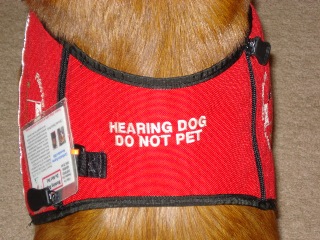
I was out shopping and maneuvering cart, assistance dog, and SELF up and down the aisles. A woman noticed Chloe, my assistance dog. She came closer with real intent in her body posture and facial expression. I wasn’t getting really “friendly vibes” from her so instead of pretending to continue to shop so that I could keep an eye on her, I boldly faced her approach and waited to see what would happen. She made her way to my side with determination and pointedly read Chloe’s vest:

She then looked at the side of my head and noted my cochlear implant. She actually took two steps to the side to check out my OTHER ear. By this point… I’ll admit that I was a little intimidated!

She looked me in the eye and said, “So you need this dog yourself?”

Now you have to understand my IRE was already “tickled” and there was a part of me that wanted to respond:

“No, stupid. I bring this well-trained dog into public places because I like the attention. This cochlear implant and hearing aid? All for show, lady. As a matter of fact… (and I’d lean close to offer a conspiratorial whisper)… I. Don’t. Shave. My. Legs.”

But you know what? I care what people think of me. I care… because I care about others who have hearing loss. I care about others who live their lives with assistance dogs and service dogs. I want this ill-informed lady to walk away with a better appreciation for what I can do “in spite of“. So I plaster a semi-genuine smile on my face and gesture towards Chloe…

“Yes, I have a hearing loss and Meniere’s disease. Chloe alerts me to sounds I cannot hear, and picks up things I drop. Because of her, I can be out shopping without anyone with me and I never have to ask for help”.

Her face gets a lightbulb moment kind of look. “Oh I see”. She looks at me. She looks at Chloe. She walks away. I could still sense the disdain coming off of her. But at that point? It simply didn’t matter. I had taken a deep breath and responded in such a way that I remained a POSITIVE advocate for both people with hearing loss and people with working dogs. As she walked away I pinched myself to keep from stopping her to ask if she shaved her legs. I do admit that I leaned down to Chloe and scratched her head to whisper:

“Imagine that Chloe. It’s not even Halloween!” The witch with hairy legs walked away with some positive information about working dog partnerships.

We Need Each Other

I’m reminded time and again how much we need each other. I know a kindred spirit and dog-trainer who drove all the way to Frederick with her roommate who has a service dog to walk around the mall after my “incident” to show solidarity. These same people were all set to travel to Virginia to attend a vigil to protest that Andrew was not going to be allowed to have his service dog in school. Thankfully, the school board reversed their decision.

I know numerous trainers at Fidos For Freedom that spend countless hours training assistance/service dogs, training and instructing people… all without pay. They take dogs into their homes to spend countless hours OF THEIR FREE TIME, honing skills and modifying behavior so that a dog eventually makes an excellent match with a person that needs them. These are NOT people who “don’t have a life” either. They have families, jobs, pets of their own, ministries, hobbies, and goals. These trainers not only do not get paid, they rarely receive any recognition. They don’t do what they do for the recognition though. They do it because they love people, love dogs, and love to be a part of the connection that takes place between these matches.

I have another friend who constantly challenges herself by going back to school in spite of working full-time. She already has multiple degrees but she is constantly looking for ways to better herself so that she can better help others. She is heavily involved in hearing loss support, traumatic brain injury, enjoys wildlife and supporting her local zoo, and is an avid photographer. She has bi-lateral cochlear implants, but you’d never know she had a disability. She doesn’t live like she has one. She, like many others I know, live life in all the ways they are ABLE and don’t focus on the disability. (I love her… can you tell?)

I know people who volunteer and give of their time, resources, and talents to numerous non-profit agencies. Their goal is to serve their fellow man. They want to make a difference. They DO make a difference.

It takes just one BAD example of a person with a disability or special needs to sort of “spoil it” for the rest of us. As for me? I don’t ever want to be that person. I certainly take the opportunity to “belly-ache” to select individuals who know I just need to “vent”. I know – that THEY know – I may belly-ache about an encounter in private, but in public I will put on a brave face. They let me vent… and then hand me a razor.

Yes… we need each other. Don’t ever think that what you do – does not in SOME way reflect on others. As a person of faith I try to be extra careful. After all, I cannot go around “claiming faith” if I live as if I don’t have any at all. If I express that faith is important to me, I need to remember that my words, actions and life reflect how others see Christ.

Denise Portis

© 2011 Personal Hearing Loss Journal
Meniere’s Rant

I don’t usually go on and on about Meniere’s disease, but I’ve had a pretty bad week with the “little Rascal”. For one thing, I count myself extremely BLESSED as I seem to have only one major trigger. Rain. I know plenty of other folks who have other types of triggers that include flying, change in altitudes (vacations in the mountains!), alcohol, head cold or allergies, chocolate (oh my!), smoking, and even certain foods! So since I only have “rain” as a Meniere’s trigger, I really try not to complain very much.

A fellow Meniere’s patient pointed me to a terrific support group through Facebook today. I have already found a lot of great information. If you belong to Facebook… check it out here. There is a simple but helpful Meniere’s organization on the Internet which can be accessed here. A website providing basic information and clinical trials can be accessed here. My favorite website is the National Institute on Deafness and other Communication Disorders (NIDCD). They have a terrific Meniere’s Disease section that can be located here.  Thanks to the Meniere’s disease Facebook page, I was even directed to our very own Super Villain – Count Vertigo. Who knew?

Being a former farmer’s kid and because I still have numerous relatives that I love in a farming community in SE Colorado, I try to never belly-ache about the rain. Rain is necessary and in most cases a “shower of blessing” to farmers, ranchers, and those who get tired of moving their sprinklers around.

But this week? SIGH. I’ve had some bad experiences. On a rainy day, I fell in the laundry room this past week and happened to find the only exposed nail in the “unfinished room”. Thankfully, I hit it square and impaled myself through the fleshy part of my arm. I was able to pull it clean away and stop the bleeding very quickly. A quick verification that I had a tetanus shot recently, a severe pounding with the hammer on that (stupid) nail, and I escaped “nearly” unscathed.

This morning my alarm clock went off and my well-trained assistance dog was in my face immediately to “kiss me awake”. As soon as I sat up I knew it was raining outside. When the room spins the moment I become vertical, I rarely need to look outside to verify that it is raining. I didn’t fall until about 10 AM. Unfortunately, when I lost my balance I was on the stairs with my arms around a large load of laundry. Missing three steps means I have a pretty good chance of landing “gracefully” and still on my feet. Missing four however? Not a chance. I lay sprawled on the floor staring at the ceiling and a concerned hound dog with dirty laundry scattered all around me. I have a standard set of “OK, I’ve fallen – now what?” questions I ask myself.

1) Am I conscious? (duh)

2) Is anything broken?

3) Am I laying on anything important (like a dog or a cat)

4) Can I close my eyes and open them again and stay conscious?

5) Do I need to call a family member?

If I can answer No, No, No, YES, and NO… then I simply sit up and take my time to re-group. This time I didn’t hit anything other than my elbow on the way down. I may or may not be sporting a pretty blue spot tonight.

There is no cure for Meniere’s Disease. (Hope you aren’t new to the disease and I just depressed you for the remainder of the year!) There are some treatment options, but they only work for “some”, and all the options only serve to reduce the severity of symptoms or number of attacks. NIDCD lists several treatment options that include:

1. Medications – Prescriptions such as meclizine, diazepam, glycopyrrolate, and lorazepam can help relieve dizziness and shorten the attack.

2. Salt restriction and diuretics – I take a prescription diuretic and do restrict my salt. I’ve not seen any real difference, but continue to do these in case it has a cumulative effect.

3. Cognitive therapy – Doesn’t treat the Meniere’s but does help the patient deal with anxiety and coping with “future attacks”.

4. Injections

5. Pressure pulse treatment

6. Surgery

7. Alternative medicine. I take Manganese (5 mg) and a B complex vitamin. Researchers have found that Meniere’s disease patients have a Manganese deficiency. Manganese can be hard to find. (Magnesium is plentiful, but you’ll have to go to a specialty store or order online to find Manganese). Other treatments include acupuncture, acupressure, tai chi, and other supplements. Always tell your doctor if you are taking other supplements as many may interfere with prescription drugs.

This past year, Gene Pugnetti was surgically implanted with a special cochlear implant to treat his severe Meniere’s disease. You can read about the latest update here. The original story can be read here. I will be looking for updates about Gene and wish him the best!

Some things I have learned that help me with Meniere’s disease:

1. I take 5 mg of Manganese and a B-complex vitamin.

2. I limit my salt and take a prescription diuretic.

3. I take 50 mg. of Benedryl before bed.

4. I have inexpensive molding about 4 feet high along the hallway, kitchen, and bedroom. At night, if I have to get up in the dark, I only need to feel my way around the room to discourage getting disoriented. Without it, my eyes “play tricks on my brain” about how close the floor, walls, and doors are as I am struggling to see in the dark. The molding has allowed me to move about the house as needed in the dark without injury.

5. I never EVER go down the stairs without holding on to something. If I have something in my arms, I balance the “something” on one hip. On bad days, if it takes me 3 or 4 minutes to get down the stairs instead of 30 seconds, that’s OK. Patience is a virtue… and may prevent broken bones!

6. I avoid looking directly at ceiling fans or other contraptions that “spin”.

7. I do not ever ride roller coasters, or rides that spin in any way. If I am “spun” into an unconscious state, it is rather difficult to hold on! I made a promise to my family after “Space Mountain” in 2002 to avoid these rides for the remainder of my life. I’m finding it isn’t a difficult promise to keep.

8. I stand and sit with pre-meditation. To simply “pop up” or sit down quickly only means I will experience dizziness. Why bother when moving with a little more care will help to avoid it?

Hopefully this information may be of use to someone! I’m very thankful Meniere’s disease rarely necessitates I write about it!

Denise Portis

© 2010 Personal Hearing Loss Journal