
Half a Stick of Juicy Fruit Gum

juicy-fruit

I miss my grandmother (Vina Jewell Burhenn – Isn’t her name the GREATEST?). As I stopped to think about how to approach my subject for Hearing Elmo this week, I found myself thinking of a very special memory.

It was always a treat to sit with my grandparents in church on Sunday. I think I convinced myself that Grandma would let me get away with more, and my mom and dad were going to make me be “super good”. The pastor was my uncle, Cecil, and so even as a little kid we were expected to be an example to other little kids in the church because we were “kin”. So whenever possible, I always sat with Grandma because I could get away with more – AND… she always gave me a 1/2 stick of Juicy Fruit gum.

Naive kiddo that I was, the truth was that Grandma made me be even more “golden” and because we sat three rows from the front, my parents sitting behind – and to the right of us – could STILL see everything I did.

In the earliest years, I don’t think I ever questioned, “why a HALF stick of Juicy Fruit gum?” I will have to hazard a guess that around  8 or 9 years old, I finally whispered and asked Grandma, “why a HALF stick?”

“When you break it in half, does it let the magic pour out?” I whispered.

Response: Blank Stare

“When you break it in half, is it teaching me to share?” I queried.

Response: Blank Stare

“When you break it in half, is it to make sure I come back for the other half?” I said softly, and with strategic wisdom.

Response: “Denise, I gave you a half a stick because it is ENOUGH”.

Oh. Well gee. I know my child-brain kinda hated the logic of that.

My grandmother would dole out half sticks of Juicy Fruit gum because it was ENOUGH. (Side note: What a shame that it was never Doublemint gum as I would have discovered at an earlier age that I was allergic to spearmint).

It Simply Doesn’t Take MUCh to be ENOUGH

I’m told I take after my grandmother in a lot of ways. Here are just a few FREQUENT reminders from siblings and parents:

  1. I doctor my own ailments to my detriment. And I have Google, which Grandma did not!
  2. I love animals – many times more than people.
  3. I expect justice and fairness.
  4. I will respect you, but by golly you better reciprocate. If you don’t we’re gonna argue!
  5. I can be stubborn.
  6. I don’t mind confrontation. (Likely only recently doing confrontation in the right way).

I think one of the things I get down about the most as a person who is differently-abled with a chronic illness, is that I often worry and fret about my limitations.

I can’t hear on the phone so I am not able to easily call up a friend and ask how they are doing.

I can’t see to drive at night (headlights trigger vertigo), so I cannot go to parties, meet-ups, etc. with friends at night. Most folks do stuff later in the day.

I can’t just drop everything and go to a friend’s rescue. My own limitations require that I determine if I’m physically ABLE. I must ready my canine partner, Milo. I am not a 9-1-1 friend. That grieves me.

You may have limitations that at times, cause you to feel as if what you have to offer is not as valuable. You see how other friends reach out to each other and are discouraged that you cannot offer the same kind of friendship. (If you’ve never read “Spoons” – you should. It eloquently describes life as a differently-abled person). You can only offer a HALF stick of Juicy Fruit gum and you are a little bit pissed off by that.

Do you know what I have learned? A half a stick of Juicy Fruit is enough. I may only be able to touch base with friends via text or Facebook, but taking the time to touch base is STILL appreciated. I may not be able to go to things at night, but when my daytime schedule allows, I can drop off a meal or come by for a quick hug. I cannot be a 9-1-1 friend and be able to just physically show up at an emergency. However, my friends know they can text me or private message me and I will drop EVERYTHING to pray, encourage, and be there for them.

“The purpose of life is not to be happy. It is to be useful, to be honorable, to be compassionate, to have it make some difference that you have lived and lived well.” 
― Ralph Waldo Emerson

We want to make a difference. We want people to see our value. We need to be needed. We all strive for that purpose in different ways.

Maybe you are passionate about social justice issues and do all you are capable of doing.

Perhaps you are a writer – and do so to encourage, educate, and advocate.

Maybe you are an artist. Your drawings, photos, paintings, and sculptures reach out and change people.

You follow up with hurting people and ask them how they are doing NOW.

Your HALF stick of Juicy Fruit is pretty darn important. What you CAN do… what you are able to do… is ENOUGH.

Don’t let anyone tell you anything differently. If they do, give them my number and I’ll take care of it. <wink>

You have value. Believe.

Denise Portis

©2017 Personal Hearing Loss Journal

 

Coming to Terms

Deborah Marcus' blog "Visions of Song"
Deborah Marcus’ blog “Visions of Song”

It is always a treat when guest writers post for “Hearing Elmo”. I never wanted this blog space to be all about “me” and my own issues. Please let me know if YOU would like to write for the site!

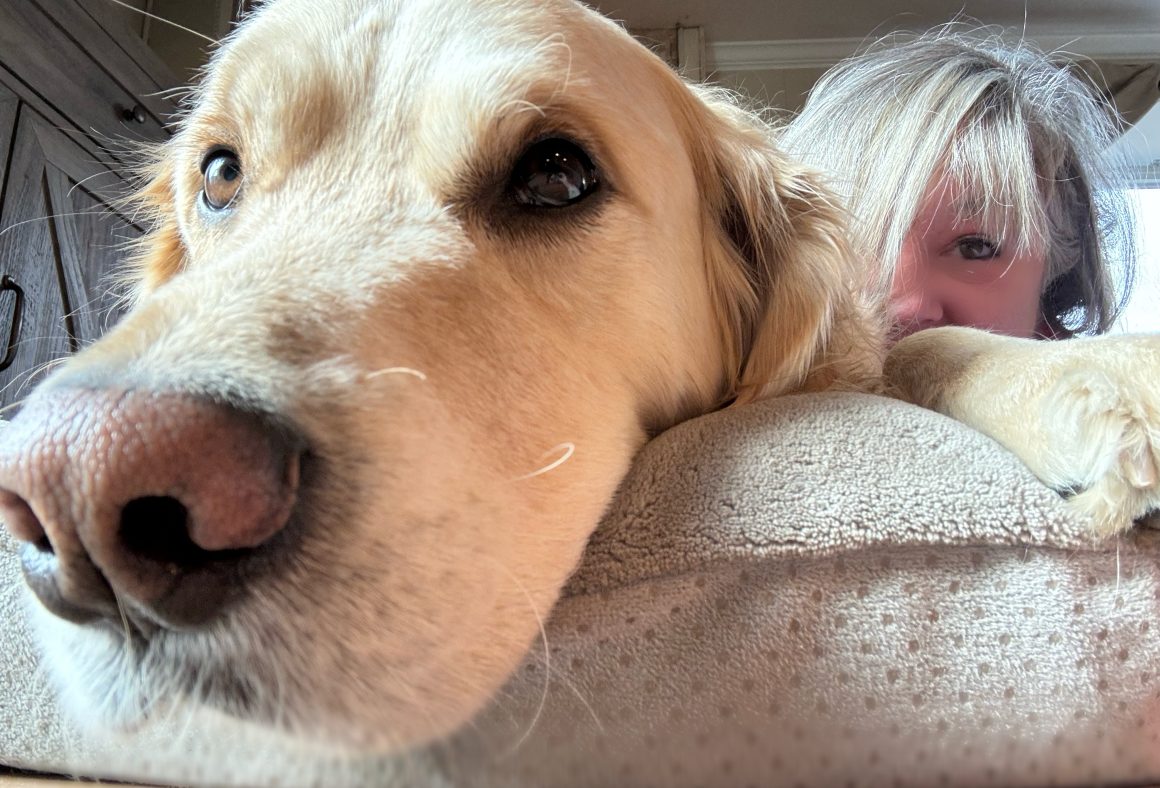
Deb has been a friend for so long, I would have to stop and burn calories just to remember the when and where we first connected. I love her like a sister and her presence in my life has been a blessing. Deb writes (click the photo above to visit her blog) and is a photographer as well. As a matter of fact, I re-designed my guest bath around her dragonflies. A loving “welcome back” to my friend, Deb, as she shares some things that many of us with disability, chronic illness, or special challenges deal with on a daily basis. 

Winter
Winter

From the time I was in elementary school, I understood that life is not fair, that it’s not even a question of fairness, and that readjusting one’s perspective is something that must occur for the full expression of the self, time and time again.

Of course I didn’t think of it in quite those terms when I was 6, 8, or 10 years old, but I experienced it. I imagine we all do in one way or another, whether by subtle shifts or dramatic events that leave us no choice but to consider this a reality of being human.

Here are a couple of examples. Each of us has some of our own.

-That moment at the audiology clinic, age 9 or so, where I went every couple of years for a hearing test as there is hearing loss in my family. I heard someone say, looking at the audiogram: there it is, the mild to moderate hearing loss. I didn’t know how to read the graph at that time, but my maternal grandmother was hard of hearing and I understood it from that vantage point. I would be like grandma, hard of hearing. Reading lips. I didn’t understand that I would lose the ability to hear birds singing, or the many nuanced experiences that we take for granted when we are able to hear, but I was able to internally adjust to my reality.

-A different moment, after a terrible event at home. I went out into the yard, in the dark, in winter and lay on the snow-covered grass. I looked up at the clear sky, full of stars, and as my breathing slowed to a normal rhythm, thought how beautiful it would be if I could just fall asleep right there…and never wake up. After a while, I felt something move me. You might call it God. I internalized it as a spirit of some kind. It said to me: No, it’s not your time. Stand up. Go back inside and warm up. Now I understand that as either depression, or self-preservation, or a little of both. I did not mention this to a soul until many years later.

Spring
Spring

In order to move forward after life-changing events, one has to be able to reckon with the forces within and without. I was motivated in the first example away from despair. As I looked towards my grandmother who could not hear, though it was beyond me at that age to recognize how small her world had become by that point in my life, I could see that she had her faculties and was loved by many in her circle, and so I had expectations of adjustment but did not despair. In the second example, in despair, I can’t say it was all me figuring out what to do, but had an experience that told me we can seek and find the resources to continue on.

Summer
Summer

Fast forwarding to today, I have experienced a number of life-changing events, some of which constitute frank disability. I have had orthopedic issues since middle school. I am now completely deaf without my cochlear implants. I am a survivor of mother-daughter sexual abuse, and with that came some episodes of physical and emotional abuse. I’ve experienced periodic vertigo since the occurrence of one of those physical episodes, when my mother, in a fit of rage I’ve never been able to parse out, pushed my 16 year old self backwards down a long flight of stairs. I only recall coming to at the bottom of the stairs, the crawl back up, the screaming that came from my mother’s throat that suggested that I was somehow at fault for my “accident”. I have struggled with (undiagnosed) depression for years. I’ve coped with physical pain for most of my life, with degrees of it varying over time. The most extreme of these pain issues resides in my facial nerve, with a diagnosis of trigeminal neuralgia.

Autumn... reflections
Autumn… reflections

Throughout each of my 53 years, I have found the will to continue on. Recently, I had to consider the prospect of foot surgery. Wanting to avoid it at all costs, I explored physical therapy, at the encouragement of an acupuncturist I see from time to time. My hope is still to either avoid surgery altogether or be better equipped to manage if I did. During my initial evaluation, I shared my vestibular/balance history. I had recently had the courage to tell my primary doctor about the trauma when I was 16, the vertigo, the neck pain, and now the increasing balance issues. It became clear at the first assessment that my vestibular system is in extremely poor shape. The physical therapist wrote “fell like a tree” in the assessment notes. I worked extremely hard both in therapy and on home exercises from September into December. While we made some modest gains on the foot issues, there was no progress on my balance issues. In December, my PT and I had a heart to heart. It is pretty clear that as a result of multiple factors, my vestibular system is not going to get better. I can continue to work on the vestibular exercises in effort to slow the progression, but that’s probably it. While all this was happening, my primary suggested I try a small dose of medication for the chronic depression, which I was forced to acknowledge, for the sake of self-preservation. We are working on finding a medication I can tolerate and which is a help to me.

It’s strange territory to be in this place where I feel more than a little bit at a loss. Where did my seemingly inherent sense of “carry on!” go? I’ve made adjustments all through my life, and did good works, and have had wonderful relationships and ending relationships and work and play and the same constellation of things that everyone else experiences in their own fashion. I wonder, though, who am I now? I have had moments of despair, when the thought that going to sleep and never waking up would serve me and everyone I know well. The only reason I feel strong enough to write this out in a semi-coherent fashion now is because I have begun to hear that spirit voice again, that says: No, it’s not your time. Stand up. Go back inside and warm up. To that end, I’m focusing on what my new life will look like, how to take the best care of myself possible, and how I can possibly continue to be source of support to others.

Stay warm, friends.

Deborah Marcus

Visions of Song blog: CLICK HERE


Civility and Respect

img_3470

Milo-bear and I have been partners eighteen months now. I would have to say most of the wrinkles have been ironed out. I suppose anyone who has had a service dog long enough to be on #2, will experience some adjustment as you learn that dogs really are DIFFERENT. Milo is a different breed, sex, size, and personality. He has a different skill set than Chloe did. Poor guy was told “good girl” for at least a year, so I think being a different sex was one of the hardest verbal changes I had to make! I think that part of the reason things have been synced so well just recently, is that Milo trusts me now. For such a big guy, he’s pretty timid. He bonded to me quickly, but it took him quite awhile to understand that I was going to take care of him as much as he was going to take care of me. Milo respects me now (though he has loved me for a really long time).

If you know anything about dog training, you know that a dog doesn’t have to fear you to respect you. As a matter of fact if your dog fears you, then you haven’t taught it anything about respect and trust. Milo and I respect each other and are a great team.

I’m part of a committee on my campus called the “Civility and Respect Campaign”. Part of the Social Justice Collaboration, the committee meets to discuss ways to foster civility and respect for all persons on campus. The hope is that this campaign will strengthen a spirit of community. You don’t do that be fearing one another. Having been a part of the disability community for 25 years now, I have learned that differently-abled people are often feared. That isn’t a good thing. Below are some reasons I have come up with from my own life’s experience. You may relate to some of these.

  1. We are feared because our diagnosis is not 100% understood.

I have learned that most people want to do the right thing. I would have to hazard a guess that most of the misunderstandings between some with special challenges and folks without, is that communication breaks down. If we want to be treated in a civil way and with respect, we have to learn to communicate our needs with civility and respect.

Isn’t it easy to get riled? My fuse isn’t as short as it was when I was 2 decades younger, but certain attitudes can really get me bent out of shape. When people approach you with an ugly demeanor and sportin’ a ‘tude, I have to work at not responding in the same manner. I literally take 5-6 seconds to respond when someone gets up in my face about why I’ve parked in handicap parking or why I’ve brought a (vested and clearly marked) dog into their store. These few seconds allow me to calm down and resp0nd appropriately. Good communication is not responding in like kind. If someone has a rotten attitude, the conversation can be turned around if you respond in the right way. Only one time has a person continued to “go off the deep end” when I was talking to them. I finally said, “I need to talk to someone that can stay calm”. The person evidently had enough sense to know they couldn’t, so they actually DID go retrieve someone else for me to talk to instead. It took less than 5 minutes to clear up the misunderstanding.

I’ve had conversations go the other way too. A well-meaning Giant grocery store employee came up and asked me if they could get my service dog some water while I was busy trying to retrieve a cart. The person was kind, but almost ingratiating. After I thanked them and said that my dog was fine “but thank you… could you help get this cart unpinned?” They then asked if they could help me get a motorized cart set up. (This after I asked them nicely to help me unpin a cart to use). Honestly? I’m sure my face spoke VOLUMES. I was thinking, ‘I’m standin’ here with a cane and a calm service dog. (After struggling and jerking on it on my own) I now have a cart to lean against as well. I have a list in my hand and would like to start shopping, only YOU are in my way and delaying all of that!’ The look on my face must have been scary. The employee held up their hands and said, “Oh now calm down I’m just trying to help”! (Really? Is that why you helped me unpin a cart?) Enough seconds had rolled by I finally trusted myself to speak. “Thank you so much for wanting to help. I’ve had special needs for a very long time and if I need additional help I am quick to ask for it. My service dog makes me a very independent shopper and I would really like for you to stop embarrassing me and making a scene”. The employee looked horrified and stomped away to go belly-ache to a fellow employee (likely about the unreasonable disabled person).

Was that the right thing to say? Hmmm. Maybe not. I know I kept my voice down and stayed calm (a herculean effort), but I’m sure my expression was dangerous. When I got to check out, a cashier I often see at the store said, “I apologize about earlier. They are new and don’t know you at all. They handled that all wrong and I took some time to explain how things should be done for shoppers with special needs”. I thanked them and finished checking out, mentally reviewing the whole thing in my head again and just amazed I didn’t deck the person with my pocket book. (Hey. It’s heavy and huge and would have done some damage)

It was a poorly communicated problem and solution.

2. We are feared because a previous encounter conditioned the person to believe we were going to be a problem.

Always… ALWAYS remember that what you do and say will affect the next differently-abled person who comes into that store, restaurant, doctor’s office, or other public venue. It’s amazing to me how a “knee jerk” response is conditioned. Do you know I’ve been wrong about this idiom for my entire adult life? I thought a “knee jerk response” meant the person said something they knew they shouldn’t have and so jerk their knee up to protect their (ahem) private parts to keep from getting kicked. As much as I like (even prefer) MY definition, apparently a “knee jerk response” is an automatic and reflexive response done without examining causes or facts. The origin of the word: From the tendency of the knee to jerk involuntarily when hit sharply, properly called the patellar reflex.

If you have ever had a “bad encounter” with a fearful person, they may have had a really bad interaction with someone before you. I was involved with a training at the police academy in our county and explained issues people with a cane and service dog may run into. I said, “Don’t take the person’s cane away. It’s a piece of adaptive equipment geared to keep them upright”. A commanding officer spoke up, “I’ve been hit by one of those. We have to take away something that can be a weapon!” I know my mouth dropped open. I had never thought of that! Together we worked out a way that the person could be asked to sit and the cane taken away safely. This officer’s experience created a predisposed suspicion of anyone wielding a cane.

As the differently-abled person, we have to remember two things. 1) The idiot person we are dealing with may have been conditioned to respond this way. 2) How we reply will affect the idiocy in the future. Sometimes I chant in my head, ‘BE NICE, BE NICE, BE NICE’ which means: “Denise! YOU be the bigger person and turn this conversation around!”

3. We are feared because… they are an idiot.

Sigh. No nice way to even put this. Sometimes? Sometimes you just need to find a different cashier in your favorite grocery store. Doctor’s office intake people being demeaning? Find a new doctor. Limited options? Place a formal complaint. (See: 1) https://www.ada.gov/filing_complaint.htm and 2) http://www.abilitycenter.org/blog/how-to-file-a-claim-against-a-business-for-violations-of-the-americans-with-disabilities-act/).

Civility and respect go a long way. If you cannot resolve a situation, file a complaint by any means at your disposal. Good luck out there and – erm – keep that knee up! Because I still like my meaning better!

Denise Portis

©2017 Personal Hearing Loss Journal

 

You Don’t Just Decide

im-fine

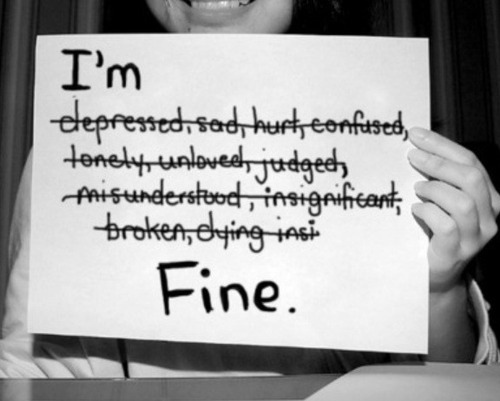
… to not be depressed.

I should have gone into acting. My students and coworkers would be so surprised to learn how tough this past month has been. I have been struggling to write, but honestly? I just cannot. Not yet. (I’m in a bad place, but I will and very soon!) So how blessed and relieved was I to receive permission from a guest writer at Hearing Elmo, to post a narrative she wrote on FaceBook about depression? Ruth Fox has been a friend and fellow “chronic illness warrior” for a good number of years. I have trouble remembering when we first met even and we keep up-to-date on social media. Ruth lives in one of my favorite places… Tennessee. She is a photographer and writer… and a friend who understands invisible illness and disABILITY. 

Before I copy/paste what she has to share, as a reminder: Hearing Elmo is open to any and all who would like to share about this life we live. It can be anonymous, open and transparent, or somewhere in between. 

13012888_10208785574373696_450127612655971788_n

As a survivor of over a decade of profound life threatening depression, my heart goes out to the many people with depression who are struggling through the holiday season.

Depression is a vicious disorder, and not one easily dealt with by the affected individual, their family or friends. Like many chronic disorders, depression can be managed through medication, therapy and healthy mental, social, spiritual, and physical life choices.

Depression continues to be a chronic disorder for me, yet the devastating effects that it’s had on my life are greatly minimized due to my efforts accommodate it, as I have accommodated other physical disabilities.

Depression isn’t the consequence of what happens to us in life. Many of my friends and acquaintances have experienced the worst that life can offer. Yet, though they may be grieving, sad, or very frustrated and alone in their experiences, they don’t struggle with depression. This reinforces the fact that depression is, as scientifically proven, a physical disorder of brain chemistry; not a consequence of life circumstances.

Depression makes all aspects of life more difficult. The jovial atmosphere of holiday celebrations often exacerbates its symptoms. The challenge of coping with depression is similar to dealing with other disabilities; to accommodate it in such a way as to minimize the effect that it has on daily life.

For me, the first step was getting and maintaining medical treatment. Next was determining what life activities reduced my depression symptoms and what ones exacerbated them. Then reorganizing my activities so that they tilted the balance towards helpful activities. This occasionally required abandoning what was considered socially acceptable or traditional, which was very difficult to do at first.

Positive self-talk is an exercise I learned to use regularly, because one difficult depression symptom is the emotional twisting of reality. When depression is out of control, all actions or statements of other people tend to be taken extremely personally. If these are perceived as negative the result can be irrational tears, obsession over disappointments, and self-pity. The effect can be so strong that it paralyzes functionality. One’s sense of confidence and self-worth is often mistakenly placed into the hands of others.

Positive people, who accept the right of other people to do what works for them, even if it was a bit unconventional, are the kind of people my husband Gary and I want to be, and we try to surround ourselves with similar people. Depression isn’t fun, any more than all of other the challenges we face, but it doesn’t have to diminish the quality of life.

Ruth Fox


One-Eyed, One Horn, Flying Purple People Eater

one-eyed-one-horn

Sheb Wooley released a song in 1958 called the “One-Eyed, One Horn, Flying Purple People Eater“. I know this not because I was there (ahem), but heard the song throughout my childhood. If you have never heard this “gem”, you are MISSING OUT. To help fill that void for you, click here for a captioned version: Enjoy

Now I mention this because this song has been going through my head for a solid week. I know! I do have better things to do! However, I’m in the car enough that I tend to fill the time with singing… or maybe BELTING out the OLDIES is a more truthful admission. For some reason, this song is just stuck in my noggin’. It is a song that frankly? It doesn’t make much sense. Maybe it did to Mr. Wooley. Something doesn’t have to make sense to get stuck in our head though. It doesn’t even have to be the truth. It doesn’t even have to be healthy.

Negative Broken Record

Sometimes unhealthy thoughts and labels stick with us because at some important developmental milestone, we heard these negative things enough we have come to believe them. These negative thoughts can turn into self-fulfilling prophecies. These negative, perpetually repeating thoughts can bring us down and keep us in a state of defeat. Experience tells me that a state of defeat = dissatisfied and unfulfilled life.

A get so aggravated when people (and sometimes counselors) say you should erect boundaries with people who tell you negative things that you take to heart. Easier said than done. What if they are family? What if it is someone you work with daily? Most of the time, if someone tells me something negative I try to:

  1. Determine if there is any merit in what they are saying. If so, does it mean I need to change some behaviors?
  2. Determine if I respect the source. Should I spend any time at all contemplating what they’ve said as constructive criticism, or is something I should immediately release as misdirected and poisonous barbs?
  3. Determine the level of influence. Do I work with this person? Is this someone I must see either occasionally or frequently?

Sometimes the “stuck in my playback feature” of my brain are negative comments, labels, or criticisms from people I care about. I can set up a boundary (and have… mentioned below), but I cannot just shut the door and throw away the key (although there is a time for that too… read on!).

I’m no expert in rebuttal of mean insults, however I learned at a fairly young age that “fighting fire with fire” only burned everyone. Frankly, I can stand the smell of scorched material.

I learned that getting defensive often only made me look petty, childish, and well… DEFENSIVE. A defensive stance and demeanor is not attractive on me (perhaps on no one).

I have learned two responses that work for me:

  1. What you have said has upset me. I need some time to regroup and then I would like to talk about what you just said (or called) me.
  2. I don’t believe in labels and discussing things with mean-spirited people. I would love to continue this conversation in a more healthy way when you are ready to do so.

You-re Ugly. You-re Fat. You-re Disabled. You-re Embarassing.

It makes me so sad when I hear people say self-deprecating things, knowing they heard it somewhere else first. Those “stuck in our head” kind of hurtful descriptions are usually hurled from the mouth of someone who claims to love us. It doesn’t always have to be wounding comments either. In my Developmental Psychology course, I ask my students to write down 10 things they have heard from friends and family members about themselves that were hurtful “to date”. It takes most students 10 minutes to write down 10 things; or, about 60 seconds per recalled comment. Then I give them a new piece of paper and ask them to write down 10 things they have heard from friends and family members about themselves that were encouraging, uplifting, and positive. It takes a student three times as long. That’s right. At 30 minutes I call “time” and there are always some who have not been able to come up with a full ten items. What does this tell us? Are humans more prone to remember negative or positive?

Negative comments are like wounds. They may cause us to bleed and to fester. Maybe infection sets in as well and our wounds begin to affect other body parts. Negative comments leave scars. No amount of vitamin E, cocoa butter, or cell activator products will remove the scar. Sure! Both time and perhaps counseling and support can reduce the visibility of scars, but the scar remains.

Positive comments seep into the skin slowly. Yes, perhaps our ears are the conduit, but our hearts are what build up our self-esteem. Dr. Barbara Fredrickson (OCDE.US, 2016), explains that there is a 3:1 ratio of necessary positive to negative comments to equalize the impact. In other words, for every negative comment you hear and take to heart, it may take three positive comments to remove the potency and harmful effects of the negative comment.

Permanent Brick Walls

Sadly, there are times when you must love yourself enough to initiate self-care in building a permanent brick wall to toxic people. It isn’t easy. There may be a price tag. You may alienate others who are affected by your choice. You may become the target for people who insist that forgiveness AND reconciliation are mandatory. My friends? There are times that this is a small price to pay compared to the continued damage a toxic person may deliver.

If they are incapable of remorse and change, who will protect us? Though it may sound attractive at our low points, putting out a hit on the toxic person is not a good choice. If we do not permanently dis-allow them opportunities to harm us, who will? When I have had to do this, I do so with heavy heart. However, I also do so knowing my children are looking to me for an example. Cuz ya know what? They are going to have toxic people in their lives. When I disassociate with a poisonous soul, I do so knowing that younger adults learning to live with acquired disability or illnesses are watching me.

It Doesn’t Take a Gift of Words

I don’t know about you… but I want to be a part of the group that is telling another something positive, uplifting and encouraging, and genuine. I want to be a part of the THREE that helps to cancel out the negative things another has heard and believed. All day–each and every day–I look for opportunities to say positive, genuine things to others.

“You look great in that color!”

“Wow, look at how well you did on this exam!”

“You always have the greatest things to say during class discussions”

“Thank you for emailing me about your current crisis. You are so responsible in that and I want to help you”

To people I know who are differently-abled:

“Those running lights on your wheelchair are freaking AWESOME!”

“You have the best hearing of anyone I know” (to a student with vision loss)

“You’ve told me about your personal demons. I love how you bravely and courageously face life with a smile”

“I love how Milo (my service dog) loves you. He must sense what a caring person you are to seek you out each class period”  (to a student with recent TBI who is still coming to terms with new challenges)

That’s All Fine and Dandy – But I Cannot FORGET

Yup. I can determine to be part of the solution (instigator of the positive in the 3:1 ratio), and still have STUCK negative comments playing over and over in my head. “♫ ♪ This is the song that never ends, yes it goes on and on my friend. Some people started singing it, not knowing what it was, and they’ll continue singing it forever just because… ♫ ♪ ”

So what’s a person to do?

  1. Surround yourself with people who are positive contributors. You may not be able to pick your family and have tough choices to make about boundaries, but we can pick our friends. Make wise choices.
  2. Learn self-talk. “With practice, you can learn to notice your own negative self-talk as it happens, and consciously choose to think about the situation in a more realistic and helpful way” (Martin, 2016, para. 5).
  3. Be realistic about extremes and over-generalizing. I love these 7 “steps” to eliminating negative thinking. Check them out here: CLICK
  4. Affirm yourself. CUTE VIDEO of a little girl saying all the right things in 50 seconds: CLICK.  Perhaps talking to yourself in the mirror has fallen out of style (but should it have?). Regardless, we can learn to dispute that negative STUCK phrase in our heads. You gotta identify it first, then figure out where it came from, decide if it is true, decide how you want it to CHANGE, and then do #3 above. And hey… if preachin’ at yourself in the mirror helps? Go for it!

I leave you with the challenge to be someone’s 3. Be the positive, uplifting and affirming influence for another individual. Make it genuine (no lying… who does that help? I never say something positive I don’t mean/believe) It may take some practice. You have to learn to be watchful and observant. May God grant me the opportunity to be the 3 for someone! That these comments may re-play in a person’s head with the frequency of one-eyed, one horn, flying purple, people-eaters? Well, color ME PROUD.

Denise Portis

©2016 Personal Hearing Loss Journal
Fredrickson, B. (2016). The magic ration of positive and negative moments. Retrieved November 8, 2016, from https://www.ocde.us/PBIS/Documents/Articles/Positive+$!26+Negative+Ratio.pdf

Martin, B. (2016). Challenging Negative Self-Talk. Psych Central. Retrieved on November 10, 2016, from http://psychcentral.com/lib/challenging-negative-self-talk/


Let It Go – Or It’ll Kill You

img_3382

I am home today grading papers, writing my dissertation, and doing laundry. I love laundry.

No. Really! I love laundry!

So needless to say, I’m in my “happy place” today in spite of some sprinkles, high humidity, and lots of wobbles. Heck. I didn’t even put on make-up.

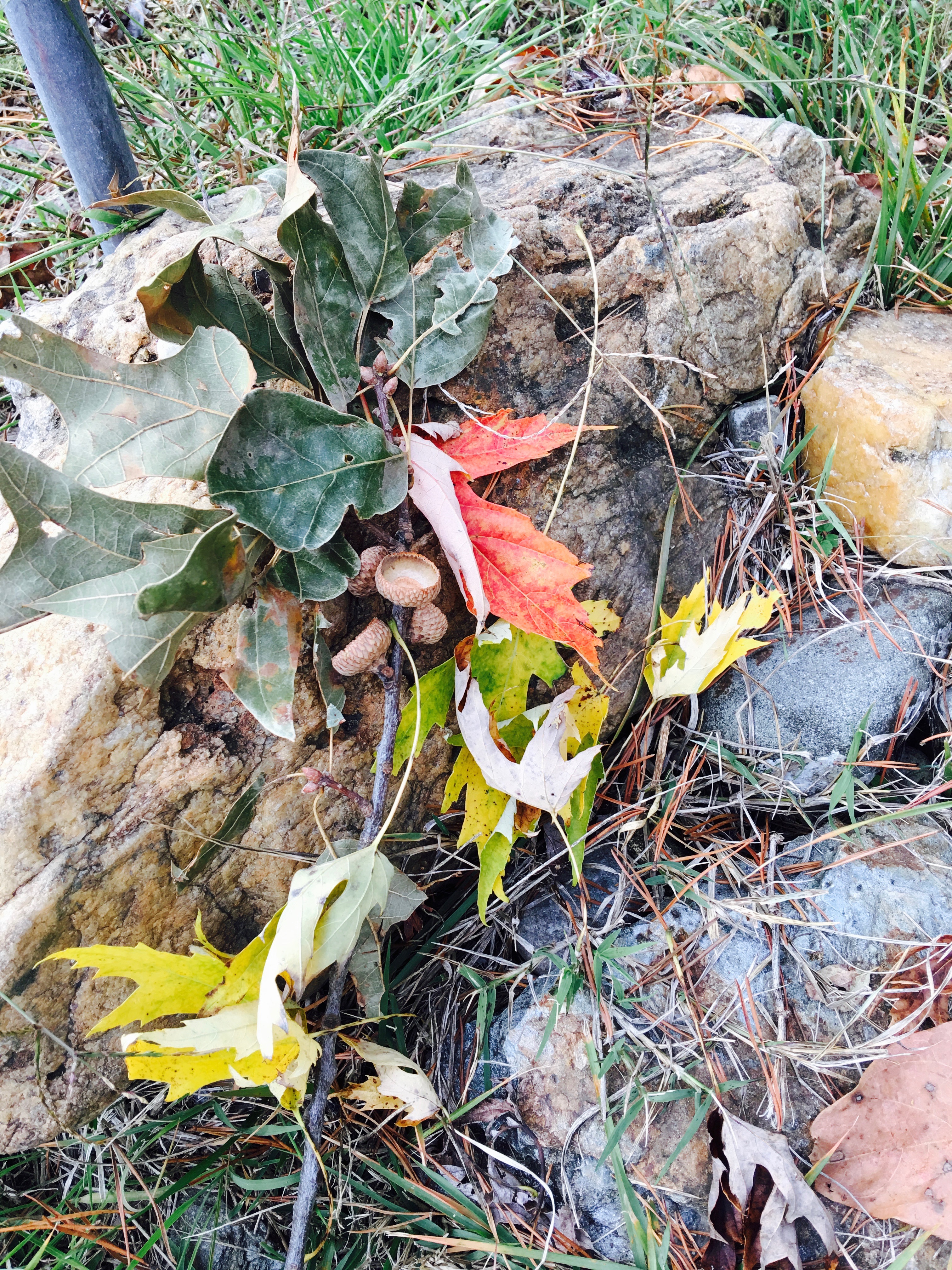
This morning around 7:30, I noticed this cluster of acorns by the pond. They were still on the branch (and at the time, INTACT), surrounded by some pretty Autumn leaves. I thought, “Wow. That’s kinda purty. I’ll bring my camera out later and take a picture“.

Fast FOR..W….w……w…ard……….  2 hours:

The next time I took the dogs out I grabbed my iPhone and thought to myself while springing the screen door open with a flourish,

  1. Deb will be so proud.
  2. I, too, can spot beauty.
  3. Hope the showers hold off.
  4. Did I skip breakfast? (Just keeping it real…)

I got out to the pond and searched first for the ROCK, then for the little oak tree branch with acorns. The picture above is what I found. Every single acorn gone, y’all.

I looked around a bit thinkin’… I must be in the wrong spot. The thing is? There are only so many rocks around the pond! Besides! Right there was the wee little branch, surrounded by perhaps a few more leaves, with ZERO acorns on it!

Do you know I had to sit down a second and ponder on it? I mean… what in the world happened in two hours?

img_3383

Well a clue, was that this guy <points up> was very, VERY interested in the wee little branch. He sniffed and snuffed. He circled around the spot. He sniffed some more. Then he lay down next to me and continued to sniff while I slowly but surely turned my investigator meter off.

A critter! It had to be. Something sly and sneaky… something small and (evidently) smelly… something HUNGRY was here.

Sigh. I stood up and brushed myself off thinking, “Let it go, Denise. Let it go!” It’s not like I could glue some acorns back on the twig and make it work (though I DID think about it long and hard). “You missed this photo opportunity. Let it go, Denise. Let it go.”

Now, I’m fully aware that most of you have launched into song. Your arms are flung wide, you twirled at least ONCE, and you are belting out, “Let It Go” for all you’re worth. Raise your hand if you’re guilty…

Do you know I have not seen “Frozen“? Oh, I have seen the video of the song, and numerous other parodies. I’ve seen adorable videos on FaceBook of folk’s kiddos singing the song as if it were their own. Needless to say, after I looked up the lyrics for the first time (necessary when you hear a song and are trying to make out the words with a hearing loss), I wasn’t that impressed. I mean, “The cold never bothered me anyway” was SPOT ON for this cold-weathered girl. The rest of the lyrics are kinda harsh, IMO. No worries. I’m not getting ready to dissect and demonize the lyrics to a favored song.

Why Letting It Go – is GOOD

hold-your-breath

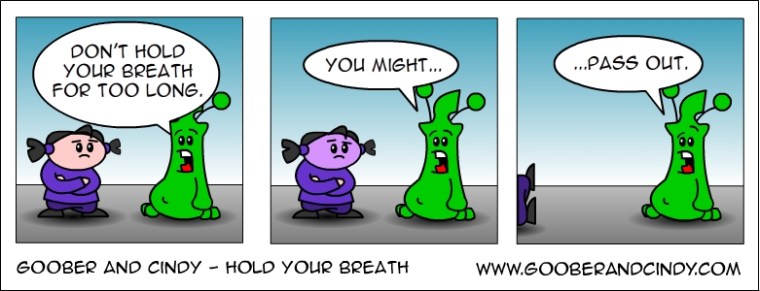
I hold my breath. I do so,

… when I’m concentrating

… when I’m nervous

… when I’ve just fallen

… when I’m about to fall

… when I have panic attacks

… when I’m afraid.

That’s right. I have excellent diaphragm control and lung capacity. (Not really… I just pass out a lot). Any-WHO, I learned to “let it go”; my breath, I mean. I was chanting “let it go” before Disney made the phrase famous. (Sorry, Disney… I checked the published date for the song).

Don’t you wish we could “let it go” as easily as a breath being held? I get a little disgusted when people tell someone to “let it go” when they are hanging on to something they need to let go of to be free.

Perhaps you are waiting for an apology that will never happen. 

Someone hurt you and you are still waiting for them to make it right.

A complete loser made your life miserable for years, and you still hear their voice in your head.

You are so accustomed to things going badly, you are in a perpetual state of waiting for the other shoe to drop. 

You cross your fingers and wait for God to finally punish someone who really needs punishing.

You wait around for the Cubs to win the World Series.

Let it go. The problem with holding your breath – AND – holding on to things like this, is that a state of increased tension and anxiety only harms YOU. It’s like a burning feeling in your lungs. Holding on to things like this can harm your health. Blood pressure, mental health, heart disease, and many other conditions are affected by “holding on”.

Forgiveness is one of the hardest things in the world for me. Yet, I have been forgiven for so much. Pretty arrogant, aren’t I? Forgiveness became easier when I realized it didn’t mean I had to pretend something didn’t happen. It did and it hurt. However, holding on to grudges, bitterness, and anger was only hurting ME (not them). “Forgiveness doesn’t mean that you deny the other person’s responsibility for hurting you, and it doesn’t minimize or justify the wrong. You can forgive the person without excusing the act. Forgiveness brings a kind of peace that helps you go on with life” (Mayo Clinic, 2014, para. 4).

I recognize that part of the human existence is missing opportunities, forgiving others, and learning to “let it go”. One of my favorite songs (To Forgive by Al Denson) can be found HERE. I’m not saying it is easy.

You know what, though? As a differently-abled person who also struggles with depression and anxiety, I have learned that holding on to stuff only makes my life more difficult.

And I can do without more “difficult”.

So if I can be proactive about my own health and lay the groundwork for having more good days than bad… simply by “letting go”.

Whoosh….

That’s what an exhale sounds like.

Mayo Clinic (2014). Forgiveness: Letting go of grudges and bitterness. Retrieved October 30, 2016, from http://www.mayoclinic.org/healthy-lifestyle/adult-health/in-depth/forgiveness/art-20047692

Denise Portis

© 2016 Personal Hearing Loss Journal

 

Crappy Life Lessons

img_2567

I’ve had to force myself to log onto “Hearing Elmo” and write SOMETHING.

Anything!

I don’t like for too much time to go by and not be writing. Writing, blogging, and “talking to you” is important to me. I learn from you. I hope we learn from each other.

Misinterpreting

Saturday, October 1st, on her twelfth birthday, we said goodbye to Chloe, my first assistance dog. She retired in May of 2015. Chloe was diagnosed with Transitional Cell Carcinoma in August of this year.

I’ve started this post 8 times (and yes, I counted). The first couple of drafts were angry and mean. One draft was scary. Others were tearful and frankly? Were so full of random thoughts and words, the grammar itself forbade me from hitting “publish“.

Shame and Blame

lane-graves

On June 14, 2016, little Lane was killed by an alligator at Walt Disney World resorts. Like many who read his story, my first thought was, “Where the heck were his parents, and how in the world does something like this happen?”

Erin S., a friend of mine, fairly quickly put me in my place–and rightly so. Why do we immediately judge what we do not know?

  1. We are shocked by something.
  2. We are heart broken.
  3. We look for someone to blame.
  4. … as if that makes it better.

We cannot ever know the “whole story”. We simply are not privy to that. There is a backstory to every tragedy and every loss. Little Lane was killed as the result of an tragic (freak) accident and he cannot be placed back into the arms of those who loved him. Why do we search for who is to blame? Sometimes, folks?

Sometimes life just sucks.

img_3148

Facebook is a wonderful place; especially for the differently-ABLED community. It is a place where technology levels the communication playing field. I have re-connected and strengthened friendships. I have “met” people in this venue I may never meet face-to-face. Last week, however, I “unfriended” and “blocked” 34 people I didn’t really know. Getting one to two messages a week, led me to believe they were simply out to get a “rise”. Many posted publicly and I exercised my right to DELETE. Haters gonna hate.

I created a public page for Chloe’s last chapter to raise awareness about an organization I love, Fidos For Freedom, Inc. I wanted to share what being a puppy raiser, sponsor, and trainer for service dogs was like. I wanted to share information about the valuable resource (even MINISTRY) of therapy dogs. I wanted to share how one dog changed my life and brought me back into the world of the living after a self-imposed isolation.

When bad things happen, we tend to look for answers or worse-someone to blame. After only reading the public “cliff notes” of Chloe’s life, I was lambasted by people for making the wrong decision.

  1. You should get a third opinion. You could treat this and prolong her life an entire year!
  2. How could you let her live the last month of her life this way?
  3. OMG. It’s just a dog. Surely you have something better to do.

Now these are folks I don’t know and you are open to these kinds of messages when you go “public” with anything. I don’t mind blocking folks who just look for ways to get people riled. I fully trust that those who know me and know my husband Terry, trusted US to make the best and most humane decision for a furry family member. (More than that… a retired partner).

politics

Ah. It’s an election year. It’s getting nasty out there in FaceBook land, isn’t it? Yet those I actually do know, I allow to post whatever they want on FaceBook. I may not click “like”. We may agree. We may disagree. More than anything though I hope we are the kind of “real” friends to agree to disagree… and love each other anyway.

I love Culture of Empathy’s website. I don’t agree with everything they post, but their message is powerful. Empathy is defined as, “identification with and understanding of another’s situation, feelings, and motives”. Empathy does not mean you may fully agree with them.

Y’all?

We can love one another and show kindness and compassion without having to acknowledge that an important connection and relationship is the equivalent of being identical twins. I love my husband and best friend, Terry, but the man is an idiot sometimes (albeit a sweet one). I do not agree with everything he says, believes, or “votes”. Yet, I respect everything he says, believes and votes and fully support him because I love him and he is my friend.

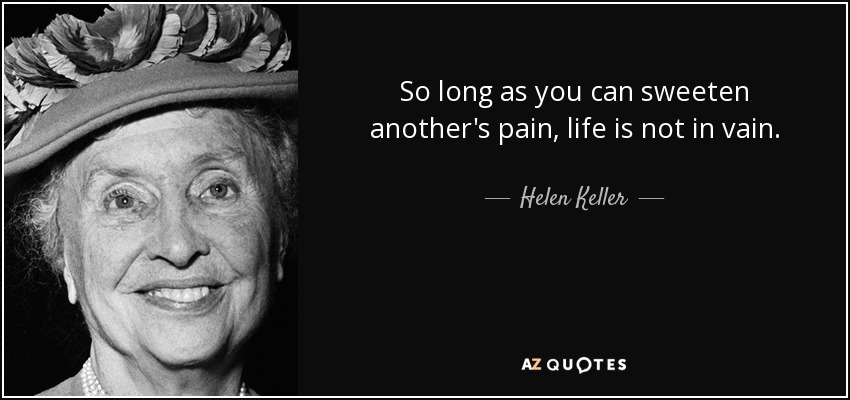
The Bible does not actually use the word “empathy” anywhere, yet it is inferred. It does use the word compassion numerous times. Compassion can be defined as “a feeling of deep sympathy or sorrow for another who is stricken with misfortune, accompanied by the strong desire to alleviate the suffering.” Especially when someone is faced with a critical decision or experiencing heart ache, can I not support them with compassion? How does judgement, argumentative jabs, and insistence they agree with ME, help? It doesn’t. It only shows I lack compassion and kindness.

helen-keller

I’m not perfect. But…

I want to be perfectly committed to being kind, being loving, and making a difference. I may not always agree with you, but if we have the kind of relationship that we can talk about disagreements with respect and kindness, and walk away still close friends? I count myself BLESSED.

Crappy Life Lessons

So a crappy life lesson? Sometimes when grieving and in pain, people are gonna kick you when you are down. Sometimes when important decisions need to be made, folks are going to call into question my own character for an informed and personal choice. I’m gonna love you anyway.

For you see? Love isn’t love if it changes on a whim and because someone disagrees with you. I believe the world would be a better place if our first thought when getting up in the morning was,

“How can I make a difference today? How can I show kindness?” 

Hold me accountable.

Denise Portis

© 2016 Personal Hearing Loss Journal
Can You Be Arrested for That?

My favorite cane...
My favorite cane…

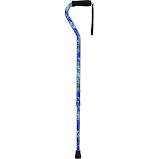
I have friends who are police officers. One, Carl, is actually chief of police for a district in our area. I see him most Sundays, and tomorrow I plan to ask him, “Can you be arrested for that?” I love his sense of humor and he and his wife, Pam, are two of my favorite people. Though I know he will be witty, I also know he will be straight with me. Anything that pertains to the law, he’s gonna be frank with me.

Maybe I should back up though, and tell you the story? <grin>

First of all, I’m really tired. I could list you dozens of citations that link differently-abled people with fatigue and insomnia. I’m usually good about listing all those for you, but honestly there are over 26,000 articles since 2012 alone. (Yes… I counted, or rather Google scholar did!). But I digress…

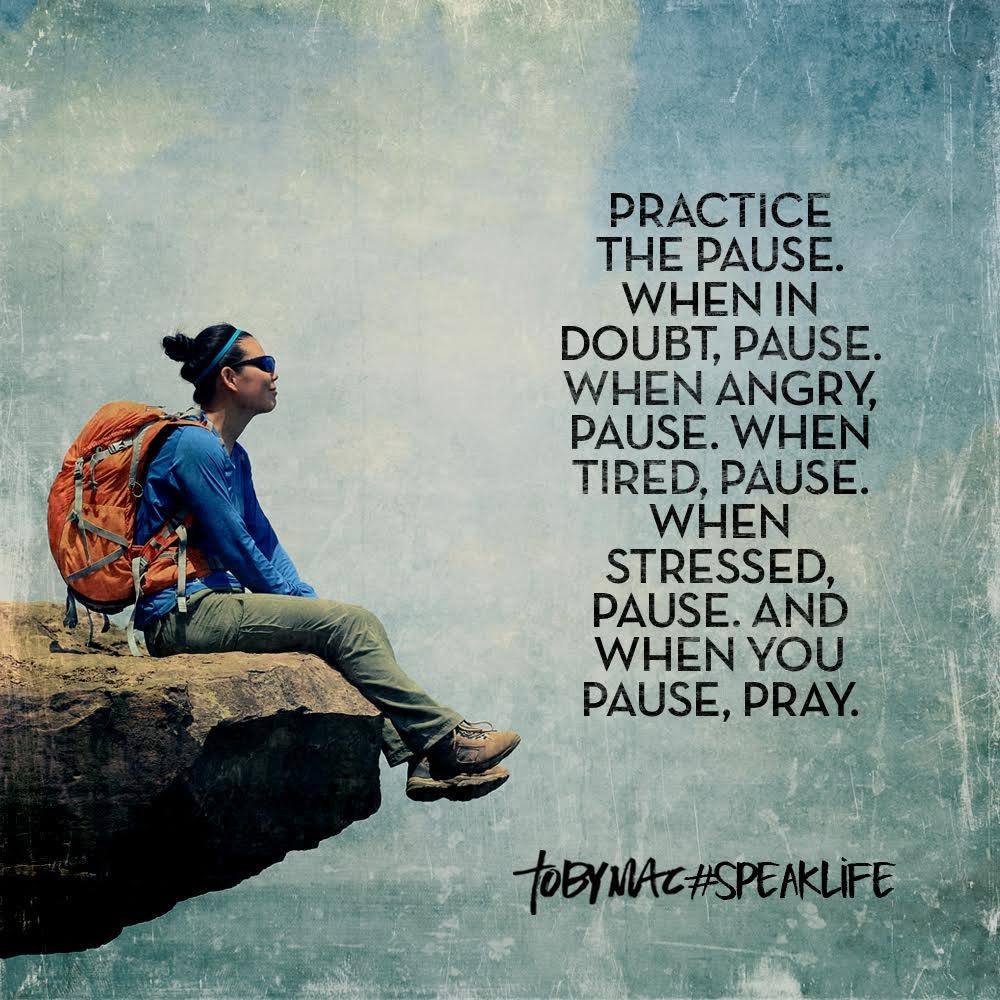
When I’m tired I have a little more trouble filtering what I say. I am much more apt to just say the first thing on my mind. I’m trying to live with the “pause – respond” method (thanks for that Toby Mac post, Helen), and being mindful of not saying the first thing that comes to mind really helps. When I am tired though, I’m less likely to turn that filter on.

I have a dog in hospice care at home (sweet, retired Chloe), and I am very likely involved in way… too… much. Finishing my dissertation, teaching four classes, volunteering at a number of places; the list goes on an on. Just color me tired. This tired woman, with turned-off filter, entered Giant grocery store on Thursday. Milo-bear (my current service dog from Fidos For Freedom, Inc.) was tired as well as we had just completed a long training at the county police academy and he had a fairly long demo (that he NAILED). I only needed to get a few things, and so encouraged Milo for a last push before heading home.

When I’m tired, I wobble. <ahem> Ok. I wobble all the time. However, I wobble MORE when I am tired! I had one of the smaller carts, Milo, cane, and enough time that I did not need to rush. This didn’t seem to matter. I was a mess. I even wobbled when I moved my field of vision from one shelf to another. Being late-deafened, I do not always hear things in a big, cavernous store with lots of tile and hard surfaces. I turned suddenly, and almost plowed into a man standing there shopping with one of those hand baskets. He threw up his hands and watched me wobble, screech (just a little), and grab for everything stationary in my vicinity.

No face plant (this time). I whooshed out a breath of air, and locked eyes with him and was getting ready to say, “Wow. That was close“. He beat me to airtime, however.

“Well you are more than a little pathetic today, aren’t you?” with a grin and twinkle in his eyes.

Now… I’m late-deafened. I often mishear things. My husband could tell you a thousand stories about WHAT I THOUGHT I HEARD. He’s one of the few voices I can hear on a telephone, and has never let me live it down when he called and said, “Dinner at six?” I misheard and thought he said, “Dinner and sex?” Maybe inside I was thinking, “yes, please“, mature adult that I was said, “Excuse me…?” Yeah. That one has been hard to live down.

So this smiling man with a twinkle in his eye standing there waiting for me to respond, may NOT have said, “Well you are more than a little pathetic today, aren’t you?” I had to give him the benefit of the doubt.

Maybe he said “phonetic“. Eh, likely not since I only screeched and had not said anything.

Maybe he said “poetic”. I could dream.

Maybe he said “prophetic“. Perhaps he sensed I was getting ready to assault him.

To clarify, I said, “Ummm, pathetic?”

“Yes”, he replied, “because you….” his voice cut off because at this point? I had my cane raised.

I poked him with it. HARD. “I’M pathetic? You’re the pathetic piece of humanity standing there making snide comments about people who are a little different than you!” 

He rubbed his chest where I poked him, mumbled something that I’m not EVEN gonna pretend I heard well or understood, and wandered off. I sat there hyperventilating.

Milo-bear looked up at me like, “Are we done yet?” cool as a cucumber. Me? My cucumber was fried.

As I stood there wobbling and taking deep, calming breaths, I gave myself a pep talk that the guy likely just had a poor choice of words. He seemed friendly, nice even. I’m sure he didn’t mean the way it sounded… the way I took it. I even had the grace to ask God that if He brought me face-to-face with the man later in the store, I would apologize and try to explain how his comment made me feel. Thankfully, I did NOT run into him, because… well I wasn’t really wanting to apologize.

Yes. I should have just moved on, or perhaps even “only” blasted him with my “how pathetic are YOU” rebuttal. I need to keep my cane to myself. (Can you tell I am preaching to myself?) Who knows why he chose the words he did. I make poor choices all the time.

And I do mean ALL the time.

So perhaps I need to practice the “pause method” even more:

13661858_10153727086711179_5341764973726458521_o

Denise Portis

© 2016 Personal Hearing Loss Journal

 

Coping with Disability

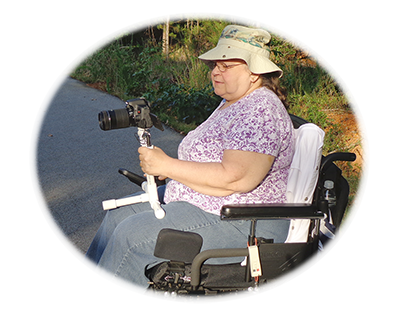
Always such a privilege and joy to welcome guest writers to “Hearing Elmo”… especially those who have made an impact on my own life! Ruth’s blog can be found at: http://foxbuds.com/default.html  

coping-with-disability-ruth

Succeeding at being functional, in spite of major disability, requires acceptance, attitude control, and accommodation. For approximately a half year, the extreme energy challenges that defines my disability took a vacation. I went from using a wheelchair to walking a mile independently. My wheelchair was actually forgotten, and it sat unused for several weeks. Feeling so energized, I worked to increase independence and exercise. Walking in a nature park; to and from the mailbox (long city block of considerable elevation grade); to and from study groups and services at church; and during shopping became frequent occurrences. Even bi-weekly lap swimming was added to the exercise mix. Restricted time limits on activity seemed to have dissolved. I came to expect unlimited energy and endurance.

Then, as quickly as it arrived, my disability “vacation” was over. Independence and exercise became challenging; fatigue and weakness unmerciful. Within a couple of hours after awakening, my day’s energy supply was gone. Being stubborn, I let failure define my course of action. Signs of exhaustion were ignored, functioning became extremely challenging and “mito crashes” began to occur frequently. During these mito crashes, I have trouble thinking and focusing; my speech sometimes slurs; word recall fails resulting in multiple unfinished sentences; there are unexpected falls when walking; muscles feel like they are made of wet cement; sitting up is painful as gravity alone is too heavy; my heart pounds and beats become irregular; and even breathing takes effort. My unwillingness to respect my body’s inability to produce needed energy, resulted in an unnecessarily low quality of life.

To find any degree of functionality, I first had to let go of stubbornness, pride and the perception that my disability would become a focus for those around me. It is uncomfortable when people express sympathy, or question my use of accommodations again, particularly my wheelchair. Yet, when I was finally forced to go back to using my wheelchair, which is the most visible accommodation that I use, people paid very little attention to it. Everyone around me was used to seeing me in a wheelchair, it just had been a while since they had seen it. As trivial as it may seem, it wasn’t much different than people failing to notice a haircut, or new glasses.

The hardest part of a disability is figuring out which accommodations give you the greatest amount of functionality. In this day and age of high technology, canine assistance, and ADA accommodations, it is amazing the level of functionality one can reach regardless of how severe the disability. Today, a person with hearing loss/deafness has so many choices that they can make to communicate at a distance, turn speech into text, or become aware of changes in their immediate environment; a person with vision impairment/blindness has choices that
they can use to replace print, locate navigational barriers, and obtain independent transportation; for a person with a mobility impairment there is considerable access to public and even private buildings, and accessible transportation; a person with a medical disability such as diabetes, epilepsy, or compromised respiration has options of implantable medication delivery, service animals that can predict impending medical crisis, and portable treatment equipment. It is true that barriers aren’t completely eliminated by accommodation, however it is a rare person that isn’t “barrier challenged” in some way, even without a specific disability diagnosis. Technology and access will slowly, but surely, improve over time.

Accommodating my disability this time around, was easier. Everything I need for my disability barriers is already in place; I just have to use it. Also having an extremely creative and supportive husband, who is so willing to do whatever is needed to help reach an acceptable quality of life, is a huge benefit as a disability affects everyone; it’s a family affair. All that was needed was for me to stop fighting against declining energy and to start working to make the best use of the limited energy I had left.

A person with disability can accept their personal limitations and find appropriate accommodations, yet not be successful due to attitude. Anger, bitterness, and continuous frustration over the limitations of public disability access is the fastest route to an attitude of entitlement. This is a personality disability; as limiting as any physical disability. It becomes a barrier to self-advocating. It prevents a person with disability from being part of the solution, by sharing what works, as well as what doesn’t work. An entitled personality is counterproductive to legislation, research, and development of new options, as frustration and anger slows the process down. An entitlement attitude keeps a person from finding or accepting alternate ways to bridge specific barriers.

My goal is to express gratitude for every barrier that is reduced or removed, and find my own solutions when I can. Yes, frustration gets the best of me sometimes, but as with everyone else, I am a work in process.