
Apocalypse

apocaylpse 2

My husband teases me about my addiction to apocalyptic movies. I’ve seen so many, and new ones come out each year! My husband assumes that the reason I love them is that I do have a pessimist’s soul. I’ve tried hard to change this and I’m certainly more optimistic at “almost 50” than I was at “almost 30”. However, that “end-of-the-world” vibe is not why I love apocalyptic movies. I love them because normal people rise to the challenge and become real heroes. One I recently saw was “San Andreas Fault”. Even though it was a good movie, “The Rock” (the leading actor) is not a “normal person”, nor did he play a normal hero. (At least his acting has improved over the years…) My favorite “end-of-the-world” movies are those in which folks with normal jobs “rise to the occasion” and discover who they really are in the midst of turmoil, tragedy, and overwhelming odds.

Coincidence, or Logical Comparison?

Each semester, one of the extra credit options I offer to my students is called, “disABILITY for a Day“, or d4D. I co-advise S.O.D.A. (Students Out to Destroy Assumptions), a student club focused to raise awareness and advocate for disability populations. In the extra credit opportunity, the students must “take on” one of a list of pre-selected disABILITIES. We limit what they can choose, so that students are not taking on a disABILITY that may perpetuate a stigma, such as a mental health disorder. The choices are hearing loss, vision loss, mobility (ambulatory) challenges, and fine motor skills. Students are provided with ear plugs, or an eye mask, encouraged to borrow crutches, walkers, wheelchairs, or they can tape one or both hands into a sock to limit their fine motor skills. We ask that the students take precautions… no driving, or trying to work off campus; if vision loss… secure a sighted guide for the day, etc. Students must:

  1. Complete a class rotation with their disABILITY
  2. Answer 10 essay questions and read an article about living with disABILITY
  3. Write a reflective essay on their experience (or a video testimonial).

I was quite surprised that five students from four different classes used the same phrases in their reflection assignment. To my knowledge, these students do not know each other. Here are the similar wording or phrases used in response to the question, “What was the most difficult part of being disABLED for the day?”:

  1. “felt alone”, “if this were for real it would be like the end of the world”
  2. “I became invisible, no one even looked at me”
  3. “It was like the apocalypse happened. It was surreal, walking around in a world that completely ignored your existence. I felt like I had the plague”.
  4. “It’s like a bomb went off and I was the last person standing. I have never felt so alone”
  5. “Even my professors ignored me. I felt so alienated. It felt like the end of the world or something.”

When I see similar phrases showing up, I take notice. Is it just a new way young adults are explaining isolation, discrimination, and stigma? Interestingly, in essays this year, many of the students reflections included seeing a person they knew with disABILITIES with “new eyes”. Many were convicted to do a better job reaching out and including those who are differently-abled. One student shared, “I go to class with a girl who has fine motor [skill] challenges. I chose to tape up my hands for my disABILITY. She was so excited to see what I was doing and gave me advice during class [about] note-taking and doing a team activity. She always has a smile and doesn’t try to hide her issues at all. I admire her so much. If I ever develop disabilities, I want to be like her”. 

I’m so glad I grade essays at home. I read similar accounts from other students… a new awareness about what life is like for those living with what was their chosen disABILITY — only 24/7. I can’t tell you the number of times I cried at my desk. Not happy tears, and not sad tears. It was more of a WHEW tears.

WHEW. They get it.

I’ve never met a person with special challenges who WANTED those challenges. One of my students is legally blind. I was talking to him last year, and we got to talkin’ about acquired disABILITY. He didn’t lose his sight until his 20’s, which is when I began to lose my hearing. We discussed how we respond/think when people say how much they admire us now. He said, “Geesh. At no point did I say, “SIGN ME UP for being blind”. I didn’t ASK for this. You accept, adapt, and go on”. Isn’t that a terrific, healthy way to respond to challenges?

I (proudly) serve on my county’s Commission on Disability Issues and immerse myself in various local, state, and federal advocacy groups. Do you know that I am surrounded by heroes? Normal people with normal lives, forced to accept and adapt to significant issues. It may not seem like the apocalypse occurred – or that the end of the world is near. But… I can tell you that it can be hard. This doesn’t mean folks who are differently-abled or face significant daily challenges need Academy awards, fan clubs, or media coverage. We don’t want/need to see our “name in lights”, or for people to tell us how wonderful we are. Simply:

Include us

Befriend us

Hug us

Hire us

Believe in us

Advocate for us

Advocate? That’s right! The most important advocacy force comes from self-advocacy. However, peer advocacy, system advocacy, and legal advocacy are all highly effective forms of advocacy.

A new year is right around the corner. May I challenge you to try something in 2016? Advocate on behalf of another. Thomas and Bracken (1999) argue that peer advocacy is one of the strongest types of advocacy. You may find opportunities at work, church, or standing in line at the grocery store (check out video). You may be able to advocate at a local coffee shop (see video), or be able to participate in hiring panels. Just make sure it is advocacy that is WANTED. Be careful to avoid embarrassing someone, or advocating in a negative way. If you have the opportunity to advocate on behalf of another, I’d love to hear from you!

Thomas, P. F., & Bracken, P. (1999). The value of advocacy: putting ethics into practice. The Psychiatrist, 23(6), 327-329.

Denise Portis

© 2015 Personal Hearing Loss Journal
Making the Difference – in ONE

calf feeding

I grew up on a working farm. I’ve learned to add that “working” part, for after I moved to the “big city” I discovered that many people have what is called a “hobby farm”. I loved growing up on a farm, but can’t say I’ve ever considered it a HOBBY.

Growing up, I had a lot of responsibilities that included various kinds of farm work. Probably one of my least favorite chores was baling alfalfa; in part, because I was highly allergic! Sneeze at the wrong time, and the bale of alfalfa was suddenly on top of you, or worse… several piled up and rolling off the flatbed truck. I can’t tell you how many times my aggravated Daddy had to stop the truck, wait for my siblings and I to reload some scattered bales… all because I sneezed at the wrong time.

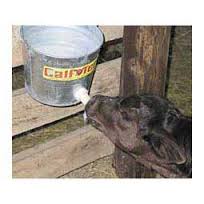
One of my favorite responsibilities was feeding the baby calves. We always had some wee calves that required bucket feeding. The picture shown is not my own calf, but it was the same kind of bucket. Now-a-days, buckets are plastic or are big “bottle-shaped thingie-majiggers”. We had these old-fashioned (but serviceable) metal buckets. In the beginning, I hated the chore. If the school bus comes at 7:40, that means all chores had to be done early. I’m talkin’ cock-a-doodle-doo early. I wasn’t a 5 o’clock in the morning kind of kid, and I’m still not that kind of adult.

We used powdered formula for the calves. Some were orphans, some were adopted from feed lots, and some were separated on purpose from mama if the calf was unlucky enough to be born to one of our milkers. The powdered formula smelled horrible. Ugh. We mixed it with hot, HOT water. In this way, by the time we carried the buckets to the barn, it was still warm for the calves. The calves drooled all over the place. Occasionally, they would head-butt the bucket (like they would their mama) and if you weren’t prepared (or had fallen asleep against the fence post), formula went everywhere and you started all over.

I’m not fastidious. I can stand dirt under my fingernails and getting my hands messy. However, returning to the house every morning covered in calf drool and formula, had me grumbling and complaining big time. My dad would let me whine and complain. He is a very quiet guy. When he did open his mouth to talk, we all practically stood in awe to see what he was going to say. It was always rather profound. One morning after listening to me bellyache, he said, “Denise, have you ever thought about how important you are to that calf?”

Well… Dad didn’t expect an answer. He had already walked off. I stood there digesting that though and I must have thought about it the rest of the day. I think I must have thought about it all the way up ’til I went to bed that night. The next morning, I awoke with a new attitude about those calves.

They needed me. They were pretty low on the “totem pole” as far as value on the farm. However, if I didn’t feed them, they were goners. For all intensive purposes, I was their mama. That morning I noticed as I walked out to the barn that the calves were all standing by the fence waiting… for ME. Likely, they always had! However, I was so busy grumblin’ I never noticed. As I set the buckets on the fence to give them one more good stir before turning them around for the hungry bovines, I noticed the calves were mooing softly and actually wagging their tails. They were expectant. They knew they needed me and that I could provide what they needed. I remember throwing my legs up and over the top rail so that I could sit and put my weight on the bucket guards to keep them from being butted to the ground. Now that my attitude was different I was seeing these calves in a whole new light. So… I started singing.

That’s right. I sang to the calves. Over the following eight or nine years, calves heard me bellowing out every 80’s tune I could think of and even some 70’s tunes as well. I sang, and I sang, and I sang. My entire outlook and attitude towards these calves had completely changed because I discovered they needed ME. At this point, you are probably wondering, nice story… but what exactly are you trying to say?

PIVOTAL MOMENTS

I truly believe that it was at that point I realized, even someone like me can make a difference. I was just a young farm girl. I had few aspirations. Yet, even *I* could make a difference – perhaps in the life of something rather lowly (and drooly), but I could still make a difference.

Do you know I believe some of my panic at 25-years-old, with the realization my issues were progressive, was that I was afraid I would no longer be able to make a difference? I’ve been forced to adapt to increasingly progressive “differently-abledness”. However, those early lessons made an impact. A “nobody”, farm girl could make a difference to a calf. Surely, a differently-abled woman could still find a way to make a difference!

Don’t get me wrong… I’m no super hero. As a matter of fact, I cringe a little when someone at work stops me and tells me “You inspire me!” I’m thinkin’, “Girl? I’m no inspiration. I’m ordinary. I’m just me. I didn’t sign up to only hear bionically, and learn to walk a semi-straight line with a vestibular disorder!” Everything about my life is rather ordinary. Sure, I have challenges, but the fact of the matter is, WE ALL DO.

I wake up each morning thinking, “I want to make a difference for ONE, today” (well… and I’m also singing 80’s tunes – some habits die hard). Perhaps this is what “trips up” folks who live with disability or chronic illness. They may have convinced themselves they have to do something rather profound to make a difference. You don’t. You can make a difference with something as ordinary as smiling. Kraut & Johnston (1979) wrote a fascinating article on research they did on unspoken messages and their impact. Smiling is actually an emotion-filled message that you send – perhaps to someone who needs that message.

Guinness (2003) wrote a book, “The Call”. I believe we each have strong, in-born desire to have a purpose. Sometimes, we mistakenly believe we are too broken, too busy, too much of a “farm girl” to have a purpose; to make a difference.

Wrong.

For some reason, folks think they have to impact the world to make a difference. Making a difference, MAKES A DIFFERENCE, even in the life of ONE. Aknin et al., (2013) recently completed some fascinating research pointing to how much good it does an individual to make a difference in the life of one person or in one way. There are physical, psychological, and emotional benefits to making a difference… also called prosocial spending (Aknin et al., 2013). You may feel you have limitations, but having the opportunity and capability of making a difference is not one of them.

This has completely changed my outlook on my own life. I can make a difference.

… and so can you.

I love the lyrics to this song (hey! I warned you earlier I’m an 80’s tunes kind of person). The Oak Ridge Boys got this one right:

Did I Make a Difference?

I’m caught up in the push and shove
The daily grind, burning time, spinning wheels
I wonder what I’m doing here
Day to day, year to year, standing still

Somewhere there’s a teacher with a heart that never quits
Staying after school to help some inner city kids
A mother who’s a volunteer, a soldier in the fight
I can’t help but ask myself when I lay down at night

Did I make a difference in somebody’s life?
What hurts did I heal? What wrongs did I right?
Did I raise my voice in defense of the truth?
Did I lend my hand to the destitute?
When my race is run, when my song is sung
Will I have to wonder, did I make a difference?
Did I make a difference?

I’ve been working hard to make a living
And forgetting what true living is
Taking more than giving, something’s missing
Lord, how long can I go on like this?
There’s a lonely old man down the street
And I should be ashamed
I’ve never been to see him, I don’t even know his name
There’s kids without their supper in my own neighborhood
Will I look back someday and say that I did all I could?

Did I make a difference in somebody’s life?
What hurts did I heal? What wrongs did I right?
Did I raise my voice in defense of the truth?
Did I lend my hand to the destitute?
When my race is run, when my song is sung
Will I have to wonder, did I make a difference?
Did I make a difference?

When my race is run, when my song is sung
Will I have to wonder, did I make a difference?
Did I make a difference?
When my race is run, when my song is sung
Will I have to wonder, did I make a difference?
Did I make a difference? Did I make a difference?

———–

Denise Portis

© 2015 Personal Hearing Loss Journal

Aknin, L. B., Dunn, E. W., Whillans, A. V., Grant, A. M., & Norton, M. I. (2013). Making a difference matters: Impact unlocks the emotional benefits of prosocial spending. Journal of Economic Behavior & Organization 88, (1), 90-95.

Kraut, R. E., & Johnston, R. E. (1979). Social and emotional messages of smiling: An ethological approach. Journal Of Personality And Social Psychology, 37(9), 1539-1553. doi:10.1037/0022-3514.37.9.1539

Where the People Aren’t

"I Wanna Be Where the People Aren't"
“I Wanna Be Where the People Aren’t”

I recently saw the above picture on FaceBook, and since I love “The Little Mermaid”, (and because I know cats can be SO “offended”), I found this VERY funny.

As an Introvert, I often want to be where the people AREN’T. I, and most Introverts, love people. However, folks misunderstand what an introvert, and extrovert are.

Heck.

There is even a newly labeled “blend” for those who exhibit both introvert and extrovert tendencies (lest others think we have multiple personalities, or Dissociative Disorder). Evidently an Ambivert, is one who has both characteristics, often in dependence on their role in that specific environment.

The difference between an Introvert and Extrovert, however, is simply how a person prefers to RECHARGE. It has nothing to do with whether or not they like people. Extroverts recharge by being around others. Introverts recharge by being alone.

All this thinking about “versions” had me contemplating how each dimension is effected by acquiring a disability. As a person who is differently-abled, my mind just “goes there” automatically when I think about personality characteristics. Who copes “better” with acquired disability? An Introvert or Extrovert (or Ambivert)?

“Version” affect

Interestingly, research shows that people who are extroverted are more likely to acquire a disability that limits mobility or results in chronic pain (Malec, 1985). Evidently extroversion can be equated with higher risk behavior and decisions that may result in injuries associated with motor loss/coordination or chronic pain. Introverts, too, are diagnosed with acquired disability, but often with diagnoses that are “non-traumatic” (Malec, 1985). This doesn’t mean Introverts are not involved in motor-vehicle accidents, or risky behavior that results in injury. The research simply shows that extroverts are more likely to choose activities that could result in these types of disability. Frustrated in my search for information regarding “version” types and acquired disabilities more like my own — those that are the result of genetics and/or “unspecified contributors” for deafness and Meniere’s disease, I continued searching the research databases.

I came across an interesting study by Noonan et al., (2004), called, “A Qualitative Study of the Career Development of Highly Achieving Women with Physical and Sensory Disabilities”.

BINGO.

I figured I hit the jackpot with this search and find! What I discovered, however, has nothing to do with a connection between “version” types and successful coping with acquired disability. According to Noonan et al., (2004), successful coping includes  “developmental opportunities (education, peer influences), family influences (background and current), disability impact (ableism, stress and coping, health issues), social support (disabled and nondisabled communities, role models and mentors), career attitudes and behaviors (work attitudes, success strategies, leadership/pioneering), and sociopolitical context (social movements, advocacy)” (p. 68). The difference between those who successfully cope and are extroverted and those who successfully cope and are introverted, centers around social support. An extrovert is more likely to identify and ask for help from any peers or individuals within their environment and in so doing actively engage in demonstrative advocacy. Introverts are more choosy about who they enlist support from, but are often “background” advocates. This is supported by research from Ellis (2003) in findings that include the difference in how extroverts and introverts enlist support, openly or privately – respectively.

“Version” Types and Assistive Technology

Having lived with special challenges for more than 31 years, I have had the (privileged) opportunity to meet hundreds of individuals who are differently-abled. Networking through organizations such as Fidos For Freedom, Inc., Assistance Dogs International (ADI), the Hearing Loss Association of America (HLAA), the American Association of People with Disabilities (AAPD), and numerous other organizations, I have met both extroverts and introverts who cope well — and some not so well — with acquired disability.

Some discouraging research does suggest that extroverts are more likely to use assistive technology and devices (Johnson, 1999).

This sucks.

I struggled for so many years with invisible disabilities and challenges, that my “epiphany” moment of changing that… making the invisible very visible, still gives me psychological goosebumps. My introverted life changed when I determined that I would embrace technology and assistive devices. I use bright canes, an assistance dog, bling up my cochlear implant and have informative brochures with me wherever I go. You’ll notice I didn’t say my introverted self became extroverted. I’m aware of and fully accept who I am – an introvert. Yet, using assistive technology and devices (and canine) has dramatically improved mitigating my own disabilities. Extroverts are more likely to seek “tools” early on in a diagnosis that incorporates an acquired disability (Wressle, Samuelsson, 2004; Kintsch & DePaula, 2015). Once introverts determine that the benefit of using assistive technology and devices improves quality of life, they, too, are able to embrace tools that improve life with the downside of making them (perhaps) more noticeable.

In closing, can I just say, “I LOVE PEOPLE”? We are different yet, are alike. We react to things differently and yet similarly. We all love dogs. 

Cuz… well, that just makes sense.

Denise Portis

© 2015 Personal Hearing Loss Journal
Ellis, A. E. (2003). Personality Type and Participation in Networked Learning Environments. Educational Media International, 40(1/2), 101.

Johnson, D. (1999). Why is assistive technology underused? Library Hi Tech News, (163), 15-17. Retrieved from http://search.proquest.com/docview/201534320?accountid=14872

Kintsch, A., & DePaula, R. (2015). A framework for the adoption of assistive technology. Retrieved on November 24, 2015, from http://citeseerx.ist.psu.edu/viewdoc/download?doi=10.1.1.124.3726&rep=rep1&type=pdf

Malec, J. (1985). Personality factors associated with severe traumatic disability. Rehabilitation Psychology, 30(3), 165-172. doi:10.1037/h0091027

Noonan, B. M., Gallor, S. M., Hensler-McGinnis, N. F., Fassinger, R. E., Wang, S., & Goodman, J. (2004). Challenge and Success: A Qualitative Study of the Career Development of Highly Achieving Women With Physical and Sensory Disabilities. Journal Of Counseling Psychology, 51(1), 68-80. doi:10.1037/0022-0167.51.1.68

Wressle, E., & Samuelsson, K. (2004). User satisfaction with mobility assistive devices. Scandinavian Journal Of Occupational Therapy, 11(3), 143-150 8p.

Does Not Play Well With Others

play

I hesitate to even post about this topic because I’m sure to get a little backlash about this viewpoint. Because of that, you will see interspersed throughout this written confession, links of scholarly evidence and citations to peer-reviewed articles that will lend a little more credence to what I’m about to say. I don’t want it to be just an opinionated article, after all!

Confession: I Don’t Play Well With Others

Now if my mother is reading this, she is likely “nodding her head in agreement” but that is because her clearest memory of me is the bossy older sister, not at all afraid to confront people (they call me Vina Jewell Jr. in my family), and stubbornly opinionated. However, when you grow up in a small farming community and go away to college, there isn’t much chance your mother will be able to get to know the adult you’ve become.

Don’t get me wrong. Mom and I talk weekly. But a FaceTime call is a great deal different than seeing someone day in and day out. However, the fact that I don’t play well with others as an adult has nothing to do with the negative characteristics I hope to have left far behind me in my childhood.

As a 49-year-old woman who readily identifies as being differently-abled, “playing” often means quiet, reflective time, or interactions where I’m present but only “just”–in that I do not have to interact with those around me. For example, my husband and I will watch a movie together once in awhile. I’m a reader. I write. I research (by choice and not because I’m a doctoral student). I love sitting on the deck and staring out into the woods. I love to cuddle with my dogs.

Now some who read that last paragraph may think that I don’t like people.

Wrong.

I love people, and enjoy interacting with others. I believe anyone I work with will tell you that I am an eager team player who throws herself into volunteer work with passion and gusto. You see… I WORK well with others. Outside of class, I proudly advise three different student clubs and participate in a number of faculty/staff committees. I love this work. I love the people I work with, too. However, I’m working – not playing. I’m one of the lucky ones in that as a person who is differently-abled, education is a great career. People with skills, training, and education in other types of careers are not as lucky. Many people with disability or chronic illness find that in their chosen career they face both exclusion and discrimination (National Disability Strategy Consultation Report, 2009). I am extremely grateful to be a part of the education community, for I rarely face these issues.

So what’s the deal with my not “playing well with others”? Well you see? The things I mentioned earlier that are ways I unwind, decompress, relax, and “flourish in my happy place”, very few people are willing to do alongside me. (And that’s ok…) I have a few friends that will “hang out with me” and “play” with no expectations. We do not have to do a whole lot of talking. We just “are” – and are comfortable in silences and quiet places. The problem is that none of these friends live near me.

Hearing Loss and Background Noise

It may be different for folks with other types of challenges. As a person with hearing loss, I can tell you that one of the biggest barriers to living a happy and productive life alongside of others, is background noise. Some folks think that background noise is the same thing as white noise.

It’s not.

White noise is a steady (and unremarkable) buzz of sound. If you are as old as I am, it would be like the “snow” sound on a television channel currently off the air. When I was a kid, my older brother and I would sometimes be allowed to stay up watching TV, and we’d eventually fall asleep. When I awoke, the television screen would have “snow” with a buzzy kind of static-like noise. Background noise, on the other hand, is any extraneous sound that is heard while trying to monitor a specific sound. For folks with hearing loss, that specific sound is SPEECH while trying to screen out other sounds (and perhaps voices) from the environment. If I could burn calories for every minute I communicate with others in the normal world, I would not be 25 pounds overweight.

Background noise is the enemy of people with hearing loss. This noise even diminishes our ability to concentrate and form both short-term and long-term memories (Rugg & Andrews, 2009). Kenneth Henry (Neubert, 2012), postdoctoral researcher at Purdue, uses the analogy of numerous televisions. For folks with normal hearing, it would be like turning on a dozen television sets on different channels and asking the individual to concentrate on one show. It’s hard. It’s not at all enjoyable. It’s not something someone would ever do by choice.

Yet people with hearing loss must consciously make the choice to reach out to others, invest their time, energy, and focus just to communicate! It’s hard to communicate in a world full of background noise. It’s worth it. It keeps us from being isolated. It keeps us connected to others. It may keep us productive and working. There is a price to pay, however. The price tag is limited options for “play time”. In order to completely eliminate the WORK in listening, one needs a quiet environment. Friends tend to text one another with suggestions such as:

“Hey! Want to meet at Ruby Tuesdays after church today and eat together?”

“Let’s go shopping!”

“There’s a meet-up at the local Starbucks for mom’s frustrated with their adult children. You should come!”

“A dozen or so of us are going to go walking at the park with our dogs. You should come along!”

“We are all going to go get a pedicure! We are meeting at 2 PM”. 

This is not my kind of “play time”. Now occasionally (OK… I’m exaggerating – RARELY) I will go out and do some of these things. However, there are very few people I can ask to participate in what I really consider “fun”. Even when I go out with friends from Fidos For Freedom with individuals who have various disabilities it is hard. When you do not hear well, you can be isolated even when amongst folks who really understand disability. Folks with hearing loss “play” differently.

“Hey girl! Come over and sit on my deck and watch the squirrels in the trees with me, will ya?”

“I know this great place in the woods near my home where two streams converge. It’s a great place to sit and read a book. I’ll bring the bug spray!”

“Let’s go sit by the Chesapeake and pet our dogs while we watch the ships go by…”

Having a hearing loss as an adult – even when it is “corrected” by hearing aids and/or cochlear implant, the individual is certain to have a co-morbid  auditory processing disorder. This creates all kinds of communication issues that make it extremely difficult to enjoy communicating. According to Whitelaw (2015) “These types of communication issues may include difficulty hearing in less than optimal listening situations, reliance on visual information to augment auditory information, a reduced appreciation of listening to music, and difficulty understanding speech when the speaker is unfamiliar” (para. 1).

I have special programs on my cochlear implant that reduce background noise and allow me to zero in on the person right in front of me. I rely on these programs. (There have actually been times in extremely noisy environments, that I swear I hear better than my normal hearing counterparts). Even with this wonderful technology, I still have to concentrate. It’s not fun. It’s not “play”. It requires recovery time later. Is it worth it? 

Well if it wasn’t, I would never leave home… and I leave home a great deal and for a variety of reasons. Just because I CAN doesn’t mean it is easy. I’ve been alive long enough to know that important things are not always easy.

How to “Play” with Someone with Hearing Loss

If you know someone with hearing loss, please allow me to provide some “playing pointers”. You will note that these activities often revolve around just being in the presence of each other. They are activities that do not require dialogue every second of your chosen “together time”.

  1. Board games: It’s OK, to laugh and “chit chat” over a great board game. But… turn off the TV. Don’t have background music going. If there are more than two people playing the board game, don’t have individual conversations. Every spoken word is meant for everyone present. This keeps the person with hearing loss from having to deliberately ignore the sound of a conversation not meant for them. Please don’t think that people with hearing loss can enjoy “game night” with a big crowd. The folks in my small group at church had a “game night” (with all in the family invited) one night and my first thought was, “just shoot me now“.

2. Books, reading, and discussion: Book clubs are great! That is… if the discussion group is meeting in a quiet setting while discussing the chapters that week. Sitting in the food court of the mall and discussing what you read that week = NOT A GOOD IDEA. If you like to read, ask to spend some reading time with a person with hearing loss. You read; you don’t talk. It is difficult to express how meaningful it is to simply be in the presence of another.

3. Walks, hiking, boating, and other “outdoorsy” stuff: These activities can be great for folks with hearing loss. However, many trails and parks and lakes have become very populated. This means that the person with hearing loss may have trouble hearing you if they cannot see your face. Imagine kayaking with a person with hearing loss. If the kayaks are facing each other they will do great. This also means you won’t get anywhere because two kayaks facing each other cannot move. So enjoy the time together but don’t try to tell them all about the problems you’ve been having at work. Enjoy the hike. Enjoy the quiet of the walk. Enjoy the sound of the paddles hitting the water – and the far distant sounds of other folks out on the water.

4. Movies: I’m a “hearing again” person. This means that I can go to a movie, watch it, understand it, and give it a Siskel and Ebert “thumbs up” or “thumbs down” vote — just like everyone else. This doesn’t mean I can converse about the movie as we exit with the crowd. This doesn’t mean I can walk all the way to the parking deck and discuss everything we loved about the movie. Give me a safe place to stop moving. Allow me to concentrate on the conversation.

5. Gardening, Fishing, or ART: I love gardening, though do precious little of it I’m afraid. I had a great little “deck veggie garden” this year but wondered why I didn’t feel the thrill of it like I experienced it years ago. I concluded it was because I wasn’t pulling weeds alongside my father. I realized I wasn’t thinning plants while with my grandmother just three plants over. Be willing to spend some quality quiet time gardening with a person who doesn’t hear well but enjoys getting down in the dirt.

Fishing can be a great activity.

Art, too, can be a great opportunity to spend some time with an artsy hard-of-hearing person.

Some great resources: LISTENING IS EXHAUSTING.

SOCIALIZING WITH HEARING LOSS.

Not Hearing Loss – but “OTHER”

What if your challenges are not hearing loss. People who live with disability, chronic illness, and visible or invisible health problems may still “play” differently.

As a person with a balance disorder, I cannot go to the fair at the county fairgrounds and “play”.

I cannot walk to the park and “swing” on the swing set while discussing heart-to-heart issues.

If you want to spend time with someone who has specific challenges, ask them what they like to do and meet them where they are – within the parameters of what is “fun” for them. They may have a really hard time meeting you for some “play time” when it will be WORK for them. Ask how to accommodate them. I promise you that they really do enjoy being with you.

L. Denise Portis

© 2015 Personal Hearing Loss Journal

Polygamy and Practice

polygamy and practice

Do you know how many times polygamy has cropped up in my conversations? It’s super easy for me to hazard a guess because I have NEVER had a conversation about polygamy. I don’t watch “Sister Wives”, and know very few Mormons (and those I do – do not practice polygamy). So why… WHY would I bring the word up in a chance encounter? *shaking my head at myself*

I’m a creature of habit. I go to the same stores and the same restaurants. I’m super scheduled and my electronic calendar is near and dear to my heart. I’m color-coded. I’m organized.

Therefore, it’s no surprise that I tend to run into the same people at the places I frequent. I have shopped at the same grocery store for almost four years. You tend to run into some of the same people when you frequent a store. When you go everyplace with a service dog, it makes you rather unforgettable, especially with children. It’s no surprise that I see some of the same children in stores who have been curious about and thrilled with Chloe as I shop.

It shouldn’t have surprised me that a little boy I have seen a half a dozen times or more stopped me to ask about my dog. My new partner is Milo, a black shepherd/lab whose appearance is completely different than that of Chloe. Here is a recent photo of both Chloe (retired) and Milo (current). The picture isn’t that great which reminds me I need to work on getting some more “3 musketeers” shots!

Service Dog Bookends

This little boy that I see occasionally (whose name I DO NOT know – which embarrasses me as he knows my service dog’s name), looked at me with big eyes and said, “Where is Chloe and WHO IS THAT?” (Ya gotta love kids)

I replied, “Oh, this is my new service dog, Milo. Chloe is retired now and is at home sleeping on the couch”.

He looked very solemn and said, “So she still lives with you?”

“Oh yes“, I said. “She will always live with me. It’s just that Milo is my new partner!”

He was quiet for a second or two and said, “So it’s like you are divorced and Milo is your new service dog?”

I was so astonished by the seemingly change in topic I stuttered out, “Well… ummm…. no, not at all. Chloe and I aren’t divorced. I guess it’s more like polygamy and both dogs live with me now!”

The little guy look TOTALLY CONFUSED, and I glanced up to see the HORRIFIED LOOK on his mother’s face. Ever want to just slap your hand over your mouth? I knew as soon as I said it that it was 1) totally inappropriate, 2) would take the mother all day to explain to her son, and 3) completely “off the wall”.

I made a mess of trying to back peddle (for people with balance disorders can do precious little BACKWARDS), and hurriedly made my way down the next aisle.

I stood in the international food section fussin’ at myself and nearly in tears for using such a poor analogy around a 6-year-old. I determined then and there I needed to PrAcTiCe PrAcTiCe PRACTICE what to say in response to “where’s Chloe and who is THIS?”

Part of Good Advocacy is Practiced Responses

Being a good advocate and representative of “whatever ails ya” means you have good responses when someone asks questions. I have learned the HARD WAY, that these responses need to be rehearsed. When you are taken by surprise by either well-meaning, curious people or rude, snarky trouble-makers, you want to have a measured, helpful reply so that you advocate in a positive and helpful manner. I have found that if I don’t have a “canned response”, I tend to match the tone and demeanor of the person asking. This means that sometimes I am pleasant and in “teacher mode”, with great responses that educate and advocate on behalf of the disability community. However, other times I’m waving my cane in a curmudgeon’s face and informing them in no-uncertain terms how horrible they are.

At Fidos For Freedom, Inc., (where I trained for now – TWO – service dogs), we practice how to respond when encountering access issues. If you have a service dog, it is not a matter of IF you have access issues, rather WHEN you have access issues. It is easy to get flustered. It is easy to get mad. It is easy to say the wrong thing. Practice makes it much easier to respond with something that will actually help you and others like yourself.

Doesn’t it Suck that Many of the Rude Ones are “Kin”?

What is even harder is when the person acting incredulous and skeptical is someone you know well or are even family. I’m lucky that I have a very supportive spouse and adult children. Even so… it is hard to love someone with a chronic condition. Once in awhile, my husband (or kids) do not filter what they are saying, because they, too, are sick and tired of Meniere’s disease. I’m 100% certain my husband has rehearsed responses to commiserate appropriately so that he doesn’t spend the night on the couch.

(Holding an ice pack on my cheek, or head), “I’m so tired of falling and staggering around! What I wouldn’t give for just one day of no vertigo!”

“It must suck, honey!” is the rehearsed response so that “Yeah, I’m getting tired of taking off work to take you to the E.R.” doesn’t slip out.

It can really hurt when someone who knows you better than others “opens their mouth and inserts foot”. I recommend that even support people practice and learn how to deliver sympathy and encouragement.

You Will Still Blow It

Even if you practice measured, helpful responses to personal questions, you are still going to blow it from time to time. A couple of Sundays ago I was ticked off at myself for not responding kindly to someone and was thinking, “Denise! You’ve had this diagnosis for 2 decades! Exactly WHEN is it gonna become HABIT?”

I sit during the worship service. It isn’t because I cannot stand. Folks are surprised when they learn that at work, I stay standing for very long periods of time. I actually MOVE very easily and with very little wobble. It’s standing still that is the problem. My world turns… counter-clockwise when I’m standing still. I love my church. They are very supportive of people who are differently-abled. We have a loop system in the auditorium for people with hearing loss. We have fully accessible bathrooms and classrooms. We have an elevator and a lift for people with mobility issues. In spite of this, I’m forced to sit during the worship service. My church puts the words to the songs on the wall using a projector. We have a beautiful stage and lights as well. The song lyrics are in a multi-media slide show with patterns, colors, movement and lights. Everything is color-coordinated and changes song to song. The freaky OCD person in me is in awe every Sunday. It’s gorgeous! But… I can’t stand. If I do, I’m fighting consciousness. It isn’t a problem, for I don’t mind sitting. I’m comfortable and SAFE. I learned that not everyone understands why I’m sitting, however.

An elderly person came up to me at the beginning of the service and asked me how to access the hearing loop in the auditorium. I removed my cochlear implant and hearing aid and demonstrated how to switch to t-coil. I get this question about once a month and I’m always glad to educate. I love the hearing loop and it has dramatically transformed church for me. I love answering questions to help others access this wonderful technology. So wasn’t I surprised by the encounter, but totally floored by the follow-up question:

“So why are you seated during the music? I’m way older than you and even I can stand!”

I don’t know if it was the environment, the timing, or the unexpectedness of the question, but can I tell you … I really took it wrong? I could FEEL the tension creep up my spine and I was mentally counting to ten and trying to diffuse the explosion about to spew out of my mouth. THIS ONE I hadn’t practiced for. I hadn’t run any scenarios through my head and out through my heart filter to answer a question like this appropriately. So I didn’t.

“Wow. That was really, really mean. We’re done,” I said. The person looked startled, then uncomfortable and walked away. I think the last action was because I’m certain my look was murderous. I mean… I was MAD. (I later apologized).

Folks are gonna take you by surprise once in awhile. You will hear an insensitive comment from someone you weren’t expecting it from and it will just shock you into silence (if you are lucky) or cause you to say something you regret. It is best to be prepared.

Ummm… WHY SHOULD I?

Maybe you are thinking that if people are going to be insensitive and inconsiderate, that “why should I temper what I say in response?”

Since we are on the subject… here are some “canned responses”:

1. You don’t want to sink to their level.

2. You need to be the mature one.

3. Kill ’em with kindness.

4. In the end, you advocate for all of us.

5. Honey attracts more bees than vinegar.

Well.

I happen to love vinegar. I mean… don’t get me started on pickles. There are few things I love more. Let’s be honest though… from someone who is differently-abled to someone who may also live with acquired disability, chronic illness, or invisible issues, “WHY should we be careful in our response?”

(sigh)

Because it’s the RIGHT thing to do. Sucks, don’t it? I can tell you from experience though that it is much better to answer correctly and watch someone else squirm, than to have to apologize for “going off” on someone. Go practice, my friends! You’ll be glad you did!

Denise Portis

© 2015 Personal Hearing Loss Journal