
Where the People Aren’t

"I Wanna Be Where the People Aren't"
“I Wanna Be Where the People Aren’t”

I recently saw the above picture on FaceBook, and since I love “The Little Mermaid”, (and because I know cats can be SO “offended”), I found this VERY funny.

As an Introvert, I often want to be where the people AREN’T. I, and most Introverts, love people. However, folks misunderstand what an introvert, and extrovert are.

Heck.

There is even a newly labeled “blend” for those who exhibit both introvert and extrovert tendencies (lest others think we have multiple personalities, or Dissociative Disorder). Evidently an Ambivert, is one who has both characteristics, often in dependence on their role in that specific environment.

The difference between an Introvert and Extrovert, however, is simply how a person prefers to RECHARGE. It has nothing to do with whether or not they like people. Extroverts recharge by being around others. Introverts recharge by being alone.

All this thinking about “versions” had me contemplating how each dimension is effected by acquiring a disability. As a person who is differently-abled, my mind just “goes there” automatically when I think about personality characteristics. Who copes “better” with acquired disability? An Introvert or Extrovert (or Ambivert)?

“Version” affect

Interestingly, research shows that people who are extroverted are more likely to acquire a disability that limits mobility or results in chronic pain (Malec, 1985). Evidently extroversion can be equated with higher risk behavior and decisions that may result in injuries associated with motor loss/coordination or chronic pain. Introverts, too, are diagnosed with acquired disability, but often with diagnoses that are “non-traumatic” (Malec, 1985). This doesn’t mean Introverts are not involved in motor-vehicle accidents, or risky behavior that results in injury. The research simply shows that extroverts are more likely to choose activities that could result in these types of disability. Frustrated in my search for information regarding “version” types and acquired disabilities more like my own — those that are the result of genetics and/or “unspecified contributors” for deafness and Meniere’s disease, I continued searching the research databases.

I came across an interesting study by Noonan et al., (2004), called, “A Qualitative Study of the Career Development of Highly Achieving Women with Physical and Sensory Disabilities”.

BINGO.

I figured I hit the jackpot with this search and find! What I discovered, however, has nothing to do with a connection between “version” types and successful coping with acquired disability. According to Noonan et al., (2004), successful coping includes  “developmental opportunities (education, peer influences), family influences (background and current), disability impact (ableism, stress and coping, health issues), social support (disabled and nondisabled communities, role models and mentors), career attitudes and behaviors (work attitudes, success strategies, leadership/pioneering), and sociopolitical context (social movements, advocacy)” (p. 68). The difference between those who successfully cope and are extroverted and those who successfully cope and are introverted, centers around social support. An extrovert is more likely to identify and ask for help from any peers or individuals within their environment and in so doing actively engage in demonstrative advocacy. Introverts are more choosy about who they enlist support from, but are often “background” advocates. This is supported by research from Ellis (2003) in findings that include the difference in how extroverts and introverts enlist support, openly or privately – respectively.

“Version” Types and Assistive Technology

Having lived with special challenges for more than 31 years, I have had the (privileged) opportunity to meet hundreds of individuals who are differently-abled. Networking through organizations such as Fidos For Freedom, Inc., Assistance Dogs International (ADI), the Hearing Loss Association of America (HLAA), the American Association of People with Disabilities (AAPD), and numerous other organizations, I have met both extroverts and introverts who cope well — and some not so well — with acquired disability.

Some discouraging research does suggest that extroverts are more likely to use assistive technology and devices (Johnson, 1999).

This sucks.

I struggled for so many years with invisible disabilities and challenges, that my “epiphany” moment of changing that… making the invisible very visible, still gives me psychological goosebumps. My introverted life changed when I determined that I would embrace technology and assistive devices. I use bright canes, an assistance dog, bling up my cochlear implant and have informative brochures with me wherever I go. You’ll notice I didn’t say my introverted self became extroverted. I’m aware of and fully accept who I am – an introvert. Yet, using assistive technology and devices (and canine) has dramatically improved mitigating my own disabilities. Extroverts are more likely to seek “tools” early on in a diagnosis that incorporates an acquired disability (Wressle, Samuelsson, 2004; Kintsch & DePaula, 2015). Once introverts determine that the benefit of using assistive technology and devices improves quality of life, they, too, are able to embrace tools that improve life with the downside of making them (perhaps) more noticeable.

In closing, can I just say, “I LOVE PEOPLE”? We are different yet, are alike. We react to things differently and yet similarly. We all love dogs. 

Cuz… well, that just makes sense.

Denise Portis

© 2015 Personal Hearing Loss Journal

Ellis, A. E. (2003). Personality Type and Participation in Networked Learning Environments. Educational Media International, 40(1/2), 101.

Johnson, D. (1999). Why is assistive technology underused? Library Hi Tech News, (163), 15-17. Retrieved from http://search.proquest.com/docview/201534320?accountid=14872

Kintsch, A., & DePaula, R. (2015). A framework for the adoption of assistive technology. Retrieved on November 24, 2015, from http://citeseerx.ist.psu.edu/viewdoc/download?doi=10.1.1.124.3726&rep=rep1&type=pdf

Malec, J. (1985). Personality factors associated with severe traumatic disability. Rehabilitation Psychology, 30(3), 165-172. doi:10.1037/h0091027

Noonan, B. M., Gallor, S. M., Hensler-McGinnis, N. F., Fassinger, R. E., Wang, S., & Goodman, J. (2004). Challenge and Success: A Qualitative Study of the Career Development of Highly Achieving Women With Physical and Sensory Disabilities. Journal Of Counseling Psychology, 51(1), 68-80. doi:10.1037/0022-0167.51.1.68

Wressle, E., & Samuelsson, K. (2004). User satisfaction with mobility assistive devices. Scandinavian Journal Of Occupational Therapy, 11(3), 143-150 8p.
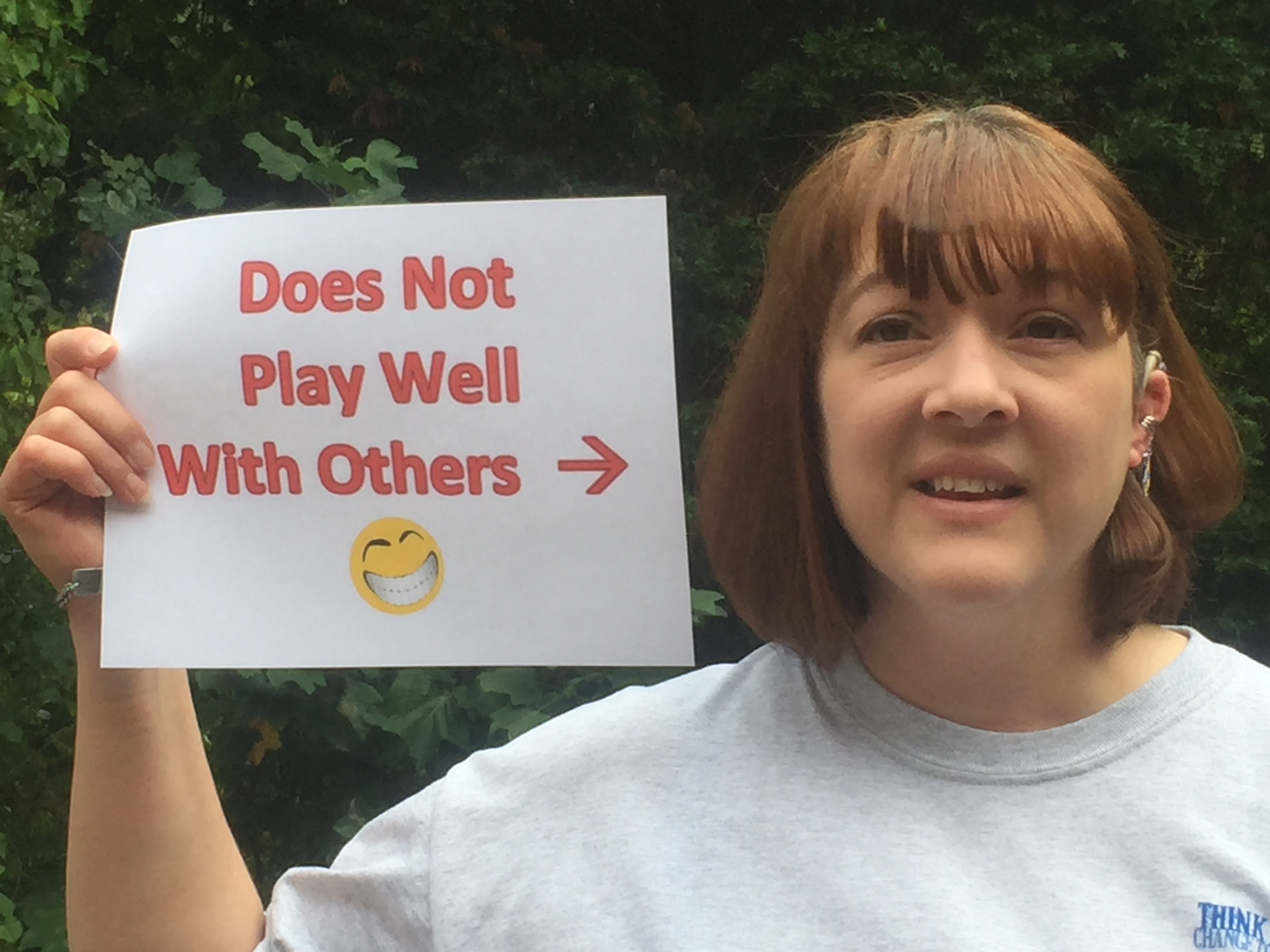
Does Not Play Well With Others

play

I hesitate to even post about this topic because I’m sure to get a little backlash about this viewpoint. Because of that, you will see interspersed throughout this written confession, links of scholarly evidence and citations to peer-reviewed articles that will lend a little more credence to what I’m about to say. I don’t want it to be just an opinionated article, after all!

Confession: I Don’t Play Well With Others

Now if my mother is reading this, she is likely “nodding her head in agreement” but that is because her clearest memory of me is the bossy older sister, not at all afraid to confront people (they call me Vina Jewell Jr. in my family), and stubbornly opinionated. However, when you grow up in a small farming community and go away to college, there isn’t much chance your mother will be able to get to know the adult you’ve become.

Don’t get me wrong. Mom and I talk weekly. But a FaceTime call is a great deal different than seeing someone day in and day out. However, the fact that I don’t play well with others as an adult has nothing to do with the negative characteristics I hope to have left far behind me in my childhood.

As a 49-year-old woman who readily identifies as being differently-abled, “playing” often means quiet, reflective time, or interactions where I’m present but only “just”–in that I do not have to interact with those around me. For example, my husband and I will watch a movie together once in awhile. I’m a reader. I write. I research (by choice and not because I’m a doctoral student). I love sitting on the deck and staring out into the woods. I love to cuddle with my dogs.

Now some who read that last paragraph may think that I don’t like people.

Wrong.

I love people, and enjoy interacting with others. I believe anyone I work with will tell you that I am an eager team player who throws herself into volunteer work with passion and gusto. You see… I WORK well with others. Outside of class, I proudly advise three different student clubs and participate in a number of faculty/staff committees. I love this work. I love the people I work with, too. However, I’m working – not playing. I’m one of the lucky ones in that as a person who is differently-abled, education is a great career. People with skills, training, and education in other types of careers are not as lucky. Many people with disability or chronic illness find that in their chosen career they face both exclusion and discrimination (National Disability Strategy Consultation Report, 2009). I am extremely grateful to be a part of the education community, for I rarely face these issues.

So what’s the deal with my not “playing well with others”? Well you see? The things I mentioned earlier that are ways I unwind, decompress, relax, and “flourish in my happy place”, very few people are willing to do alongside me. (And that’s ok…) I have a few friends that will “hang out with me” and “play” with no expectations. We do not have to do a whole lot of talking. We just “are” – and are comfortable in silences and quiet places. The problem is that none of these friends live near me.

Hearing Loss and Background Noise

It may be different for folks with other types of challenges. As a person with hearing loss, I can tell you that one of the biggest barriers to living a happy and productive life alongside of others, is background noise. Some folks think that background noise is the same thing as white noise.

It’s not.

White noise is a steady (and unremarkable) buzz of sound. If you are as old as I am, it would be like the “snow” sound on a television channel currently off the air. When I was a kid, my older brother and I would sometimes be allowed to stay up watching TV, and we’d eventually fall asleep. When I awoke, the television screen would have “snow” with a buzzy kind of static-like noise. Background noise, on the other hand, is any extraneous sound that is heard while trying to monitor a specific sound. For folks with hearing loss, that specific sound is SPEECH while trying to screen out other sounds (and perhaps voices) from the environment. If I could burn calories for every minute I communicate with others in the normal world, I would not be 25 pounds overweight.

Background noise is the enemy of people with hearing loss. This noise even diminishes our ability to concentrate and form both short-term and long-term memories (Rugg & Andrews, 2009). Kenneth Henry (Neubert, 2012), postdoctoral researcher at Purdue, uses the analogy of numerous televisions. For folks with normal hearing, it would be like turning on a dozen television sets on different channels and asking the individual to concentrate on one show. It’s hard. It’s not at all enjoyable. It’s not something someone would ever do by choice.

Yet people with hearing loss must consciously make the choice to reach out to others, invest their time, energy, and focus just to communicate! It’s hard to communicate in a world full of background noise. It’s worth it. It keeps us from being isolated. It keeps us connected to others. It may keep us productive and working. There is a price to pay, however. The price tag is limited options for “play time”. In order to completely eliminate the WORK in listening, one needs a quiet environment. Friends tend to text one another with suggestions such as:

“Hey! Want to meet at Ruby Tuesdays after church today and eat together?”

“Let’s go shopping!”

“There’s a meet-up at the local Starbucks for mom’s frustrated with their adult children. You should come!”

“A dozen or so of us are going to go walking at the park with our dogs. You should come along!”

“We are all going to go get a pedicure! We are meeting at 2 PM”. 

This is not my kind of “play time”. Now occasionally (OK… I’m exaggerating – RARELY) I will go out and do some of these things. However, there are very few people I can ask to participate in what I really consider “fun”. Even when I go out with friends from Fidos For Freedom with individuals who have various disabilities it is hard. When you do not hear well, you can be isolated even when amongst folks who really understand disability. Folks with hearing loss “play” differently.

“Hey girl! Come over and sit on my deck and watch the squirrels in the trees with me, will ya?”

“I know this great place in the woods near my home where two streams converge. It’s a great place to sit and read a book. I’ll bring the bug spray!”

“Let’s go sit by the Chesapeake and pet our dogs while we watch the ships go by…”

Having a hearing loss as an adult – even when it is “corrected” by hearing aids and/or cochlear implant, the individual is certain to have a co-morbid  auditory processing disorder. This creates all kinds of communication issues that make it extremely difficult to enjoy communicating. According to Whitelaw (2015) “These types of communication issues may include difficulty hearing in less than optimal listening situations, reliance on visual information to augment auditory information, a reduced appreciation of listening to music, and difficulty understanding speech when the speaker is unfamiliar” (para. 1).

I have special programs on my cochlear implant that reduce background noise and allow me to zero in on the person right in front of me. I rely on these programs. (There have actually been times in extremely noisy environments, that I swear I hear better than my normal hearing counterparts). Even with this wonderful technology, I still have to concentrate. It’s not fun. It’s not “play”. It requires recovery time later. Is it worth it? 

Well if it wasn’t, I would never leave home… and I leave home a great deal and for a variety of reasons. Just because I CAN doesn’t mean it is easy. I’ve been alive long enough to know that important things are not always easy.

How to “Play” with Someone with Hearing Loss

If you know someone with hearing loss, please allow me to provide some “playing pointers”. You will note that these activities often revolve around just being in the presence of each other. They are activities that do not require dialogue every second of your chosen “together time”.

  1. Board games: It’s OK, to laugh and “chit chat” over a great board game. But… turn off the TV. Don’t have background music going. If there are more than two people playing the board game, don’t have individual conversations. Every spoken word is meant for everyone present. This keeps the person with hearing loss from having to deliberately ignore the sound of a conversation not meant for them. Please don’t think that people with hearing loss can enjoy “game night” with a big crowd. The folks in my small group at church had a “game night” (with all in the family invited) one night and my first thought was, “just shoot me now“.

2. Books, reading, and discussion: Book clubs are great! That is… if the discussion group is meeting in a quiet setting while discussing the chapters that week. Sitting in the food court of the mall and discussing what you read that week = NOT A GOOD IDEA. If you like to read, ask to spend some reading time with a person with hearing loss. You read; you don’t talk. It is difficult to express how meaningful it is to simply be in the presence of another.

3. Walks, hiking, boating, and other “outdoorsy” stuff: These activities can be great for folks with hearing loss. However, many trails and parks and lakes have become very populated. This means that the person with hearing loss may have trouble hearing you if they cannot see your face. Imagine kayaking with a person with hearing loss. If the kayaks are facing each other they will do great. This also means you won’t get anywhere because two kayaks facing each other cannot move. So enjoy the time together but don’t try to tell them all about the problems you’ve been having at work. Enjoy the hike. Enjoy the quiet of the walk. Enjoy the sound of the paddles hitting the water – and the far distant sounds of other folks out on the water.

4. Movies: I’m a “hearing again” person. This means that I can go to a movie, watch it, understand it, and give it a Siskel and Ebert “thumbs up” or “thumbs down” vote — just like everyone else. This doesn’t mean I can converse about the movie as we exit with the crowd. This doesn’t mean I can walk all the way to the parking deck and discuss everything we loved about the movie. Give me a safe place to stop moving. Allow me to concentrate on the conversation.

5. Gardening, Fishing, or ART: I love gardening, though do precious little of it I’m afraid. I had a great little “deck veggie garden” this year but wondered why I didn’t feel the thrill of it like I experienced it years ago. I concluded it was because I wasn’t pulling weeds alongside my father. I realized I wasn’t thinning plants while with my grandmother just three plants over. Be willing to spend some quality quiet time gardening with a person who doesn’t hear well but enjoys getting down in the dirt.

Fishing can be a great activity.

Art, too, can be a great opportunity to spend some time with an artsy hard-of-hearing person.

Some great resources: LISTENING IS EXHAUSTING.

SOCIALIZING WITH HEARING LOSS.

Not Hearing Loss – but “OTHER”

What if your challenges are not hearing loss. People who live with disability, chronic illness, and visible or invisible health problems may still “play” differently.

As a person with a balance disorder, I cannot go to the fair at the county fairgrounds and “play”.

I cannot walk to the park and “swing” on the swing set while discussing heart-to-heart issues.

If you want to spend time with someone who has specific challenges, ask them what they like to do and meet them where they are – within the parameters of what is “fun” for them. They may have a really hard time meeting you for some “play time” when it will be WORK for them. Ask how to accommodate them. I promise you that they really do enjoy being with you.

L. Denise Portis

© 2015 Personal Hearing Loss Journal

Road Signs

traffic calming

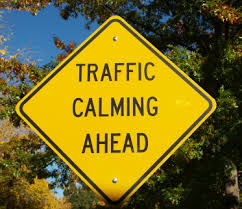
I’m directionally challenged. When I say that, I mean that I even have trouble following SIRI-instructed GPS instructions. Where I grew up it was really easy to tell North from South and East from West. The grasslands of Colorado will do that for you. However, after I moved to the city after high school I’ve had trouble with direction! I remember being so surprised at all the street names. I mean… I grew up on Road W. (I’m not kidding). I lived 1.5 miles east of my grandparent’s home. I knew this because my hometown was North, and my grandparents lived 15 REA poles adjacent to us on the “sun setting” side. I know you think I’m making this up, but I was truly disoriented when I discovered directions included street names and not landmarks. Then I discovered traffic signs that we never had in Baca County! I mean… “TRAFFIC CALMING”? We hardly had a need for stop signs, let alone traffic calming signs.

Last week on a back road–a short cut, carefully taught by my significant other–I encountered a “Traffic Calming Ahead” sign. Now granted… this sign has likely been there all along. However, I just HAVE become confident enough to notice things like traffic signs as I’ve been too busy looking for that white house with the green shutters (cuz – yeah. I still don’t use street signs so please don’t tell my husband). As I passed the sign, my first thought was, “Whaaaa????”

I’m very eloquent when talking to myself. As I drove a little further there was a big speed bump in the road. Do you know I almost had to pull over to the side of the road to figure on what a speed bump had to do with “Traffic Calming Ahead”? I forced myself to go on, while my thoughts just jumbled together.

After I figured out what it meant, my next thought was, “Heck. What happens when the sign says, ‘TRAFFIC DRAMA AHEAD’ “? I guess I hope I don’t ever have to find out.

I suppose it’s nice that the city thinks so much of drivers to warn them in advance when they are going to force a change in driving attitude. Wouldn’t it be nice if we had road signs as we traversed LIFE?

Road Signs

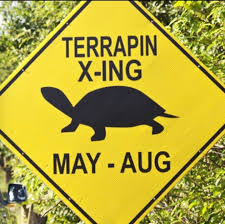
It took me awhile to figure out, “Bridge Ices Before Road”. Longer still to figure out:

turtle crossing

Someone, somewhere, has been very conscientious about what lies ahead. Why can’t we have that kind of system to navigate life? I suppose in a way we do. As a person of faith, I certainly have prayed enough asking for guidance and clear direction on decisions.

I’ve also “bent the ear” of close friends when I’m trying to make decisions or determine what to do. I don’t know about YOUR life, but in my OWN? I’m often left thinking, “What just hit me?” after I’ve already encountered the hazard. There was no warning. Don’t for a moment think that I’m not paying attention either. I’m probably hyper-aware as I’m prone to some OCD tendencies. So why do I so often hit the speed bump at full speed (or crush the turtle)?

Distractions

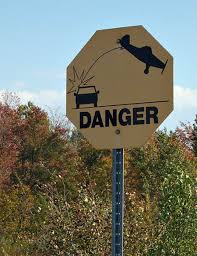
I have some folks in my life with some ADHD goin’ on. It kinda makes sense that they would miss signs. So how does someone who pays great attention to details, get distracted? Basically? I lose my focus. I may be driving along still thinking about:

helicopter

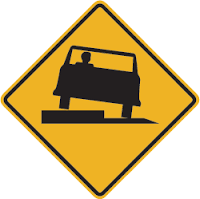
That I failed to pay attention to the next warning:

uneven

So when my car dropped off the uneven pavement on one side, I screamed like a girl. Thank goodness I’m a girl.

Not only do I tend to perseverate – causing me to be distracted, I also tend to “worry something to death”. How many times do we worry about things we cannot change? Take a minute and list all the things you really have no control over. I’ll check back with you in a couple of months.

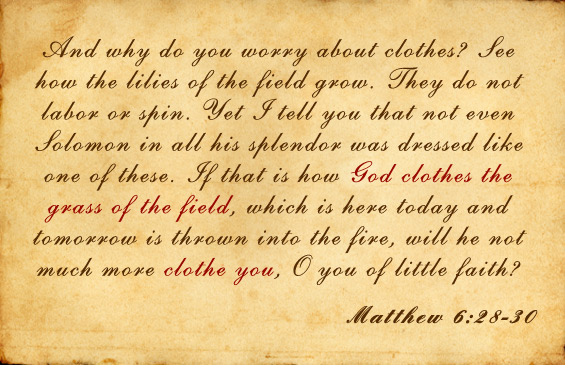
As a person of faith I try to:

faith

I have to tell ya, though, I blow it again and again. I’m a “worrier”. I’m trying to do better because I’ve come to recognize it IS a big distraction for me. I miss warning signs, I become self-centered, I miss cues about other hurting people, and I step in doggie doo-doo (just laying it out there, folks).

The “Here and Now”

I’m having to learn to live in the “here and now”. I’m not very good at this. Don’t get me wrong… I think we should make plans and be prepared. Be an ant instead of a grasshopper. But I get awfully distracted about worrying about something that hasn’t happened yet. Worse? I worry about something that has already happened and can’t be changed.

I’m working hard to take one day at a time. I’m working hard to focus on the here and now. Example:

I’m fixin’ to walk into class and will be there for 50 minutes. How are my students today? Does anyone seem worried, distracted, tired, or ASLEEP? How can I make personality dispositions FUN? I don’t get any second chances. I don’t want to miss that one student looks shell-shocked, another likely high. (Dude? What have you been smokin’?)

I don’t get that 50 minute time segment back. It can be simplified beyond this, too. I’m trying to take more naps. I need them. I don’t know if it is because I’m “almost 50”, or if it is because I am fatigued from having to speech read and pay attention? I just know that I live for naps. If I have an opportunity to have one, I don’t want to lay there for 27 minutes of my hour available worrying about what I need to do. I’m learning to focus on calm – peace – rest – sleep.

My guess is that if you are reader of this blog, you have challenges of your own. You may be differently-abled or live with chronic illness or pain. Perhaps you are struggling with emotional health. Learning to ignore the distractions will help you focus – help you cope. It isn’t a cure-all. Occasionally you will still be taken by surprise. You are going to see and benefit from far more road signs if you are really paying attention. I hope you will work on it and if you have any tips, comment below! I know I take all the advice I can get!

L. Denise Portis

© 2015 Personal Hearing Loss Journal

Why I Rarely Vent (in Person)

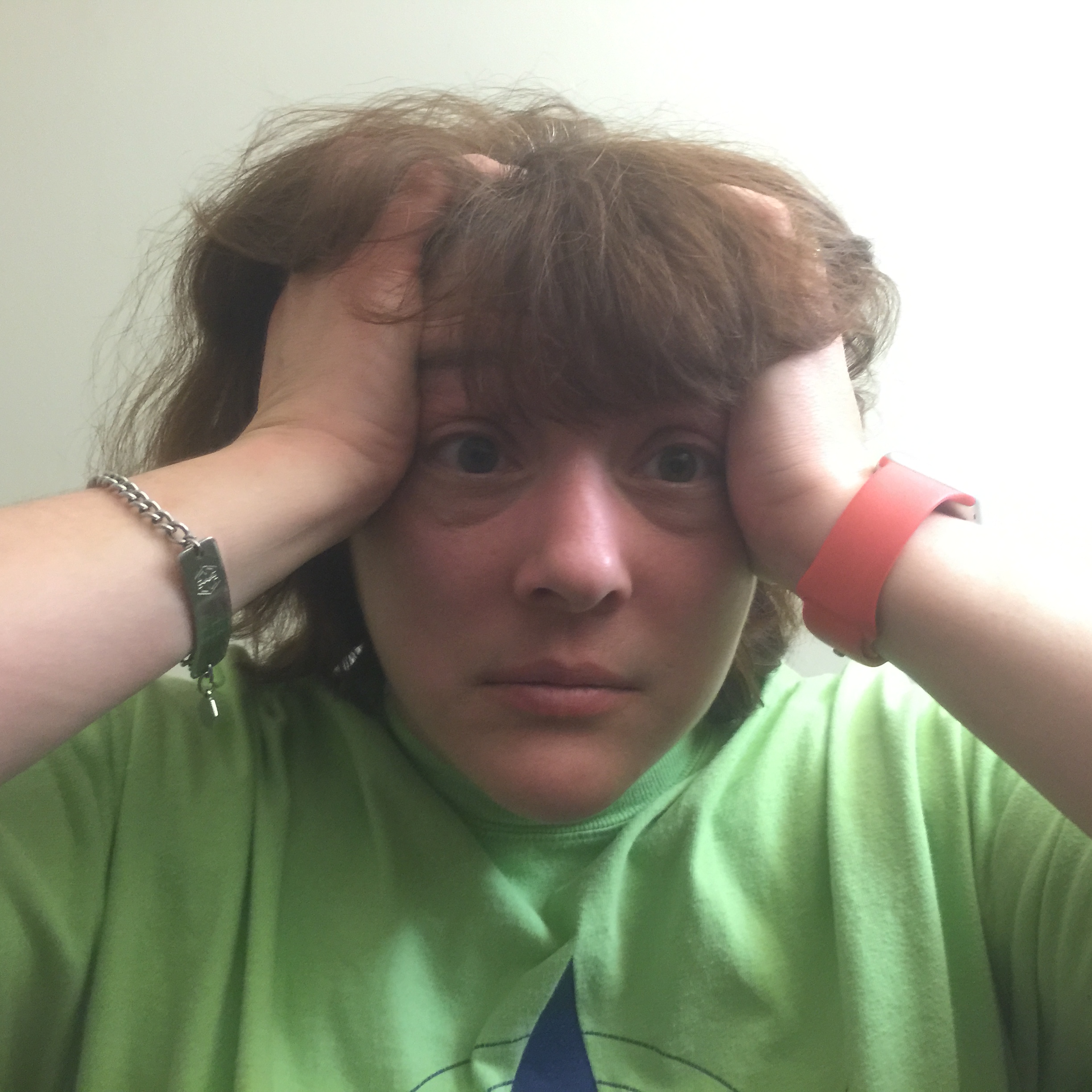
My head is gonna explode. There's a reason I don't vent in person...
My head is gonna explode. There’s a reason I don’t vent in person…

Aren’t I brave to post a picture with no make-up on a “horrible, rotten, no-good day”? I decided last minute to stop in at work on Monday to check my mail box. I forget to do it during the summer when I’m not teaching. Anyway, I ran into a person I know fairly well. I almost ran the other direction because I know her well enough that I didn’t want her to see me with no make-up, flip-flops, and blue jeans. However, since SHE had all that going on too… I decided to let her flag me down instead of pretending I didn’t see her. We exchanged the “how’s your summer going?” questions and visited for a few minutes. We’ve served on various committees together and so when she asked me, “So how are you really doing?” I didn’t hesitate to answer truthfully. Silly me, I thought she wanted to know!

“Well, I have had a bad day. I get super tired of falling on rainy days. Ya know? But the weather for the rest of the week looks great” and I beamed my best smile!

She said (I kid you not), “Yeah, I fell this weekend and broke my friggin’ nail. Just look!” (she sticks her finger in my face for easier viewing). “I just got a manicure too!”

Now the first thing that popped into my head wasn’t nice. So I’m not even going to repeat it on here. My second thought, however, was “this is why I’m not honest to people face-to-face“. Besides… if you don’t live with a chronic illness or disability, you just can’t understand what having a bad day for THAT person really means. (I can’t completely understand YOUR bad day either). It’s not their fault. I chose to believe she was trying to commiserate and help in some way. I “ooo’d and aaaah’d” over her broken, manicured nail, getting madder and madder (but doing a fantastic job of hiding it, I might add!)

After due diligence in bemoaning her broken nail, I turned to leave. Since I had been holding her wrist to get a better look at the nail, I dropped my hand (and her hand) as I turned to walk away. It was then she noticed my arm. “Oh my gosh. What did you do to your arm?”

I turned my arm to look at where she was looking and saw a row of purple and blue bruises. “Oh that,” I said breezily, “yeah, I said I fell, right?” Her eyes got really big, and she whooshed out on an astonished breath, “Well, I’m an ASS, aren’t I?”

I giggled. Not at her.

Ok, yes it was AT her, but her self-condemnation and horrified look were truly priceless. I assured her that all was well, working hard to make sure we went our separate ways with friendship and her self-esteem still intact. After all, I didn’t want her to think that *I* thought she was an a**. Even though I did…

Why We Dodge the “HOW ARE YOU?”

On the short drive home I belly-ached out loud to Milo (new Service Dog). One of the great things about service dogs is their non-judgmental, listening ears. When I’m angry, I tend to cry. Not sad tears either. (Hubby has learned to not “there-there” me when he sees tears because chances are he’s in trouble and not that I’m sad and need a shoulder).

Many people with chronic illness and disabilities lie. Not premeditated lying. It’s more of a self-protective omission of the truth. When your NORMAL is not “normal” for people who do not live with significant health challenges, you do not really have symptom-free days. Instead, you learn to appreciate the good days and try super hard not to dwell on the bad days. You don’t ever answer “how are you?” truthfully. (Unless the person who asks lives it too and really gets it). You don’t want to be a negative Nellie; a sour puss; a stick in the mud; __________________ (fill in the blank).

So you dodge the question, or flat out lie. I had a friend tell me that “stating how my day really is going doesn’t make my day better. It only depresses the other person. Since there isn’t anything they can really DO to make it better, I grab FRIENDSHIP by the collar and don’t let go, insisting my day is going very well if only to talk to a friendly face for a few moments longer”.

Don’t get me wrong… we all need some folks we can be honest with and tell it like it is. For me, it is often God because I figure His shoulders are broad enough. Sometimes I need a flesh-and-blood human face to talk, too. This is why I highly recommend support groups. I rely on the people I have come to know at Fidos For Freedom. We couldn’t be any more different. We struggle with completely different kinds of disabilities and challenges, but each one of us understands why we dread the “how are you?” question. Even virtual support (through the medium of the Internet) can be very therapeutic to people with chronic illness and disabilities.

But… I really want to know! I really want to help!

I have a few people in my life (and I hope that you do, too) who I can be honest with  when I’m overwhelmed with a “horrible, rotten, no-good day”. They may ask, “how are you really doing?” and I TELL them. The obvious next question is, “Well, what can I do to help?” Ya know? I’ve really wanted to take people up on this before. I mean… sometimes it may be that I need someone to go shopping with me. Milo is terrific, but there are some things he cannot pick up and some things I really wish I hadn’t dropped to start with! (like glass). Shopping is exhausting for me but a necessary chore.

My son has a “temporary disability” as he fell through the ceiling while in the attic and broke his arm. (The full story is much longer, but I’m not going there today). He is really struggling with doing “normal” things because he has one hand. So I asked him, “what can I do to help?”

Laundry. My son asked me to do his laundry! And do you know, I was almost hysterical with JOY? I love to do laundry! I am ABLE to do laundry! I love pre-treating stains, choosing settings on the washer, and piling things in evenly. I love putting wet clothes into the dryer. And… (OMGosh I’m trembling with excitement I can hardly get it out…) I love folding warm clothes from the dryer. I’m getting goosebumps thinking about the neatly folded piles of “like” clothing. It’s a very normal (and for most people), boring task. However, “son” couldn’t do it. *I* could help.

If you are in a position to help someone who lives with chronic illness, doing something rather ordinary — is EXTRAORDINARY for them.

Loading/unloading the dishwasher

Washing the bedding and re-making the bed

Mowing the lawn

Deep-cleaning a bathroom

I know people with various disabilities who do things to help out others with disabilities. That’s how it should be, right? People… just helping PEOPLE.

Concluding full circle here – VENTING

I have some high maintenance friends. And you know something? I love them. I knew in advance they were high maintenance and I chose to be their friend anyway. I also have some friends who “hold their hand close to their chest”. Heck, if I’m really going to see their “hand”, I almost have to yank them towards me and demand “a real reveal”. I’ve had to learn how to “read” them. I very well may MISS IT sometimes – the clues that tell me that all is not well.

Sometimes people just need to vent. They KNOW you can’t do anything to improve their situation. They KNOW they will have better days (so please? Don’t tell them, “the sun will come out tomorrow”?) They may just need a few moments to tell you like it really is. You say, “How are you?” and they decide to open the dam. It may pour out of them. It may be a trickle of water that you have to give additional encouragement to in order to really break down that barrier.

Let them VENT.

… and then what? I don’t recommend patting them on the shoulder and asking if they feel better. What’s the next step?

It’s two years old now, but I love — absolutely LOVE this advice. <Click here for full article> The highlights and three follow-up (recommended) questions to a “Vent-or” are:

  1. What bothers you the most about the situation?
  2. What is making you the most _______________?
  3. (My favorite) What worries you about this?

This is listening done right. They vent. You follow-up with questions that let them know you were actually listening. You can brain-storm with them options that may help them with some of the things that are frustrating them. You may discover through dialoguing with them, a way that you can easily help them beyond providing a listening ear.

Folks who live with disabilities or chronic illness like being able to reciprocate, too. I am on CLOUD NINE that my son needs me to do his laundry for him right now. I love dog-sitting for my daughter’s dog when she needs to go out of town. There are some things I can do. Let me do them. 🙂

I hope you will look at venting a little differently after reading this. Especially if the venting you listen to is from someone who has significant health challenges. One of my dear friends has a seizure disorder as well as other significant health challenges. She often lets me hear how things are really going because she knows I care. I tell her I will be praying, and she knows I mean it. She immediately asks, “so how can I pray for YOU?” and I know she means it. A praying friend can be HUGE. Sometimes you can do more. I hope you will look for those opportunities. Lysa TerKeurst does a great job blogging about this. Please allow me to share her great article with you: “Don’t Say You’ll Pray for Me“.

Denise Portis

© 2015 Personal Hearing Loss Journal