Gonna change directions here today as the death of Whitney Houston coincides with something I am seeing more and more in the disability community.
It doesn’t matter whether or not you like Whitney Houston. What I am disappointed to see is some of the comments and “hatin’ on” this artist since her death. I actually saw on one person’s Facebook that drug addicts and alcoholics get what they deserve. “Someone with so much talent shouldn’t have wasted it”
Wow. I mean REALLY?
Unless you were thrust into fame and fortune at a relatively young age…
Unless you had to deal with the media on a daily basis, giving up any hope of privacy…
Unless you married for love and were crushed by disappointment…
Unless you raised a child as best you could in the backdrop of an industry that can be unforgiving…
Unless you developed an addiction because of life’s crushing problems and entered rehab while the whole world knew it…
Unless you made mistakes and fell back into bad habits – all while the whole world watched…
… then keep your mouth shut about Whitney Houston.
Why Does This Upset Me? Why Should it Upset YOU?
Anytime people begin to criticize and judge someone else a change takes place. Amnesia.
I rarely hear someone criticize and judge someone who is just like THEM. It usually happens when someone is different than you are. Criticizing is easy when we don’t walk in that person’s shoes. Judging is a simple task when we cannot hope to understand what really caused someone to do something when they are different than we are. We forget all the times we have been hurt for being judged and criticized by people who do not understand our own choices in life.
Wanna get me ticked off? Criticize and judge someone who chose to mitigate their disability with a service dog when you don’t live with a disability. Sometimes even others within the disability community may scratch their head and wonder why a person would choose a service dog when “they have the same disability you do”. What they may not know is that there ARE various differences between your disabilities. Your lives may be different. They may have 24/7 help that you do not have access to in your own life. Why don’t we celebrate “whatever works”?
In the hearing loss community, I know people who criticize people who don’t allow “nature to take its course” and embrace their deafness. To some, if you do not learn ASL then you are shunning a community that could be your family. For others who have accepted technology and/or surgery to stay connected to the hearing world, they may criticize those who have learned ASL for various reasons – personal reasons! I know people who criticize other people’s choices about hearing aids or cochlear implants. Why are we prone to criticize anyone who makes a different choice than what we have made for ourselves?
I think perhaps it is a form of self-protection. We may somehow feel that if someone who is very similar to us chose another path, that their choice may mean that our own path was a wrong one. It may be a form of defensiveness. If we see someone successful at living life with a disability, we may feel the need to criticize because we still have some problems with our own disability. If we see someone floundering at living life with a disability – and they chose another path? Many point and say, “I told you so”.
We could all learn to be more compassionate. We could all learn to listen more and keep our mouths shut.
“When you judge another, you do not define them, you define yourself.” –
Wayne Dyer
“If you judge people, you have no time to love them.” –
Mother Teresa
What May Happen if You Reserve Judgment
If you can keep your opinions to yourself, you may just make some discoveries:
You didn’t understand why they did what they did until you got to know them better.
You misunderstood their choice
After learning more about the person, you actually agree with their choice.
After time you find that you still would have done it differently yourself, but it seems to work for them.
If you can keep your negative opinions to yourself and instead pray for and encourage that person, you may discover a…
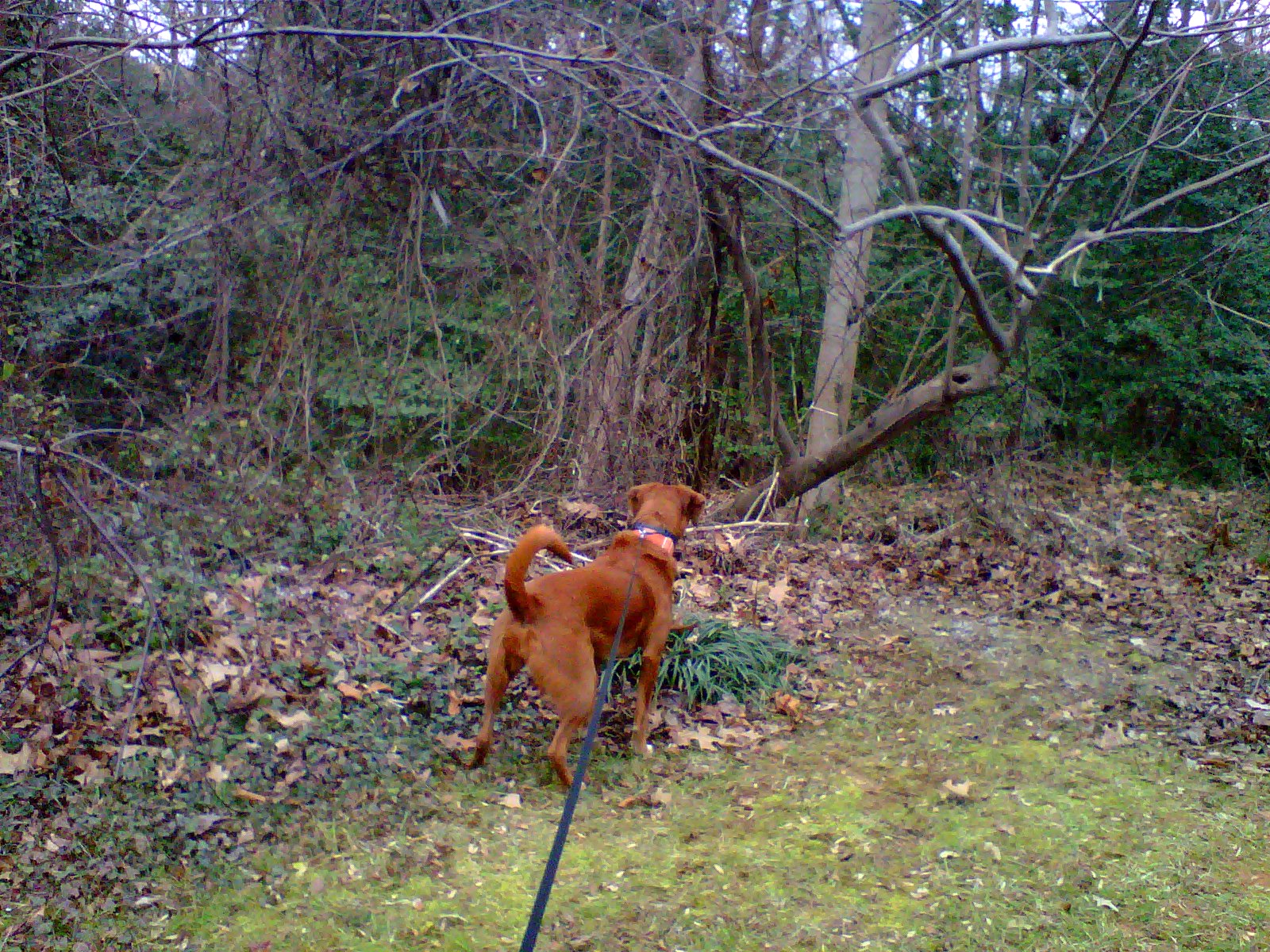
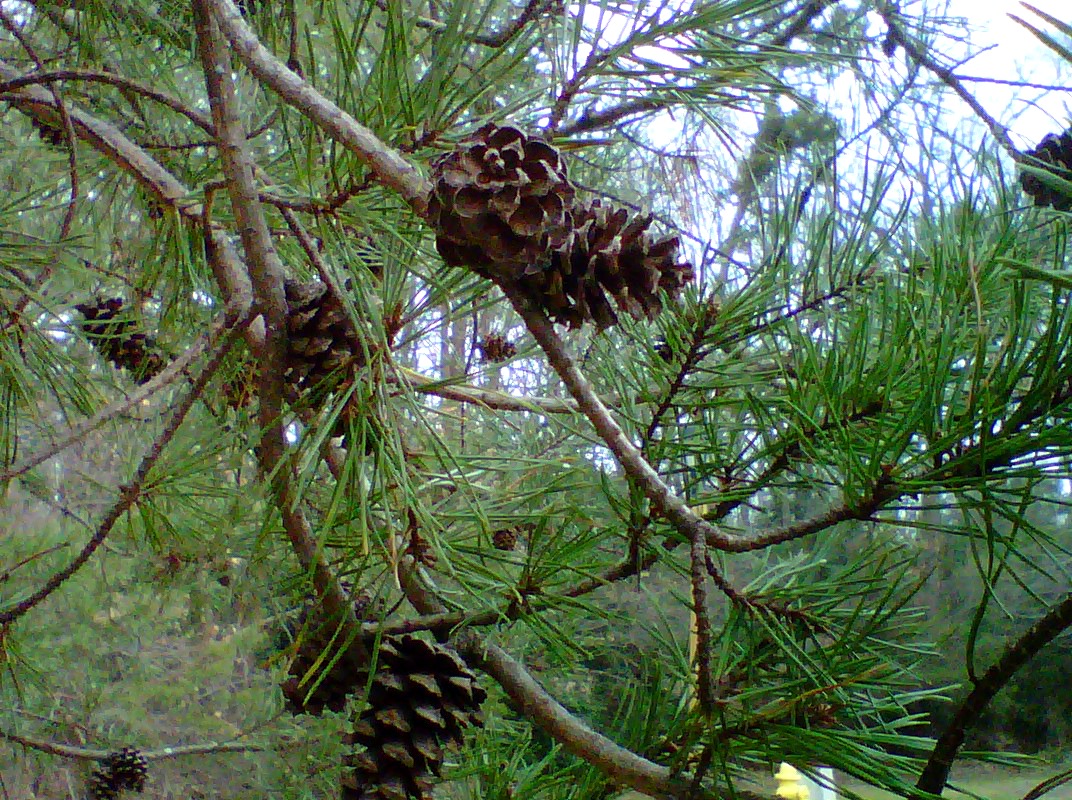
The woods near our home without their usual foliage…
(PART ONE OF FOUR)
Chloe and I took a walk after lunch today. I had to smile as I saw the snowflakes falling softly around us even though it wasn’t cold enough to “stick”. I just love winter. I love actually getting out IN the cold weather as well. I love bundling up and walking briskly – something I can do even with Meniere’s as my symptoms are usually much more mild in the winter. I love being able to see my breath in the air and being able to smell various fireplaces in use in homes as I pass. However, one of the biggest reasons I love winter might surprise you. As a person with hearing loss, one doesn’t expect to enjoy QUIET.
Winter Can Be So Quiet
When walking, many people are inside where it is warm. So in the wintertime, my walks are often much more quiet than when I go during other seasons. I love the quiet. Don’t get me wrong! I love being able to hear, but I hear best when it is quiet. Am I contradicting myself? (BIG GRIN). Eh… maybe.
Hearing with a cochlear implant is a mind-boggling thing. I hadn’t expected to hear this well again this side of Heaven. When my husband and I realized that my progressive hearing loss would ultimately mean I would not hear at all, we were concerned. Thankfully, through the support and relationships of the Hearing Loss Association of America, we learned that being late-deafened does not necessarily mean the end to hearing. We learned about cochlear implants and I took almost three years researching and “talking the much needed ears off” numerous cochlear implant recipients. As thankful as I am for my cochlear implant, it does not mean that I now hear perfectly. As a matter of fact, I become a little aggravated when people act as if my cochlear implant “fixed” my hearing. Yes, I can hear. But it’s a different kind of hearing, and one made more difficult when trying to understand speech in the midst of noise.
So I love the quiet. I hear better. When walking, as the world around me is more quiet compared to other times of the year, sounds that are present are crisp and clear. If it is quiet on our walks, I can actually hear much of what Chloe is hearing.
Chloe can HEAR the squirrels even though she hasn’t yet spotted them…
I love listening to nature. I pick up many more sounds in the winter because of the quiet. The lack of foliage also assists in allowing sound to carry. In some spots of our neighborhood I can even enjoy an “echo-like” effect in the world around me.
We Need the Quiet
I have had numerous late-deafened folks tell me that they too, go “deaf” on purpose. For those of us who are thrifty, it saves on battery life. However, for many it is simply a matter of being mentally fatigued. It takes a lot of effort to understand and communicate using technology and speech reading. People with hearing loss must employ a number of senses to communicate. Those with normal hearing are not required to use much more than their sense of hearing to communicate. I believe this is part of the reason I need 8-10 hours of sleep a night. (Yes… you read that right!) I am mentally exhausted at the end of every day just because I’m communicating with family, friends, and co-workers. It takes work to hear! Listening requires active participation for those of us with hearing loss.
The forest is sleeping during the winter…
When there is a great deal of background noise, I don’t hear well. As a matter of fact? There are times I don’t even try. Case in point… my church:
Want to know the noisiest part of every church service? I think it is before and immediately after the actual service. Or, how about when the pastor or minister of worship says, “Everyone take a few minutes to meet and greet those around you!” ? AAAARGH! I try to make myself invisible if you must know. I am petrified someone will come and talk to me because I know I won’t hear them. I’m getting better though when someone approaches with their hand out and a big smile. I’m taking a risk but “betting on” that they are saying, “Hello, how are you today?” I have learned to smile, shake their hand and say a simple “Hello!” My preference in communicating is definitely one-on-one. I do really well – IF – it is in a quiet atmosphere.
But you know something? My exposure to multiple disabilities at Fidos For Freedom has taught me one very important lesson. We could ALL do with more “quiet” in our lives. Quiet can foster introspection – and friends? I’m big on reflection, meditation, and soul-searching! For many of us, we face many physical battles on a daily basis. We really NEED quiet time. Contemplation may provide us with resolve, a new “plan of attack”, time to absorb new information about our disease/disability, and the ability to recuperate emotionally and mentally. As a person of faith, it is my quiet moments that I can humbly ask for guidance or assistance… or scream for help!
It is often when we are quiet that we can plan and “gear up” for the journey ahead. Victor Hugo said, “One is not idle because one is absorbed. There is both visible and invisible labor. To contemplate is to toil, to think is to do. The crossed arms work, the clasped hands act. The eyes upturned to Heaven are an act of creation.” For some of you, life’s journey requires a little planning. I have a friend who cannot do anything spontaneously. Errands are planned, cleaning specific rooms of the house are planned a whole day in advance. Errands rely on the goodwill of family and friends who are willing to cart her “here and there” as her eyesight has deteriorated. Cleaning is done when the body isn’t on “strike”. Lyme’s and Chronic Fatigue insist that she double-up on recipes when she has enough energy to cook. That way she can freeze things so that she doesn’t go hungry on days she cannot cook meals. She requires a lot of quiet time. For her… it’s not a communication issue. She needs time to plan and to take strategic steps in organizing as best she can her journey. She even needs quiet time to COPE with her disease.
Winter allows me more quiet time. Outside – fewer people are out and about. Inside – family members at home tend to curl up and do quiet things on their computers or may catch up on reading. Like hibernating bears they tend to sleep more. Co-workers are quieter during the winter. Hubby says it is because of S.A.D. Who knows? I do think winter generates a feeling of “quiet” in many people.
I encourage you to find more quiet time. Winter, spring, summer, or fall – the season isn’t important. Finding time to be QUIET and use the time wisely is important to all. Even if you use the time for a power nap…
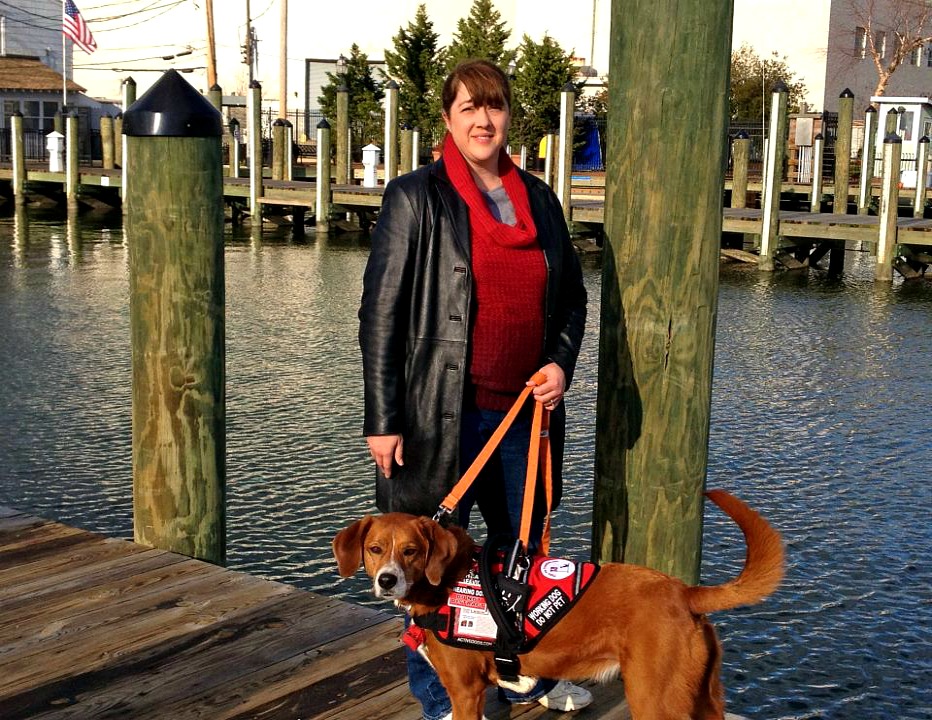
At City Dock in downtown Annapolis near the U.S. Naval Academy
I find it a little hard to believe it is 2012. Normally, the New Year doesn’t sneak up on me. However, this year it certainly did just that. In the past, I’m almost obsessive-compulsive about planning and organizing my resolutions for the New Year. I suppose that I haven’t allowed myself to obsess about it this year, points to the fact that I continue to change and evolve as I age. I think change is important and hope that I will always grow, mature, and change from one year to the next.
Sometimes though? Sometimes I see things in myself that I need to change because they are negative. In my reflection of 2011, I discovered a real negative that I really want to work on in 2012. Introspection did not really help me discover WHY I have developed this bad habit, but I can make some educated guesses.
I apologize. I apologize a great deal. I apologize for things that are not my fault. Some reasons I may do this?
1. I feel as if it will keep others from feeling the blame or reacting in a defensive way.
2. I default to shouldering the blame for most things.
3. I hope to diffuse any uncomfortable thoughts or reactions by others.
4. I hope to garner apologies and acceptance of responsibility by others by my own example.
5. HABIT
Please don’t misunderstand me. I believe that people should accept responsibility and offer apologies when they are warranted. However, I have developed a habit of apologizing for things that are not my responsibility. Sometimes when I say “I’m sorry”, it is simply a matter of miscommunication. I need to say something… but do so in a way it more accurately communicates my real meaning.
An example: “I’m sorry you misunderstood me”.
A better response would be, “I believe I have been misunderstood. May I clarify my meaning and intent?”
As a person with hearing loss I even respond with a “sorry” when I missed something. Example: “I’m sorry. I didn’t catch that”. It may very well be that it is no one’s FAULT that I missed it. After all… I am a late-deafened adult. Yes, sometimes folks may cover their mouth with their hand, or mumble. When that happens it is better to say, “I didn’t catch that. Could you repeat it please?” – or – “You were covering your mouth and I didn’t catch that. Will you repeat it please?” I’m going to try to stop myself before I respond with a habitual “I’m sorry. I didn’t catch that”.
It’s My Choice to Mitigate My Disabilities with a Service Dog
Recently, I “replied all” to an email in which a group of employees were nailing down details about when to meet for a book group. We are reading “Storm” by George R. Stewart. I actually typed out, “I apologize in advance that I will have my service dog with me as she is with me 24/7”. I sat and looked at that sentence for a minute and thought to myself, “WHAT IN THE WORLD?”
I deleted that sentence and re-typed, “Just a heads up so that no one is startled, I will have my service dog with me as she is with me 24/7”. I re-read and re-thought that sentence for several minutes. I like to give people I’ve never met before heads-up about Chloe, but it isn’t required. However, some people ARE afraid of dogs or have allergies. I like to let people know in advance when I can.
When I interviewed at the local community college, before hanging up the phone I let the person know that I would have my service dog with me at the interview. When I arrived to meet with the panel of people interviewing that day, the director let me know that he was glad I told him about Chloe. He normally has his dog with him at work during the summer, and he didn’t want his dog to interfere with my working dog.
Sometimes it cannot be helped. I arrive and people are surprised (or dismayed) that I have a service dog with me. In the past, I have intercepted looks and stepped forward to apologize that I have Chloe with me. I’m not sure why I felt compelled to do this. I’m NOT sorry I have Chloe. She has given me the independence and confidence I needed to follow my dreams! Yet, I often felt as if I needed to apologize for her presence.
When someone asks if they can pet Chloe, I would automatically say, “I’m sorry. She’s a working dog and cannot be pet while she is in vest”. A better response that I’m trying to remember to say is, “She’s a working dog and cannot be distracted right now. Thank you for asking permission though!”
I realize that many people use the “I’m sorry” phrase without thinking about the ramifications of the meaning. To many it is simply a way to break the ice, or begin communicating a difficult idea. For me, I believe that the overuse of the phrase has only served to weaken my own self-esteem and even development as a confident adult with a disability. Please understand that I am talking about ME – and how being overly zealous with apologizing has inadvertently affected ME in a negative way. You will never hear me correct YOU if you choose to use this phrase.
I believe in giving heartfelt apologies when they are needed. In the right circumstances, it conveys the desire to make right a wrong and to restore a good relationship with another person. One of my favorite books is “The Five Languages of Apology” by Chapman and Thomas. I believe in caring about our fellow man and to learn to apologize in such a way it restores good communication and healthy relationships.
It’s no one’s fault I do not hear well. There is no one to blame that I stumble around on rainy days nor am able to retrieve things from the floor. You may be surprised to learn that I wouldn’t change anything about me. Sure… it’s taken a long time for me to accept who I am and to “like me” just the way I am! I do want to correctly communicate my heart, mind, and intent to others. I believe I apologize in far too many circumstances. I want to accurately relay information without demeaning or demoralizing myself.
You may be thinking “poTAtoes” – “po-TAH-toes”. What is the difference? For me… this is something I choose to work on this year. I want to better communicate with others without taking the blame for things that cannot be helped.
In October I was at a training class at Fidos For Freedom in Laurel, Maryland. One of my least favorite exercises is the “Meet and Greet”. I hate it, yet know it is one of those necessary (evil) tasks that I must learn to accomplish with an assistance dog along side of me. Reality check? I will have to communicate with others in a group when there is background noise. It is very difficult for those of us with hearing loss to do this exercise. I have to remember to turn my t-coil off on both cochlear implant and hearing aid. Thankfully, our training room is looped and I hear the trainer very well when commands are given. However, I have to turn these OFF in order to hear a group of people in the “Meet and Greet”. We introduce ourselves and give a little information about our dogs to new people. To folks we know well we simply “catch up”. Our dogs are suppose to remain in a safe place (sit or stay) and we learn to communicate while also keeping an eye on our partners. When you also speech read, it can be very difficult to watch faces while also keeping an eye on your dog. At this particular training, Chloe was in a down/stay for the inevitable “Meet and Greet”. Some of these dogs Chloe has known for a long time. Some of them are newer puppies recently introduced to the training floor to eventually be matched with a client. I spotted Chloe stretching in her down/stay with tail all a-wag and kisses galore for another dog in a down/stay. I corrected her and then realized I missed what the fellow client said.
“I’m sorry. I missed that”, I said with exasperation.
The other client didn’t hesitate and said, “Don’t be sorry. I don’t apologize for weaving around with both a cane and a dog!”
It hit me that I was implying my inability to hear well in this environment could be changed. It is what it is. I do NOT hear well in “Meet and Greets”. It is not anyone’s fault that I do not. No apologies are necessary. I’m learning to ask for repeats without apologizing.
I wish you success in planning your own New Year’s resolutions and goals. I’m keeping it simple this year. Happy New Year and welcome 2012!
Once upon a time, there was a young woman from a small farming community in the mid-West. She was healthy and strong. She loved music, “listening” (but mostly TALKING), and books. She went away to college and met a Southern boy. She had so many dreams! She met a “circle of 8” culturally Deaf friends in college and was welcomed into their small sub-culture on this tiny college campus. She learned sign language.
To her sorrow, she couldn’t have children, so she made big plans to go right into graduate school and eventually be in a place where she could help people. She told her husband, “Someday? I want to adopt some Deaf children”. He knew she had a heart for this culture with hearing loss and also knew she longed to be a mother. He supported her dreams.
Don’t you love “Once Upon a Time…” beginnings? My favorite books begin by transporting the reader back in time. “Time” may be a real time period, oozing with history and descriptions of bygone days. The setting may be in a make-believe time and place. Somehow, it still manages to wrap my mind and heart around the characters and story, despite the make-believe.
When I think of my own “once upon a time…”, I have to smile at my naivety and immaturity. NOT that I continue to be gullible and naive at times – even immature! However, I find that I am forced to hide my “knowing smile” when I hear my 21-year-old daughter “dream aloud”, or my 20-year-old son outline his “life’s blueprint” for me. Life has a way of taking a person down paths that are only visible through the benefit of hindsight. Our story unfolds one day at a time. Decisions are made – some irreversible. We learn to live with consequences – both good and bad ones. We may “roll with the punches” and work hard to be refined like gold. Unplanned detours have a way of changing our direction in life. Our goals may change in order to accommodate our changed lives.
At the current age of 45, I look back upon my own “once upon a time…” story. I am late-deafened and have a balance disorder. I “hear again” with bionics and navigate life with a service dog. I have two children. I’m a teacher. I am still married to my college sweetheart. It has been over ten years since I have been able to visit my hometown in that small farming community. I am “mostly” shunned by the Deaf community as I chose a different life path. I am integrated and immersed in a new community of people with hearing loss and other disabilities that I did not know even existed. I actually love technology and even my books are now in an electronic library. I don’t listen to music – but I do listen. Better than most, in fact…
Chances are I have many chapters left in my story. Regardless of the number of pages, my heart’s desire is that I may make a difference – in even just one life. Occasionally, I hear from disgruntled readers who are exasperated at my viewpoint. “You don’t know what I live. You can’t understand how few opportunities I have now”. I gently remind them that whether they are using JAWS or Dragon software or are dictating to another, they have reached across miles to touch base with me. They have shared their ideas, frustrations, and heartaches. Others respond at times in frustration that they lack the support I have around me and cannot build a foundation for happiness in their own lives. I share with them some things I am unable to share in this venue – the people who have abandoned me and have turned their backs on my family and I. I remind them that every obstacle helps me to peel back layers of who I really am to reveal strengths that are hidden when “everything is perfect”.
No. Our lives are not the same. Where is the fun in that?
Hearing Elmo is actively soliciting other writers to contribute their own stories. In other words… I’m begging. GRIN! I prefer that 50% of the posts sheltered here be from people other than Linda Denise Portis. You can have a different viewpoint! Won’t you consider sharing your own “Once Upon A Time…”? You may not consider yourself a “good writer”. I’m not… and that hasn’t stopped me sharing my own thoughts and stories. I ask because I’m astonished at what kinds of things make a difference to another. We cannot know what others are going through and whether or not their own invisible disability or chronic illness forces them to reach out for help. Some are “pointed” to Hearing Elmo by others. However, most chance upon this “once upon a time…” venue. Won’t you consider sharing your story? It can be serious or fun. You can relay facts or express dreams. If you or someone you love lives with disability, chronic illness, or mitigates personal obstacles/disabilities with a service dog… Hearing Elmo would love to be your sounding board. Are you a trainer or health professional? I hope you will consider writing!
I recently “re-read” a terrific article by Arlene Romoff, fellow blogger and Hearing Loss Association of America member/leader. She detailed how to navigate the holidays with a hearing loss. (Her article can be viewed here).
I was reminded that these tips work well for most holiday situations, but not ALL. Are you ever invited to holiday gatherings that are not “family” or close friend centered activities? It can be quite difficult to navigate holiday gatherings that you are not in control of – or – that are attended by folks you may not know so well. My husband and I have been attending a terrific church for the past two months and are involved in a small group with similar aged people. A holiday gathering was discussed and planned. Sign-up for the activity began a couple of weeks ago. And you know? For the first time in my life with hearing loss, I explained when asked if I was coming that I’m would not be. I did not feel crushed by the guilt of being so anti-social afterwards!
Perhaps it is because I have learned in recent years that it is OK to be alone “on purpose” on occasion. Now don’t get me wrong! I’m all for relationships, communication, and forging/cementing friendships! I believe in “play time” and in working hard to participate in family and friend activities during the holiday so as to celebrate the season in all its glitter, glory, and historical significance.
I knew from paying attention in this small group at church that “sign up” would begin soon. So I embraced an opportune moment at home with my best friend and husband, Terry, to discuss the issue. I explained that I fully supported his going to “represent us” and that I know from understanding the dynamics and participators in this group… that not all attend with spouse or “significant other” for various reasons. I explained to him that I have chosen to not put myself in extremely unsettling and difficult situations. Sure… sometimes I have no choice. But in this? I did. I explained that the effort was almost debilitating and between fears of being jostled and trying to navigate and hear in an unfamiliar place – in a PARTY no less – well… I was just choosing literally NOT “to go there”. I could see him thinking about my comments and as he is very expressive, I could tell he was thinking back to various activities I had attempted in the past. He was very understanding. He agreed that should things like this come up and he desired to go, he would do so even without me. He knew I’d hound him for details later and appreciate participating vicariously.
It has been a couple of weeks now since that sign-up sheet went around in class. I still don’t feel guilty, but must be so use to that feeling I keep waiting for it to hit me! (GRIN) As it is, I simply think am finally OK with being alone “on purpose”.
Solitary Activities
I love to walk and hike. Thankfully my assistance dog, Chloe, never argues about being a walking buddy so I can depend on her ears and alerts to stay safe while doing something I enjoy. My preference is to walk alone… but I never say “no” to walking with my young adult daughter, Kyersten. However, when walking alone I actually hear better. No one to talk to you see, unless you count a very attentive hound dog. Because of this “lack of people” noise, I’m able to tune into what sounds are going on around me. I’m constantly amazed at what my cochlear implant will pick up – when no one is talking. The sound of crunching leaves, fussing squirrels, the wind blowing the now skeletal branches of the trees around me… autumn is noisy! I can hear traffic sounds both near and far, children on the playground, dogs barking at doors as we traverse the neighborhood, and cats glaring from windows in homes. OK, yeah… that last one was a bit over the top, but I certainly have “holes drilled into my back” by the glares of imperial felines who watch us pass their kingdom’s boundaries!
I love when my house empties out with various family members going to activities, movies, or different shifts at work. I work better in a quiet house. No one interrupts me and I get a lot of work done! When I don’t have work to do, I have learned to not only embrace solitary “down time”, I look forward to it! A hot cup of tea and a good book + turning off my ears “on purpose” = a type of sweet surrender to all that is good in being alone.
I participate in holiday activities and feel close to family and friends. Thanksgiving was at my house (but of course!) and we had company as well… but on my terms. No holiday music, activities were quieter ones, and I heard very well. The experience was not at all stressful. I’m learning, you see…
I DO get to know new people – but usually one-on-one. In large or even small group settings, my focus and concentration are on staying at a place I’m not “lost” in the conversation. That makes it pretty difficult to get to know others! But one-on-one meetings, lunches, or walks allow me to really discover new people. I’m quick to invite and accept the invitations for such outings!
Thankful for… the Internet
Perhaps a bit “off topic”, but as Thanksgiving was this past week, I don’t feel as if I can close this post without mentioning how thankful I am for the Internet. I know people think that you cannot have “real” friends through the Internet. However hearing loss can at times be almost isolating… and not by choice. I have discovered a network of very special friends – all who have hearing loss. I have peeled back layers of “them” to see reveal people who I am proud to call FRIEND. I have met them face-to-face in various locales… usually hearing loss related activities. I never hesitate to participate in groups – even large ones – with my peers. There is no frustration in asking for repeats at these conferences, conventions, and gatherings. I don’t mind folks invading my personal space, for it is always good EAR first. In super noisy environments, paper is always handy and darn if we don’t abbreviate and jot quick notes as good as the younger texting generation! If your batteries go dead, one need simply to remove their implant… scowl at it, and several people nearby will hand you batteries. It isn’t strange to ask hostess or waiters to turn the background music “off”, because no one in the group wants it on anyway. We finish each others sentences and clarify for each other when one voice, timbre, or pitch may not be heard as easily as another. We are comfortable with each other because we live the same kind of life. The Internet allows us to stay in touch “in between times”. For that I am grateful and mindful to acknowledge the power of connecting through this tool – the Internet.
If you are a person with hearing loss and have not yet learned it is fine to be alone “on purpose”, perhaps it is because you have not yet discovered solitary activities that you enjoy. I hope that you will learn to embrace these times. Take up a new activity that is done well as the result of your being alone. I know dynamite photographers, writers, and artists whose skills improved when they learned to embrace their own alone time. What hidden talents and skills have you not yet honed but could do so should you choose to be alone “on purpose”?
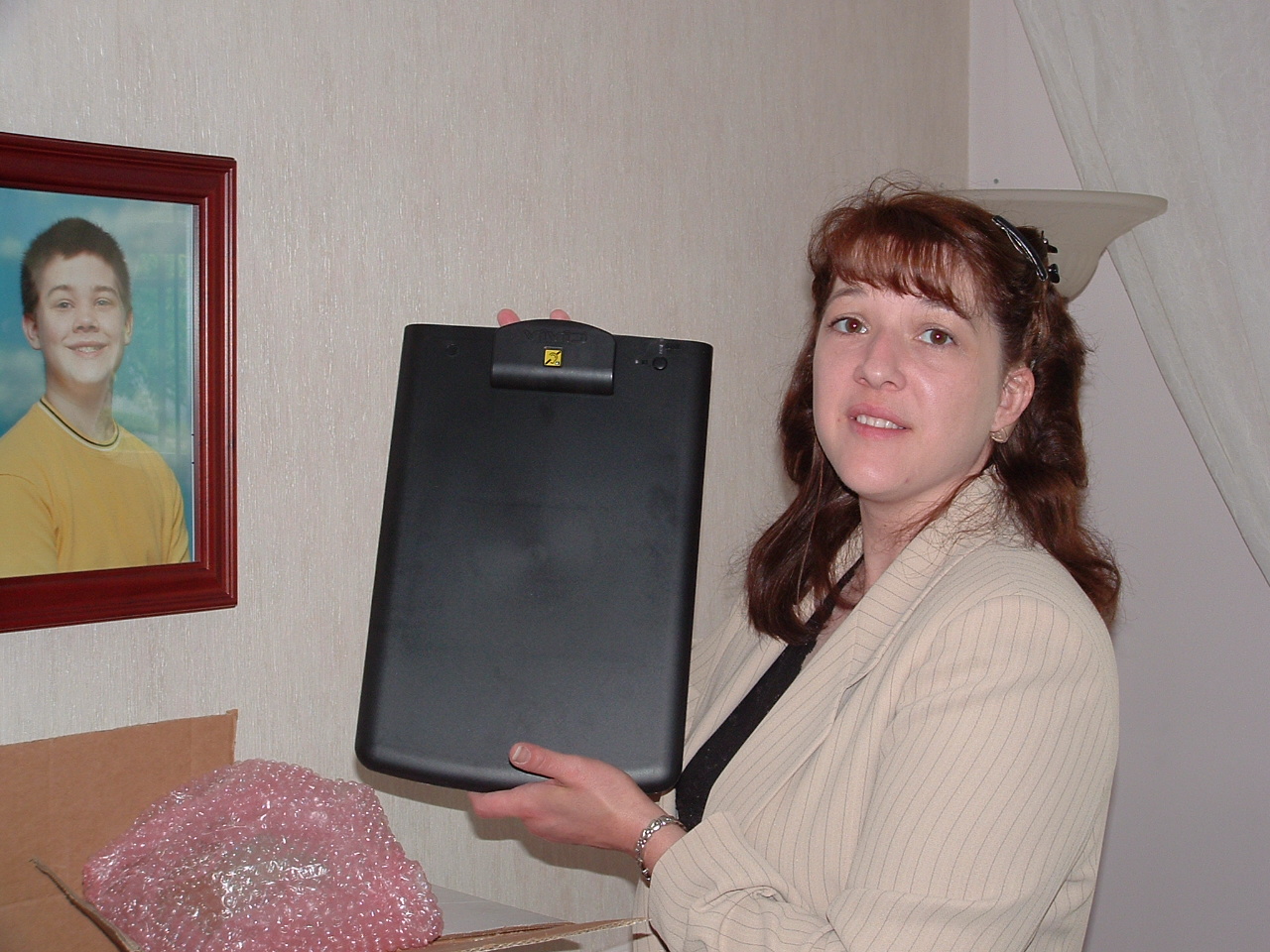
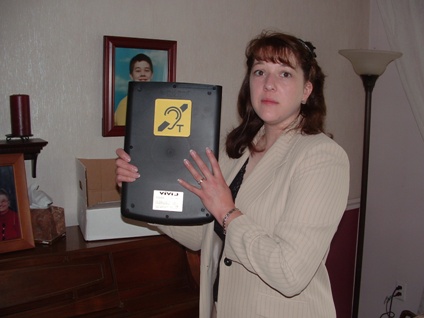
Can I just say that I LOVE, LOOOOOOOOOOOve, this product? I got mine for Mother’s Day in 2006 and I have used this thing to death! Because I do not have to attach anything to the boot of my CI (like a lapel mic, etc), AND because I don’t have to wear a neck loop, I have found the ease of this portable device is 2nd to none. I simply press a button and wa-lah! (hey… it’s a word! Look it up!) I have an immediate 5 foot radius induction loop around me. The clipboard allows me to take notes and to jot down reminders as I’m talking to students or “others”. The back of the clipboard has a “can’t miss” symbol that reminds everyone that they do need to speak “towards me”.
I don’t usually brag on one particular product, but this is one that should anything ever happen to it? I’d purchase one again the very next day. It is simply a “must have” for me! 🙂
Cowardly Lion: Courage! What makes a king out of a slave? Courage! What makes the flag on the mast to wave? Courage! What makes the elephant charge his tusk in the misty mist, or the dusky dusk? What makes the muskrat guard his musk? Courage! What makes the sphinx the seventh wonder? Courage! What makes the dawn come up like thunder? Courage! What makes the Hottentot so hot? What puts the “ape” in apricot? What have they got that I ain’t got? Dorothy, Scarecrow, Tin Woodsman: Courage! Cowardly Lion: You can say that again!
the quality of mind or spirit that enables a person to face difficulty, danger, pain, etc., without fear; bravery.
What Kind of People Have Courage?
Exactly what kind of people have courage? In my opinion, courage is not found in a specific “kind” of person, personality, gender, or culture. Courage can be found in the heart of any individual. Facing life develops courage in our hearts. I began thinking about courage this past week. I was waiting outside a classroom as I had arrived a bit early. I have no idea what kind of class was being held in room 406, but I heard the professor say, “When you think of someone who is courageous, who comes to mind?”
I couldn’t hear all the responses, but some that I did hear included:
men and women in the armed forces
parents
law enforcement officers
and firefighters.
As I sat leaning against the wall eavesdropping on the class discussion, I thought about how I would answer that question should anyone ever ask me.
“People with disABILITIES have courage”
Part of the reason I love Fidos For Freedom so much is that the clients, trainers, and volunteers have become like family to me. There are a number of disABILITIES present in people who are “family” at this organization. People who are “differently-abled”. Some of the clients are deaf (or Deaf), some have balance problems, chronic fatigue syndrome, fibromyalgia, chronic pain (from accidents or illness), CRPS, MS, and the list goes on. No matter the background or current health status of any one individual, one thing I see in the face of ALL is – COURAGE.
How can we be SO different and struggle with such a wide variety of challenges, and yet all have courage? Bill Tipton said, “Increasing your courage to take calculated risks can improve your general well-being and attitude in life. Learning to transform the negative reaction of fear of failure to a positive sensation of opportunity can enhance your chances for success. I believe people with disabilities, or perceived differences, get more opportunities to demonstrate and practice courageousness” (Global Dialogue Center, 2011)
I believe when a person takes a “calculated” risk and strives to improve their life, courage results. I have seen people work very hard to train assistance dogs. I have seen people work very hard to train to be matched with an assistance dog. Different people have different obstacles, but all push on… reaching for that goal of more independence. I’ve seen clients training who are in obvious pain. I have seen people work hard at taking risks and learning new ways of doing things so that they may safely and confidently handle a dog partner. This is courage.
How Does One Find Courage?
Jayne Leone said, “Related to the word courage are the words encourage and discourage. (In fact within the word courage is the word rage.) Think of the times we have encouraged ourselves or encouraged others. Now think of the times we have discouraged ourselves and discouraged others. There are many buzz words being used today — such as empowerment, challenged, support — used by many professionals, when in reality the operative word is courage, encourage or discourage. As we well know, many social institutions can encourage us or discourage us as disabled persons. They can help us be empowered, help us to maintain self-control, help us be self confident, help us gain courage. By discouraging us they can do the opposite” (Independent Living Institute, 1997).
I believe that courage isn’t an attribute one learns and then “ya got it“. I do believe that courage, though hard-earned and a difficult teacher, is practiced by choice on a daily basis. This is why we have “good days” and “bad days”. I think the key to having an abundant life is to have more “good days” than “bad days”, but allow “bad days” to act as a learning experience as well. Let’s face it. We are going to have bad days. Don’t you think the key is in how one RESPONDS to a bad day? Courage doesn’t disappear on bad days. Courage doesn’t guarantee success.
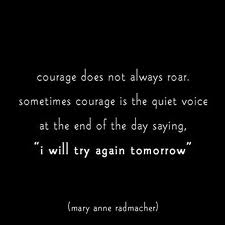
Sometimes? Courage is going to bed after a “bad day”, with resolve to try again tomorrow. Courage means you simply refuse to accept defeat.
The Lion now walked to the Throne Room and knocked at the door.
“Come in,” said Oz.
“I have come for my courage,” announced the Lion, entering the room.
“Very well,” answered the little man; “I will get it for you.”
He went to a cupboard and reaching up to a high shelf took down a square green bottle, the contents of which he poured into a green-gold dish, beautifully carved. Placing this before the Cowardly Lion, who sniffed at it as if he did not like it, the Wizard said:
“Drink.”
“What is it?” asked the Lion.
“Well,” answered Oz, “if it were inside of you, it would be courage. You know, of course, that courage is always inside one; so that this really cannot be called courage until you have swallowed it. Therefore I advise you to drink it as soon as possible.”
The Lion hesitated no longer, but drank till the dish was empty.
“How do you feel now?” asked Oz.
“Full of courage,” replied the Lion, who went joyfully back to his friends to tell them of his good fortune.
Swallow Courage
Ever get caught up in wishing things were different? Do you ever wish you were simply “normal”? (Who defines what is NORMAL, anyway?) I’m at various stages of accepting who I am today. Sometimes I have a clear vision of my “new normal” and seem to understand the “new me”. At other times though? I’ll be honest – I flounder. There is a part of me that wants to “fit in” and do things like “normal” people do.
Why do I have to find batteries so that I can continue hearing when my CI “dies”?
Why do I have to stand and sit slowly?
Why do I have to remove my hearing aid at times when the ear mold leaves a sore in my ear?
Why do I have to use my hands (or Chloe) on the stairs to safely navigate “UP”?
One must “swallow” courage – to believe!
My husband reminded me the other day that even people without disABILITIES struggle with acceptance. As a psychologist, he has seen folks from all walks of life struggle with accepting the way things are TODAY. Age may have made a change in your “normal”. An accident, illness or disABILITY may have changed your “normal”. He said, ““You have differences that make you uniquely you, but that also require some assistance. Without Chloe you’d fall more and miss more. Without your implant you are deaf. You need to accept who you are without apology and stop looking to be treated normally”.
Courage ≠ Never Being Afraid
“But how about my courage?” asked the Lion anxiously.
“You have plenty of courage, I am sure,” answered Oz. “All you need is confidence in yourself. There is no living thing that is not afraid when it faces danger. True courage is in facing danger when you are afraid, and that kind of courage you have in plenty.”
“Perhaps I have, but I’m scared just the same,” said the Lion. “I shall really be very unhappy unless you give me the sort of courage that makes one forget he is afraid.”
You can have courage and still feel fear. The unknown can be a scary thing. When an acquired disABILITY occurs in the life of a person, there are no guarantees things will not get worse. Many have progressive symptoms. Courage does give us the ability to deal with change, however. Few are born with courage. It is a learned skill, an acquired characteristic.
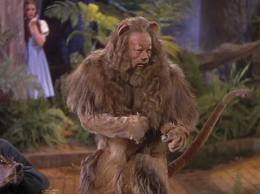
The Cowardly Lion has always been a favorite of mine in “The Wizard of Oz”. I loved both the movie and the books. I smile when he uses his tail to wipe his self-pitying tears away. I grin when he “shakes” in fear of the Wicked Witch and trembles at the sight of the flying monkeys. I know the end of the story. The Cowardly Lion shows courage time and again throughout the movie, putting himself at risk for others and to achieve his own ultimate goal… a gift bestowed from the Wizard – that of courage. Unbeknownst to the Cowardly Lion, courage lay dormant in his fearful heart. He only had to exercise what was already there.
I hope that YOU believe that courage is in your heart. You may not even recognize it. If you take risks and live life “in spite of”? You have courage!
I have Meniere’s Disease. It is easy for folks to forget that as the disease is “invisible”. Amazingly, I sometimes forget I have it myself. So that is just embarrassing! GRIN. Meniere’s disease manifests itself in individuals in a variety of ways. The disease lacks specific symptoms and triggers that are true of everyone. The disease varies person to person. For myself, the weather tends to be a very specific trigger for me. If pressure systems come into the area that include heavy rains or even high humidity, I know that I will have a “bad balance day”. If that day is simply the beginning of a string of similar weather days, I can be so off-balance by day 3 or 4, that I practically have to CRAWL up and down steps. It’s rather embarrassing to crawl when you are 45 – believe me!
Here in Maryland, we have had a significant amount of sunny, low-humidity days. As a result, my balance has been pretty good. Yesterday, I did laundry and actually jogged up and down the steps WITH a laundry basket. Yet I forget sometimes that in spite of my having few visible symptoms, I still HAVE Meniere’s disease even on bright sunny days.
Chloe does a number of things for me, only some of which are hearing alerts (what she was originally trained for at Fidos For Freedom). Chloe has also been trained to help me with a number of “balance assist” tasks which are very helpful on days I am experiencing Meniere’s disease symptoms. As a matter of fact, there are weeks that Chloe actually does more balance work for me than she does hearing alerts. One thing we have taught her to do is to “roll” her own blanket. I carry a blanket that is HERS. The blanket goes to every place I teach. It smells like her and she knows it is her “safe place” to be unless I ask her to do something for me. I usually put it out of the way in the classroom, but where she can easily see me. The blanket and Chloe are usually within 4-5 feet of me at all times. Below is a video of Chloe “rolling” her blanket — she adjusts the carpet square to be high enough that I can easily reach it without having to bend past my limitations.
Harsh Reminders
I get aggravated at family and close friends sometimes when they make suggestions for me to do something or try something that they KNOW I cannot do. It’s easy to forget certain things I cannot do because I don’t walk around with a sign on my shirt that says, “Beware of fall when bending!” You know what? Sometimes the person who forgets what I can and cannot do is – ME. You’d think I’d always be aware of the fact that I cannot bend to get something off the floor without paying the price. For me… bending far enough to retrieve something off the floor means that I lose consciousness for just a few seconds. Everything goes “black” in my vision, and my “hearing” (even with a cochlear implant) turns off. As soon as I stand back up, everything snaps back into focus. If I bend quickly, (for example to try and catch something as it is falling), I usually “join” the item on the floor… only I am sprawled out looking ungainly and mystified as to how I got there.
We’ve had beautiful weather here in Maryland lately. I need to remind myself on days like these that I still HAVE Meniere’s disease. In class this morning, I began gathering my things up to pack into my bag and exit the room. I dropped my roll sheet, so Chloe went over to pick it up and bring it to me (an automatic retrieve). As I was standing next to her pink blanket, I decided to save myself time and reached down to pick up her blanket. I lost my balance and my forehead crashed into the podium. After connecting with a wicked CRACK, the impact popped me back on my caboose. Thankfully, I didn’t lose consciousness. Chloe trotted over to me with the roll sheet and dropped it into my lap. She wagged her tail at me, nose 3 inches from my face.
“Hey Denise! Umm… why are you on the floor?” (Yup. I can read my assistance dog’s mind. Scary, huh?)
“Guess I should have had you roll your blanket, huh Chloe?”
Upon hearing “roll blanket”, she calmly rolled the end of the blanket and then tugged it over closer to where I sat.
I heard a student over my shoulder ask, “Ummm. Mrs. Portis? Are you OK? Was that your HEAD?”
I tried to chirp out in a manner that was convincing, “Oh sure! I’m fine, no problem!”
As I used Chloe in a stand/stay to get off the floor… I thought to myself one word – over and over again.
stupid
Stupid
STUPID!
Harsh reminders are needed from time to time, if not for any other reason than to remind us of the consequences of forgetting our own limitations.
We need to remember our own limitations. As a person with hearing loss, it helps me to remember that I cannot hear well in really noisy, crowded areas. If I need to have a conversation with someone, it is better to ask them to step over to the side out of the “hub-bub” of noise if I need to talk to them. Failure to acknowledge what I cannot do well (hearing in noise) only results in that I will be frustrated and angry at my inability to understand the conversation. If I want to play with my dogs, I need to remember to sit on the floor in order to tug on toys, throw balls, and squeak stuffed animals at them. If I try to “play” standing, I am sure to take an unplanned nosedive.
Have you had some harsh reminders about your own invisible illness or disability? Some lessons are hard to learn!
I just loved the movie UP! Not just because it had main characters that were dogs – and ones that could talk at that! Carl, a 70’s something animated actor sported hearing aids and spunk. Mostly the latter…
I recently ran into a 70’s something gentleman at the gas pump. I was leaning against the car waiting for my tank to fill, trying desperately to avoid looking at the high numbers scrolling across the screen as my 12 gallon tank drained my bank account. It was a pretty fall day, so I had the car windows down and was talking to Chloe. She could really care less about the price of unleaded, but she does like to flirt with other people nearby. I caught sight of a low tire, and changed positions so as to look at it better. This gentleman caught my eye and said, “I noticed that too… you need air in that tire”.
With some apprehension I looked around the station and could not see an air pump. I responded, “Oh dear, I don’t see an air pump!”
The gentleman cupped his ear and said, “teardrops and dare what?”
I think my eyes popped wide. Another person with hearing loss! I just beamed at him and turned to face him while repeating, “I don’t see an air pump, do you?”
He dropped his cupped hand and turned in a circle looking around the islands of pumps at the station. “Nope! I don’t see one either. You may have to go to another station and get some air in that tire!”
I pointed to my head and said, “I have a hearing loss too…”
He looked at me quizzically and moved to see the side of my head. “Oh! I thought that was one of those new-fangled gadgets people use to talk into. Is that a hearing aid?”
I beamed again, always excited to share and said, “No. It’s a cochlear implant.” I pointed to my other ear,… “but I have a hearing aid in this ear even though it doesn’t do me much good”.
He shook his head sadly and said, “Yes, I tried them for awhile but all I got was squeals and whistles. I never could hear better.”
Pointing to my CI again I said, “You should go to your audiologist and get evaluated for a cochlear implant. I hear much better than I ever did with just a hearing aid.”
He moved closer to me, still occasionally cupping his ear. I couldn’t tell if he was understanding all I was saying, so I really concentrated on speaking at a moderate pace and clearly. At least as clear as a pronounced southern accent would let me.
He stood within a yard from me and looked longingly at my CI. “If I were young again, I’d get that surgery!”
I put my hand on his arm and said, “Oh! You shouldn’t let age stand in your way. I know plenty of folks who are older who get the CI. They do very well!”
“No… no. I’m too old. It’s too late for me”, he said sadly. His eyes glistened and his chin dropped. It was all I could do not to throw my arms around him and hug him tight. Demonstrations of physical affection and empathetic squeezes were not likely to be accepted by a total stranger. So I restrained my impulses and instead said clearly, “You should think about that some more. It’s the quality of life that matters.”
My tank was full, as was his and cars were in line. I gave him my card and told him to email me. I hope he does.
Untreated Hearing Loss
Untreated hearing loss may result in depression, anxiety, little to no social activity, and insecurity (cited by Zounds). Helen Keller, who was both blind and deaf, said that deafness cuts one off from people, whereas blindness cuts one off from things. Even those who have received treatment for hearing loss may experience some of these same results, but in different degrees.
I recently went to a small group Bible study and had trouble hearing when I first came in since everyone was talking at the same time. Someone addressed me and I didn’t hear them. They ended up reacting negatively to that and I sat in shock at having been misunderstood and unfairly judged – and “I’m a veteran!” I thought to myself. But I think as a result of taking concrete steps towards hearing better, those of us who have made an effort to communicate with assistive listening devices and technology have also developed coping skills towards dealing with bouts of depression, anxiety, and insecurities. We have very likely also made great strides in being more socially active. In my case, having a negative experience at least meant I could email my peers and belly-ache about it and get some great advice!
But what if your hearing loss is untreated? If your hearing loss began as an adult, do you remember those early days of not hearing well? I sure do. I can tell you they aren’t GOOD memories either. Slowly, but surely I dropped out of nearly everything. When Terry and I first got married we vowed to continue to date. So even after the kids were born, we’d swap baby-sitting favors and go out on dates. After I began losing my hearing (when our 2nd child was born), those dates dwindled away and eventually stopped. I’d have hubby “order in” so that I could eat something I didn’t have to fix but would not have to face the noise of a restaurant. Now that I have a CI, I’m enjoying dining out again.
If you are still a working adult when hearing loss occurs, it can greatly impact your ability to do your job. You can only “fake it” so long. Hearing loss can be treated discreetly and privately. I have met some people at work, church, or in public who I didn’t realize had a hearing loss until they noticed my own “bling” (or hearing assistance dog) and mentioned it to me. For many, disclosing hearing loss is a choice you can make, whether you are at work or another place you often hang out (ballgames, church, community events, etc).
If you know of someone who may have a hearing loss, you may discover they can be stubborn about agreeing to go get evaluated by an audiologist. Encourage them to do so! Many times audiologists will do a hearing test for free. Even if you do not yet need a hearing aid or other technology in order to maximize hearing, it is good to get a baseline audiogram to chart where your hearing is “going”. Not all types of hearing loss are progressive – but then again there are many that ARE. Having a real way to chart what is happening to your hearing is important.
We use to get our hearing checked regularly in school. Because of budget cuts few schools do hearing tests anymore. Parents should be diligent about periodic hearing tests for their children. Especially those who had tubes put in when young, or suffered from numerous ear infections. If hearing loss runs in the family, it is even more important to religiously set up audiograms for members of the family.
Don’t Chalk it Up to “Age”
I have heard many say that they expected some hearing loss when they reached their late 60’s or 70’s. Age-related hearing loss is not uncommon. However, many choose not to do anything about it. Hearing aids have “come a long way baby”. They come in all sizes, shapes, and COLORS. (Yeah, of course I would mention THAT!) They can be worn discreetly or worn all “be-dazzled”. You may find that you hear fine in “most” situations, but perhaps you have trouble understanding and hearing in noisy places. Hearing aids are also able to isolate voices close and zero in on direction of the listener. You’ll never know what is available until you go see an audiologist and talk to them about your options!
If you tried hearing aids and hated them, but know your hearing loss has worsened – please don’t discount cochlear implants without sitting down and talking to recipients. All three cochlear implant manufacturers have message boards and forums in which you can ask questions and discover answers from actual cochlear implant recipients. Age doesn’t matter either – the oldest person I personally knew who was implanted was 87-years-old. I have read stories of others who are even older. A person does need to be healthy enough to undergo outpatient surgery and anesthesia, but age doesn’t disqualify anyone!
The American Academy of Audiology reported the findings of a study done by the National Council on the Aging. Over 2,300 individuals participated in the study, and 2,090 hearing family members were also surveyed. The results of the study can be viewed here. The study noted that, “Hearing loss is one of the most prevalent chronic conditions in the United States, affecting more than nine million Americans over the age of 65 and 10 million Americans age 45 to 64. But about three out of five older Americans with hearing loss and six out of seven middle-aged Americans with hearing loss do not use hearing aids”.
If you or someone you know has a hearing loss, go get an audiogram and information about your hearing loss. What have you got to lose?
According to the Invisible Illness Awareness website, the following statistics are true:
Over 100 million people in the U.S. have a chronic illness;
20.6 percent of the population, about 54 million people, have some level of disability;
9.9 percent or 26 million people had a severe disability
1.8 million used a wheelchair
5.2 million used a cane, crutches, or a walker
So that is less than 6% who have a visible illness.
There are many illnesses that start out being invisible and as the disease progresses it becomes more visible.
Also note that:
26 million persons were considered to have a severe disability;
yet, only 7 million persons used a visible device for mobility.
Thus, 19 million of the people who were defined as severely disabled, did not use a wheelchair, cane, crutches or walkers.
In other words, 73% of Americans with severe disabilities do not use such devices.
Therefore, a disability cannot be determined solely on whether or not a person uses visible assistive equipment.
U.S. Department of Commerce (1994). Bureau of the Census, Statistical Brief: Americans With Disabilities. (Publication SB/94-1).U.S. Department of Commerce (1997). Bureau of the Census, Census Brief: Disabilities Affect One-Fifth of All Americans. (Publication CENBR/97-5).
Why Do I “Plug” Invisible Illness Awareness Week?
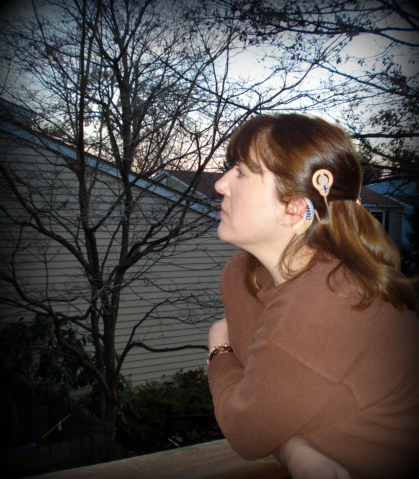
I have been trying to raise awareness about this week for three years now. This year, a friend noticed my “don’t miss” posting on Facebook and couldn’t resist teasing me about it. After all, I don’t exactly allow my challenges to be INVISIBLE. I wear a bright red ear mold on the hearing aid in my “deaf” ear. I wear sparkly “bling” on the cochlear implant on my “hearing again” ear. I go about my life accompanied by a hearing assistance/balance assist dog 24/7. I learned long ago that it was in my best interests to make an invisible disability – VISIBLE. It kept me from being knocked out of the way, and helped people realize that something about me is different. I can still work, shop, go to movies, hike, and dance… yeah. OK, maybe not that last part…
I just don’t hear well… especially in big, cavernous places, or busy, buzzing atmospheres. Once you get my attention and I know you are talking to me, I can actually hear you great! I may have to ask for a very occasional repeat, but for the most part I do really well. I’m proud of how far I’ve come in my hearing. Despite all my visible reminders and “kissing sidekick”, Chloe, people who know me well (friends, co-workers, and family members) will forget that I may have trouble if you don’t get my attention first and that I can’t move FAST – ever. Heck… sometimes even *I* forget that I cannot move fast. Nothing reminds me quicker than when I
fall
down
and
go
BOOM!
Through the years I’ve been able to meet some wonderful people. Some examples include:
4) Individuals in support groups for tinnitus, Meniere’s disease, hearing loss, and assistance dogs users (both face-to-face and in virtual environments online).
Not every disability can be made visible. Not every person chooses to even try and make something invisible – visible. They have their reasons and it is an individual’s choice how they want to disclose or keep hidden any disabilities they may have. It could influence their work environment, relationships, and even self-esteem. I choose to support ALL individuals who live with chronic illness, invisible illness, or disability. Recognizing these illnesses once a year in a push for national awareness, I hope will eventually dispel erroneous ideas and information about these very populations. This is one of the reasons I “blog”, and invite guest authors to write for “Hearing Elmo” as well. Raising awareness makes a difference… one person at a time.
I read some incredible stories of courage, faith, and perseverance this week at the national website for invisible illnesses. You can check out some of them here. I’m proud to be a part of a community of people who choose to live a victorious life – “in spite of”.
Take some time this week if you can to recognize the courageous people that you know who live with invisible illness and the choices they have made in order to live life to its fullest!