It’s Not Easy Being Green

I love Kermit. For the record, I loved Kermit before Miss Piggy loved Kermit. In the early 70’s, Kermit first poignantly croaked out that “it’s not easy being green”. Being green was something he could not help. It simply was.

This song has since been associated with people lamenting their own self-identity, yet coming to terms with “it being what it is”. By the end of the song, Kermit admits it’s OK to be green and that it is how he wants to be.

Am I OK Being This Way?

Something I have struggled with in acceptance of acquired disabilities is “the new me”. You see… I wasn’t born green. I can’t even say the transformation was similar to the beautiful miracle and mystery of a caterpillar changing into a butterfly.

And yet… it’s not like I asked to be late-deafened. It’s not like I asked to have a balance disorder like Meniere’s disease. But just like Kermit being green, it is what it is. There is no changing it.

So if this is me now, am I OK with it? Anyone with acquired disabilities ever struggle with that acquisition? If I asked for a show of hands, you’d first notice my own raised palm. I think you’d also notice a great number of hands. You aren’t alone.

Like many of you, I feel good about who I am much of the time. But I’d be lying if I said it’s always easy to be me. It’s not. So what to do?

Acceptance ≠ Resignation

I’ve never heard a person with acquired disability or chronic illness say, “This is easy”. It’s not. Yet do you know what I have discovered? I have this fuzzy, old memory of “life before disability” and IT STILL WASN’T EASY. My friends? Life is not easy. If you haven’t figured that out yet then you are still very young. Or, perhaps you are a frog.

I am discovering that acceptance of where I am (or even where I may end up), does not mean that I give up. Nor does it mean that I am resigned to an unhappy, unfulfilled life with no chance of ever giving back or having a purpose.

I get some “flack” with some of my readers about using the word “disability”. Rest assured, I welcome ALL opinions and discussion about the posts here at Hearing Elmo, as do the guest writers who participate. Some have suggested that using the term disability lowers one’s expectations and influences self-esteem. I understand the argument and point of view by those who believe this. I use the term because it is the terminology used by the ADA which ultimately protects my rights as a person with disability. It is about my freedom as a person who negotiates life a little differently. You may use disabled, differently-abled, special challenges, etc. In the end though it is green; though some may call it lime, olive, or chartreuse.

So today, August, 20, 2012, I am a person with disabilities. It’s not easy. But it isn’t impossible. Bottom line, because of who I am today, I compromise. I’m going to Hershey Park with a big group of couples from our church. I’m the self-designated pocket book holder. I won’t be riding any rides. I cannot. But I anticipate a day of fun and fellowship with other folks my age. I don’t choose not to go. For me, that would be giving up so it is not an option.

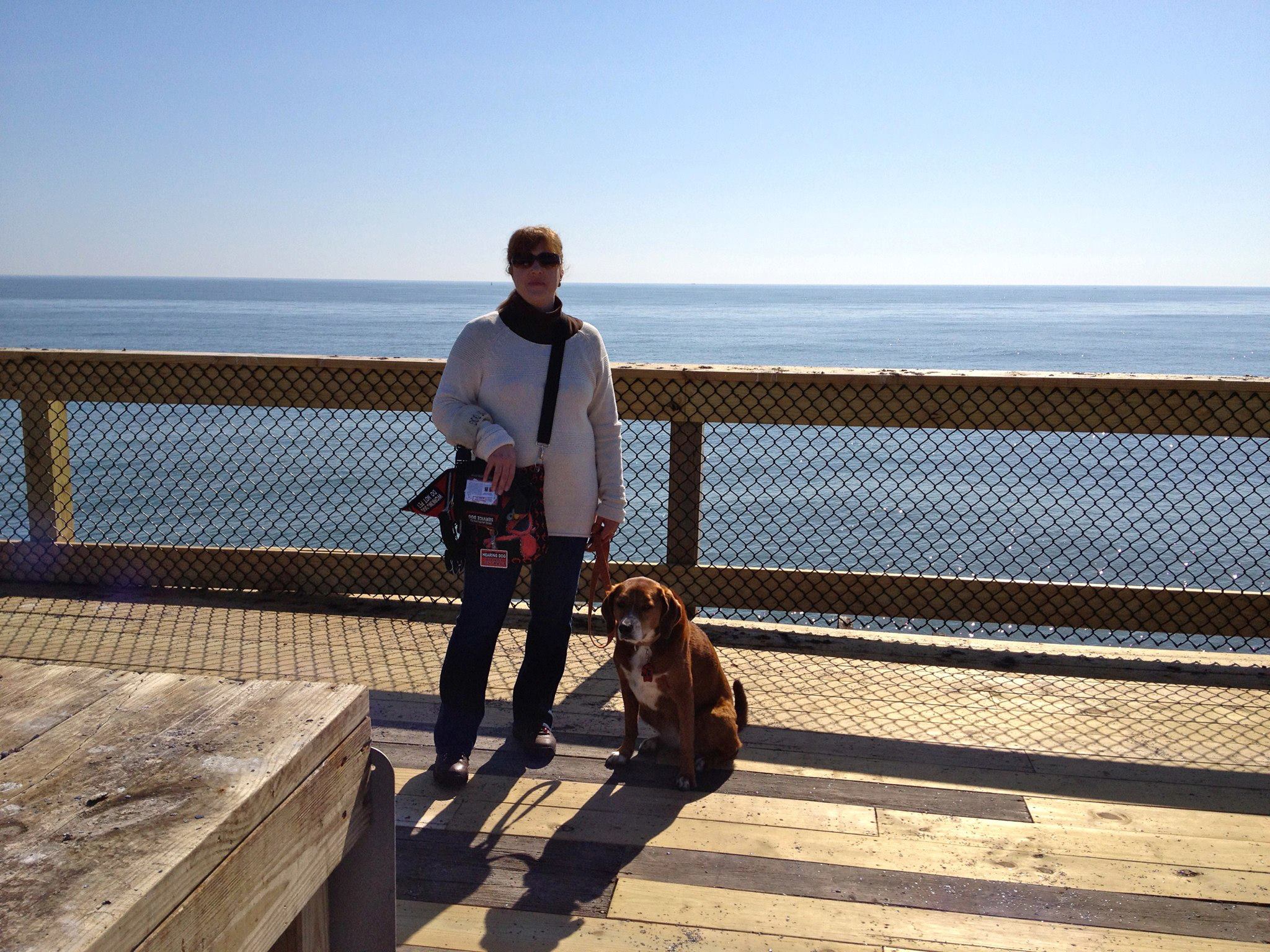
I don’t use the phone well, but I can use captioned phones, assistive technology, and my cochlear implant to make do. I use email a lot – and yes, FaceBook too. I walk like the world is in motion – especially on rainy days. Yes, yes, I know. The world IS in motion, but trust me! My earth’s rotation is faster than YOUR earth’s rotation. So I often walk with a cane. I have an assistance dog who counter-balances, and retrieves things I drop. I say, “Whoa!” a lot.

Don’t Pin a Super Hero Cape on Me!

Before you pin a super hero cape on me, please know that I don’t always have good days. I don’t always wake up and believe I can take on the world. I do not always look in the mirror and like what I see. There are times I worry about where I am in terms of what I can and cannot do. What is important, I believe, is what you do after having those very normal feelings. Worried? Totally normal. Depressed? This can be a very normal reaction. Pissed? Believe it not, being angry is a normal response to acquired disability. When you STAY worried, depressed, or pissed it becomes a problem. Don’t be afraid to talk to others. Perhaps you need to see a counselor. Maybe you need to do something just for YOU to work off some of that negative steam.

You will never hear me say it’s easy being green. It’s not. But acceptance of where we are allows us to then LIVE and even to give back – to be productive and have a life of purpose. Just like Kermit croaks, we may not be sparkly and flashy like others. Within each of us is the desire to discover and acknowledge that our being green – is OK. Perhaps even good.

I welcome your thoughts on this!

Denise Portis

© 2012 Personal Hearing Loss Journal

It’s Not Easy Being Green lyrics

It’s not that easy being green
Having to spend each day the color of the leaves.
When I think it could be nicer
being red or yellow or gold
or something much more colorful like that.

It’s not that easy being green.
It seems you blend in with so many other ordinary things.
And people tend to pass you over
’cause you’re not standing out like flashy sparkles in the water
or stars in the sky.

But green’s the color of Spring.
And green can be cool and friendly-like.
And green can be big
like an ocean
or important like a mountain
or tall like a tree.

When green is all there is to be
It could make you wonder why, but why wonder why?
Wonder, I am green and it’ll do fine
it’s beautiful!
And I think it’s what I want to be.
A Whispered Thank You

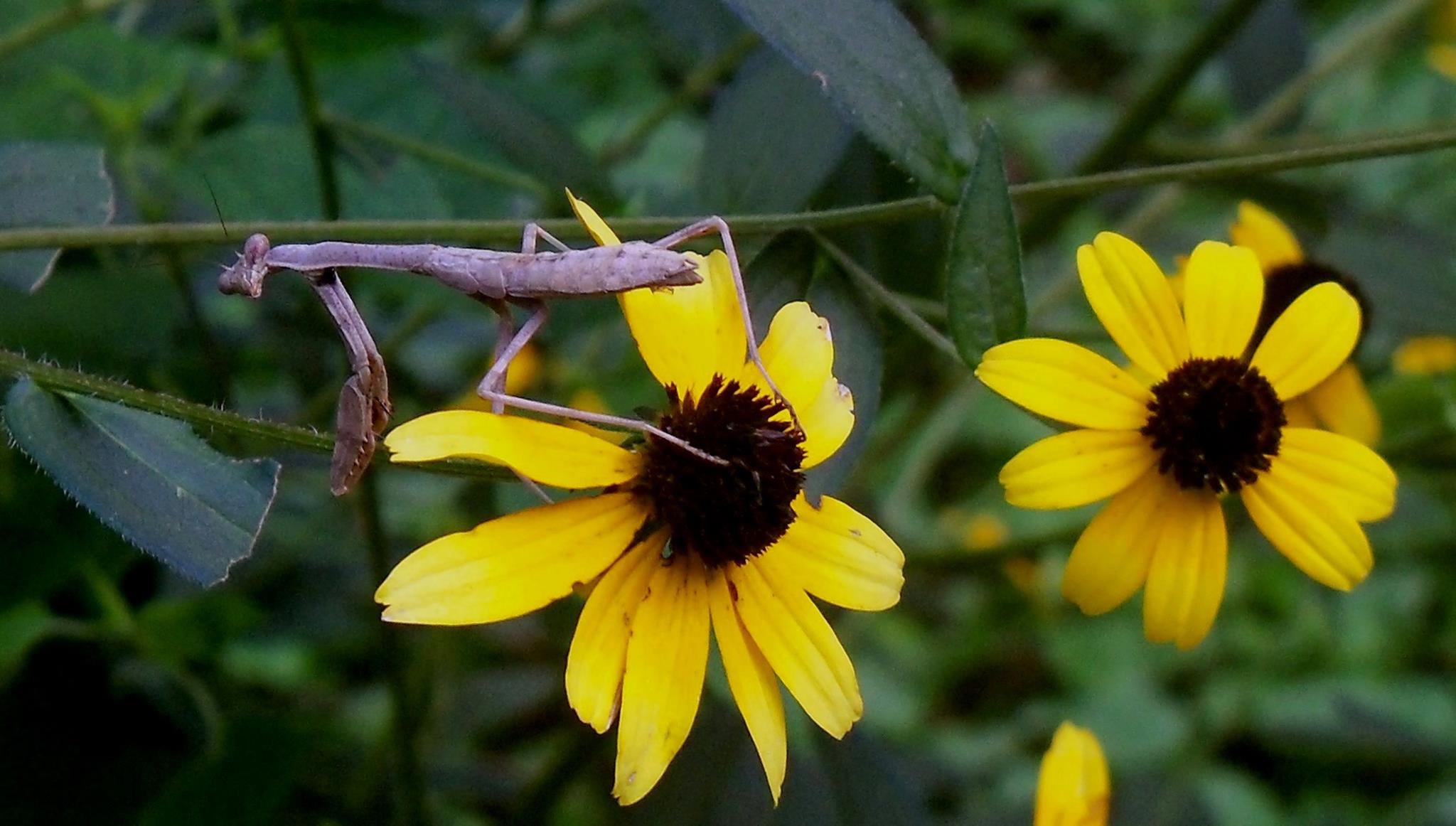
Praying Mantis calisthenics – photograph by Deborah Marcus (NC), friend and nature photographer

Not long ago while visiting in NC, I spent an afternoon with my friend, Deb, at the North Carolina Zoo. Deb takes pictures of life in nature; everything from plant life to animal life (and everything in between). She sees things that most folks miss and often stopped and pointed out things I would have just walked right by as my “notice-er” is out of practice. When Deb takes a picture she always whispers, “thank you”. When I first caught her doing it we were just thrilled and tickled that I was actually hearing her whisper of thanks! Cochlear implant sisters-in-arms, we always celebrate those moments.

However, since my visit I have given her habitual murmured thanks a lot more thought. When I tend to think on somethin’, I ponder, speculate, question, and soul-search. Eventually I write about it – even if it takes me almost 15 months to get around to it!

Like a Dangling Spider Cares?

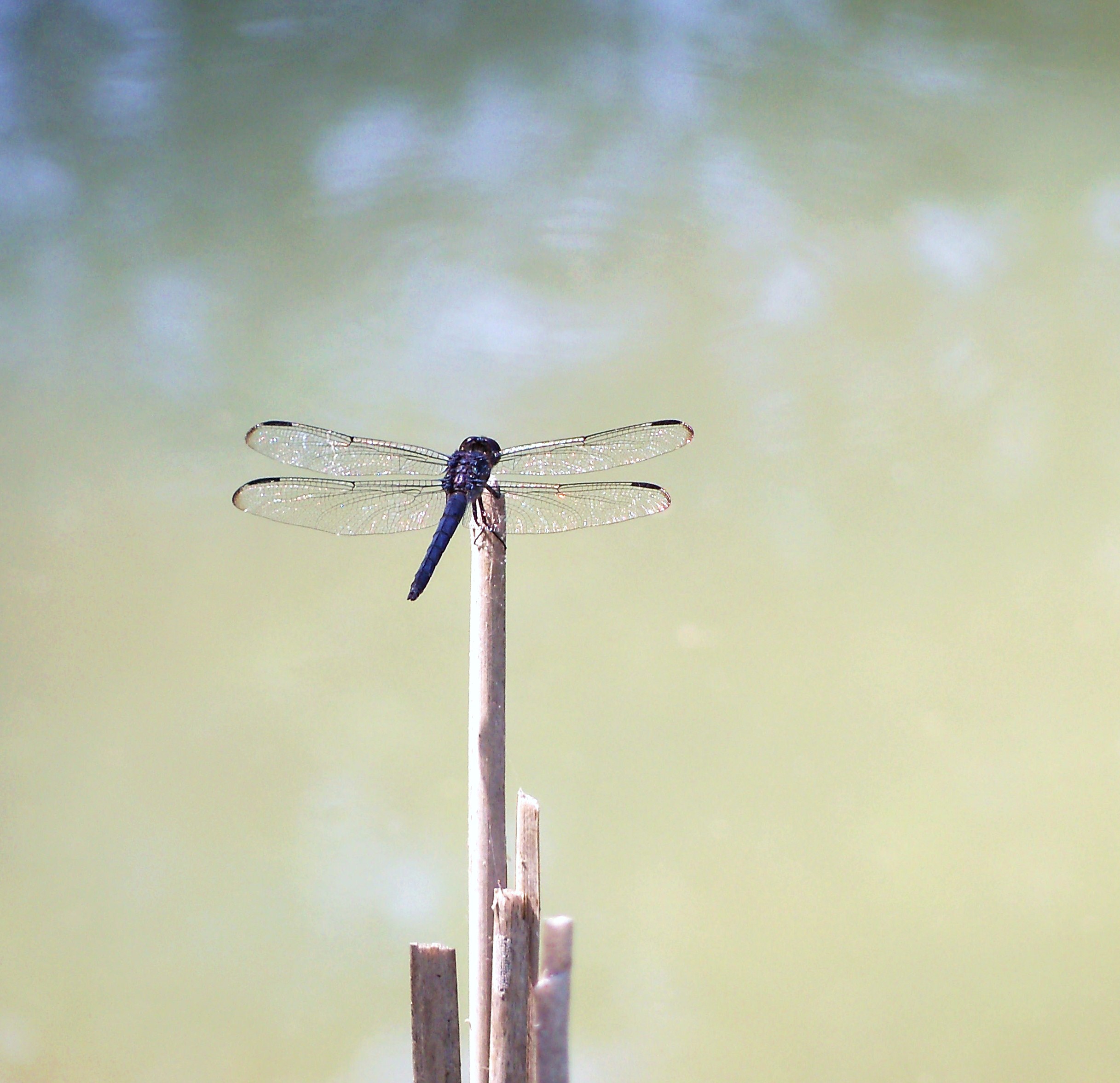
I have to admit, when I first heard her thank a lily-pad, skimming dragonfly, I thought, “Umm. This critter does NOT care if she thanks it for the Kodak moment or not”. But it’s deeper than that. An attitude of gratitude and respect is cultivated. We certainly aren’t born with it. I remember teaching my toddlers “please” and “thank you”. Sure… some of that can be a learned behavior from appropriate modeled examples. Some folks are just naturally friendly and easy-going. Some walk around like a sour puss (I’ll not mention any names) and thanks is a foreign language. Most of us fall somewhere in between, our emotional health dependent on life circumstances. This is why an attitude of gratitude must be created and exercised faithfully to instill a HABIT.

It starts with the small things. Walking out underneath my porch to dispose of an empty plastic container, I thank the spider who just snagged that mosquito. (No. I haven’t found it in my soul yet to thank any skeeters). I try to thank my family members for doing things – EVEN IF IT IS THEIR JOB TO DO SO. I thank my students for turning their work in on time; or, if late, for eventually turning it into me! I thank the very pregnant, adjunct coordinator for my department, as she certainly has better things to do (like nesting) than to email all of us our reminders for the semester. I thank the person in training at the U.S. Post Office for waiting on me – which they stuttered out a very surprised “Your welcome!”. (Doin’ everything I can to assist in a decrease of “goin’ postal”). I thank the cashiers at the grocery store, Wal-mart, and CVS. (I thank the produce department workers, which is only funny to you if you know me well). I thank my waiter/waitress every time they do the smallest thing for me at a restaurant… even though it is their job. I thank “hound dog” for every task she does for me, which only increases the tempo of her wag. Do you see how far this attitude of gratitude can go?

Sitting with a friend waiting for small group to start one Sunday morning, I startled her by saying, “thank you for being my friend”. She sat there with her mouth hanging open waiting for “more” or for “the other shoe to drop” (like… would you DO THIS FOR ME?) She said, “That’s it? Well gee. I’ve not received a thanks like that in awhile!” I grinned at her but thought, ►well why not?◄  Why do we not thank the folks in our life even when there is no real reason? Keeping it to ourselves doesn’t bless anyone.

“Silent gratitude isn’t much use to anyone.”

~ Gladys B. Stern

Expressing our thanks must be EXPRESSED. William Ward said, “”Feeling gratitude and not expressing it is like wrapping a present and not giving it.” According to “Happy Life U” (you should check it out!) expressing thanks can actually improve emotional happiness.

New research shows that practicing gratitude may be the fastest single pathway to happiness, health, long life, and prosperity. In a remarkable study performed by Dr. Emmons, people who kept a gratitude journal for just 3 weeks measured 25% higher on life satisfaction after wards. They exercised more, drank alcohol less, and their families and friends noticed that they were nicer to be around. And the effects lasted for several months beyond the initial 3 week study. Other studies on gratitude are confirming these results. People who take the time to notice and appreciate the good things that come their way through grace, or luck, or the goodness of others are happier and more peaceful. They do better on cognitive tests and tests of problem solving skills. They practice healthier habits, have better relationships, are more optimistic and live longer. Gratitude is one powerful emotion (Happy Life U, 2011-2012, para. 5).
 

So What Has This Taught Me?

I already explained I’ve been thinkin’ on this topic for better than 15 months. I’ve even followed up with a conversation or two with my friend, Deb, about this which likely has her wondering why this is so important to me. I write a great deal about invisible and chronic illness, acquired disabilities, and living victorious lives in the bodies in which we find ourselves living.

Naturally, I had to research if being thankful could help folks in the community of souls of which I self-identify. Wood, Joseph, and Linley (2007), suggest that gratitude can be a powerful social support tool that folks with disabilities can use to help them. They asked 236 folks with various burdens (disabilities, chronic and terminal illnesses, addictions, etc.) to participate in a study that asked them to keep a gratitude journal. Folks discovered their written “thanks” eventually jumped off their pages and out of their mouths. “Gratitude correlated positively with seeking both emotional and instrumental social support, positive reinterpretation and growth, active coping, and planning” (Wood, Joseph, & Linley, 2007, p. 1076).

Allison Shadday has MS. She believes we need to shift our attention. “Sometimes we all have to slow down intentionally before we’re able to genuinely appreciate the many positive aspects of our lives. If you find yourself feeling critical or negative during the day, take a deep breath and redirect your attention to something for which you’re grateful. Notice if your body becomes more relaxed and your breathing more steady. Tune in to how your attitude shifts when you focus on the sweetness in life. This is living consciously” (Shadday, 2006, p. 51).

It seems… being thankful makes us healthy. More than that… it can make us HAPPY. The recipient of our thanks may not deserve it. They may not look like they need it.

Do

It

Anyway.

I think you will find it can change YOUR life, for the better.

Denise Portis

© 2012 Personal Hearing Loss Journal

Note:  You can “see” and “hear” more from Deb at http://visionsofsong.wordpress.com/

Happy Life U. (2011-2012). New Science of Happiness. Retrieved August, 12, 2012, from http://www.happylifeu.com/Attitude-of-Gratitude.html

Shadday, A. (2006). Embracing an attitude of gratitude. Inside MS, 24(6), 50-51.

Wood, A. M., Joseph, S., & Linley, P. (2007). Coping style as a psychological resource of grateful people. Journal Of Social & Clinical Psychology, 26(9), 1076-1093.

How Important is it to Prepare?

With family in Colorado dealing with the fires, and our own area’s recent experience with widespread power outages after a “land hurricane”, disaster preparedness has been on my mind lately.

Isn’t it crazy that we don’t think to plan for something until it actually happens? Then we get some things together for the next time, only for a decade to go by before it repeats itself. By that time batteries are dead, water is stale and evaporated, and extra dog food has turned to powder.

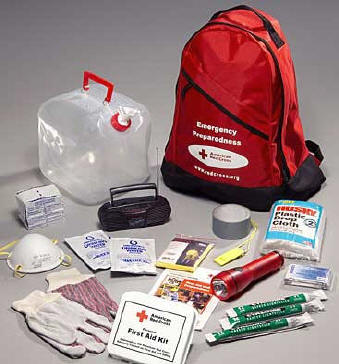
Preparing can be expensive too; something most of us have difficulty budgeting for should a disaster occur. Yet, little by little we CAN get together some essentials. Purchased over time, these items may be less of a punch to our weekly budget for food and other essentials. If you dislike gathering things together for a price, disaster preparedness kits can be purchased at stores or online.

What to Put in a “Kit”

You can find numerous resources online with information about what to put in a disaster preparedness kit. You may have to prepare with numerous people in mind, or even numerous pets. According to the experts it is best to have a kit on hand that can be picked up and taken with you in the event of an emergency – fire, hurricane, or flooding… things that can be predicted to some degree as the result of early warning systems in the area.

With power outages, however, you may need a bigger “kit” for numerous days. Power outages can be planned as the result of city construction or tree removal. Most of the time though? Power outages are an unpleasant surprise. Causes can range from results of mother nature at work, or a hubby at work with a shovel and a poor attention span.

72Hours.org has some terrific ideas in what to put in a disaster kit. You can access the site HERE. FEMA and Ready.Gov has some additional plans and ideas at their site. These include how to let friends and loved ones know where you are and how you are doing. You can access these plans HERE. The ASPCA has some wonderful ideas and plans for those of us who may have service animals and other family pets. You can access that information HERE.  The Red Cross has some additional ideas for pet owners HERE.

The key is to BE PREPARED. When my family and I experienced 36 hours of no power in 95 degree heat, it isn’t something we decided to do for FUN. It was an unexpected and unpleasant surprise. We had plenty of water and gas in our cars, but could not even leave the house at night in sweltering heat because of numerous pets that needed attention, supervision, and assurance. We holed up in the basement and did our best to keep everyone calm and as cool as possible. Because I shop at Costco, when I buy batteries, I buy A LOT. But I wasn’t keeping close tabs on what sizes we had, and our flashlights and lanterns were scattered all over the place. (The power outage began late at night after the sun had gone down). I discovered after doing a little investigating after the power returned, that generators are expensive. They can also be dangerous to operate if you do not know what you are doing. Yet after our experience, I started a “generator piggy bank”. It may take us YEARS to have enough to actually buy one, but imagine being able to run some fans and keep the refrigerator running during a long-term power outage?

I welcome additional ideas our websites that may help folks prepare.

Disabilities or Health Issues?

As a person with disabilities I was prepared BY ACCIDENT. I purchase cochlear implant batteries in bulk once or twice a year. Thankfully, my cochlear implant is NOT the type that uses rechargeable batteries or I may have been deaf as well as sweaty! I noticed that because of the excessive heat, my balance was worse than usual. I was unprepared for a SUNNY day to be staggering around as if it were a rainy, overcast day. My husband who only has one kidney, was especially fatigued and weak because of the heat. I had friends that were unable to power their scooters that they use for mobility purposes, but their manual wheelchairs were in storage! These kinds of things can make a difficult situation much worse.

If you have special needs of ANY kind, be sure to take these into consideration when you do your planning. Because we are all aware of how important that planning is, right? (GRIN)

Denise Portis

© 2012 Personal Hearing Loss Journal

Dissension in the Ranks?

We get along great – thank you very much!

One of the big arenas in which I connect with others struggling with some of the same issues as I do, is Facebook. It never ceases to amaze me some of the criticisms I read among not only the hearing loss community, but the disability community as a whole.

Take the word “disability” itself. Some people have a good ol’ fashioned hissy fit if someone uses the “D” word.

Others may get uptight if someone brags on the brand of hearing aid or cochlear implant they use. Some folks may get up in arms about who did the right thing by whether or not they owner trained an assistance dog, or trained for a “program” service dog. I actually saw a conversation about whether or not people who lose their hearing should – or should not – use ASL (American Sign Language).

At times I just want to throw up my hands and whine loudly, “Can’t we all just get along?”

Nothing Wrong with Being Proud

Pride is often vilified. The phrase “Pride goeth before a fall” is used frequently to remind us that a prideful (almost disdainful) attitude not only turns others off, but ultimately may cause a person to fail or not achieve their goals. Pride is often categorized as a negative trait. However, pride may also be a GOOD thing. We can be proud of our kids, our skills/talents, or of our affiliation with a group or organization. It may instill a sense of identity. Zia and Katzenbach (2010), suggest that a healthy sense of pride can potentially motivate an individual to doing good work for others; to serve, inspire, and ignite a passion to do your very best.

Sometimes I “rag on” my husband about being prideful. It is usually with an eye roll while inferring “we all know how you can be”. Men are often accused of being susceptible to a negative kind of pride and ego. But ya know something? One of the things I love most about my husband is his healthy sense of pride. He knows what he is good at and in that knowledge comes a sense of urgency to share those things. He recognizes his gifts, talents, and skills, and uses them to assist others. I’m reminded when I choose to give him a hard time about being cocky occasionally, that many of the things I love about him actually stem from his sense of pride.

Part of embracing who you are “now” may mean you begin to associate with a group or community of people. Chandler (2009) believes that people with chronic illness or visible and invisible disabilities should use disability pride to their advantage. This doesn’t mean we become our disability, but rather we embrace who we are despite our disability. “Fundamentally, Disability Pride represents a rejection of the notion that our difference from the non-disabled community is wrong or bad in any way and is a statement of our self-acceptance, dignity and pride. It signifies that we are coming out of the closet and are claiming our legitimate identity. It’s a public expression of our belief that our disability and identity are normal, healthy and right for us and is a validation of our experience” (Triano, 2009).

So Why Do We Criticize Others?

If you follow Hearing Elmo, you know that I get really excited about guest authors. (If you are interested in writing for Hearing Elmo, shoot me an email at denise.portis@gmail.com). I know there are experiences within the community that I do not understand because I do not live it. It is good to get other’s perspectives and thoughts about issues that relate to our community.

Being diagnosed with hearing loss can frustrate patient, family, audiologist, and doctors. It is not “one size fits all”. Causes, degrees, implications, and symptoms may be extremely varied. Having balance problems does not mean that we have similar experiences, or erm… all FALL THE SAME WAY. My life with hearing loss and the balance problems I have, may be completely different from someone who shares the same diagnosis. We are still individuals.

So why do people within our community argue, posture, and belittle someone else who chooses a different path? Through the Hearing Loss Association of America, I have heard the motto “whatever works”. This means that whatever a person chooses to mitigate their own challenges is supported by the community as a whole. Have a hearing loss but do not want to learn ASL? No problem. But don’t blast those who chose to embrace the Deaf community and use ASL as their primary means to communicate. Don’t criticize those who choose to use the language (or variations of) when batteries die, or environments are not conducive to communication. Love your hearing aid? I’m happy for you! But if someone else chooses not to use them or horror of horrors… chooses another brand, don’t verbally bash them!

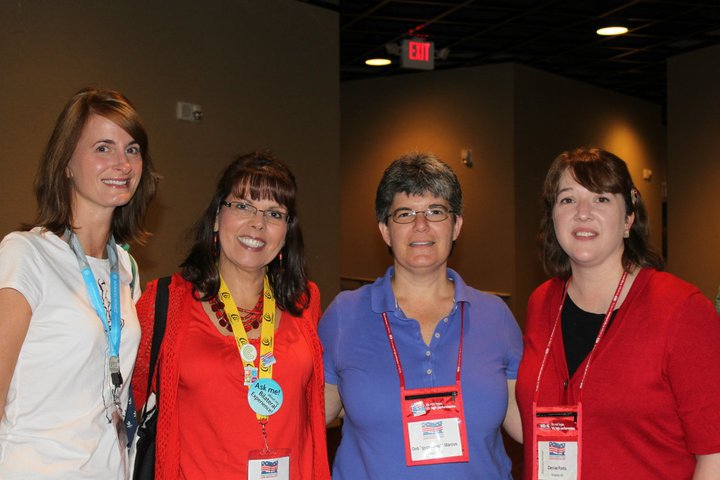
The picture at the top of this post is a photo of some of my dear friends who I met as a result of my own hearing loss. Our hearing loss is as different as our appearances – and ACCENTS (grin). We struggle with different things and may have chosen various coping skills by which to live a victorious life despite our challenges. Yet, we celebrate our SAMENESS. (Hey! That is a word – – look it up!). Is it not hard enough to keep a positive attitude and strive to make a difference without cutting down those who have challenges of their own?

Does this mean we aren’t entitled to our own opinion? Of course not. However, there is a big difference between having an opinion and expressing your opinion. To do so and deliberately criticize or demean another is never the right thing to do. As a matter of fact, to insist “it is my way or the highway” makes you disabled instead of a person who happens to have a disability. ‘Course… that is just my opinion as well!

Denise Portis

© 2012 Personal Hearing Loss Journal

Chandler, E. (2009). Pride and shame: Orienting towards a temporality of disability pride. Radical Psychology: A Journal Of Psychology, Politics & Radicalism, 8(1), 2.

Triano, S. (2009). What is disability pride? Retrieved June 30, 2009, from https://www.disabledandproud.com/power.htm    

Zia, K., & Katzenbach, J. (2010). Getting back on the fast track with pride. Leader To Leader, 2010(58), 33-38.

A Special Kind of “Stupid”


On Monday evening, May 14th, David Walters of Bel Air, MD, pulled a fire alarm in  a crowded theater. He was issued a criminal summons the following day and faces a $5,000 fine and up to 5 years in jail. You can read about the story HERE. More on the story HERE.

It seems David was upset that the movie was open captioned for patrons who are deaf or hard-of-hearing. Specific movies (identified at the ticketing counter) allow people with hearing loss to enjoy newly released movies on the big screen. It allows equal access. Sure… we can purchase the movie later after it goes to DVD and watch it at home. But who wants to miss out on the buttery popcorn, movie candy, cherry Icee‘s and being with friends and family at the theater? Nothing beats the big screen! David marches out and complains – evidently loudly. He is offered a refund which he refuses. He goes back in to finish the movie. When finished he comes out again and loudly complains – now demanding a refund. When denied (because he went back into the movie), he gets angry and pulls the fire alarm. This shuts down all the theater’s screens and panics movie goers.

This is a special kind of S.T.U.P.I.D. When I first read about this story, I have to admit. I had some “AVENGER” feelings going on in my own heart and mind for this idiot. I thought, “Wow. If he could live one day in my shoes. It would be poetic justice for him to lose his hearing someday!”

Deaf For A Day

Because I live with both deafness and a balance disorder, I can tell you honestly that really? I wouldn’t wish deafness on anyone. Yeah. This jerk probably deserves it, but hopefully what he’ll get is justice. I hope because he endangered so many people that they make an example of him. I hope everything was done correctly in his arrest so that he doesn’t get off on some kind of technicality.

Each year I ask my students in my ASL1 class to voluntarily participate in a “Deaf For a Day” assignment. Later, they write about it. Most “get it”. They understand what the assignment was about and why they are asked to participate. Each year, however, I have either a student or two, or a parent or two, very disgruntled about the assignment. In the follow-up writing assignment, some disclose how poor of attitudes family members had because they were unable to communicate with their student in a “normal” way.

Yes.

I like to think that should something happen to their child and they lost their hearing, these parents would do all that they could do to be supportive and loving in the transition to a new way of communicating. They may not use ASL even, but technology is not a 100% fix. Even cochlear implant surgery is not 100%. I’m bi-modal (both cochlear implant and hearing aid) and although I hear really well, I still am considered a person with hearing loss. There are times I have to ask for a repeat, or ask someone to follow me to a quieter location.

Put Yourself in Their Shoes

Before you think to yourself that you would never be this “special kind of stupid”, consider this.

Have you ever parked in a handicapped space to save time because you were only running into the Post Office for 5 minutes?

Have you ever sat at a table clearly marked for handicapped patrons at a local fast food place because there were no free tables, and then failed to keep a look-out for anyone coming into the establishment that may need that table?

Have you ever reached to pet a service dog without requesting permission of it’s owner?

Ever felt exasperated (and let it show) while waiting in line behind a mom with a child with autism or other special needs who was having a meltdown?

Have you ever felt impatient as someone with mobility issues that fumbles and drops items while you are waiting in line at the cashier?

Ever see someone stumble or walk funny and immediately think they’ve been drinking instead of thinking they may have a balance disorder?

Ever honked your horn and grimaced at an elderly driver who cautiously entered a very busy intersection during peak rush hour?

Not understanding what chronic fatigue syndrome, fibromyalgia, or Lyme disease actually are, have you inwardly cringed and rolled your eyes while listening to a seemingly endless list of complaints about pain from a co-worker, fellow church member, or acquaintance?

Ever see someone mistreating a homeless person or person with mental illness and not intervened?

Ever stepped into a handicapped stall in a public restroom because the others were full? Exactly how are you going to know someone is there who needs it when you are actually in there doing “business”?

You may not be pulling fire alarms and endangering hundreds of people, but you are still choosing to be a part of this special kind of stupid group. I’ll admit that I’ve made some of these mistakes myself. We all have.

I’m asking that all of us take a minute, however, to think about how we can do better. I don’t know about you, but I don’t want to be a special kind of stupid.

Ever.

Let’s love our fellow man, offer a helping hand when we can, and smile at someone just because it’s Monday. Buy a cup of coffee for the next person in line. Hold the door for someone.

Maybe.

Just maybe…

it will be contagious.

Denise Portis

© 2012 Personal Hearing Loss Journal

If Fish Aren’t Stupid…

I love it when I learn something new. Even when that learnin’ means that it contradicts something I previously thought was true. I grew up on a farm/ranch in SE Colorado. The families I knew, including our own, had all kinds of animals. Common critters included horses, cows, pig, sheep, chickens, turkeys, peacocks, ducks, geese, and even a llama or two! Something you didn’t see a lot of in the family rooms of various ranch houses were aquariums. We had some big ol’ goldfish that grew to an astonishing size in the cow tank near our house. What was even more astonishing than their size is that they survived the frozen tank winter after winter. I can’t remember who first told me that fish are stupid. This was long before “Finding Nemo” even came out in theaters, with Dory convincing us all once and for all that

fish.

are.

stupid.

After I went away to college and married a city boy, I actually lived in town big enough to have cable television. I found that I had a lot of years of catching up to do on Animal Planet, the Discovery Channel, and many other educational animal shows. However it wasn’t until my daughter’s boyfriend – the one who happens to know all there is to know about owning a freshwater tank – put up a couple of aquariums in our home on behalf of beloved daughter, that I began to see freshwater fish up close and personal. As a matter of fact a big 30 gallon tank sits behind my desk, so it is pretty hard to miss the freshwater angelfish swimming around the tank. I very soon discovered that my preconceived notion about the stupidity of fish was – well – WRONG. They really do NOT have 30 second memories. They are affectionate, can remember the easiest “trail” through the freshwater plants to circumnavigate the tank, will follow a person around the tank to “beg” for food, they can be aggressive and yet can be tame enough to actually take blood worms from your fingers. They will live in harmony with other types of fish (but not all), and seem to actually play with each other occasionally. Don’t get me wrong. I’m not ready to whip out an IQ test to see how they fare, but I really no longer believe that fish are stupid.

Other Wrongs – Now Corrected

I just turned 46-years-old this week. That is really hard for me to wrap my mind around. I remember when my mother turned 46-years-old, I was a very young and immature 23-years-old. I remember filling out her birthday card to send from my little apartment in Chattanooga to her “home on the ranch” in Colorado and thinking… “Wow. Mom is O.L.D. She is definitely entering her “senior” years now.” I’ve got to tell you now that I’m 46-years-old myself? Well, let’s just say I want to open mouth – insert foot.

I also grew up with very limited experience with any person with chronic illness or invisible disabilities. I did not have very much experience with people with even visible disabilities. Growing up in a small farming community limits one in that way I guess. It wasn’t until I became deaf and developed Meniere’s disease that I first really began meeting people of all kinds who are “differently abled”. Having an acquired disability today is much different than it use to be simply because we have the Internet that connects us to each other and to a wealth of information as well. I grew up believing that people with disabilities were to be pitied. Knowing what I know now about a community of which I am proud to be a part of, pity is the last thing any of us want. I’m constantly amazed by the perseverance and strength that I see in people with all kinds of various “differences”. I hate to even use the word disability, but it is the language present in our current laws that protect the rights of those who have them. A fellow client from Fidos For Freedom, Inc., first introduced me to the term “differently abled”. I find that this phrase much more accurately describes those who live a victorious life despite any physical, mental or emotional differences they may have. Through networks such as the Hearing Loss Association of America, Cochlear Americas, Invisible Disabilities Community and Invisible Illness Awareness Week I have learned that having invisible issues also creates incredible strength and depth to the human soul. I’ve met some wonderful people who have taught me how to navigate life with grace and a “can do” attitude.

I’ve learned that all of us should “check our preconceived notions” at the door. Assumptions are a discriminatory lot. I do have to admit to also enjoying lessons learned from erroneous stereotypes. After all, that means I’m still learning. You can teach an old dog new tricks! After all, I’ve learned that fish aren’t stupid…

Denise Portis

© 2012 Personal Hearing Loss Journal

Time Off

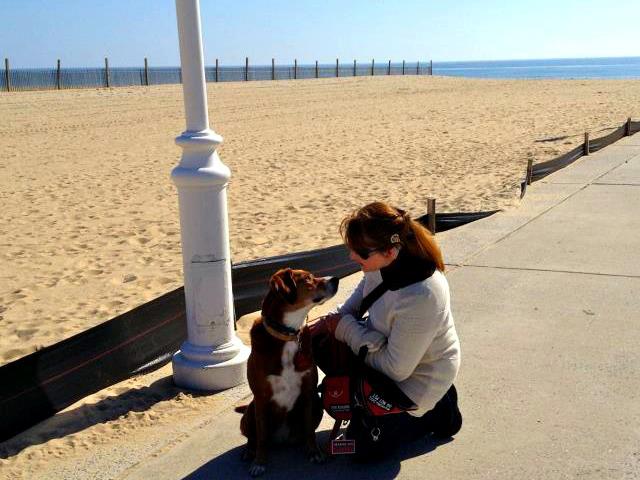
Chloe's vest comes off and she gets the "beach rules" from Denise. Unaccustomed to being "vestless" in public, she was very attentive and unsure in the beginning


As a surprise, my husband reserved a couple of  nights in a motel at Ocean City, MD, while we were on spring break from work. (One of the perks in working for a college). Apparently March is the time to go if you are not a crowd lover – or “sun” lover. Too cool to lay out or play in the surf, but beautiful weather for walking and many opportunities for quiet time.

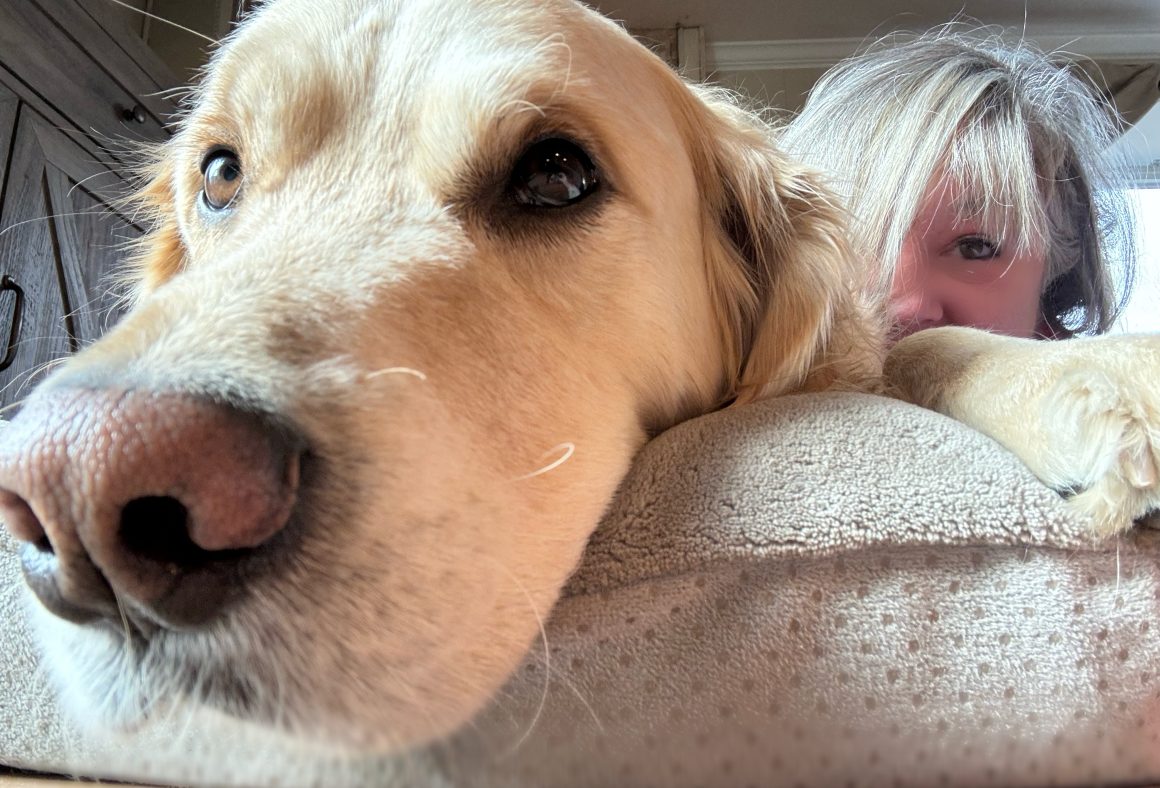
Chloe is normally “working” when she is in public. Determined to give her some time to just be a dog, I removed her vest for large amounts of time. She was at first a little timid about being without her vest. Once she saw some other canines on leash though, the wag was back in her tail. Even working dogs need down time. People ask me all the time if Chloe gets to relax. I always have to grin. Chloe is almost 8 years old and at home? Well, let’s just say she knows how to relax. She doesn’t wear her vest at home, but she still alerts to timers, my phone, or my name being called. But she naps (and snores), she plays with her buddy, Tyco (our family dog), she has several squeaky toys, she squirrel watches, and eagerly awaits family members coming home.

Chloe enjoys working though. She danced her way on campus just this morning and wagged her way all the way to the elevator. Sometimes I wish some of her “wag” would rub off on me as 7 AM classes on Monday seemed awfully early to me after a week off!

Everyone needs time off. It can be hard to do if you are working to pay bills, save money, or try to get out of debt. But time off can be in small, “mini” vacations. Even an hour or two here and there can be very beneficial in helping a person re-group.

People with DisABILITIES Need R&R too!

I have met a number of people with various disabilities that have confided that they rarely do what others call “fun” things. Think about it for a minute. If people who walk without assistance, hear without assistance, see without assistance, and speak without assistance enjoy things like movies, walking, reading a good book, or hanging out with friends, well? It just may not be that easy for others.

I like going to the movies. I went to see “The Hunger Games” over spring break with my husband and 21-year-old son, Chris. But I don’t get the same level of enjoyment out of movies that they do. Even with Chloe by my side, I am very disoriented in the dark, especially if my cochlear implant is picking up the very loud commercials and previews on the screen. As I make my way to a vacant seat, I am often fighting the effects of vertigo. After I get seated – hopefully in a place where people won’t have to crawl over my assistance dog and I – it takes a number of adjustments to find a good program on my CI to best hear the movie. If I do that, I sometimes find it difficult to converse to the person right next to me too. At times I miss things said in the movie. If I’m with someone I know well, I’m not bashful and will lean over and ask, “What did they say?” There are not any captioned theaters close to my home (although I am glad there are some within an hour’s drive), so most of the time I go to the same movies you would attend. However, not having captions mean I have to really pay attention! Can I just be honest and say that I’m unable to eat popcorn and catch an on-screen conversation at the same time? (BIG GRIN). I have to really focus and concentrate to understand what is going on. So it is still “fun” for me… just not perhaps the same level of “fun” it may be for you because it does take WORK.

For some, sitting down and reading a book may not be “fun”, and it doesn’t mean they don’t enjoy a good book. Some folks have trouble even holding a book, or turning pages easily. Taking a walk may relax YOU, but for someone who has Meniere’s disease it can be difficult to do a simple walk. My world constantly turns counter-clockwise. It is a slow rotation, mind you, but a rotation nonetheless! On high humidity days, the rotation picks up speed – one of the reasons I just don’t try to walk on days like that! So walking on a sidewalk in a straight line takes concentration. I have given up walking with family members. Although I enjoy the conversation, I cannot talk and walk at the same time! I can talk to my walking buddy, Chloe, and she just listens. I don’t have to worry about her end of the conversation and my having to make sense of what she said while still putting one foot down in front of the other. We love to go into the woods on trails and in grassy areas too. This requires even more concentration. I usually shut up at this point as I have to carefully balance each step. So yes… I enjoy walks but probably not on the same level you do.

Despite having to make adjustments and find a new way of doing seemingly mundane things, even folks who are differently-abled need to take breaks. Perhaps even a lot of them! They may be in the form of naps. I am learning that napping or resting is a necessary requirement for many people with certain kinds of invisible illnesses. I require 8-10 hours of sleep a night. (When I tell people that, they FALL OUT, but if it helps you get through a day “hearing well”, you do anything necessary). Others may require a nap – or TWO. They aren’t lazy. They aren’t depressed (although just like anyone, people with disabilities can and do get depressed). They simply require some extra rest in order to continue a day’s work.

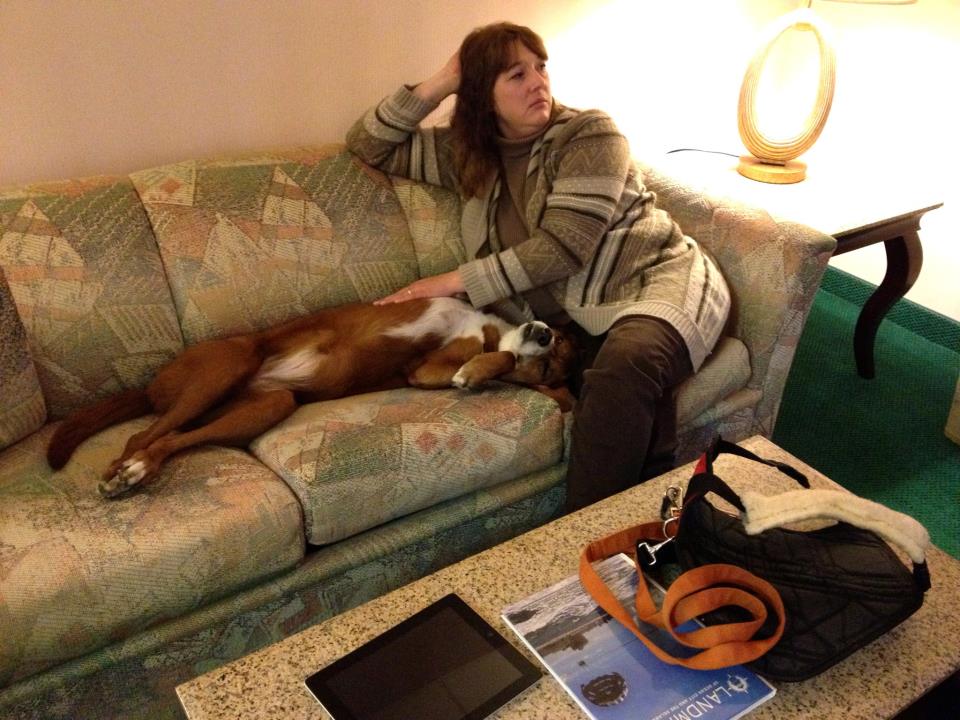
Chloe "relaxing" on a mini vacation at the beach. She really knows how to de-stress!

Careful not to judge. You may wonder why someone doesn’t enjoy the same kind of “down time” you do even though you have the same disability. Each person has individual differences in their disability. I have a friend who enjoys running in his spare time. I’m talking about REAL races… the kind where you take off after hearing a starting pistol! He’s an incredible runner and does very well. He is a bi-lateral cochlear implant user. When I first met Sam, I was astonished to hear what he did for fun! Having hearing loss and balance issues, running isn’t something I can enjoy.

I’m not saying we shouldn’t look for others who are struggling with some of the same issues. We can mentor, give advice, and support someone else in a way that will give them the tools they need to live a victorious life. But do be aware that you may share a diagnosis, but have different symptoms, struggles, and issues. We can still be a listening ear and give encouragement. Just be careful about insisting on something that works really well for YOU, because it may not work really well for them.

I’d really love to hear about some of the ways you choose to unwind! What do you do to relax? What is FUN for you? What do you need to do in order to enjoy some of the things others do without accommodation?

Denise Portis

© 2011 Personal Hearing Loss Journal


Kidney Disease and Hearing Loss

Recently, I read a blog that mentioned kidney disease and hearing loss. You can read the post HERE.

My husband, Terry, and I have been married almost 26 years. He was born with only one kidney, and the one he has doesn’t work ideally. Because he has always lived an “alcohol/drug” free life, he is in good health considering!

I have noticed, however, that he has started showing signs of hearing loss. It started with the television. We “TIVO” everything so that we can watch favorite shows when we have time to sit down and watch them together. In recent months, I have noticed that HE is asking me to turn the volume up. I’ll let that sink in for a minute (grin). I’m deaf. Sure I “hear again” with a cochlear implant, but HE is asking ME to turn up the television. He usually has the remote that fast-forwards through the commercials (as I seem incapable due to vertigo in watching the screen and trying to hit buttons). I have the remote that controls the volume.

He is also saying “huh” more. I’ve noticed it at the dinner table and also in restaurants. Granted, both places can be noisy environments, but it has been a bit of an eye-opener for me to be on the other side of that “huh?”

So as we’ve aged, my hearing has gotten better and his – not so much. I can’t say at this point he will need hearing aids, but I’m thinking the probability in the next 10 years is very high.

I want to be the kind of spouse he has been. Terry has been my biggest cheerleader, support, and source of encouragement. It can’t be easy to be married to someone who is late-deafened when you fell in love with someone who could hear. He has shown me that what happens after “I do” doesn’t impact love, commitment, or a shared life. He hasn’t let it phase him that I have a balance disorder. He picks me up if I fall, brushes me off and helps me see the “funny” in it (as long there isn’t any blood). He encouraged and supports my having a hearing assistance/balance assist dog from Fidos For Freedom. He now actually serves on their board.

So if my husband with kidney disease DOES lose his hearing? I’ll be there for him too. In the meantime, I am helping him navigate living with some adjustments regarding VOLUME.

Denise Portis

© 2012 Personal Hearing Loss Journal

Link to story in Wall Street Journal:  Click HERE.


Commencement

This past Sunday, my pastor spoke on discipleship. In discussion of what discipleship actually is (growth), he discussed how some people may get confused that at the end of twelve years of high school they graduate and participate in commencement. Commencement is not the end of something; rather, commencement is the beginning of the rest of your life. However, for some that may be the defining moment of their life – the culmination of all they will accomplish.

According to dictionary.com, commencement is a beginning, or a start. Merriam-Webster defines it as a point in time in which one “enters upon the next”. In just a few months, commencement will take place at a number of schools. At the community college where I work, reminders are going out to students reminding them to petition to graduate by a certain date. At Fidos For Freedom, a service dog and therapy dog organization, commencement takes place at the banquet that takes place each May. Clients who are “graduating” this year are already gearing up for speeches, festivities, and recognition of a completion of training.

Yet these exercises are not an ending to anything. Rather, they are a beginning. For college students they may be transferring to a four year college to obtain a higher degree. It may mean looking for that ideal career. For clients at Fidos For Freedom, it is the start of a new life of independence – with trainers and “family” in the wings should any further assistance be needed.

Safe People

The topic of my favorite book, “Safe People”, has been a recurring theme in many of my discussions with family and friends lately. I actually dug my copy out to read it again, because I found myself recommending it to several different people. Learning to identify and avoid unsafe people and relationships can be a hard-learned lesson. I think the truths that have permanently etched themselves on my heart and mind from this book, are how to be a safe person MYSELF. For me, it was reaching a point in time when I could turn my back on the past and boldly face my future. Sure! I took lessons learned from the past – in my relationships, problems, and successes – but armed myself with those lessons to be better equipped for my future.

It has been a commencement for me. Like Merriam-Webster explains… it is a period of time where I chose to “enter upon the next” chapter of my life.

Progressive Illness/Disability

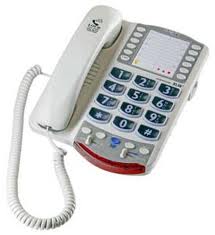
I think one of the frustrating things about having progressive hearing loss, or chronic illness/disability, is that one may commence living life with a new charge for life , equipped to be as independent as possible, only for changes in our health to take us back to square one. Prior to my cochlear implant, I remember learning to cope with the telephone, conversations in crowded places, and learning to speak with people with poor communication habits. However, in a matter of months my hearing would take a dive and I would discover that what worked last month, didn’t work at all now! Like most families with small children at home, we lived paycheck to paycheck. We pinched pennies and scrimped and saved to purchase an amplified telephone for me. For five or six months I was in telephone heaven! I used the phone every single day with confidence and enthusiasm. It didn’t take long, however, before I was struggling to even use that new gadget. I earned a little extra time by using it when the kids were outside and the house was relatively quiet. What was once easy became increasingly difficult. Eventually, the frustration of what I wasn’t hearing, despite hearing aids set to t-coil and begging people on the other end to speak clearly into the phone, had the phone collecting dust from lack of use. I’d talk to other HoHearies and get some new ideas. At some point though? The phone became a thing of my past. I had to come up with ways to contact people other than the phone. For the late-deafened community, the emergence of email, texting, and even FaceBook became very real “life-savers” in terms of being able to freely communicate with others. Although I hear well enough on the phone now that I have a cochlear implant, these other forms of communication are still my own first choice.

Resilience is a Special Kind of Strength

Many readers of Hearing Elmo have various disabilities, invisible illnesses or chronic health problems. For some, those difficulties are progressive and force them into a constant state of evolution. This can actually be healthy. (I see some of you grimacing out there!) Yet progressive illness can produce resilience – the likes of which create a strong and capable individual who can face life’s problems with the confidence earned through experience. Resilience is a special kind of strength. These individuals know that living successfully with progressive health problems is simply adopting an attitude of commencement.

Some people never graduate. They never enter that next stage of life. Even though the past may be painful, they cling to it with a tenacity that may stun family and friends. If they have progressive health problems, they may be stuck in the grief process. The grief process is a PROCESS. In a healthy situation, one moves from one stage to the next, eventually reaching acceptance and a new normal. Even psychologically we can get stuck in the past. Everyone else has moved on, but we have super-glued ourselves to unresolved situations instead of letting go and moving on with our lives (like everyone else has). Living this way yields toxicity to both ourselves and to others. We become “unsafe people”. It can have a negative influence on our relationships, self-esteem, and emotional/mental health. Dr. Seavey addresses how to face the future in a terrific article that can be accessed HERE.

Can you look back and see different points in your own life where commencement took place? Using all you learned in a specific period of your life, you chose to begin the next chapter of your life. May we all view commencement as springboard to usher in a successful, victorious future and not as a monument that designates an END!

Denise Portis

© 2012 Personal Hearing Loss Journal

It’s the Little Things

Deborah is a bilateral cochlear implant recipient. She experienced familial progressive hearing loss, which presented at age 10. Her first ear was implanted in 2005, the second ear in 2008. A native New Yorker, she presently resides in the central Piedmont of North Carolina. She is involved with HLA-NC, is a volunteer at the Wildlife Rehab Center of the NC Zoo, and is a board member of the Brain Injury Association of North Carolina. In her spare time she takes courses at the local college, and enjoys walks and photography in the nearby Uwharrie National Forest. 

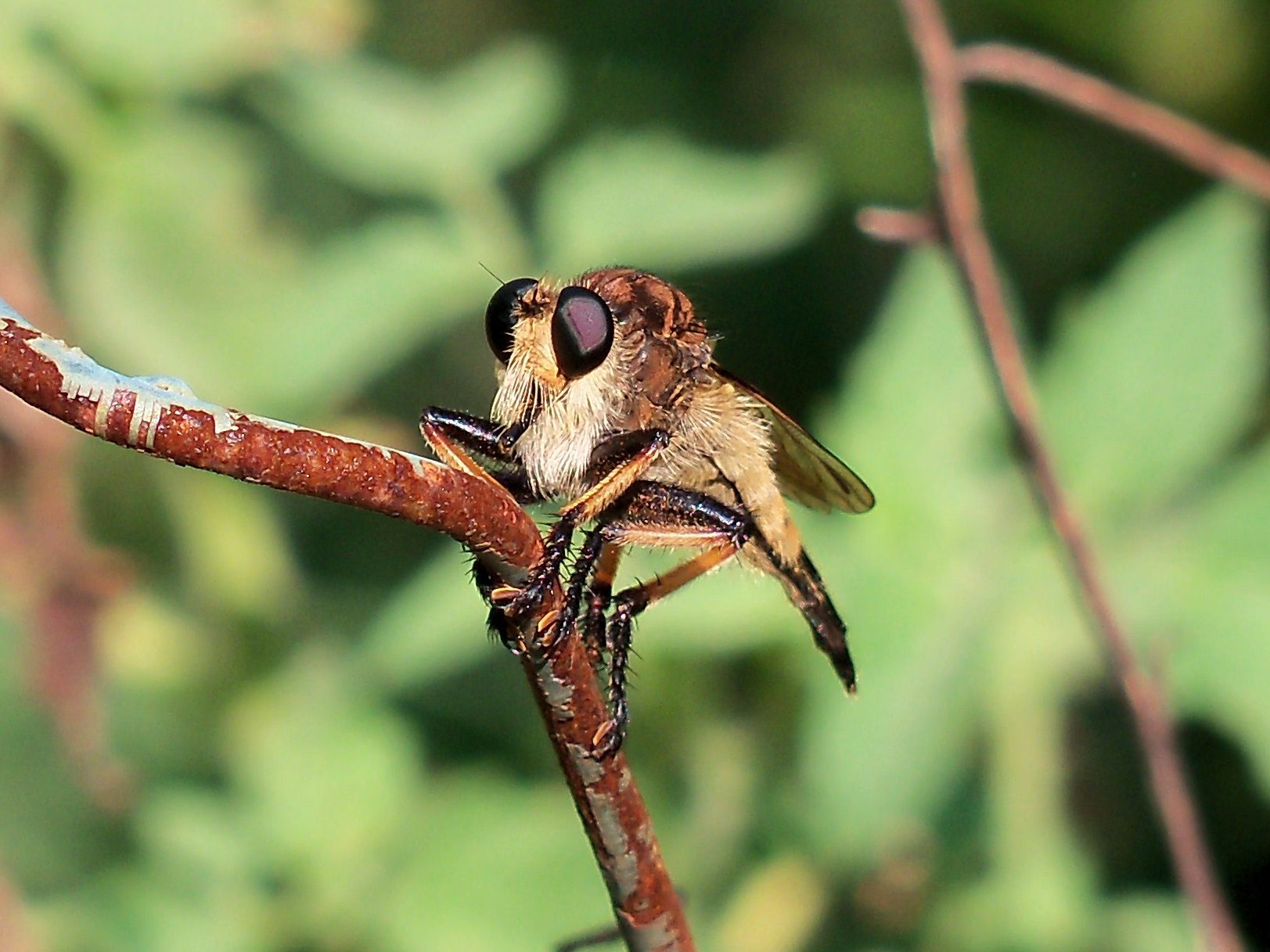
I love being out in nature, taking long walks and observing the world around me. I often capture some of what I see with my camera.  Trees, sky, colorful blooms, rivers and streams, rocks, fungi, ferns. All are a delight to my senses. However, there is nothing I enjoy photographing more than bugs. Yes, bugs. From the stingers to the crawlers, the colorful to the camouflaged, the loners and occasionally those in flagrante delicto. From the time I was a young girl, I loved the outdoors. When my family and I still lived in the city, you could find me in the back of the apartment building, climbing a small fence so I could wander around the grassy patches that remained among the asphalt yard. When we moved to the suburbs, on a dead end street that had many acres of woods adjacent to it, I was delighted! This was still a time in our culture where folks were not so afraid to let their children run around the neighborhood, playing at friend’s homes and backyards. I chose to run around in the woods, usually by myself. I was not yet so hard of hearing that it was a concern, nor was it an explanation for why I preferred solitude. I am still this way today.

I’ve been thinking a lot about how my love for observing and photographing bugs ties in with my experience as a cochlear implant recipient. I was recently in New York for a visit, and one day a friend and I went to visit some museums. She, an artist and therapist, had been curious about my fascination with bugs. As we all know, bugs do not have a great reputation. Much time and resources goes into controlling or eradicating them. No one had ever asked me about this, and I can honestly say I’d never really wondered. I thought about all the people who seem to hate these fascinating beings! Nevertheless, my response was immediate and striking to both of us: it is in the little things that we learn the most about life. The whole world can be found in one of those little creatures. From the smallest of them we can receive the greatest lessons. When I observe a spider building a web, or an ant carrying an object many times its own body weight, and when I consider the role that each bug plays in the scheme of life, I am awed and humbled.

Seemingly Inconsequential

It is the seemingly inconsequential experiences of hearing with my cochlear implants that offer the most striking images of the radical impact that “hearing again” has had on my life.  When I mentor someone who is considering getting a cochlear implant, I have found that sharing the smallest CI moments, such as the one that follows, best illuminates the impact of the ability to hear with the technology.

Six months post activation of my first cochlear implant, I was driving across Colorado to visit with clients I served in a statewide program for individuals with traumatic brain injury. I made a stop at a gas station, and went inside to buy a soda. It was a busy time, and the gal at the register was moving customers through fairly quickly. We spent about a minute together as she rang up the purchase, collected my money and made change, made a joke about the crazy weather we’d been having which made us both laugh and to which I offered a humorous rejoinder. (No, I don’t remember what it was anymore, but she thought it was funny, and that’s all we need to know J ). She wished me a good day and I left the store, still smiling over our enjoyable interaction. Suddenly, a realization hit me with such force that I came to a complete standstill: I was able to have a quick, light-hearted interaction with the girl at the gas station. Tears welled up in my eyes, and I was half laughing, half crying: I had joined the living. Before I could hear again with my cochlear implants, my days were filled with experiences I call “smile and get the hell out of there” moments. If you are not hard of hearing, you cannot imagine how difficult it is to read the lips of everyone encountered each day. Struggling to accept that along the way I left any number of people with the impression that I was very pleasant but a bit slow was a fact of my life. But now I was one of those people who could banter, who could have lots of marvelous little interactions with people if I so wished, and I recognized right then the enormous impact this was going to have on my quality of life. I am sure that until that moment I had not fully comprehended that this is what people do, this is what is meant by “small talk”. It wasn’t long before I realized that I could also eavesdrop. LOL! To my hearing friends I say: Don’t act so shocked! You do it all day long and don’t even think about it! Six years hearing again and I can confirm that it’s not all brilliant commentary. But I like being able to decide that for myself.

So, the next time you see a little bug, think of me, and stop and watch it for awhile. If it’s in your house, don’t stomp on it. Scoop it up and put it outside, and observe it. Discover all those insights and life lessons right in front of you, free of charge.

Guest Writer, Deborah Marcus

© 2012 Personal Hearing Loss Journal