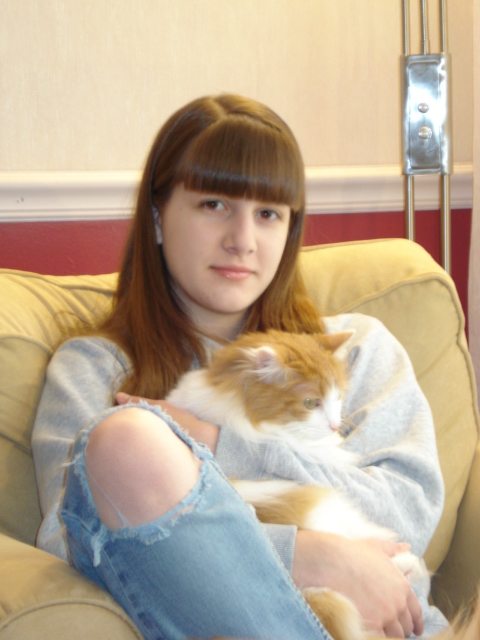
Parking Lot Adventure

Mom and I came out of the pet store with two huge dog food bags, a huge bag of litter, and three new litterboxes. It was starting to sprinkle rain, so Mom took her “ears” (her cochlear implant and hearing aid), out and carefully stored them in her purse. We made a plan: she and Chloe would make a break to the van and open it.  I would push the heavy cart to the van. Sounds deceptively simple right?

Mom and Chloe ran out into the rain. I pushed the cart and ran into the parking lot… in front of a car (don’t worry, they had stopped for me).  Suddenly, the three litterboxes fell from my cart, into the exact middle of the road.

“Uh oh! MOM! THEY FELL! COME BACK!!!” I yelled, momentarily forgetting Mom couldn’t hear me without her “ears”. She continued to run into the distance. A woman standing on the sidewalk stared after her.

“Yeah! YOU GO GET THE CAR, I’LL STAY HERE!!” I yelled, as if that was our plan all along… in case anyone thought my mom had abandoned me… to be hit by a car… as I dragged my litterboxes and cart to the sidewalk.

Well, technically she had!  But… she didn’t mean to. I am a CODA – child of a deaf adult – and I was used to having to say, “Oh, she can’t hear me, I’m on my own for this one.”

Mom turned around when she reached the car and realized what happened. She stored Chloe in the van and raced back to help me.

I was howling with laughter at this point. I have a strange sense of humor.

Mom was laughing too. I probably looked ridiculous trying to drag everything out of the way. And so we laughed  in the rain, as we smiled apologies to cars and people.  We finally dragged our cartload to the van.

“What are you – deaf??” I teased when we reached the van.

Being a CODA has taught me a certain level of independence, learning to think for myself. When household accidents, parking lot accidents, losing someone in a store, etc. happen, I learned to calmly handle the situation myself or to walk to my mom. I can’t always call for my mommy…she can’t hear me. It’s something I learned and accepted.

Just like I know I can’t stand behind my mom and talk to her. Because 99% of the time, after pouring my heart out to her back, she’ll turn around and give a piercing scream, all because she didn’t know I was there!

Having a mom with a hearing loss isn’t a trial, it’s just different. My brother and I adjusted just like my mom had to adjust to her hearing loss. It affects the whole family, but it doesn’t have to be negative. We adapt and change along with her.

And it does give us extremely amusing moments…or extremely scary, because having your mom scream loudly when she turns to see you usually causes you to scream in return. Trust me. Ask Chloe.

Kyersten Portis

18-years-old

Kyersten’s mom lost her hearing when Kyersten was only two-years-old.  Kyersten has only known her “mom” as a person with hearing loss.  Kyersten and her family live in Maryland with a menagerie of animals.

But I’m afraid…

But I’m afraid…

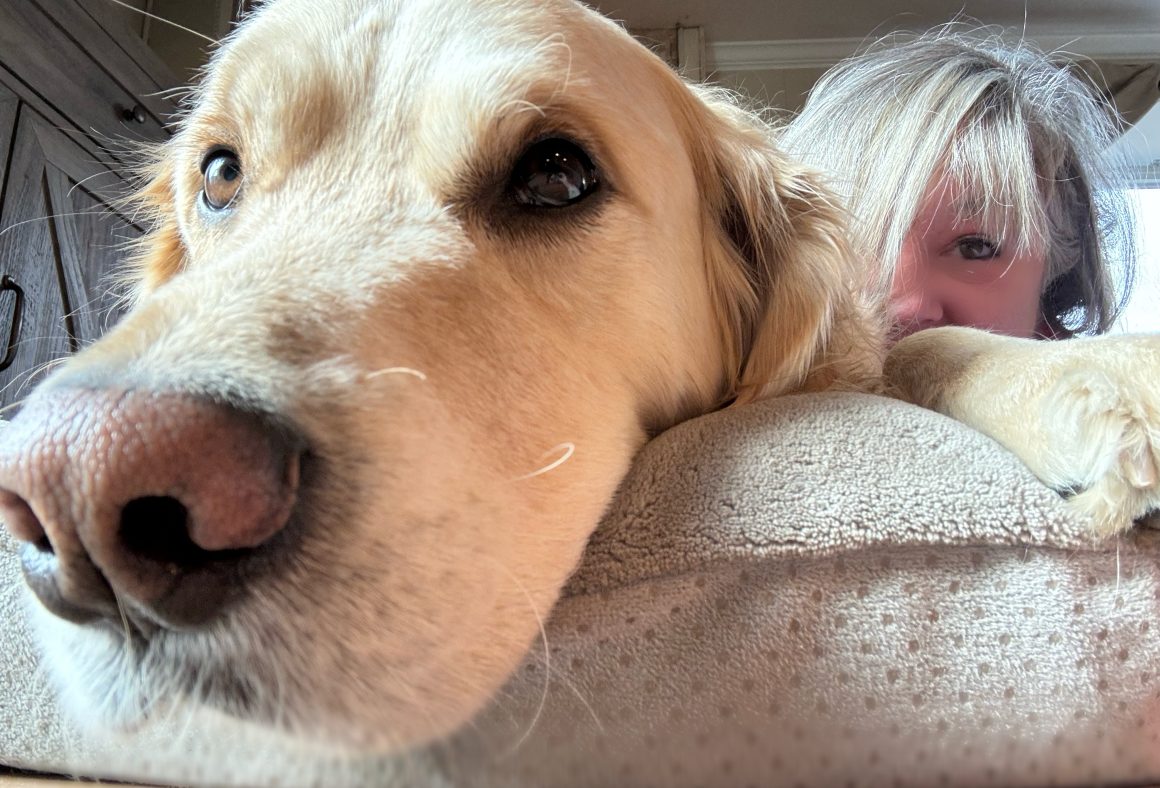
This morning my assistance dog, Chloe, was out on the porch barking her head off.  I’ve never appreciated how she looks without a head, so I found myself hustling outside to see what all the fuss was about.  At first, I couldn’t figure out what she was barking at, but it was very clear that Chloe was afraid.  Each muscle in her 4 legs were trembling with fear and tension, her forehead was wrinkled, and she whined in between high pitch barks!  I had to step closer in order to finally see what she was fixated on… a tiny bird feather.

Now I’m the first to brag that my working dog is a very smart canine!  She loves to learn, loves to work, and loves to train!  But sometimes… her fear keeps her from putting all the pieces together.  Sometimes… she needs help to look past her fear and approach things a little more logically.  I continued to reassure her that everything was fine.  I wanted her to investigate it a little closer with a little more, erm… backbone!  Grin!

Me: “Chloe… it’s OK girl!  It’s just a feather, and it won’t hurt you.  Show me!  What is it?”

Chloe: (Looks at me like, “Don’t you SEE?  Oh my gosh!  LOOK!  Show you?  But I’m afraid…“)

It seems that feathers have a smell… at least they do if you are a dog.  Chloe could smell a recent “alive kind of smell“.  When she would get close enough to sniff the feather, her sniff would MOVE the feather… and much to her dismay TOWARDS HER!!  Therefore, Chloe was convinced it was alive!  What does a hound dog do when they think something is alive?  They bark!  When Chloe would bark at the feather, it would move even MORE, but away from her!  Feathers are so light that they tend to want to follow the natural rules that feathers follow when applying physics… a hound dog’s hot air.

Even holding the feather in my hand, had her cowering in fear!  I sat on the porch and talked to her, all the while holding the feather out towards her.  Finally, she crept up behind me and with head on my shoulder sniffed and huffed at the feather in my hand.  I could feel her trembling, with her fearful “self” pressed up behind me!  Eventually a good, stiff, Maryland-September breeze picked the feather up and flew it up over the railing and out into the yard.

Chloe cocked her head to the side and looked at me like, “Well! What did you do THAT for?”

She was afraid of the feather, but wanted the feather.

But I’m afraid…

Last night I attended our school’s kick-off meeting.  All the teachers were present, and I knew I would face supper, entertainment, games, dessert, announcements and fellowship.  I have to admit it was something I had to make myself attend.  The night before I had even cried all over my husband, trying to find a way to get out of having to go!

When you have a hearing loss, there is just something incredibly intimidating about going to a group function that reverberates with the background noise of a large number of excited and “pumped” teachers!  I planned in advance, and made sure my cochlear implant batteries were fresh so that I wouldn’t “go dead” in the middle of a conversation.  I brought some assistive listening devices that work in conjunction with my t-coils on both my CI and my hearing aid.  Due to some recent rains, I knew I was wobbly enough to need Chloe’s special collar.  I was prepared.  I wanted to go.  I needed to go.  But I was afraid…

I talked to my director via email prior to going.  I’ll admit that I was trying to see if it was something I did indeed have to attend.  I did… and my director knew I needed to for more than the information we received as teachers.  She knew I needed to go in order face my fear.

My fellow teachers are very nice people.  I WANT to get to know them better… to even gain the treasure of a friend or two.  But in year’s past I’ve seen the look of panic when I put a microphone nearer their face in order to hear them better in a crowd.  I’ve seen their faces as they inwardly castigate themselves as they said something behind their napkin and I had to ask, “Pardon?”  (I’m a transplanted Southern gal, what can I say?)  I’m 100% sure that if these teachers knew how afraid I was of them, they would be devastated!

In my HEAD, I know that I have nothing to fear.  And yet, when I go to these things I find myself saying, “But I’m afraid… ”

My consolation, is that it is getting better.  The more functions I attend like this, the more comfortable I become.  The “feather moves”, and I’m a little jumpy about it; however, I’m learning it’s just a “feather”.

I’m thankful I do not seem to have the same illogical fears towards my students.  Young people seem so incredibly natural towards me.  If I have to ask a student for a repeat… seven different times… they cheerfully do so without any visible qualms at all.  Perhaps it’s because my classes are “electives”, (although many take them as alternative foreign language).  I know they CHOOSE to be there, and it doesn’t bother them that their teacher has a hearing loss.  I do not feel disabled around them.

With my peers it is different.  I hope it isn’t always so.

I want to attend meetings like these, but am afraid of meetings like these.

At least with fellow teachers, I am becoming stronger and more confident.  Perhaps I need a good, stiff, Maryland-September breeze to convince myself I’m in a “safe place”.  At least with every one I go to, I’m less “trembly”… and heck!  I quit barking months ago!

Denise Portis

© 2008 Hearing Loss Journal

Psalm 56:3: “But when I am afraid, I will put my trust in You.

Helping to Change a Fearful Heart

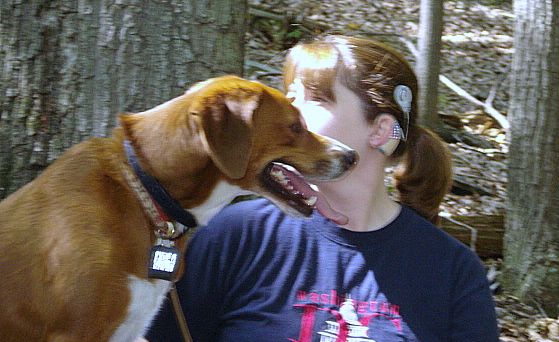
Kyersten and Tyco at Gambrill State Park, hiking near our home.

The Fearful Heart of a Dog

My family and I recently adopted a beautiful Norwegian Elkhound named Tyco.  Tyco is a year old male and came from a local rescue .  The rescue had picked him up from a shelter in Pennsylvania.  We have a form that his previous family filled out when they took Tyco to the pound to give him up.  All the problems they claimed Tyco had, we have never seen… but then again we don’t have him chained in the yard like they did.

My trainer (and friend) actually “found” Tyco for us, and they as a rescue always do some preliminary testing with a dog they take in for fostering.  She had told us that he was not aggressive nor mean at all.  However, although she didn’t think Tyco had been abused, it was obvious he had been hit.  When we first brought Tyco home, he was very timid around my husband and 17-year-old son.  It may be that he was not treated kindly by the men in his previous home.

Therapy that Works!

Tyco, like most puppies, chews.  When he’d pick up an iPod to chew on, (something my teens have now learned to not leave lying around), I’d say in an authoritative tone, “Tyco…. DROP IT!”  He’d drop it and sit apologetically with his ears down.  I’d come towards him to pick it up and say, “Good boy!  Good ‘drop it!’ “, and he’d cower and look away.

If we were all in the back yard “playing hard” with our canine family members, he’d cower in fear if we ran up to him to tussle over a ball… dropping it and cringing away.  So, I did what any good dog owner would do with a dog with a problem when people ran up to him in play.  I began running at him all the time in the back yard… throwing my arms around his neck and cooing, and praising him like crazy.  I gave instructions for the rest of the family to do the same.  He quickly realized that these boisterous “Tyco interceptions”, only meant lots of belly rubs and scratches behind the ears!

We’ve had Tyco for 6 weeks now, and he is still a little timid when verbally disciplined, but has really come a long way.  We taught him that we can be loud and even authoritative, but that we’d never ever hit him.  When he stops doing what we are fussing at him for, we immediately change our tone and praise him like crazy.  He’s “getting it”.  He wags his tail and “grins” at any family member loudly headed his way in a full sprint!

Denise with Chloe (who is off duty), brave enough to hike miles from home

The Fearful Heart of Someone New to Hearing Loss

Whether you lose your hearing suddenly, or have a progressive loss, it is not easy to go from hearing “fine” – to hearing poorly.  Every individual has their own issues.  These vary from person to person, due to factors which include: gender, age, relationship status, self-esteem, and even “faith history”.

My first reaction to hearing loss?  I dropped out of life. I holed up in my home and “waved a white flag of surrender”.  I felt powerless to fight the self-imposed isolation, and my self-esteem plummeted.  I was a stay-at-home mom at the time, and I’ve always been grateful I wasn’t working outside the home.  I’m sure I would have quit work unprofessionally and with a chip on my shoulder, certain that the hearing people I worked with were out to get me.  As it was my marriage and friendships imploded, and activities in my kid’s school and our church came screeching to a halt!

Therapy that Works!

Patiently and stubbornly my husband helped me see all that I still had to live for… in spite of not hearing well.  Even my audiologist handed me a flier about a support group that met in her offices one Saturday a month.  (Don’t you wish all audiologists cared enough about their patients to give them support information that will help them when they are not an an appointment WITH THEM?)

At the time HLAA (Hearing Loss Association of America) was SHHH (Self-help for Hard of Hearing People).  Self help?  My first reaction was that I wanted someone ELSE to help me… I didn’t want to help myself.  I was a whiny, bitter, angry, young woman.  Finally, a friend at church who happened to be the leader of the support group, talked me into attending.  Part of going to a support group is the satisfaction and “growth” one experiences when you reach out to help someone who needs it more than you.  I needed plenty of help… AND FOUND IT.

No organization is perfect, and HLAA has it’s faults as well as benefits.  (On the side-bar of my blog, you will see the links to numerous organizations that help people with hearing loss.  All provide great resources, and serve a purpose).  In a support group, I was able to find people just like me… those who had lost their hearing later in life.  This meant the WORLD to me.

Now I am part of a hearing loss support group in Maryland.  I look for people with a fearful heart.  They are easy to spot!  They look like what I saw in my own mirror every day for a long time.  Sometimes that person needs somebody to catch their eye and then sprint towards them with open arms and praise them like crazy!  Sometimes a “fearful heart person”, needs another peer to quietly listen and empathize.  I’ve even met people that I could tell needed me to gently scold “DROP IT”.  Their fear and pain were destroying who they were meant to be.  They needed help to recognize that.

I see some of those changed people every month at support group meetings.  They don’t wag their tails like crazy, but their smile of welcome is like a beam of sunshine shot straight from what was once a fearful heart.  They hug my neck, but only briefly… someone has just walked into the building with a fearful heart that they recognize needs THEM.

The thing I love about HLAA, is that even if you do not have access to a local chapter that meets physically as a group, they offer support, networking, friends and advice through their online chapter and message boards as well.  You can live ANYWHERE, and find the help your late-deafened fearful heart needs!

Denise Portis

© 2008 Hearing Loss Journal

Hurry Sickness

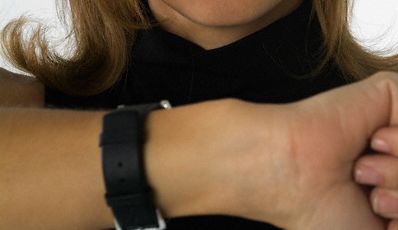
The first time I heard the phrase “hurry sickness”, I was sitting across from my elderly, widowed neighbor, Celia.  We were living in North Carolina at the time, and I had one of those rare opportunities to “soak up her wisdom” over tea and thin mints!  She was telling me about her son who had just retired for medical reasons, from a successful thoracic surgery practice.  He was depressed and suicidal.  He had put his surgery practice and surgical skills first in his life.  Now… forced to retire “young” at 52-years-old, he felt he had nothing to live for at all.  He had hurried through life, pushing himself to be the best (and he was!), making a name for himself in the nation’s Capital.  Two weeks after retiring, his practice had already replaced him and all he had to show for his sacrifice was a nice watch.

(As I recall… ) Celia told me, “Norm has ‘hurry sickness’… he always has!  He’s never been able to ‘BE STILL’ and enjoy quiet.  ‘Hurry’ has ruined his health, and now he’s alone in a big house, kids are gone… alone.  He never learned to enjoy ‘alone’… ‘Hurry’ has been like a pervasive, lethal infection, destroying him from the inside out!”

Dr. Ann McGee-Cooper has a great list of “red flags” for those who may think they have “hurry sickness”.  See if you can see yourself in any of these:

How do I know if I have “Hurry Sickness”

  • I typically drive 10 or more miles/hour over the speed limit.
  • I interrupt others and/or finish their sentences.
  • I get impatient in meetings when someone goes on a tangent.
  • I find it difficult to respect people who are chronically late.
  • I rush to be first in line, even when it doesn’t matter (for example, getting off an airplane first in order to stand at Baggage Claim longer).
  • If I have to wait over a few minutes for service in a store or restaurant, I get impatient and leave or demand service. To me time is money!
  • I generally view as less capable those who may be slower to speak act or decide. I admire people who move at my speedy pace! I pride myself on my speed, efficiency, and punctuality.
  • I view “hanging out” as a waste of time.
  • I pride myself on getting things done on time, and will sacrifice the chance to improve a product if it means being late.
  • I often rush or hurry my children and/or spouse.

Ones I have thought of as well:

  • I look for the check-out line at the grocery store with the fewest people, all the while scanning other registers to see if they are moving faster.
  • I stand in the shortest line at a fast food restaurant, and hop over to another line if the person in front of me just ordered something complex that will take time.
  • I go through my entire day multi-tasking so that I can get more accomplished in a short period of time.
  • I “dare” the kids to see who can clean their room the fastest, even offering a monetary reward for the winner!
  • I choose email over the phone because it won’t take as long as I don’t actually have to communicate.

I’m in the process of reading John Ortberg‘s book The Life You’ve Always Wanted.  He has a chapter in his book called “An Unhurried Life:  The Practice of ‘Slowing’ “.  I thought I was actually pretty good at “the practice of slowing”.  I was startled to read his opinion of what solitude is NOT.  I thought that by taking my cochlear implant off and curling up with a good book was a strategic way to practice “slowing”… to enjoy solitude.  Dr. Ortberg suggests that this is not actually practicing solitude.  It doesn’t “unhurry” you at all!  He said we need both brief periods of “real” solitude to “unhurry” our lives, but also extended periods.  Brief periods can be 30 minutes!  Extended periods should be at least for an entire day.  He states:

“What do we do when we practice solitude?  What should we bring along to that quiet place?  The primary answer, of course, is ‘nothing‘… At its heart, solitude is primarily about not doing something.  Just as fasting means to refrain from eating, so solitude means to refrain from society.  When we go into solitude, we withdraw from conversation, from the presence of others, from noise, (easy for me!  smile!  I need only remove my CI!) from the constant barrage of stimulation.”

I have found that since I lost my hearing, it is especially important for me to be “quiet”.  You would think that would be easy!  But one must “quiet” more than sound.  I must “quiet” my hands from being busy, Busy, BUSY.  I must “quiet” my mind from always thinking about what I need to do next, accomplish before I go to bed, chores, work, service, etc.

This morning with my husband gone to work, my son busy working an eight hour shift at McDonald’s, and my daughter taking care of a doctor’s appointment and then a pet sitting job, I found myself alone.  Eager to take advantage of my solitude, I sat in our “quiet room”.  This room was lovingly dubbed “The Quiet Room” by my hubby.  The wallpaper is the cloth type that keeps noise from bouncing around, there are vinyl “noise reducing” blinds on the window, thick carpet and soft comfortable furniture.  NO ELECTRONICS ALLOWED.

Alone, with only a sleepy hound-dog at my side, I turned my CI off and sat in a big cushy chair and watched the rain.  Monday-Friday, our cul-de-sac is a very quiet place.  I enjoyed my time of just reflecting, praying and watching the rain!  I came away feeling rejuvenated even!

Do you have “hurry sickness”?  Do you need to learn to reflect… to enjoy solitude?

Denise Portis

© 2008 Hearing Loss Journal

Djembe and Elmo Live

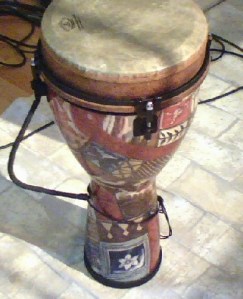
Djembe Drums

Isn’t it funny the things that get my attention?  I’m a late-deafened adult, and only hear through the miracle of a cochlear implant.  And yet… things that get my attention are things that make SOUND.

This past Sunday I discovered that a newer drum being used in our band at church had a different sound.  Its sound was SO different than that of the other drums in the band, I ended up cornering the young man who plays it in order to ask him what it was.  Do you know how hard it is to hear a word like “Djembe“?  Grin!  I ended up asking him to spell it for me… he was very patient.  Wouldn’t ya know, I came home and googled it!  I want one for Christmas.

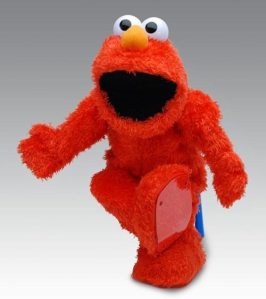
Elmo Live

Did you know that Elmo also has a new release this Christmas?  (You can watch him HERE)  I am so excited!  I have already thrown out a “hint” to my family.  (A “Denise hint” means an email copied to everyone in the family with a link and picture embedded was sent!)  Elmo is also a noise-maker!  You’d think I’d choose things that would involve my other senses.  Although if you think about it… Elmo and a djembe drum DO use the other senses as well.  But I find it interesting that I am mostly excited about “hearing” both of them.

Things That Make Me Go “Hmm”

I suppose the primary reason I like “noise-makers” for gifts is because I was born with normal hearing and struggle on a daily basis to STAY a “hearing person”.  I think that is what sets adults with hearing loss who choose to be “oral” apart from those who incorporate themselves into the culturally Deaf population, employing the use of American Sign Language to communicate.  I first heard (pardon the pun) the acronym OHL from Larry Sivertson.  He is someone I’ve been able to get to know through online correspondence and hearing loss conventions.  To my knowledge he was the first to coin the phrase, but i could be wrong about that.  He has a terrific site called Hearing Loss Web.  It’s a terrific website and tool for those with hearing loss… especially those who choose to remain oral.  His wife, Char, just had her own cochlear implant activated recently.  Larry and Char would likely understand better than most why non-essentials that make “noise” are such a grand gift for someone like myself.

My family doesn’t mind my “hint” list.  On the contrary, they really love seeing the UNADULTERATED JOY I receive in “hearing something” out of the ordinary.  It has helped them to not take their own hearing for granted I suspect!  I’m sure that everyone who has a cochlear implant, has a number of “noise-makers” that just bring a smile to their face to even recall hearing them for the first time.

I take their OWN “hint” list just as seriously.  (Who’d have thought iPod could continue to come up with new “must have” gadgets just in time for Christmas!)  Prior to my hearing loss in 1991, I use to only ask for things I “needed”.  I think it’s much nicer to have a “wish list” that includes things you’d never get for yourself because you don’t NEED them!  Sure we all tend to get things we NEED as well, but isn’t it fun to get some totally nonsense things too?

Denise Portis

© 2008 Hearing Loss Journal

Reader’s Digest and Thyme

OK!  I admit it!  I’m a fan of Reader’s Digest.  I grew up on a farm in Baca County, Colorado, and my only friends were tumbleweeds, newborn calves and my cousins up the road!  Because we had a “party line” for a telephone, I never dared to talk on the phone to school friends who lived several sections of land south on other ranches. (1 section of land = 640 acres) Needless to say, when the Reader’s Digest arrived each month my siblings and I fought over who had earned the right to disappear with it as a result of chores already completed in anticipation of the mail.

Since that time, Reader’s Digest has changed it’s look a little bit, and it’s index and page numbers are easier to navigate.  It comes in “large print”, and you can even access it online!  I’m still an avid fan of Reader’s Digest, although I’m the one who pays the subscription now.

This month’s RD came in the mail this past week, and I finally had the chance to sit down with it yesterday as it had been in “hiding” with my own kids who chose to disappear with it on it’s arrival.

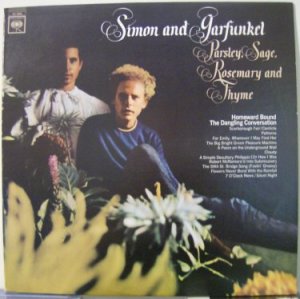
I had to laugh at a “humor” story about a Simon and Garfunkel song.  Yes, yes I know!  Just knowing the song, and knowing the duet means I’ve tragically aged myself.  Perhaps this will finally put to rest that rumor that I’m Terry’s 2nd wife!  I really DID grow up in the late 60’s and 70’s!

It seems a little girl had been listening to the song, “Scarborough Fair”.  She looked up at her parent and asked, “So did Parsley save Rosemary in time?”  I can’t really explain why I got the giggles over this.  I was actually laughing so hard that I had to wipe the tears of mirth from my eyes.  Chloe sat and looked at me with her very serious hound-dog look.  She was a little apprehensive, as she had been given no training about how to deal with Denise if she’d lost her mind!

As a person with hearing loss, I often misunderstand things that people say.  I’ve learned to repeat what I THOUGHT I heard when something doesn’t “fit” in the conversation.  This allows me to be proactive about the way I hear, and helps others “hear” what things may sound like to a person with hearing loss should they “rush” or “mumble”.  (See?  All those workshops at hearing loss conventions have paid off!  I really HAVE learned something!)

I love that even people with normal hearing sometimes mistake what they hear.  I also believe it’s very important for people with hearing loss to communicate what they hear when something doesn’t make sense.  It helps EVERYONE to speak up and ask for clarification.

I’ve only encountered one problem with this practice.  It doesn’t work in reverse.  If you’ve men in your life (husbands and teenage sons in particular) you can relate.  You repeat what you thought you heard and are RIGHT.  Aforementioned subjects try desperately to find an “life raft” from their “ship that is quickly sinking“!  An example:

me: “Honey?  Will you let the dogs out and get one of the kids to set the table?”

“honey”: “I’m reading the paper, and have worked all day.  Give me a minute!”

(I poke my head around the corner with eyes wide and point to my CI which clues the other person in that I heard “something” just fine!)

me: “Did you say, ‘I’m reading the paper and have worked ALL DAY?’ ”

(The paper comes down, the color washes from his face and all of 60 seconds rushes by as if time is being SUCKED OUT OF THE ROOM)

“honey”: “Umm… I said ‘I can’t REACH the paper to THROW IT AWAY’ ”

(I look at the paper in “honey’s” lap and raise one eyebrow with the practice and finesse of a true “Mr. Spock”/Star Trek fan… )

“Honey” gets up to let the dogs out…

Denise Portis

© 2008 Hearing Loss Journal

“Life is My University”

Louisa May Alcott (1832-1888 )

“Life is my university, and I hope to graduate

from it with some distinction.”

I have always loved quotes.  I write them down, meditate on them, journal about them, and have learned the power of words.  Although many quotes have taken hold of my very soul… forcing me to make changes and “grow up”… I am very conscious of the fact that I am neither profound nor eloquent.  My own children will remember a couple of quotes all right!  My son will remember how fond I was of saying, “If you’d put it up when you’re done with it, I would not have to interrupt what YOU think is important to do it now!”  My daughter will remember, “You’re being to hard on yourself!”

I don’t “live”, to be “quoted”, and yet still recognize the impact “quotes” have made in my own life.  I am currently reading a book by Drs. Parrott and Warren entitled:  Love the Life You Live.  In the introduction, the authors chose to begin the book with a quote by Louisa May Alcott, “Life is a university, and I hope to graduate from it with some distinction”.  Sometimes quotes seem to leap off the page for me!  It is as if a hand reaches through the pages of the book laying in my lap, to touch my heart with the power of truths wrapped in the guise of words to forever change who I am.  I sat there re-reading, and then contemplating this quote for at least twenty minutes.  (Yes, I know!  It can take me awhile to read a book!)

“Stress 201:  MWF 8-9:30 AM.  Professor:  TBA“

I’ve had a tough year if I’m to gauge it with the type of things that measure stress and anxiety.  If I’ve been “taking classes” in this “university of life”, I’ve not been able to pull a “C” and will likely need to repeat the classes if I’ve any hope of graduating!  The sobering facts about my “school year”, are that outside forces and circumstances did not cause the stress and anxiety.  These “classes” were manufactured by internal insecurities, “righteous indignation”, and the wails of a childish response screaming, “that’s not FAIR”!  I hate these kinds of classes.  The kind of classes where the professor is YOU, and you can’t believe that bad luck in ending up with yourself as the teacher!

When my husband was encouraged to resign his position as Executive Director of a national non-profit last year because his “skill set” was no longer needed, and the organization wanted to hire a younger, experienced fund-raiser that would represent the “new face” of the population, he was disappointed for all of one day.  He has the unnerving, yet enviable ability to see the positive in everything.  He is now in a completely different environment where he is making a difference in a larger population of “others”, than he ever hoped to touch at his previous job.  He is thriving, growing, and more importantly content and excited about the future.

I chose not to look at it as an opportunity to get out of a stagnate, negative environment.  Instead, I was angry that he was not given the opportunity to expose the truth, that he was not given the chance to present what was really going on behind “closed doors”.  However, I quickly went from “righteous indignation” to “praying God’s wrath” on their heads!  Yes.  Hubby and I registered for different “classes”.  His completed coursework complemented his work at life’s university.  My classes are the kind that if you looked at my “transcript”, you’d wonder why I ever chose to invest myself in things that had nothing to do with my “major”.  I may as well have registered for “Underwater Basket Weaving”.

A lady I’ve come to know who lives CLEAR across the country in California, recognized early on the poor choices I’d made in my “class schedule”.  Raegene recommended a good book about the type of forgiveness that is extended only after tough upper level courses in “life’s university”.  From there I found my attitude changing.  Quotes from my own mother came back to me as I read the book.  Quotes like, “You’re right.  LIFE ISN’T FAIR.  Shake it off!” Other quotes she has written on my heart and mind seemed to be intertwined with the words I read.  “You are not responsible for other’s actions.  You are only responsible for how you react to them.”  As a person of faith, I realized that God was hammering it “home” for me that I was not doing well when I received my “mid-terms”.  It’s not that I had even signed up for the wrong classes.  I was simply studying poorly, and failing to take “good notes” in class.

A Forced “Minor” in Hearing Loss

Sometimes we are forced to take “classes” that we have no interest in, yet need in order to graduate.  We can go belly-ache to the “Dean” if we want to, but in the end these courses are needed to complete our degree.  No one chooses to “minor” in hearing loss.  I think this avenue of “study” especially takes those by surprise who find themselves in the classes later in life.  Whether the hearing loss is sudden, or progressive… one never deliberately signs up for classes where the extra class fees include hearing aids, cochlear implants, Dry ‘n Store devices, and batteries by the truckload!

When I found myself in “hearing loss classes”, I immediately looked for tutors.  All tutors are not created equal.

The first day of class your professor may discuss “why” for about 10 minutes.  It’s all the time they have for this topic, as there is very little information to support it.  Yet students “talk it to death”.  When the professor would like to proceed with the lecture series, many students choose to dissect, discuss, and write term papers about “why”.  Some are lucky to have mentors who force them to move on to the next important chapters in the text.  These students have tenured professors who realize the important task of “moving on” and learning “life skills” instead of allowing stagnate thinking.  Others who aren’t so lucky, end up spending the majority of their classroom time arguing and trying to defend and debate a topic that doesn’t matter.  The professor may be apathetic as they will “get paid anyway”.  I long to tell people new to hearing loss to drop the class as quickly as possible.  Enroll in a class that moves on from the “why” to more important topics by the 2nd day of lecture.

Hearing loss, like most acquired disabilities, is not a chosen study.  Yet sometimes a person ends up with enough credit hours that they discover they have inadvertently minored in it!  The wonderful thing about this minor, is that all students can become substitute teachers if they choose too.  When I stopped looking at my course load, and instead sought ways to teach others what I have learned, my attitude about my “minor” began to change.  If I can help tutor ONE person with hearing loss, it will be worth the late nights I’ve spent cramming for exams, and tuition dollars I’ve thrown at “Hearing Loss”.  Because I had a series of good tutors myself, I quickly went on from the “why” to chapter two… “What now?”

I’ve met some people in the seventeen years I’ve lived with hearing loss, who have made a “major” out of hearing loss.  It was never meant to be a “major”. Life is much more than “hearing loss”.  However, I have met some people who have a Ph.D. in hearing loss.  Don’t get me wrong!  Hearing loss can shape who we are, teach us life skills, develop attitudes and mold our character.  It can have a profound effect on our studies in “life”.  But I am not defined by my hearing loss.  Hearing loss has simply brought out unique characteristics that would have never been developed had I not experienced it.  Life is never about a disability.  Life is about our ABILITIES.  I can’t hear well, but you should see what I CAN do!  And I can only do it because I’ve learned to live with the uniqueness of my own personal hearing loss history.

What about you?  Have there been unique trials and triumphs that have steered your coursework towards a special kind of “you”? Are you searching for “teachable moments” in your “studies”?  Are you “teaching” with your own life? I don’t know about you, but I want to graduate with distinction!

Denise Portis

© 2008 Hearing Loss Journal

If You Want Me To

Since I recently posted about getting my daughter, Kyersten, ready for college… I wanted to follow-up with a very special post.

Kyersten is an incredible young lady.  I realize I’m “her mom”, but those who know her can tell you that she is very special.  I really look forward to the coming years to see how she continues to grow and mature!

Kyersten has always loved sign language, and grew up as a wonderful CODA (children of deaf adults).  She was a big help to me prior to my cochlear implantation, and has been an interpreter in our church and served in deaf ministries for a number of years.  She has taken 5 levels of sign language, and frankly I can’t teach her much more than I have.  Like me, she recognizes and respects the differences between those who cannot hear and use sign, and those who chose to be oral like myself.  (I know sign and even teach it.  I don’t use it in my everyday life, however, as everyone I know has normal hearing).

She has had a tough week.  A great number of emotional things have happened, and she’s learned some very hard lessons about people.  I wanted to share a video she had taped this week.  The song is by Ginny Owens, and I’ve captioned it for those of you who do not hear well.  Enjoy!

Denise Portis

© Hearing Loss Journal

Visiting College with a Hearing Loss

Yesterday Terry, Kyersten and I went to college.

We are blessed that our kiddos get to go to their first two years “free”, as long as they attend where “Daddy” works!  Needless to say, Kyersten is enrolled in Anne Arundel Community College this Fall!

The first hour, Kyersten stayed curled up with a computer somewhere while Terry and I went to visit one of his bosses.  Charlene was very nice, and Terry had “coached” her how best to communicate with me.  Her office was very quiet, which helped a great deal.  Noisy environments are tough places to try to have a “hi, how are you?” conversation with a new person.  For some reason the subject of Kyersten always comes up (Is she excited?  Is she single?  What does she like to do?) at AACC, when the other person has a college-aged SON.  I suppose I should get use to that!

Terry and I then went to get Kyersten and we “walked” through her class rotation.  She opted to do all of her classes on Tues/Thurs this first semester.  She is taking 13 hours, so that’s only 4 classroom locations to find.  Easy, right?

The campus is beautiful and is set in the middle of a park, really!  Foot bridges, walking paths, gardens, and wildlife abound… much to Chloe’s chagrin as she was “in vest” and working!  We got turned around a couple of times trying to find all of Kyersten’s classes.  Part of the problem, was that Terry kept looking for elevators as he knows I don’t take stairs well.  When I finally figured out what he was doing, I made him go back and “show Kyersten the way” minus the elevators.  So I had a few flights of stairs to climb, but did great with Chloe next to me.  We had a storm front come through over the weekend, so my balance was still a little “off-kilter”.  I’m glad that Chloe actually brings attention to the fact that there is “something different” about me.  It discounts any possibility that I’ve been drinking, as my gait can be a bit wobbly when my Meniere’s symptoms are subsiding!  At least I was able to get a lot of great “staircase” training in with Chloe.  I usually avoid them, but do need the exposure to this “danger” in a controlled environment occasionally!

It struck me as funny and yet ironic, that as she stood in each classroom making comments about places she’d like to sit, I found myself looking for the “best place to sit” as well.  Where a person with hearing loss would sit, however, is a little different than where a college-aged freshmen would sit!

The bookstore was a madhouse, but we bravely entered the foray and muscled our way to the nearest student employee.  Service dogs are well known at AACC, so Chloe was ignored and allowed to work for the most part.  She was totally bored in a down/stay, even amidst the mayhem of a college bookstore before classes start!  All that great “noisy environment” training at Fidos For Freedom is worth it!  After trying to fight my way through the narrow isles, I finally just went and waited with Chloe over to the side as Kyersten was in “good hands”.

Kyersten was so excited the rest of the day!  I’m sure that walking through her rotations, finding all the student “hang outs”, and meetings some of the students made it seem more “real” to her.  Even buying textbooks brought it “home” to her that she is getting ready to start a new chapter in her life!  The kid loves books!  She poured herself into them the remainder of the day!  I don’t have to “hear perfectly” to recognize the excitement in her voice!  There are numerous campus Bible studies and clubs for Christian students at AACC.  She has already begun to touch base and will very likely be immersed in “college life” by mid-August.

Am I ready for this?  (yeah!  I am!)

Denise Portis

Are you too sensitive?

For curiosities sake, I went to my favorite hearing loss forums and discussion boards and counted the number of topics that had to do with “hurt feelings” and being “too sensitive”.  I knew the subject had come up in one form or another on every site I’ve been too, yet I was surprised to finally give up counting after 75 “finds”!

Just like people with “normal” hearing, people with hearing loss can be too sensitive.  This subject has been discussed a great deal in my household lately, and you’ll note my daughter recently posted on this topic.  What does being “sensitive” even mean?

According to one source, (as it pertains to feelings and people), it can mean:

Of a person, easily offended, upset or hurt.

This is different that being sensitive to the burdens, worries, and problems of others.  That type of sensitivity stems from an empathy that leads you to step in and make a difference.  (Something ALL of us should learn to do better!) When you have this kind of sensitivity, you are in high demand as a friend.  Your sensitivity is towards OTHERS, not self.

But people with hearing loss can be too sensitive to the comments made by others, or even facial expression and body language.  I know this because I AM a person with hearing loss, and I can BE this way sometimes!  In the beginning especially, I found it very hard not to react in a really defensive way towards others.  Through observing the examples of those who modeled genuine acceptance for who they are, I too, have learned to appreciate the good and bad of hearing loss.

How can you know if you are highly sensitive?

Psychologist Kyra Mesich asks the following questions:

Do you feel emotions often and deeply?

Are you keenly aware of other people’s feelings?

Are you easily hurt or upset by insults or unkind remarks?

Do you avoids conflicts and confrontations?

Can you not easily release sad or upset feelings?

Do you feel deeply for others’ suffering and pain?

Are you prone to recurrent depression?

Are you keenly aware of and affected by beauty (art, music, nature)?

Do you feel overwhelmed or depleted by too much stimuli (large crowds, loud noises, hectic environments)?

Were you sensitive as a child?

If you answer “yes” to some or many of these questions, chances are you are very sensitive.  You’ll note that some of things things are POSITIVE!  Some of these are considered to be a strength and add to your character.  Some types of sensitivity create problems, however.  This negative type of sensitivity can alienate the people who love you, and hurt your character.

I believe that many times an acquired disability creates new feelings of sensitivity that perhaps were not there before. Some people feel like their entire world has changed, and nothing is as it was! They become “hyper” sensitive as they re-learn how to interact with their world now that one of their major senses is missing.

What are some things that can help you become less sensitive? (When I say this I do not mean that we should become “hardened” towards the needs of others!  I mean that we become less defensive, and overreact “less”!)

I’d love to hear from some of you!  Feel free to email me your own ideas, or post a comment of some tips of your own! (Check/click “comments” as needed as some will likely post their own ideas in this section instead of emailing.  Emailed comments will be cut/pasted at the end in RED. )  Some things I have thought of…

1.  Learn to give the benefit of the doubt.

This is not easy to adopt, yet we really can change our way of thinking and learn to give the benefit of the doubt to others.  We should start with those close to us, and trust their hearts that they meant no harm in what they said.  Don’t try to tell me that you can’t ignore what your heart and “feeler” is experiencing!  Take it from someone who use to wear their feelings on their sleeves!  You really CAN change the way you think!  Deliberately choose to “believe the best”, time after time.  Eventually it will become a habit, and you will find that you assume the best in a natural way.  At first, however, you may have to consciously CHOOSE to think in a positive manner.  (Phil. 4:8)

2.  If unsure, immediately ask for clarification.

Especially in the beginning, you may need to do a lot of this!  After all, you are trying to break a bad habit of over-reacting to people’s comments or expression! If you are left puzzling (or “smarting”) over something someone said, hold up your hand and ask!  Something as simple as… “Whoa!  Wait a minute!  You ARE teasing, aren’t you?”  Don’t sit around stewing about it if you aren’t sure!

3.  Learn to notice the “silliness” too… and notice it FIRST!

What a revelation it was to me to learn that the tension in a situation could be easily diffused by being the first to notice how silly it was!  If I mishear something, I have learned to stop and parrot what I thought I heard.  Sometimes it is hysterical! I believe this helps others in two very important ways.

1) Others learn HOW you sometimes hear something.  It may cause them to choose their words more carefully in the future.

2) They learn that you are a “safe” person.  You can see the “funny” in life and look at things in a positive light.  If you are comfortable with your disability, chance are they will be too.

4.  Recognize that being “sensitive” is not a positive trait.

I’m always amazed when people brag like it’s a GOOD thing to be a really sensitive person!  Certainly if we are sensitive to the needs of others, we can really be used to make a difference!  But if your sensitivity is in how you respond to others, then it has become all about “SELF”.  We become so intent on how WE feel or were made to feel, we totally miss looking to others.  By realizing what a negative trait it is to be highly sensitive, we can better change a behavior we have developed or inherited.  If you don’t first see how this is hurting who you are and what you can be, it is unlikely you will be stimulated to change!  “Own” that you have a problem and need to change.

5.  Determine if the real issue is SELF-esteem.

It was very liberating for me to realize that one of the reasons I over-reacted to everything was my own poor self-esteem.  A phrase often used to describe me was that she “makes mountains out of mole-hills!”  (I still have my mole-moments!  Smile!)  It may be that you need to work on YOU, before you can get past being overly sensitive to others.  Find some good books or devotionals on self-esteem.  One CAN improve their self-esteem.  If we have a poor opinion of ourselves now that we are deaf, chances are we think everyone else feels the same way.

In the end, what helped me the most was that I wanted to be surprised when someone WAS deliberately trying to hurt me.  I had been living as though people meant something in a mean way, and was surprised to discover they did not.  I desperately wanted to change that around.  I wanted to live and respond in such a way that it was normal for people to mean well.  The only surprise I wanted to experience was when someone WAS intentionally trying to hurt me.  I’ve found that I’m rarely surprised.

Denise Portis

© Hearing Loss Journal

(From LB) I was once told “We only tease those we love”. After I became super sensitive about things, people quit teasing me. I looked around and noticed that there were very few people who loved me enough to trust me with good-natured teasing. That told me a lot. I vowed to change my ways!

(From TTU) Your quote about being a “safe” person reminded me of a great book entitled: “Safe People: How to Find Relationships That Are Good for You and Avoid Those That Aren’t” by Drs. Cloud and Townsend. People who are overly sensitive are not “safe”. I didn’t want to become one of those people after my hearing loss!

(From Vicki) I know that I am sensitive. I am learning in ways how to deal with it. This does not always have anything to do with my hearing loss. Some people tease me in a friendly way and at first I did not take it that way until one person pulled me aside and said that others were just trying to lighten the mood around me as I can be too serious at times. When I started commenting in a friendly teasing way back to them, they were pleased that I was coming around and included me in more things. I am now learning to listen to how the comments are said and who is saying it. This can make a difference into who is stating it. I am also learning to take things one day at a time. I am also learning to be more positive in the way I handle things as the more I do this, the more people has been responsive and truly trying to help me out. This is a step by step process and I was fortunate enough to have a friend who took the time to work with me. I still have a long ways to go.

Thanks for sharing this with us Denise and enlightening us with such a wonderful way of opening us up to how we need to learn to face all this.