If You Want Me To

Since I recently posted about getting my daughter, Kyersten, ready for college… I wanted to follow-up with a very special post.

Kyersten is an incredible young lady.  I realize I’m “her mom”, but those who know her can tell you that she is very special.  I really look forward to the coming years to see how she continues to grow and mature!

Kyersten has always loved sign language, and grew up as a wonderful CODA (children of deaf adults).  She was a big help to me prior to my cochlear implantation, and has been an interpreter in our church and served in deaf ministries for a number of years.  She has taken 5 levels of sign language, and frankly I can’t teach her much more than I have.  Like me, she recognizes and respects the differences between those who cannot hear and use sign, and those who chose to be oral like myself.  (I know sign and even teach it.  I don’t use it in my everyday life, however, as everyone I know has normal hearing).

She has had a tough week.  A great number of emotional things have happened, and she’s learned some very hard lessons about people.  I wanted to share a video she had taped this week.  The song is by Ginny Owens, and I’ve captioned it for those of you who do not hear well.  Enjoy!

Denise Portis

© Hearing Loss Journal

Are you too sensitive?

For curiosities sake, I went to my favorite hearing loss forums and discussion boards and counted the number of topics that had to do with “hurt feelings” and being “too sensitive”.  I knew the subject had come up in one form or another on every site I’ve been too, yet I was surprised to finally give up counting after 75 “finds”!

Just like people with “normal” hearing, people with hearing loss can be too sensitive.  This subject has been discussed a great deal in my household lately, and you’ll note my daughter recently posted on this topic.  What does being “sensitive” even mean?

According to one source, (as it pertains to feelings and people), it can mean:

Of a person, easily offended, upset or hurt.

This is different that being sensitive to the burdens, worries, and problems of others.  That type of sensitivity stems from an empathy that leads you to step in and make a difference.  (Something ALL of us should learn to do better!) When you have this kind of sensitivity, you are in high demand as a friend.  Your sensitivity is towards OTHERS, not self.

But people with hearing loss can be too sensitive to the comments made by others, or even facial expression and body language.  I know this because I AM a person with hearing loss, and I can BE this way sometimes!  In the beginning especially, I found it very hard not to react in a really defensive way towards others.  Through observing the examples of those who modeled genuine acceptance for who they are, I too, have learned to appreciate the good and bad of hearing loss.

How can you know if you are highly sensitive?

Psychologist Kyra Mesich asks the following questions:

Do you feel emotions often and deeply?

Are you keenly aware of other people’s feelings?

Are you easily hurt or upset by insults or unkind remarks?

Do you avoids conflicts and confrontations?

Can you not easily release sad or upset feelings?

Do you feel deeply for others’ suffering and pain?

Are you prone to recurrent depression?

Are you keenly aware of and affected by beauty (art, music, nature)?

Do you feel overwhelmed or depleted by too much stimuli (large crowds, loud noises, hectic environments)?

Were you sensitive as a child?

If you answer “yes” to some or many of these questions, chances are you are very sensitive.  You’ll note that some of things things are POSITIVE!  Some of these are considered to be a strength and add to your character.  Some types of sensitivity create problems, however.  This negative type of sensitivity can alienate the people who love you, and hurt your character.

I believe that many times an acquired disability creates new feelings of sensitivity that perhaps were not there before. Some people feel like their entire world has changed, and nothing is as it was! They become “hyper” sensitive as they re-learn how to interact with their world now that one of their major senses is missing.

What are some things that can help you become less sensitive? (When I say this I do not mean that we should become “hardened” towards the needs of others!  I mean that we become less defensive, and overreact “less”!)

I’d love to hear from some of you!  Feel free to email me your own ideas, or post a comment of some tips of your own! (Check/click “comments” as needed as some will likely post their own ideas in this section instead of emailing.  Emailed comments will be cut/pasted at the end in RED. )  Some things I have thought of…

1.  Learn to give the benefit of the doubt.

This is not easy to adopt, yet we really can change our way of thinking and learn to give the benefit of the doubt to others.  We should start with those close to us, and trust their hearts that they meant no harm in what they said.  Don’t try to tell me that you can’t ignore what your heart and “feeler” is experiencing!  Take it from someone who use to wear their feelings on their sleeves!  You really CAN change the way you think!  Deliberately choose to “believe the best”, time after time.  Eventually it will become a habit, and you will find that you assume the best in a natural way.  At first, however, you may have to consciously CHOOSE to think in a positive manner.  (Phil. 4:8)

2.  If unsure, immediately ask for clarification.

Especially in the beginning, you may need to do a lot of this!  After all, you are trying to break a bad habit of over-reacting to people’s comments or expression! If you are left puzzling (or “smarting”) over something someone said, hold up your hand and ask!  Something as simple as… “Whoa!  Wait a minute!  You ARE teasing, aren’t you?”  Don’t sit around stewing about it if you aren’t sure!

3.  Learn to notice the “silliness” too… and notice it FIRST!

What a revelation it was to me to learn that the tension in a situation could be easily diffused by being the first to notice how silly it was!  If I mishear something, I have learned to stop and parrot what I thought I heard.  Sometimes it is hysterical! I believe this helps others in two very important ways.

1) Others learn HOW you sometimes hear something.  It may cause them to choose their words more carefully in the future.

2) They learn that you are a “safe” person.  You can see the “funny” in life and look at things in a positive light.  If you are comfortable with your disability, chance are they will be too.

4.  Recognize that being “sensitive” is not a positive trait.

I’m always amazed when people brag like it’s a GOOD thing to be a really sensitive person!  Certainly if we are sensitive to the needs of others, we can really be used to make a difference!  But if your sensitivity is in how you respond to others, then it has become all about “SELF”.  We become so intent on how WE feel or were made to feel, we totally miss looking to others.  By realizing what a negative trait it is to be highly sensitive, we can better change a behavior we have developed or inherited.  If you don’t first see how this is hurting who you are and what you can be, it is unlikely you will be stimulated to change!  “Own” that you have a problem and need to change.

5.  Determine if the real issue is SELF-esteem.

It was very liberating for me to realize that one of the reasons I over-reacted to everything was my own poor self-esteem.  A phrase often used to describe me was that she “makes mountains out of mole-hills!”  (I still have my mole-moments!  Smile!)  It may be that you need to work on YOU, before you can get past being overly sensitive to others.  Find some good books or devotionals on self-esteem.  One CAN improve their self-esteem.  If we have a poor opinion of ourselves now that we are deaf, chances are we think everyone else feels the same way.

In the end, what helped me the most was that I wanted to be surprised when someone WAS deliberately trying to hurt me.  I had been living as though people meant something in a mean way, and was surprised to discover they did not.  I desperately wanted to change that around.  I wanted to live and respond in such a way that it was normal for people to mean well.  The only surprise I wanted to experience was when someone WAS intentionally trying to hurt me.  I’ve found that I’m rarely surprised.

Denise Portis

© Hearing Loss Journal

(From LB) I was once told “We only tease those we love”. After I became super sensitive about things, people quit teasing me. I looked around and noticed that there were very few people who loved me enough to trust me with good-natured teasing. That told me a lot. I vowed to change my ways!

(From TTU) Your quote about being a “safe” person reminded me of a great book entitled: “Safe People: How to Find Relationships That Are Good for You and Avoid Those That Aren’t” by Drs. Cloud and Townsend. People who are overly sensitive are not “safe”. I didn’t want to become one of those people after my hearing loss!

(From Vicki) I know that I am sensitive. I am learning in ways how to deal with it. This does not always have anything to do with my hearing loss. Some people tease me in a friendly way and at first I did not take it that way until one person pulled me aside and said that others were just trying to lighten the mood around me as I can be too serious at times. When I started commenting in a friendly teasing way back to them, they were pleased that I was coming around and included me in more things. I am now learning to listen to how the comments are said and who is saying it. This can make a difference into who is stating it. I am also learning to take things one day at a time. I am also learning to be more positive in the way I handle things as the more I do this, the more people has been responsive and truly trying to help me out. This is a step by step process and I was fortunate enough to have a friend who took the time to work with me. I still have a long ways to go.

Thanks for sharing this with us Denise and enlightening us with such a wonderful way of opening us up to how we need to learn to face all this.
Observation

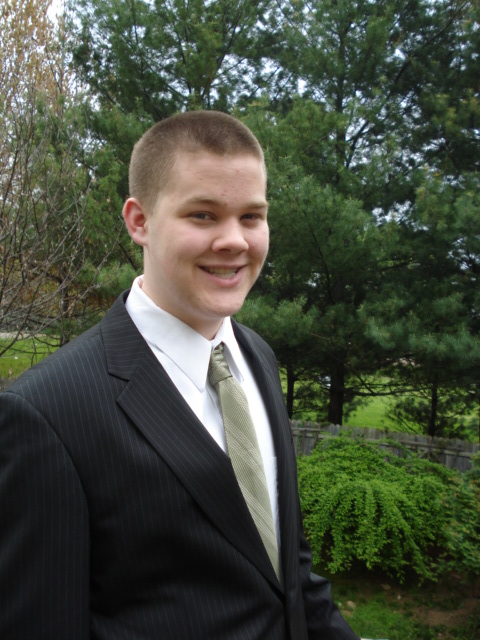
My son Chris 17 years old

I came across the blog of a an old friend today.  (Well SHE’S not old, because we are the same age… and gee!  I AM NOT OLD!)  I almost didn’t “recognize” her as she has a new name and is a published author!  (You GO girlfriend!)

Her latest post dealt with the ability to observe.  Gee.  Those of us who are late-deafened have certainly mastered this ability, haven’t we?  Well, I guess if we haven’t mastered it yet, then we are still banging our heads against something hard and useless, trying desperately to get a grip on an acquired disability we didn’t ask for!  It’s in our best interests to be good students of observation.

My dad loves to shop… in malls nonetheless.  Ok, I’m stretching the truth a bit, but he does enjoy going with my mom to shop in malls.  Why?  He loves to sit and observe.  I’ve OBSERVED him “observing” and get pretty tickled as his face is definitely transparent as he “observes” this person… and THAT one!  He loves to eavesdrop, and I’ve been very entertained by things he’s observed when sitting at the mall waiting for Mom.

Learning to really decipher facial expression and body language is “key” for someone who doesn’t hear.  I like to think I’m an expert.  However, now that my son is 6′ 3″ tall and I’m looking straight up his nose when face-to-face in a typical mother/son “discussion”, I’ve come to the realization I still have a lot to learn about observation.  (“MOM!  I’m NOT rolling my eyes!  You can’t even SEE my eyes!  You’re staring at my belly button!”)  SMACK. 

Observation according to Dictionary.com:

1. an act or instance of noticing or perceiving.
2. an act or instance of regarding attentively or watching.
3. the faculty or habit of observing or noticing.

Yup.  We could all do with brushing up on learning to OBSERVE.

Denise Portis
©2008 Hearing Loss Diary

Sometimes? Sometimes it hurts…

sometimes-its-hard.jpg

I like to think that I approach life with a really wonderful attitude. One of the biggest reasons that I am able to do so, is that I am really so incredibly blessed! I have the absolute greatest family, a wonderful husband, an assistance dog who loves me in the way God created dogs to love people (unconditionally), a super church, etc. Even my disability is one in which I can “handle” most days, and have been blessed by the friendships of others who really have a bigger burden to bear in their own disabilities.

Some people hate the word “disability”, as it lends one towards thinking they are NOT able – hence “dis” abled. I do like to focus on what I can do, instead of those things I cannot. However, I try very hard to balance that with reality. There ARE things I cannot do as a result of my disability. I think when one says that certain physical challenges (or emotional or mental) do not affect our everyday lives, one is really embracing a state of denial. I think we have to be honest with ourselves. It is only in this way we can then go out and be honest with others. I sit in my house alone as I write this, as my family has gone to participate in RESPITE… a ministry of our church. It is a ministry I cannot participate in, as I cannot allow my own deafness and balance problems place a child with disabilities in danger. I don’t care if I tumble down the stairs, or fail to hear something that ends up hurting me. I do care should I place another in danger. I accept that my disability will not allow me to do some things… things like RESPITE.

“Honestly”? (Grin), I think Christians make a mistake when they choose to go around acting as if life is always good all the time. GOD IS GOOD ALL THE TIME, but sometimes? Life isn’t! Sometimes? Sometimes it hurts…

Oswald Chambers wrote in My Utmost for His Highest, “A river is victoriously persistent, it overcomes all barriers. For awhile it goes steadily on its course, then it comes to an obstacle. For awhile it is balked, but it soon makes a pathway round the obstacle. You can see God using some lives, but into your life an obstacle has come and you do not seem to be of any use. Keep paying attention to the Source, and God will either take you round (it) or remove it. Never get your eyes on the obstacle or on the difficulty.”

I really do try to live that way. I consider myself a persistent little brat! I’ve had a few barriers disguised as boulders thrown into the course of my river! Sometimes, that boulder has acted like a dam. The water rising around me made me feel defeated and useless. There were times I wanted to stay in that stagnate pool so that I didn’t have to continue my journey down the riverbed. But after lessons learned, and a new desire to persevere, the “water” broke over the top of that barrier. And golly! The waterfall created after a necessary period of “standing water” was magnificent! Even in my deafness I could hear the roar of newfound power released, as I heard it from my heart! I know that God must have looked down and saw the water finally cascade over that barrier and thought, “Ah! Now that is why I created her! Look at her go now!”

My deafness has brought me a unique and valuable group of peers, many of whom have become very close friends. My deafness has definitely coerced me closer to my God; sometimes with a gentle push and other times with a giant shove. My deafness has helped me to really “listen” with other senses, as I’ve learned to see emotions play across people’s faces more clearly. People do not realize that their emotions can many times echo off of them like waves. These emotions of tension, happiness, sadness or anger, can almost knock a person over if they are really listening with something other than ears.

It reminds me of when I stood in the Atlantic ocean about 15 years ago. My family I were staying in a condo with my father-in-law on the Outer Banks of North Carolina. I stood in about 18 inches of salt water. Tears of shock poured down my face as I had been “sucker punched” with the knowledge that I could not hear the ocean. I could feel it, but I could not hear it. I grew up in Colorado – a completely landlocked state for those of you with geographical “issues”. (smile) So my very first time to stand in the ocean, trying to hear what I no longer had the hearing to do, wounded me deeply. (Now that I have a cochlear implant I have to get my ears to the ocean… well, the rest of me too! I’m fairly certain Maryland borders the ocean!) That week I did, however, learn how the ocean feels. Even in 18 inches of water, the current could be felt. My toddlers played around me in the surf and would squeal and run when they heard a big wave come crashing towards the shore. I soon learned that what I couldn’t hear, I could feel… and rarely was caught unaware by an incoming whitecap!

I think people with hearing loss can learn to hear better than those with normal hearing… if only we determine to do so.

But you know? Just when I think I’ve got a “handle” on my hearing loss and balance issues, something happens to remind me that hearing loss can still hurt. Sometimes? Sometimes it hurts…

I slammed the door of our van on my son’s hand yesterday. It was only by seeing my daughter’s horrified expression as she faced me and saw the commotion outside my door that I even knew it had happened. My first response was, “Why didn’t you holler?” Both assured me that everyone within a square mile DID hear him holler. Being able to hear, wouldn’t have meant his hand would not have been “in the wrong place at the wrong time”, but I certainly would have opened my door quicker had I heard him!

I’ve also learned that even though I tend to “read someone’s emotions well”, if that person decides to deliberately hide their feelings then I am truly “deaf”. As a mother, I find myself tagging along behind a child who is hurting, trying desperately to sense what is wrong. I feel like Sherlock Holmes sometimes, trying to deduce what might be the problem from analyzing evidence that is clear… about a problem that is NOT. If my children need their “space” and choose to not discuss certain things, it is their choice. I can sense a problem, but not be able to identify it. It can be rather annoying for a mother to shadow your every step and try to find out what is wrong! My children are growing up, and needing me less. My brain knows that, but my heart refuses to let go just yet.

I worry about how I’ll know if something is wrong, when they eventually move out… get married… and have families of their own. If I’m not within arms reach, how can I feel that something is wrong… that something is hurting them? I know and trust that God will always be that “within arm’s reach” source of comfort. Knowing it, trusting it, and being able to truly come to terms with it is something else though!

I suppose that is why my “river” will always have barriers to work around. Sometimes those barriers are big things; things that cause my river to surge to a halt. Other times, those barriers are a series of small things. Ultimately, I must press on. My river has a course to run.

Phil. 3: 13(b)-14 “but this one thing I do, forgetting those things which are behind, and reaching forth unto those things which are before. I press toward the mark for the prize of the high calling of God in Christ Jesus. “

Denise Portis
©2008 Hearing Loss Diary

Kindness is a Language the Deaf Can Hear…

“Kindness is the language which the deaf can hear and the blind can see.”
— Mark Twain

My senior kiddo is taking American Literature this year. She just finished the novel “Adventures of Huckleberry Finn”.

I’ve always been a little “nuts” about Mark Twain, even though I don’t agree with everything he did, wrote, or said. I think you can still admire a writer and a “mind”, and not agree on “everything”. I love this quote by Mr. Twain, “Kindness is the language which the deaf can hear and the blind can see”. I believe that. Kindness is something appreciated by all people regardless of their ability to hear, see, walk, talk, read and ETC.

In blogs across the internet there has been much hullabaloo over the Pepsi commercial shown at the beginning of the Super Bowl. If you missed it, you can view it at YouTube here.

Personally, I loved the advertisement. It doesn’t matter to me that the majority of folks with hearing loss choose not to learn or use ASL. I think any recognition of hearing loss and communicating in a non-traditional way is something to celebrate!

I’ve seen blog after blog “bashing” another’s perspective or point of view! Why? Certainly the culturally Deaf and oral hearing loss communities have differences. They choose to communicate differently, they take advantage of different types of assistive devices, and have several different access needs for accommodation. However, I truly believe that we have many similarities and issues that unify us… initiatives on which we can work together. Captioning, cell phone and telecommunication accessibility, and being treated with kindness instead of being treated like we are STUPID are just a few.

Another thing that benefits both populations is SEEING. In the Pepsi commercial, I love that one of the first things the actors did in the car was to flip on the light so that they could communicate! That’s something I still do, even after being surgically implanted with bionic hearing, and taking advantage of numerous assistive listening devices. It still helps for me to SEE the face.

One of the many reasons I am so thankful for my hearing loss, is that I have seen my children grow up treating people… all people… with respect and kindness. When we lived in NC, we were active in the families and lives of people who suffered from traumatic brain injury. When we moved to the DC area, we learned much more about the hearing loss community and how best to treat someone with this disability like an equal… and with KINDNESS. If having an acquired disability results in my children becoming people who treat all individuals with kindness, I count myself blessed. Kindness is a language the deaf can hear, the blind can see, and the mute can speak. Kindness heals the injured, and moves those who are now immobile. Kindness is a language that knits together the hearts of every person; if we will only learn it. It’s not a tough language. We can all be bi-lingual in this regard!

Denise Portis
©2008 Hearing Loss Diary

Retreating or Engaging?

I recently read an article at HSLDA that really caused me to think about whether or not I “retreat” or “engage”.

I love to look up definitions of words that I already know, as I am many times surprised by a new definition or use of a word I have been using for some time.

As always, there are numerous definitions for words. It often depends on the context and how you choose to use the word.

For “retreat“, I liked the following definition:
“the act of withdrawing, as into safety or privacy; retirement; seclusion”. For the word “engage“, I chose these definitions: “to occupy the attention or efforts of (a person or persons)” and to attract and hold fast.

This is a picture from 2004 with my friends Art N. and Linda K. from Florida. They are both deaf and blind. We are pictured with their guide dogs Dusty and Charcoal. I am holding one of Art’s famous embossed “hug coupon” cards. He believes in the power of a “hug”, and gives them out liberally.

Art and Linda would find it very easy to retreat from life. They each have two major disabilities, and neither were born with them. Both acquired them later in life; Linda began losing her sight as a child, and her hearing as a teen. Art began losing both senses as an adult. It would be pretty simple for them to hole up in a “safe” place and have someone take care of their needs. Many would choose to withdraw from life, as it can be a very difficult thing to interact with people not being able to see or hear well. Art has a unilateral hearing loss, and Linda is one of the few bilateral cochlear implant users that I have met. This doesn’t mean that they communicate easily, however, and it takes patience and “work” to communicate with others.

The internet has been a wonderful tool for them, and it was through an online support group that I first met them. I was so taken with them and their very special abilities, I became a very willing friend and have met them several times in person.

Art and Linda reach out to others. They engage people where they are at… whether an online support group or through the numerous places they go to during the week. They eat at several different restaurants whose owners and patrons know them by name, Linda gets her nails done, they go to get their haircut often, shop for groceries, and just got back from voting in Florida’s primaries. To meet them is to be forever changed. They rub off on a person in a really wonderful way.

They chose to engage others and have had a profound impact on the lives of others. They chose not to retreat and hide from the world.

I have to admit that there are times that I wish I could just stay at home and hide from others. It can be very difficult telling the SAME people the SAME things about how best to communicate with me. I suppose in some ways I have retreated from certain functions, but I really believe it is more of a way to preserve my sanity than it was to retreat from fear! A friend of mine named Sandy, tried very hard to include me in every function available to other teachers. She made it possible for me to utilize my personal FM system, insisted everyone use a microphone attached and linked to that same device, and made sure meetings were held in a round table format. However, there were certain things like “holiday parties” that I had to put my foot down and insist on not going too! Sometimes what is “gained” (that is, going to a party, eating fattening foods, playing silly games, hanging out with my peers), is not worth the price that must be paid when you have a hearing loss. The stress, fatigue, and “dangers” I would encounter… were not worth the risk! (Dangers? Have you ever tried balancing a plate, the leash of your assistance dog all while experiencing vertigo from Meniere’s disease? Smile! Yikes!)

However, as much as possible I believe I have tried to “engage” people. I teach classes and hope to relay valuable information about hearing loss to others. I speak at functions when invited and try to represent the population I am a part of in a positive way. I take part in national initiatives that seek to make hearing loss a matter of national concern. I try to make a difference where I’m “at”… where I live.

Each of us have unique gifts and talents. We also each have unique problems that can create barriers to our engaging people. We may be tempted to retreat.

I challenge you as I challenge myself each and every day… go out an engage someone. Attract their attention and hold them fast by occupying their attention and interest. Retreat is sometimes necessary. Just don’t STAY there…

Denise Portis
©2008 Hearing Loss Diary

Deaf for a Day

This week, one of my classes will be doing an assignment I call “Deaf for a Day”.

For most, it is a frustrating experience but not for the reasons that you may believe. Most of the complaints that I get from my students are because the assignment cannot be done “totally deaf”. The earplugs simulating hearing loss, simply do not take away ALL the sound. They truly want to try to get a grasp of what it would be like to be “deaf for a day”.

I do everything I can to make it possible (smile), but in the end most experience the day “hard-of-hearing”.

I suppose that most who are late-deafened, have at one time WISHED deafness on someone for a day. Perhaps it was even someone to whom they were close… someone being particularly thick-headed about communicating in a way that made life a little easier. In anger, I’ll admit that I have at times wished “deafness” on someone if only to help them understand what my life was like… to experience the frustrations I live.

In truth, I will admit that I do not wish deafness on anyone. I do not wish it on anyone who was born hearing. I have Deaf friends who were born Deaf and are accepted into the Deaf culture and community. They fully utilize ASL as well as fully experience life. When you are born with normal hearing, however, deafness is not something one becomes accustomed too quickly… nor easily.

Many think that becoming deaf means that voices are no longer heard. Certainly communication is one of the more frustrating things a late-deafened person experiences. And yet, so much in our world makes sound! Learning to live in an environment where everything is silent can be painful.

I think that is why I chose the cochlear implant. It helps to keep me connected to the hearing world in which I was born. Almost everyone I know communicates through spoken word. Many of the things I enjoy the most make sound. I have reached the point in my “hearing loss journey”, that I readily accept changes in my hearing, choose to wear “bling” on my implant, and confidently put my faith in my hearing dog, Chloe! Hugs from this Vizsla darling are certainly a perk I enjoy!

I always look forward to the responses from my students about being “Deaf for a Day”. It is interesting to note, that many of the family members tend to be extremely frustrated and “ill” about the assignment. I had a mother once tell me that she “hoped I never repeated the assignment”, for it was “very frustrating trying to make conversation and make sure instructions were understood” to their hearing child gone “deaf”. After that conversation, I cried. You see, the whole point of the assignment was lost on this parent. At the end of the day… when the lights went out – the earplugs came out as well. In the morning their child woke up to their regular alarm clock, or “get out of bed NOW” reminder! (smile) What I want my students to learn… the lesson I hope they come away with… is how their world and relationships would change should they lose their own hearing. Certainly, the greater number of them will adapt, find help, and discover how very supportive their families are.

But hands off Chloe… grin! She’s mine!

Denise Portis
©2008 Hearing Loss Diary

Instinct and Learned Behaviors

One of the most frequent questions I am asked about Chloe is “What kind of dog is she?” She is rather striking looking with her muscular build and red coloring. As her breed is “questionable”, I always tell them:

“My trainer believes she is a Vizsla and Golden Retriever mix”

My trainer has had a wide exposure to dogs, their breeds, and AKC shows and obedience trials. I’ve attended some of these functions with my daughter who now shows her Chinese Crested, and other dog enthusiasts have agreed with my trainer’s guess.

I suppose if I ever just wanted to know for sure, there are two tests available to the public now that will identify your dog’s “mix” for you. The Canine Heritage Breed Test and the Wisdom Panel Mixed Breed Analysis Test will take all the guess work out of the equation for you!

I do know by simply observing Chloe, that she is a scent hound and not a sight hound.
Chloe will follow a scent all over the yard when off leash. The scent trail may twist and turn, having her meandering across the lawn, over stumps, around sheds and even across gravel walkways. However I have seen her following a scent and miss a squirrel sitting on a lower branch of a tree watching her with interest. Unless the squirrel makes a noise causing her head to jerk up in awareness, she will never notice that critter unless her nose leads her right to it. If the scent trail she is following doesn’t lead her to the trunk of the tree where the squirrel is, then the trail she is following belongs to something else… something likely not even in the yard anymore.

I’m amazed when her nose begins to follow scents she can smell in the air even! She will even TASTE the air as she “tracks” something that wasn’t on the ground and yet came through our yard through flight.

Whatever her true breed mix may be, the “hound” in her is very obviously a scent hound. And yet… even though instinct drives her to behave a certain way, Chloe has learned particular behaviors and responses. This is why she is such an incredible hearing dog, and balance assist for me. These behaviors and responses were not “bred” into her, rather “trained” into her.

She knows I will praise her for “hearing things” and so will alert to even the smallest sound. I enjoy watching where she intently tunes into, as she tries to discern what is making a sound in order to take me to it. Those incredible ears will perk up, and she cocks her head to one side as if saying, “What in the world was THAT… and should I take Denise to it?”

I think one of the most difficult things for me in learning to live with an acquired disability like deafness, is learning to ignore instinct and instead rely on learned behaviors.

I was born with normal hearing, and like any child learned the different sounds an animal makes. I likely had more success in this than some others as I grew up on a ranch in Southeastern Colorado! I learned what a door closing sounded like, a baby’s cry, a coffee maker percolating, water boiling on the stove, and what water sounds like running in a stainless steel sink. I learned what the dishwasher sounds like, and the sound of a car engine that is running “correctly”. I learned that almost everything in the world makes a sound… even to the smallest whisper of noise like the sound of a breath exhaled on a cold winter’s morning.

Even though I lost my hearing over a period of twelve years, I still had to concentrate on using my other senses. When my coffee maker was finished, I had to see if any steam was still emerging from the top in order to know when it was finished. I had to learn to feel the vibrations of a door slamming to become aware of whether or not one of my children had returned from the backyard. A hand placed on the outside of the dishwasher, helped me to conclude whether or not the machine had completed its cleaning cycle. I think that is why losing one of your senses can cause STRESS in our lives. Our ears still want to HEAR the sounds of the world in order to help our brains make sense of everything around us. I had to “re-learn” how to become AWARE of small, relatively unimportant signals. I very quickly had to learn to perceive important emergency situations, and invested in some signaling devices that were visual or tactile alerts for things like fire alarms, alarm clocks, etc.

After my cochlear implant was activated, I again began to hear things that were silent to me for over a decade. I remember it took me a full week to discover the SOUND my coffee maker made. I didn’t have Chloe at the time to take me to it. It was very frustrating to hear something every morning and not be able to determine what it was. As I only have a CI on one side, I had difficulty with directionality as well. My family were unable to assist me in finding the “sound”, as these noises were things they had long ago learned to tune out as unimportant “background noise associated with life”. Even though it has been almost three years, I clearly remember how I practically HUGGED my coffee maker when I finally pinpointed the sound! In a period of 6 weeks, my husband had replaced our garbage disposal, dishwasher and vacuum cleaner as my brain “reconnected” sound with household items, and I by instinct and memory recall, knew they were not running correctly or effectively. The car ended up in the shop as well for some brake work!

I am “blessed” to be hearing again, however I am quick to explain that I do not hear normally. I am still adapting and learning to “hear” in new way. I allow my bionics to “hear” for me, and yet have learned behaviors that I continue to use to help me make sense of what I’m hearing.

I think people are incredible! The way our bodies work and have been put together at times astounds me! God certainly created something unique and special when He created us. We can adapt to disabilities and re-learn how to accomplish simple tasks.

Chloe? Well no matter WHAT her breed is, she assists me and helps that adaptation and “re-learning” to be a much lighter burden!

Denise Portis
©2008 Hearing Loss Diary

We’re Not So Different, You and I!

We only have one old dog in the house now. Ebony is a 15-year-old Pomeranian that Kyersten adopted in 2003. Since Max passed away 1-1-08, our only family “old-timer” is Ebony now. I noticed she tends to get special favors from all of us, and if she wasn’t spoiled before… she most certainly is now! Ebony is considered “terminal” and we were told she had months to live about three years ago, and then again about 18 months ago. Obviously Ebony doesn’t listen to the vet!

Ebony is not very dog-like. I suppose I should explain that. When she pants she smiles like a little clown. She doesn’t pant like a “regular dog”. Ebony is a little queen, and has each of her “people family” wrapped around her little arthritic paw. She doesn’t really perform any kind of function. She certainly isn’t a watch dog. She doesn’t chase squirrels. She doesn’t alert. Cripes! The little stinker isn’t even potty-trained! WE are the ones who are trained, and simply take her out at regular intervals. Ebony has an enlarged heart, liver disease, she’s almost blind, she has collapsing trachea, luxating patellas, arthritis and has a “near death” experience if we give her heartworm meds. Yet she continues to enchant us with her regal and haughty attitude.

There are times… and mind you they are very few and far between… that Ebony DOES do something that actually reminds us that she is a canine. If Kyersten is delayed in feeding her, she will sit “prim as a princess” and stare her down. If Kyersten moves, Ebony will bark. Those barks take Chloe completely by surprise. I’ve seen Chloe’s jaw snap shut with a “click” as she is so astonished by that bark!

Chloe will tip-toe over close to Ebony and sort of sniff, Sniff, SNIFF… trying to decide if she really heard that little black thing bark! Then she’ll sit and stare at Ebony as if it has finally dawned on her that Ebony may indeed be a dog. I can almost see her thinking, “We’re not so different, you and I!”

When Chloe gets those light bulb moments about Ebony’s genus and species, it reminds me of the encounters I have with people with hearing loss. In many ways, hearing loss is unique for every individual. No one’s audiogram looks the same, no one struggles with hearing the exact same consonants and vowels in specific listening environments. Everyone seems to have different “additional” problems like vertigo, tinnitus, ear infections/disease, Meniere’s, etc. Different people do well with specific types of hearing aids, assistive listening devices, BAHA’s and cochlear implants. Yet… in many ways we’re not so different.

At the 2007 Walk4Hearing in the Capital area, I was standing against a post beside a woman I’ve never met. She had two slim-lined hearing aids and was about my age. I could only see her profile, and noticed she was struggling to understand someone. When that person walked away, she turned around and saw me standing there. She crossed her eyes with an exaggerated grimace, and said, “Gosh! I hate it when people chew gum!” I had to laugh out loud and commiserated with her!

It wasn’t ten or fifteen minutes later, I walked towards a different shelter closer to the starting line for the Walk. I almost quite literally ran into a mother with three children. I crossed her path just in time to her hear groan, “Please don’t walk away from me when you are talking! I can’t hear your back!” I almost had a fit of giggles all the way over to where my family were waiting for me!

Those of us who have hearing loss are so different in so many ways. And yet… “we’re not so different, you and I”. As a matter of fact, if we actually sat down and listed similarities and differences, I imagine we’d find we had more in common than we thought!

That is one of the reasons why the numerous hearing loss advocacy groups should work together. Yes, there may be differences in that some of us use sign language, while some are only oral. Some may have hearing aids, and others a BAHA or cochlear implant. However, there is strength in numbers. We can accomplish so much more if we pool our resources, efforts and voice to make hearing loss a matter of national concern. Besides… it’s much more pleasant to be on the same “team” than to be fighting against each other! “We’re not so different, you and I!”

Denise Portis
©2008 Hearing Loss Diary

But it’s MY problem!

Although Chloe’s main “job” is to hear for me and to assist me when my balance is “off” any particular day, she also has come to believe that she is the SQUIRREL POLICE. Now that the weather has finally started to act like it’s Winter, her beloved backdoor where she watches the squirrels is now closed. It hasn’t stopped her from her diligent stance of protection when she isn’t alerting for me. Because my door was getting scratched up, I became an “enabler”. I provided a chair for her to sit on so that she could continue her look-out duties. (It doesn’t hurt that the paint on my door is now safe!) I’ve never told her that “protecting Denise from the squirrels” was her problem, but Chloe has made it her problem.

Chloe is a dog. (I just wanted to clear that up for anyone in doubt!) She acts like a dog, and has instincts like a dog. She has taken it upon herself to be the squirrel police for our family. She has made it her problem. I can assure her I’ve got it “handled”, and it doesn’t matter. The squirrels are her problem.

The squirrels are going to act like squirrels. They are hungry and many are pregnant. As long as someone keeps putting out corn for them, they will continue to come… in spite of the red furry sentinel they see on the other side of the glass! Chloe will continue to worry that the squirrels are on our deck, even if I continue to reassure her that this isn’t part of her job. Since she isn’t losing sleep over it, and since she eats and acts normally, I let her act like a dog in this regard.

I know people with hearing loss who take it on themselves to feel responsible for the way other people act regarding their hearing loss. They can attend workshops, read “self-help” books, and attend support groups and chapter meetings to learn that they are only responsible for the way that they respond to things. Don’t get me wrong… I believe that it’s important that we “gently educate” others about hearing loss. This will help the next person who doesn’t hear well that our “chosen student” comes into contact with in the future. However, many people with hearing loss make it their problem when someone continues to react in a negative way.

Our first HLAA chapter meeting after the holidays, had me overhearing some stories from members about how hard it was to interact with family members who have never truly accepted the fact that they have a hearing loss. They continue to communicate poorly in spite of the pleas and encouragement from their family member with hearing loss. They talk with their mouths full, or their hands in front of their mouth. They turn away to look at something else while talking, instead of making eye contact with the individual with hearing loss. Perhaps their house reverberated with the sound of Christmas music and the person chose to have a conversation next to the stereo!

Sometimes you have to come to the realization that some people do not fully understand in spite of your coaching. Worse? Maybe they don’t care. However, this doesn’t mean that it is your problem. It’s their problem. Don’t you have enough problems of your own? Why take on the problems of someone else?

It’s OK to even get a little miffed at this person. You may even “wish” hearing loss on them for just one day! But at the end of YOUR day, leave the problem where it belongs! With them! You can’t control them, or force them to “get it” in communicating with someone with a hearing loss. Don’t make their problem, your problem.

Chloe adopted a problem that wasn’t assigned to her. But she is acting on instinct, and her new problem doesn’t cause her any harm. When we take on the problem of someone’s poor attitude about our hearing loss, we don’t handle it well at all! It wasn’t meant to be ours! Our blood pressure goes up, we harbor “ill will”, and we think negative thoughts. We can’t curl up in our doggie bed at night and go right to sleep.

Do your best, and let other’s deal with their own problems!

Denise Portis
©2008 Hearing Loss Diary