Inclusion

back up1

A friend of mine from high school works for KIT (Kids Included Together) and I’ve enjoyed following her training schedule on FaceBook as it takes her literally all over the world. KIT, “… specializes in providing best practices training for community–based organizations committed to including children with and without disabilities into their recreational, child development and youth development programs” (KIT, 2014, para. 1). I touched base with her recently to ask if she and I could dialogue about what inclusion looks like on a community college campus. I want to be more involved at my workplace with the Student Services department and Disabilities office to help raise awareness about what disABILITY, chronic illness, and invisible conditions are (and are not), and to help train professors and staff to provide an atmosphere of inclusion, acceptance, and a place to grow for all who are differently-abled.

There seems to be such stigma attached with certain diagnosis or disABILITIES. I cannot stress to fellow professors how important it is to let students know at the very beginning of class:

1. You welcome transparency about any and all invisible illnesses, chronic conditions, or disabilities.

2. You provide assurance of confidentiality.

3. You provide a platform in which students can provide feedback about classroom procedures or policies that make it difficult in light of their diagnosis or condition.

4. You become a “safe person” to any who wish for a faculty advocate to coordinate with Disability Support Services and/or other faculty.

Some unfortunate stigmas attached to living with a disability or chronic condition, include:

1. You are looking for special favors because you are “special”.

2. You are not capable of doing well in class because you have to do things “different than the norm”.

3. You have a persecution complex.

4. You are a drama queen/king.

Some of the strongest people I know are people who live daily with an invisible illness/disability or chronic condition. They not only often have to find “new ways” to do something that to the normal person seems “easy” (for example, washing hair… pretty darn difficult if you have a balance disorder), but they also have to navigate a world that harshly criticizes, misunderstands, or labels folks who struggle with these issues. Some of the most difficult invisible illnesses to positively advocate for are those with mental illness or disorders. Good gravy, talk about your stigmas! They are often considered “crazies” or “fragile”, and people often avoid them after disclosure. This sucks IMHO. Some of my favorite people are those who happen to have mental illness or disorders. Talk about your resilient people! 🙂

Real Responses that HELP

As I have been thinking about inclusion from an adult perspective, I have found that in many arenas, peers, co-workers, and colleagues want to make their event fully accessible to you but do not know where to start. I have learned in the decades I’ve lived with invisible disABILITY, that we should strive to not only point out the problem – but also the solution. So here is where I need your help. I want to put together a document that can be downloaded by readers so that folks can use the collaborated effort of YOUR ideas to assist when they have problems of their own.  So email me your examples, and I will include them! denise.portis@gmail.com  – in the subject line please put: Hearing Elmo Problems and Solutions.

Here are some examples of my own to get your brain working on ideas yourself! Not all are “cut and dry” problems and solutions. Sometimes the solution is simply a candid response. Read on:

1. PROBLEM: It doesn’t help when you yell when I’ve indicated I can’t hear you as added volume distorts your words and draws attention to both of us.

SOLUTION: If I have indicated I didn’t hear you, please make sure you are facing me. It helps me to see your face. Speak in a normal tone and try not to over-enunciate words as this distorts the way it appears on your lips. If I still cannot make it out, consider writing it down, or re-phrasing it.

2. PROBLEM: It’s great to have accessible venues as long as the accessibility options are available.

SOLUTION: Are there elevators available for those who cannot take stairs? Please make sure these are not blocked. (At a recent workshop I attended, when the elevator opened, the registration desk was backed up to the opening, blocking the exit. They were horrified and quickly moved things, saying, “We didn’t know someone was attending who needed this“. It’s actually against the law to block accessible options from use. This includes handicapped parking, bathrooms, ramps, making sure hearing loops are actually switched on and working, and much more. (I once complained that the handicapped stall in the ladies room had been “out of order” for a couple of days and was encouraged to use the other available stalls until it got fixed. WHAT? *grimace*).

3. PROBLEM: People think if I just plan ahead and “rest up”, I will be able to participate in an event.

SOLUTION: When I have to bail even last minute on something I hoped to attend, I try to provide as much notice as possible. You may need to remind organizers or colleagues that how you feel “day to day” is often out of your control and that you regret the late cancellation. Something as uncontrollable as the WEATHER can wreck havoc with my plans. We aren’t trying to be butt-heads and we very likely really wanted to participate. Please do not make it worse by giving us a hard time or insinuating we planned poorly.

4. PROBLEM: The workshop has several small group activities but the room does not allow the groups to separate very far. This may cause difficulties for those with any degree of hearing loss with the “bee hive” effect.

SOLUTION: Go up to the workshop facilitator and request to allow your group to go out in the hallway, or a nearby room so that it is quieter so that you can participate. (If you know in advance the workshop may incorporate these kinds of activities, see if the conference/convention center has assistive listening devices, or invest in your own so that you can carry it with you always. Be a “hearing loop” advocate! http://www.loopamerica.com/?gclid=CjkKEQjwttWcBRCuhYjhouveusIBEiQAwjy8IG2XkFTiQkOxeExJVBKV8kaOwZxqjxKgqTGAMSh4Ktzw_wcB)

I look forward to receiving your own ideas and together presenting a form we can share!

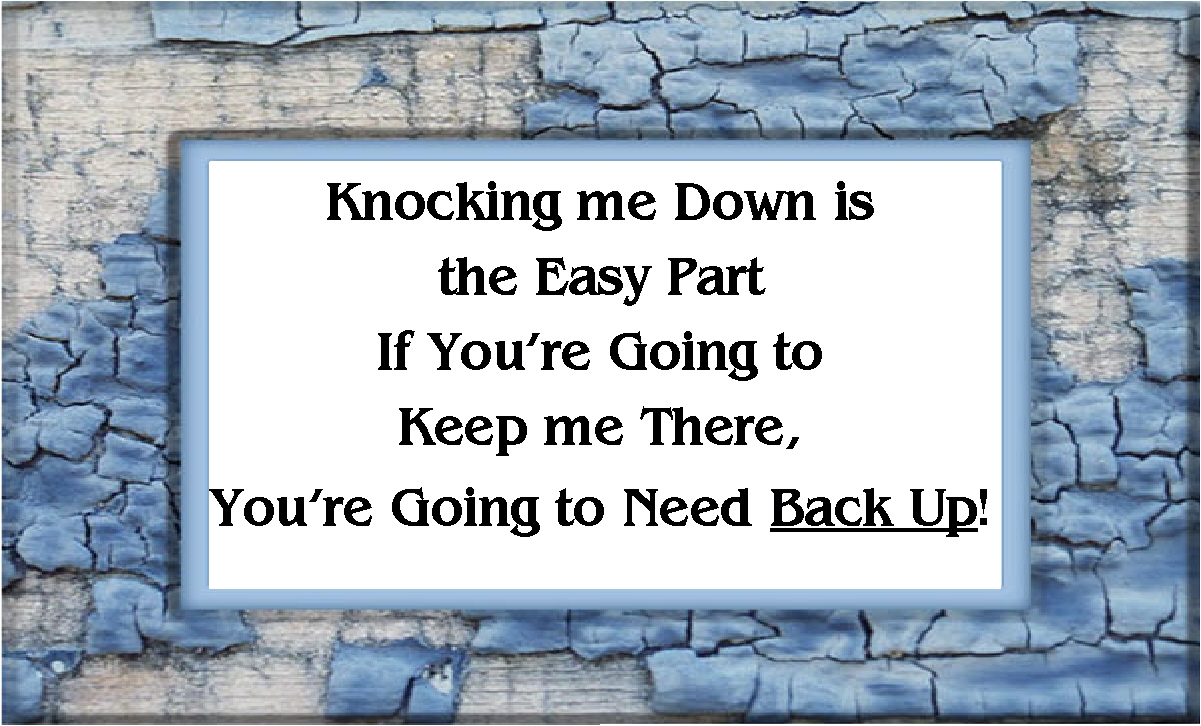
Finally, you may be wondering about the picture I chose for this week’s post. The truth of the matter is, we all have the power to wound or injure another person with words, actions, or lack of action. I want to remind my own community of folks who live with chronic illness, or invisible disability that you are not alone. Yes, people can and will hurt you. But there is strength in numbers and you are not alone. I get knocked down from time to time, but you seriously are going to need “back up” to keep me down. This community is very resilient. We bounce back because we’ve learned there aren’t a lot of other options.

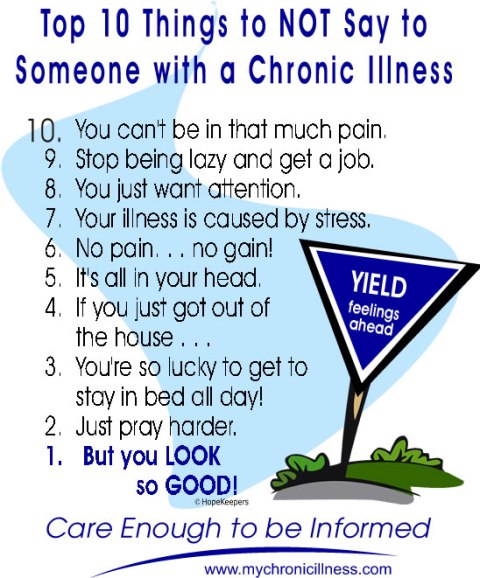
Send me your own ideas of problems and solutions to things that you have perhaps experienced yourself. I leave you with one of my favorite “list graphics”:
my chronic illness

Denise Portis

© 2014 Personal Hearing Loss Journal

Kids Included Together (2014). KIT: About us. Retrieved on June 8, 2014, from http://www.kitonline.org/html/about/kit.html
Would I if I Could?

If I could change my life, would I?

I recently had a reader and guest writer bring up something all of us who live with invisible illness or disability have thought about at least once. If you could wave a magic wand and “make yourself healthy”, would you?

Well gee, evidently I’m no fun. I’m a realist. So my immediate response and argument was, “but we CANNOT change those things about ourselves so why discuss that magic wand?” She immediately texted back:

*ROLLS EYES*

Yeah. I don’t play make-believe very well. Her point was… that WASN’T the point. It doesn’t matter if you CAN, the question is WOULD you.

First Instinctual response

My first response would have to be:

Heck yeah!

About two months ago I was having a “terrible, horrible, no good, very bad day“. I woke up (thanks to my canine alarm clock) and swung my feet out of bed too fast causing me to crash into the dog bed and water bowl next to my bed. Climbing down the 16 stairs to the kitchen area, I missed the last 4 steps, re-injuring my bad ankle. I ran my coffee maker without coffee grounds. I slipped on the kitchen rug and slid like a ninja into the dining room and cracked my head on the table. When my husband came downstairs he found me sitting on the floor wailing. I sobbed and blubbered all the things that had happened in the 30 short minutes I had been awake. He leaned down and patted my shoulder and said, “Awww honey. Sometimes it sucks to be you“.

I cracked up. It was exactly what I needed. Sometimes? Sometimes it just sucks to be me. But… I am me and I deal with that. Wouldn’t it be great if I didn’t have to live with a balance disorder though? Wouldn’t it be great if I could hear with “normal ears”?

Well duh. Of course it would. I’ve had folks tell me before, “Denise, you are always so UP and optimistic. You do not ever seem to let this STUFF get you down“. Well gee… you aren’t hanging out with me enough then. I try to set people straight quickly. It isn’t always wonderful. I don’t always smile. I’m not able to pick myself up by my bootstraps all the time. Sometimes I wail on the dining room floor thinking how much it sucks to be me!

But You Can’t Stay There

So I have good days and bad days. Just like you.

I am quite capable of “counting my blessings”, finding the “silver lining” and make darn good lemonade from those “lemons”. That doesn’t mean I don’t really wish things were different sometimes. I’d be lying if I said I love being me all the time.

But magic wands do not exist. This is my life. I know more about Meniere’s disease and late-deafened life than the doctors who diagnosed me. I know more about learning how to fall and how to move than my buddies at vestibular rehab. I’ve learned to cope.

Just like many of YOU have. You make the best of it. There are few alternatives.

We will have “bad days“. Don’t be afraid to feel it. Belly-ache about it. Scream at God. Throw something (not at someone – jus’ sayin’). Cry. Cuss.

But you can’t stay there. A friend of mine lives with a chronic pain and inflammation condition. I asked her how she “keeps on keeping on” when she’s had a bad day. She said, “You have to. You get up and breathe in and out. You wipe your tears. You suck it up. But then, go confide in a friend. Write. Dance. Take a walk with your camera. Hug your dog. You can’t stay there“. (My friend is very wise, yes?)

My friends, you are going to have days where you discover you are stronger than you think you are. But… you are also going to have days you find you aren’t as strong as you’d hoped. That is part of acceptance. Acceptance doesn’t mean you have to LIKE it. By accepting we then learn to cope. We become flexible. We become teachers (and reach out to others). How you cope may not be how someone else copes. The trick is TO COPE.

Would I change the physical stuff about me if I could?

***WaVeS mAgIc WaNd***

But that would mean that I wouldn’t have met many of you. My friends and relationships would all be different.

I wouldn’t have learned to advocate and help others.

I wouldn’t have found a “place” at Fidos For Freedom.

I wouldn’t have pursued psychology and disabilities.

I wouldn’t have learned to empathize and support others who live with invisible illness and disability.

I would not have learned how capable I am.

I wouldn’t have learned who I really am.

So nope. I wouldn’t waste that fairy dust on changing me. I may not always like my life, but I love living. I keep my focus on the verb, not the noun.

So if I had a magic wand? Well heck, I’d use it for something useful! Like being able to consume as much chocolate as you want without the scale showing any change! Um yeah. IN A FREAKING HEARTBEAT! 🙂

Denise Portis

© 2014 Personal Hearing Loss Journal

“Reflection”

Look at me
You may think you see
Who I really am
But you’ll never know me
Every day
It’s as if I play a part
Now I see
If I wear a mask
I can fool the world
But I cannot fool my heart

Who is that girl I see
Staring straight back at me?
When will my reflection show
Who I am inside?

I am now
In a world where I
Have to hide my heart
And what I believe in
But somehow
I will show the world
What’s inside my heart
And be loved for who I am

Who is that girl I see
Staring straight back at me?
Why is my reflection
Someone I don’t know?
Must I pretend that I’m
Someone else for all time?
When will my reflection show
Who I am inside?

There’s a heart that must be
Free to fly
That burns with a need to know
The reason why

Why must we all conceal
What we think, how we feel?
Must there be a secret me
I’m forced to hide?
I won’t pretend that I’m
Someone else for all time
When will my reflection show
Who I am inside?
When will my reflection show
Who I am inside?


Pet Peeves

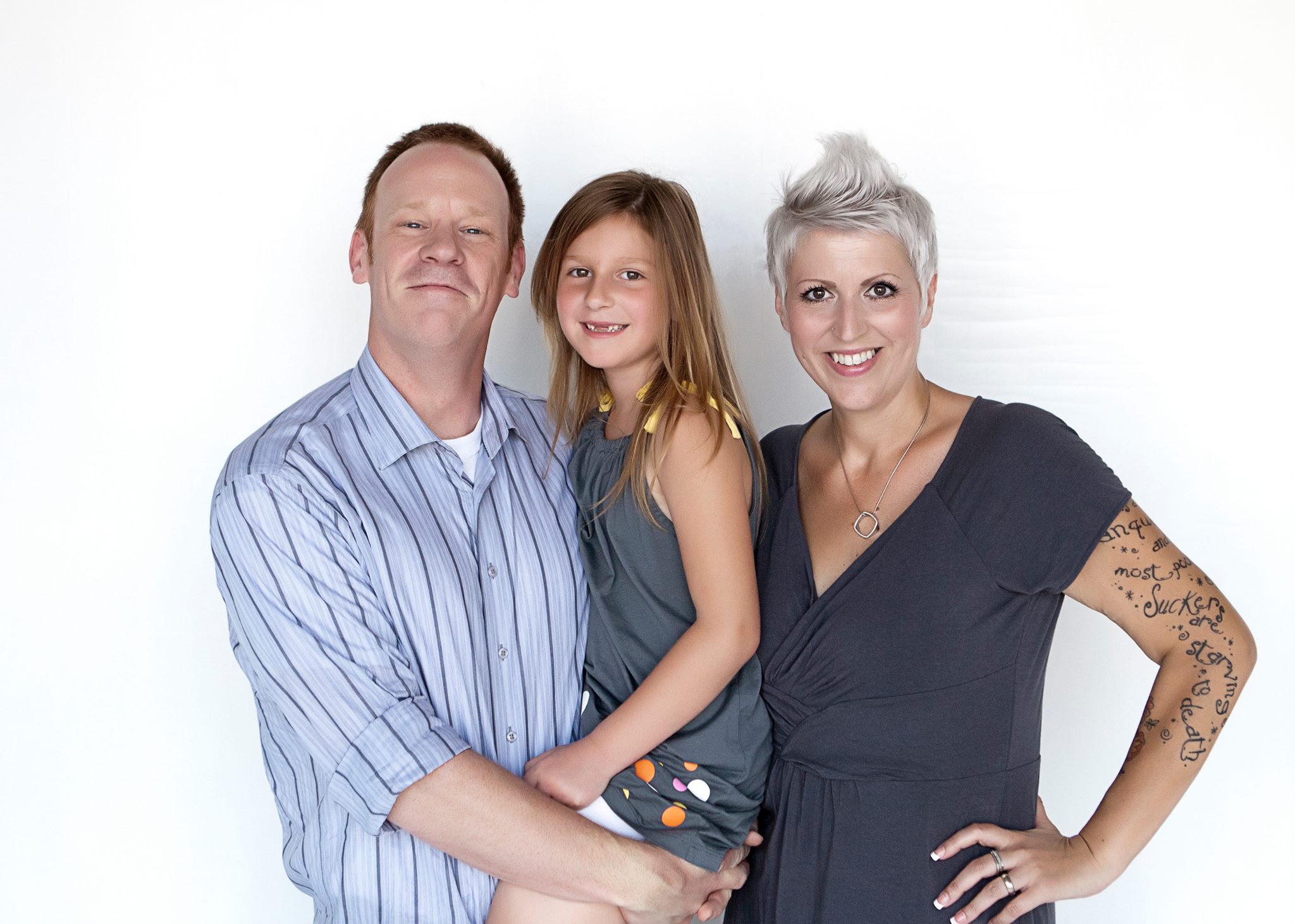
Melissa and family
Melissa and family

Hearing Elmo welcomes, Melissa Sisco, guest author from Alabama. One of the many things I love about Melissa’s writing is that she is very transparent and doesn’t “sugarcoat” things. The way I see it, a blog supported by writers who live with invisible illness or disability, must be very REAL as they write. Melissa is the mother of two young daughters and was first diagnosed with Meniere’s Disease in 2007. Melissa also has asthma/allergies, a heart condition, weak bones, endometriosis, and diabetes Type II. Melissa admitted that “Meniere’s Disease has been the single most challenging medical diagnosis I have experienced in my 32 years”. A big shout out to Melissa for writing! 

Okay. So I’ve had Meniere’s Disease for over 7 years now. I’ve been bilateral for over 2 years. The reality is that my left ear is more or less a lovely decorative piece. I have a usable older (once top of the line) hearing aid that is being refashioned for use on my right ear. I could truly benefit the most from a nice bi-aural set, but insurance doesn’t cover that, and the set I would need would set me back a good 8 to 10 thousand dollars. I now make too much money to qualify for any government assistance, so that option is gone now. I don’t have that kind of money lying around, nor do I want to bury myself in credit card debt, so I would rather spend it on my daughters while enjoying some activities of natural hearing while I still have some left.

When I was first diagnosed at 27, the hearing loss thing felt like a death sentence. Now I see it’s just part of my new me. My world is more quiet, save for the tinnitus. I see more, I feel more, I taste more and yes, I even smell more. I’ve enriched my other senses out of necessity. And really that is not so bad. I’ve even accepted the definition of disability as it is necessary to protect me legally and medically. But I am no less ABLE. I just don’t hear as well. My mind is still sharp as a tack (most of the time). Hearing –not so much. I am okay with that. I can accept it; make peace with it. That is God’s Will after all. Everything happens for a purpose.

But, there is one pet peeve I’ve encountered repeatedly lately that really gets under my skin. You know, like poison ivy or something akin to that. Starts as a tiny pink slightly itchy dot. You tell yourself not to pay it any attention. But it itches. You scratch, it spreads, it gets worse. Finally you have to stop and confront it with calamine, Benadryl or even a visit to the doctor if it’s bad enough or you happen to be allergic. That pet peeve is people who have already written me off as Disabled. I need a, beg my pardon, flipping epi-pen for this one.

Nothing else infuriates me more right now than that attitude from others, whether they are strangers, co-workers (present or past), friends (present or past), or family (can’t change that). Being completely written off as “Oh, she’s done, stick a fork in her;” is absolutely the best way to watch steam come blowing out of my deaf and going-deaf ears. The word anger just doesn’t seem to really define how I truly feel when I am overlooked, uninvited, unfriended, or just plain ignored because, well I am (*gasp*) Disabled now. There are days you would think Disabled is synonymous with Dead. Well I am NOT.

I still eat food. In public. I still can be a bridesmaid (although I can’t wear heels – I will look tipsy way before anyone else). I still have a promising career because of this lovely new-fangled invention, they call it a chair. I still drive a car! For now anyway. I still type 85 wpm. I am still a mother to my daughters, a wife to my husband, a daughter, a friend, etc. to those who haven’t walked away. And a loyal one at that. I have had to make certain adjustments, like asking people to look me in the face when they are talking, or to wait until I can get my caption call phone working before we continue a good conversation, but these aren’t overboard requests. I’m not asking people to walk through lava or sit in on my inner ear perfusions with me. I reserve the special stuff only for my closest loved ones.

I was really, deeply hurt when I overheard (okay, read the transcript) of a conversation I wasn’t supposed to hear. (Lovely captioning apps that Apple offers.) I found out that several people I had worked with previously (and some I still have to work with –awkward) had nixed our friendship because they assumed my “Disability” meant my career was going nowhere. No career meant I was “no good” to them. Words really can’t accurately express how deeply hurt I was. I have always taken pride in doing what I can for those I work with. I repeat in my head that I can’t possibly know the trials that others may be going through personally and so I make it my mission to do what I can to make things easier where I can. Accidentally finding that transcript was one swift kick in the emotional gut. I still treat them as I did before, because I can’t change who I am. I will always help when I feel the need is there. But that pain and anger is just below the surface as well. I guess it’s more like a deep throbbing disappointment now. And it hurts to see people daily who think I’m “done for” lying to me; eyes, words, gestures and all.

I struggled long enough to convince myself I was still good enough for myself, even without hearing or good balance. It took me a while, but I got there. There are still some rough days, the ones I can’t get out of bed because of the vertigo, or a random vertigo drop attack that suddenly smacks me with a sidewalk; but I am making it. I just didn’t quite imagine my work place I once considered safe turning into a world of landmines. People waiting for me to drop work permanently because they want my job, or they want someone else in my job. (After all Disabled people don’t deserve real jobs. *sarcastic thoughts of “healthy” people*)

Losing friendships hasn’t gotten any easier either. Some people just get tired of trying I guess. And I don’t blame them. I had a rather extended pity party for myself for a while. Making new friendships is even harder. I am not obviously deaf/hard of hearing. I “cover” for it well. Most people have no idea I can’t hear them, that I am only lipreading and body gesture reading. I’ve yet to try to figure out the best time to break that to people. If you tell them right from the get go they avoid you like the plague. If you wait a while, you get the “I had no idea,” or “Oh, that’s why you said [whatever didn’t make sense the other day].” Neither response is more conducive to friendship than the other. My favorite response was, “Why don’t you just hang out with only Deaf people?” No comment. I walked away from that one, quickly.

I am still working on my ASL. It is slow and painful for me. I crave grammar, structure, (I used to love diagramming sentences) and ASL has little to none of that. I also have no one to practice with except my daughters (at 5 and 7 they are already better than me!). My husband is starting to try, if only because it annoys him that “his girls” can talk about anything right in front of him and he is completely clueless.

Melissa, "But I am no less ABLE. I just don’t hear as well."
Melissa, “But I am no less ABLE. I just don’t hear as well.”

I have recently picked up an old hobby again. My acoustic guitar. Can’t hear all the notes. But I can feel the vibrations. I actually play better now than I did when I could hear fully. How ironic is that?

If you would like to contact Melissa, reply here or contact me. I will forward your email to her! denise.portis@gmail.com


Beaver – Destructive or Discerning?

swimming-beaver-344367-m

We have beaver. Actually, we’ve had beaver for about 16 months now, however this summer it is really evident WE HAVE BEAVER.

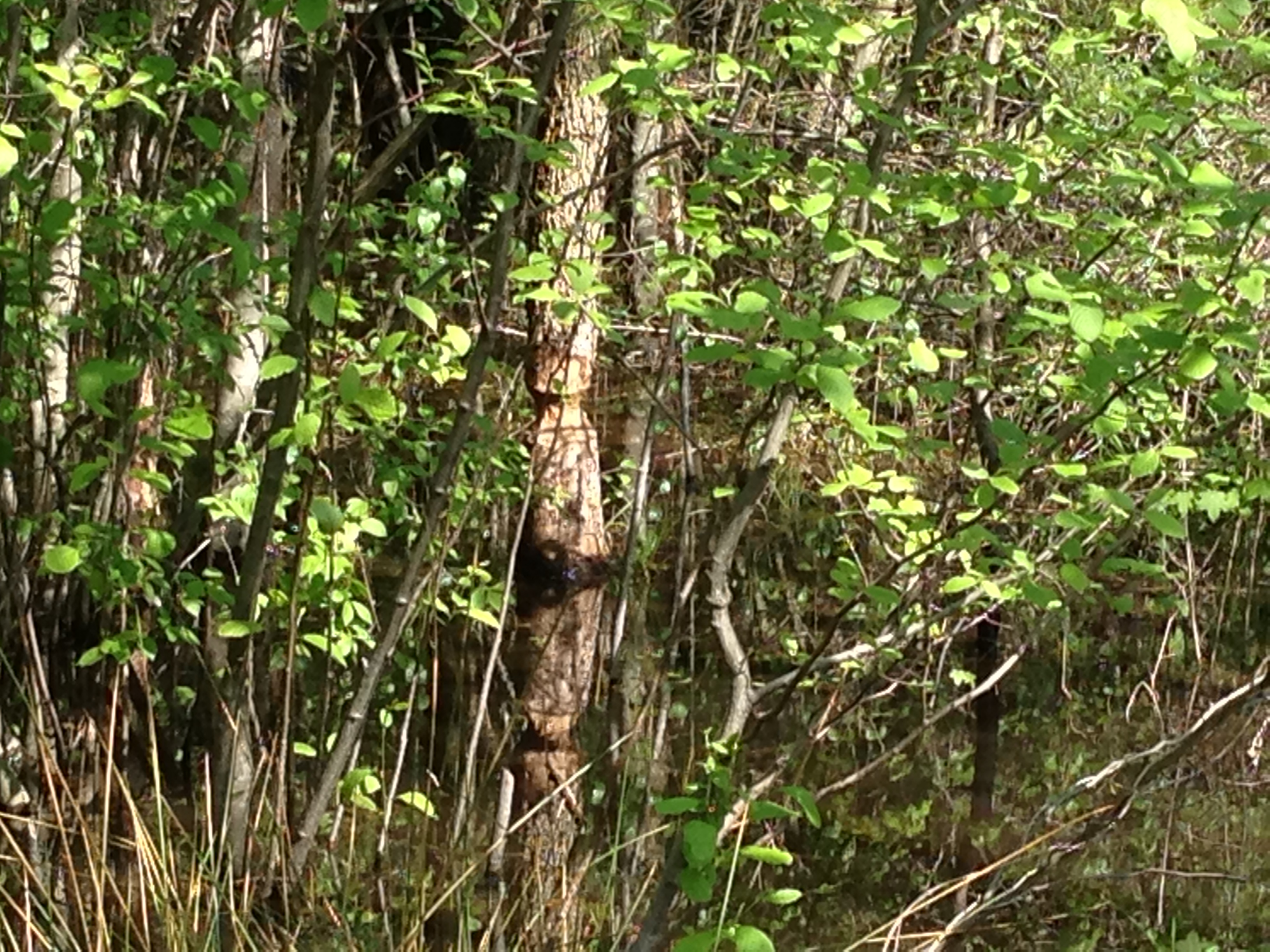
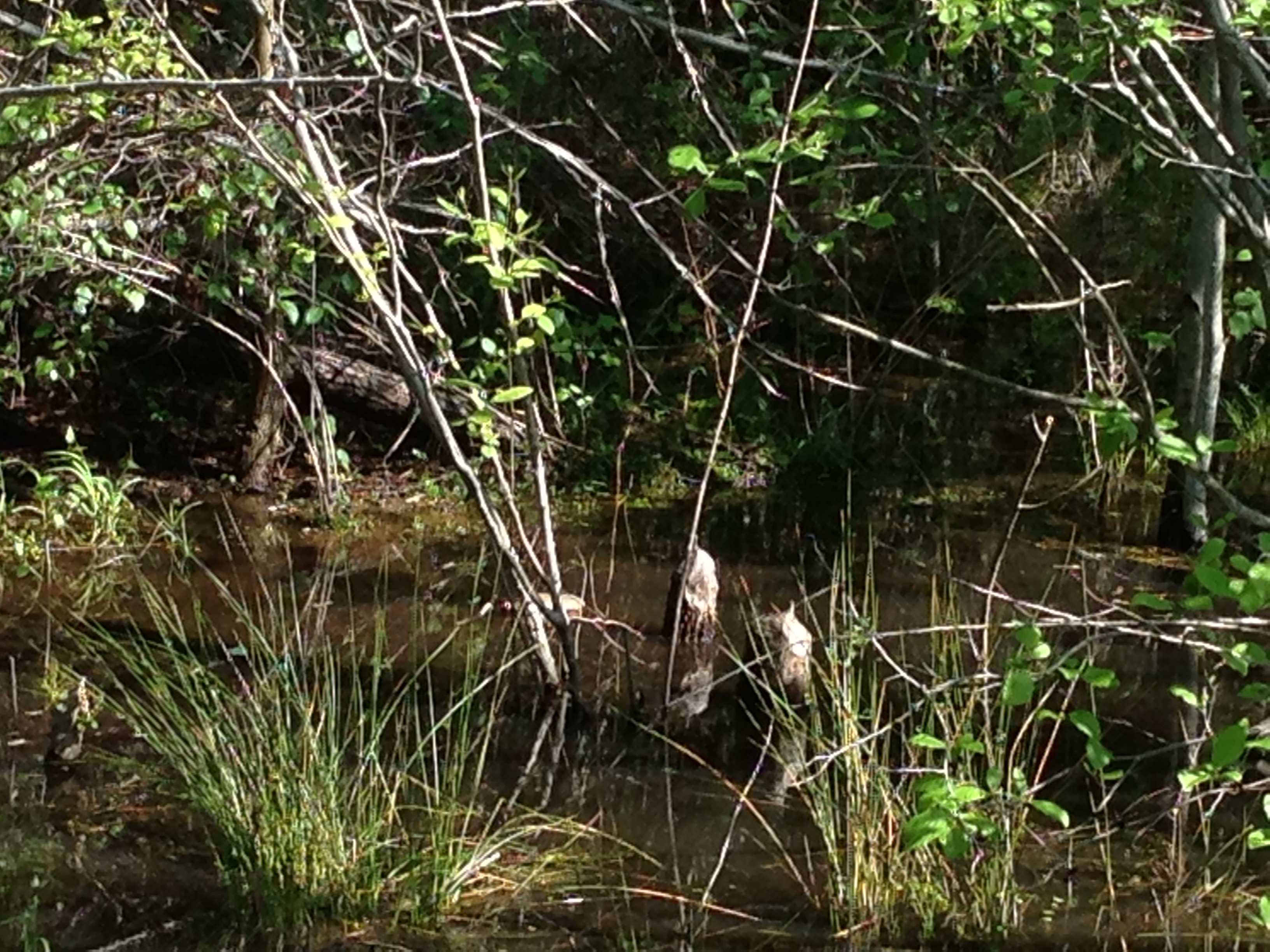
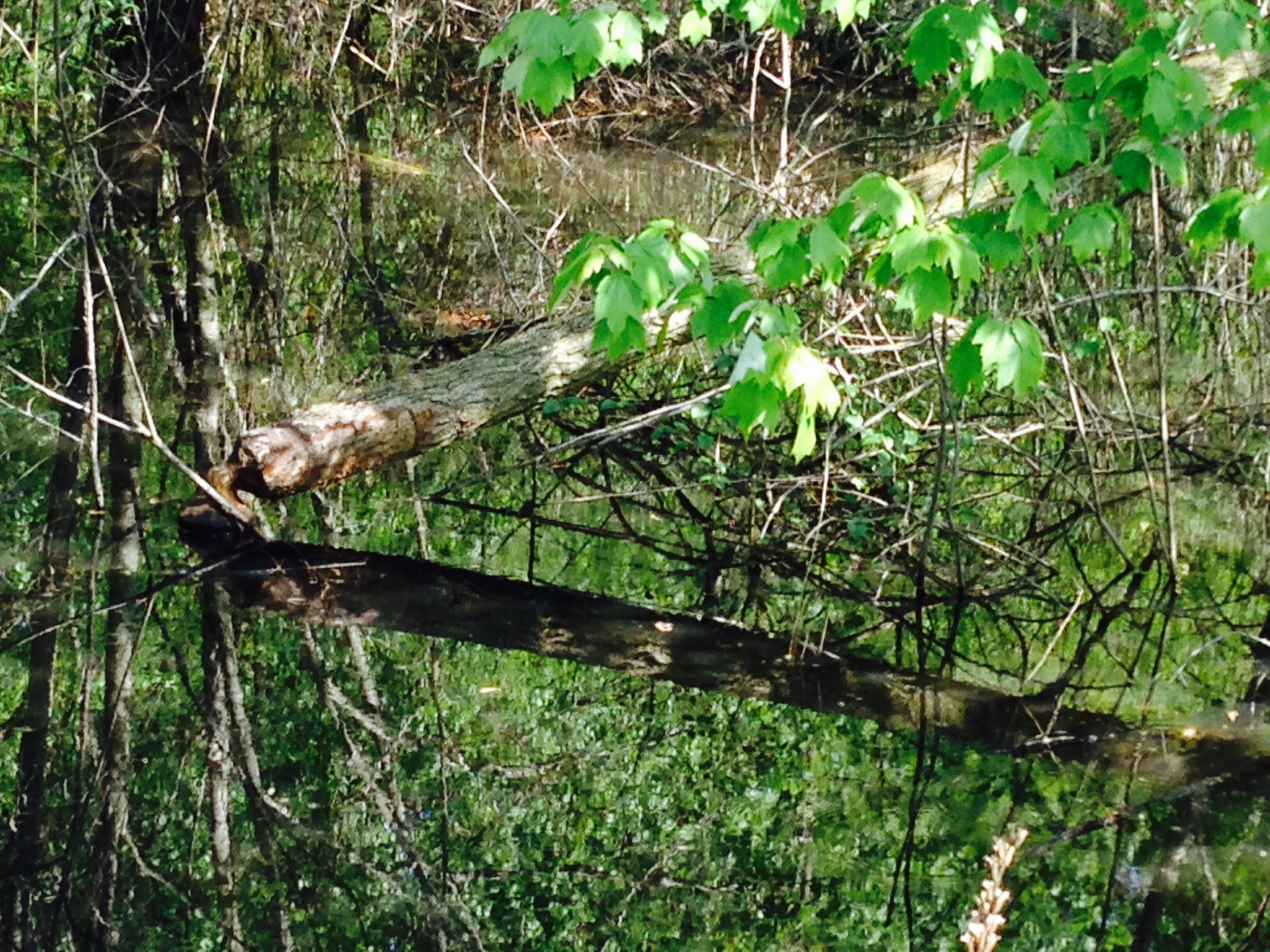
Our townhouse community sits up at the top of a hill. It is a closed cul-de-sac community, so it is great that “through traffic” is not an issue here. A brand-new walking path is now within footsteps of my front door. It will eventually connect to other walking paths, but for now it is about 1.5 miles round trip. At the bottom of our “hill” the path takes us by both a busy road, and what was once a small creek. In the Spring, I use to get a kick out of “hearing” the water sounds, especially after heavy rains. Last Spring those water sounds disappeared. However, I spotted this:

beaver10

… and then this:

beaver11

The creek quickly turned into a pond. And this year? Well let’s just say there is a new ecosystem near my house.

I came across a huddled group of homeowners about 3 weeks ago, whispering and gesturing towards the pond with banks now within 60 feet of our back doors. I stopped to see what was going on, and because it was early enough in the morning with few traffic sounds, I could actually hear their whispers.

“Will the water level rise much more?”

“What do you think they are up to?”

“Do they bite?”

Now my first thought was, “FOLKS. Beaver do not understand human language and to my knowledge they don’t have bionic hearing like I do. Why the HECK are you whispering?”

I didn’t voice those thoughts. Instead I said, “Ummm” (I’m ever so eloquent…)

“Yeah, but have y’all been down to the pond area where the walking path is? Have y’all seen what has happened down there?”

Blank looks. I discovered they don’t comprehend SOUTHERN. I tried to speak a little more cultured…

“Yes, you should walk down there. There are 2 HUGE culverts about 8 feet in diameter. That water level will never get any higher unless those culverts become dammed up as well. If that happens, the city will just unplug them. After all, that road will flood before our homes will“.

Blank looks. See what a lack of exercise will do? Go walking folks, go walking. Check out what the beaver have done up close. Geesh. I think they were miffed I was talking in a normal tone of voice. After all… *sneaky whisper* … the beaver probably HEARD ME.

Beaver have made a comeback in Maryland. I pulled this from a neighboring county’s website:

“Beaver can be among the most beneficial of the county’s wildlife. They create favorable habitat for a variety of wildlife species including fish, birds, amphibians, reptiles, and mammals. This variety of wildlife is in turn valued for recreational, scientific, educational and aesthetic purposes. Beaver activity is also helpful in retaining storm water runoff and improves water quality by trapping sediment, nutrients, and pollutants. Beaver activity can also cause flooding of roads, trails, forest land. They also consume trees and shrubs. Their impacts often occur suddenly and dramatically.

These benefits and detriments often occur simultaneously at a single location. Because of the varying degrees of tolerance levels among people to beaver activity, there are bound to be disagreements on how best to “deal” with beaver conflicts.” (Howard County Parks and Recreation, 2014).

Living side-by-side with these amazing creatures is fairly simple. I’ve been thinking a lot about this family of beaver.

beaver3

They migrated to this area near the bay bridge and did what came naturally to them. Not with destruction in mind… but cunning and incredibly discerning architects, this family of beaver have created a whole new ecosystem. We’ve always had tree frogs (although it took Chloe’s trainer to clue me in to what I was hearing each year). But now we have:

Beaver8

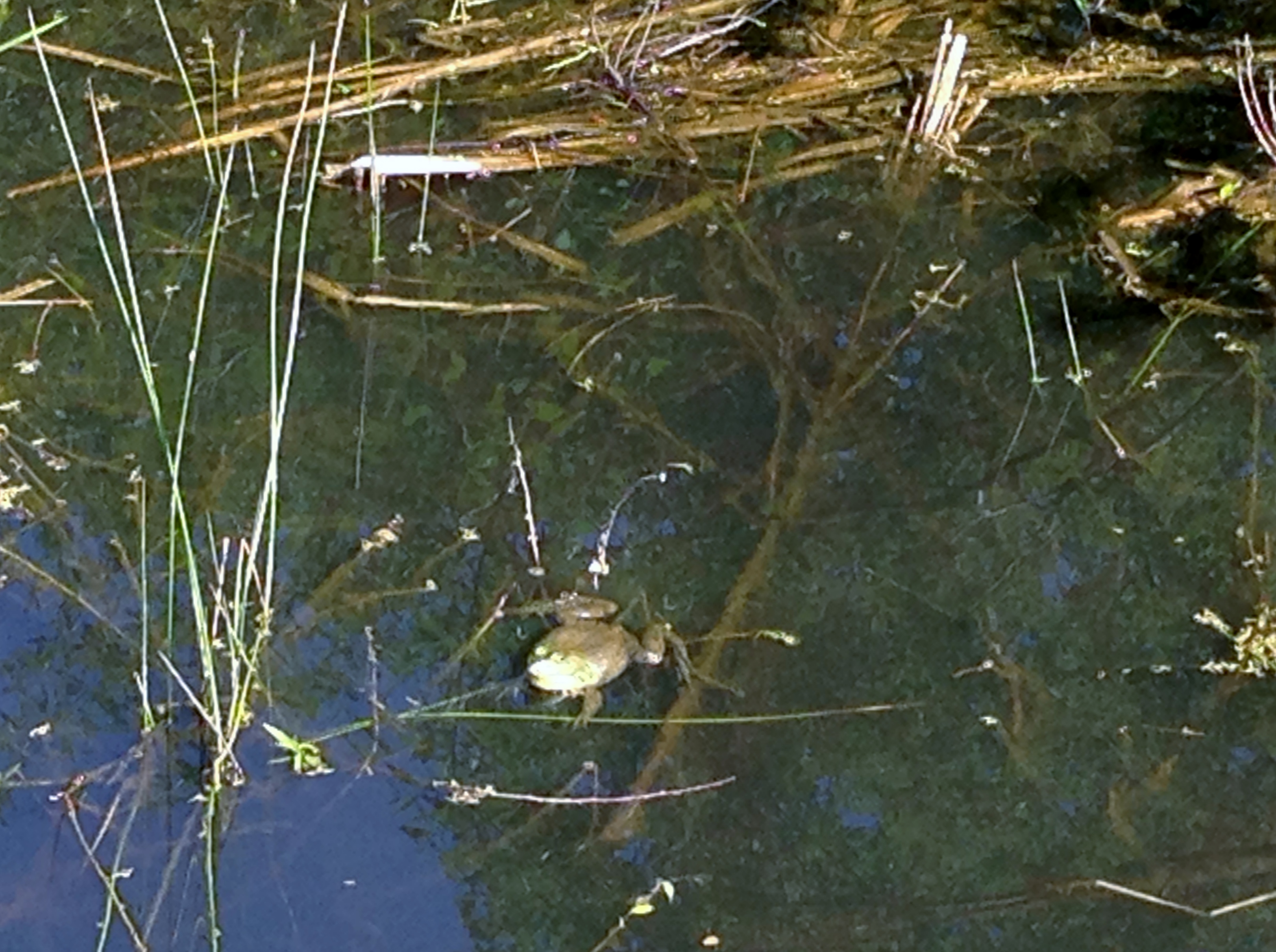
… bullfrogs. You should have seen Chloe’s head and ears the first time she heard THEM! These fellas stretch about two feet, nose to tip of hind legs. I know this, because I’m the crazy neighbor lady screeching to the neighborhood boys who have caught them and held them up to “Return them to the pond when you are done!”  There are also numerous plants I have never seen before in this area when all we once had was a creek…

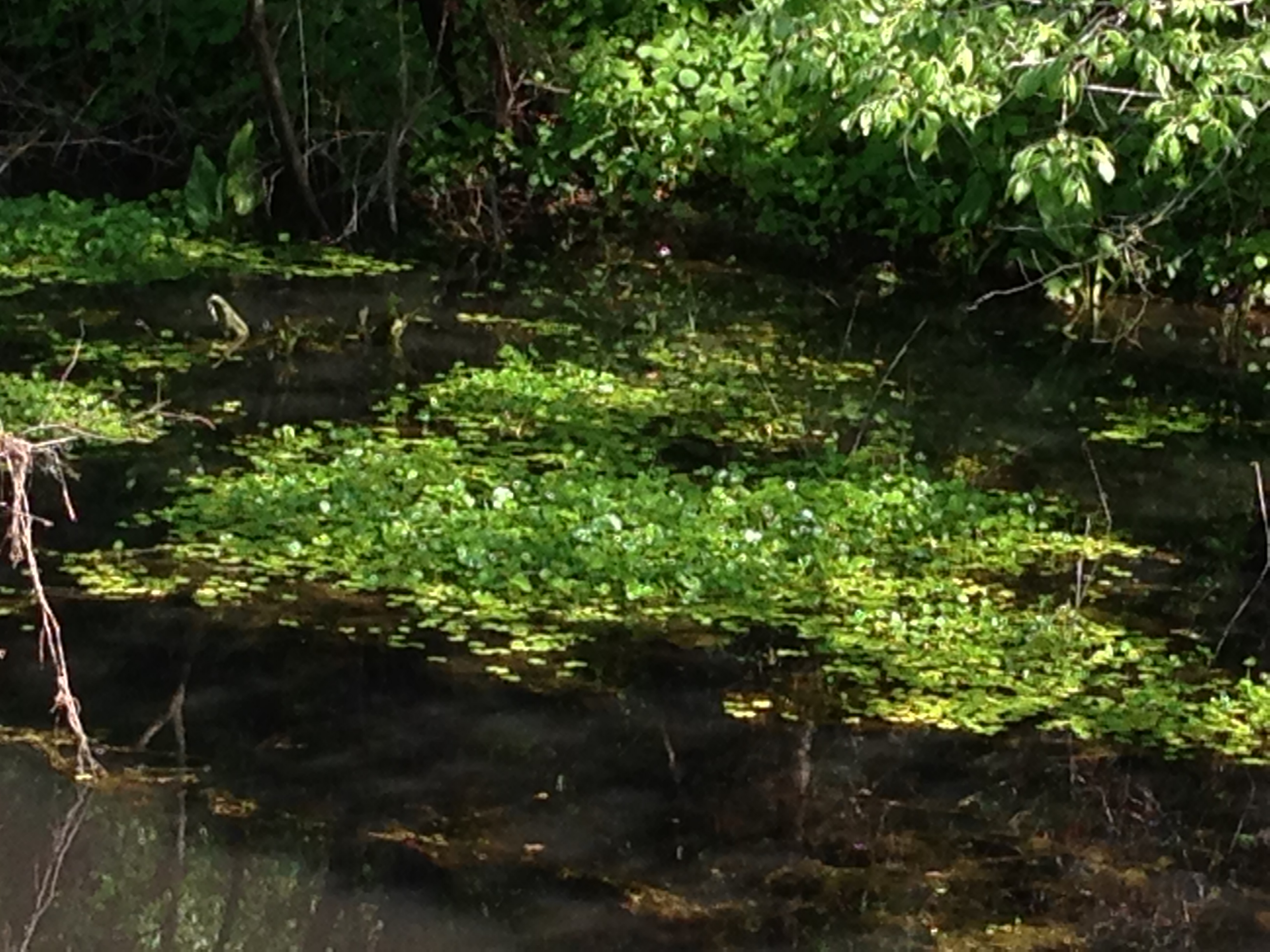
Beaver7

and the trees are flourishing…

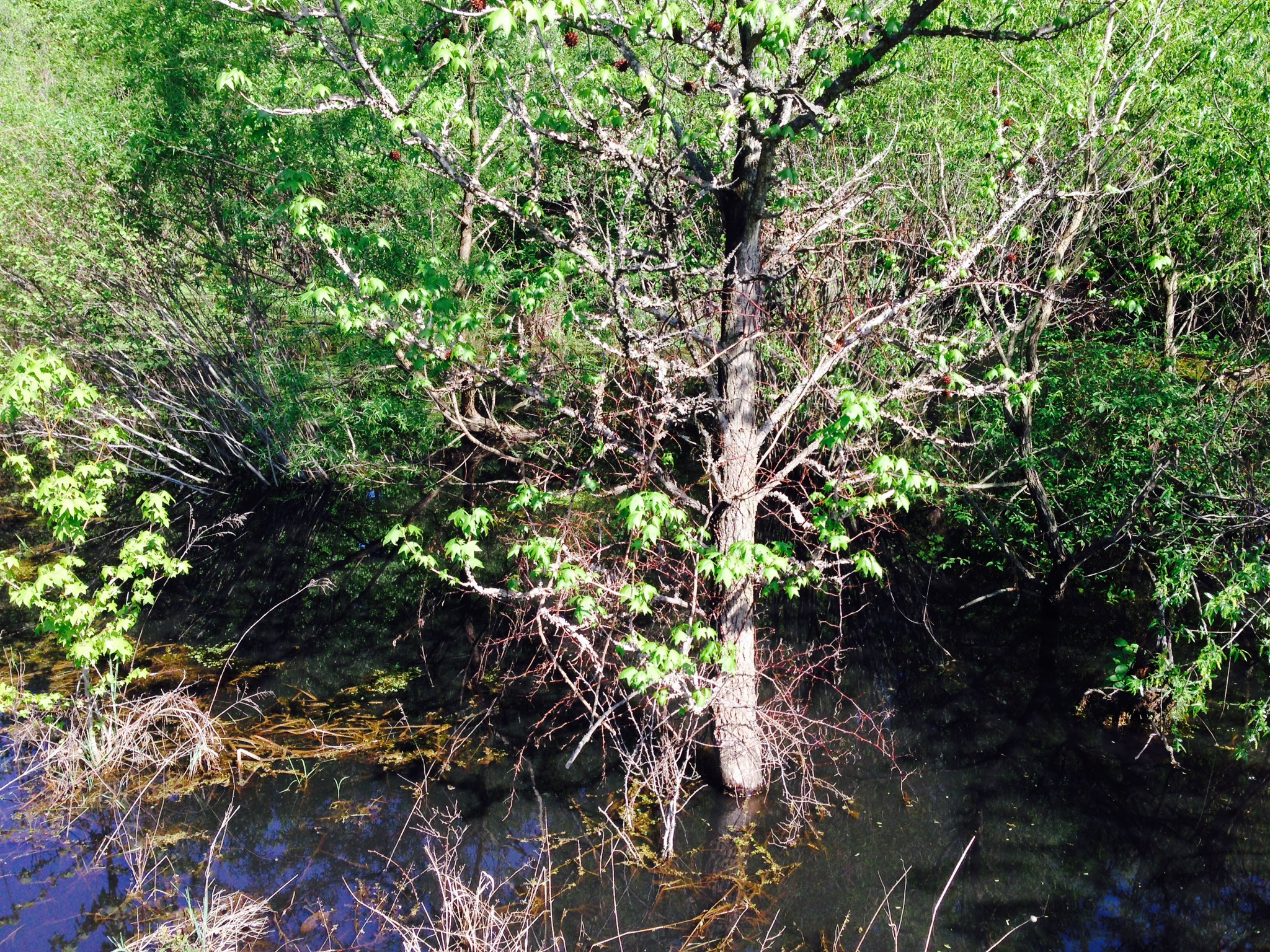
beaver1

I counted 4 different families of mallard duck one evening, with little ones thriving in this secluded and protected environment. Turtles are sunbathing on any log or rock that breaches the surface of the water. The fox are back (having been gone for at least two summers). There are enough deer in our area now to make my poor hound dogs hoarse for all the barking alerts they insist on for me.

I cannot help but be amazed. The beaver strengthened and created a home just right for them, and in the process created a place to thrive for other species. Folks? I want to be a beaver.

I didn’t ask for disabilities. I never once thought, “When I grow up… I want to be DEAF and have a significant BALANCE DISORDER”. However, in my own process of adapting and making my environment safe and liveable for ME (cochlear implant surgery, service dog from Fidos For Freedom, be-dazzled canes, no-slip shoes, discovering where all the elevators are on campus, practicing all I learned in vestibular rehab.), I have created a new ecosystem.

I want MY WORLD to intersect with the REAL WORLD and help folks recognize the importance of inclusion. I work to make sure that my new life, teaches and advocates in accepting differences. I want others to recognize abilities rather than disabilities. I want my invisible disabilities to be visible and “pond-like“. I want my life to inspire others to choose to live equally purposeful lives. In my own small way I do this by working with my campus disability office. I openly talk about being “differently-abled” in class. I “plug” what I know whenever I can to whomever will listen… cochlear implants and service dogs, depression and coping skills. I have discovered my environment changing. People are coming out of the woodwork… or umm… newly created POND, and sharing with me that they have a mental illness, invisible challenge or diagnosis such as fibromyalgia, chronic fatigue syndrome, or Lyme’s disease.

Yes. Having an attitude of gratitude and focus on education and advocacy, has me walking by concerned citizens from time to time, whispering about a beaver conspiracy. But just as I’ve learned that being transparent is contagious, these folks will eventually HEAR and go walking to discover other new ecosystems. At least… I hope they will.

Do you live with disability? Are you struggling with an invisible illness? Do you have a chronic condition that folks do not seem to understand, nor comprehend how it affects you? Hearing Elmo is not just a place to “hear”. My desire is that numerous authors, both named and anonymous, begin to disseminate the kind of information that changes our environments. In the end, the beaver aren’t the sole beneficiaries. We all benefit. Would you like to write for Hearing Elmo? Contact me at denise.portis@gmail.com and type “Hearing Elmo” in the subject line. Building dams is pretty fun. It is unexpected. It is worthwhile. We can all make a difference!

Denise Portis

©2014 Personal Hearing Loss Journal

Howard County Parks and Recreation. (2014). Beavers. Retrieved May 16, 2014, from http://howardcountymd.us/DisplayPrimary.aspx?id=2396

I Was Given Just 15 Months to Live…

Heather Von St. James

Hearing Elmo welcomes guest writers are I am thrilled to introduce you to Heather Von St. James. Invisible illness and disability are not aided in remaining invisible. One of the things that helps to raise awareness is for advocates to write about their experiences, and educate others about “little known” diagnosis. Heather shares in an interview, her passion for mesothelioma research and awareness because it is HER story. You can learn more about her personal experience at: http://www.mesothelioma.com/heather/#.U2PU0ihNuSo

If you would like to contact Heather, please see her contact info at her website.

Heather, many people may not even know what mesothelioma is. Can you explain what it is in layman’s terms for us?

Mesothelioma is cancer of the lining of the organs primarily caused by asbestos exposure. There are three main types, Pleural, which is the lining of the lung, peritoneal, which is the lining of the stomach area and pericardial, which is the lining of the heart.

How common is this type of cancer?

It is quite rare… only about 300 people a year in the US get diagnosed with it every year.

What can you share about those early days immediately after diagnosis? What were you thinking and feeling, and what advice can you give those newly diagnosed with this?

The first few weeks were a total blur. I was going from one doctor appointment to another, then from one scan to another, making travel arrangements to get us to Boston to see the specialist, as well as trying to tell everyone in our lives what was going on was almost more than I could deal with. On top of that, I was caring for a newborn. My daughter was just 3 1/2 months old upon diagnosis.

I remember thinking that I just need a plan to beat it. If I could get a plan in place, then it would be ok. The feelings were all over the place; fear, determination, anger, relief that I finally knew what was wrong with me… then finally a state of peace, because I knew that no matter what, this was happening for a reason, and I would do whatever it took to beat it. My advice would be to find a medical team you are comfortable with, and a specialist. Get a page on Caring Bridge to keep friends and loved ones up to date on things going on, so you don’t have to make 1000 phone calls. Surround yourself with your support system. The more people to help you out in your time of need, the better… and let them help you. That is the hardest thing sometimes, is to open up enough to let others help us.

Heather Von St. James and family

What advice can you give friends and family members? What are “good things” to say and do, and what were some of the “not so good things” you heard that were not beneficial to you?

OH boy… there is not enough space to talk about this! The main thing to remember… cancer isn’t contagious. You can’t catch it from the person who is ill.. Your loved one who is sick has not changed, they just have this going on in their life. Don’t desert them… be honest with them, that yes, it scares you, and you are scared for them, but this is about them not YOU. Good things to say are to tell the person you love them. Be mindful of the person who is ill, and be honest with them. Don’t be a Debbie Downer, and be depressed around them, that does no good for anyone. Just be who you always have been. Trust me, they will appreciate that.

HOPE and staying positive are a central theme of your message. Can you explain why this attitude is so important when a diagnosis you may have seems extremely dire and frightening?

Negativity and despair will do nothing for you in your battle. You have to have a victorious mind set, not victim mentality. It’s been clinically proven that a positive attitude does more than just medicine alone. I let myself have down days. It is impossible not to, but just visit that place, don’t live there… when you are done wallowing in self-pity, get up, dust yourself off (figuratively speaking) and move on. No good comes of negativity. It is not always easy, but fighting something so scary is a lot easier to do when you have hope.

Heather Von St. James and daughter

You have a beautiful daughter who was only a newborn when you were diagnosed. How have you discussed your illness with her and what advice can you give someone if they are a parent?

We have never hidden anything from her. It has always just been a part of our life. She knows I have limitations because of my one lung and for the most part is pretty cool about it. I’m very involved with her life at school and take her places to show her that I’m not a victim, and that I try my hardest, even with certain limitations. Handling a situation like this is different for every family, depending on the child, and what they are capable of. I guess you need to do what is right for you and your individual family. What works for us, doesn’t work for everyone. Some people are very private, and the thought of sharing their life with the world is mortifying, while others don’t mind and put it all out there. It is whatever is right for you.

How can we help YOU raise awareness?

Share my story, my blog, my video… tell people asbestos is not banned. Tell them to call their elected officials and ask for money to be appropriated for meso research and to say NO to the FACT Act. Those are just a few… Thank you so very much for helping, it means the world to me.
– Heather Von St. James


Fundamental Attribution Error

hershey park

I drive my family crazy sometimes. I have psychology on “the brain”. Things I’m studying, things I’m teaching, things I’m thinking about (the dreaded dissertation looms after all), I tend to talk about. I mean a lot. Even when you don’t want me to.

Spring is a busy month for Hearing Elmo. For some reason, lots of folks tune in and contact me. I love to write (even email responses) so I don’t mind at all. To me? This is what Hearing Elmo is all about. I’m glad to be a small part in helping to raise awareness about invisible disAbilities and chronic illnesses. I learn SO MUCH from so many of you who write. So thanks! 🙂

Lately, I’ve had a lot of conversations both email and face-to-face with folks who are struggling with bad thoughts. Thoughts about strangling someone.

Even though it’s deserved.

People with disAbilities or chronic illness are often judged. Sometimes it’s a first impression. Sometimes it is by someone who knows better. I want to cover both today. In psychology we call this the “Fundamental Attribution Error”. Lilienfeld, Lynn, Namy, and Woolf (2013), explain that the fundamental attribution error “refers to the tendency to overestimate the impact of dispositional influences on other’s behavior. By dispositional influences, we mean enduring characteristics, such as personality traits, attitudes and intelligence. Because of the fundamental attribution error, we also tend to underestimate the impact of situational influences on other’s behavior” (p. 501). It’s that last part I want to talk about in this post.

People with Disability or Chronic Illness are Misunderstood

If you are reading this post you likely have some connection to invisible illness or disAbility. Perhaps your condition is not invisible at all. You may live with personal challenges.

easter 2014

Easter Sunday I came home from church with husband and hound dog and went downstairs to work. After about 20 minutes I came to the realization many of you do each and every day. I was wiped out. I knew I would get far more work done if I went upstairs to take a nap. Some folks call these “power naps”. Me? I’m not going to sugarcoat it. I need naps sometimes because I have Meniere’s disease and hear with a cochlear implant. I’m 47-years-old. I get tired. I get tired a lot! So trudging upstairs I passed my husband in the family room and said, “I’m going upstairs to take a nap“. I stood there a second to see if that elicited any reaction.

Now Terry has been married to me long enough to know that if I actually say I need a nap, you better let me take a nap. No smart remarks. He only said, “Be sure to close the blinds or Chloe will bark at every little thing“. I’ve “trained him well“, yes?

But it isn’t easy being the significant other of someone who has a invisible illness or disAbility. When Terry first married me I was only unilaterally deaf and no balance disorder to speak of. Fast forward 28 years and I am now at a point where I can still do a lot. I have dreams, goals, work hard, am a wife, mother, mentor, teacher, student and writer… and I take naps.

I have been out and about before running errands or just shopping with my best friend – Terry Portis. I have out of the blue said, “Ok. You need to take me home.” The last time this happened we were going to a super Target. We had just parked in the parking garage and Terry started to get out. “Ok“, I said. “You need to take me home“.

He stopped and looked at me. After a long pause he asked incredulously, “You mean… now?”

I looked at him eyeball to eyeball (which can be uncomfortable with the risk of losing your contacts – but I needed him to know I meant business). “Now” I responded.

So we went home. Sometimes when I “run out of gas” I do so very suddenly. There can be little warning. You could make me push it and we’ll both risk the reality of a major nosedive in “Lawn and Garden” with mild concussion and concerned gathered crowd to show for it. (Clean-up on aisle twelve…)

None of us ask to develop acquired disAbilities. No one prays for a chronic illness. People we know and love may get peeved at us that we require more rest than we use to need. Part of it may be that they miss doing things with you that they use to be able to do. My husband loves Target. But sometimes? Well sometimes you need to take me home and do it NOW. That can be hard.

So those of us who have the chronic illness or disAbility need to be understanding too. But… don’t be afraid to talk about it. One of my favorite “opening statements” for a heart-to-heart conversation begins like this:

“When you say (or do) _________________ it makes me feel like _______________.”

It lets the people I care about know that it DOES bother me when they say or do something – not seeing the whole picture. They don’t understand the situation well enough to get why I behaved a certain way or responded a certain way. So I need to remind them. That’s OK.

If you are the “significant other” – try to put yourself in the other person’s shoes. You don’t want to really know what they are going through for that would mean you’d have to share the disAbility or diagnosis to really get it. What they are going through is really… REALLY…

HARD.

But you know what? They can get through it because you are there to help them, encourage them, and cheer them on! (So don’t forget how influential you can be, OK?)

For Those Who Don’t Know me

Several times a year someone who doesn’t even know me will say something that I almost come unglued about. I have one of those moments where I want to strangle someone. But in most states that is still against the law…

Costco, October 2013: I was in the meat section trying to decide how many crock-pot size meals I wanted to make in the next couple of weeks when I heard a woman about 3 feet away say, “Oh MY GOD!!!!!!!!!!! A dog, in the meat section. I’m going to complain to the manager“.

I turned around and saw this woman standing there with hands on hips and an embarrassed husband standing next to her. Well my friends? Sometimes good sense just rushes right out of my head. I pointed my finger in her face and said, “This is a service dog. I am late-deafened and have a balance disorder. This dog has picked up dozens of things for me since I’ve been in this store for the last 20 minutes. You shouldn’t judge what you don’t know. I’d rather have disAbilities than be stupid. You can’t fix stupid“. And I walked away.

Amidst applause. For it seems we had drawn a crowd.

Yet I will be honest with you. More times than not I do NOT get to say something pithy and intelligent. Sometimes my heart is broken. Sometimes I walk away crushed. Sometimes I strangle people. (Ok, maybe not but I may FEEL like it).

It can be really hard when people judge what they don’t know. After stumbling into an end cap at a store I had a person jest, “Little early to be drinking, isn’t it?” I could get mad and “let it rip”. Or strangle. Cuz yeah I’m a little sidetracked by how satisfying that would be right now. But folks don’t know me. They don’t know my reality, or my day-to-day situational influences that have me moving, responding, and requesting naps. Then I have to make a decision.

A) Strangle them

B) Scream at them

C) Walk away. It isn’t worth it.

“C” is the best response most of the time.

———

Do you get tired easily? Does fatigue trigger headaches, body aches, and brain fog? Do you sometimes just need a NAP? People may not understand that. They may think you are being lazy. They may think you should try harder. They may need strangled…

… with the truth. So tell them!

Denise Portis

© 2014 Personal Hearing Loss Journal

Lilienfeld, S. O., Lynn, S. J., Namy, L. L., Woolf, N. J. (2013). Psychology: From inquiry to understanding (3rd ed.). Boston: Pearson Publishing.


We Can’t Know What it Means

Entry Photo for Cara Gregg - Columbia, MD

When I want to go to the store, I load up my service dog and away I go. When I go to church, I just walk out the door to my townhome’s parking place and get in my old car and drive safely to the place I call my church home. Whenever I need to go somewhere, I have a reliable way to get there. My orange, small Caliber is old with lots of miles on it, but it runs and it is reliable. I am grateful for that.

A good friend of mine, Cara, does not have reliable transportation. She cannot get in my Caliber. You see Cara not only has a service dog, (and Tank is a handsome, helpful boy), she is also in a scooter. She has an old accessible van with over 150,000 miles on it and sometimes the lift does not work. Many times Cara must lift the base of the scooter lift to get it to go all the way into the van. She is currently in a contest with many other wonderful people, with the National Mobility Awareness Month. An accessible van will be given to the registered participant with the most votes… and you can vote DAILY.

Because there are so many people in the contest who are worthy – I’m quite sure – I wanted to let you know why I think Cara deserves to win. After reading my story, I hope you will vote (a simple process), and do so daily. I hope you will encourage others to vote, and share the link through email, FaceBook, Twitter, etc.

Cara is a person with disabilities but is in no way disabled. She has MS and Interstitial Lung Fibrosis. She recently lost her special needs son, Justin to an undiagnosed heart condition. Cara is now on permanent disability. But… Cara volunteers more than most able-bodied people. She is a coach of a special Olympics team. She does the Polar Bear Plunge for Special Olympics. She volunteers for Fidos For Freedom, Inc., and is an unpaid staff person. She mentors new people to the service dog organization. Cara works hard. She just doesn’t get paid. She does, however, receive a lot of joy and finds a sense of purpose in what she does. Cara has people who need her. People who count on her.

Cara only wants reliable transportation. She requests your vote. I request your vote on her behalf! There is no one more worthy. Let’s help her continue to be able to volunteer and serve in her community. Let’s help her not have to worry about how she will get to the grocery story, doctor’s offices, or pharmacy. I hope you will help. A one time registration takes less than two minutes. Then it takes 30 seconds a day to vote. Hate junk mail? Me too! Be sure to click the box “OFF” for being willing to receive emails from the organization. I don’t blame you! I do it every day myself as I don’t need more email in my Inbox.

This will mean so much to Cara if she wins. Can you do your part? 30 seconds a day? Please read her very special story at this link:

CLICK HERE

Will you share her story with others? The contest ends soon! Thank you in advance!

Denise Portis

Make a Difference

make a difference

My paternal grandmother passed away unexpectedly on March 28th. She was instrumental in my becoming, well – ME. I told her the FIRST time how important she was to me at Silver State Youth Camp in the Rocky Mountains when I was 13-years-old. I made it a point to tell her at least once a year, and to my knowledge never missed a year of telling her how important she was to me.

We have people we care about, and then there are usually a smaller group of people who influenced who you are. I’m convinced we do not have a whole lot of opportunities in life to invest ourselves THAT WAY in the life of another.

Searching for Significance

One of my favorite books is by Robert McGee. Searching for Significance is something all of us long for I believe. Something it took me years to learn, however, is that “significant” is what you deem important. What I think is significant and life-changing, may not mean a hill of beans to you. And that’s OK. We can’t find significance by asking others how they measure that. Significant things are as unique as people are. This is why so many of us are invested in causes, hobbies, and community service. For US, these things add significance to our lives. We want to make a difference by being involved.

One of my favorite quotes is by Joseph Campbell. “Life has no meaning. Each of us has meaning and we bring it to life. It is a waste to be asking the question when you are the answer.”  I find this rather profound. WE bring meaning TO life.

Life is hard. Living with disabilities is hard. Living with adult children at home is hard (not really but I had to throw that in there). If I expect my life – with all it’s trials and successes, joys and sorrows, to provide meaning, I’ve missed the whole point of living.

Some folks think they are not in a position to make a difference. You don’t have to have money or advanced degrees to make a difference. Everyone has some kind of talent. I have friends whose disabilities are severe enough they are really home-bound. Yet they have made such a difference in my life through the short emails or messages they send me – right when I need encouragement the most. I have had people I don’t even know make a difference.

I will never forget the homeless man I met at the inner harbor in Baltimore. My “quick diagnosis” was schizophrenia. He was a beggar, entertainer, and to many a nuisance. He stopped me to ask about my service dog. He asked if he could have her and promised to take good care of her. When I explained what she does for me I actually got choked up. He listened attentively and then squatted down and held her head for a moment. He muttered something to her and I couldn’t make it out. (It hadn’t registered with him that I said I was late-deafened). He looked up and said a little louder, “I was jus’ tellin’ her to be the best dog for you she could be because life is short. She makes a difference so she has to count now, not tomorrow”. I was like, “Woah.” That has stuck to me like super glue for 6 years now. It has inspired me to make a difference TODAY. We aren’t promised tomorrow to make a difference. Count now.

Just Remember to TELL THEM

If someone else does something that makes a difference to you, won’t you tell them so? It doesn’t have to be a huge announcement. It doesn’t have to be a flamboyant gesture. No need for helium balloons and streamers. Just tell them, “You made a difference”.

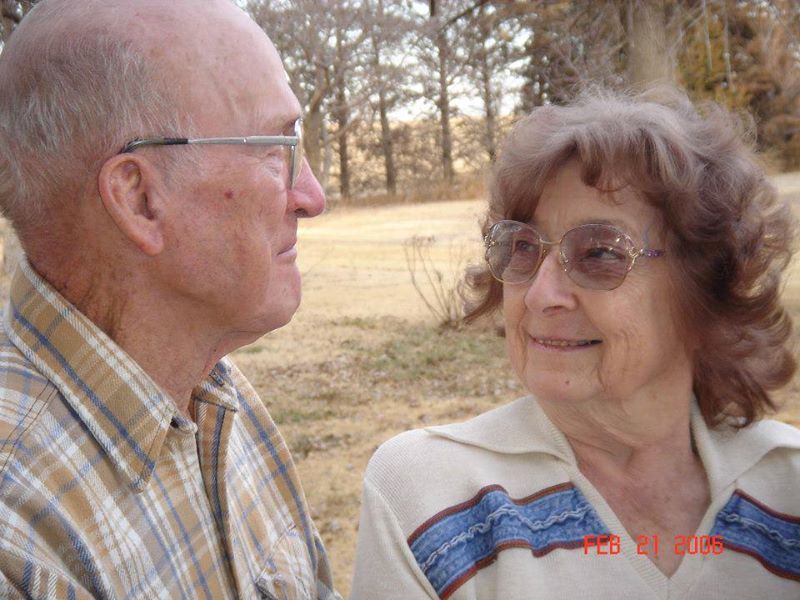
My grandparents... together again.
My grandparents… together again.

We need to let others know when they influence us or inspire us. Who am I because of my grandmother? Those who knew us both tell me I get my stubbornness from her. They also tell me my love of dogs, singing voice, hair color, and ability to confront people with courage all come from her. The reality is that even when my life began to change as the result of Meniere’s disease and deafness, her letters made a difference. She is a writer, and encourager, a cheerleader, an advocate, a teacher, and a legacy-builder. When she wrote, a common theme included near constant reminders that *I* could still make a difference. She encouraged me to be an advocate.

I am.

She encouraged me to write.

I do.

She told me I should not be afraid to speak and present to others.

I’m not and I do.

Her legacy of “making a difference” spans generations.

Very likely I do not know you personally. However, I do know that you *POINTS THROUGH YOUR COMPUTER SCREEN* can make a difference. It doesn’t have to be big. Betcha it is big to someone else though! That is what making a difference is all about.

Denise Portis

© 2014 Personal Hearing Loss Journal

Your Thinker and the Trickle Down Effect

squirrel-pin-tree-winter-snow-nature-hd-wallpaper-desktop-free-animals-picture-squirrel-hd-wallpaper

Wednesday, March 19th

I had a “pep in my step”. I had a whistle on my lips. My heart was glad. I was walking my service dog and most of the snow was gone from the ground.

“What beautiful weather for a walk!” I thought to myself.

But then a squirrel scampered down off a tree trunk merely inches in front of my well-trained service dog’s nose. It all happened so fast.

The first jerk on the leash put my body in motion. You can’t fight the laws of science. I was going to be in motion until something stopped my motion since my brain went on instant vacay. Let me tell you I stuck the landing. Nearby Olympic judges all held up “10” placards. Cheers all around (or at least in my imagination).

I lay there on the pine-needle strewn ground for a minute trying to determine if anything was broken. The world was still spinning. I closed my eyes for a minute and choked back the nausea. Flipping to my back I felt a hound dog kiss on my face.

“Whew. Chloe is still here”, I thought.

I forced my brain to verify the leash was actually still in my hand. YUP! I opened my eyes and focused for a second. Chloe went into a down/stay on her own and rested her head on my shoulder. The weight of my ding-a-ling service dog’s head was a comfort.

I heard something! Another good sign. My cochlear implant was still attached to my head. I focused on the sound and looked up – Up – UP into the tree boughs above me and spotted that rascal squirrel.

Oh.

My.

Gosh.

He had the impudence to sit up there fussing – at US. I couldn’t help but laugh. He was ticked! I laughed all the way up until he skipped away… jerking the branch he was on and dumping snow on my face and chest from twenty feet up. My laughter stopped immediately. I was choking after all…

I sat up and brushed the snow off and started to giggle again. Chloe wagged her tail in delight. It seems she wasn’t going to get a “Denise sermon” after all. Within 10-15 seconds though I was overcome with a different emotion. I sat there crying. Not just silent tears – nooooooo. This was unladylike, deep sobs with intermittent hiccups!

I sat there bawling my eyes out for five or six minutes, comforted by a hound dog most certainly sorry her instincts caused another “Timber…” moment for me.

Yes. I could see the funny. But fast on the heels of the laughter and positive attitude came an emotion near the surface most days. Self-pity. Sorrow. I hate my life.

Is Happiness a Choice?

One of my favorite books is “Happiness is a Choice” by Minirth and Meier. The premise of the book is that especially for those of us living with depression, happiness is a choice. The book’s number one principle is: “Change the way you talk to yourself”.

I’m on board with that. Really!

I am!

“You can change some of the negative aspects of your thinking by challenging the irrational parts and replacing them with more reasonable thoughts” (Martin, 2010, para. 4). Whitbourne (2013) explained these, “inner monologues as “self-talk,” in which you provide opinions and evaluations on what you’re doing as you’re doing it. You can think of self-talk as the inner voice equivalent of sports announcers commenting on a player’s successes or failures on the playing field” (para. 1). I believe in the power of self-talk. I believe our “thinker” really can influence our behavior. My husband is a cognitive psychologist. He and I have a lot of discussions as I work on my own Ph.D. about the best ways to change behavior. He – and other professionals like him – believe that if you can simply change what your thinker is thinking, there will be a trickle down effect. It will influence and possibly change behaviors you wish to change. There is a lot of scholarly research and science to support this.

I believe this! I do! But I will be honest for a moment. There are times I want to just say…

SCREW SCIENCE

That’s right. Just in case you even needed MY – or ANYONE’s permission…

It is OK to be upset about the reality of your life.

Living with acquired disability sucks. Hearing loss sucks. Meniere’s disease sucks. How about you? Fill in the blank:

_____________________ SUCKS.

*Deep Cleansing Breath*

I’ve tried to explain to folks who ask, that living with a chronic condition or acquired disability is – on the best of days – HARD.

I still get the flu.

I have still lost people I love and miss them.

I have lost beloved pets.

I get headaches, body aches, and am growing older.

I get mad at my family sometimes.

I experience car problems.

I hate traffic.

I have unexpected bills.

I still have a period (hey! Jus’ layin’ it all out there! <BIG GRIN>)

All of these things happen to me just like they happen to you. Only folks with chronic illness or acquired disability have those things happen on top of what – for them, is the norm… living with challenges daily.

Yeah, yeah. I know!

I still get the flu   I can be thankful I have medicine to help and a hound dog to cuddle with. See? I can see the positive!

I have still lost people I love and miss them  I can be thankful I will see them again someday based on my personal faith beliefs and worldview.

I have lost beloved pets  I have other furry family members and that makes me happy.

I get headaches, body aches, and am growing older  Beats the alternative. Right? 

I get mad at my family sometimes   But I have a family…

I experience car problems.  But I have a car and this time we could afford the “fix”.

I hate traffic.  I have a job to go to.

I have unexpected bills.  But I’m smart enough to figure out how to pay that bill or arrange payments.

I still have a period Yeah. I got nuthin… (LOL)

So can my forced “change thinking” have a trickle down effect and influence my behavior, feelings, and perceptions? Yes.

And no.

Confused? I don’t mean to be the cause of a “What the heck you talkin’ about, Denise?” thoughts.

However, it is important – at least I think it is – to allow yourself to have moments of self-pity. Feel the sorrow. Rail at God. Write “My Life Can Suck” really big and pin it to a wall and throw darts at it. If it makes you feel better, do it. I think it is healthy to “own your feelings” about the reality of your life. It’s hard. You may feel alone. You may want to give up. It’s OK to feel that way.

But then? (Brace yourself…)

Change your thinker. Allow it to do what studies have shown actually works. The “Trickle Down Effect”. I’m here to tell you though that it isn’t a long-term fix. You may have to “adjust the knobs on your thinker” daily. Maybe on REEEEEALLY bad days – hourly!

Do you know what thoughts help me the most?

Keep on keeping on.

I can make a difference in the life of another.

Tomorrow is a new day.

Mean People Suck. (Sorry. That’s my favorite bumper sticker and I *had* to throw it in there).

Yup. They are platitudes. “Feel good self-talk”. But ya know something? It works for me because I also allow myself the freedom to sit in the pine-needles with snow covering my shoulders and bawl my eyes out.

So strive to improve your self-talk. But feel free to wail.

{{{{{{{{{CYBER HUG}}}}}}}}}}}} from me to you!

Denise Portis

©2014 Personal Hearing Loss Journal

Martin, B. (2010). Challenging Negative Self-Talk. Psych Central. Retrieved on March 21, 2014, from http://psychcentral.com/lib/challenging-negative-self-talk/0003196

Whitbourne, S. K. (2013). Make Your Self-Talk Work for You. Psychology Today. Retrieved on March 21, 2014, from http://www.psychologytoday.com/blog/fulfillment-any-age/201309/make-your-self-talk-work-you

Hearing Loops Come to Oshkosh

Juliette Sterkens
Juliette Sterkens

Hearing Elmo welcomes guest author, Juliette Sterkens. Juliette Sterkens, AuD is a Wisconsin audiologist with 30+ years of experience in the field of audiology and hearing instrument fittings.  Dr. Sterkens is currently on a sabbatical from her audiology practice to speak around the country to consumers and hearing care professionals on the use of hearing loops in behalf of the Hearing Loss Association of America.  Her efforts have leveraged nearly 300 hearing loop installations in the Fox Valley and Wisconsin and many more beyond. She is the creator of the www.loopwisconsin.com website and her blog at http://loopwisconsin.wordpress.com .  She has received the Wisconsin Audiologist of the Year, the American Academy of Audiology Presidential Award and the Humanitarian of the Year Award from Arizona School of Health Sciences for her work on a local, state and national level.

Chris Prust of Oshkosh is one of 36 million Americans with a significant hearing loss.  Although she wears a hearing aid and a cochlear implant, it is still difficult for her to clearly hear and understand amplified speech in churches, auditoriums, or meeting rooms.  As a member of the Algoma Boulevard United Methodist Church in Oshkosh, she was delighted at the results the first Sunday the church turned on its new hearing loop system.  “I’m home now and can’t stop smiling.  The system went way beyond meeting my expectations.   I was in awe.  I thought I would never again be able to experience a church service where I could hear every world and be able to follow along with the music knowing I was singing the correct and note and verse,” Chris said.

A hearing loop takes a signal from a sound source — a television or a public-address system, for example — and transmits it through an amplifier to a wire that surrounds (“loops”) the audience. That wire sends a magnetic signal to a person’s hearing aid, which has a telecoil, a type of sensor. The hearing aid wearer then gets a direct, clear signal, one without interference from reverberation and crowd noise.

Hearing loops are most commonly found in auditoriums, concert halls, places of worship and lecture halls but  new applications make it useful for ticket booths, taxis, tour buses, service desks and airport gates. While public installations require a trained installer, a TV or computer can be self-installed by a handy individual. Hearing loops have been in widespread use in public venues in England and the Scandinavian countries for some time, and are now starting to catch on in the United States. (See www.hearingloop.org)

Jim and Vicki Denzin, parents of three daughters, two of whom use hearing aids, are grateful that St Raphael Catholic Church in Oshkosh has installed a hearing loop. “Our girls are now able to understand Fr. Doug so much better” they commented. So pleased were they with the hearing loop technology they also installed a system in their Neenah home. Jim commented installation only took an hour and was not hard to do. Vicki reports her girls love using the loop in the TV room but is also quick to point out that it makes it easier for the girls to ignore their mother when they are watching TV. The loop has one other downside Vicki laughs, “The loop broadcasts to other areas of the house including the upstairs which meant we quickly learned to turn the loop amplifier off when it is bedtime, otherwise they pick up the TV’s audio while in their bedrooms!”

Hearing loops make public facilities accessible for people with hearing loss and brings them in compliance with the Americans with Disabilities Act. In the Fox Valley many libraries, nearly a hundred large churches, the Fox Cities Performing Arts Center, the Oshkosh Convention Center, funeral homes, the Grand Opera House and several retirement communities and senior centers all have taken the initiative to install hearing loops to better serve people with hearing loss.  A list of loops of loops around the country  can be found at www.aldlocator.com

“It is not because the sound is not loud enough, that people who have hearing loss complain that they can’t hear” said audiologist Dr. Juliette Sterkens, an Oshkosh audiologist at Fox Valley Hearing Center, who is on a sabbatical from her practice to
serve as the Hearing Loss Association of America’s hearing loop advocate, “it is because the reverberation and background noise in large rooms and churches make understanding very difficult for persons who use hearing aids. A hearing loop helps to overcome this problem”

Sterkens started a Hearing Loop Initiative in early 2009, similar to an initiative in Michigan (see www.loopwisconsin.info) and today nearly 300 hearing loops can be found around the state.  Sterkens continued “Hearing loops can profoundly affect people who use hearing aids.  When Chris Prust told me that the day the hearing loop was turned on at her church, was one of the most memorable moments in her life because it made her feel “normal’, we both cried a few tears.”

– Juliette Sterkens, AuD

———