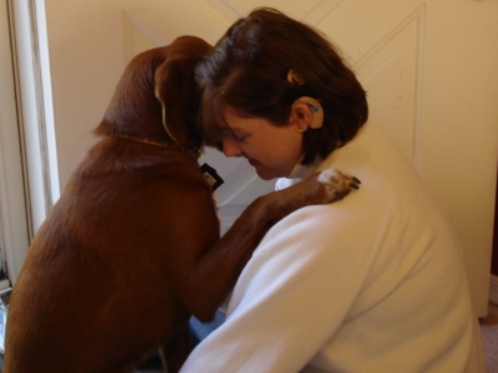
Watch Me

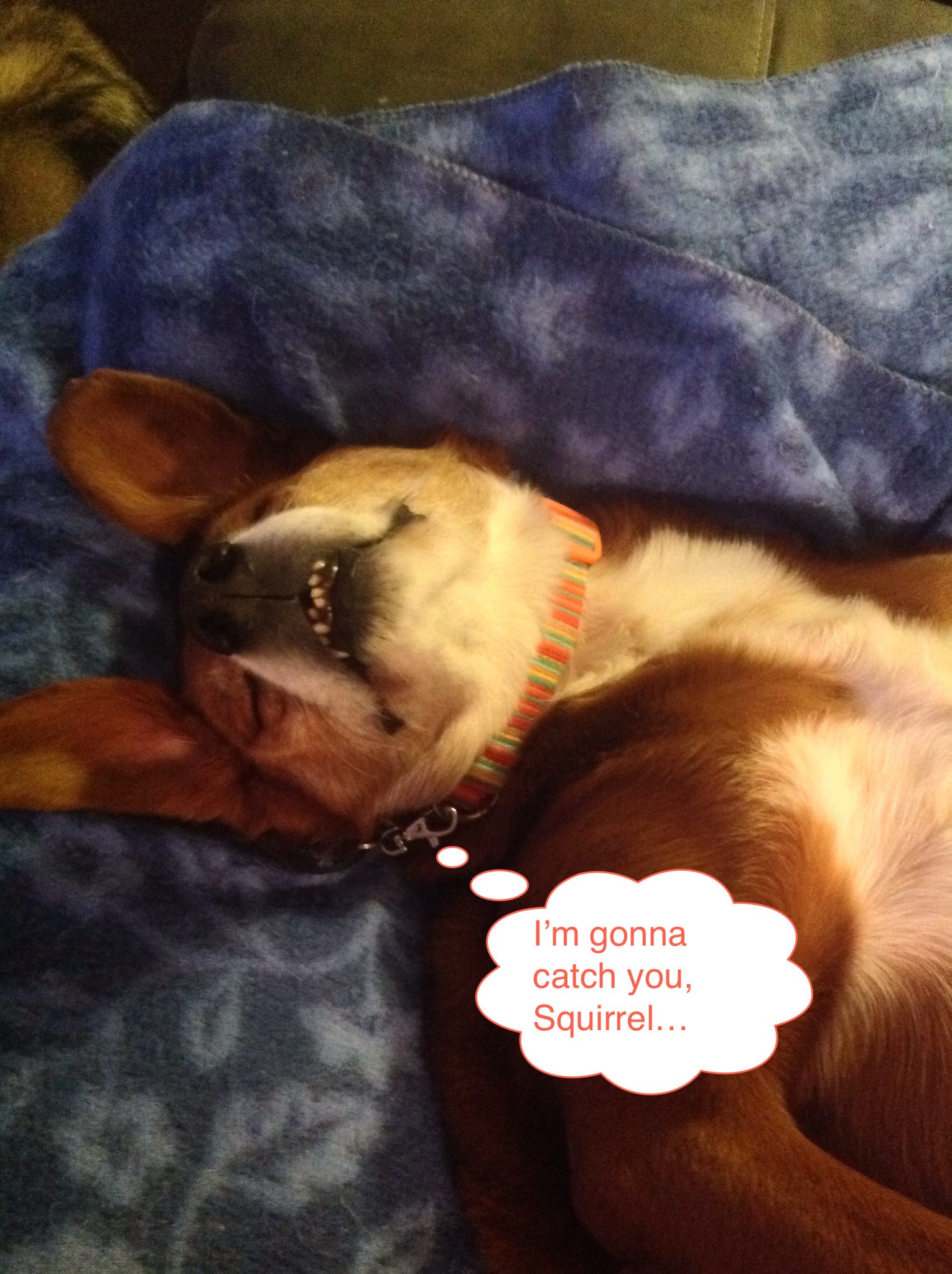
Chloe and Lewis

Want to get on my last nerve? Enjoy listening to me Sputter as I desperately try to spit out a response? Want to see this kitty’s claws?

this puppy’s teeth?

this chicky’s – erm – umm – BEAK?

Then tell me I can’t do something. Heck, I’m not even the “first born” in my family! The birth order norm fairy forgot to send the memo when I was born – “2 of 4”. I can be a stubborn behind. Sometimes this is very, very BAD. But sometimes? Sometimes this is very, very GOOD.

Do you know that I credit my “can do” attitude to my hound dog? The fact that I can say, “Watch me!” can be attributed to the fact that I am partnered with an assistance dog from Fidos For Freedom, Inc.

Yes. Perhaps I would have found my courage without her. I may have discovered I am resilient on my own. I may have responded to a “Hey! You can’t do that!” with the response of “Oh yeah? WATCH ME!” by simply growing and maturing. However, I can exactly pin point the moment in time when I grew self-esteem muscles.
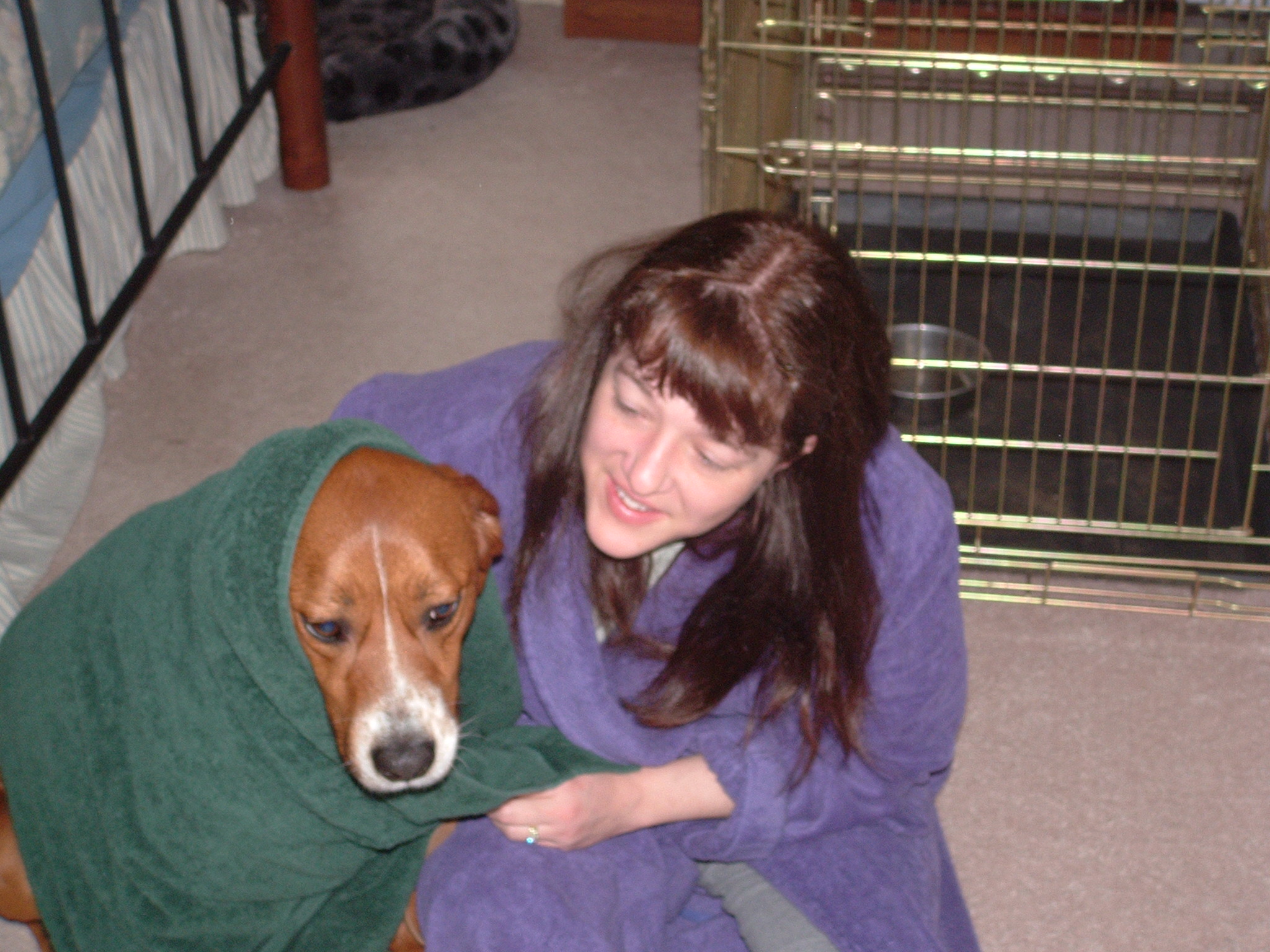
Chloe jumped into my bubble bath with me when my phone rang. Her hearing alert was so ingrained, she was oblivious to the water and naked partner.

I was matched with Chloe in May of 2007. Shortly after that, Chloe came home to live with me and to do what she’d been trained to do. Alert me to sounds I could not hear. (Eventually she received additional training and skills to help me with my balance). I use to really enjoy bubble baths. This was before numerous concussions and worsening Meniere’s disease made the risk of drowning to real. Chloe was parked on the bath mat while I enjoyed that lazy bubble bath. I can’t tell you how startled I was to suddenly find my dog IN the bathtub with me and licking my face. My husband popped his head in the door and said, “Your phone was ring… ing. Ummm. Why is Chloe in the bathtub with you?”

From that moment on, I knew I’d never miss a phone call.

… or alarm clock, or not be able to pick up something I’d dropped, or climb stairs safely, or know if someone was behind me in a store, and friends? The list goes on…

Watch Me

One of the early commands I learned was “Chloe – WATCH me“. Because I talk to my dog and would often say, “Chloe – look-it that squirrel, – or – look-it that bunny”, I learned NOT to say, “Chloe LOOK”. It would make her eagerly look around at whatever CRITTER I had seen before her! However, if I say, “WATCH me“, she looks right at me. She may cock her head and obviously listen for a command; much more than just meeting my brown eyes. However, she knows that “WATCH me” means “make eye contact – pay attention”.

Chloe actually tells me “WATCH me” as well. Chloe does it with her ears and head. When her head swings in a specific direction and her ears go up, I :  1) look at her and pin point where she is looking/listening, 2) turn to look myself. It may mean I need to step out of the way of something or someone.

Not LITERALLY

“WATCH me” doesn’t always mean literally, however. I was so cracked up at a meeting I attended recently. I was seated next to a person with low vision. We were in between speakers and were visiting while we waited for the next session to start. About 10 yards away, I noticed this man and lady plug up a power strip and run an extension cord over to their row in the auditorium. I interrupted my friend and said, “Hang on – they can’t do that! I’ll be right back. Watch me!”

I stood up and walked over to the couple now fussin’ with how the cord should lay across the aisle. I put Chloe in a sit/stay and said, “Oh I’m sorry. You can’t put that cord there as there are a bunch of us in this area who cannot navigate safely with it stretched across the aisle“. They looked at me with a startled eyes and then around me to the section I was sitting in. I could tell by the dawning comprehension on their faces, that they spotted the service dogs, walkers, scooters, and canes.

“Ooops. Sorry about that!” and they worked together to pick it up and roll it back into a nice handful of cords and plugs.

I casually walked back to my group and my friend said, “I saw that! Fist bump!” and she held up her fist for a “you go girl” moment.

Then it hit me. When I walked away I had told my friend with low vision, “WATCH me“. When I returned she said, “I saw that!” I started laughing. Not the kind of southern girl lady-like giggle. Oh no. I was hee-hawing. I managed to snicker out loud in between SNORTS what I had said – and what she had said. I nearly laughed myself into the floor. Yup. The kind of laugh where I had tears of mirth running down my cheeks and very unladylike hiccoughs to boot. My friend was laughing just as hard. She said, “We’re a pair, aren’t we?”

You “see”, my friend? You don’t have to have 20/20 vision to be able to WATCH ME. You can pay attention with your eyes, your ears, or your hands. You can pay attention with your heart. You can pay attention – by PAYING ATTENTION.

It’s a focus.

It’s an attitude.

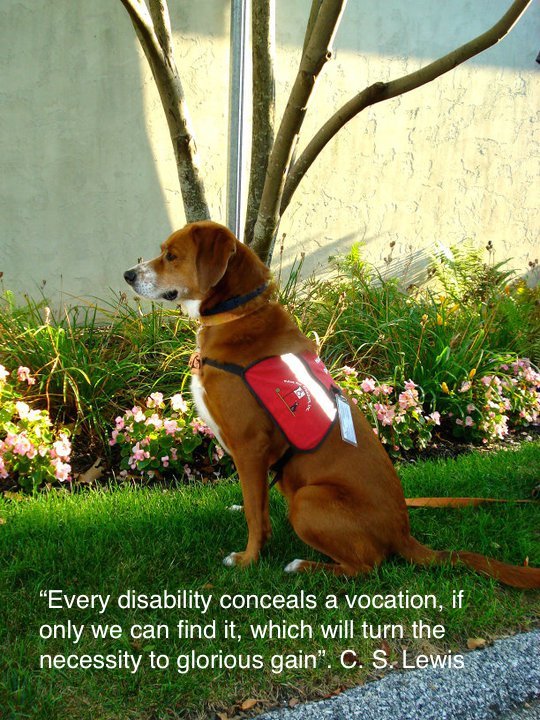
One of my favorite quotes (in the opening picture above) is by C.S. Lewis: “Every disability conceals a vocation, if only we can find it, which will turn the necessity to glorious gain”.

I recently had someone take me to task for self-identifying as a person with disABILITY. She argued that I was basically admitting I was unable to do something. I thought, “Well how wrong is THAT?”

Every person I know who lives with disability is actually someone who has learned how to do something IN SPITE OF challenges. You find a new way to do something. You learn how to do things safely even though it may not be the way a task is done by most folks. Perhaps you have assistance because of a device, service dog, or have simply learned to ask for help.

Yesterday while on campus, I needed to drop something off at the Disability Support Services office. My balance was “good” yesterday, so I exited a door that actually opened into a courtyard that had stairs bordering the perimeter. I felt confident to go up the 20 some odd stairs with Chloe. When I reached the top, an employee was standing there with big eyes, having seen me take a slow but steady climb to the top.

“Hey!” I said cheerfully, and stepped around her. I looked up and was startled by a mass of people coming out of the gymnasium towards me on a very narrow sidewalk. I looked for an alternative path and spotted a way around through the mulch and picnic area.

Sensing what I was about to do, the lady beside me said, “Maybe you should wait“. I know she meant well. I felt no criticism, nor did I feel she was talking down to me. But… I was in a hurry, and I was having a good balance day. I had my service dog right beside me.

So I responded, “Oh, I’m ‘good’, no worries…” and proceeded to carefully pick my way around tree roots, pine cones, mulch and twigs. I didn’t retort, “WATCH me“, but if one could interpret the courage and attitude from my squared shoulders and confident stride, you would have “read that” in my departure.

Chloe and Fidos For Freedom were the “shot in the arm” I needed to become confident and independent. You may have found your own way to adapt. Having a disability does NOT mean you cannot do something. As a matter of fact, chances are if you tell someone who is differently-abled they cannot do something, you may discover by the set of their jaw, the determined look, and confident square of their shoulders that they most certainly CAN. Their body language screams,

“WATCH me“.

Denise Portis

© 2014 Personal Hearing Loss Journal
Recurring Dreams… Life Goes On

1531649_10202502950992038_1907354485_o

One of my favorite chapters in “Introduction to Psychology” is the one where we study dreams, sleep, and the subconscious mind. Everyone dreams – though you may not always remember your dreams. If you have furry family members, you’ve learned that even pets dream. I’ve seen evidence of REM sleep in dogs, cats, hamsters, even cows!

Very likely, if you do remember a dream it is because it was a bad one. Or, you may remember it because it is a recurring dream. Interpreting dreams is tricky. Yes, yes, I know! Abraham, Jacob, Joseph, Daniel, and numerous others in the Bible made it look easy. It really is NOT that easy. If you have dreams that are bothering you, or have recurring dreams, don’t be afraid to talk about them with someone you trust. It can be a friend, counselor, or peer with a supportive role in your life. However, just remember, YOU are the expert on your dreams… they are YOUR dreams. Tartakovsky (2011) explains that there are indeed some universal symbols in dreams, however what those symbols mean to the DREAMER is what really matters. Someone else analyzing and interpreting the dream on your behalf is very likely inaccurate. In spite of knowing WE are the expert  when it comes to our dreams, recurring dreams usually end up making us “talk out loud” about what we are dreaming. Because you dream this dream OFTEN, you start thinking about it when you are awake. Most dream analysis experts agree that “recurring dreams reflect feelings and awareness that have not been successfully resolved in our waking lives” (Psychology Campus, 2004-2008, para. 4).

My Recurring Dream Had a Specific Trigger

I (like many of you) have a recurring dream and it always follows the same conscious scenario. Every time I fall and actually sustain an injury, I can guarantee I will have the same dream. I actually call it my “falling dream“.

Yes.

I do understand that by anticipating the dream, I am likely precipitating the dream itself. I get that. Now before you jump to conclusions, my dream isn’t about falling. Heck, I do enough of that in my conscious activity! I certainly don’t need it to happen in my subconscious mind – grin!

After a fall, I have a dream where I’m walking in a busy location with people everywhere, and all of sudden I’m frozen and cannot continue walking. Perhaps even more telling, my service dog, Chloe, is also frozen mid-step. Everyone around us continues to walk, talk, and move. Sometimes in the crowd I recognize people from my family, work, church, etc. Most of the time the faces are strangers, however. I can “hear” myself in the dream screaming (of course my mouth is not moving), “Help me! I can’t move! I can’t speak! Why aren’t you helping me? Can’t you see I’m frozen?”

So… yeah.  Please have fun with that and if you feel like commenting or emailing me what YOU think this probably means, go for it! I’m always interested in other’s opinions. Because the dream always follows a significant “Denise fall down – go boom” moment, I think I have this one figured out. I’ve had this same dream for over 12 years. The only thing that has changed in the dream is the addition of Chloe, my service dog. I was matched to Chloe in 2007. Goes to show the significant impact a service dog has on their person that she ended up in a recurring dream. <BIG GRIN>. Another change in the dream occasionally happens… but I’ll get to that later! <wink>

I believe this dream “for me”, means that I recognize that my “new normal” has an affect on ME, but not so much others. All the feelings, fears, bruises, even shame, is something I deal with in being differently-abled. However, it isn’t something that impacts others. Ever want to scream at the world to stop a moment and acknowledge that…

DARN IT. I’m dealing with this! Don’t you see? 

or

DARN IT. I suck at this! Don’t you see? HELP!

Life goes on. That’s hard, isn’t it? Isn’t it frustrating when you are sucker punched with a personal crisis of some kind and life just goes on as usual for everyone else? Worse? Life goes on for YOU!?

You lose someone close to you and crap. Life goes on.

You receive a diagnosis that will change your life. This sucks but life goes on.

Someone you trusted betrays you. It hurts but life goes on.

A progressive illness progresses. You adapt and life goes on.

You are sick and tired of being sick and tired. Life goes on.

Simple Acknowledgement

Most folks who live with invisible disability or a chronic illness will tell you that it is hard for them to share with others when they are struggling. This may be because they always seem to be struggling and figure everyone around them is sick and tired of hearing about it. We don’t want to be labeled as a “bellyacher”. Maybe you only rant to someone close to you. Perhaps you write. Maybe you pray. You may have some type of “release” that allows you to vent.

Sometimes my frustrations get the best of me and I bellyache out loud. However, most of the time I keep it quiet or at most confide in a trusted friend who “gets it” on a level that others cannot. I have a friend with MS who once told me, “Denise? I always feel like crap. I can’t respond to ‘How are you today?‘ with, ‘actually I feel like crap!‘. So I respond the way all of us respond, ‘I feel great, how are you today?‘. I can’t respond truthfully. People who do not have MS cannot understand what it is like to wake up tired, go to bed tired, and hurt all over each and every day. So I lie and say, ‘I’m great! How are you?‘ I don’t think this makes me a liar. This is how I convince myself I’m OK. I try to convince others I am.” 

You know? I don’t know very many people who live with significant challenges who want someone who will allow them to dump for hours each day. Griping for hours on end does not help physically, emotionally, or mentally. Most of us learn early on that perseverating on the negative only provides the ingredients for a significant meltdown. It is HUGE, however, to know we have a trusted peep or two that we can say, “Today is a bad day, but I’m going to be OK“.

Most of us simply long for a quick acknowledgment. Perhaps a short hug. I have a friend who has a seizure disorder and lives with chronic fatigue and pain whom I see about once a week. Like most folks, when we greet we say, “How are you doing?” I know this person well enough that both of us can say (on a day things aren’t going so well), “I’m not doing that great today, but things can only get better“. Or, “I’m not doing that great but I’m OK. Tomorrow will be better“. A pat on the shoulder and an understanding hug goes a long way. My friend doesn’t want me to grab her hand, drag her over to the side, and make a big production out of her “horrible, no good day”. If I say, “I’m thinking about ya“, or “How can I pray for you today?“, that is enough. You can see some of the tension roll off their shoulders. Simply acknowledging another’s pain or distress is A BIG DEAL. Salovey, Brackett, and Mayer (2004) call this empathy or emotional intelligence, and one can grow their EQ (emotional intelligence) simply by learning to acknowledge someone else’s feelings. It doesn’t have to be time-consuming. As a matter of fact, here are some great tips that will grow your EQ and help someone else:

1. Remember – and follow up.

Did someone tell you that they were having a rough day? The next time you see them ask them how they are doing NOW. By simply remembering they were going through a tough time and you care enough to follow up is HUGE.

2. Send a card.

My life has dramatically changed in that most of my correspondence is electronic. I buy one book of stamps each YEAR, when I use to buy that many stamps each month. However, I do shop for and keep inexpensive cards for “other” occasions (in other words, not birthday or anniversary), so that I can send a card off to someone who let it “slip” they are going through a tough time.

3. Follow up with a text.

It takes 10-15 seconds (depending on how many thumbs you have), to send a quick text. If you’ve limited time, don’t text an open-ended question. Just send off a quick, “Wanted you to know I’m thinking of you today and hope your day is better“. It doesn’t take much time and it likely means THE WORLD to that person.

A Significant Change in the Dream

Ok. I explained earlier that I do have one specific change that happens in my dream and over the years I think I have this figured out as well. Sometimes when I am “frozen”, a person or persons do come up to ICE CUBE Denise and Chloe, and try to help. Guess what? These are usually people I’m thinking about consciously, who are also going through something significant. For example…

I had this dream this past week after a fall on the deck. The injury was significant enough to warrant a doctor’s visit, x-rays, and a cancelled trip. I have been thinking about and praying for two specific people, both of whom showed up in my “falling dream”. One had surgery last week, the other is looking at surgery in her future. Both came and patted “frozen Denise and Chloe” and told my icy self that “everything would be OK”.

You know what? Having a support group MATTERS.

10538663_10204128535430633_9142153402343424683_n

It doesn’t mean that you need to join an organization (although there are benefits to doing so). It does not mean you need to find a group in which you stand up in a circle and say, “Hello. My name is Denise and I have invisible disabilities“. However, there is significant HELP in having a person or two who GET IT.

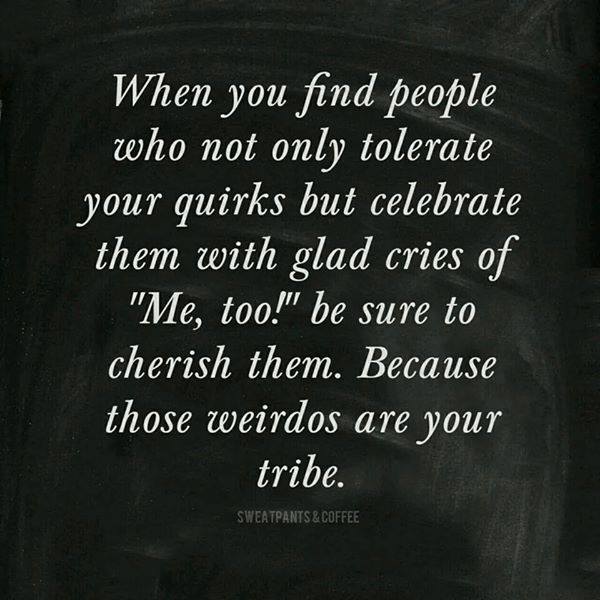
A tribe.

People who understand where you are coming from when you experience your life – your “normal”.

Thankfully, it is fairly easy to find those folks. The Internet has opened the door to really connecting with others who are like-minded, live what you live, and provide support simply because they truly GET IT. Maybe you have a friend or confidant who is that support for you, but they don’t actually share your diagnosis. But folks? Everyone has something. Life is hard. We all have difficult times. The two folks who showed up in my “falling dream” last week do not share my diagnosis. They do share living a difficult life but PERSEVERING. That’s why these folks show up in my dream. Support makes a difference.

You can be that kind of support. It will grow you. It may be time consuming at times. You may find a reciprocated “shoulder”. You may not. I don’t know about you, but at the end of my life I want to be the kind of person who patted a few ice cube people. I want to be that person who tells someone THEY matter. What they are GOING THROUGH matters. One of my dream goals is to eventually see a puddle under every person in my crowd.

Because we all deal with something.

We can help each other to thaw out by caring, listening, hugging.

Denise Portis

© 2014 Personal Hearing Loss Journal 
Psychology Campus (2004-2008). The possible meanings of dreams. Retrieved August 11, 2014 from http://www.psychologycampus.com/dream-psychology/

Salovey, P., Brackett, M. and Mayer, J. (2004). Emotional intelligence: Key readings on the Mayer and Salovey model. New York: Dude Publishing.

Tartakovsky, M. (2011). How to Analyze Your Dreams (And Why It’s Important). Psych Central. Retrieved on August 11, 2014, from http://psychcentral.com/lib/how-to-analyze-your-dreams-and-why-its-important/0005975

Beaver – Destructive or Discerning?

swimming-beaver-344367-m

We have beaver. Actually, we’ve had beaver for about 16 months now, however this summer it is really evident WE HAVE BEAVER.

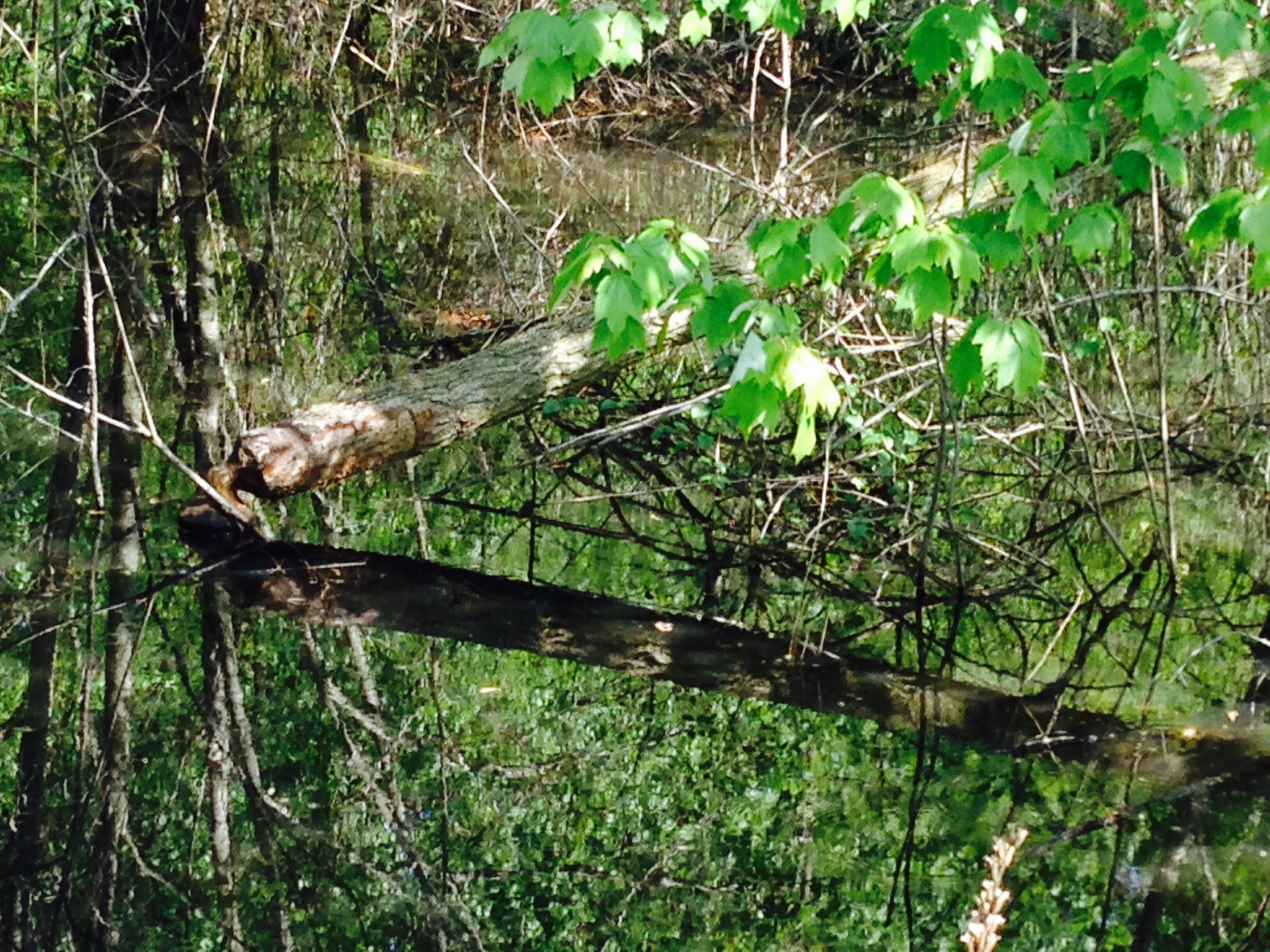
Our townhouse community sits up at the top of a hill. It is a closed cul-de-sac community, so it is great that “through traffic” is not an issue here. A brand-new walking path is now within footsteps of my front door. It will eventually connect to other walking paths, but for now it is about 1.5 miles round trip. At the bottom of our “hill” the path takes us by both a busy road, and what was once a small creek. In the Spring, I use to get a kick out of “hearing” the water sounds, especially after heavy rains. Last Spring those water sounds disappeared. However, I spotted this:

beaver10

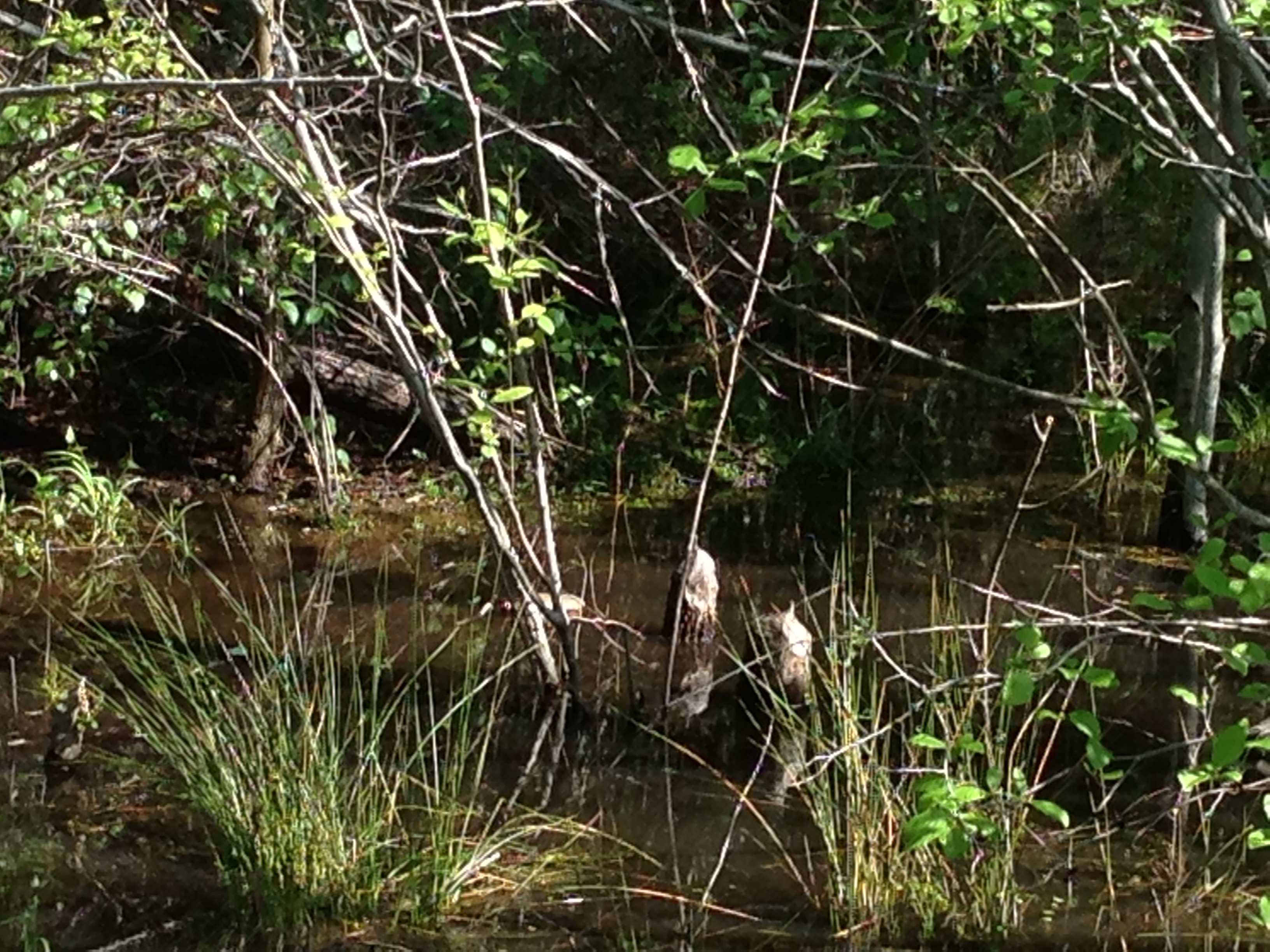
… and then this:

beaver11

The creek quickly turned into a pond. And this year? Well let’s just say there is a new ecosystem near my house.

I came across a huddled group of homeowners about 3 weeks ago, whispering and gesturing towards the pond with banks now within 60 feet of our back doors. I stopped to see what was going on, and because it was early enough in the morning with few traffic sounds, I could actually hear their whispers.

“Will the water level rise much more?”

“What do you think they are up to?”

“Do they bite?”

Now my first thought was, “FOLKS. Beaver do not understand human language and to my knowledge they don’t have bionic hearing like I do. Why the HECK are you whispering?”

I didn’t voice those thoughts. Instead I said, “Ummm” (I’m ever so eloquent…)

“Yeah, but have y’all been down to the pond area where the walking path is? Have y’all seen what has happened down there?”

Blank looks. I discovered they don’t comprehend SOUTHERN. I tried to speak a little more cultured…

“Yes, you should walk down there. There are 2 HUGE culverts about 8 feet in diameter. That water level will never get any higher unless those culverts become dammed up as well. If that happens, the city will just unplug them. After all, that road will flood before our homes will“.

Blank looks. See what a lack of exercise will do? Go walking folks, go walking. Check out what the beaver have done up close. Geesh. I think they were miffed I was talking in a normal tone of voice. After all… *sneaky whisper* … the beaver probably HEARD ME.

Beaver have made a comeback in Maryland. I pulled this from a neighboring county’s website:

“Beaver can be among the most beneficial of the county’s wildlife. They create favorable habitat for a variety of wildlife species including fish, birds, amphibians, reptiles, and mammals. This variety of wildlife is in turn valued for recreational, scientific, educational and aesthetic purposes. Beaver activity is also helpful in retaining storm water runoff and improves water quality by trapping sediment, nutrients, and pollutants. Beaver activity can also cause flooding of roads, trails, forest land. They also consume trees and shrubs. Their impacts often occur suddenly and dramatically.

These benefits and detriments often occur simultaneously at a single location. Because of the varying degrees of tolerance levels among people to beaver activity, there are bound to be disagreements on how best to “deal” with beaver conflicts.” (Howard County Parks and Recreation, 2014).

Living side-by-side with these amazing creatures is fairly simple. I’ve been thinking a lot about this family of beaver.

beaver3

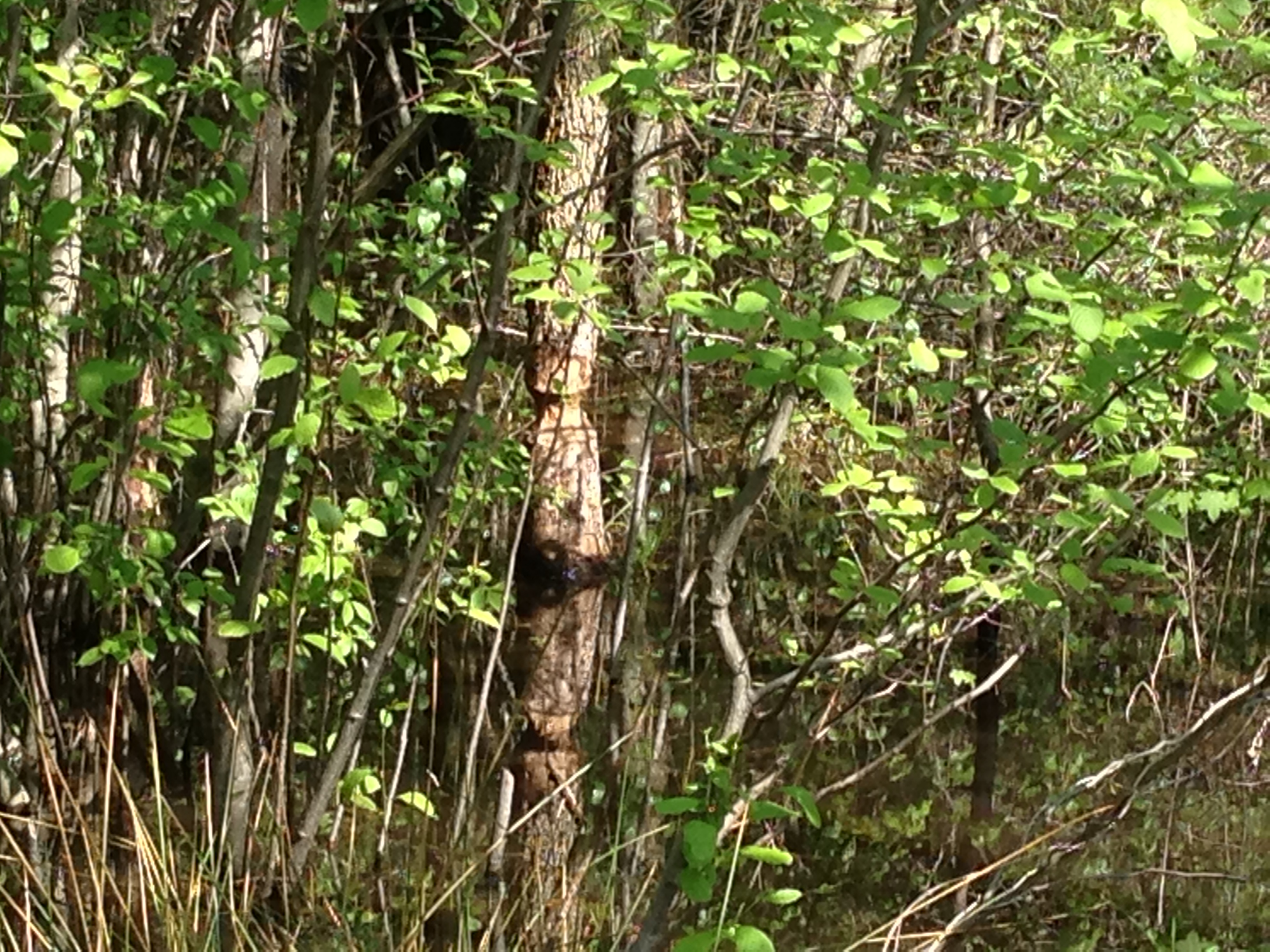
They migrated to this area near the bay bridge and did what came naturally to them. Not with destruction in mind… but cunning and incredibly discerning architects, this family of beaver have created a whole new ecosystem. We’ve always had tree frogs (although it took Chloe’s trainer to clue me in to what I was hearing each year). But now we have:

Beaver8

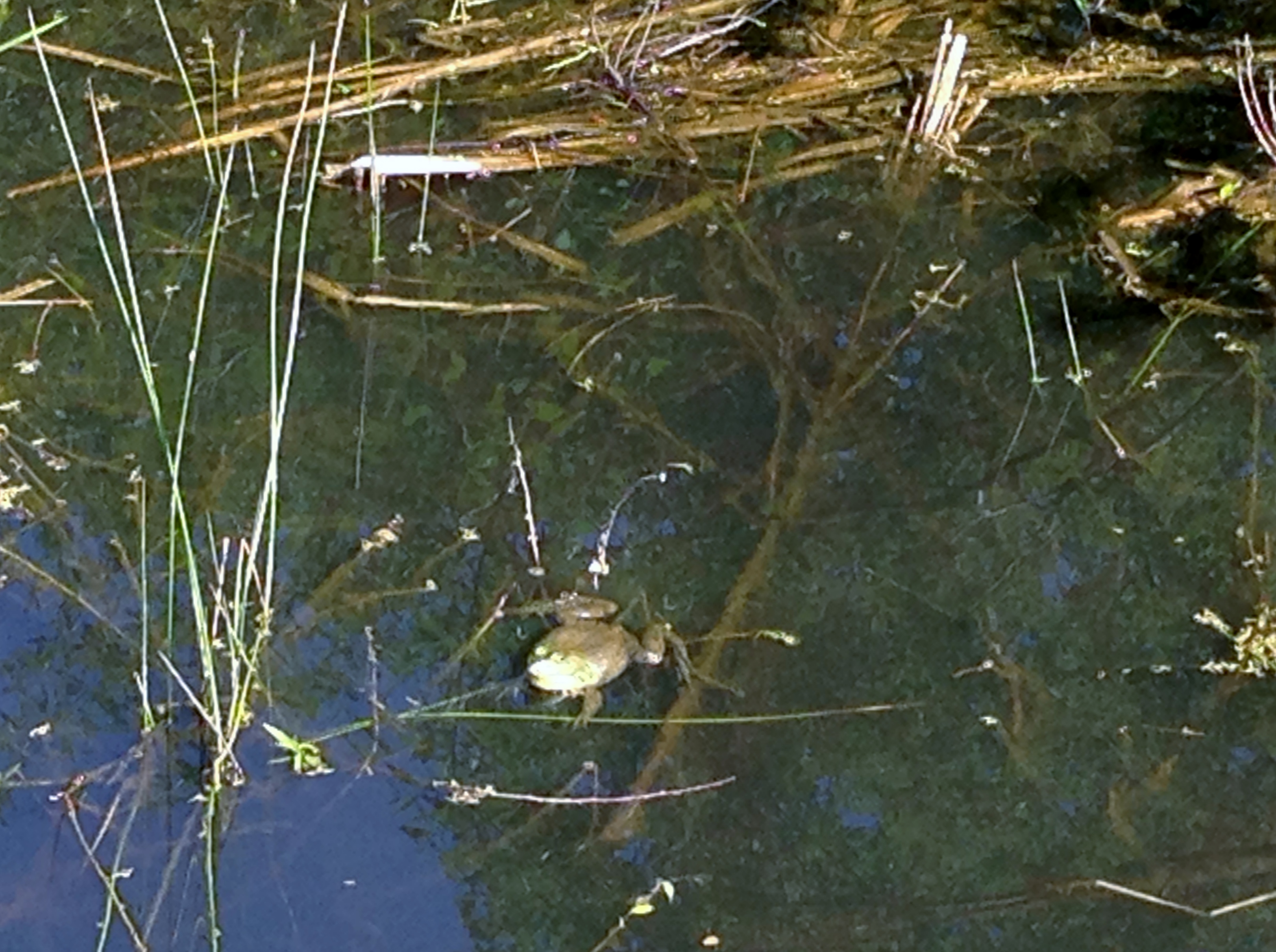
… bullfrogs. You should have seen Chloe’s head and ears the first time she heard THEM! These fellas stretch about two feet, nose to tip of hind legs. I know this, because I’m the crazy neighbor lady screeching to the neighborhood boys who have caught them and held them up to “Return them to the pond when you are done!”  There are also numerous plants I have never seen before in this area when all we once had was a creek…

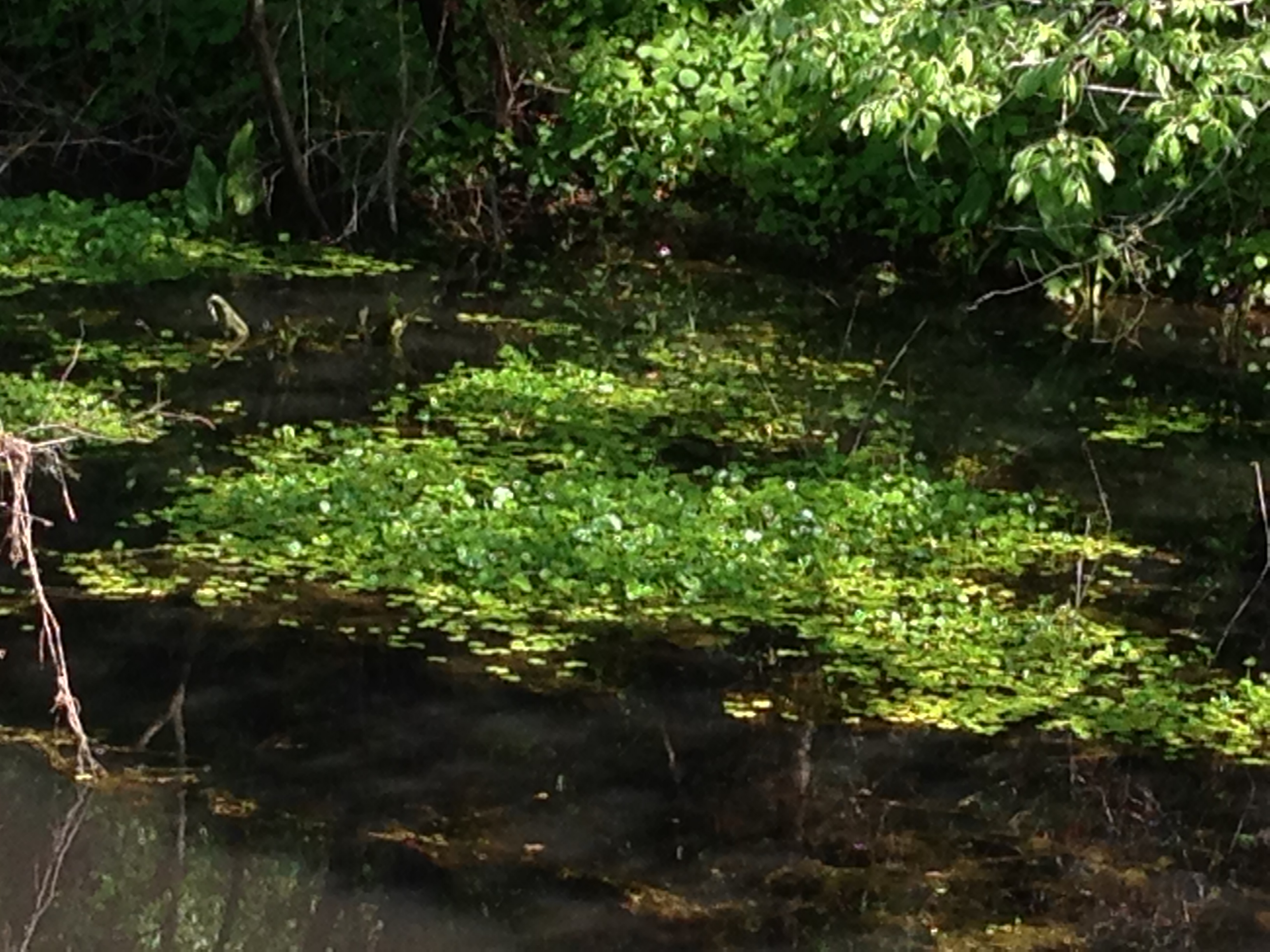
Beaver7

and the trees are flourishing…

beaver1

I counted 4 different families of mallard duck one evening, with little ones thriving in this secluded and protected environment. Turtles are sunbathing on any log or rock that breaches the surface of the water. The fox are back (having been gone for at least two summers). There are enough deer in our area now to make my poor hound dogs hoarse for all the barking alerts they insist on for me.

I cannot help but be amazed. The beaver strengthened and created a home just right for them, and in the process created a place to thrive for other species. Folks? I want to be a beaver.

I didn’t ask for disabilities. I never once thought, “When I grow up… I want to be DEAF and have a significant BALANCE DISORDER”. However, in my own process of adapting and making my environment safe and liveable for ME (cochlear implant surgery, service dog from Fidos For Freedom, be-dazzled canes, no-slip shoes, discovering where all the elevators are on campus, practicing all I learned in vestibular rehab.), I have created a new ecosystem.

I want MY WORLD to intersect with the REAL WORLD and help folks recognize the importance of inclusion. I work to make sure that my new life, teaches and advocates in accepting differences. I want others to recognize abilities rather than disabilities. I want my invisible disabilities to be visible and “pond-like“. I want my life to inspire others to choose to live equally purposeful lives. In my own small way I do this by working with my campus disability office. I openly talk about being “differently-abled” in class. I “plug” what I know whenever I can to whomever will listen… cochlear implants and service dogs, depression and coping skills. I have discovered my environment changing. People are coming out of the woodwork… or umm… newly created POND, and sharing with me that they have a mental illness, invisible challenge or diagnosis such as fibromyalgia, chronic fatigue syndrome, or Lyme’s disease.

Yes. Having an attitude of gratitude and focus on education and advocacy, has me walking by concerned citizens from time to time, whispering about a beaver conspiracy. But just as I’ve learned that being transparent is contagious, these folks will eventually HEAR and go walking to discover other new ecosystems. At least… I hope they will.

Do you live with disability? Are you struggling with an invisible illness? Do you have a chronic condition that folks do not seem to understand, nor comprehend how it affects you? Hearing Elmo is not just a place to “hear”. My desire is that numerous authors, both named and anonymous, begin to disseminate the kind of information that changes our environments. In the end, the beaver aren’t the sole beneficiaries. We all benefit. Would you like to write for Hearing Elmo? Contact me at denise.portis@gmail.com and type “Hearing Elmo” in the subject line. Building dams is pretty fun. It is unexpected. It is worthwhile. We can all make a difference!

Denise Portis

©2014 Personal Hearing Loss Journal

Howard County Parks and Recreation. (2014). Beavers. Retrieved May 16, 2014, from http://howardcountymd.us/DisplayPrimary.aspx?id=2396

Fundamental Attribution Error

hershey park

I drive my family crazy sometimes. I have psychology on “the brain”. Things I’m studying, things I’m teaching, things I’m thinking about (the dreaded dissertation looms after all), I tend to talk about. I mean a lot. Even when you don’t want me to.

Spring is a busy month for Hearing Elmo. For some reason, lots of folks tune in and contact me. I love to write (even email responses) so I don’t mind at all. To me? This is what Hearing Elmo is all about. I’m glad to be a small part in helping to raise awareness about invisible disAbilities and chronic illnesses. I learn SO MUCH from so many of you who write. So thanks! 🙂

Lately, I’ve had a lot of conversations both email and face-to-face with folks who are struggling with bad thoughts. Thoughts about strangling someone.

Even though it’s deserved.

People with disAbilities or chronic illness are often judged. Sometimes it’s a first impression. Sometimes it is by someone who knows better. I want to cover both today. In psychology we call this the “Fundamental Attribution Error”. Lilienfeld, Lynn, Namy, and Woolf (2013), explain that the fundamental attribution error “refers to the tendency to overestimate the impact of dispositional influences on other’s behavior. By dispositional influences, we mean enduring characteristics, such as personality traits, attitudes and intelligence. Because of the fundamental attribution error, we also tend to underestimate the impact of situational influences on other’s behavior” (p. 501). It’s that last part I want to talk about in this post.

People with Disability or Chronic Illness are Misunderstood

If you are reading this post you likely have some connection to invisible illness or disAbility. Perhaps your condition is not invisible at all. You may live with personal challenges.

easter 2014

Easter Sunday I came home from church with husband and hound dog and went downstairs to work. After about 20 minutes I came to the realization many of you do each and every day. I was wiped out. I knew I would get far more work done if I went upstairs to take a nap. Some folks call these “power naps”. Me? I’m not going to sugarcoat it. I need naps sometimes because I have Meniere’s disease and hear with a cochlear implant. I’m 47-years-old. I get tired. I get tired a lot! So trudging upstairs I passed my husband in the family room and said, “I’m going upstairs to take a nap“. I stood there a second to see if that elicited any reaction.

Now Terry has been married to me long enough to know that if I actually say I need a nap, you better let me take a nap. No smart remarks. He only said, “Be sure to close the blinds or Chloe will bark at every little thing“. I’ve “trained him well“, yes?

But it isn’t easy being the significant other of someone who has a invisible illness or disAbility. When Terry first married me I was only unilaterally deaf and no balance disorder to speak of. Fast forward 28 years and I am now at a point where I can still do a lot. I have dreams, goals, work hard, am a wife, mother, mentor, teacher, student and writer… and I take naps.

I have been out and about before running errands or just shopping with my best friend – Terry Portis. I have out of the blue said, “Ok. You need to take me home.” The last time this happened we were going to a super Target. We had just parked in the parking garage and Terry started to get out. “Ok“, I said. “You need to take me home“.

He stopped and looked at me. After a long pause he asked incredulously, “You mean… now?”

I looked at him eyeball to eyeball (which can be uncomfortable with the risk of losing your contacts – but I needed him to know I meant business). “Now” I responded.

So we went home. Sometimes when I “run out of gas” I do so very suddenly. There can be little warning. You could make me push it and we’ll both risk the reality of a major nosedive in “Lawn and Garden” with mild concussion and concerned gathered crowd to show for it. (Clean-up on aisle twelve…)

None of us ask to develop acquired disAbilities. No one prays for a chronic illness. People we know and love may get peeved at us that we require more rest than we use to need. Part of it may be that they miss doing things with you that they use to be able to do. My husband loves Target. But sometimes? Well sometimes you need to take me home and do it NOW. That can be hard.

So those of us who have the chronic illness or disAbility need to be understanding too. But… don’t be afraid to talk about it. One of my favorite “opening statements” for a heart-to-heart conversation begins like this:

“When you say (or do) _________________ it makes me feel like _______________.”

It lets the people I care about know that it DOES bother me when they say or do something – not seeing the whole picture. They don’t understand the situation well enough to get why I behaved a certain way or responded a certain way. So I need to remind them. That’s OK.

If you are the “significant other” – try to put yourself in the other person’s shoes. You don’t want to really know what they are going through for that would mean you’d have to share the disAbility or diagnosis to really get it. What they are going through is really… REALLY…

HARD.

But you know what? They can get through it because you are there to help them, encourage them, and cheer them on! (So don’t forget how influential you can be, OK?)

For Those Who Don’t Know me

Several times a year someone who doesn’t even know me will say something that I almost come unglued about. I have one of those moments where I want to strangle someone. But in most states that is still against the law…

Costco, October 2013: I was in the meat section trying to decide how many crock-pot size meals I wanted to make in the next couple of weeks when I heard a woman about 3 feet away say, “Oh MY GOD!!!!!!!!!!! A dog, in the meat section. I’m going to complain to the manager“.

I turned around and saw this woman standing there with hands on hips and an embarrassed husband standing next to her. Well my friends? Sometimes good sense just rushes right out of my head. I pointed my finger in her face and said, “This is a service dog. I am late-deafened and have a balance disorder. This dog has picked up dozens of things for me since I’ve been in this store for the last 20 minutes. You shouldn’t judge what you don’t know. I’d rather have disAbilities than be stupid. You can’t fix stupid“. And I walked away.

Amidst applause. For it seems we had drawn a crowd.

Yet I will be honest with you. More times than not I do NOT get to say something pithy and intelligent. Sometimes my heart is broken. Sometimes I walk away crushed. Sometimes I strangle people. (Ok, maybe not but I may FEEL like it).

It can be really hard when people judge what they don’t know. After stumbling into an end cap at a store I had a person jest, “Little early to be drinking, isn’t it?” I could get mad and “let it rip”. Or strangle. Cuz yeah I’m a little sidetracked by how satisfying that would be right now. But folks don’t know me. They don’t know my reality, or my day-to-day situational influences that have me moving, responding, and requesting naps. Then I have to make a decision.

A) Strangle them

B) Scream at them

C) Walk away. It isn’t worth it.

“C” is the best response most of the time.

———

Do you get tired easily? Does fatigue trigger headaches, body aches, and brain fog? Do you sometimes just need a NAP? People may not understand that. They may think you are being lazy. They may think you should try harder. They may need strangled…

… with the truth. So tell them!

Denise Portis

© 2014 Personal Hearing Loss Journal

Lilienfeld, S. O., Lynn, S. J., Namy, L. L., Woolf, N. J. (2013). Psychology: From inquiry to understanding (3rd ed.). Boston: Pearson Publishing.


Your Thinker and the Trickle Down Effect

squirrel-pin-tree-winter-snow-nature-hd-wallpaper-desktop-free-animals-picture-squirrel-hd-wallpaper

Wednesday, March 19th

I had a “pep in my step”. I had a whistle on my lips. My heart was glad. I was walking my service dog and most of the snow was gone from the ground.

“What beautiful weather for a walk!” I thought to myself.

But then a squirrel scampered down off a tree trunk merely inches in front of my well-trained service dog’s nose. It all happened so fast.

The first jerk on the leash put my body in motion. You can’t fight the laws of science. I was going to be in motion until something stopped my motion since my brain went on instant vacay. Let me tell you I stuck the landing. Nearby Olympic judges all held up “10” placards. Cheers all around (or at least in my imagination).

I lay there on the pine-needle strewn ground for a minute trying to determine if anything was broken. The world was still spinning. I closed my eyes for a minute and choked back the nausea. Flipping to my back I felt a hound dog kiss on my face.

“Whew. Chloe is still here”, I thought.

I forced my brain to verify the leash was actually still in my hand. YUP! I opened my eyes and focused for a second. Chloe went into a down/stay on her own and rested her head on my shoulder. The weight of my ding-a-ling service dog’s head was a comfort.

I heard something! Another good sign. My cochlear implant was still attached to my head. I focused on the sound and looked up – Up – UP into the tree boughs above me and spotted that rascal squirrel.

Oh.

My.

Gosh.

He had the impudence to sit up there fussing – at US. I couldn’t help but laugh. He was ticked! I laughed all the way up until he skipped away… jerking the branch he was on and dumping snow on my face and chest from twenty feet up. My laughter stopped immediately. I was choking after all…

I sat up and brushed the snow off and started to giggle again. Chloe wagged her tail in delight. It seems she wasn’t going to get a “Denise sermon” after all. Within 10-15 seconds though I was overcome with a different emotion. I sat there crying. Not just silent tears – nooooooo. This was unladylike, deep sobs with intermittent hiccups!

I sat there bawling my eyes out for five or six minutes, comforted by a hound dog most certainly sorry her instincts caused another “Timber…” moment for me.

Yes. I could see the funny. But fast on the heels of the laughter and positive attitude came an emotion near the surface most days. Self-pity. Sorrow. I hate my life.

Is Happiness a Choice?

One of my favorite books is “Happiness is a Choice” by Minirth and Meier. The premise of the book is that especially for those of us living with depression, happiness is a choice. The book’s number one principle is: “Change the way you talk to yourself”.

I’m on board with that. Really!

I am!

“You can change some of the negative aspects of your thinking by challenging the irrational parts and replacing them with more reasonable thoughts” (Martin, 2010, para. 4). Whitbourne (2013) explained these, “inner monologues as “self-talk,” in which you provide opinions and evaluations on what you’re doing as you’re doing it. You can think of self-talk as the inner voice equivalent of sports announcers commenting on a player’s successes or failures on the playing field” (para. 1). I believe in the power of self-talk. I believe our “thinker” really can influence our behavior. My husband is a cognitive psychologist. He and I have a lot of discussions as I work on my own Ph.D. about the best ways to change behavior. He – and other professionals like him – believe that if you can simply change what your thinker is thinking, there will be a trickle down effect. It will influence and possibly change behaviors you wish to change. There is a lot of scholarly research and science to support this.

I believe this! I do! But I will be honest for a moment. There are times I want to just say…

SCREW SCIENCE

That’s right. Just in case you even needed MY – or ANYONE’s permission…

It is OK to be upset about the reality of your life.

Living with acquired disability sucks. Hearing loss sucks. Meniere’s disease sucks. How about you? Fill in the blank:

_____________________ SUCKS.

*Deep Cleansing Breath*

I’ve tried to explain to folks who ask, that living with a chronic condition or acquired disability is – on the best of days – HARD.

I still get the flu.

I have still lost people I love and miss them.

I have lost beloved pets.

I get headaches, body aches, and am growing older.

I get mad at my family sometimes.

I experience car problems.

I hate traffic.

I have unexpected bills.

I still have a period (hey! Jus’ layin’ it all out there! <BIG GRIN>)

All of these things happen to me just like they happen to you. Only folks with chronic illness or acquired disability have those things happen on top of what – for them, is the norm… living with challenges daily.

Yeah, yeah. I know!

I still get the flu   I can be thankful I have medicine to help and a hound dog to cuddle with. See? I can see the positive!

I have still lost people I love and miss them  I can be thankful I will see them again someday based on my personal faith beliefs and worldview.

I have lost beloved pets  I have other furry family members and that makes me happy.

I get headaches, body aches, and am growing older  Beats the alternative. Right? 

I get mad at my family sometimes   But I have a family…

I experience car problems.  But I have a car and this time we could afford the “fix”.

I hate traffic.  I have a job to go to.

I have unexpected bills.  But I’m smart enough to figure out how to pay that bill or arrange payments.

I still have a period Yeah. I got nuthin… (LOL)

So can my forced “change thinking” have a trickle down effect and influence my behavior, feelings, and perceptions? Yes.

And no.

Confused? I don’t mean to be the cause of a “What the heck you talkin’ about, Denise?” thoughts.

However, it is important – at least I think it is – to allow yourself to have moments of self-pity. Feel the sorrow. Rail at God. Write “My Life Can Suck” really big and pin it to a wall and throw darts at it. If it makes you feel better, do it. I think it is healthy to “own your feelings” about the reality of your life. It’s hard. You may feel alone. You may want to give up. It’s OK to feel that way.

But then? (Brace yourself…)

Change your thinker. Allow it to do what studies have shown actually works. The “Trickle Down Effect”. I’m here to tell you though that it isn’t a long-term fix. You may have to “adjust the knobs on your thinker” daily. Maybe on REEEEEALLY bad days – hourly!

Do you know what thoughts help me the most?

Keep on keeping on.

I can make a difference in the life of another.

Tomorrow is a new day.

Mean People Suck. (Sorry. That’s my favorite bumper sticker and I *had* to throw it in there).

Yup. They are platitudes. “Feel good self-talk”. But ya know something? It works for me because I also allow myself the freedom to sit in the pine-needles with snow covering my shoulders and bawl my eyes out.

So strive to improve your self-talk. But feel free to wail.

{{{{{{{{{CYBER HUG}}}}}}}}}}}} from me to you!

Denise Portis

©2014 Personal Hearing Loss Journal
Martin, B. (2010). Challenging Negative Self-Talk. Psych Central. Retrieved on March 21, 2014, from http://psychcentral.com/lib/challenging-negative-self-talk/0003196

Whitbourne, S. K. (2013). Make Your Self-Talk Work for You. Psychology Today. Retrieved on March 21, 2014, from http://www.psychologytoday.com/blog/fulfillment-any-age/201309/make-your-self-talk-work-you

Purposeful Down Time

24486_1390844928154_3468044_n

I’m back in school. I never thought I’d return to school to be honest. All that changed when I realized that I may not ever land a full-time faculty position if I am constantly going to be applying for the same jobs as those with doctorates. Here I am – back in school.

I manage my time very effectively, almost obsessively. I am a very organized and detailed person. Something I have learned to do, however is to be very purposeful in my down time. For some reason, even though I found that it was fairly easy for me to be organized and to schedule my day, I was unable to enjoy any free time I might have. When I was “off”, I wasn’t really enjoying the time. I even recall telling my mother that if I didn’t have plenty to do, I was convinced it would contribute to my feeling depressed. “Be so busy you don’t have time to feel blue” was my motto, I guess.

The truth of the matter, this is dangerous. Some folks think their time is too valuable to be spent in frivolous activities. Some believe that there is too much to do to waste time doing nothing at all. I argue that not taking the time to simply “be” is deadly. You don’t have to search very long to find reports of Americans who are stressed. We seem to be over-worked, over-scheduled, and over-committed. I have family members who don’t take vacation time because their company will pay them back for it at the end of the year if they don’t use it. My response is, “Whaaaa…?”

(I’m very eloquent).

I’ve been reading “Essential Guide to Online Learning” as many of the classes I am taking to finish up my doctorate are in an asynchronous classroom. The author of the book explained that we need to “be present in your downtime” (Laureate Education, Inc., 2013, p. 27). In order to make time for school, work, family, errands, and all the “other stuff” we squeeze into our schedules, I employ the use of Google calendar. Every task has a specific color. As detailed as I am, however, every day has blank time slots open. FREE TIME!

“Let’s Par-teeeeeey!” Or not.

I try to be purposeful with my free time. If I choose to use my free time to read a good book, groom my dog, or take a walk, I mindfully do those things. So often, folks spend their free time worrying about what they have to do next in their schedule! How is that enjoying your free time? How does one reap any benefit from having some time to yourself?

The first time I realized I had trouble with this was when I realized I couldn’t even go to sleep at night. Here I was, drop-dead tired and weary, exhausted from having to “hear” all day and needing a good eight hours of sleep. Instead, I would lay in bed worrying about what I had to do tomorrow – often things that I had little control over. I was losing sleep over losing sleep. Oh the irony…

I realized that I was going to have to get serious about fun and relaxation. There are things I do each week for just me. There are things I do each DAY – although some days I have more time than others. If I have the time every single day to walk my service dog, Chloe, then by gosh when I’m walking her I will do nothing but walk her and enjoy the moment. I run into folks who are walking their dogs too. By run into, I mean that quite literally. Their attention is on their cell phone instead of the dog at the end of the leash. They are not looking up and around, which means they may not be aware of their surroundings, who is in their vicinity, or what *blech* they are getting ready to step in with their brand new walking shoes. I breathe deeply, look around, talk to my dog, and intentionally notice the world around me.

If I have 30-45 minutes to read before bed in order to decompress and unwind, you can be sure I am not reading a required text. I will be reading something for me… something that “feeds my soul” or “fires my imagination”.

This morning I had two hours to put up my family’s Christmas tree. The house was quiet, with hubby already gone to work and kiddos sleeping in since their work schedules were later. I mindfully put up my Christmas tree. I didn’t think about the assignment I had due by 3 PM. I reminisced as I hung old ornaments and strung lights. I arranged and re-arranged. I asked the dogs if things looked “purtee”. Then I turned off all the lights in the room, pulled the blinds down, and turned on the twinkle lights. I listened to Christmas music. I rubbed my dogs’ bellies. At 11 AM, however, I had research that I had scheduled to do in advance. However, I deliberately refused to think about it prior to my free time being “up”.

Do you need to be more purposeful with your down time? Do you need to reduce stress and schedule “me time”? Please feel free to share tips and favorite “purposeful me time” moments in the comments.

Denise Portis

©2013 Personal Hearing Loss Journal
Laureate Education, Inc. (2013). Essential guide to online learning. Baltimore: Laureate International Universities Publishing, Inc.

Alone in a Crowded Room

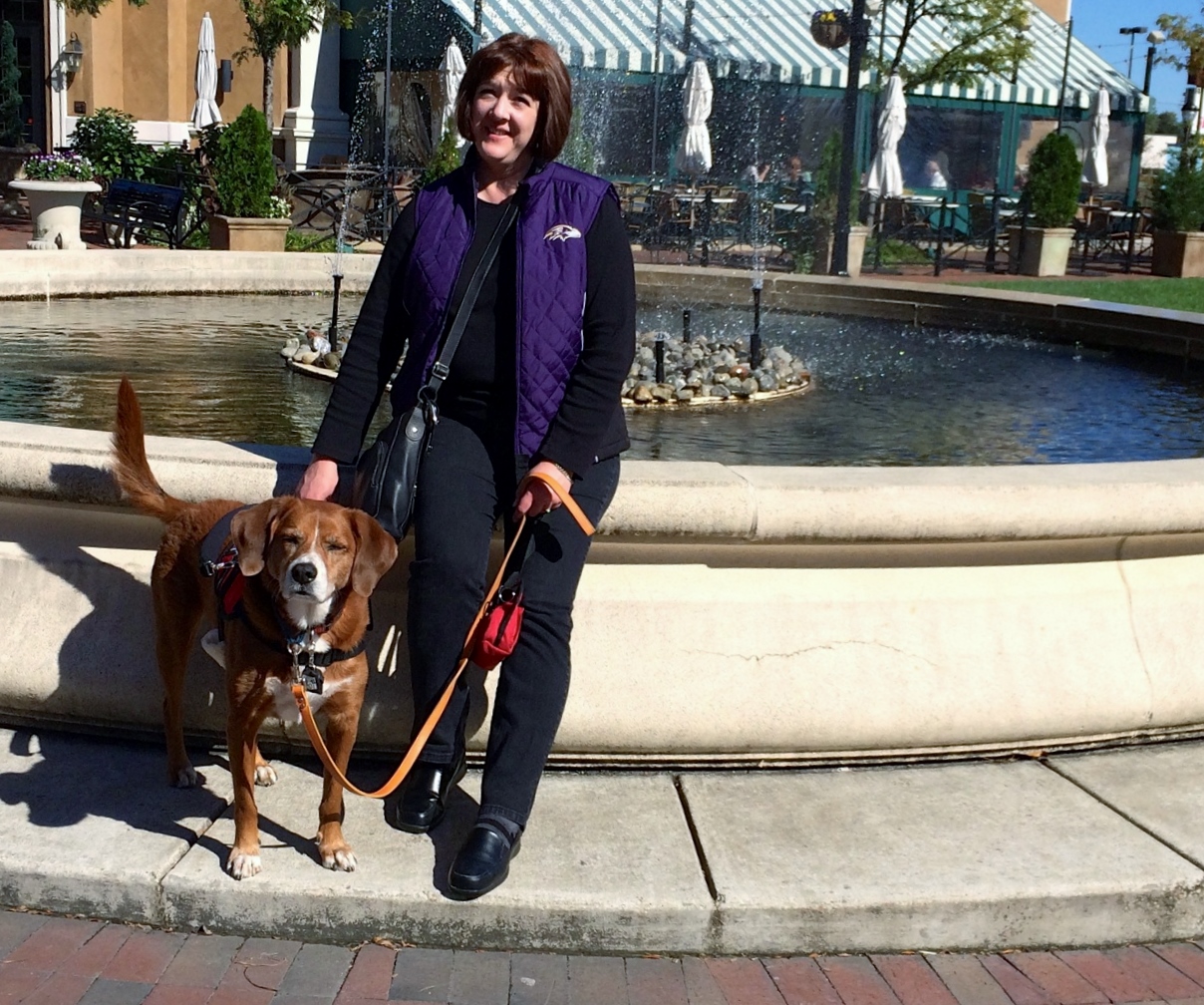
I can clear out a crowded fountain area just by "arriving". My wobble and service dog can put people off.
I can clear out a crowded fountain area just by “arriving”. My wobble and service dog can put people off.

I’m big on time alone. I guess I’ve always been a bit of a homebody. Don’t get me wrong. I love interacting with people. However, if I go to much time without some “alone time”, I’m a grouch. I can tell I’ve reached my limit when I don’t filter what I’m saying and just “tell it like it is”. I’ve always wondered if it is an unconscious desire to drive people away by just being mean and ornery because I want – I NEED – to spend some time alone? It is a little “red flag” for me. If I get grouchy, I examine my schedule to see if I’m spending enough time alone. The time is necessary for me to re-group.

Hearing loss requires ACTIVE listening

Perhaps it is because I have a hearing loss and it requires so much attention just to listen. I may need to repeat all or part of what I heard in order to seek clarification. I can’t listen without thinking about listening. Gone are the days I can prepare food in the kitchen or wash dishes while talking. I have to stop what I’m doing and actively engage in conversation to communicate. I have to see well to hear well. I have to stop what I’m doing and concentrate just to hear.

My husband has been accompanying Chloe and I for our evening walks lately. I’ve discovered that it is even difficult to WALK and talk at the same time. If I’m to communicate while walking, I don’t look to see where I’m stepping. It doesn’t take much for me to stumble. But who can watch the path if you are having to look at the talking head?

Needing alone time means that I prioritize “me time” just to give my mind a break. I don’t even have to “turn my ears off”. But just being able to “be” without having to give something – or someone my undivided attention is very necessary to my coping.

Alone because of Self-imposed isolation

People with disability or invisible illness are sometimes alone by choice. It is easier to be alone than it is to deal with others. Maybe the stares bother us. Maybe we are tired of having to tell the same ol’ story about why we move funny, have a service dog, or overuse the word “Huh?“. Maybe it is just HARD to get out and about. Physical barriers can prevent some people with mobility impairment from creating social networks, creating a feeling of isolation and a lack of access to support (Matt & Butterfield, 2006). It may be HARD to go shopping or run errands. It may require a plan of action not needed by others. Spur-of-the-moment activities may be a thing of the past for people who are “differently-abled”.

Maybe the person has felt shunned or as if they are “too much work”. I know that I have made the choice to not participate in something if I know I can’t be independent. It has kept me isolated at times. Chloe, service dog extraordinaire, can do so much for me. But she can’t disintegrate background noise so that I can hear better, nor can she eliminate a spin in my visual field. I’m incapable of visiting, for example, a food court in a mall without assistance. I cannot order, carry a tray, and walk to a table by myself. I’ve even clipped Chloe to my belt loop before with faith she would heel on command, and would find that I still have trouble balancing a tray with food and drink. I can’t balance it all and also look up to find an empty table. Balancing myself and avoiding falls is hard enough without trying to balance “stuff”! This has caused me to feel like I’m not as connected to some of the people I know who go and hang out at the mall or go to a coffee shop together.

Isolated because of Stereotypes

Sometimes people who are differently-abled are isolated because they ARE different. It is a common problem with human beings. If someone is different we may have stereotypes about what we perceive is different about them and then treat them in a unique way as a result. Sometimes people ignore folks with disabilities or chronic illness because they don’t know what to do or say. A colleague at work once told me, “Denise I’ve seen you wobble before just standing and waiting for an elevator. I was fearful that if I stopped and talked to you and accidentally bumped you that you’d go down for the count!” She had to learn through numerous interactions with me that I rarely fall as the result of another. I fall flat on my face under my own steam thank you very much. This same colleague told me that I “looked vulnerable”. Having a disability can scare people into keeping a distance – fearing what they don’t understand and choosing not to interact to cope with that fear.

People with disabilities can sometimes advocate in a very negative, belligerent way. After doing so, they only succeed in setting the stage for that person when they encounter the NEXT person with disability that comes into their store or restaurant. I can always tell when a manager has had “difficult encounters” when they come up apologizing all over themselves to ask if Chloe is a service dog or if they can assist with anything. They have had to “battle it out” with angry people before to simply inquire if the dog they have brought into their establishment is a service dog.

One day last month when I went out to eat I was given one of those electronic alert boxes to alert me as to when a table was available. The hostess kept apologizing and asking if she needed to come and get me, or would I be able to tell if the box was vibrating. Since it lit up and shook, I explained I didn’t need to hear anything. I would know when a seat was available. After being helpful to the point of almost becoming a nuisance, she said, “You are so nice. Usually when I ask if I can help someone who needs extra help they become angry and loud“.

I blinked a couple of times. It helps me process. I responded, “Oh I’m loud, but I can tell you want to help. Maybe you should wait to see if the person asks for extra assistance“.

Her eyes lit up and she acted as if that was the most novel, innovative idea. “Well why didn’t I think of that?” she gushed. Why indeed?

The administrator at one of the schools I teach at told me, “Denise? I never know if you want or need my help with something. So I’m going to trust that if you need help you will ask!” I’ve always appreciated that. I know my limits. I’ll ask if I need help.

Yet many don’t know what – if anything – to do to help. So they hang back and inadvertently ignore a person who is “differently-abled”. Regardless of abilities, most people just want to fit in and belong. They need connection. Without it a person can become depressed or anxious – even paranoid.  Pretty, Andrews, and Collet (1994) explain that two important aspects of connectivity: a sense of community and social support have both been found to buffer against the effects of stress, anxiety and depression and to enhance well-being. People don’t realize that by forcing isolation on someone they can cause emotional injury. There is a difference between choosing quiet time alone, and enduring the painful reality of being alone in a crowded room. So what’s a person to do?

Include them. Treat them like you would anyone else. Trust they will ask for assistance if needed. Treat them with respect – just like you should every person. Love them. There may be a few things they do differently, but their need for inclusion and connection is the same as your own. Work at really seeing every soul in a crowd. No one should be invisible.

Denise Portis

© 2013 Personal Hearing Loss Journal
Matt, S. B., & Butterfield, P. (2006). Changing the disability climate: Promoting tolerance in the workplace.American Association of Occupational Health Nurse, 54, 129–134.
Pretty, G. M. H., Andrews, L., & Collet, C. (1994). Exploring adolescents’sense of community and its relationship to loneliness.Journal of Community Psychology, 22, 346–358.

Reliable Transportation for Cara and her Tanks

cara

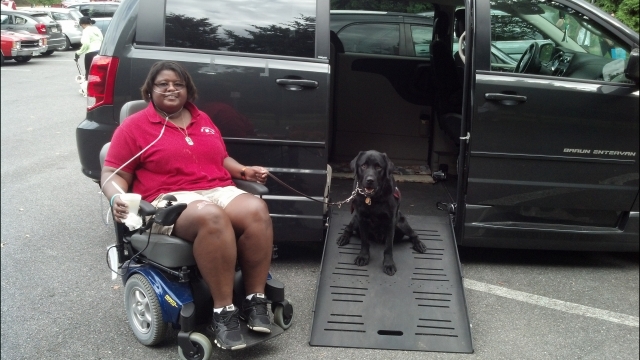
I have met so many special people in my life. One of those special people is someone who has become one of my closest friends. Cara is a fellow client at Fidos For Freedom, Inc., where I trained and received my own assistance dog, Chloe. I rarely promote fundraisers on here so I hope you understand that when I do choose to share a story it is because it is for a very unique and special reason.

Cara first joined the Fidos For Freedom, Inc., family to train and be matched with a service dog to mitigate a chronic illness – Multiple Sclerosis. Since that match with her beloved, Tank, she has also been diagnosed with additional life-threatening illnesses. Cara doesn’t let “life” get in her way. She continues to volunteer for Special Olympics as her son enjoyed the activities. Justin (her son) passed away a couple of years ago, but she continues to stay active giving of her time and energy to this wonderful organization. Cara also often provides leadership in various roles at Fidos For Freedom, Inc., and encourages new clients as well as “veterans” like myself.

Cara’s current transportation is “beyond any mechanic’s ability to fix” and she is fast coming to the point where she will no longer be able to attend Special Olympics activities, or Fidos For Freedom activities and trainings. Cara is trying to raise money for the conversion of a used van to make it accessible for her use. Please read her story below and click on the links provided to read an in-depth biography of this incredible lady – as well as information about why she is raising money.

Imagine not being able to go out and hop in a car, call a taxi, etc., because you do not have transportation that can carry you, your wheelchair, service dog, and oxygen tanks. You become house bound and lose the ability to be involved with others and with life. Help us not let this happen to my friend, Cara.

This is not a scam. Would you consider donating even a small amount? More importantly, will you share this post with others and encourage them to donate small amounts as well? In a short time, people networking with other people, folks who CARE about others and reach out to help, will help Cara meet her goal to have reliable transportation so that she may continue the quality of life she enjoys. I hope you will consider helping – and sharing!

===================================

Today I’m launching a fundraiser at http://tinyurl.com/AVanForCaraAndHerTanks. I usually don’t like asking for help, but find myself in the humbling position of needing to do that.

Due to my failing health, I am using my wheelchair a lot more often lately. The lift in my van is labor intensive and is becoming more difficult for me to use. In addition, my van is old and I’m concerned about it’s safety on the road. I drive myself to the hospital and to several specialists, almost once a week.

I am asking for your help in raising the funds I need to modify a used van with an automatic ramp, lower the floor, put in a kneeling system, etc. This will allow me to transfer to my chair safely from inside the van. I’ll be out of the elements, away from strangers, and out of the way of traffic.

Please visit my fundraising page at http://tinyurl.com/AVanForCaraAndHerTanks where I share my story and to find out how you can help. If you would also share this with your friends and family, it would help me greatly!

Thanks in advance for taking a look and helping if you can! Cara, service dog Tank, and O2 Tank, Jr  🙂

Denise Portis

© 2013 Personal Hearing Loss Journal

A Pocketknife to Clean Your Nails

pocketknife

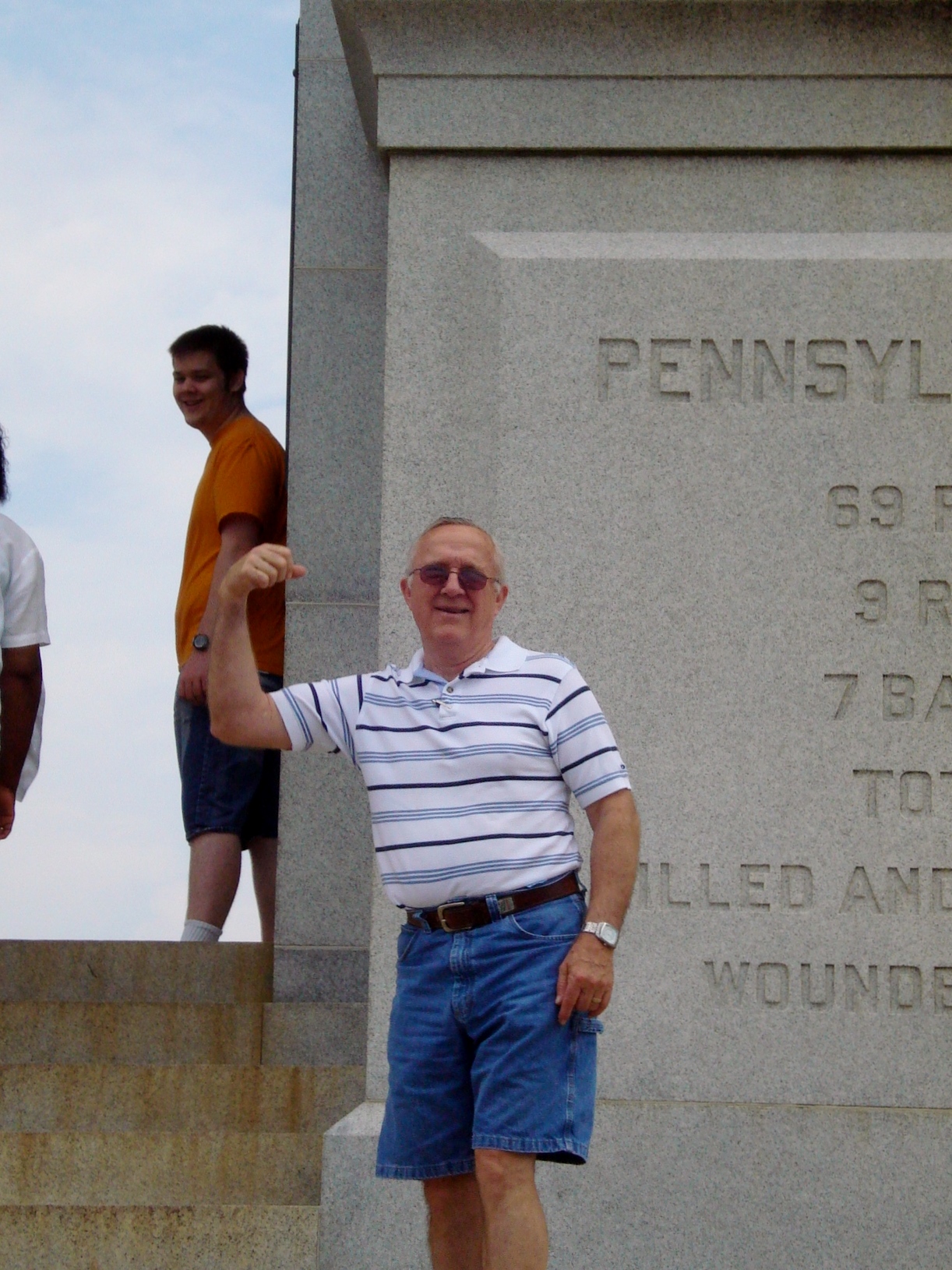
ABOVE… My dad in 2011 when he visited Gettysburg with us.

Do you know every time I retrieve a nail file to smooth, clean, or file my nails I think of my dad? Isn’t it funny the kinds of things that will recall a memory for us? Not the kind of recall that triggers our sympathetic nervous system and launches a flashback in folks who suffer from PTSD. Instead, the kind of recall that knocks on the door of our heart with a “feel good” memory. The memory replays a specific conversation or event. For me, when I use a nail file I vividly recall how my dad would clean his nails with a pocketknife.

I couldn’t have been more than 7 or 8-years-old, for we had not yet returned to the family farm. My dad still worked for International Harvester at the time. One day I sat watching him clean his nails with a pocketknife.

“Why do you use your knife to clean your nails?”

Dad continued to clean his nails and thought about his reply. The man never just “spoke off the cuff”. He responded after a bit, “It does the job”.

“Well, will you clean MY nails?”

With less thought he replied, “I can’t. I can’t tell where your nail stops and your finger starts”. He scooted closer to allow me to see from a different angle how he was using his knife to clean up under the nail. I may have been young, but I immediately grasped why he couldn’t clean MY nails with this unconventional method.

Although I never could bring myself to clean my own nails with a pocketknife, I learned over the years that one can do things just as well by means of unconventional tools and methods. I would not have understood if someone had tried to tell me that I would eventually become deaf and develop Meniere’s disease – a balance disorder, and that by doing so I would have to adopt some new means to navigate my world safely.

Works For Me – But Maybe Not for you

I suppose one of my biggest pet peeves is when folks start dictating to someone who shares a diagnosis how they MUST go about treating that disease or disorder. Just because something works well for YOU, does not mean it will work well for someone else. This doesn’t mean we shouldn’t be willing to tell our story and share what works for us. Peer networks and support groups are invaluable in my opinion. However if I chose to use a nail file to clean my nails, and you choose a pocketknife, all that should be celebrated is that the end result yields positive benefits for us both. Clean nails are clean nails no matter how they got that way.

That doesn’t mean the process to clean nails is always easy. I have to sit to brush my teeth. That toothbrush swishing around in my head will make me pass out if I do not do so from a seated position. I never could sit on the lid of the commode to brush my TEETH. So I step into the bedroom and sit on the hope chest to brush my teeth. I have to be sure to keep my mouth closed so that there is no splatter. Ewww, right? This last week as I was sitting there brushing my teeth, it just hit me wrong. Here I was 47 years old and unable to brush my freakin’ teeth over a freakin’ sink like a normal – erm – FREAK! So…

I started crying.

My husband stepped into the bedroom. I can’t imagine what he saw. Here is the wife sitting and brushing her teeth, sobbing her eyeballs out, toothpaste now EVERYWHERE, including dribbling down her quivering chin. He calmly said, “You OK?”

Did I look OK? Alright, yuppers… I didn’t actually WANT his help. I just wanted to finish brushing my teeth. Those FREAKIN’ ones…

When a person with disability or chronic illness finds a way that works for THEM, it doesn’t mean it is easy. But this is why we are not disABLED. We are differently-abled. It is quite a cognitive and emotional boost to discover you can still enjoy something you did before – only in a new way. It may look strange, novel, or genius… but the reality is “it gets it done”. Yet what I find works for me, may not work for someone else with Meniere’s disease. I cannot safely clean their nails with my pocketknife.

Celebrate the Day

Gee, we live in a wonderful age of technology! When I think about the miracle in that I’m hearing again bionically, and all the cool tools available to me through simple apps on my iPhone, or special assistive technology, I get goosebumps! I live in a country where service dogs OTHER THAN guide dogs are fairly common. Email and texting – two communication devices I utilize frequently, are favored among the NORMAL hearing population. This makes my life so much easier!

Folks with mobility issues, learning challenges, hearing loss, chronic illness, and various disorders have options available here in the U.S. that we did not have 30 years ago – or even 10 years ago! Yet some of the things we learn to do are through our own ingenuity! I have quite literally patted myself on the back and mentally “high 5’d” myself when I discover a new way of doing things. To you being able to do the laundry without actually having to change the altitude of your head is not very impressive. But to me? This is a “WOO-HOO” discovery. But the proper lean formation, use of step-stool and service dog work for me. They may not work for you if you, too, have Meniere’s disease. But be willing to share ideas with each other without dictating proper protocol. The end goal is clean nails after all.

Denise Portis

©2013 Personal Hearing Loss Journal
You’re So Vain…

chloe hug

I love my local grocery store. Not so much that I was pleased I had to go twice this week after forgetting a few items, but the aisles are spacious, the employees know me (and Chloe) by name, and I save a lot of money in both sale items and even gas points. My unexpected impromptu second visit this week was disastrous, at least from an emotional standpoint. I came down the aisle looking for those elusive cotton balls that I failed to remember on my first trip and met a lady only slightly older than me with two canes. We stopped to chat for a minute and thought I had met another who understood when she surprised me by saying, “I just couldn’t work with a dog. It seems so vain because so much attention is brought on by being with one“.

I could feel the heat creep up in my face and I blinked back tears as I stuttered out, “Well different strokes for different folks I suppose“. (I’m always so proud of how eloquent I am in a pinch *rolls eyes*).

I really had very little left to say so quickly cut it short and moved on to find those STUPID cotton balls. Because ya know? Now I was MAD after that initial “kick in the gut” feeling so I determined then and there those cotton balls were stupid. Made me feel better anyway.

My husband and I kid around about how vain Chloe is. Her biggest fault as a service dog is that she is too friendly. She’s a flirt. She gets gently reprimanded on days my balance is really off if I put her in a sit/stay while talking, but then she wags and flirts and stretches for a kiss. Heaven forbid someone actually switch their attention to HER! Then she is like, “You love me. Denise loves me. We all love me. I love me.” She’s so vain! (♫♪ Chloe, you probably think this post is about you! Don’t you? Don’t you?♪♫)

Many people with invisible disabilities are not in favor of mitigating their disabilities with a service dog because it DOES bring attention to you. As a matter of fact, I know of cases where folks drop out of training programs when they discover that this service dog will bring unwanted attention to them. That isn’t worth it in their opinion. And… that’s OK. I have Meniere’s disease (a balance disorder) and am hearing again with cochlear implant technology. I HAVE chosen to mitigate those invisible disabilities with a service dog. I wear bling-bling on my cochlear implant processor. On days my balance is REALLY bad, I use a bright purple, metallic cane. This works for ME. It doesn’t mean it will work for YOU.

could’ve should’ve would’ve

If I could’ve… if I shoud’ve.. or if I would’ve – I suppose if I hadn’t been on the verge of tears I would have told this woman:

“Do you know that before Chloe, I spent 20-30 minutes before work each day changing outfits trying to find one that hid all the bruises from my falls?”

“Do you know that when the elevator was temporarily out of service this week I didn’t have to cancel class because Chloe was able to counter-balance for me on the stairs?”

“Do you know this cochlear implant bling-bling helps people remember to face me when they speak if it is obvious I’m not hearing well?”

“Do you know all these patches and certification tags on Chloe’s vest legitimize her role as a service dog so that I have less access issues?”

“Do you know it takes me 45 minutes to get groceries each week now because Chloe picks up the things I accidentally drop compared to the 2 1/2 hour trips I use to have?”

“Do you know I never have to ask a stranger to pick up something for me now?”

“Do you know I’m working again because I don’t have to worry about putting students out to pick up pens, erasers, markers, or papers for me in the classroom?”

“Do you know I never have to worry about missing a phone call now?”

“Do you know I have the sweetest, “kiss me awake” alarm clock in the whole, wide world?”

“DO YOU KNOW I THINK YOU NEED A DOG BECAUSE YOU OBVIOUSLY DON’T HAVE ENOUGH LOVE IN YOUR LIFE?”

Ok… maybe that last one is unnecessary.

But the reality?

weather vane

People with invisible disabilities or chronic illness are more likely to deal with VANES instead of vanity each and every day. We have things we pay attention to so that we stay SAFE, red flags that remind us we are pushing our limits. Boundaries in place to keep us from over-doing things. I know my body better than anyone… even my doctors. This past week we had torrential rains on Thursday. On Wednesday, I was in “full disability regalia“. Chloe, cane, and fresh batteries in the “ears” and still I wobbled and fumbled my way through the day because there was a system coming into our area! A student said, “Wow your balance is really off today!”

I replied, “Yes! I’m a human barometer and much more accurate than the Weather Channel!”

A thoughtful pause and then, “Is there an app for that?” (snicker… I love my students).

Like a weather vane that helps farmers or meteorologists know which way the wind is blowing, people with disabilities have things in place that allow them to “take their pulse” each day to see how to safely navigate the world around them.

I’ve met a good number of people who have a service dog. I’ve never met anyone that I suspected of choosing to do so because they wanted the attention. And so please understand that the only one who is vain in my partnership is CHLOE.

♫ You’re so vain
You probably think this POST is about you
You’re so vain
I’ll bet you think this POST is about you
Don’t you? Don’t you? ♫

That’s OK. If Chloe’s weakness is that she is warm and friendly… I can live with that.

Denise Portis

© 2013 Personal Hearing Loss Journal