Operation Christmas Child and Thankfulness

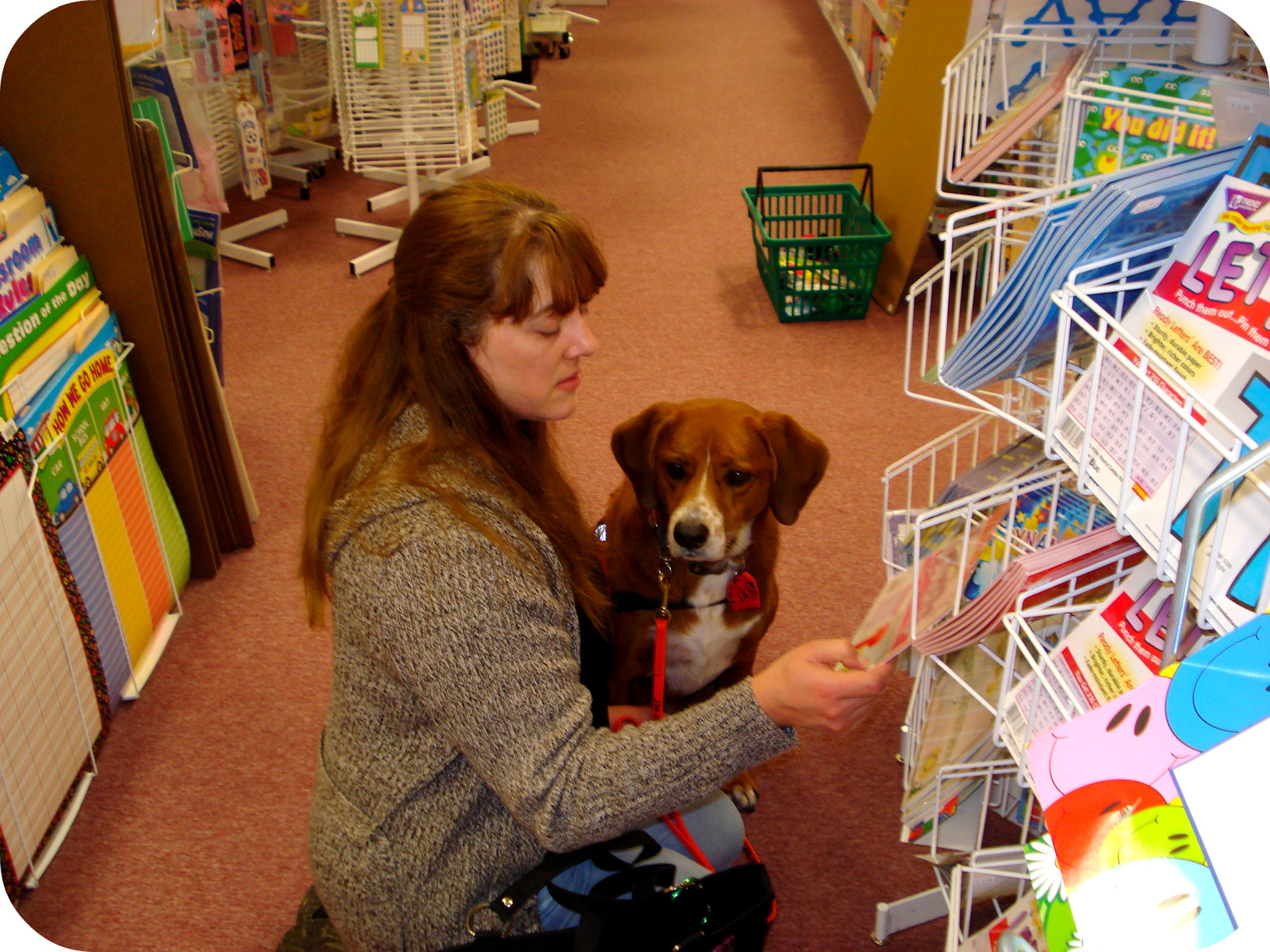
Chloe and I went shopping for items to put into our Operation Christmas Child shoe boxes on Saturday. Armed with the following list, Chloe and I marched into the retail world:

GIFT IDEAS

TOYS
small cars, balls, dolls, stuffed animals, kazoos, harmonicas, yo-yos, jump ropes, small Etch A Sketch®, toys that light up or make noise (with extra batteries), Slinky®, etc.

SCHOOL SUPPLIES
pens, pencils and sharpener, crayons or markers, stamps and ink pad sets, writing pads or paper, solar calculators, coloring and picture books, etc.

HYGIENE ITEMS
toothbrush, toothpaste, mild bar soap (in a plastic bag), comb, washcloth, etc.

OTHER
Hard candy and lollipops (please double bag all candy), mints, gum, T-shirts, socks, ball caps; sunglasses, hair clips, toy jewelry, watches, flashlights (with extra batteries)

As a family, we had agreed to do one shoebox for a girl, and one shoebox for a boy. This year we chose to do items for two children ages 10-14 years old. At some point in the shopping trip, I realized how sobering it was to realize that for some children a pad of paper, pencils, and stickers were considered a luxury item. When I purchased some toothbrushes and toothpaste, the idea really came to settle in my heart and mind. We are so blessed here in the United States. Many items to us are necessities and common staples of our every day life. To children in other countries, those same items may be considered true luxuries and priceless gifts.

For the boy package, we purchased stickers, pads of paper, pencils, crayons, small slinky, small book, pencil sharpener, kaleidoscope, kazoo, skipper jump rope, ball, toothbrush, toothpaste, hand puppet of a triceratops, and some other odds and ends.

For the girl package, we purchased much of the same, but instead of a kazoo we included a set of bells and the puppet was a ladybug.

Perhaps it is because this is the week of Thanksgiving, that I am particular thankful for things I normally take for granted. I’ve often thought about how blessed I am that I live where I do in regards to my hearing loss and Meniere’s disease. I live within “spitting distance” of the Listening Center at Johns Hopkins Hospital, and my cochlear implant surgeon was one of the best in the country. I can easily purchase batteries for my CI, and have access to other assistive listening devices. I live within 65 miles of Fidos For Freedom, who only match assistance dogs with people within a certain radius of their organization. It is one of their commitments to provide follow-up training and support for the life of the dog. Trainers are all volunteers and live locally, so to participate and become matched with one of their special dogs one must live within a certain “workable distance”.

If you are having difficulty finding a way to be thankful this year due to life’s stresses, problems and trials… pack a shoe box for Operation Christmas Child! I think it will quickly help you discover things you are truly grateful for in the end! Plus… you will make a difference to a child who may never know the true meaning of Christmas if not for you! Check out the link and find out where the nearest drop-off location is for YOU!

Operation Christmas Child Link

Denise Portis

© 2009 Hearing Loss Journal


Braille Menus

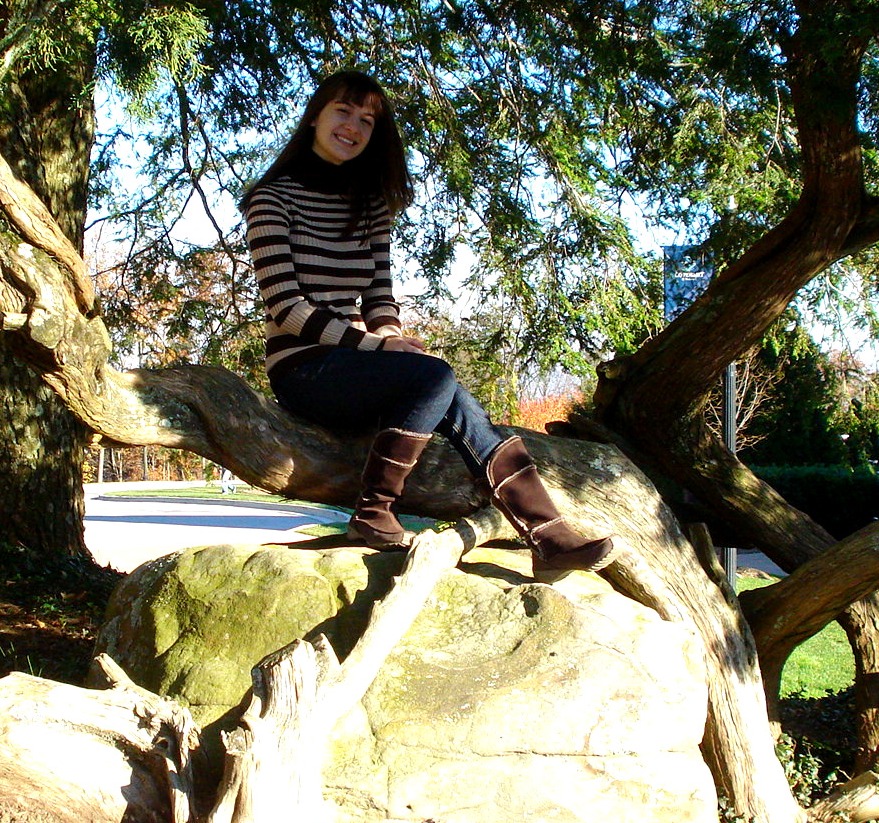
Kyersten has always loved the outdoors... here she is on Lookout Mtn. in Georgia.

Kyersten, my “going on 20” daughter and I, went to Baltimore yesterday. She had a field trip she had to complete in order to earn some extra credit in her 200 level zoology class that she is taking. This has been a TOUGH class for her and she earnestly reasoned with me why she so desperately needed the car to go the National Aquarium. She can be pretty convincing. I had not been in awhile, so invited myself along so that I could spend some one-on-one time with her. Perhaps since we’ve recently visited some colleges on her “short list” that she will be transferring to next Fall, it was still keenly evident to me how precious little time I have left with her before life really changes! She was very willing to endure my company and cheerfully agreed (even before I promised lunch out!).

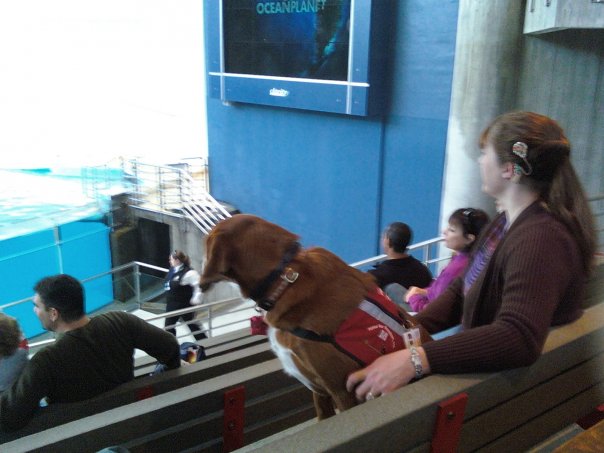
The aquarium is a great place to be with a CI and working dog. There is SO much to hear, and it can be a great place to practice using some of my special programs like “BEAM” to hear just Kyersten in a din of NOISE. It is good for Chloe, for we do not frequent really noisy places out of habit. It is good practice for her to stay calm and focused amidst all the “merry mayhem”. Towards the end she was wagging her tail at every squealing group of school children, and even met another service dog. Butch was a HUGE black lab that was built like a tank. He was very “lab-like” and friendly. He and Chloe said a brief hello and went on accompanying their partners. Chloe was much more relaxed after that – smile. A harmless moment of flirtation is enough to put the wag in the tail of my hound dog!

A Dolphin Show can be really noisy and tough to hear at with all the echo! Doesn't keep it from being REALLY FUN!

Lunch at the Cheesecake Factory

I gave Kyersten the option of several places to eat there in the Inner Harbor. She gave me one of those “duh” looks that 19-year-old’s are so good at… She loves cheesecake, so I really didn’t need to ask her! She eats a pretty light lunch there in order to save room for what is important. CHEESECAKE. Smart kid, yes?

Even though it was 12:30, we didn’t have to wait in line at all. Perhaps because it was a weekday? The young man asked us to follow him back through the restaurant. The area he led us to looked out over the promenade and one wall was all glass. I made the mistake of glancing around too much and caught site of the ceiling fans in my peripheral. I sort of “toppled” with a decided lack of GRACE into my chair. Kyersten just grinned at me, as she guessed my problem. I situated Chloe under the table, and turned to look at the young man who seated us.

“May I bring you a Braille menu, ma-am?” he asked politely.

I could see Kyersten’s eyes widen across the table.

Without missing a beat, I pointed to my CI and said, “Oh no thank you! I’m fine with this one” (and then pointed down to the regular novel-length menu on the table).

When the young man walked away, Kyersten rolled her eyes and said, “OH BRUUUTHER!”

I just grinned and said, “Hey! He was polite, and I do have a service dog with me. I toppled into the chair… for all he knows I don’t see well!”

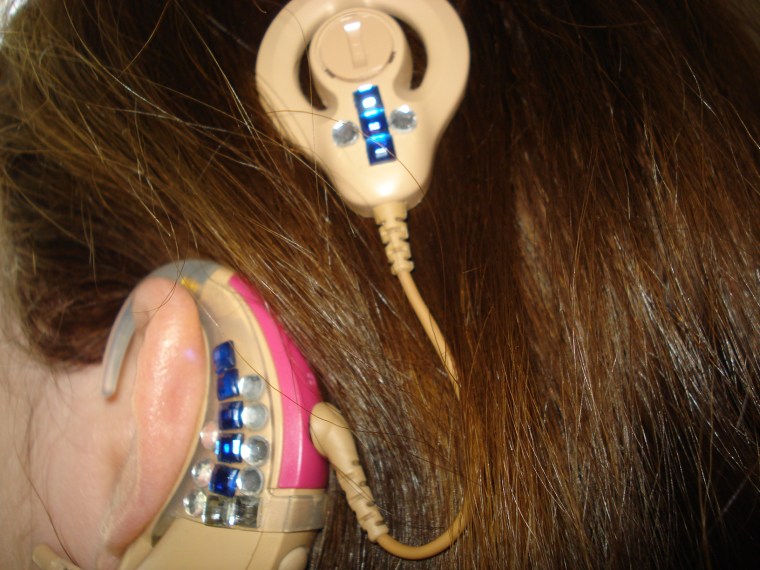
Kyersten just looked at me, and looked at the cochlear implant on my head decorated in gold, red and green jewels for Christmas. She then looked at the opposite ear with the prominent BTE hearing aide and bright red ear mold.

She didn’t say another word, but that 2nd eye roll said it all.

Not the first, won’t be the last!

This was not the first time I’ve ever been offered a Braille menu before. I have friends with low-vision or are legally blind. I appreciate the fact that many restaurants have Braille menus!

I also appreciate it when restaurants train their employees “enough” that they have learned to recognize someone with a special need. Oh sure! They might not identify the need correctly, but I truly believe it is the thought that counts! When I have students in my ASL classes do projects like “go to the mall” without your voice and only sign, (“Deaf for a Day“), many come back to class and tell me that they were offered a Braille menu at the food court at various places. We discuss how they handled this and what this may mean.

Hearing Loss is Unique to Each Individual

Hearing loss itself is unique to every individual. The disability is not a “cookie cutter” change in hearing. I get some responses from people sometimes that do not like that I use the “disability” word. I’m OK with that, and respect their opinion and choice to not identify with that word. Personally, I am OK with admitting that I have a disability. I believe it does not strip away any power, self-esteem or pride to admit that. I am NOT, however, disabled. Yet, my disability may not be anything like that another person with hearing loss experiences.

I have Meniere’s disease. I do not meet many people with hearing loss who have Meniere’s. I am bi-modal (one CI, one hearing aid). I am more likely to meet bi-lateral people if I meet someone with a cochlear implant now! (Which I think is JUST TERRIFIC!) What they experience in their hearing loss is different than what I experience. Some people use a “bit of sign”, while others are culturally Deaf and do not use their voice at all. Some people have hearing aids that they do very well with, while others put their own in a drawer and “fake it” through life. I hear very well in quiet to “medium-noise” environments. I don’t even have to speech read anymore thanks to the wonderful technology of my Nucleus Freedom! However, in really noisy environments I do have to speech read even when using special programs. Other people with cochlear implants may do better in noisy situations.

I have had the privilege of participating in various forums, workshops, conferences and conventions. I have seen people with hearing loss really become defensive with other people with hearing loss. You know? (scratching head and really ponderin’ on that) I just don’t get that! So what if someone hands you a Braille menu! Were they genuinely trying to help? Does it matter that they don’t realize your hearing loss is different than their own? Perhaps they do not understand that what works for them may not work for you. Why come unglued and act defensive?

Here are a few real-life examples I have observed:

1. A person with hearing loss walked up to another person with hearing loss and pointed to their wires connected to their body-worn processor for their cochlear implant. “Why on earth would you wear something like that with all those wires showing?” Oh yeah… that produced a positive response!

2. “Bling” on cochlear implants and hearing aids are often disdained by other people with hearing loss.

3. “Why would you go with THAT company for your CI? The one I went with is so much better and their success rate is much higher!” (Should we just be happy someone is HEARING AGAIN?)

4. “I’m sorry, I didn’t catch the last part of what you said”. “What? You have a cochlear implant now, shouldn’t you be hearing better than I am with two hearing aids?” (Yeah… as long as you aren’t talking while crunching raw broccoli, bozo…)

Let’s face it! We will likely meet someone else with hearing loss who has chosen different techniques, coping mechanisms and technology in order to live life to its fullest. They may hand us a Braille menu. Our response should be positive… and let them know we genuinely appreciate their attempt to be helpful. An angry retort, thrown “menu”, defensive attitude and “hearing loss sermon” will not bring anything positive out of their mistake. Relax. Smile. Educate in a positive way.

Denise Portis

© 2009 Hearing Loss Journal


It Takes Just One Voice

DSC031201

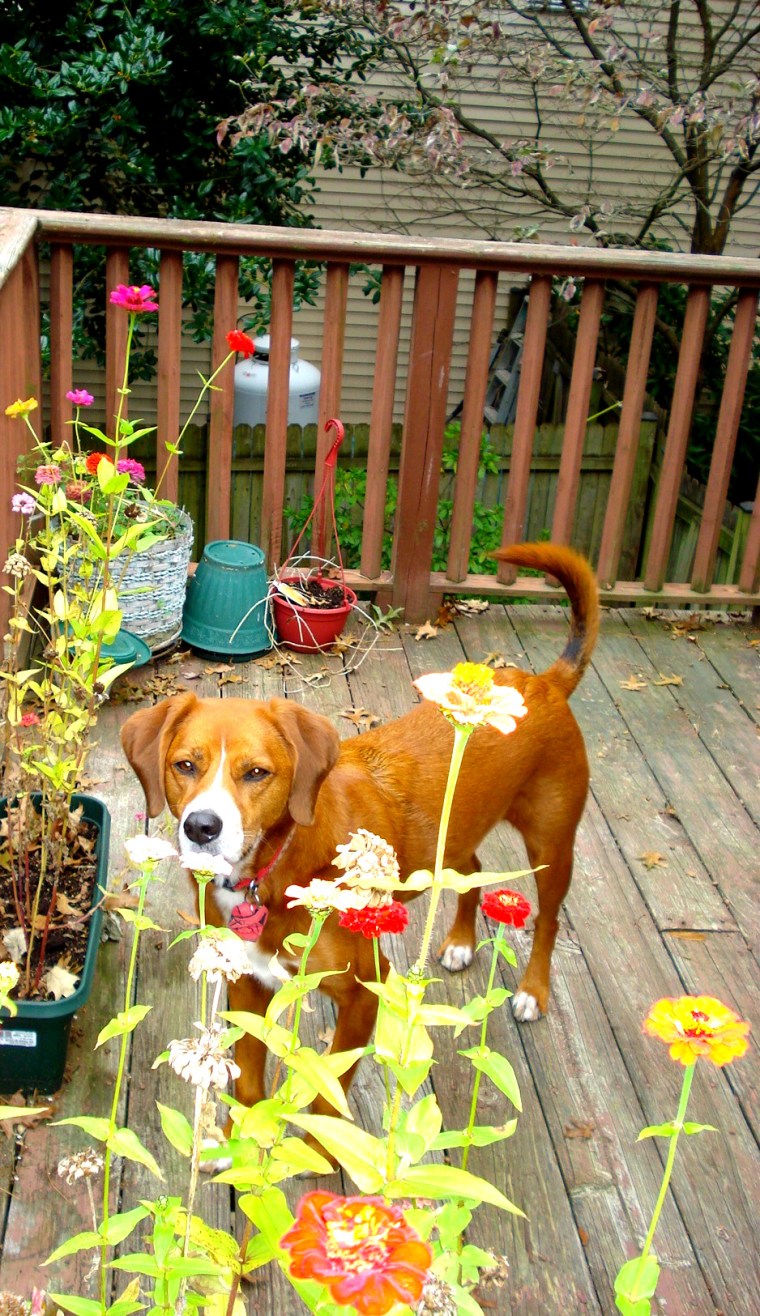
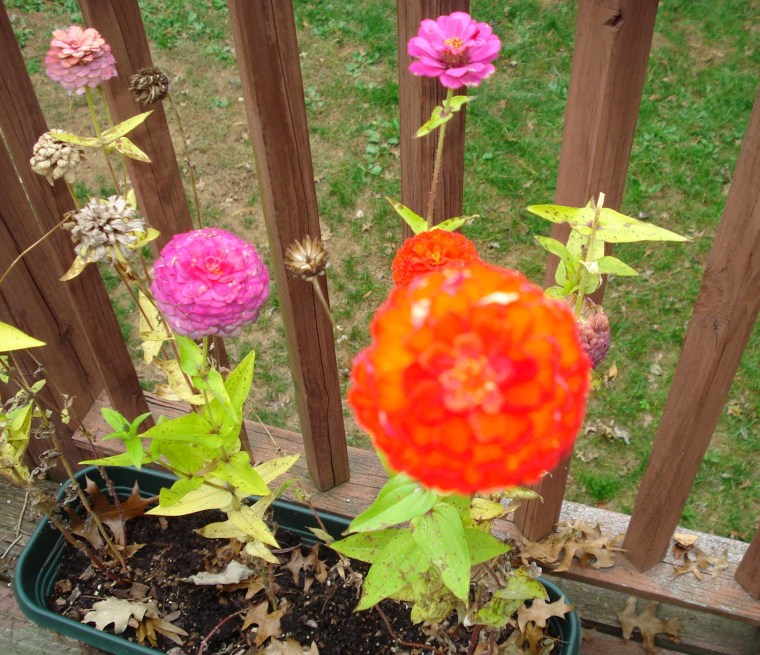
My “morning chore” this morning included cleaning up the porch and putting patio furniture up for the season. Each Autumn I accomplish this task, I’m reminded how desperately our deck needs replaced. I haven’t been out on the deck in about a week and was startled to find more Zinnias in full bloom. Don’t they know it’s late October? Most had died and I thought part of my morning chore for this designated “deck clean-up” morning was going to be to shut the flower pots down for the year. I just couldn’t do it… not with brand new Zinnias raising their beautiful colorful heads to celebrate this Fall Fashion Show going on in mid-Maryland right now!

I explained to Chloe how surprised I was to see brand new blooms on the Zinnias. Patient dog that she is she listened attentively, but I could tell she didn’t really understand what all the excitement was about! But you see? The Zinnias were not finished…

Disabled and finished?

This week I received a tearful email from a fellow HLAA (Hearing Loss Association of America) member. She was upset about the state of her local chapter. It seems they are having trouble attracting new members and the old members are rarely participating. They are SPECTATORS, but not PARTICIPATORS. A peer mentor at one of the local hospitals that performs cochlear implants for people in our area, she explained to me that she cannot even generate any interest in those relatively new to hearing loss.

“You can see that the word ‘disability’ has sunk into their very soul, impacting the way they choose to live their lives,” she explained. “I try to explain to them that hearing again through a cochlear implant is something to be celebrated! It is not normal, perfect hearing, but it is hearing and choosing to stay involved in the hearing world in which they were a part! If you talk to them you can tell they are depressed, defeated, and ACTING disabled. It’s as if all the color has gone out of their lives.”

I thought about my own support group and local chapter of HLAA. There are a handful of people who volunteer for everything, work hard at making sure the chapter is well run, make it a priority to attend each month, and reach out to other members who are on the ‘roll’.

DSC03113

These folks stand out. They smile, are involved in numerous OTHER community endeavors, love people, make a difference… they are colorful. In spite of their hearing loss, deafness, communication needs and problems, they are noticeable because of their focus on ABILITY instead of DISABILITY.

dAp

Fidos For Freedom participates in dAp programs throughout Maryland. Chloe and I have been to two of these early on in our training together. The disABILITY Awareness Program was started in the late 1970’s. The intent of dAp is to educate children and their teachers about disabilities, what it’s like to be a person with a disability, and to increase acceptance of people who may be ‘different’. I’m given the opportunity to talk about what I CAN do. Fidos For Freedom has been instrumental in helping me to be independent again. I have learned so much about what it means to live “in spite of” a disability. There are so many different disabilities represented in our client family. For many, being partnered with a canine partner helps them focus on the “can do” instead of what they cannot. Many enter the training program at Fidos pretty much beaten down by the fact that their life is now completely different because of a disability. They finish their training in full bloom. They stand out and make a difference. Their independence grants them the courage to re-take their life.

One Voice

I love people with disabilities. Near and dear to my heart are populations with hearing loss, deafness, Meniere’s disease and brain injury. I belong to these populations. I wrote back to my friend this week and tried to encourage her. Many small chapters of organizations like HLAA have to make the decision to perhaps only meet quarterly instead of monthly. What you can’t do is “close shop”. If you make a difference in ONE person each year, is that not important?

Do you feel alone? Ever feel as if you are carrying the load alone and GEE HAS IT BECOME HEAVY? You may be one voice. Are you caring for an elderly parent who has Alzheimer’s? Are you a stay-at-home mom with three little ones under 5-years-old and no one at home SPEAKS ADULT? Do you work with people with addictions, and feel your heart breaking every time someone returns to their drugs or alcohol? Do you love someone with TBI who will never be the same person they were prior to their accident? Do you or a loved one live with a terminal illness?

You can remain in FULL BLOOM … in spite of it being late October. You can be ONE VOICE that makes a difference. An amazing thing can happen to ONE VOICE that remains in full bloom in spite of the season. It may take time and a lot of effort. It may not even happen in your lifetime. But one voice is usually joined by another… and then Another… and ANOTHER. You may never discover your own influence this side of Heaven. Be influential anyway. Stay in full bloom. Be one voice… one that makes a difference. If your life is all that is changed, is that a bad thing?

Some of you may cringe. I love Barry Manilow. (Sue me!) My older brother got me hooked on him in the late 70’s. This is a short song, but I ask you to listen to it and think about it from the point of view of making a difference.

Denise Portis

© 2009 Hearing Loss Journal

Sit in the Sun

Even hound dogs can miss the sun after days of rain!

After FOUR DAYS of drizzle and rain, we have enjoyed SUN. I forget that not being able to go outside can affect our furry family members as well. I was very lucky to not have any errands to run during the days of rain with the exception of running my husband to the airport (whom I let out at the curb) and going to church.

Folks don’t realize how difficult it can be to go out in “inclement weather” when you have a disability that involves your balance. Luckily, I was able to put off running to the store, etc. and work from home during most of those rainy days. I did have one day I had to go in and teach, and Chloe was much more of a “balance assist” dog that day instead of a hearing assistance dog. Poor thing had to retrieve 19 dropped items (yup! I counted!) and had to help me down the very LONG staircase. I guess I shouldn’t say “poor thing”, for truthfully this dog thinks work is PLAY. Her tail is in a constant state of WAG.

Important to Rest and Re-charge

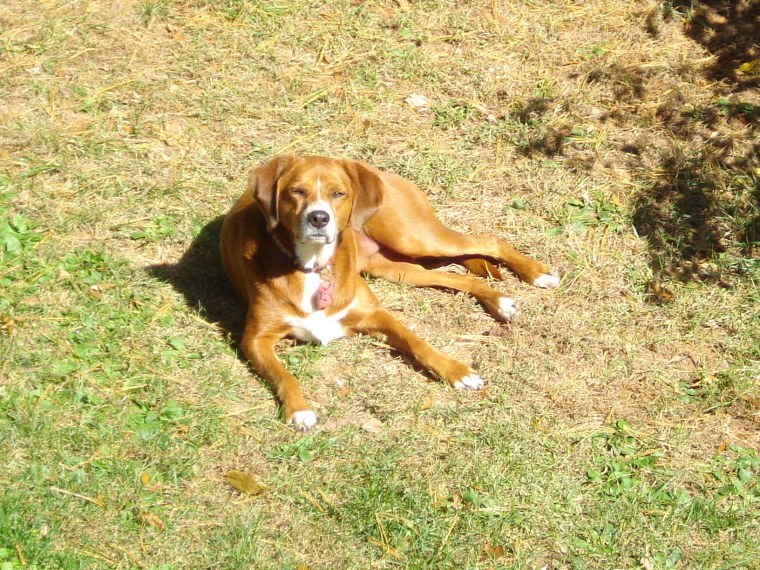
Even Pegasus loves the sun... but he IS naked! Chloe has enjoyed her naps in the sun!

People ask me sometimes if Chloe ever gets to “just be a dog”. She absolutely does! At home she does not wear her vest. Having said that, however, she doesn’t stop working! She has been trained to alert me to the sounds in my home. If someone is at the door… she comes to get me. If my phone rings, she comes to get me or will bring the phone and drop it in my lap. If one of the kids or my husband call my name, she’ll come and get me and take me to them. If the kitchen timer goes off, she comes to let me know. All these things she does without her “working clothes”.

Chloe gets plenty of opportunities to rest and play, however! She barks at bunnies, chases squirrels in the backyard, and tumbles and wrestles with her Elkhound puppy, Tyco. In the evenings she parks her hound-dog self next to me while hubby and I visit and/or watch some taped shows of NCIS. She gets a loving belly-rub the entire time. So don’t feel sorry for working dogs… they are loved, well cared for, and spoiled in many ways!

When to Rest and Re-charge

People need to learn to take a break and go sit in the sun. Especially after numerous “rainy days” that pours itself out on us in the form of stress, difficulties and life problems. We all know when stress is starting to “get to us”. Perhaps you can feel your blood pressure go up, or maybe you develop tummy troubles. You might have difficulty sleeping, or go around BITING THE HEAD OFF of everyone you know.

I just love lists. If you saw my office, you’d laugh out loud! I make lists for everything! My favorite Bible verses are lists that God made for us! He may not “number them” for us, but series of phrases and words are still lists written by God. I have a couple of books my husband got me as really a joke one year. They are called, “Lists to Live By” and I love them! One list I came across this morning reminded me that when we have the opportunity to “sit in the sun”, we should make that time count. Sure… you need to learn to rest. Maybe nap! Relax and unwind! But when you “get back to work” and to facing your problems, it is great to have a plan!

Pat Williams wrote a book called, Unsinkable. Check out this list… and maybe begin brainstorming and thinking about how you can do some of these things during an opportunity you find to “sit in the sun”. In parenthesis, I’ve added my own thoughts.

1. Use what you have. (Don’t tell me you do not have any talents. Even people with disabilities have skills and talents they can use.)

2. Don’t worry about what you don’t have. (Do you have a disability that keeps you from doing something? So what! There are people without disabilities that don’t swim, bungee jump, water ski or travel all over the country! Learn to enjoy what you CAN do, and if you can… ADAPT and change the parameters of an activity so that you can participate. If it cannot be done, don’t worry about it! Find something else you CAN do!)

3. Stay cool when the heat is on. (Under pressure? Biting your nails? Are you WAY TO BUSY? Learn to take time to re-charge… go “sit in the sun”!)

4. When you fall down, get up, dust yourself off, and keep going.  (You are gonna fall. It can even hurt. Don’t just lay there… get up and keep going!)

5. Follow through on your dreams. (Don’t let a disability keep you from a dream! Find a way… talk with others and get advice… dreams aren’t only for those who are 100% healthy and problem free)

6. Discipline your thoughts. (Take time to reflect. Exercise your brain. It makes planning and working much more effective. Being organized can save you time… you may even be able to use that extra time to go “sit in the sun”!)

7. Find comfort in helping others. (No matter who you are or what your abilities… you CAN help others. It doesn’t have to be big things. Little things matter to people. Don’t believe me? Think of 5 or 6 little things that do not require money, tons of time, and incredible skill. Do those things on behalf of other people and see if they do not notice!)

8. Give God control.  (Ya know He is anyway, right? Relinquishing control allows us to trust in the One who can make these things happen for us anyway!)

Hope you find some time to “sit in the sun” at least figuratively this week!

Denise Portis

© 2009 Hearing Loss Journal

Not an Exact Science…

Just because I can zero in and concentrate, doesn't mean I'll always get it right!

Having a hearing assistance dog has its advantages when I do not hear “surround sound”. I have trouble with directionality as I only have one cochlear implant (and due to my balance problems very likely will not ever have a second). I have learned to pay attention to where Chloe is looking in order to figure out from what direction a sound is coming. The only problem is… sometimes I don’t pay attention.

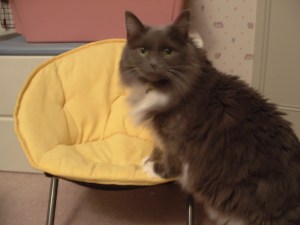
Today our sweet cat, Kiki, found herself stuck due to my inability to hear and failure to take note of WHY Chloe was parked on the stairs instead of next to me. Kiki decided to squeeze between the door and the glass storm door in order to better partake of the sunlight and “view”. I did not know she was there, and closed the door because of the draft as I walked by. Thankfully, my husband came home about 10 minutes later and saw “cat on glass” as Kiki was smushed like a sardine between the storm door and metal door. We retrieved her amongst a chorus of “poor kitty”, and “I can’t believe I did that” while Kiki just purred and basked in all the attention. yellowchairkiki Having a hearing assistance dog is not an exact science when it comes to utilizing her amazing ears if I don’t pay attention to where she is fixated! I really have to pay attention to why she is parked and pointedly looking in one direction!

Reading Lips/Speech Reading

Some people believe that everyone with hearing loss read lips well. Actually, they call it speech reading now, as really you are trying to discern what someone says solely by what you see on their mouth as they speak. Speech reading is not an exact science. As a matter of fact, mistakes are often made by even the best of speech readers. Now that I hear as well as I do with my cochlear implant, I have lost the ability to speech read to some degree as I may once again rely on what I am hearing to understand in many situations. I do still rely on speech reading in noisy environments, and I will always be a big fan of closed captions. Several friends (God bless ’em) have started posting video links in Facebook that have the lyrics attached as well. This only enables me to hear BEST, so I am always thankful for what I see in addition to what I hear.

A couple of nights ago, my daughter was talking to her boyfriend on Skype. They go to separate colleges and during the school year have a “long-distance” relationship. My husband and I graduated from different colleges as well, but our only hope of contact was through a weekly letter (through good ol’ fashioned snail mail) and the occasional phone call. I was still able to use the phone well at the time, and waited by the pay phone at the end of the hall every Friday night. Technology has changed “long distance relationships”. My daughter actually has “candlelight dinner dates” with her boyfriend via Skype. They talk almost daily either “face-to-face” with Skype and webcam, or a minimum of numerous texts sent immediately through the easy access of cell phones. I popped my head in the other night and found them “talking”. My daughter “muted” the long-distance boyfriend so that she could ask me what I wanted. (Another interpretation, “Can’t you see I’m busy? Hurry up!”) Her boyfriend was still talking, so I told her what he was saying. She quickly typed (as you can both speak and type thru Skype) and asked him if what I said he asked was what was actually said. I was right on the button! She unmuted BK (the boyfriend) and both were amazed at my ability. I immediately chalked it up to “luck” and reminded them both that it isn’t a cheap parlor trick! It takes work and concentration to really be good at speech reading. I simply got lucky!

Think About What Looks Alike

I picked up a good HoH (hard of hearing) habit from a friend in California in 2006. She coached me to learn to repeat to people what I thought I heard even if I knew it could not be right. By doing so it did several positive things:

1. It allowed the person with normal hearing to only have to repeat what I got wrong, saving them the time and possible exasperration of repeating everything verbatim.

2. It allows the person with normal hearing to begin to understand what things sound like to ME… a person who hears with a cochlear implant. They learn to be experts at rephrasing things and finding synonyms to explain the same comment.

3. It allows both parties to see the “funny” in trying to make sense of what I hear. I both SEE in speech reading and hear with a cochlear implant.

4. It allows the HoH person to learn to extend grace and to accept that mistakes are made and most people are eager to help clear up the confusion. It creates a positive communication environment.

Stop for a moment and think about what looks the same on the mouth when words are enunciated. Some mistakes I’ve made:

1. I thought someone walked towards me with an admiring glance and said… “Sweeeeet…. heart”!

Really they were looking beyond me and saw a red corvette… they were saying “Sweeeeet Car!“

2. The words six and set look the same as SEX. (yikes!)

3. Mom I’m knitting hard!

Which was really, “Mom, I need the car!”

4. Mrs. Portis, I forgot my paper. Canons get formica? (I was really scratching my head in confusion on this one)

Mrs. Portis I forgot my paper, can I run get it from my car?

Learning to speech read more accurately, can however, help a HoH person communicate better. My local chapter of HLAA has plans to do a 2 hour “speech reading tips” class in the next couple of months. Some great resources that we will be utilizing, come from CHHA (Canadian Hard of Hearing Association), and include:

“Sound Ideas: Managing your Hearing Loss” manual and video

“Lip Reading Naturally” by Frances Mezei and Shirlee Smith

Think It Looks Easy?

I have a challenge for you. Mute your television and see if you can figure out what is being said. You might be surprised at how well… or how poorly you do!

Some additional resources:

1. http://www.agbell.org/docs/speechreading.pdf

2. http://www.lipread.com.au/Products.html

3. http://www.amazon.com/Lessons-Lip-Reading-Self-Instruction-Edward-Nitchie/dp/1428638008

4. http://www.lipreading.com/

Denise Portis

© 2009 Hearing Loss Journal


Happy Birthday Chloe!

birthday Chloe turned five-years-old on Thursday, October 1st. According to one source, that makes Chloe about 36-years-old in human years. No wonder she is perfectly fine with a Sunday afternoon nap now!

History in a Nutshell

Chloe came to Fidos For Freedom in January of 2005 as a three month old puppy. PC310044 Chloe was puppy raised by Linda O., who is a long-time Puppy Raiser for Fidos For Freedom. Chloe has an anonymous sponsor, however we have been blessed to get to know her as well over the years. Chloe’s sponsor has acted as such on behalf of numerous Fidos For Freedom dogs.

Chloe had two fantastic trainers. First she trained with Jolanthe W., and later with Pat J. Both were instrumental in helping Chloe to learn basic obedience, public deportment, and hearing alerts.

In January of 2007, I was matched with Chloe at a Wednesday night training. I’m not sure who had the happiest tail wag!

Chloe and I graduated from Fidos For Freedom at the Tux & Tails Gala in May of 2009.

I cannot imagine life without Chloe! Whether it is doing her job alerting me to sounds I do not hear, or retrieving dropped items so that I do not topple from the Meniere’s, Chloe is simply glad to be with me. She doesn’t even consider her job, “work”.

In honor of all those canine partners who assist their human with various tasks, I want to wish Chloe a very Happy Birthday!

Denise Portis

© 2009 Hearing Loss Journal

Turning Off An Alert

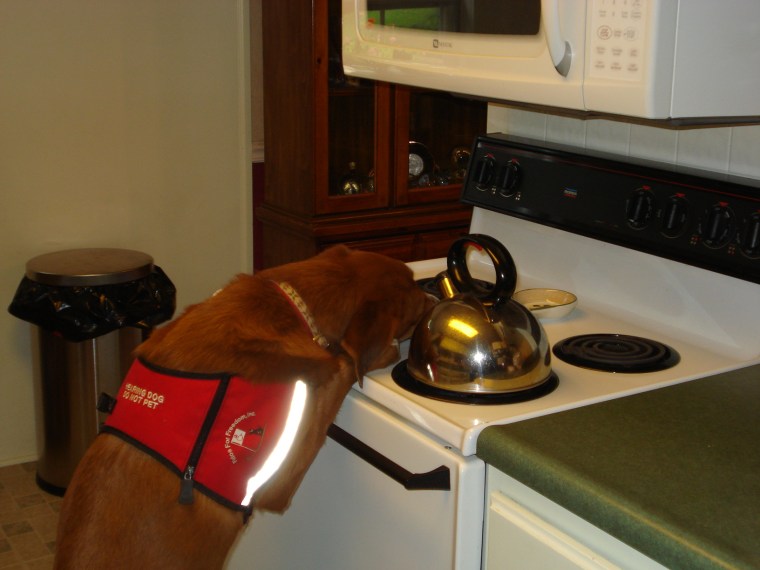
No worries... this is a staged picture. The tea kettle is cold, and a treat is on the stove to award a "Paws up" command.

One of the things I really love about Fidos For Freedom, is that even when you have completed your training you receive follow-up support “for life”. I see Chloe’s trainer about 3 times a month and so when I decided I wanted Chloe to learn a new alert, I contacted Pat.

I was putting the tea kettle on the stove to boil and walking away to check my email in the mornings. It would “whistle” like crazy after I obviously forgot about it after walking away. (You’d think I could wait patiently for all of 2 minutes!) My kids are sleeping in this summer on days they don’t work… at least, they are if the tea kettle doesn’t whistle them awake after it has been boiling for ten minutes or so! They BEGGED me to stop leaving the tea kettle without watching it. Well, I knew one other hearing assistance dog at Fidos who alerted to the tea kettle for her partner. I asked Pat how this was done, and she gave me a step-by-step plan of how to train this alert.

It worked like a charm! In a matter of a week, Chloe was alerting to the whistling tea kettle. The only problem is that I found I now had to turn that alert OFF.

Chloe bumps things with her nose to let me know what is making the sound. If a kitchen timer goes off or my cell phone rings, Chloe bumps them with her nose. When I taught her to alert to the tea kettle, I was finally able to “just forget about it” because she understood that this was now a part of her job. She’d race to get me and then make sure I was following her into the kitchen. Before I could stop her she tried bumping the hot tea kettle with her nose. I screeched and scared her to death ‘mid-bump’!

I thought, “well maybe it is all in the timing…” I attempted to follow her much more closely when she came to get me to let me know the tea kettle was whistling. That worked on days my balance wasn’t giving me fits. However on rainy days when Meniere’s disease caused me to have difficulty walking fast, she would beat me to the kitchen every time! I had to screech at her again!

She started being really anxious to alert to the tea kettle! (Wouldn’t you?) Everytime she did her job, I ended up having to screech at her. For now, I am hanging out in the kitchen for the 2 minutes or so it takes for the tea kettle to whistle. I think I’ll time how long it takes to be “almost whistling” and set the kitchen timer instead. The tea kettle would be an important alert (especially if you ask my sleepyhead kids), but it isn’t worth a burn on Chloe’s nose or paw. It is time to re-think how I want to do this. For now, the alert needs turned off.

Conditioning

When I first began losing my hearing, a subtle yet negative pattern began to take place in the way I interacted with others. If there was a communication blunder, faux pas or misunderstanding, it was always the hearing person’s fault. They not only didn’t understand what I was going through, but they didn’t care! Or so I had convinced myself…

The reality is that my disability is MY problem. It’s not YOUR problem! I had to learn to be proactive – not REactive. It can be very frustrating to tell someone to please face me when they talk – AGAIN. But the truth of the matter is, I make as many or MORE mistakes than the hearing people in my life. I start conversations with someone in my family from another room almost on a daily basis. I can hear them responding, and have to quickly hustle into the other room to at least catch the tail end of what they said. If I cannot understand, I sheepishly have to ask for a repeat (Baa – BAAA)

After I joined HLAA and began to learn from my peers a better way to communicate and advocate, I realized I desperately needed to be re-conditioned. Through the beginning years of my hearing loss I had conditioned myself to believe and react in such a way that hearing people were out to get me and that I needed to harshly and sternly educate in bullheaded opposition in order to gain their cooperation. I desperately needed to turn off this “alert”.

As the result of having established a bad habit in the way I choose to handle conflict regarding communication, I had begun alienating people round me. Worse… my behaving in such a way only insured that the next hard-of-hearing or late-deafened person this “idiot hearing person” dealt with would receive a defensive response. Not only was I hurting myself, but others with hearing loss as well.

Once in awhile I meet someone “new” that has hearing loss and a chip on their shoulder. I want to take them aside and explain my own history and need to turn off an “alert” It’s not always the right time or place, but I have had the opportunity to do so a few times. Sharing my own story seems to mean more than fussing at them about what they are doing. Explaining how to communicate with me best is an important “alert” or task. But to do so the wrong way is not worth “burning” someone else. I was taught and encouraged to re-think how I wanted to convey this information. I had to turn off an old “alert”.

It is very likely that all of us have something we should change… a bad reaction we have towards others. Maybe it’s one person that really gets under your skin. You hear their name and your blood pressure goes up! It may be time to recondition a negative response. You may not even realize it, but you may be hurting your reputation by the way you choose to respond to even the mistakes of others. Your own reputation or testimony may not be all that is at stake. Perhaps you are making all Democrats or Republicans look bad. Maybe you are making all Christians appear holier-than-thou or judgemental. Maybe the way you behave affects the way others look at all people with hearing loss. If you recognize this, you can turn the alert off and recondition the way you respond. If I can do it, anyone can!

Denise Portis

© 2009 Hearing Loss Journal

I’m sorry… 5 Different Ways

DSC02941

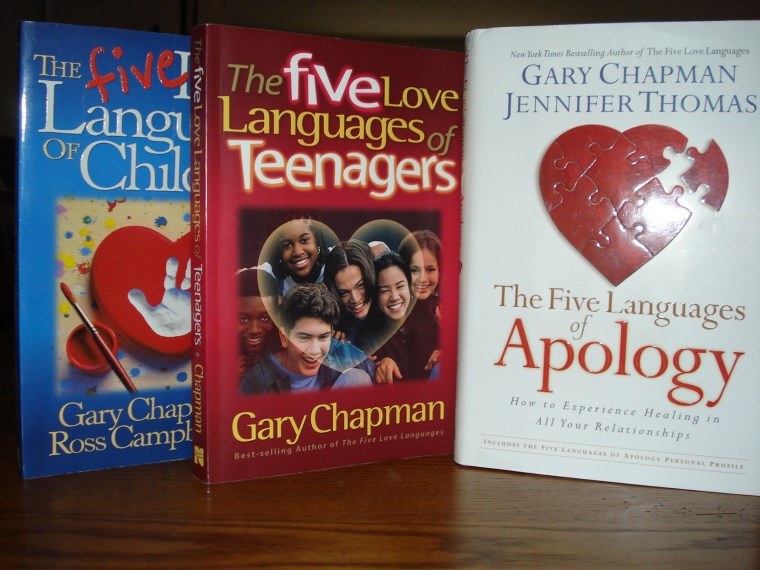
I’ve always been a big fan of “The 5 Love Languages”, written by Gary Chapman and along with other combinations of co-authors like Ross Campbell, and Jennifer Thomas. In collecting some background information for this post, I see that there are now 7 titles total. I’m behind! I only have 4 of the books! My favorite of the “lot”, is “The Five Languages of Apology: How to Experience Healing in All Your Relationships”. Every person has a preference in how they apologize. This is a good indicator of how they prefer to be apologized to by others!

Doggedly Different
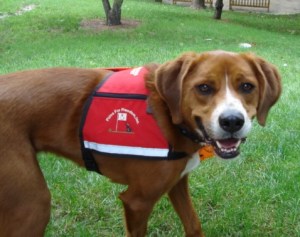
chloe sorry Chloe and I have been working together for a little over two years now. In the beginning, I had to really get to know her and learn what some of her calming signals, body language and other cues meant. Sometimes as clients-in-training, we pick up things from our trainers just by paying attention. The trainers work with more than one dog more often than not. They simply cannot relay every single tidbit of information about your dog to you. When I’ve asked specific questions, they may think a second about MY dog and then answer as best they know. Something I picked up by listening to Pat was the word “phoeey”. It isn’t even said in a harsh way, or with an elevated tone.

We were at a gas station filling up Pat’s car. Chloe wasn’t  staying overnight with me yet, and so the fact that Pat was OUTSIDE the car filling up had Chloe concerned. I could just barely hear Chloe’s high pitch whine. When Pat got back in the car, Chloe hopped up to give Pat’s ear a kiss, and Pat calmly said, “Chloe phoeey”. Chloe immediately went back to her place “happy as a clam” and seemed assured that all was right in the world again.(Is a clam ever happy, folks? Where do we get some of our phrases? EYES ROLL).

By LISTENING, I learned that if I say “phoeey” to Chloe she understands to stop what she is doing. If it is something she knows she should NOT have been doing, she attempts to apologize as well. For Chloe, an apology is a sweet sit, eyes connect with a tiny sheepish duck of the head. She will many times put a paw on my knee if I’m sitting as if to say, “Sorry… we ok?” A pat on the head is all that is required for her to know the apology is accepted.

My Elkhound pup turned two this month, and believe me he is still a pup! tyco1 Tyco is very sensitive, and if I ask him to stop doing something (a louder WRONG for he ignores a “Tyco phoeey”), he belly crawls to me and licks my feet! The poor guy! I scratch his ears and “love talk” him for 10 seconds to let him know there are no bad feelings.(Longer periods of time just rewards his behavior… I want him to know all is well and GET ON WITH LIFE).
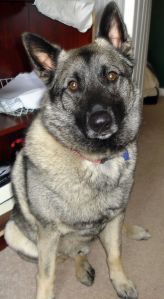

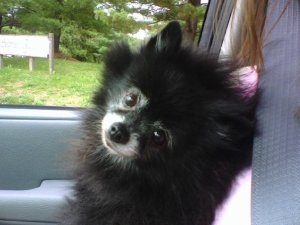
naked Peg 003 Pegasus is a nervous little guy. If he is corrected by person or other dog, Pegasus will TWIRL to apologize. He twirls. Constantly. In one direction. Opposite what my world spins due to Meniere’s. Needless to say, I intervene before I fall on my caboose. I reach down and pick him up mid-twirl, smooch him a kiss loudly and confidently, and set him back down. WHEW. Apology accepted.  ebony Ebony? Well she is our senior citizen. If she is corrected, (usually Ebony – NO) she ignores us. After all… she’s deaf (and partially blind, and arthritic, collapsing trachea, enlarged heart, liver disease, rotating patellas, alopecia and MORE).
5 Different Apologies

I think every person should read this book! I have learned so much about how each of my own family members have a different apology language. I’m learning how to do the same with other family members and friends. The apology languages are as follows:

1. Expressing Regret (“I am sorry”)

2. Accepting Responsibility (“I was wrong”)

3. Making Restitution (“What can I do to make it right?”)

4. Genuinely repenting (“I’ll try not to do that again”)

5. Requesting Forgiveness (“Will you please forgive me?”)

In a perfect world there would be no need for apologies. Since we live in a world that is far from perfect, it would be wise to learn to apologize. Let’s face it! We all blow it!

On Purpose

Sometimes we intentionally purpose to make someone mad or hurt them. I wish it weren’t true, but I can be honest with myself. There are times I know that what I’m going to say or do will either make another angry or hurt. Perhaps I justify it because it is done with vengeance. Maybe I’m just in a rotten mood and desire to “share the feeling”. It may be that I’m tired, not feeling well, and should go to bed instead of trying to communicate with someone. The damage is done! I believe when we are willful and premeditated about our wounding, our apology should reflect the seriousness of situation. I believe we should not only SAY we are sorry, but SHOW we are sorry. If I ever find that I am deliberate about being unkind, I attempt to make restitution. Shame on me!

Oops… did I do that?

Sometimes we hurt someone unintentionally. Apologies are given because of how another received what we said or did, not because it was our intent to hurt them. Have you ever discovered you hurt someone and that disclosure took YOU by surprise? If you hurt someone accidentally, you should apologize. Depending on the circumstances, you may try to explain what you were attempting to do. Don’t justify your actions WITHOUT an apology. It doesn’t really matter what you MEANT. If it hurt someone, we should try to make that right. We shouldn’t be so proud that we cannot say, “I’m sorry! I did not mean it that way, and I’m really sorry that what I said ended up hurting you!”

Having said all of that, we need to be careful about our own sensitivity. At certain times in my life, I remember being in the frame of mind where I EXPECTED people to say or do hateful things. Guess what? I was never disappointed. It seemed that every day I was owed an apology for something. What a terrible way to live! If someone says something a bit “off”, try not to jump to the conclusion that is was meant maliciously or callously. Expect the best from people… not their worst.

Recently my son and I were working together to change the cat litter out in the litter boxes. The kids have 3 cats between the two of them and so we have 3 litter boxes. (Ever tried to ask a cat to wait in line with her legs crossed?). We buy cat litter in huge 40 pound bags. I simply cannot lift it and “aim” at the same time. My 6′ almost 3″ son has no problem hefting big awkward bags… unless any dust happens to aggravate his allergies that is! In the middle of hefting, tilting and aiming the bag, he gave a tremendous house-rattling SNEEZE. Yup. You guessed it! When the dust cleared, he and I both looked down at the pile of litter that now completely covered my bare FEET.

“Um… gee mom. Sorry about that!”

I wiggled my toes. They didn’t appear because the pile was THAT DEEP. He didn’t MEAN to bury my feet. It wasn’t his intention to set up an accident to where it would necessitate my cleaning litter out from between my toes. I couldn’t help it… I started to giggle, then I began to crack up… and finally my son and I were both in stitches just dying laughing! We cleaned up the mess, and finished the job… but just barely! Chris gets the hiccups when he laughs THAT hard, which is just about as dangerous as a sneeze!

Heck! Even DOGS understand when it wasn’t on purpose! Sometimes my two big dogs will be playing and one of them may inadvertently nibble/pinch too hard. If Tyco did the “oops”, he drops and crawls to Chloe and licks her feet with his ears flattened. His apology language doesn’t change species to species it seems! If Chloe does the “ouchie”, she will come and sit next to Tyco and give him a soft cuff and lean against him. She looks up under her eyelashes at him with a look that says, “Did I do that? Um, sorry – oops!”

Chip on Their Shoulder

Have you ever met someone who is ultra-sensitive? It seems like every time you are with them you say or do something that hurts their feelings or wounds their fragile ego. Do we owe them an apology every single time? Wouldn’t our conversations with them end up being apologies alone? In the course of my lifetime I have been in contact with people like this. You may have to sit them down and say:

“You know? It seems like whenever we are together I say or do something that makes you mad or hurts your feelings. I’m really not intentionally doing these things! It may be that you have this expectation of me. Can we discuss this?”

Perhaps you should agree to just limit your contact with this person. Maybe you don’t have a choice! This may mean that you have to change your own behavior and carefully, methodically respond when with this person. You may be in a situation where it is impossible to tip-toe around the other person’s feelings. Your one-on-one conversation may include something like:

“It seems I cannot say or do anything to keep you from being upset. If you watch my interactions with others, I love to laugh, tease and interact with others in a positive way. I understand you do not like this and I have never intended to cause you pain. It may mean that we work together as best we can, and just acknowledge that our personalities do not mesh well. That’s OK! We don’t have to be friends to work together with mutual respect.”
clam If you are obsessing over where “happy as a clam” came from, feel free to click the clam to see what “Wise Geeks” says. Yeah… I was obsessing!

Denise Portis

© 2009 Hearing Loss Journal

B.L.I.N.G and Invisible Disabilities

B asically L iving I nvisible is N ot G ood

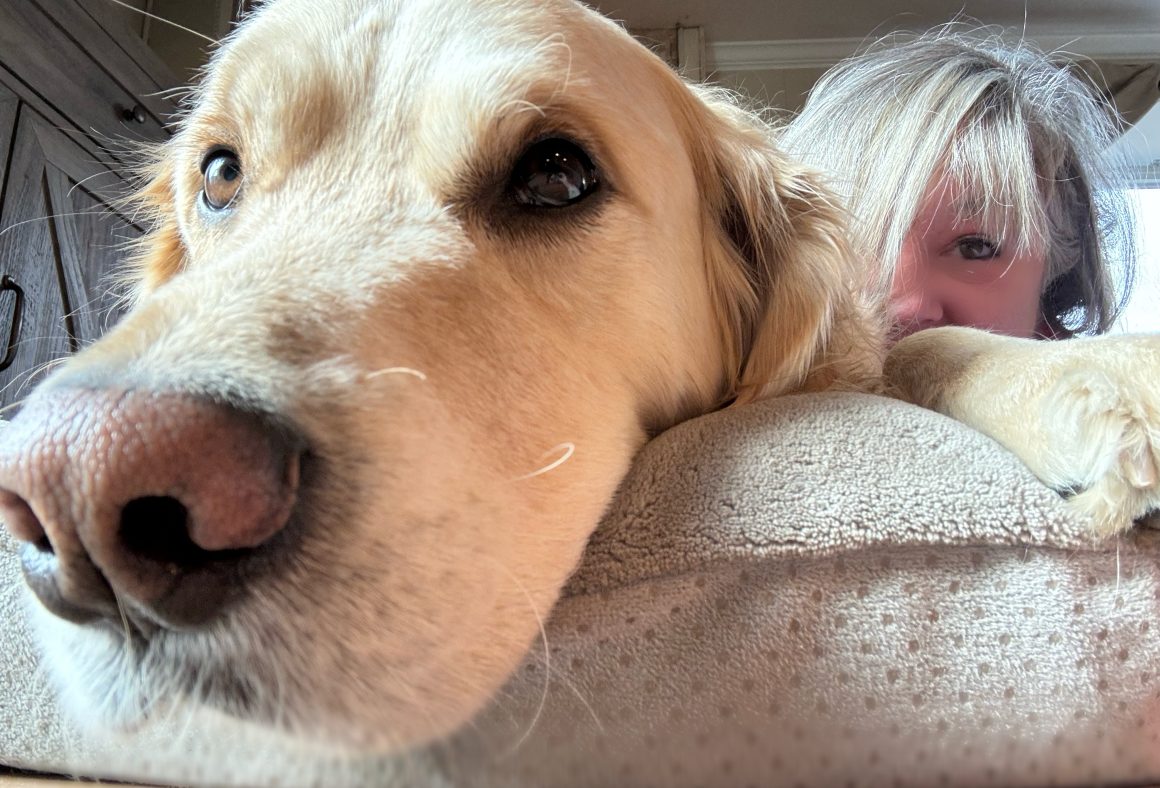
My 19-year-old daughter came up with the witty acronym of B.L.I.N.G. (B asically L iving I nvisible is N ot G ood). It can be tied to a variety of life lessons.

Cochlear implant “bling” and Assistance Dogs

I am a late-deafened adult and I also have Meniere’s disease. Being “late-deafened” is a fancy way of saying that I lost my hearing after I learned oral language. Hearing loss can be mild, moderate, severe or profound. Although all levels of hearing loss affect the way in which a person freely communicates, a person obviously has more serious problems the more severe their hearing loss is. I think part of the reason that HLAA (Hearing Loss Association of America), ALDA (Association of Late-Deafened Adults), and other non-profit organizations for people with hearing loss have trouble attracting new members is that for most people, hearing loss is a nuisance and not a life-changing disability.

According to NCHS (National Center for Health Statistics), there are 37 million Americans who have trouble hearing (NCHS, 2006). A study done by Gallaudet in 2001 reveals that 8 million Americans have difficulty hearing even with the use of a hearing aid (Gallaudet Research Institute, 2007). This leaves approximately 29 million Americans who communicate effectively in spite of a hearing loss. This vast majority of people with hearing loss enjoy the invisibility of their disability as they function well “in spite of”. They “look” like everyone else. They do not have a need for support groups, advocacy or a connection to a non-profit organization because they have no need to identify with the hearing loss group. (I discussed why some people choose to not seek help when they DO have a significant loss here.)

When it became obvious that my own hearing loss was progressive, I began to realize how difficult it is to have an invisible disability. Prior to my cochlear implant in 2005, you would never know I had a disability unless I opened my mouth to speak to you. My speech was beginning to deteriorate just a little bit due to the fact I had not heard my own voice in a number of years. I may have interrupted conversations, not realizing someone else was speaking. I had trouble balancing the volume of my voice and more often spoke to softly than to loudly! Meniere’s disease kindly bestows noticeable symptoms for me when it’s a rainy or overcast day. You would never know it, however, unless I tried to walk a straight line or go up or down steps!

Being surgically implanted with a cochlear implant felt a little bit like a miracle. I could hear my own voice again in most environments and my speech improved dramatically over the period of only a couple of months! Having a cochlear implant does not mean I hear perfectly, however. There are some situations with a lot of background noise or poor acoustical environments that I may have to ask for a “repeat”. I may have trouble following conversations if I’m extremely fatigued. Prior to my implant, I had already adopted bright colored ear molds for my hearing aids and wore my hair up. I found out through a great deal of “trial and error” that it was in my best interests for people to know that I have difficulty hearing. After I received a cochlear implant, I didn’t see the need to change my adopted visibility. I wear “bling” on my CI, and it does draw attention to the fact that I hear but not in a normal way. It allows people to quickly identify that they may need to be sure to face me when they talk, or be aware that if I ask for a repeat it is not because I’m not paying attention. I really believe my “bling” helps other people as much as it helps me.

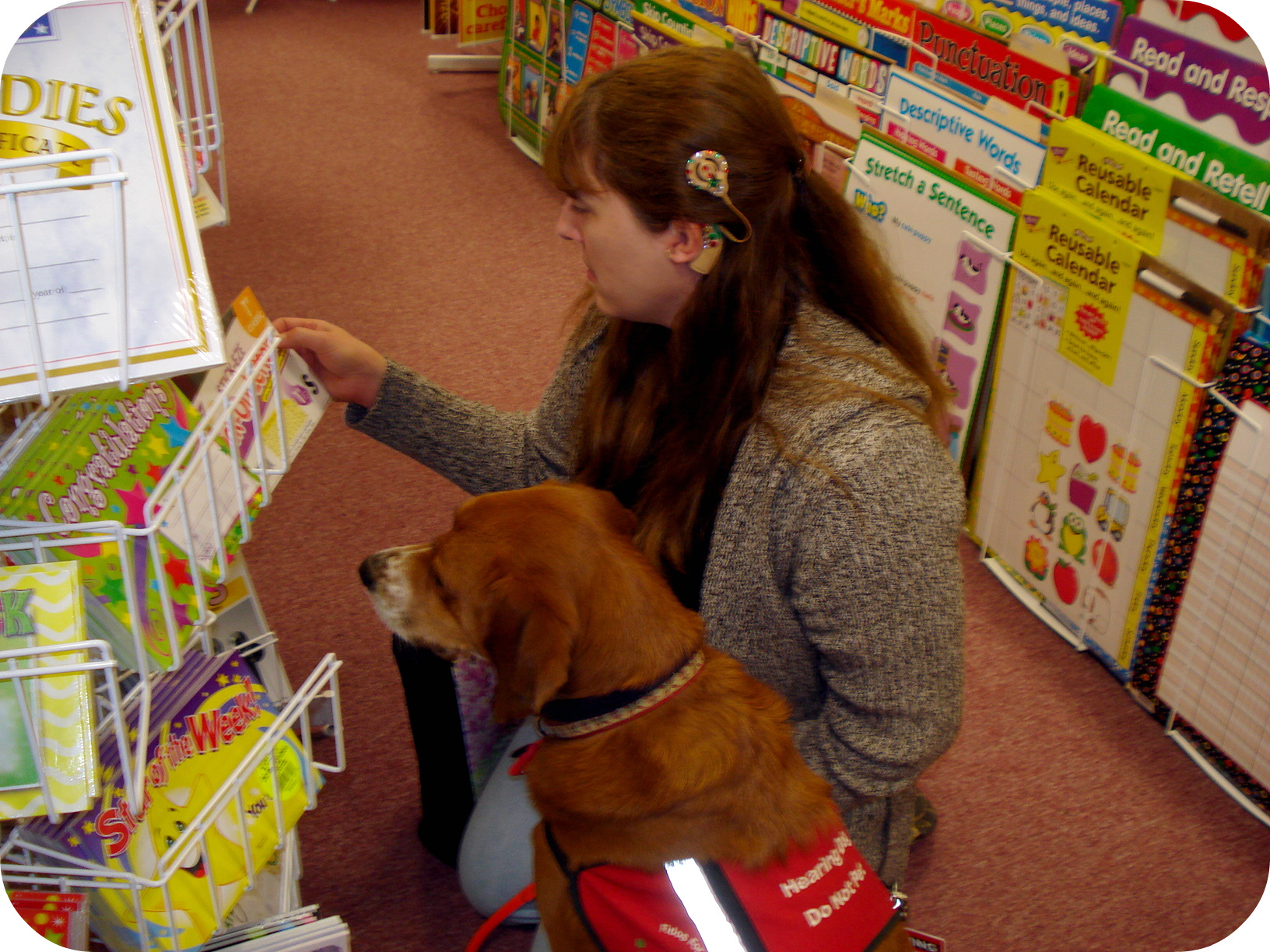
Having a hearing assistance dog who also does balance related tasks for me, brings attention to my disability as well. If you’ve ever thought about having an assistance dog, but do not like to field questions or have people notice you, then you may want to reconsider. Chloe comes from Fidos For Freedom in Laurel, Maryland. It’s not her bright red vest that gets attention. What makes people notice is simply the fact that she is a DOG! It’s not very often you see a dog in a store, restaurant or even church!

B asically L iving I nvisible is N ot G ood

Recently, God allowed a very mean person to be a part of my life for a short time. I say that GOD allowed this person, because it actually served to remind me that there are bigoted mean people who not only do not understand disabilities, but choose not to understand. Through FaceBook, I ended up “accepting a friend invite” because they were involved with someone I trusted. It didn’t take very long for this person’s true colors to be revealed. Comments left on my uploaded photos or “Notes” and eventually conversations between this person and myself and my husband through “instant messaging”, all revealed how there are still people who don’t “get it”. We received over 45 comments and messages from people astonished that there were still people like this out there! Some people do not realize that disabilities are often invisible. They do not understand that there are good reasons to make an invisible disability… visible! Some people do not understand that disabilities are not chosen. There are some that do not understand that disabilities may not only be life changing, they can be terminal. Many diseases and disabilities are those that shorten a life. God used this person in my life to remind me that some people are not only uneducated about disabilities, but they may willfully choose to believe the worst about those who have them. (It’s a great relief to not have to put up with this person anymore, but I do thank God that it was used to open my eyes!)

For me… basically living invisible is not good. There may be other people with Meniere’s disease or deafness who choose to live another way. I respect that! “Bling” works for me. It reminds even those I know well that in spite of my speaking perfect English (with the exception of a southern accent), I do not hear normally. It reminds them that if I repeat part of what I heard and wait for a repeat of what I didn’t… that it isn’t because I chose to stop paying attention. If I say, “whoa” under my breath and touch the wall in order to snap my visual field back into focus, they are reminded why I have a dog who picks up things for me and “braces”.

“Bling” and an assistance dog both serve to allow me to live with some independence. I don’t have to have family members with me now just to go to the post office or a store.

Invisible Awareness Week   0e1c199b505195ca9883a3faad5994b4

There are others who know what it is like to have an invisible illness or disability. September 14-20 is “Invisible Awareness Week“. If you or someone you know have an invisible illness, I encourage you to check out this site!

If you do not have an invisible disability, chances are you know someone who does. Do you know some of the strongest advocates for people with disabilities are those who do not have one? Think about it… who will get further with a person who misunderstands the needs, reactions, or communications from a person with an invisible illness or disability? Certainly people who live with invisible illnesses or disabilities should learn to advocate in a positive way. Their ability to do so helps us all! However, if you take a person aside and teach them… explain to them a little bit about another person’s disability or illness, it may mean even more! Every person can be a strong advocate for others.

Denise Portis

© 2009 Hearing Loss Journal
Falling on STEP 2

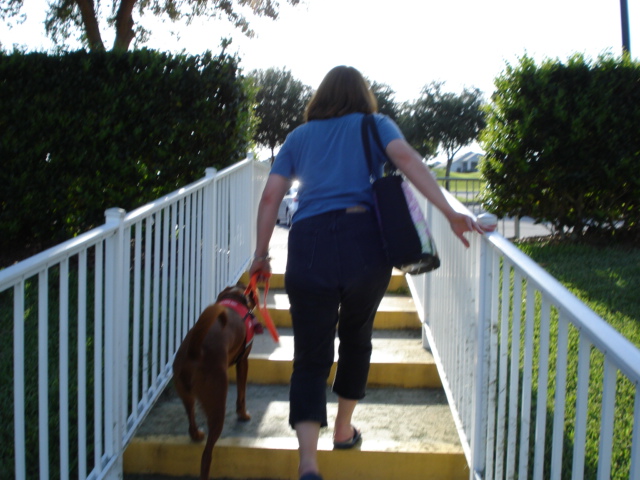
Chloe on stairs in Leesburg, Florida

Not All Stairs Are Created Equal

Sunday, my kids were scheduled to help clean up after the service. In an effort to save time, Kyersten handed us her library books that she had planned to return through the book drop. C. Burr Artz Library is only about 1 block from where our church currently meets. Books are often returned on Sunday since we are in the right vicinity. As it was Father’s Day, I was anxious to “shave off minutes” where I could and so agreed to drop them off for her. We were in separate cars, and the plan was that Terry and I would drop off the books and then reserve a table at Outback. Outback normally opens at 4 PM, but on Father’s Day they were opening earlier – a fact Terry was very excited about since the choice was his given the special day. Terry and I left the kids cleaning up the foyer and coffee corner, and hurried to stop by the library before proceeding to Outback.

C. Burr Artz Library in downtown Frederick

It may be difficult to see from this aerial shot of the library, but the book drop is to the left as you face the main doors. There is a set of stairs you cannot see, and a handicap accessible ramp leading right up to the book drop. Terry pulled into the circular drive in front of the library and the plan was for me to hop out, drop the books in, and hop back into the van. Sounds deceptively simple, correct?

I hopped out after telling Chloe “quiet” and “stay”. She tends to have a cow when I leave the vehicle without her. It rarely happens and only when someone else is in the car. Even so, she behaves as if I’ve left her in a foreign country! In order to keep Terry from having to listen to her belly-ache, I had high hopes my “quiet” would keep her calm for the several minutes it would take to drop the books into the slot. After all, she would be able to see me the whole time, and I would be no more than ten feet away.

There were only 4 big books, and easy to carry under my left arm. I approached the stairs and considered my options. Funny how having a balance disorder forces you to look at something as simple as a short staircase in a new light. The day was sunny and I am less apt to be dizzy on clear days. I was momentarily distracted by the appearance of a young man I go to church with as it seems he walked to the book drop and beat us there! He made a comment about that fact, and I grinned and waved goodbye.

My world tends to rotate counterclockwise. This is actually a huge boon in my humble opinion, as most people walk to the right on sidewalks, stairwells, etc. This means my strongest side… my right side… is closest to the handrail and “checks” my skewed impression of things moving towards the left. I confidently stepped up to the staircase.

Decisions to Make on Step 2

Within one step I found myself sprawled out in the stairwell. I grimaced and pulled myself back up and took inventory of the various scrapes, abrasions and new bruises. I felt an immense relief that I fell on STEP 2! At least I fell “forward” instead of “backwards” and didn’t have very far to fall. If I had been on step 5, it may have been worse as the fall would have been farther. If you fall IN the staircase, your fall is cut short by the slant of the stairs. (Are you grinning? Hey these things matter, believe me!)

“OUCH”, I muttered.

Now as falling is as much a part of my day as breathing, I really do not tend to sit around contemplating the fact that I’ve just fallen… again. I could hear Chloe “losing it” in the idling van behind me. A dog’s bark comes in loud and clear with a cochlear implant. I gathered up the strewn books, made it up the final stairs and dropped them into the book drop. Every time I use the book drop, I’m reminded of the time my son told me that it “talked to you” when you fed it books. I believed this for a number of years until he overheard me talking about our book drop one day and figured he’d better set me straight that he had been pulling my leg. Ornery little booger… anyway, I digress:

I returned to the van, hopped in and buckled up. Before I could say anything, Terry said,

“Good night, Chloe was NOT quiet while you did that. She cried the whole time!”

I sat there contemplating that comment a moment, perhaps hoping he’d notice my bloody knuckles and disheveled appearance. I’m not a patient person and so blurted out,

“Well gee it could be because I dropped out of sight when I fell on the stairs!”

I can only imagine what poor Chloe saw from her perspective inside the van. Wisely, Terry cluck-clucked like a good little mother hen and was appropriately conciliatory about my new “fall down and go boom” scratches.

Stairs are not all the same. A new discovery for me has been the realization that the width of the stairwell, angle of the slope, width of the stair itself, and whether or not the stairwell is “open” or “closed”  has an effect on perception when you have a balance disorder. You can learn the “feel” of a familiar stairwell; for example, I traverse the stairs at home at a pretty good pace and rarely fall even on a rainy day. (I might clarify that I rarely fall on the STAIRS at home… grin!). When I come to a “new” staircase, it is wise to take some time and check out the “lay of the land” so to speak!

We made it to Outback and reserved a table for four. Chloe went under the table and rested her head on my foot. She draped a heavy paw over my opposite foot… yeah I got the impression she wasn’t going to let me get very far without her again!

The Decision is Ours

Sometimes I wish life’s decisions were just made FOR me so that I could get on with living life. However, we all know that making decisions is part of a growing process. I don’t for a moment believe that God forces decisions on us. His word makes it pretty clear that we have a free will. We make the decisions even though He has the power and wisdom to make them for us. God is not a dictator, and much like a loving parent He allows us to make choices that may ultimately cause us pain. Even when it is clear we have made a “poor choice”, we still are able to learn from our mistakes.

I believe we can ask God for wisdom when we make decisions, and that it is wise to seek the counsel of others. In the end, we are left with a choice. Some decisions my family and friends have been faced with in recent days include:

“Do I take this job opportunity, or wait for something better?”

“Do I apply to this college, or another even if it is farther away?”

“What will I major in?”

“Do I buy this used car and clean out my savings account?”

“Do we remove my brother from life support?”

“The company is closing… should I work until the doors close or immediately start to seek a new position?”

“Do I go for a consultation for a bilateral cochlear implant?”

Granted, many of our decisions are not life-altering. I inwardly shake my head in exasperation when I hear people piously declare that they need to “think and pray about” whether or not to make a simple decision. I believe God gave us discernment to make decisions on whether or not to buy Kraft or the ingredients for homemade mac & cheese. Do we take the long way to Walmart or the short-cut and risk heavy traffic? I have heard people who have the time, means and talent try to determine if God wants them to serve in some capacity or another. For goodness sake… just serve! We can’t all be ushers, greeters, or nursery workers, but every individual can be “used” in some fashion. Don’t dare to call something God gives you to do “small” or “unimportant”.

I have made decisions about important things before only to discover rather quickly I have made a mistake. When I make a decision, I try to keep my head up and eyes focused for further direction and confirmation. By staying in a state of awareness, I can more quickly discern if I’m on the right path. If I’m not, I should come to that conclusion fairly quickly. Instead of being bummed about having wasted time, I make necessary adjustments and continue with a new plan of action. I feel an immense relief that I fell on STEP 2!

What is far more difficult is when you discover a mistake after a greater period of time has gone by… perhaps even years! You may feel incredibly “bummed” that you wasted so much time on the wrong path. Perhaps the wrong decision has you bearing new consequences even after adjusting and finding the right path. It’s hard to fall on STEP 5. Taking a fall late in the game, is still a fall “forward”. We can learn from our mistakes. Experience can be a great teacher.

As a parent of an 18 and 19-year-old, I offer advice WHEN ASKED but then allow my children to make decisions on their own. I think we should ask God for advice, for discernment, and for clarity. After I make a decision, my Heavenly Father sits back and watches far more attentively than a hound dog in an idling van. He may “bark” a warning, or alert others that care for me that I am in trouble. He may see me make adjustments and then fine tune my own decision so that I can continue on life’s path. May we all learn to make decisions with more confidence!

Denise Portis

© 2009 Hearing Loss Journal