
Coming to Terms

Deborah Marcus' blog "Visions of Song"
Deborah Marcus’ blog “Visions of Song”

It is always a treat when guest writers post for “Hearing Elmo”. I never wanted this blog space to be all about “me” and my own issues. Please let me know if YOU would like to write for the site!

Deb has been a friend for so long, I would have to stop and burn calories just to remember the when and where we first connected. I love her like a sister and her presence in my life has been a blessing. Deb writes (click the photo above to visit her blog) and is a photographer as well. As a matter of fact, I re-designed my guest bath around her dragonflies. A loving “welcome back” to my friend, Deb, as she shares some things that many of us with disability, chronic illness, or special challenges deal with on a daily basis. 

Winter
Winter

From the time I was in elementary school, I understood that life is not fair, that it’s not even a question of fairness, and that readjusting one’s perspective is something that must occur for the full expression of the self, time and time again.

Of course I didn’t think of it in quite those terms when I was 6, 8, or 10 years old, but I experienced it. I imagine we all do in one way or another, whether by subtle shifts or dramatic events that leave us no choice but to consider this a reality of being human.

Here are a couple of examples. Each of us has some of our own.

-That moment at the audiology clinic, age 9 or so, where I went every couple of years for a hearing test as there is hearing loss in my family. I heard someone say, looking at the audiogram: there it is, the mild to moderate hearing loss. I didn’t know how to read the graph at that time, but my maternal grandmother was hard of hearing and I understood it from that vantage point. I would be like grandma, hard of hearing. Reading lips. I didn’t understand that I would lose the ability to hear birds singing, or the many nuanced experiences that we take for granted when we are able to hear, but I was able to internally adjust to my reality.

-A different moment, after a terrible event at home. I went out into the yard, in the dark, in winter and lay on the snow-covered grass. I looked up at the clear sky, full of stars, and as my breathing slowed to a normal rhythm, thought how beautiful it would be if I could just fall asleep right there…and never wake up. After a while, I felt something move me. You might call it God. I internalized it as a spirit of some kind. It said to me: No, it’s not your time. Stand up. Go back inside and warm up. Now I understand that as either depression, or self-preservation, or a little of both. I did not mention this to a soul until many years later.

Spring
Spring

In order to move forward after life-changing events, one has to be able to reckon with the forces within and without. I was motivated in the first example away from despair. As I looked towards my grandmother who could not hear, though it was beyond me at that age to recognize how small her world had become by that point in my life, I could see that she had her faculties and was loved by many in her circle, and so I had expectations of adjustment but did not despair. In the second example, in despair, I can’t say it was all me figuring out what to do, but had an experience that told me we can seek and find the resources to continue on.

Summer
Summer

Fast forwarding to today, I have experienced a number of life-changing events, some of which constitute frank disability. I have had orthopedic issues since middle school. I am now completely deaf without my cochlear implants. I am a survivor of mother-daughter sexual abuse, and with that came some episodes of physical and emotional abuse. I’ve experienced periodic vertigo since the occurrence of one of those physical episodes, when my mother, in a fit of rage I’ve never been able to parse out, pushed my 16 year old self backwards down a long flight of stairs. I only recall coming to at the bottom of the stairs, the crawl back up, the screaming that came from my mother’s throat that suggested that I was somehow at fault for my “accident”. I have struggled with (undiagnosed) depression for years. I’ve coped with physical pain for most of my life, with degrees of it varying over time. The most extreme of these pain issues resides in my facial nerve, with a diagnosis of trigeminal neuralgia.

Autumn... reflections
Autumn… reflections

Throughout each of my 53 years, I have found the will to continue on. Recently, I had to consider the prospect of foot surgery. Wanting to avoid it at all costs, I explored physical therapy, at the encouragement of an acupuncturist I see from time to time. My hope is still to either avoid surgery altogether or be better equipped to manage if I did. During my initial evaluation, I shared my vestibular/balance history. I had recently had the courage to tell my primary doctor about the trauma when I was 16, the vertigo, the neck pain, and now the increasing balance issues. It became clear at the first assessment that my vestibular system is in extremely poor shape. The physical therapist wrote “fell like a tree” in the assessment notes. I worked extremely hard both in therapy and on home exercises from September into December. While we made some modest gains on the foot issues, there was no progress on my balance issues. In December, my PT and I had a heart to heart. It is pretty clear that as a result of multiple factors, my vestibular system is not going to get better. I can continue to work on the vestibular exercises in effort to slow the progression, but that’s probably it. While all this was happening, my primary suggested I try a small dose of medication for the chronic depression, which I was forced to acknowledge, for the sake of self-preservation. We are working on finding a medication I can tolerate and which is a help to me.

It’s strange territory to be in this place where I feel more than a little bit at a loss. Where did my seemingly inherent sense of “carry on!” go? I’ve made adjustments all through my life, and did good works, and have had wonderful relationships and ending relationships and work and play and the same constellation of things that everyone else experiences in their own fashion. I wonder, though, who am I now? I have had moments of despair, when the thought that going to sleep and never waking up would serve me and everyone I know well. The only reason I feel strong enough to write this out in a semi-coherent fashion now is because I have begun to hear that spirit voice again, that says: No, it’s not your time. Stand up. Go back inside and warm up. To that end, I’m focusing on what my new life will look like, how to take the best care of myself possible, and how I can possibly continue to be source of support to others.

Stay warm, friends.

Deborah Marcus

Visions of Song blog: CLICK HERE
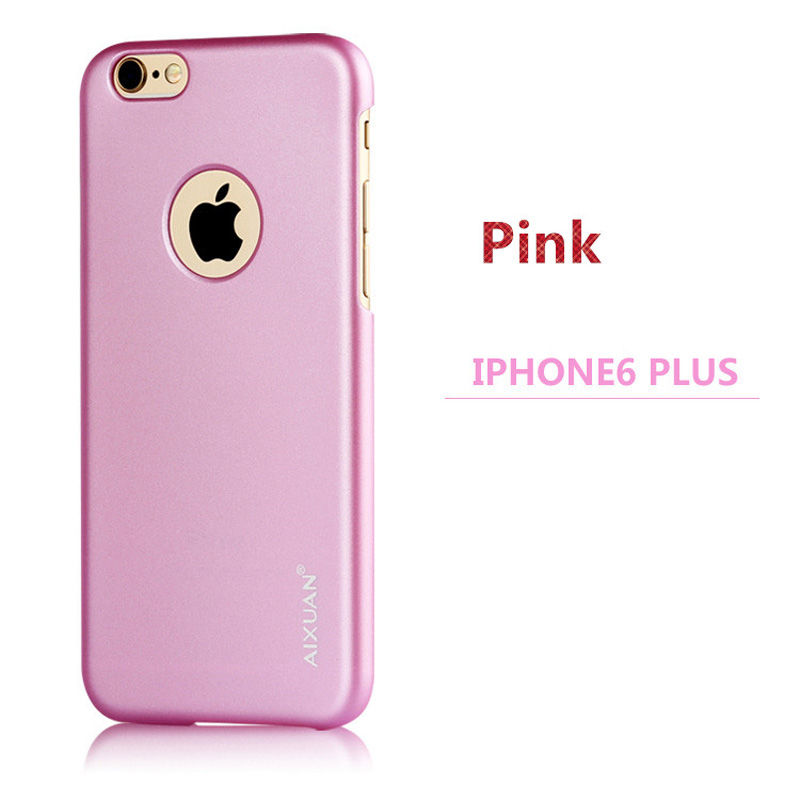
 

My iPhone Lasts Longer Than I do

iphone 6+

The other day my iPhone died before I was getting ready for bed. I was a little shocked, because I rarely have it just “die” on me. The new ones have batteries that last much longer – even if you are a frequent user of the device like I am. I stood there with dead phone in hand trying to figure out if I had charged it overnight — the night BEFORE — like I usually do. After hitting <rewind> in my head and backtracking over how my day BEGAN, I realized that I fished my smartphone out of my pocketbook before heading out the door this morning. That means I did not charge it last night. That means my iPhone lasted over 36 FREAKING HOURS! I was impressed. As impressed as I was, I STILL went and hooked it up to the charger. It was dead. It had to be charged.

As I fiddled around with the (stoopid) cord, (made difficult when you lack any kind of pincer grasp in your fingers), I thought, “Wow. My iPhone lasts longer than I do! I could never go 36 hours without being recharged!” And ya know? That made me a little sad.

My next thought was, however, “NOW WHY DOES THAT MAKE ME SAD?”

STOP Apologizing

I hate that my default to what is normal for ME, is to feel sad about it or to apologize to myself and others. Why do we do this?

Well according to Wright (1983) and Nosek et al., (2003), people who are differently-abled and chronically ill, default to apologizing and providing unnecessary explanations and dialogue about their condition to smooth the way of acceptance. These same authors point out that this often backfires. We instead bring attention to something others may not even notice. Apologies convey regret over intentional or unintentional offenses or failures. Apologizing for needing a nap, needing to relocate to a quieter room, asking someone for a repeat, or request to stand closer to a wall to keep from toppling, is not something we should REGRET. It is not a failure. It is what it is.

I would argue that falling into the habit of apologizing for our “normal” creates a dangerous pitfall and trap that our disabilities or chronic illness are an undue burden on others. This could lead to becoming preoccupied with how hard you are making life for others. Russell, Turner, and Joiner (2009) found that individuals with disability or chronic illness already have a higher tendency towards suicidal ideation. Apologizing for something we are not responsible for only creates a perfect and toxic breeding ground for suicidal thoughts.

Putnam et al., (2003) explain that true independence and self-determination falls closely on the heels of acceptance… that can only take place when we stop apologizing for our “normal“. I use to apologize a great deal. In spite of using every piece of adaptive equipment I could find and afford, in spite of partnering up with a service dog, and in spite of reading everything I could get my hands on about positive advocacy and independence, I would still apologize for putting someone else out for helping me cope with a situation. I’m trying to do better. For example:

Instead of “I’m sorry. Could I get you to move over to that wall over there so that I may lean against it and have Milo (my service dog) on the left while we speak? I hate to ask you to move, but…”

… at which point they would say, “Oh, it’s no problem. Let’s move…” However, my apologizing for having to move infers that I had a choice. Apologizing makes it seem that I regret I am who I am.

I’m trying to learn to say, “I need to move to that wall over there for balance reasons. Let’s move over there and continue our conversation?”

… and their response would be, “Sure!”

I was in a super crowded common area once in which a colleague was trying to talk to me about something important. Not only could I not hear her, my balance was REALLY off and I stood there wobbling like a buoy. There were no walls available, and I was really starting to feel ill. I said, “I am having difficulty in this listening environment. Let me follow up with an email because what you are saying is really important to me“. They were pleased to do so and I think grateful enough that I cared to communicate WELL with them. I had to bite my tongue to keep from saying, “I’m really sorry about this…” I had nothing to feel sorry about so an apology would only have infused my confidence with negativity.

Yes, But FATIGUE is just EMBARRASSING

What if your (seemingly) undue burden on others is simply that you cannot keep up? Perhaps you need a mid-day nap to finish the day strong. Yorkston et al., (2010) found that differently-abled individuals USUALLY have accompanying pain, fatigue, or BOTH. We tend to want to apologize for this. We shouldn’t.

I have a friend with chronic (and sometimes debilitating) ankle pain. Mid-day she goes to her office and puts her feet up. If she has to go to a meeting, she unapologetically claims an additional chair so that she can rest her feet. I walked into a meeting once and saw she had her feet up on an adjacent chair. Someone walked by and said, “Are you saving that for someone?” She smiled, pointed to her feet, and said, “No. Bad ankles!” The person didn’t question her. They didn’t shoot her a pitying look. They also didn’t steal her footrest. It was a smooth and succinct explanation for her claiming an additional chair.

Several weeks later I ran into her and talked to her about what I observed. She said, “I use to apologize for having to put my feet up. But then I thought, ‘WHY am I APOLOGIZING?’ I knew that only made ME feel badly. I decided then and there to stop being sorry for having tired feet“.

If I’m at work during a meal time and the weather is nice, I often go out to my car. I load my dog up, crank the air or heat (depending on the season), turn my cochlear implant and hearing aid off, and eat my meal in the quiet. Understanding my propensity for hearing fatigue, means I take time to unplug when needed. I need to recharge. I’m not anti-social (ok… well, not VERY) and I’m perfectly capable of going to the staff lounge or faculty dining room if I want to do so. Taking a mid-day recharge in the quiet enables me to complete my day STRONG… and unapologetic. Isn’t that what independence is about?

My iPhone may hold a charge longer than I do, but I take responsibility for recharging my own battery. Do what you need to do to recharge.

Need a nap? Take one.

Need some tylenol and a twenty minute break? Take them.

Need a “mental health day”? Take it.

Need a vacation? Take one.

Need a coffee break? Take it.

… and don’t apologize.

Denise Portis

© 2016 Personal Hearing Loss Journal

Nosek, M. A., Hughes, R. B., Swedlund, N., Taylor, H. B., & Swank, B. (2003). Self-esttem and women with disabilities. Social Science and Medicine, 56(8), 1737-1747.

Putnam, M., Geenen, S., Powers, L., Saxton, M., Finney, S., & Dautel, P. (2003). Health and Wellness: People with Disabilities Discuss Barriers and Facilitators to Well Being. Journal Of Rehabilitation, 69(1), 37.

Russell, D., Turner, R. J., & Joiner, T. E. (2009). Physical disability and suicidal ideation: a community-based study of risk/protective factors for suicidal thoughts. Suicide & Life-Threatening Behavior, 39(4), 440-451. doi:10.1521/suli.2009.39.4.440

Wright, Beatrice A. , (1983). Physical disability – a psychosocial approach (2nd ed.). , (pp. 116-156). New York, NY, US: HarperCollins Publishers


Yorkston, K. M., Johnson, K., Boesflug, E., Skala, J., & Amtmann, D. (2010). Communicating about the experience of pain and fatigue in disability. Quality Of Life Research: An International Journal Of Quality Of Life Aspects Of Treatment, Care And Rehabilitation, 19(2), 243-251. doi:10.1007/s11136-009-9572-1


Pretzels Baby…

Snyder's of Hanover Pretzels commercial 2016
Snyder’s of Hanover Pretzels commercial 2016

We do not have the opportunity to watch much live television in my house. My husband and I tape our favorite shows and then watch them together the couple of nights a week we are both home in the evenings. It worked out this summer, that I did not have a class to teach during the first session of the summer semester. The timing is terrific since I completed my doctoral coursework, and have now started the dissertation. There is a great deal of reading and writing involved at the beginning, so not having a class to teach until 7/1 is a “plus”.

In spite of all the groundwork needed to start the dissertation right, I have had some down time as well. Trying to catch up on my HGTV favorites before I’m back to teaching, I have been surprised by new commercials as Terry nor I watch commercials. The new Synder’s of Hanover pretzel commercial is unique. Well… it’s kind of scary too, but I’ll get to that.

Laura Wernette is the new “smoky-voiced pitchwoman”. I think she’s just scary. She has this intense, no-nonsense stare that reminds me of a grown-up Wednesday Addams.

Christina Ricci in Addams Family Values

I think what bothers me about the commercial (besides the fact they are not captioned – ahem) is that the woman in the advertisement has a facial expression that says one thing (I want to kill and maim you) while her voice is saying another (Synder’s pretzels are the best). From things I have read, the advertisement is popular and folks think the pretzel woman is pretty funny. I cannot justify what I see in her face to what I hear coming out of her mouth. I spend far too long thinking about it, believe me! It made me think about all the times I misunderstand someone’s mood when I choose to only look at their face.

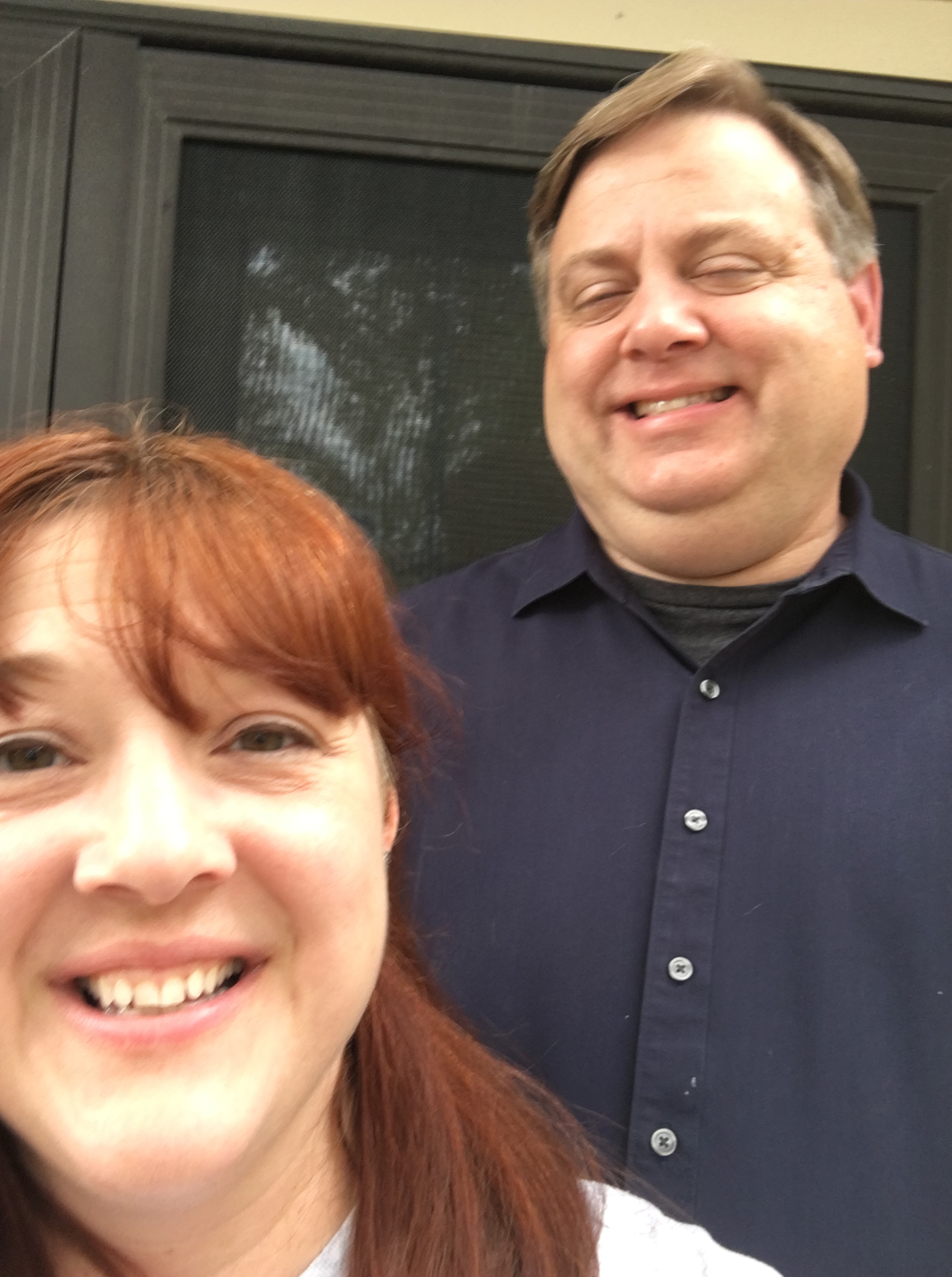
My poor husband has a perpetual eyebrow grimace.

IMG_2843 IMG_2835

Even when he is smiling and relaxed, his eyes seem almost angry-looking if one didn’t know him better. When he speaks, he has this laid-back, southern charm and friendliness that (in my opinion) doesn’t “jive” with his facial expression. I tease him about it all the time. (Aren’t I sweet?)

I think one of the things that is most difficult for someone new to hearing loss, is learning to look at the whole picture before jumping to conclusions. It can be hard to try to make sense of what you can actually hear, and match it up with what you think you are seeing on a person’s face or in their body language. (It’s impossible to do when you know and love someone who is fluent is the language of SARCASM, and the voice and pitch deliberately DO NOT match what is on the person’s face).

My best practice is to simply to ask for clarification when needed. If someone’s voice (as heard with my bionic ear, with some limitations on inflection, pitch, and tone) does not match up with what I see on the person’s face, I just ASK.

“Could you clarify for me what you are trying to say? You seem upset, but I don’t want to jump to conclusions”

“You seem really calm, but you practically growled that out to me. Is everything OK?”

I was at a residency this past March and the weather was beautiful. I spent every spare moment outside walking Milo (along with everyone else on break in between workshops). One afternoon, I stopped to answer some questions about Milo to a group of ladies I had been with in several workshops. I noticed the three women all scowling. I tried to pay attention to what they were saying, and occasionally they laughed as well. I had trouble concentrating on their WORDS because their faces were scowling – and looked angry. After a few minutes trying to figure out why their facial expressions were not matching what I was hearing, I realized the sun was in their eyes! With that epiphany, I quickly changed my body position with the comment… “Here. Let me move so the sun isn’t in y’all’s eyes”.

I could have silently freaked out wondering what in the world their problem was. It took me a few minutes, but I finally realized why I was having trouble understanding their mood when their faces were all sun-squinty angry. Small wonder that hearing loss is considered a communication disorder! Especially if you have an acquired hearing loss, learning to communicate without one of the major cues (hearing), can be difficult.

My proximity to Johns Hopkins University Hospital, allows me to mentor folks who are seeking cochlear implantation to restore hearing. One of the questions I am always asked during these meetings is, “What has been the hardest thing for YOU about acquiring hearing loss later in life?” I’m guessing the frequency of the question points to the desire most people have to see similarities in their own struggles. When I explain that having to ask for clarification was a necessary, but difficult thing to learn to do, the people I am meeting with seem so relieved. Some even say, “Oh gosh, it is so good to hear someone else say that! Does it ever get easier?”

It does. That always seems to give them some hope as well.

You are still going to have frustrating moments of confusion. I am 11 years post-op and I believe “hear again” with some level of confidence. I still make mistakes. I may misinterpret tone and intentions, or I may not catch that there has been a complete subject change in the conversation (something I’m rather famous for, if I do say so myself!). As with any acquired disability or life change, in time and with lots of practice, YOU WILL ADAPT. Part of that adaptation will be in recognizing that at times you are going to blow it, but it does not de-rail all the progress you’ve made to date. We can be extremely hard on ourselves! Everyone makes mistakes – even people without acquired disability or challenges.

Denise Portis

© 2016 Personal Hearing Loss Journal


Hearing Loss Valentines

hloss valentines

I’m reaching out on behalf of Cochlear Americas. We created Valentine’s Day cards for those in the hearing loss community to share with whomever they HEARt this Valentine’s Day. If you think the Hearing Elmo community would be interested in these cards, please feel free to share them!
How to access the Valentine cards: 
  • We have four Valentine’s Day cards that you can download, print, cut out and distribute directly from our Hearing Connections blog.
  • We will also be sharing the cards on our Facebook, Twitter and LinkedIn channels. Keep an eye out for them to appear and share them digitally if you’d like.
Ways your community can use the Valentine cards: 
  • Print and distribute them in person or by mail with friends, family or colleagues.
  • Share them on your social channels.
  • If you have children, print for your child to distribute during their school Valentine’s Day party.

Denise Portis

Hearing Elmo

Making the Difference – in ONE

calf feeding

I grew up on a working farm. I’ve learned to add that “working” part, for after I moved to the “big city” I discovered that many people have what is called a “hobby farm”. I loved growing up on a farm, but can’t say I’ve ever considered it a HOBBY.

Growing up, I had a lot of responsibilities that included various kinds of farm work. Probably one of my least favorite chores was baling alfalfa; in part, because I was highly allergic! Sneeze at the wrong time, and the bale of alfalfa was suddenly on top of you, or worse… several piled up and rolling off the flatbed truck. I can’t tell you how many times my aggravated Daddy had to stop the truck, wait for my siblings and I to reload some scattered bales… all because I sneezed at the wrong time.

One of my favorite responsibilities was feeding the baby calves. We always had some wee calves that required bucket feeding. The picture shown is not my own calf, but it was the same kind of bucket. Now-a-days, buckets are plastic or are big “bottle-shaped thingie-majiggers”. We had these old-fashioned (but serviceable) metal buckets. In the beginning, I hated the chore. If the school bus comes at 7:40, that means all chores had to be done early. I’m talkin’ cock-a-doodle-doo early. I wasn’t a 5 o’clock in the morning kind of kid, and I’m still not that kind of adult.

We used powdered formula for the calves. Some were orphans, some were adopted from feed lots, and some were separated on purpose from mama if the calf was unlucky enough to be born to one of our milkers. The powdered formula smelled horrible. Ugh. We mixed it with hot, HOT water. In this way, by the time we carried the buckets to the barn, it was still warm for the calves. The calves drooled all over the place. Occasionally, they would head-butt the bucket (like they would their mama) and if you weren’t prepared (or had fallen asleep against the fence post), formula went everywhere and you started all over.

I’m not fastidious. I can stand dirt under my fingernails and getting my hands messy. However, returning to the house every morning covered in calf drool and formula, had me grumbling and complaining big time. My dad would let me whine and complain. He is a very quiet guy. When he did open his mouth to talk, we all practically stood in awe to see what he was going to say. It was always rather profound. One morning after listening to me bellyache, he said, “Denise, have you ever thought about how important you are to that calf?”

Well… Dad didn’t expect an answer. He had already walked off. I stood there digesting that though and I must have thought about it the rest of the day. I think I must have thought about it all the way up ’til I went to bed that night. The next morning, I awoke with a new attitude about those calves.

They needed me. They were pretty low on the “totem pole” as far as value on the farm. However, if I didn’t feed them, they were goners. For all intensive purposes, I was their mama. That morning I noticed as I walked out to the barn that the calves were all standing by the fence waiting… for ME. Likely, they always had! However, I was so busy grumblin’ I never noticed. As I set the buckets on the fence to give them one more good stir before turning them around for the hungry bovines, I noticed the calves were mooing softly and actually wagging their tails. They were expectant. They knew they needed me and that I could provide what they needed. I remember throwing my legs up and over the top rail so that I could sit and put my weight on the bucket guards to keep them from being butted to the ground. Now that my attitude was different I was seeing these calves in a whole new light. So… I started singing.

That’s right. I sang to the calves. Over the following eight or nine years, calves heard me bellowing out every 80’s tune I could think of and even some 70’s tunes as well. I sang, and I sang, and I sang. My entire outlook and attitude towards these calves had completely changed because I discovered they needed ME. At this point, you are probably wondering, nice story… but what exactly are you trying to say?

PIVOTAL MOMENTS

I truly believe that it was at that point I realized, even someone like me can make a difference. I was just a young farm girl. I had few aspirations. Yet, even *I* could make a difference – perhaps in the life of something rather lowly (and drooly), but I could still make a difference.

Do you know I believe some of my panic at 25-years-old, with the realization my issues were progressive, was that I was afraid I would no longer be able to make a difference? I’ve been forced to adapt to increasingly progressive “differently-abledness”. However, those early lessons made an impact. A “nobody”, farm girl could make a difference to a calf. Surely, a differently-abled woman could still find a way to make a difference!

Don’t get me wrong… I’m no super hero. As a matter of fact, I cringe a little when someone at work stops me and tells me “You inspire me!” I’m thinkin’, “Girl? I’m no inspiration. I’m ordinary. I’m just me. I didn’t sign up to only hear bionically, and learn to walk a semi-straight line with a vestibular disorder!” Everything about my life is rather ordinary. Sure, I have challenges, but the fact of the matter is, WE ALL DO.

I wake up each morning thinking, “I want to make a difference for ONE, today” (well… and I’m also singing 80’s tunes – some habits die hard). Perhaps this is what “trips up” folks who live with disability or chronic illness. They may have convinced themselves they have to do something rather profound to make a difference. You don’t. You can make a difference with something as ordinary as smiling. Kraut & Johnston (1979) wrote a fascinating article on research they did on unspoken messages and their impact. Smiling is actually an emotion-filled message that you send – perhaps to someone who needs that message.

Guinness (2003) wrote a book, “The Call”. I believe we each have strong, in-born desire to have a purpose. Sometimes, we mistakenly believe we are too broken, too busy, too much of a “farm girl” to have a purpose; to make a difference.

Wrong.

For some reason, folks think they have to impact the world to make a difference. Making a difference, MAKES A DIFFERENCE, even in the life of ONE. Aknin et al., (2013) recently completed some fascinating research pointing to how much good it does an individual to make a difference in the life of one person or in one way. There are physical, psychological, and emotional benefits to making a difference… also called prosocial spending (Aknin et al., 2013). You may feel you have limitations, but having the opportunity and capability of making a difference is not one of them.

This has completely changed my outlook on my own life. I can make a difference.

… and so can you.

I love the lyrics to this song (hey! I warned you earlier I’m an 80’s tunes kind of person). The Oak Ridge Boys got this one right:

Did I Make a Difference?

I’m caught up in the push and shove
The daily grind, burning time, spinning wheels
I wonder what I’m doing here
Day to day, year to year, standing still

Somewhere there’s a teacher with a heart that never quits
Staying after school to help some inner city kids
A mother who’s a volunteer, a soldier in the fight
I can’t help but ask myself when I lay down at night

Did I make a difference in somebody’s life?
What hurts did I heal? What wrongs did I right?
Did I raise my voice in defense of the truth?
Did I lend my hand to the destitute?
When my race is run, when my song is sung
Will I have to wonder, did I make a difference?
Did I make a difference?

I’ve been working hard to make a living
And forgetting what true living is
Taking more than giving, something’s missing
Lord, how long can I go on like this?
There’s a lonely old man down the street
And I should be ashamed
I’ve never been to see him, I don’t even know his name
There’s kids without their supper in my own neighborhood
Will I look back someday and say that I did all I could?

Did I make a difference in somebody’s life?
What hurts did I heal? What wrongs did I right?
Did I raise my voice in defense of the truth?
Did I lend my hand to the destitute?
When my race is run, when my song is sung
Will I have to wonder, did I make a difference?
Did I make a difference?

When my race is run, when my song is sung
Will I have to wonder, did I make a difference?
Did I make a difference?
When my race is run, when my song is sung
Will I have to wonder, did I make a difference?
Did I make a difference? Did I make a difference?

———–

Denise Portis

© 2015 Personal Hearing Loss Journal

Aknin, L. B., Dunn, E. W., Whillans, A. V., Grant, A. M., & Norton, M. I. (2013). Making a difference matters: Impact unlocks the emotional benefits of prosocial spending. Journal of Economic Behavior & Organization 88, (1), 90-95.

Kraut, R. E., & Johnston, R. E. (1979). Social and emotional messages of smiling: An ethological approach. Journal Of Personality And Social Psychology, 37(9), 1539-1553. doi:10.1037/0022-3514.37.9.1539

Where the People Aren’t

"I Wanna Be Where the People Aren't"
“I Wanna Be Where the People Aren’t”

I recently saw the above picture on FaceBook, and since I love “The Little Mermaid”, (and because I know cats can be SO “offended”), I found this VERY funny.

As an Introvert, I often want to be where the people AREN’T. I, and most Introverts, love people. However, folks misunderstand what an introvert, and extrovert are.

Heck.

There is even a newly labeled “blend” for those who exhibit both introvert and extrovert tendencies (lest others think we have multiple personalities, or Dissociative Disorder). Evidently an Ambivert, is one who has both characteristics, often in dependence on their role in that specific environment.

The difference between an Introvert and Extrovert, however, is simply how a person prefers to RECHARGE. It has nothing to do with whether or not they like people. Extroverts recharge by being around others. Introverts recharge by being alone.

All this thinking about “versions” had me contemplating how each dimension is effected by acquiring a disability. As a person who is differently-abled, my mind just “goes there” automatically when I think about personality characteristics. Who copes “better” with acquired disability? An Introvert or Extrovert (or Ambivert)?

“Version” affect

Interestingly, research shows that people who are extroverted are more likely to acquire a disability that limits mobility or results in chronic pain (Malec, 1985). Evidently extroversion can be equated with higher risk behavior and decisions that may result in injuries associated with motor loss/coordination or chronic pain. Introverts, too, are diagnosed with acquired disability, but often with diagnoses that are “non-traumatic” (Malec, 1985). This doesn’t mean Introverts are not involved in motor-vehicle accidents, or risky behavior that results in injury. The research simply shows that extroverts are more likely to choose activities that could result in these types of disability. Frustrated in my search for information regarding “version” types and acquired disabilities more like my own — those that are the result of genetics and/or “unspecified contributors” for deafness and Meniere’s disease, I continued searching the research databases.

I came across an interesting study by Noonan et al., (2004), called, “A Qualitative Study of the Career Development of Highly Achieving Women with Physical and Sensory Disabilities”.

BINGO.

I figured I hit the jackpot with this search and find! What I discovered, however, has nothing to do with a connection between “version” types and successful coping with acquired disability. According to Noonan et al., (2004), successful coping includes  “developmental opportunities (education, peer influences), family influences (background and current), disability impact (ableism, stress and coping, health issues), social support (disabled and nondisabled communities, role models and mentors), career attitudes and behaviors (work attitudes, success strategies, leadership/pioneering), and sociopolitical context (social movements, advocacy)” (p. 68). The difference between those who successfully cope and are extroverted and those who successfully cope and are introverted, centers around social support. An extrovert is more likely to identify and ask for help from any peers or individuals within their environment and in so doing actively engage in demonstrative advocacy. Introverts are more choosy about who they enlist support from, but are often “background” advocates. This is supported by research from Ellis (2003) in findings that include the difference in how extroverts and introverts enlist support, openly or privately – respectively.

“Version” Types and Assistive Technology

Having lived with special challenges for more than 31 years, I have had the (privileged) opportunity to meet hundreds of individuals who are differently-abled. Networking through organizations such as Fidos For Freedom, Inc., Assistance Dogs International (ADI), the Hearing Loss Association of America (HLAA), the American Association of People with Disabilities (AAPD), and numerous other organizations, I have met both extroverts and introverts who cope well — and some not so well — with acquired disability.

Some discouraging research does suggest that extroverts are more likely to use assistive technology and devices (Johnson, 1999).

This sucks.

I struggled for so many years with invisible disabilities and challenges, that my “epiphany” moment of changing that… making the invisible very visible, still gives me psychological goosebumps. My introverted life changed when I determined that I would embrace technology and assistive devices. I use bright canes, an assistance dog, bling up my cochlear implant and have informative brochures with me wherever I go. You’ll notice I didn’t say my introverted self became extroverted. I’m aware of and fully accept who I am – an introvert. Yet, using assistive technology and devices (and canine) has dramatically improved mitigating my own disabilities. Extroverts are more likely to seek “tools” early on in a diagnosis that incorporates an acquired disability (Wressle, Samuelsson, 2004; Kintsch & DePaula, 2015). Once introverts determine that the benefit of using assistive technology and devices improves quality of life, they, too, are able to embrace tools that improve life with the downside of making them (perhaps) more noticeable.

In closing, can I just say, “I LOVE PEOPLE”? We are different yet, are alike. We react to things differently and yet similarly. We all love dogs. 

Cuz… well, that just makes sense.

Denise Portis

© 2015 Personal Hearing Loss Journal

Ellis, A. E. (2003). Personality Type and Participation in Networked Learning Environments. Educational Media International, 40(1/2), 101.

Johnson, D. (1999). Why is assistive technology underused? Library Hi Tech News, (163), 15-17. Retrieved from http://search.proquest.com/docview/201534320?accountid=14872

Kintsch, A., & DePaula, R. (2015). A framework for the adoption of assistive technology. Retrieved on November 24, 2015, from http://citeseerx.ist.psu.edu/viewdoc/download?doi=10.1.1.124.3726&rep=rep1&type=pdf

Malec, J. (1985). Personality factors associated with severe traumatic disability. Rehabilitation Psychology, 30(3), 165-172. doi:10.1037/h0091027

Noonan, B. M., Gallor, S. M., Hensler-McGinnis, N. F., Fassinger, R. E., Wang, S., & Goodman, J. (2004). Challenge and Success: A Qualitative Study of the Career Development of Highly Achieving Women With Physical and Sensory Disabilities. Journal Of Counseling Psychology, 51(1), 68-80. doi:10.1037/0022-0167.51.1.68

Wressle, E., & Samuelsson, K. (2004). User satisfaction with mobility assistive devices. Scandinavian Journal Of Occupational Therapy, 11(3), 143-150 8p.

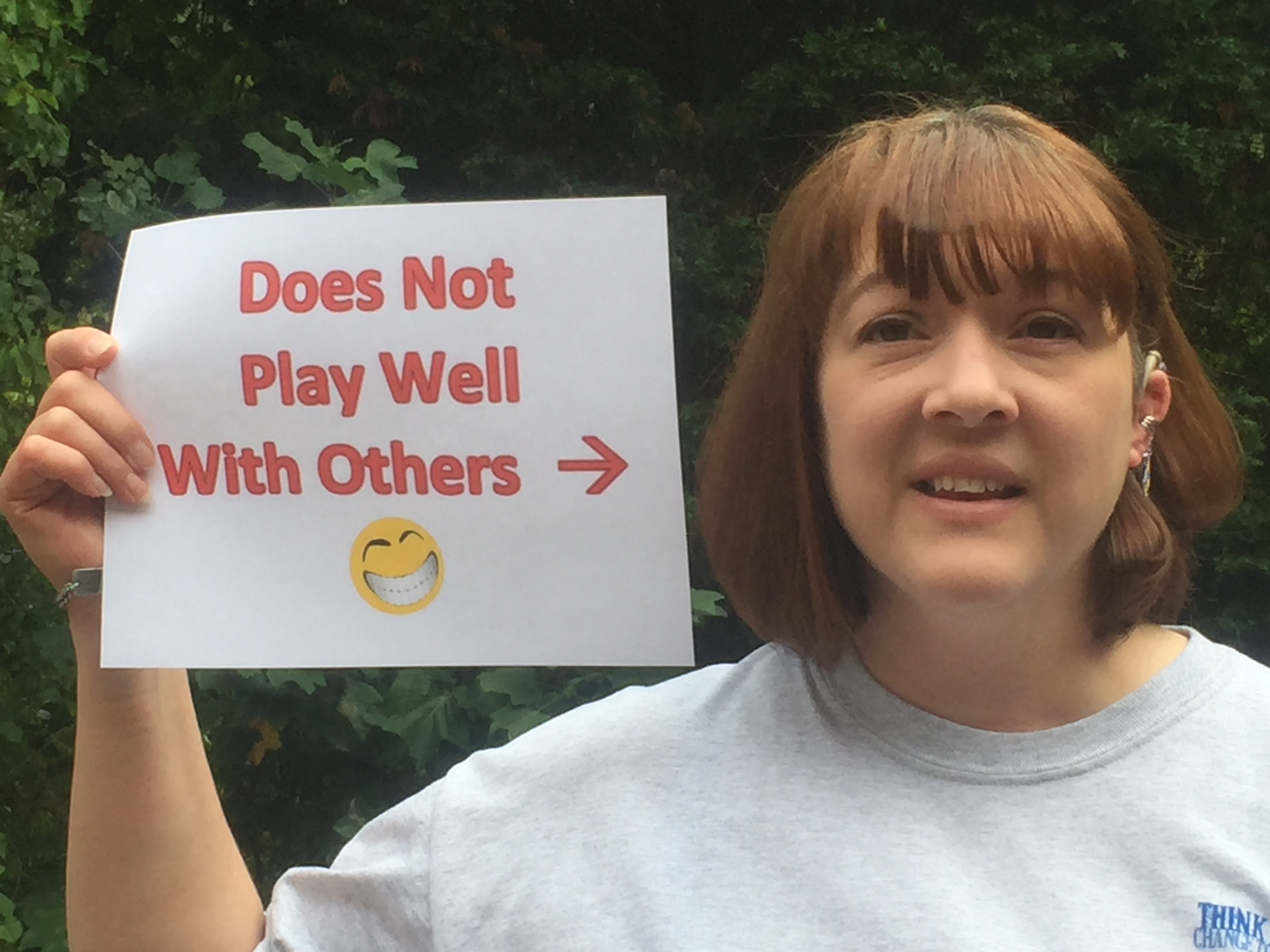
Does Not Play Well With Others

play

I hesitate to even post about this topic because I’m sure to get a little backlash about this viewpoint. Because of that, you will see interspersed throughout this written confession, links of scholarly evidence and citations to peer-reviewed articles that will lend a little more credence to what I’m about to say. I don’t want it to be just an opinionated article, after all!

Confession: I Don’t Play Well With Others

Now if my mother is reading this, she is likely “nodding her head in agreement” but that is because her clearest memory of me is the bossy older sister, not at all afraid to confront people (they call me Vina Jewell Jr. in my family), and stubbornly opinionated. However, when you grow up in a small farming community and go away to college, there isn’t much chance your mother will be able to get to know the adult you’ve become.

Don’t get me wrong. Mom and I talk weekly. But a FaceTime call is a great deal different than seeing someone day in and day out. However, the fact that I don’t play well with others as an adult has nothing to do with the negative characteristics I hope to have left far behind me in my childhood.

As a 49-year-old woman who readily identifies as being differently-abled, “playing” often means quiet, reflective time, or interactions where I’m present but only “just”–in that I do not have to interact with those around me. For example, my husband and I will watch a movie together once in awhile. I’m a reader. I write. I research (by choice and not because I’m a doctoral student). I love sitting on the deck and staring out into the woods. I love to cuddle with my dogs.

Now some who read that last paragraph may think that I don’t like people.

Wrong.

I love people, and enjoy interacting with others. I believe anyone I work with will tell you that I am an eager team player who throws herself into volunteer work with passion and gusto. You see… I WORK well with others. Outside of class, I proudly advise three different student clubs and participate in a number of faculty/staff committees. I love this work. I love the people I work with, too. However, I’m working – not playing. I’m one of the lucky ones in that as a person who is differently-abled, education is a great career. People with skills, training, and education in other types of careers are not as lucky. Many people with disability or chronic illness find that in their chosen career they face both exclusion and discrimination (National Disability Strategy Consultation Report, 2009). I am extremely grateful to be a part of the education community, for I rarely face these issues.

So what’s the deal with my not “playing well with others”? Well you see? The things I mentioned earlier that are ways I unwind, decompress, relax, and “flourish in my happy place”, very few people are willing to do alongside me. (And that’s ok…) I have a few friends that will “hang out with me” and “play” with no expectations. We do not have to do a whole lot of talking. We just “are” – and are comfortable in silences and quiet places. The problem is that none of these friends live near me.

Hearing Loss and Background Noise

It may be different for folks with other types of challenges. As a person with hearing loss, I can tell you that one of the biggest barriers to living a happy and productive life alongside of others, is background noise. Some folks think that background noise is the same thing as white noise.

It’s not.

White noise is a steady (and unremarkable) buzz of sound. If you are as old as I am, it would be like the “snow” sound on a television channel currently off the air. When I was a kid, my older brother and I would sometimes be allowed to stay up watching TV, and we’d eventually fall asleep. When I awoke, the television screen would have “snow” with a buzzy kind of static-like noise. Background noise, on the other hand, is any extraneous sound that is heard while trying to monitor a specific sound. For folks with hearing loss, that specific sound is SPEECH while trying to screen out other sounds (and perhaps voices) from the environment. If I could burn calories for every minute I communicate with others in the normal world, I would not be 25 pounds overweight.

Background noise is the enemy of people with hearing loss. This noise even diminishes our ability to concentrate and form both short-term and long-term memories (Rugg & Andrews, 2009). Kenneth Henry (Neubert, 2012), postdoctoral researcher at Purdue, uses the analogy of numerous televisions. For folks with normal hearing, it would be like turning on a dozen television sets on different channels and asking the individual to concentrate on one show. It’s hard. It’s not at all enjoyable. It’s not something someone would ever do by choice.

Yet people with hearing loss must consciously make the choice to reach out to others, invest their time, energy, and focus just to communicate! It’s hard to communicate in a world full of background noise. It’s worth it. It keeps us from being isolated. It keeps us connected to others. It may keep us productive and working. There is a price to pay, however. The price tag is limited options for “play time”. In order to completely eliminate the WORK in listening, one needs a quiet environment. Friends tend to text one another with suggestions such as:

“Hey! Want to meet at Ruby Tuesdays after church today and eat together?”

“Let’s go shopping!”

“There’s a meet-up at the local Starbucks for mom’s frustrated with their adult children. You should come!”

“A dozen or so of us are going to go walking at the park with our dogs. You should come along!”

“We are all going to go get a pedicure! We are meeting at 2 PM”. 

This is not my kind of “play time”. Now occasionally (OK… I’m exaggerating – RARELY) I will go out and do some of these things. However, there are very few people I can ask to participate in what I really consider “fun”. Even when I go out with friends from Fidos For Freedom with individuals who have various disabilities it is hard. When you do not hear well, you can be isolated even when amongst folks who really understand disability. Folks with hearing loss “play” differently.

“Hey girl! Come over and sit on my deck and watch the squirrels in the trees with me, will ya?”

“I know this great place in the woods near my home where two streams converge. It’s a great place to sit and read a book. I’ll bring the bug spray!”

“Let’s go sit by the Chesapeake and pet our dogs while we watch the ships go by…”

Having a hearing loss as an adult – even when it is “corrected” by hearing aids and/or cochlear implant, the individual is certain to have a co-morbid  auditory processing disorder. This creates all kinds of communication issues that make it extremely difficult to enjoy communicating. According to Whitelaw (2015) “These types of communication issues may include difficulty hearing in less than optimal listening situations, reliance on visual information to augment auditory information, a reduced appreciation of listening to music, and difficulty understanding speech when the speaker is unfamiliar” (para. 1).

I have special programs on my cochlear implant that reduce background noise and allow me to zero in on the person right in front of me. I rely on these programs. (There have actually been times in extremely noisy environments, that I swear I hear better than my normal hearing counterparts). Even with this wonderful technology, I still have to concentrate. It’s not fun. It’s not “play”. It requires recovery time later. Is it worth it? 

Well if it wasn’t, I would never leave home… and I leave home a great deal and for a variety of reasons. Just because I CAN doesn’t mean it is easy. I’ve been alive long enough to know that important things are not always easy.

How to “Play” with Someone with Hearing Loss

If you know someone with hearing loss, please allow me to provide some “playing pointers”. You will note that these activities often revolve around just being in the presence of each other. They are activities that do not require dialogue every second of your chosen “together time”.

  1. Board games: It’s OK, to laugh and “chit chat” over a great board game. But… turn off the TV. Don’t have background music going. If there are more than two people playing the board game, don’t have individual conversations. Every spoken word is meant for everyone present. This keeps the person with hearing loss from having to deliberately ignore the sound of a conversation not meant for them. Please don’t think that people with hearing loss can enjoy “game night” with a big crowd. The folks in my small group at church had a “game night” (with all in the family invited) one night and my first thought was, “just shoot me now“.

2. Books, reading, and discussion: Book clubs are great! That is… if the discussion group is meeting in a quiet setting while discussing the chapters that week. Sitting in the food court of the mall and discussing what you read that week = NOT A GOOD IDEA. If you like to read, ask to spend some reading time with a person with hearing loss. You read; you don’t talk. It is difficult to express how meaningful it is to simply be in the presence of another.

3. Walks, hiking, boating, and other “outdoorsy” stuff: These activities can be great for folks with hearing loss. However, many trails and parks and lakes have become very populated. This means that the person with hearing loss may have trouble hearing you if they cannot see your face. Imagine kayaking with a person with hearing loss. If the kayaks are facing each other they will do great. This also means you won’t get anywhere because two kayaks facing each other cannot move. So enjoy the time together but don’t try to tell them all about the problems you’ve been having at work. Enjoy the hike. Enjoy the quiet of the walk. Enjoy the sound of the paddles hitting the water – and the far distant sounds of other folks out on the water.

4. Movies: I’m a “hearing again” person. This means that I can go to a movie, watch it, understand it, and give it a Siskel and Ebert “thumbs up” or “thumbs down” vote — just like everyone else. This doesn’t mean I can converse about the movie as we exit with the crowd. This doesn’t mean I can walk all the way to the parking deck and discuss everything we loved about the movie. Give me a safe place to stop moving. Allow me to concentrate on the conversation.

5. Gardening, Fishing, or ART: I love gardening, though do precious little of it I’m afraid. I had a great little “deck veggie garden” this year but wondered why I didn’t feel the thrill of it like I experienced it years ago. I concluded it was because I wasn’t pulling weeds alongside my father. I realized I wasn’t thinning plants while with my grandmother just three plants over. Be willing to spend some quality quiet time gardening with a person who doesn’t hear well but enjoys getting down in the dirt.

Fishing can be a great activity.

Art, too, can be a great opportunity to spend some time with an artsy hard-of-hearing person.

Some great resources: LISTENING IS EXHAUSTING.

SOCIALIZING WITH HEARING LOSS.

Not Hearing Loss – but “OTHER”

What if your challenges are not hearing loss. People who live with disability, chronic illness, and visible or invisible health problems may still “play” differently.

As a person with a balance disorder, I cannot go to the fair at the county fairgrounds and “play”.

I cannot walk to the park and “swing” on the swing set while discussing heart-to-heart issues.

If you want to spend time with someone who has specific challenges, ask them what they like to do and meet them where they are – within the parameters of what is “fun” for them. They may have a really hard time meeting you for some “play time” when it will be WORK for them. Ask how to accommodate them. I promise you that they really do enjoy being with you.

L. Denise Portis

© 2015 Personal Hearing Loss Journal

Self-Talk

positivethinkingimage11

Self-talk. Chances are you have been using self-talk since you were a child. As a matter of fact, developmental psychologists tells us that self-talk begins in middle childhood, ages 6 to 11-years-old (Arnett, 2013). Perhaps that is why many folks think that simply “talking to yourself” out loud is the same thing as self-talk. Children often “play out loud”, adding sound effects, conversations, and even lengthy monologue within imaginary play. This is not self-talk. Self-talk is really just your inner voice. It often reflects your conscious and unconscious thoughts, beliefs, and assumptions (Psych Central, 2015).

Self-talk CAN be out loud… don’t get me wrong. One of my favorite things to practically shout when I use self-talk, is “Girl? I REJECT THAT!” This is said out loud, with southern accent, hand on hip, and oozing with attitude.  (Are you picturing it? If you know me, you likely have even heard me say it).

Self-talk is also studied in Sport Psychology. As a matter of fact, if you do some searching online, many athletes have often used quotes that incorporate the use of self-talk. We ALL use self-talk, however. Whitbourne (2013), explained “Psychologists have identified one important type of these inner monologues as “self-talk,” in which you provide opinions and evaluations on what you’re doing as you’re doing it. You can think of self-talk as the inner voice equivalent of sports announcers commenting on a player’s successes or failures on the playing field” (para. 1).

This is why sometimes internally and oft-times out loud, we say, “Well. That was stupid”. As a matter of fact, much of our self-talk as adults is negative. Some of us may be parroting things we actually hear others say. However, most of the negative self-talk comes from the heart of pessimism and self-deprecation. Why? Why are we so hard on ourselves?

People who live with chronic illness, or invisible (or visible) disabilities often have negative self-talk. Statistics tell us we don’t really engage in negative self-talk more than adults who do not struggle with these issues, but perhaps the source is different. Frustration tends to be a significant source of negative self-talk for the differently-abled.

self-talk-2

Perhaps you are trying to discover how to do something independently. Maybe your are coming to terms with having to do something differently. Here are some things I have found helpful when I find frustration is spawning negative self-talk:

1. Identify it. Perhaps this is why the first phrase out of mouth is often “Girl? I REJECT THAT”. I identify that I am engaging in negative self-talk. See it (or hear it). Call it what it is. Now that you recognize it:

2. Change your spin on it. See if you can’t put a positive spin on it. Perhaps your self-talk has recognized something that you need to pay attention to but you need to say it like you are talking to your best friend. Be your own best friend. We wouldn’t say, “Geesh, that was dumb”. Try re-phrasing it. “Well I’m smarter than this. How can I make sure this doesn’t happen again?”

A great example of this happened to me just last week. I took a really hard fall between my front door and the grass to “potty the dogs”. It was late, and pretty dark outside. I was in a hurry. My pillow was calling out to me and I wanted to reply face-to-face. I left the house without my cane. I was only walking 10 yards. What could happen?

I have 6 bruises and a small cut on my arm to show how wonderfully intelligent that choice was. So laying there in the grass with “mother earth” in my mouth, ear, and eyes, my first thought was:

“Dang. You are so graceful”.

Yeah. I speak fluent sarcasm.

My second thought was, “Geesh, that was stupid”. I’m a bit of a motor-mouth so I’m pretty sure the conversation went on a little longer, discussing how many brain cells I have, could I be any lazier for not taking 10 seconds to grab the cane?, and competing very hard to convince all living things listening that I deserve my title of Accident Prone Queen.

Because I’ve had so much practice at this, I immediately identified what was happening. Putting a new spin on it meant I could say, “Well this is why you should take 10 seconds to grab the cane!” Folks, I was WRONG to leave the house without my cane. But finding a middle-ground and re-phrasing the self-talk helped me be just a little more kind to myself. We need to take the time to be kind to ourselves.

3. Flexible expectations. No one knows you like YOU know you. If you have lived with invisible illness or disability for any length of time at all, you know what your own limitations are.

Unlike some of my cochlear implant friends, I still do not hear music very well, nor enjoy what I hear. My iTunes account could be deactivated. Does this mean music isn’t a part of my life? Absolutely not. I sing 80’s tunes at the top of my lungs when home alone.

Because of positional vertigo, I cannot use exercise equipment like the cross trainer (my husband’s favorite), stair-climber, or anything that moves my position vertically. Does this mean I cannot exercise? No. I can use a treadmill and I can walk. The latter I do twice a day.

The doctoral program I am in is designed to push you through in two years. I will be done in 3.5 years. And you know what? That is OK. This is the pace I can do successfully and complete my schooling. I can be flexible in my expectations!

a622e70b25c04c3989562d851625641a

When all else fails, tell yourself to shut up. You may not say, “Girl? I REJECT THAT!”, but don’t be afraid to tell yourself to zip it. It may even be helpful to say it out loud. It works for me! In the end, you can actually work self-talk to your advantage. Learn to cheerlead yourself. Most of us look great with poms-poms.

Arnett, J. (2013). Developmental Psychology: A cultural approach (1st ed.). Upper Saddle River, NJ: Pearson Education, Inc.

Psych Central (2015). Challenging negative self-talk. Retrieved June 15, 2015, from http://psychcentral.com/lib/challenging-negative-self-talk/

Whitbourne, S. K. (2013). Make your self-talk work for you. Psychology Today. Retrieved June 15, 2015, from https://www.psychologytoday.com/blog/fulfillment-any-age/201309/make-your-self-talk-work-you

Denise Portis

© 2015 Personal Hearing Loss Journal

Embracing It!

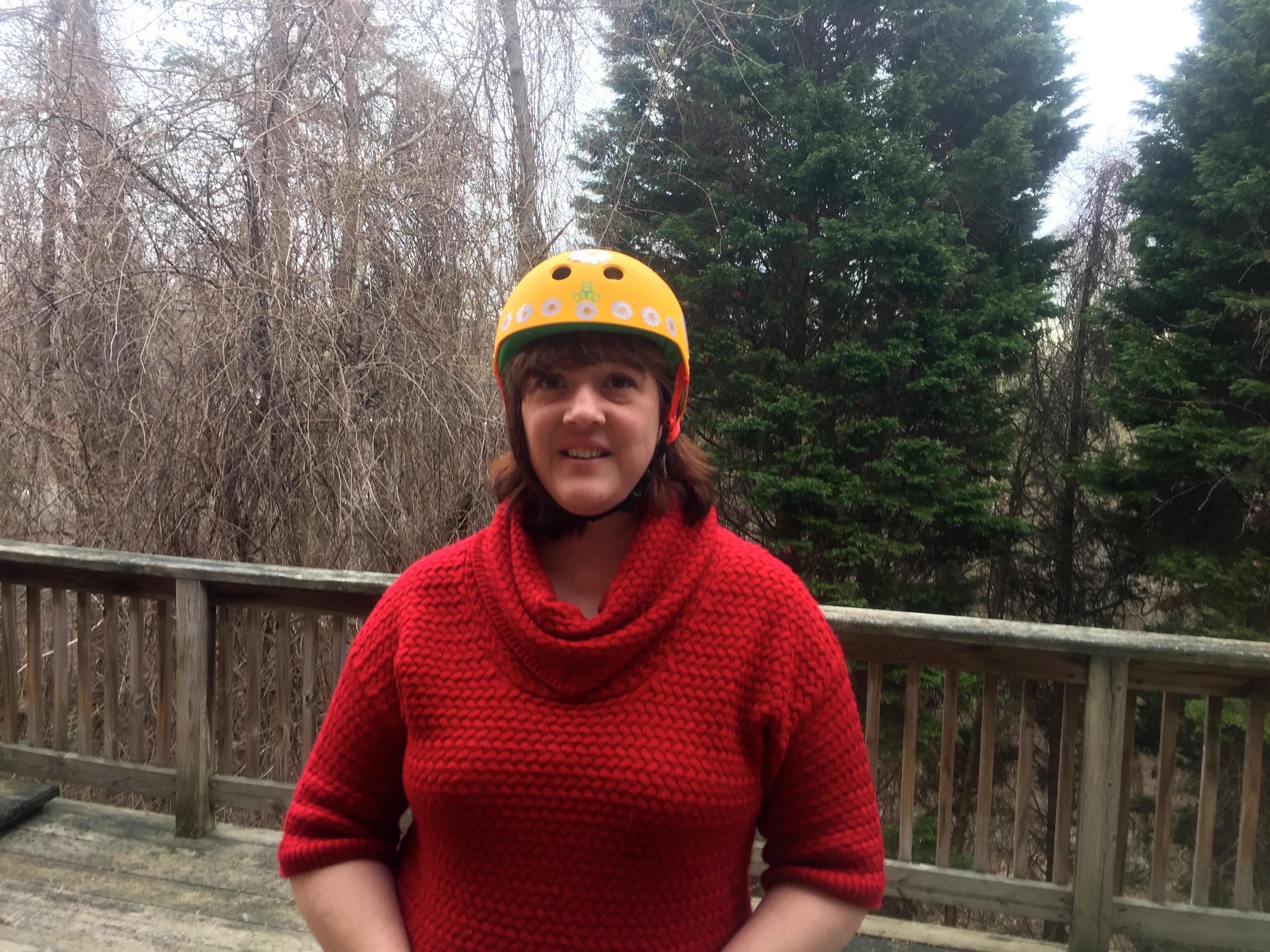
"So... tell me the truth. How does this look?" (Terry) "Baby? You are rockin' that helmet!"
“So… tell me the truth. How does this look?” (Terry) “Baby? You are rockin’ that helmet!”

I believe that there are very legitimate reasons for people who choose to keep invisible disabilities invisible. I respect their choice and their reasons for doing so. In many circumstances, it makes “good sense” and isn’t at all about vanity or shame.

I am “all out there” for lack of a better way to put it. In my profession, in my life, in the community service arenas I’m involved in, and for personal safety reasons, making my invisible disabilities – visible is the right thing to do.

I wear bling on my implant. I think it is fun. It puts a smile on my face. I’m so SO thrilled to be hearing again. The progression of my hearing loss took 12 painful years. I was completely deaf for almost two, silently researching and investigating cochlear implants. I’m so proud to be hearing again. Some say I’m flaunting it. Ummm…

YEAH.

If you do not want to bring attention to disabilities, do not ever choose to be partnered with a service dog. Even though our dogs are taught to be nearly invisible (and don’t you know folks are always startled when I get up to leave restaurants because they had no clue my dog was there?), when you walk through a store or into a doctor’s office, your service dog will bring attention to the fact that “something is different about you”. It has been a very long time since working dogs were only trained to be guide dogs. There are diabetic alert dogs, seizure alert dogs, autism dogs, PTSD service dogs, mobility assist dogs, balance assist dogs, alzheimer assist dogs, hearing assistance dogs, and the list goes on! My service dog makes me more independent. I don’t have to ask for help nearly as often. I don’t miss things (sounds my CI won’t pick up), and I’m confident and more safe. But choosing to have a service dog will bring attention to you.

When my Meniere’s disease worsened, I finally realized that 3-5 falls a week were too many. When I have my cane, I stumble maybe 3-4 times a week, but rarely go all the way down. I average only 2-3 falls a month now. I have three canes. They are bright, bold, and beautiful. I don’t try to hide that I carry a cane with me.

I love to be outside. Perhaps it’s the “farm girl” in me, but I love to be outside and love to walk. Just because I have a balance disorder does not mean that I am going to stop walking. Yet… I seemed to have trouble doing it safely. Even with cane and service dog, I was still taking tumbles when the roads or sidewalks were bad. Winter is my favorite season. I love snow, love ice, love “visible breath” in the air… but I have had some bad winters, 3 years in a row. As a matter of fact, when perusing my medical records with my neurologist, I was averaging 2 concussions each year, usually in Winter months. My last mild concussion was March 8th. I have a follow up with my neuro the first week of May. At the last appointment, he said, “You know. You need a helmet for when you walk!”

I laughed and said, “all my friends tell me I need to be wrapped in bubble wrap or need to wear a helmet.”

He looked at me eye-ball to eye-ball and said, “You don’t understand. I’m being serious. You CANNOT continue having concussions”.

Oh.

OH.

NO FREAKING WAY!

I sat there a little stunned for a minute but then began to consider the possibilities. I’m not afraid of what people think. I don’t care about what is fashionable – heck I consider myself a “disability-advocate fashion expert”. But could I embrace a helmet for walking when road and sidewalk conditions were bad?

I decided that yes… Yes, I could!

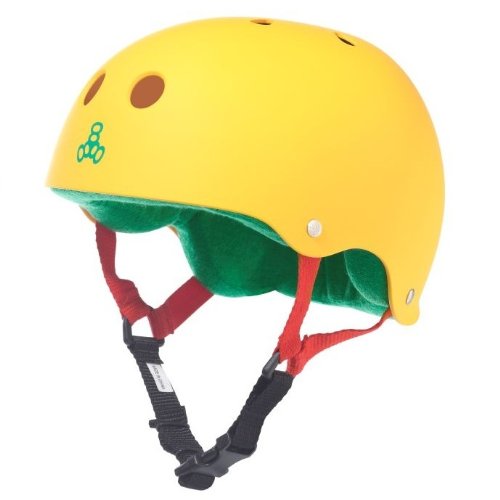
So I started researching, (cuz, yeah, that’s what I do) and found the helmet I wanted. I was crazy ecstatic that it is called a … “Brainsaver“! Ain’t it great? *BEAMS*

Triple 8 Brainsaver Rubber helmet with Liner in Rasta Yellow

I blinged up the helmet with some of my favorite stickers, (I’m a nut for daisies), and now I’m all set for walking. I even fixed the liner where my cochlear implant magnet had a little place to “rest” inside so it would not get pushed off.

I realize my approach to MY LIFE may not work for you. However, I love embracing who I am and holding my head high. I want to be an example to others, but I certainly know and understand that it is “different strokes for different folks”.

I hope I can report this time next year that I haven’t sustained any new concussions. Yay for me, and yay for neurologists who push to get their patients to take their brains seriously.

Denise Portis

© 2015 Personal Hearing Loss Journal

How Can I Redefine Me?

redefine

I stopped looking at myself as “disabled” a long time ago. I am, however, quite comfortable with being a person with disabilities. A friend, fellow-client at Fidos For Freedom, Inc., and blogger, was the first person I ever heard use the words, “differently abled”.

I have to tell you that sometimes I’m really feeling my disabilities. It can make me discouraged and frustrated. So many of us who live with disabilities or chronic illnesses often gripe, “I’d like just ONE DAY of feeling normal”. 

I’ve become very comfortable with being a “hearing again”, cochlear implant recipient and “late-deafened” (without my technology). I’ve even grown accustomed to having a vestibular disorder (Meniere’s disease). I use a cane, have a service dog, and bedazzle my cochlear implant with some amount of pride and transparency.

One thing I’m not OK with is concussions. I’ve had a lot. I was even told I had “post-concussive syndrome” after a moderate concussion in 2013. “You know… like football players have.” But…

I don’t play football.

My neurologist had me do ten weeks of vestibular rehab. This was actually a fantastic experience and I learned all kinds of tricks, most importantly how to fall safely – cuz I’m going to fall. Sure, I learned all the great things to minimize the possibility of falling, but I will take some tumbles. So I learned how to unlock my knees and SIT (albeit without any grace) to avoid falls. In spite of this, stuff just happens. And you know what? I get mad.

March 8

Take March 8th for example. There was some ice and lingering snow everywhere. I prepared to walk – which means I had my no-slip boots on, my tripod cane, and service dog (who is off vest but heels like the pro she is). I bundled up and made sure my charged cell phone is in a buttoned down pocket. I don’t use my cell phone while walking. No ear buds or attachments either – No listening to music. I pay attention when I walk. (Well, I also talk to my dog but that was the topic of another post).

So when I crossed a street and fell backwards on the ice I actually felt MAD on the way down. I had taken all these precautions! The back of my head actually BOUNCED on the road. Right before I blacked out I thought…

THIS SUCKS. 

I wasn’t out very long (I rarely am). I suffered with a headache for 4 days and made an appointment with my neurologist. (Follow up in May)

I remember thinking after texting my husband and making my way the rest of the way home, that I do not like being this person. I don’t like being the fall guy (get it?). By the time I walked the 2 blocks towards home, Terry met me and I sat on the porch for a good cry. After eliminating some of that tension (and freaking my husband out), I sat there to think (and yes, hold ice on my head). I kept thinking, “This isn’t who I am. I am not the walking, talking concussion waiting to happen. I have GOT to get a handle on this.” I needed to redefine myself. I’m NOT a fall guy. I’m a very careful person who sometimes sits quickly. I sit when I’m lucky… and when I’m not that’s OK. I have plan for that, too. I’m thinking a hockey helmet when the roads and walks are bad. Imagine how I can bedazzle THAT.

Your Thoughts Matter

Two hours before my fall, the pastor of my church (Weem’s Creek) spoke about courageous faith. Do you know that people with disabilities and chronic illness are some of the most courageous people I know? Here are some of his main points. If you aren’t a person of faith, read on anyway. This can easily pertain to anyone. If you are a person of faith you may be like me and think, “Well why have I never seen this before?”

1. To live a courageous faith, we must cultivate a habit of thinking thoughts that are from God. Instead of focusing on not thinking wrong thoughts, we need to focus on thinking right thoughts.

2. We can’t always control the thoughts we have, but we can control the thoughts we hold. We need to learn to hold the thoughts that are true, noble and excellent… those from God.

3. Meditate on God’s Word, not on our misery.

I think ATTITUDE is the real disability. If you can change your attitude, you will never feel disabled. Change your attitude – and that new attitude will CHANGE YOU.

I think of it as redefining me – redefining what having a disability means. My focus is on what I can do. I pour energy into discovering how to do things that I want to do – perhaps differently (using canine, technology, or assistance). This keeps our disabilities from defining US.

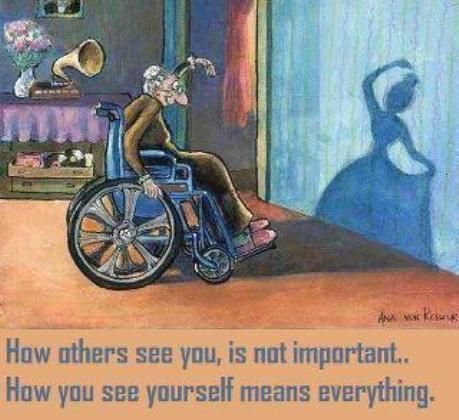
Be careful to acknowledge that everyone has a personal “definition”. Just because you may have a hearing loss too, doesn’t mean we define who we are the same. Being in control of our own definition (even if we need a necessary “redefine”), also helps others see us how we see ourselves.

It may take some work. I have a colleague at work who constantly tries to “help”. I finally told her one day, “watch how I do things WITHOUT your assistance”. That shut her up, made her watch… and don’t you know she learned so much? She told me later she just assumed I needed help. Having a disability does not mean you are “not able”. Most of us find very unique ways to be VERY abled.

Are you at a point in your life where you need a little redefining? Perhaps you have believed some of the “hype” about what you cannot do because of your diagnosis. Redefine yourself and hopefully change both your attitude and how others see you.

redefine4


L. Denise Portis

© 2015 Personal Hearing Loss Journal