If You Want Me To

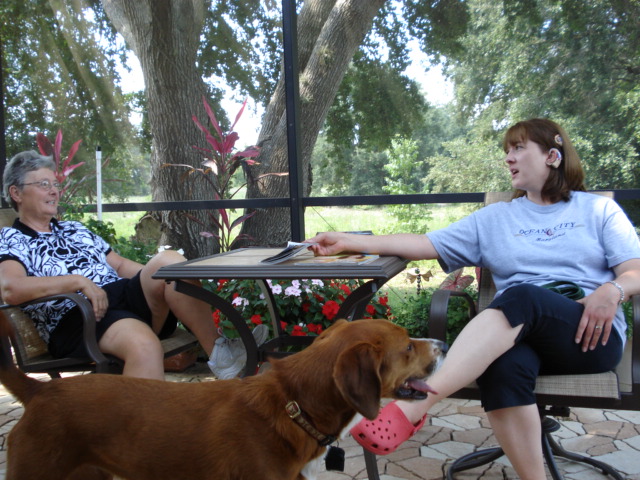
Since I recently posted about getting my daughter, Kyersten, ready for college… I wanted to follow-up with a very special post.

Kyersten is an incredible young lady.  I realize I’m “her mom”, but those who know her can tell you that she is very special.  I really look forward to the coming years to see how she continues to grow and mature!

Kyersten has always loved sign language, and grew up as a wonderful CODA (children of deaf adults).  She was a big help to me prior to my cochlear implantation, and has been an interpreter in our church and served in deaf ministries for a number of years.  She has taken 5 levels of sign language, and frankly I can’t teach her much more than I have.  Like me, she recognizes and respects the differences between those who cannot hear and use sign, and those who chose to be oral like myself.  (I know sign and even teach it.  I don’t use it in my everyday life, however, as everyone I know has normal hearing).

She has had a tough week.  A great number of emotional things have happened, and she’s learned some very hard lessons about people.  I wanted to share a video she had taped this week.  The song is by Ginny Owens, and I’ve captioned it for those of you who do not hear well.  Enjoy!

Denise Portis

© Hearing Loss Journal

Are you too sensitive?

For curiosities sake, I went to my favorite hearing loss forums and discussion boards and counted the number of topics that had to do with “hurt feelings” and being “too sensitive”.  I knew the subject had come up in one form or another on every site I’ve been too, yet I was surprised to finally give up counting after 75 “finds”!

Just like people with “normal” hearing, people with hearing loss can be too sensitive.  This subject has been discussed a great deal in my household lately, and you’ll note my daughter recently posted on this topic.  What does being “sensitive” even mean?

According to one source, (as it pertains to feelings and people), it can mean:

Of a person, easily offended, upset or hurt.

This is different that being sensitive to the burdens, worries, and problems of others.  That type of sensitivity stems from an empathy that leads you to step in and make a difference.  (Something ALL of us should learn to do better!) When you have this kind of sensitivity, you are in high demand as a friend.  Your sensitivity is towards OTHERS, not self.

But people with hearing loss can be too sensitive to the comments made by others, or even facial expression and body language.  I know this because I AM a person with hearing loss, and I can BE this way sometimes!  In the beginning especially, I found it very hard not to react in a really defensive way towards others.  Through observing the examples of those who modeled genuine acceptance for who they are, I too, have learned to appreciate the good and bad of hearing loss.

How can you know if you are highly sensitive?

Psychologist Kyra Mesich asks the following questions:

Do you feel emotions often and deeply?

Are you keenly aware of other people’s feelings?

Are you easily hurt or upset by insults or unkind remarks?

Do you avoids conflicts and confrontations?

Can you not easily release sad or upset feelings?

Do you feel deeply for others’ suffering and pain?

Are you prone to recurrent depression?

Are you keenly aware of and affected by beauty (art, music, nature)?

Do you feel overwhelmed or depleted by too much stimuli (large crowds, loud noises, hectic environments)?

Were you sensitive as a child?

If you answer “yes” to some or many of these questions, chances are you are very sensitive.  You’ll note that some of things things are POSITIVE!  Some of these are considered to be a strength and add to your character.  Some types of sensitivity create problems, however.  This negative type of sensitivity can alienate the people who love you, and hurt your character.

I believe that many times an acquired disability creates new feelings of sensitivity that perhaps were not there before. Some people feel like their entire world has changed, and nothing is as it was! They become “hyper” sensitive as they re-learn how to interact with their world now that one of their major senses is missing.

What are some things that can help you become less sensitive? (When I say this I do not mean that we should become “hardened” towards the needs of others!  I mean that we become less defensive, and overreact “less”!)

I’d love to hear from some of you!  Feel free to email me your own ideas, or post a comment of some tips of your own! (Check/click “comments” as needed as some will likely post their own ideas in this section instead of emailing.  Emailed comments will be cut/pasted at the end in RED. )  Some things I have thought of…

1.  Learn to give the benefit of the doubt.

This is not easy to adopt, yet we really can change our way of thinking and learn to give the benefit of the doubt to others.  We should start with those close to us, and trust their hearts that they meant no harm in what they said.  Don’t try to tell me that you can’t ignore what your heart and “feeler” is experiencing!  Take it from someone who use to wear their feelings on their sleeves!  You really CAN change the way you think!  Deliberately choose to “believe the best”, time after time.  Eventually it will become a habit, and you will find that you assume the best in a natural way.  At first, however, you may have to consciously CHOOSE to think in a positive manner.  (Phil. 4:8)

2.  If unsure, immediately ask for clarification.

Especially in the beginning, you may need to do a lot of this!  After all, you are trying to break a bad habit of over-reacting to people’s comments or expression! If you are left puzzling (or “smarting”) over something someone said, hold up your hand and ask!  Something as simple as… “Whoa!  Wait a minute!  You ARE teasing, aren’t you?”  Don’t sit around stewing about it if you aren’t sure!

3.  Learn to notice the “silliness” too… and notice it FIRST!

What a revelation it was to me to learn that the tension in a situation could be easily diffused by being the first to notice how silly it was!  If I mishear something, I have learned to stop and parrot what I thought I heard.  Sometimes it is hysterical! I believe this helps others in two very important ways.

1) Others learn HOW you sometimes hear something.  It may cause them to choose their words more carefully in the future.

2) They learn that you are a “safe” person.  You can see the “funny” in life and look at things in a positive light.  If you are comfortable with your disability, chance are they will be too.

4.  Recognize that being “sensitive” is not a positive trait.

I’m always amazed when people brag like it’s a GOOD thing to be a really sensitive person!  Certainly if we are sensitive to the needs of others, we can really be used to make a difference!  But if your sensitivity is in how you respond to others, then it has become all about “SELF”.  We become so intent on how WE feel or were made to feel, we totally miss looking to others.  By realizing what a negative trait it is to be highly sensitive, we can better change a behavior we have developed or inherited.  If you don’t first see how this is hurting who you are and what you can be, it is unlikely you will be stimulated to change!  “Own” that you have a problem and need to change.

5.  Determine if the real issue is SELF-esteem.

It was very liberating for me to realize that one of the reasons I over-reacted to everything was my own poor self-esteem.  A phrase often used to describe me was that she “makes mountains out of mole-hills!”  (I still have my mole-moments!  Smile!)  It may be that you need to work on YOU, before you can get past being overly sensitive to others.  Find some good books or devotionals on self-esteem.  One CAN improve their self-esteem.  If we have a poor opinion of ourselves now that we are deaf, chances are we think everyone else feels the same way.

In the end, what helped me the most was that I wanted to be surprised when someone WAS deliberately trying to hurt me.  I had been living as though people meant something in a mean way, and was surprised to discover they did not.  I desperately wanted to change that around.  I wanted to live and respond in such a way that it was normal for people to mean well.  The only surprise I wanted to experience was when someone WAS intentionally trying to hurt me.  I’ve found that I’m rarely surprised.

Denise Portis

© Hearing Loss Journal

(From LB) I was once told “We only tease those we love”. After I became super sensitive about things, people quit teasing me. I looked around and noticed that there were very few people who loved me enough to trust me with good-natured teasing. That told me a lot. I vowed to change my ways!

(From TTU) Your quote about being a “safe” person reminded me of a great book entitled: “Safe People: How to Find Relationships That Are Good for You and Avoid Those That Aren’t” by Drs. Cloud and Townsend. People who are overly sensitive are not “safe”. I didn’t want to become one of those people after my hearing loss!

(From Vicki) I know that I am sensitive. I am learning in ways how to deal with it. This does not always have anything to do with my hearing loss. Some people tease me in a friendly way and at first I did not take it that way until one person pulled me aside and said that others were just trying to lighten the mood around me as I can be too serious at times. When I started commenting in a friendly teasing way back to them, they were pleased that I was coming around and included me in more things. I am now learning to listen to how the comments are said and who is saying it. This can make a difference into who is stating it. I am also learning to take things one day at a time. I am also learning to be more positive in the way I handle things as the more I do this, the more people has been responsive and truly trying to help me out. This is a step by step process and I was fortunate enough to have a friend who took the time to work with me. I still have a long ways to go.

Thanks for sharing this with us Denise and enlightening us with such a wonderful way of opening us up to how we need to learn to face all this.
A Number of “Firsts”

Kyersten (my 18-year-old daughter) and I went to Florida last week to stay with my parents.  It was a “senior” trip of sorts.  We didn’t really DO anything, but both of us needed a week of “not doing anything”.  Mom and Dad had company the week before we came, so I think they were perfectly fine with Kyersten and I coming to read, walk, “hang-out” and practice laziness.

Chloe didn’t do well on the plane trip there.  She has flown a great number of times with trainers, but this was only the third time with me.  We only travel by plane about 2 times a year now.  That’s infrequent enough that she is still nervous.  At least on the plane ride home, she did better thanks to some homeopathic, herbal help from Rescue Remedy.

Chloe is trained to do a “stand/stay” while being searched for security purposes.  We even practiced this at Fidos For Freedom the Saturday before we left for our trip.  Chloe has so much metal on her due to 6 tags, collar, vest, etc., that she always sets the security bells and whistles off.  (I find it amusing that my cochlear implant, hearing aid, etc., all allow me through without problem!)  The security lady asked me prior to searching Chloe… “Does she bite?”  I assured her with a grin that “she doesn’t bite, but she may KISS you!”.

Wouldn’t you know that Chloe would go all a-wiggle with the search, kissing the agent to the point that it plopped her on her behind?  She was laughing so hard she could hardly “search” Chloe correctly.  The laughter only made Chloe more excited.  Chloe can be SO professional when needed!  (eye roll)

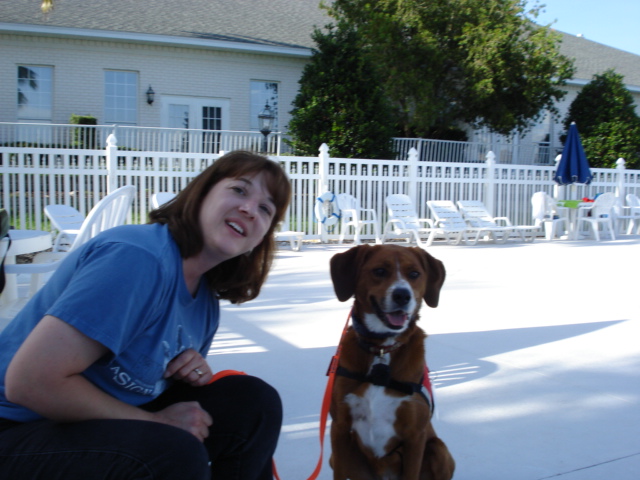
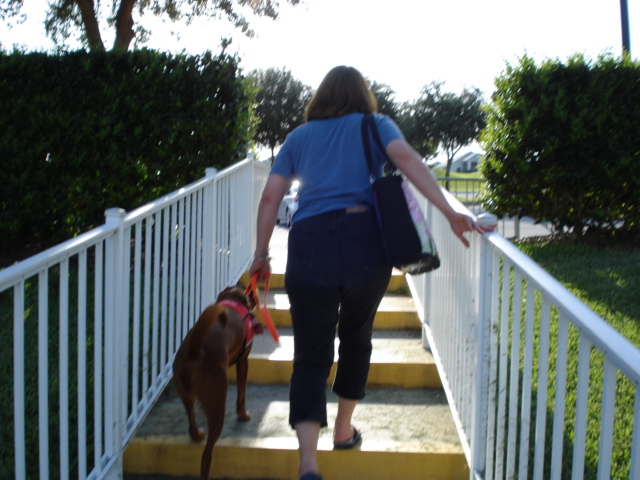
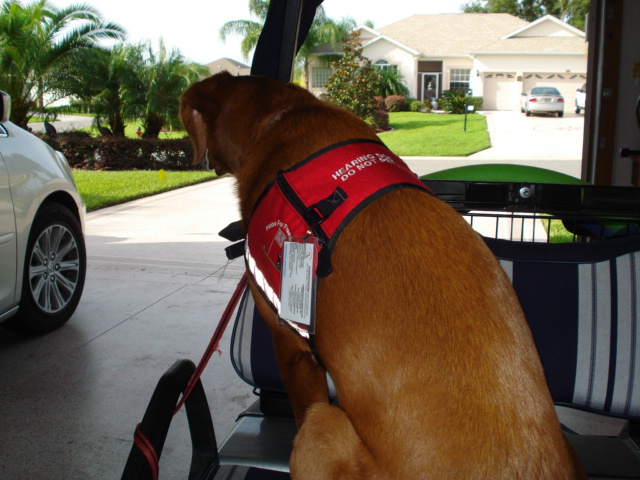
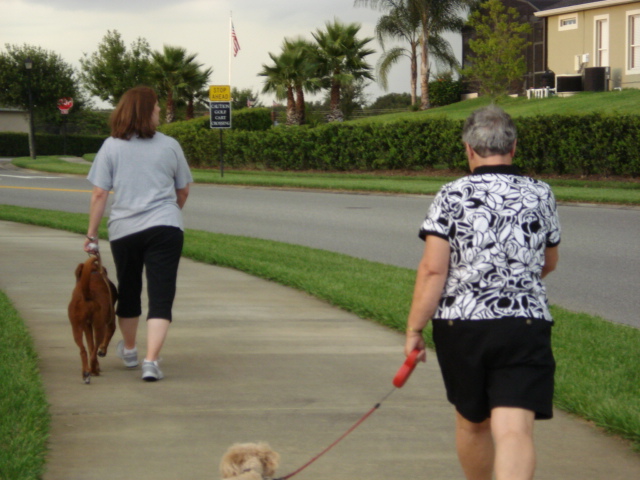
We had a series of “firsts” that I thought I’d post through picture/caption.  They may not have been complete “firsts” for her as Chloe was raised by a puppy raiser, and then trained in a couple different trainer’s homes.  But they were FIRSTS for “us”.

FIRST!  Florida heat and humidity!

FIRST!  Florida sunset!

FIRST!  Florida thunderstorm! (And I could “hear” it! Was I thrilled or what?)

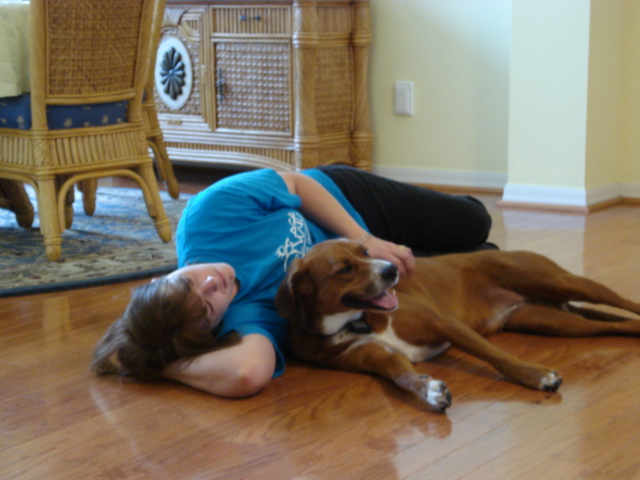
FIRST!  Learning hardwood floors are cooler!

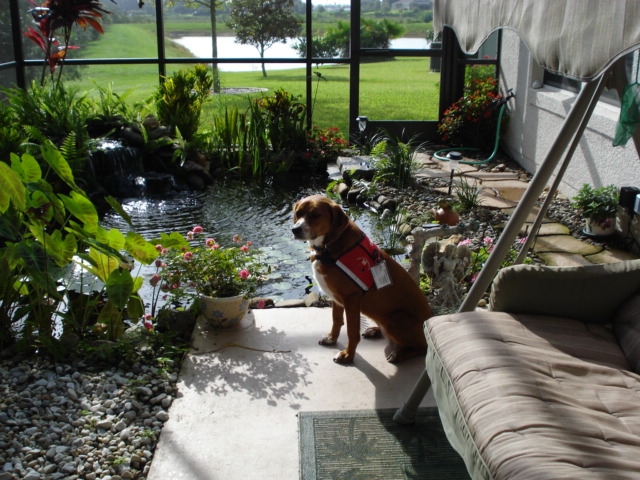
FIRST!  Indoor pond in a “birdcage”

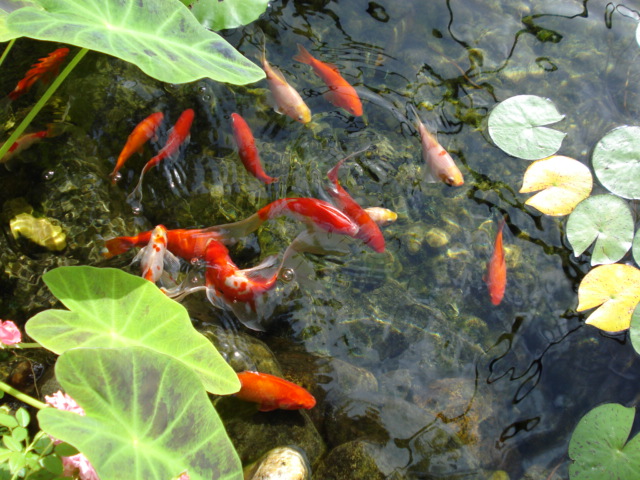
FIRST!  Pond goldfish IN the indoor pond!

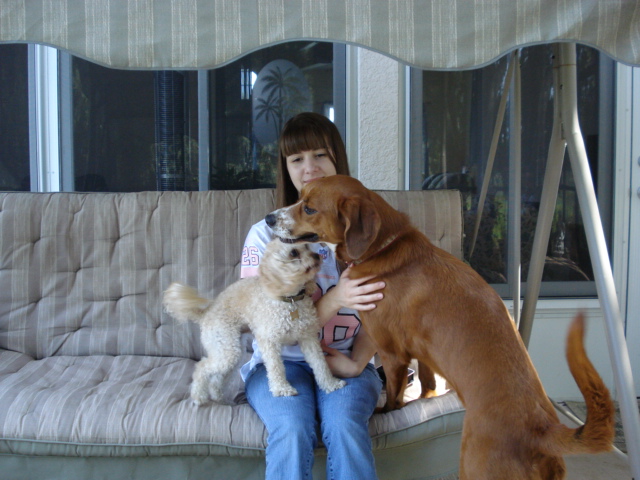
FIRST!  Porch swing… and Grandma’s Cockapoo, Simba!

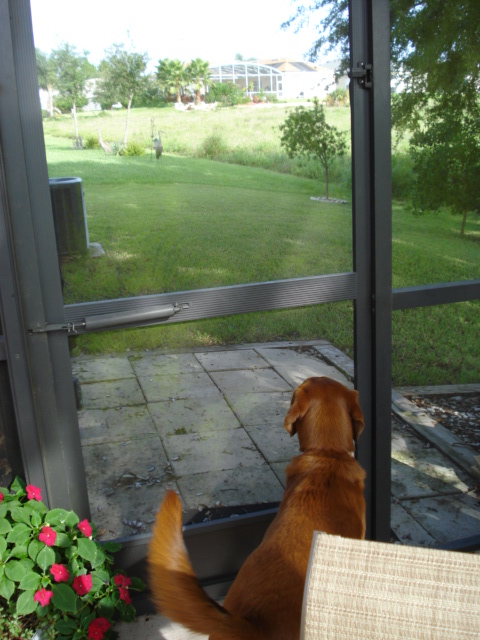
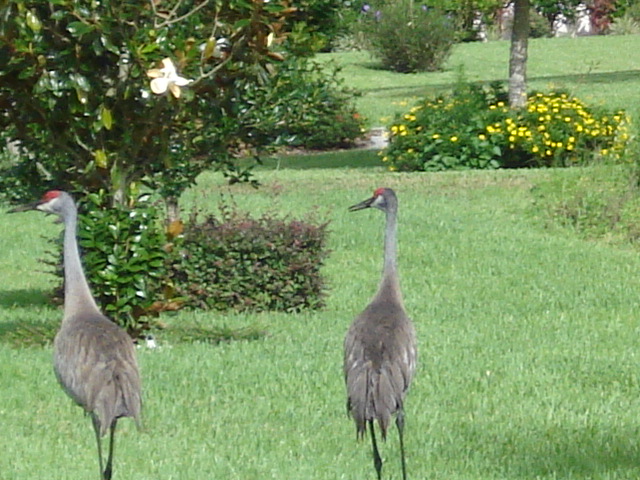
FIRST!  Sandhill Cranes!  Kyersten told me they sounded like “Velocoraptors” from Jurassic Park.  They certainly weren’t scared of Chloe.  They were aggressive!

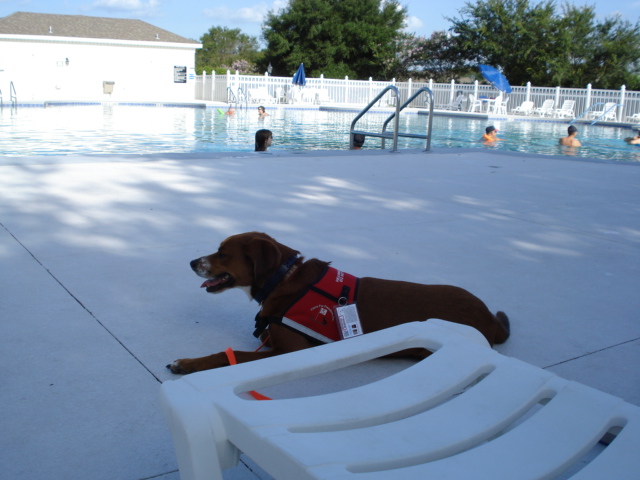
FIRST!  Olympic size swimming pool

FIRST!  Helping Denise up WIDE, steps with open rails on each side!

FIRST!  Watching Denise’s “puppy” do weird things with something called a “noodle”!

FIRST!  Riding a golf cart!

FIRST!  Walk with Denise in Florida’s heat.  (Never did see any alligators in the ponds!)

Denise Portis

©2008 Hearing Loss Diary

Observation

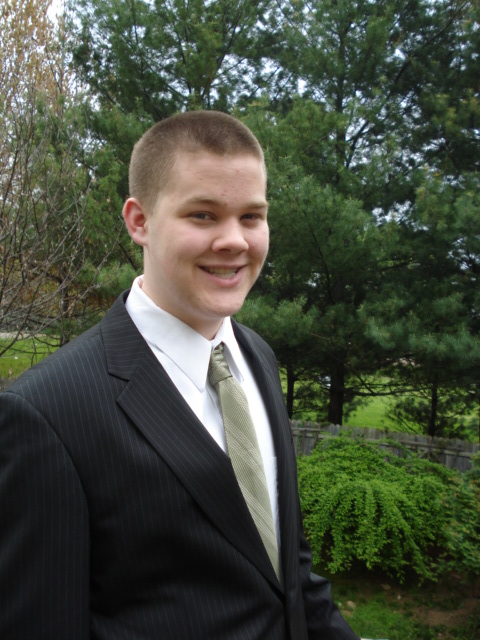
My son Chris 17 years old

I came across the blog of a an old friend today.  (Well SHE’S not old, because we are the same age… and gee!  I AM NOT OLD!)  I almost didn’t “recognize” her as she has a new name and is a published author!  (You GO girlfriend!)

Her latest post dealt with the ability to observe.  Gee.  Those of us who are late-deafened have certainly mastered this ability, haven’t we?  Well, I guess if we haven’t mastered it yet, then we are still banging our heads against something hard and useless, trying desperately to get a grip on an acquired disability we didn’t ask for!  It’s in our best interests to be good students of observation.

My dad loves to shop… in malls nonetheless.  Ok, I’m stretching the truth a bit, but he does enjoy going with my mom to shop in malls.  Why?  He loves to sit and observe.  I’ve OBSERVED him “observing” and get pretty tickled as his face is definitely transparent as he “observes” this person… and THAT one!  He loves to eavesdrop, and I’ve been very entertained by things he’s observed when sitting at the mall waiting for Mom.

Learning to really decipher facial expression and body language is “key” for someone who doesn’t hear.  I like to think I’m an expert.  However, now that my son is 6′ 3″ tall and I’m looking straight up his nose when face-to-face in a typical mother/son “discussion”, I’ve come to the realization I still have a lot to learn about observation.  (“MOM!  I’m NOT rolling my eyes!  You can’t even SEE my eyes!  You’re staring at my belly button!”)  SMACK. 

Observation according to Dictionary.com:

1. an act or instance of noticing or perceiving.
2. an act or instance of regarding attentively or watching.
3. the faculty or habit of observing or noticing.

Yup.  We could all do with brushing up on learning to OBSERVE.

Denise Portis
©2008 Hearing Loss Diary

Hearing the THUMP of Cantaloupe

I went to the grocery store this morning.  I try to go in the morning now that the heat is really intense.  It’s easier on me, and easier on Chloe.  It’s amazing how hot a parking lot can get by noon!  Needless to say, we’ve started running most of our errands in the morning.

Today I was in the produce department awhile.  Two of my favorite fruits are in “season”, and therefore VERY CHEAP.  I love peaches and nectarines!  I saw that cantaloupe was on sale as well, I thought I’d get one as Terry loves it.  I guess he’s a “summer melon” kind of man, as he loves most melons!  He was after all, raised in the South.

I started “thumping” cantaloupe to feel how “hollow sounding” they may be.  You’ll notice that I said “to feel” how ripe their “thump” was.  I can’t remember the last time I heard a cantaloupe THUMP.  (Well actually the cantaloupe itself doesn’t thump, a person THUMPS it… but I digress as per norm).  However, today I realized that I could hear that base-sounding, hollow “thump”!  My CI maps tend to bring me new sounds every time I go.  I know for a fact I could not near cantaloupe “thump” last year!  So the maps done in May at Johns Hopkins brought me a new sound this summer.  I could hear the thump of a cantaloupe!

Needless to say, I sat there “thumping” awhile… if only to hear the variations.  Chloe sat and waited patiently, although she was looking at me rather quizzically!

I suppose we all take things we hear for granted.  “Thumping” away, I couldn’t help but stop and think about all those late-deafened who could not hear the thump of a cantaloupe.  It wasn’t long ago that I could not.

I hope the next time you are in grocery store… thumping cantaloupe, you might stop a moment and think about those who no longer can.  We all hear differently.  Some, (like my daughter) have an acute sense of hearing.  Small noises are almost bothersome.  Others were perhaps born Deaf.  Many others (and the vast majority of those who have hearing loss) are adventitiously deaf.  That’s basically a fancy of way saying that something known or unknown happened and they no longer hear normally.  They no longer hear the thump of cantaloupe.

I hope many will consider being involved in our nation’s Walk4Hearing.  There are many walks all over the U.S. this year.  If you click here, you may be able to find one to be involved in near you!  You don’t have to have a hearing loss to care about hearing.  Many who walk have perfectly normal hearing, but know someone or love someone who does have a hearing loss.  If you cannot walk yourself, perhaps you would consider giving towards the goal of a Walk near you?

My family and I plan to have a team for the Capital area Walk this fall.  We walk because we care about hearing loss.  We walk because many do not hear the thump of cantaloupe.  The money raised goes to help support local chapters of HLAA and the national organization as well!

Happy hearing,

Denise Portis
©2008 Hearing Loss Diary

Fatigue, Fear and COPING!

Hearing Loss and Fatigue

I go to bed most nights with nothing left. It takes so much energy to participate in conversations all day, that I’m often asleep within minutes. I have learned to actually schedule a full 8 hours of sleep each night. If I’m feeling particularly fatigued because of “extra” busy-ness… I even try to get 9 or 10 hours of sleep!

There are days that I remove my cochlear implant early… sometimes as early as 5 or 6 PM. I always let my family know that “I’m going deaf”, so that they will know I can’t hear them talking from another room. These days that I “go deaf” early, allow me to unwind from the mental and emotional pressures of “listening” all day. Sometimes I need this extra time in order to get a good night’s sleep. Sometimes I need these “no CI” times in order to keep from killing someone! Some days, I just need the quiet time in order to think.

Background noise isn’t “background” when you are deaf with an implant. I haven’t yet learned to “tune things out”, and wonder if I ever will. It has taken so much energy and effort to learn to “listen”, I’m not sure I can get my brain to learn to “not hear” when I have my cochlear implant on my head!

Listening and communicating takes effort. When you are late-deafened, listening is not a passive activity. The concentration it takes to understand and comprehend are not the same as someone with normal hearing. Certainly, I have re-learned how to do things like… have a conversation in a busy restaurant, talk to a family member while walking along side of them instead of staring at their face, etc.

However, I still have to stop everything and fully concentrate when talking on the phone. I have to turn my cochlear implant off to pray. (You wouldn’t believe the amount of distractions that come through as noise when trying to pray!) If I’m in the BACK of the van with my assistance dog, Chloe, I cannot hear my husband in the driver’s seat. I have to ask him to turn the secondary mirror to where I can see his face. (If my son is driving… the one who still has a Learner’s permit… NONE of us talk!)

If I’m alone in the van, I can listen to the radio as long as it is “talk radio”, or music that I already knew and have a memory of how the tune goes. However, I cannot have any kind of music playing if I’m trying to talk to someone else. It takes a lot of energy to “hear”.

Hearing Loss and Fear

Even though I am “hearing again”, I need to “fight fear” on a daily basis. The first thing I do in the morning after I run Chloe outside to “hurry up” and start my coffee, is to put on my cochlear implant. (I guess that actually means it’s the third thing I do in the morning…) I have been activated for 3 years now. To some I am a “veteran” of the Nucleus Freedom as I am one of the first to be implanted with it in April of 2005. However, even today… right before the magnet takes hold and I “hear”… there is a moment’s panic. There is an invading fear that for some reason it will not work. I’ve never put it on and not been able to hear… and yet, I am almost paralyzed with the fear it will not!

I’ve often wondered if I had opted to not have surgery, to NOT be implanted with a CI… had I chosen to remain deaf and rely solely on reading lips, writing notes, and signing to those who could… if I had chosen to remain deaf, would I fear NOT HEARING? But I made a choice… I chose to be implanted with a cochlear implant. Everyone I know and love are oral communicators. They “hear”. I chose the implant to stay connected to THEM. I chose to do the rehab, and do all that was required to learn to “hear again” through this amazing technology. With that choice, there are fears. I think all of us fear a “device failure”, or our processor falling off into the garbage disposal while leaning over the sink! (grin)

I fear a breakdown in communication with someone I don’t know very well. The look in the eyes of someone who realizes you misunderstood their question or comment is scary… that FEAR is contagious. I fear my family’s frustration in communicating with me on “bad days”, and they choose to stop trying.

I fear who my children may date, fall in love with and eventually marry. I’ll be their mother-in-law, and I’m not easy to talk too. One must learn how to best communicate with me. No gum chewing, no beards, no mumbling… no saying, “never mind it wasn’t important”. All of these things cause me to throw things, and I have a great aim. (Thankfully my daughter’s boyfriend is very understanding. So far he has learned to duck! Just kidding…)

My fears keep me from things I long to do. Our church does a “Respite” once a quarter for parents in our area who have children with special needs. For 4 hours, they reserve a gym and large center in order to “baby-sit” the kids so that the parents can go and do whatever they want. It’s a madhouse. Those who work the Respite are never the same… it’s exhausting, exciting, and life-changing volunteer work. Although I’ve been asked to help, I would never do so. I could never accept the responsibility and livelihood of a precious kid who might need to depend on my being able to hear. The fear of causing someone else harm due to my NOT hearing is almost debilitating if I allow myself to dwell on it. As it is, I avoid things like Respite with a stubborn determination.

Hearing Loss and Coping

My hearing loss has grown me, but growing usually is accompanied by “growing pains”. Growing isn’t easy.

I’ve learned to insist that my students follow up with every question, every explanation, and every conversation with an email. I teach one class after another on Thursdays. When I get home, I am so fatigued and “wiped”, I hardly know who I am. Many of them have learned the hard way! If they don’t follow through with an email, chances are I simply will not remember we even had a conversation. I likely receive more emails than any other teacher at Chieftain Institute. It’s not because I am well-liked and popular – grin! My students have learned that “this” is how I communicate the best. They are great at following through and communicating with me.

I’ve learned to allow myself to “grieve” once in awhile. Trying to be brave all the time is not easy. I learned that it makes more sense to allow myself “a good cry” occasionally… to be SAD about being deaf as an adult. I always feel better afterwards, and I think it’s therapeutic. I suppose being married to a psychologist has it’s advantages, too.

I’ve learned to anticipate challenges and problems when going into a new situation. I plan, I pray, and I do my best to figure out the best way to handle “hearing” at a meeting, dinner, or appointment. I’ve learned to ask for advice, and I have people in my life who are glad to give it. (Grin!)

I have learned to have cochlear implant batteries in my bedroom, my pocketbook, Chloe’s bag, and my van. I have them on my desk, and in the “fanny pack” that I take walks with when exercising Chloe. I have learned to order batteries in bulk to save money, and try very hard to not ever run out of batteries or “dry bricks” for my Dry ‘N Store. I schedule time to clean and replace microphone covers for my processor, and I’m still mapped at Johns Hopkins at least once a year.

I wear cochlear implant bling. Heck! I practically glow in the dark! I have learned that making my “invisible disability” very visible HELPS ME. I wear my hair up so that even the bright orange/red ear mold on the hearing aid in my “still deaf” ear shows! I have a hearing assistance dog whose vest and certification are clearly visible. (Although, this doesn’t always keep people from petting her in spite of the “Do Not Pet” instructions!) Having a canine partner assist me with my disability makes me very OBVIOUS to most people. Being visible about my disability helps me in the end.

When needed, I take my VIVID Acoustics clipboard (an assistive listening device) with me to meetings in which I know I’ll have trouble hearing. I’ll bring my pocket-talker along if I know I will need the extra help to hear in a noisy environment. I always charge my Sennheiser assistive listening device, so that when I want to listen to music through my computer, I can.

My life takes preparation. I’m willing to take that “extra effort”.

I have embraced my deafness with what I hope is a realistic acceptance of my own limitations. I am excited about successes and I grieve failures when communication breaks down. I have good days and bad days! I believe I am an enthusiastic advocate. I write about hearing loss, and I enjoy speaking to audiences of “my peers”. I correspond with others who are late-deafened because I want to make a difference. Others who “live what I live” have made a difference to ME, so I strive to make a difference TO THEM.

I spend a great deal of time educating myself about new technologies, coping mechanisms, and learn all I can about the experiences of others with hearing loss. I am a member of numerous hearing loss organizations, actively participate in hearing loss forums and message boards, and am supportive of many that I’m not a member of yet. (HLAA, ALDA, SWC, ATA, Hearing Loss Web, bhNews, HOH-LD News, CIHear, Meniere’s, and many more!)

I have been involved in national awareness endeavors like the Walk4Hearing, (this link shows a short video clip prior to the 2007 walk…) and am excited about participating this year with a team.

Denise Portis
©2008 Hearing Loss Diary

The Dangers of Obsessions

We all have obsessions. Some folks live for Wendy’s Frosty’s, other’s may be addicted to the series “24“. (I hope hubby isn’t reading this!) Sometimes people become obsessed with a person, a movie star, music, weight loss, or blogging. (gulp)

Obsessions are actually an unhealthy preoccupation with something. It’s perfectly normal to have preferences, and to enjoy something in which you have an avid interest. Unfortunately, our interests sometimes become… obsessions. Obsessions interfere with living life in a normal way. Some people argue that what is “normal” for one person is not “normal” for another, therefore, one cannot dictate what is an unhealthy obsession or preoccupation. The truth of the matter is that if any ONE thing, person, or activity, keeps us from living a life that makes a difference, then that “something”… that “obsession” has become something that interferes in a dangerous and toxic way.

I don’t try to hide the fact that I’m a person of faith. I have a relationship with Christ, and almost everything I do hinges on the question that reverberated through our culture in the mid-90’s, “What Would Jesus Do?” (WWJD). I believe Christ lived to make a difference. (He died to make one too). So I periodically, take a look at my life and see if I can find any “red flags”… and obsessions that are getting in the way of making a difference.

My assistance dog, Chloe, is a highly skilled and diligently trained working dog. I habitually attend follow-up training sessions with her in order to maintain and sharpen her skills. It allows me to address weaknesses with trainers who are “paying attention”, and it strengthens the bond I have with Chloe. However, Chloe is obsessed with bunnies. As a matter of fact, if I’m sitting near a window and nonchalantly voice, “Oh, look. There’s a bunny“… she comes running to the window to get a look herself! When we walk in the evenings, Chloe’s obsession with bunnies has actually put me in danger. If my Meniere’s has my balance in limbo for the day, it doesn’t take much to put me flat on my face. If my highly trained dog’s obsession with bunnies has her forgetting and disregarding everything she has learned, I’m likely to find myself face first in the sidewalk with a straining, whining, hound at the end of the leash!

Chloe loves me. She works hard and loves to please me. I’m not pleased when I’m face down on the sidewalk, feeling every bruise from having an out-of-control hound – one whose obsession is bunnies! I’ve been looking for some ways I can enjoy our walks better. I recently read about some great assistance dog training tools at one of my favorite blogs “Service Dog Sawyer“. I plan to measure Chloe for one of these harnesses… soon! I happen to know the “trainer behind Sawyer”, AND his partner. I’m going to bug them to help!

Until then, I have to just be careful that I am more attentive to my surroundings than she is. As a matter of fact, I many times notice clover-eating bunnies that Chloe doesn’t spot. As long as I see the bunny first, I can work hard at distracting her and “bracing for impact”.

People have obsessions too. I have a 17-year-old son. The “gaming” industry knows their audience. Most “gamers” are guys. I think God created men to be “goal reaching” achievers, who are proud of their accomplishments. They work hard at “winning”, and at “being the best”. Competition does them good. It motivates them, and adds “fuel to their fire”. It’s part of what makes them an eventual “provider” and “head of the home”. But young men today are obsessed with gaming. All those God-given tendencies are being used to “go up a level”, to be able to buy “more stuff” to enable their virtual “warrior” to excel. I currently have a summer-time contract with my son about his technology and games. If I didn’t set limits, Chris would literally play ALL DAY on days he doesn’t work. I’ve been setting limits on his gaming time since he was 10-years-old. I would like to think at 17, he can now set his own boundaries. But the “draw” is too strong, and when he’s bored he could play all day and not even realize he has. At least at 17, I am able to discuss and compromise… working towards a contract we both can live with!

I know young men who play all day long. Even those who work summer jobs, tend to be gaming on their days off. Why aren’t they signing up at libraries and volunteering to help teach someone to read? Why aren’t they volunteering at hospitals, camps, and churches? Why aren’t they reading? (I recently had a discussion with my husband about reading. He’s a psychologist and has studied this topic a great deal. Bottom line, “readers are leaders”. Not the greater percentage… not those who make a lot of money as well… every single GREAT leader is a “reader”). I wish young men who play a great deal of games would ask themselves, “Whose life have I made a difference in today? What have I done “for eternity? In what ways have I grown who I am today?” My son is reading Do Hard Things, by Alex and Brett Harris. He’s actually enjoying the book and he and hubby are attending “The REBELution” tour in July in our area. Chris LIKES being challenged to do “hard things”. He even sees how our culture has “dumbed down” what a life with purpose means for young men. (At least he sees it thanks to mom and dad bringing it to his attention!)

I believe people with hearing loss (and likely other disabilities) can become obsessed with technology. I have many online friends. It’s very easy for me to communicate online through email, IM, message boards, blogs, and forums. I “hear” great online! But if I’m not careful, I can spend most of my day online “working” and “investing” myself through the internet. The things in which I accomplish can be “good” things. However, if I push my keyboard back and take a look at my life closely, I can readily see the damage and void in my life caused from not being with people face-to-face.

Don’t get me wrong. Many wonderful things are accomplished online. Relationships can be strengthened; advice and support can be given and received. Information and education can be gleaned from being online and interacting with others who are as well. I like to think I’ve made a difference in other’s lives through spending time online. I like to believe this, because I am VERY certain others HAVE made a difference in MY life through “reaching me” online!

However, I really believe that there are people in our realm of influence who are in contact with us physically, emotionally and LITERALLY. We can miss opportunities for making a difference in their lives if we are distracted by our internet “world”. Although the internet has opened up many doors of opportunity… even opportunities to minister and make a difference… it can also make us oblivious to the needs of those breathing the same air we do.

Obsessions aren’t problematic for young men and hound dogs alone. Anyone can become preoccupied with something and end up “starving” another area of their life. May we all take breaks in order to evaluate whether we are living unbalanced lives!

Denise Portis
©2008 Hearing Loss Diary

Taken By Surprise!

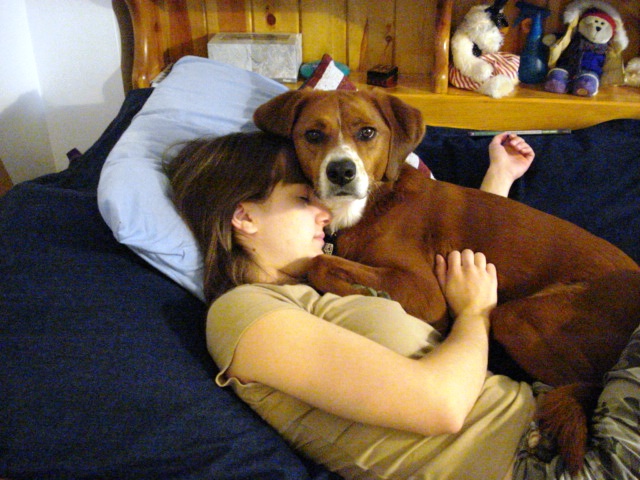
Discovering a large dog CAN be a lap dog! My 18-year-old with Chloe

My daughter, Kyersten, has developed an interest in hiking. Perhaps it is because her boyfriend is a “super hiker”, and she is learning to enjoy some of the things he does. Irregardless, on Memorial Day she took advantage of the fact that she had “mom and dad” all to herself, and drug us to Harper’s Ferry.

Harper’s Ferry is one of our favorite family “hang outs” and it takes less than 30 minutes to get there from our house. Kyersten recently went on a hike with Mark and his mother, discovering a trail we’ve never taken before as a family. She was anxious to show us the view, and so we were “game” to let her drag us up there.

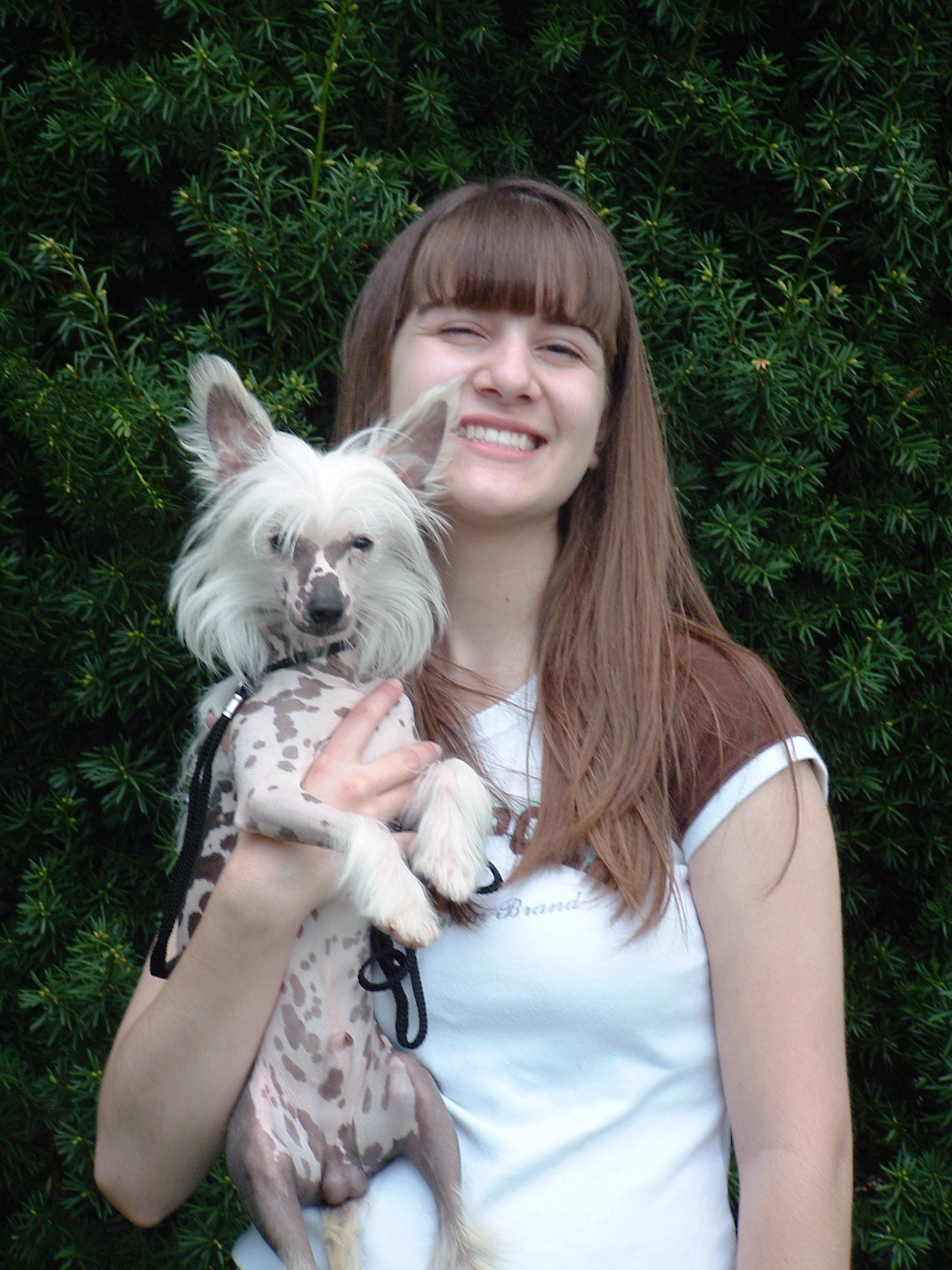
Taken by surprise #1: As females are wise and practical, Kyersten and I took turns going to the bathroom so that we could watch each other’s dogs. She had her show dog, Pegasus, along for the hike and although Chloe can go to public bathrooms with ME, Peg cannot go to public bathrooms with Kyersten. (Besides, he’s a BOY dog – smile) Peg attracts a lot of attention. He’s umm… UNUSUAL looking.

Left alone as hubby was parking the van, Chloe, Peg and I made ourselves comfortable at a picnic table.  It didn’t take long for a family to make a bee-line for me and started asking questions about Peg. (Chloe is quite use to this and normally rolls her eyes and lays down to wait while all the questions like “was he born that way?” are answered). The “mom” of the family was standing on my left, and pointed to my head and said, “Amy, come look at this!”

I was taken by surprise by the delight and attention that was now directed at ME. “Mom” explained that Amy was waiting to get her first hearing aid. She was born with a bi-lateral hearing loss and was waiting for the “pink swirly” ear mold to come in before going to her audiologist for her last fitting. Amy looked to be about 6 or 7 years old. They were very interested in my cochlear implant and “bling”, and I also showed her my orange/red ear mold on the hearing aid in my right ear. Amy seemed excited about the prospect of putting “bling” on her own hearing aid when she began wearing it.

I get a lot of “looks” in public, but rarely have the opportunity to discuss hearing loss as much as I did with Amy and her family. When they walked away, the mother mouthed, “thank you“. I was under the impression Amy hadn’t met a lot of people with hearing loss. I was glad to be an impromptu role model.

Taken by surprise #2:

Finally ready for the hike, my daughter led us across the road and up the path to the railroad bridge. It’s a good thing my 17-year-old son, Chris was NOT along. He has “acrophobia” and would have never made it across! Chloe was not in vest as it was a hot day, and our goal was the top of a mountain! She stayed in a proper heel all the way across the bridge. When we got to the other side, we were to take a metal, spiral-staircase down to the path next to the Potomac River. I stepped down and made it down 3 steps and realized something with sudden clarity. Chloe wasn’t moving and I was on the verge of losing my balance. I think I may have screeched! Terry took my bag for me, and I turned to look at Chloe while holding the staircase railing with a “death grip”.

She was quivering from head to tail, and although she made it to the 2nd stair, her toes were curled around the rungs on the iron steps and her eyes were as wide as saucers. She was scared “drool-less”. (Chloe, being a hound does not have “spit”, she has “drool”… one kiss from her and you’ll agree fairly quickly!)

Hubby said, “Uh… Denise! I don’t think we are going to be able to do this!”

Kyersten and I both swung our heads to look at him with consternation… “Honey! A working dog doesn’t “not” do something new just because they are scared! I can do this! SHE can do this!”

I began talking to Chloe non-stop and used her name over and over again. Kyersten told me later that people coming UP the stairs were murmuring, “Poor Chloe!” “You can do it, Chloe!”, etc. Slowly but surely, Chloe came down the stairs. I’m sure seeing the ground underneath her from THAT high up, totally rattled her. But with shaking paw after shaking paw, she made it all the way to the bottom. We all praised her like crazy, and her tail gave one or two VERY small wags! Peg, who was CARRIED DOWN, looked at her like “what did she do to deserve so much praise?”

All of us needed a “breather” after that scare, and I had to admit to my family that I was totally taken by surprise that those stairs scared her. I’m so accustomed to her being in public with confidence and just being happy to be by my side, I was not ready for her to be frightened by something! I learned a valuable lesson… new things should be approached with caution.

Taken by surprise #3: My third surprise was that my daughter’s idea of a flat, wide path with compact mulch through a shady forest, is REALLY a 6.3 mile hike that is labeled by the park service as “difficult”. She did get the “shady” forest part right. She was also right about the view at least!

Chloe? Well today, she seems to have recovered…

Denise Portis
©2008 Hearing Loss Diary